South Carolina Notice of Lease for Recording
About this form
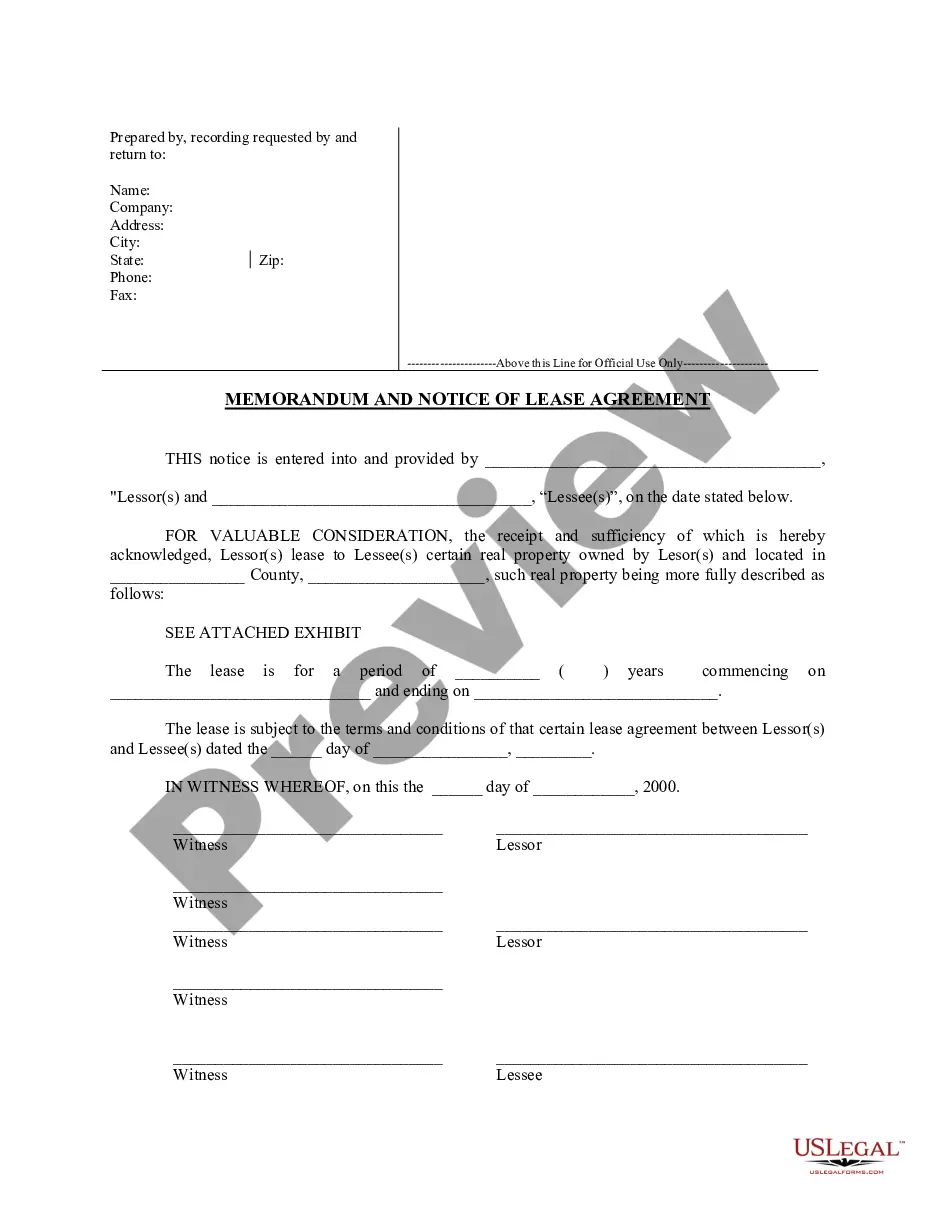
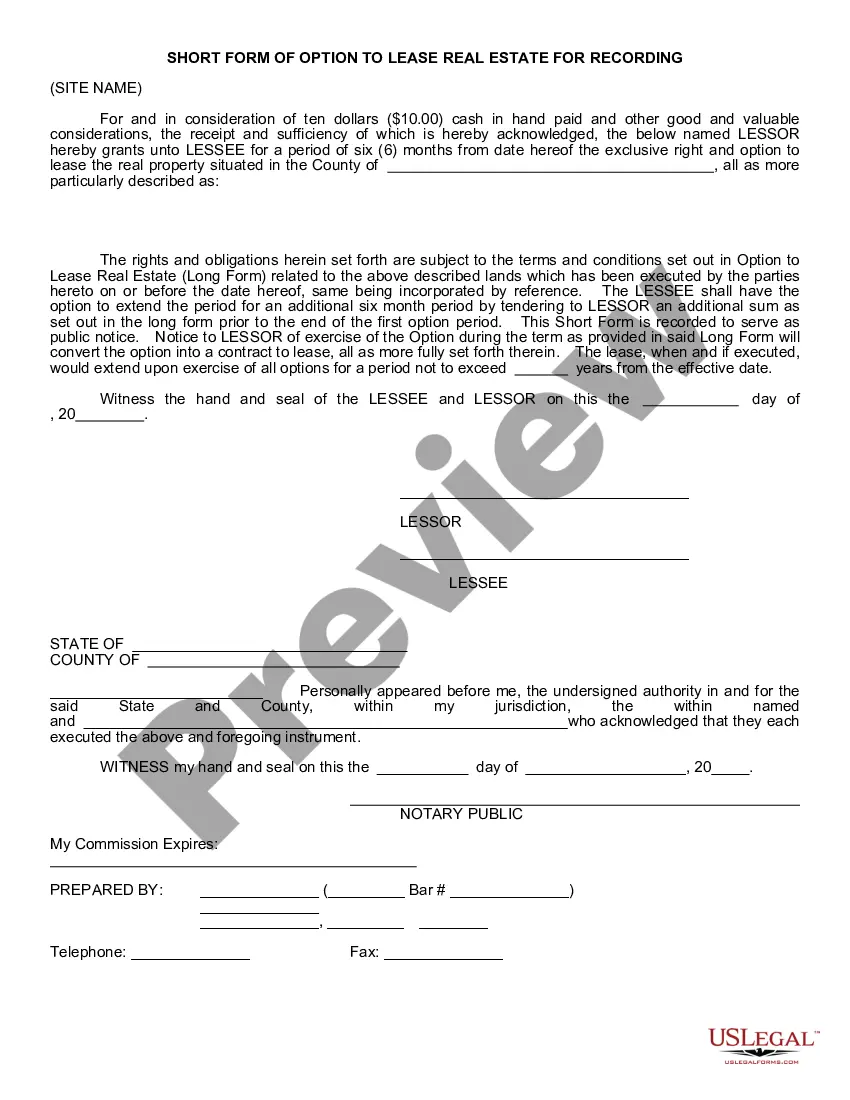
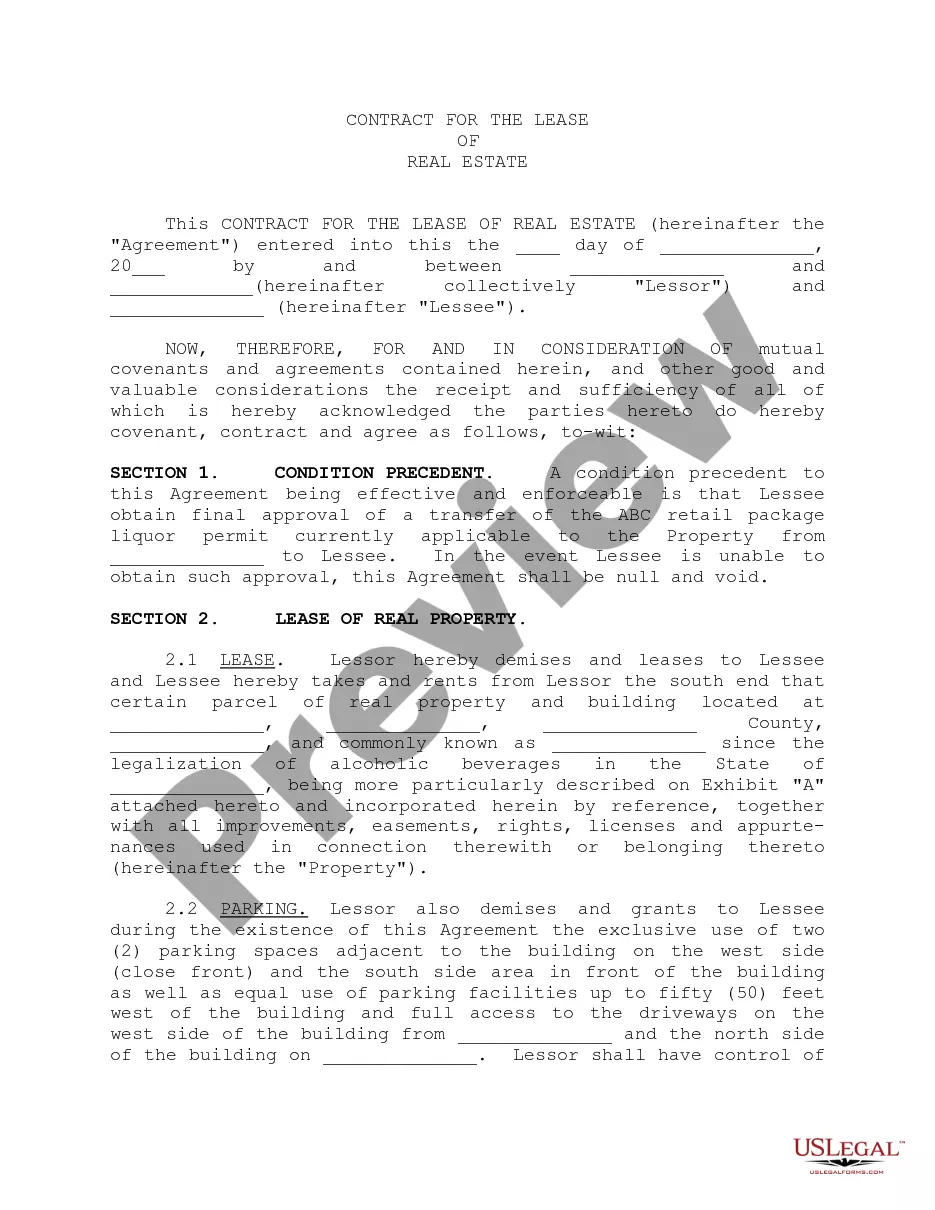
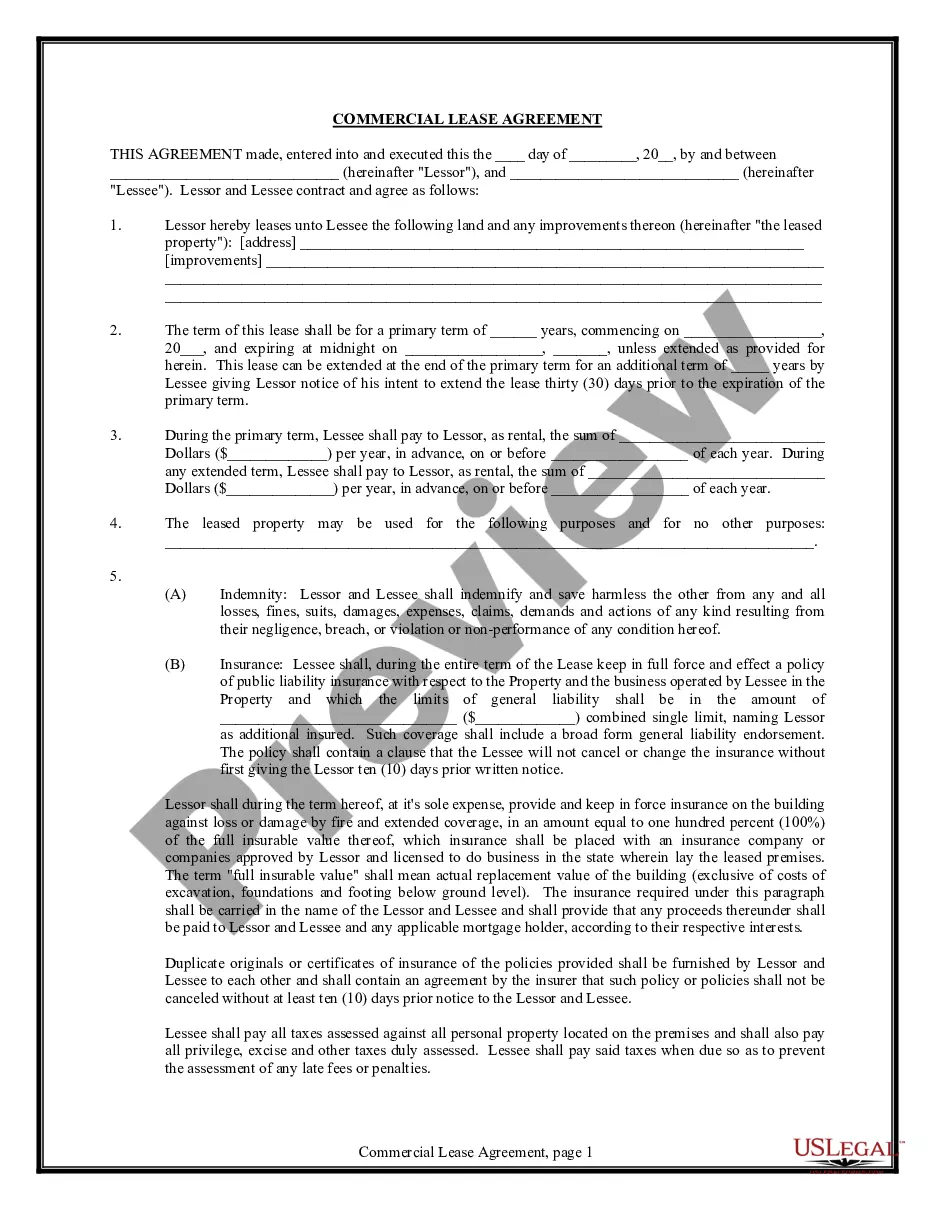
The Notice of Lease for Recording is a legal document that provides public notice of an existing lease agreement for a specific parcel of real estate. This form serves as an alternative to recording the entire lease, allowing parties to secure their interests in the property while ensuring that the terms of the lease are disclosed to the public. It is particularly useful for protecting the rights of lessors and lessees in real estate transactions.
Form components explained
- Identification of the lessor(s) and lessee(s).
- Description of the leased property.
- Term length of the lease agreement.
- Date of commencement and termination of the lease.
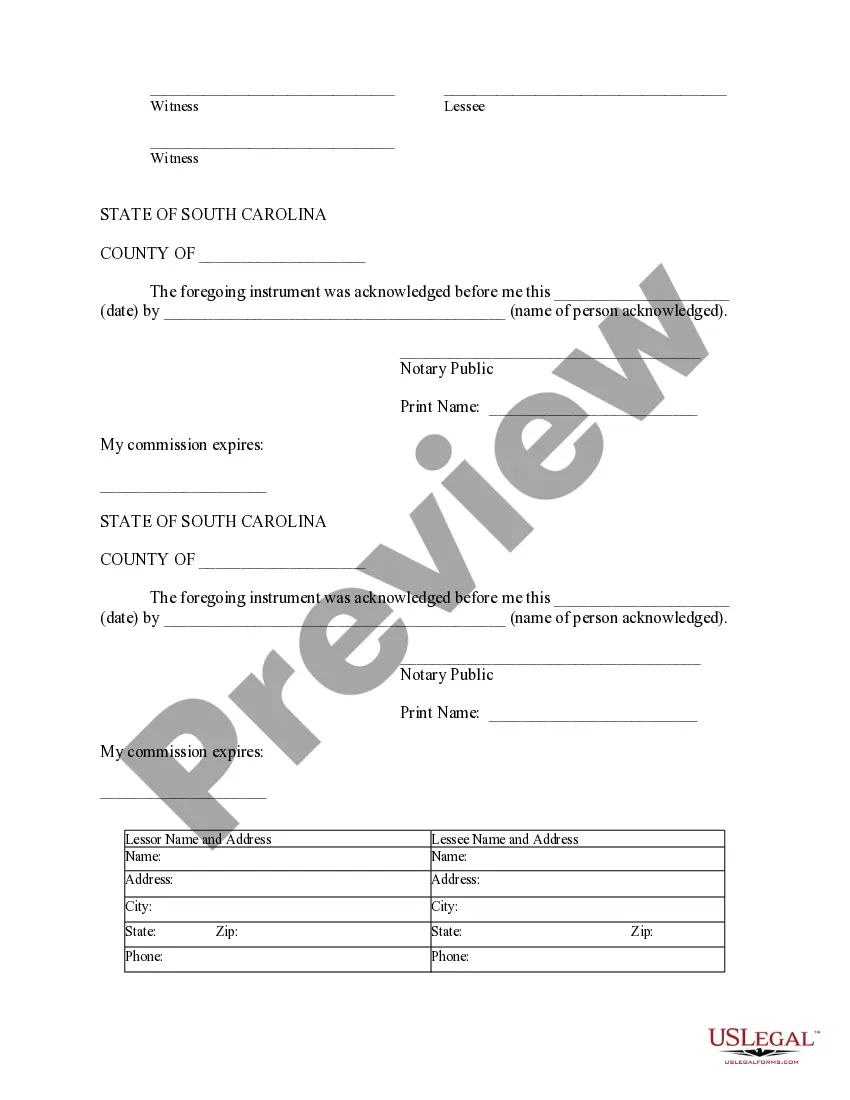
- Signature lines for all parties involved, along with space for witnesses.
- Notary acknowledgment section for legal verification.

Situations where this form applies
This form should be used when a lessor wants to formally record the existence of a lease agreement without having to file the entire lease document. It is ideal for situations where there are multiple leases on a property, or when the parties wish to establish a public record of the lease to protect their respective rights and interests.
Who this form is for
- Property owners or lessor(s) looking to document a lease.
- Tenants or lessee(s) involved in a lease agreement.
- Real estate professionals who manage or broker lease agreements.
- Financers or investors seeking to verify lease terms before property transactions.
Instructions for completing this form
- Identify the parties involved by entering the names of the lessor(s) and lessee(s).
- Provide a detailed description of the leased property, referencing any attached exhibits.
- Specify the duration of the lease agreement, including the start and end dates.
- Ensure all parties sign the document in the designated areas, along with the required witnesses.
- Complete the notary acknowledgment section to formalize the document.
Does this document require notarization?
Yes, this form must be notarized to be legally valid. The notarization ensures that all signatures are verified and that the document can be recorded in official property records, safeguarding the interests of both the lessor and lessee.
Get your form ready online
Our built-in tools help you complete, sign, share, and store your documents in one place.
Make edits, fill in missing information, and update formatting in US Legal Forms—just like you would in MS Word.
Download a copy, print it, send it by email, or mail it via USPS—whatever works best for your next step.
Sign and collect signatures with our SignNow integration. Send to multiple recipients, set reminders, and more. Go Premium to unlock E-Sign.
If this form requires notarization, complete it online through a secure video call—no need to meet a notary in person or wait for an appointment.
We protect your documents and personal data by following strict security and privacy standards.

Make edits, fill in missing information, and update formatting in US Legal Forms—just like you would in MS Word.

Download a copy, print it, send it by email, or mail it via USPS—whatever works best for your next step.

Sign and collect signatures with our SignNow integration. Send to multiple recipients, set reminders, and more. Go Premium to unlock E-Sign.

If this form requires notarization, complete it online through a secure video call—no need to meet a notary in person or wait for an appointment.

We protect your documents and personal data by following strict security and privacy standards.
Typical mistakes to avoid
- Failing to include all required signatures and witnesses.
- Not providing a detailed description of the leased property.
- Omitting dates for the lease term, which can lead to misunderstandings.
- Neglecting to have the document notarized if required by local law.
Why use this form online
- Immediate access to a legally vetted template drafted by licensed attorneys.
- Convenient editing options to customize the form to fit your specific needs.
- Ability to download and print the form instantly for recording.
- Safe and secure process for completing legal documentation from home.
Key takeaways
- The Notice of Lease provides public documentation of a lease agreement.
- It is crucial for protecting the rights of both landlords and tenants.
- Completing it accurately and according to state laws is essential for enforceability.
Looking for another form?
Form popularity
FAQ
The South Carolina deed recording fee is imposed for the privilege of recording a deed, and is based on the transfer of real property from one person or business entity to another. The fee is generally imposed on the grantor of the real property, although the grantee may be secondarily liable for the fee.
To file a complaint: The first thing you should do is call, write, or come into the office and talk with a Housing Intake Investigator. He/she will be able to explain what we do and help to determine if you have a basis for filing a complaint. Click here for the Fair Housing Complaint Questionnaire to complete.
To record a lease agreement means to file a copy of the lease agreement with the local county land records office. The land records office will charge a small recording fee and will stamp the top of the lease agreement with a recording stamp that indicates the date, time, entry number of the recorded document.
Eviction Cases must be filed in the Justice Court in the Justice of the Peace Precinct in the county in which the real property is located. See Section 24.004, Texas Property Code.
In Columbia, South Carolina, an eviction normally takes from 30 to 45 days, and the cost can range from $100 to $1,200, depending on whether you use an attorney to help you through the process.
Addresses. Date. Tenant names. Status and date of the lease. Why the eviction notice is served (clear and concise explanation) Date tenant must vacate the property. Proof of service or delivery of notice.
An original, wet signed document. Signature of the Party of the First Part. Two witnesses to the signature. A South Carolina Probate or Acknowledgement. A property description to include a recorded plat reference or metes and bounds description.
To begin the eviction lawsuit in South Carolina, also called an ejectment action, the landlord must file an affidavit with the court. An affidavit is a sworn statement by the landlord that provides details on the reasons the tenant should be evicted. Once filed, the court will then issue an order to show cause.
In South Carolina, the Writ of Ejectment allows the county sheriff to remove the renter forcibly. Once issued, the renter will have five days to vacate the premises. Once evicted, you may find that the tenant has left behind some personal belongings.