South Carolina Living Trust for Individual Who is Single, Divorced or Widow or Widower with Children
About this form
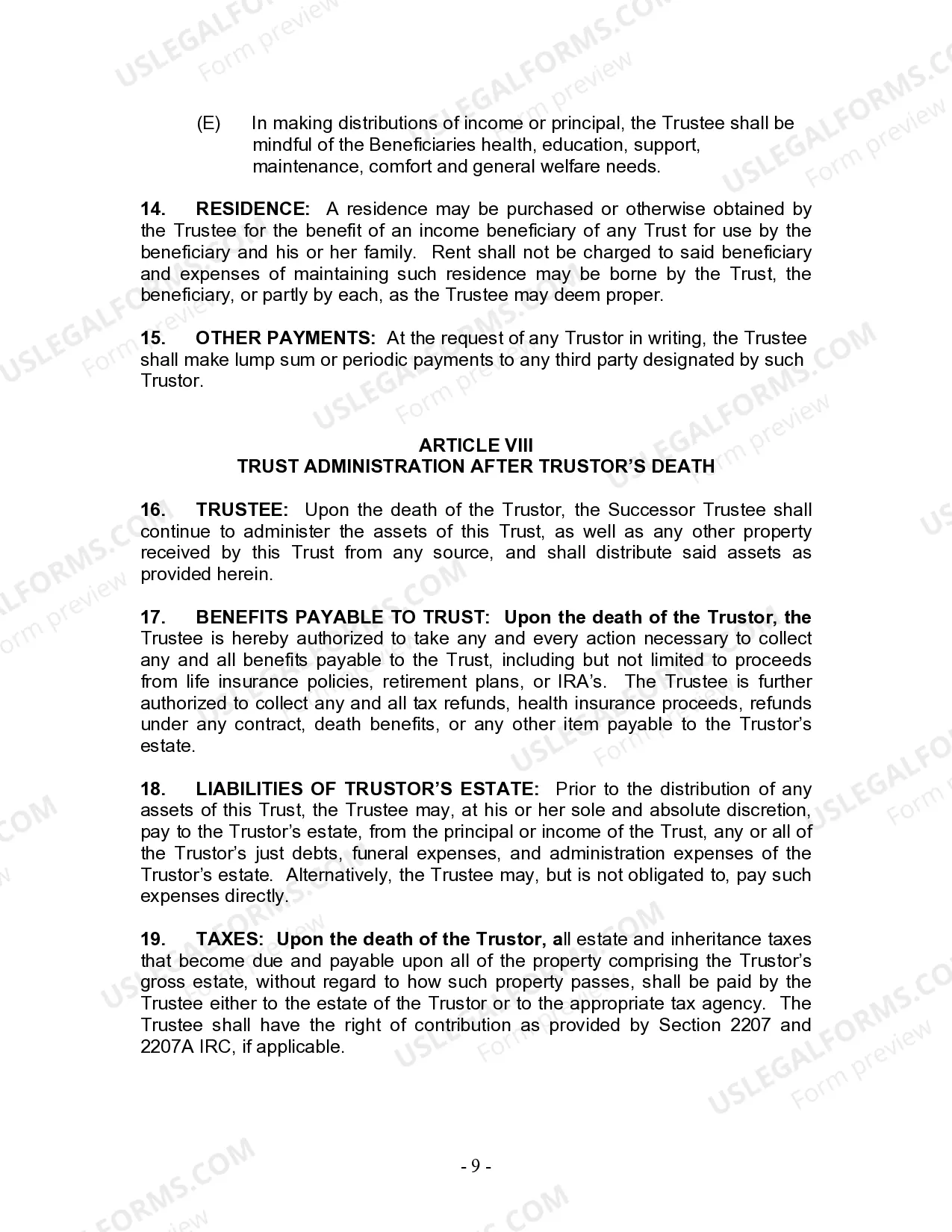
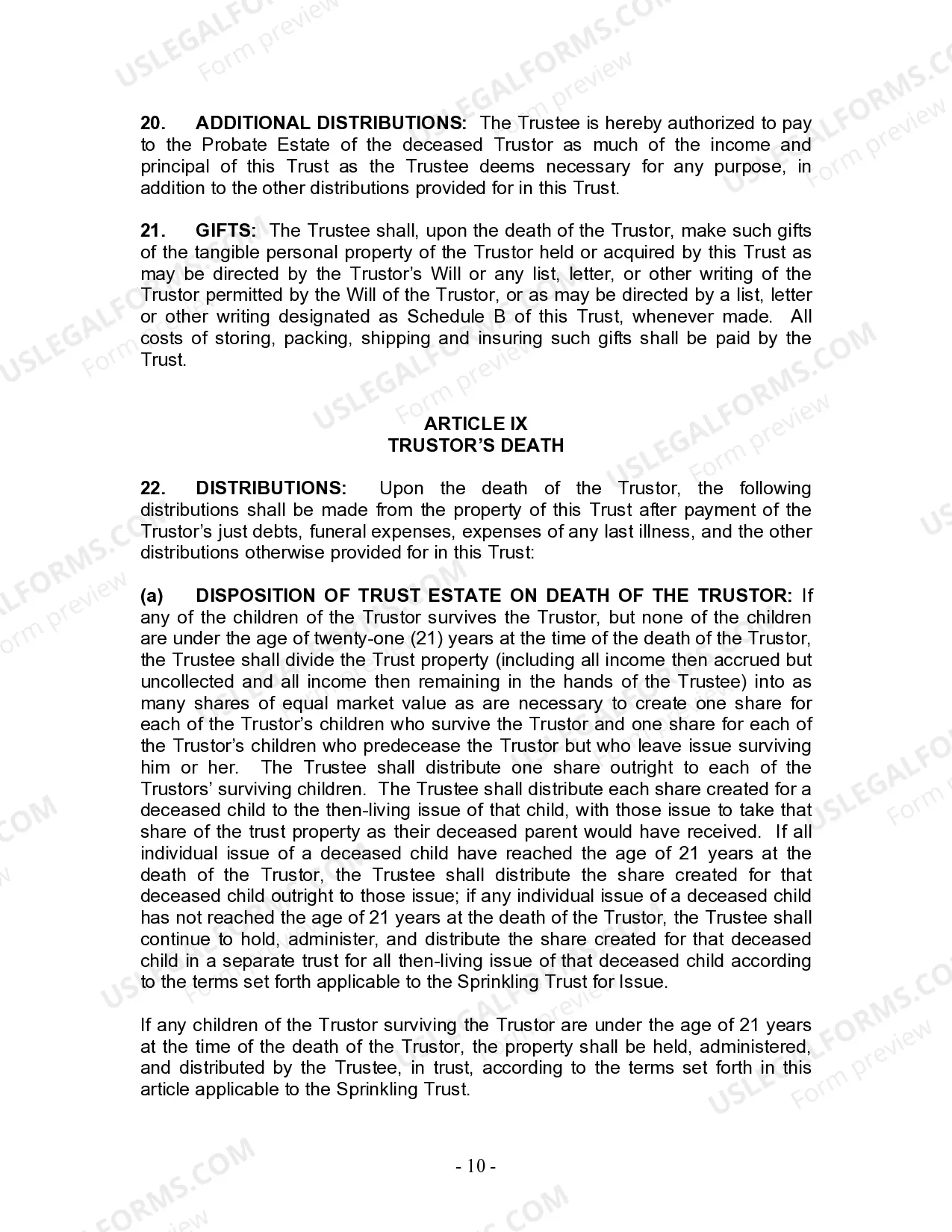
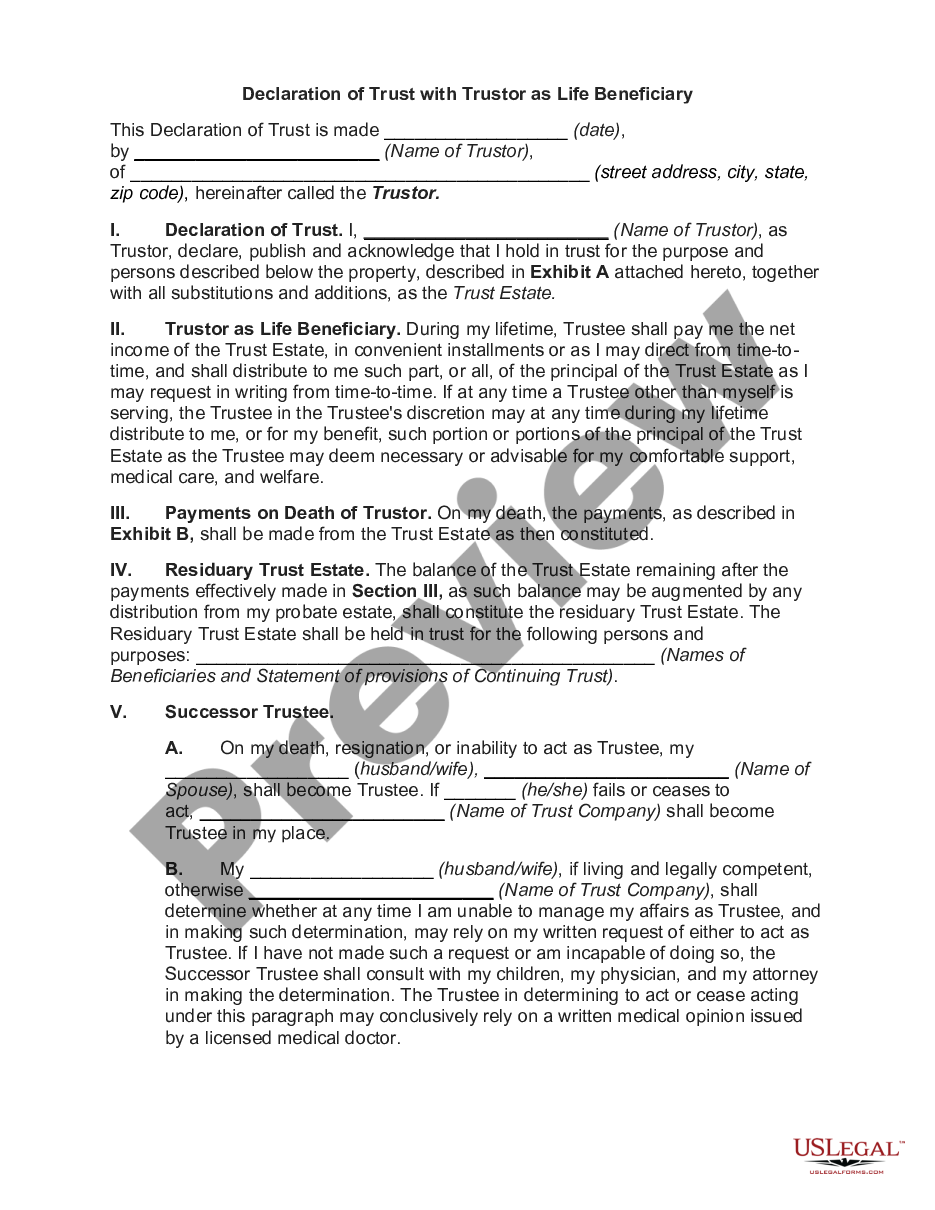
This Living Trust for Individuals Who are Single, Divorced, or Widowed with Children is a legal document that allows an individual to manage their assets during their lifetime and dictate the distribution of those assets upon their death. Unlike a Will, a living trust bypasses the probate process, making it a useful tool for estate planning. This form is specifically tailored for those with children, ensuring that their assets are passed efficiently and according to their wishes.
Key components of this form
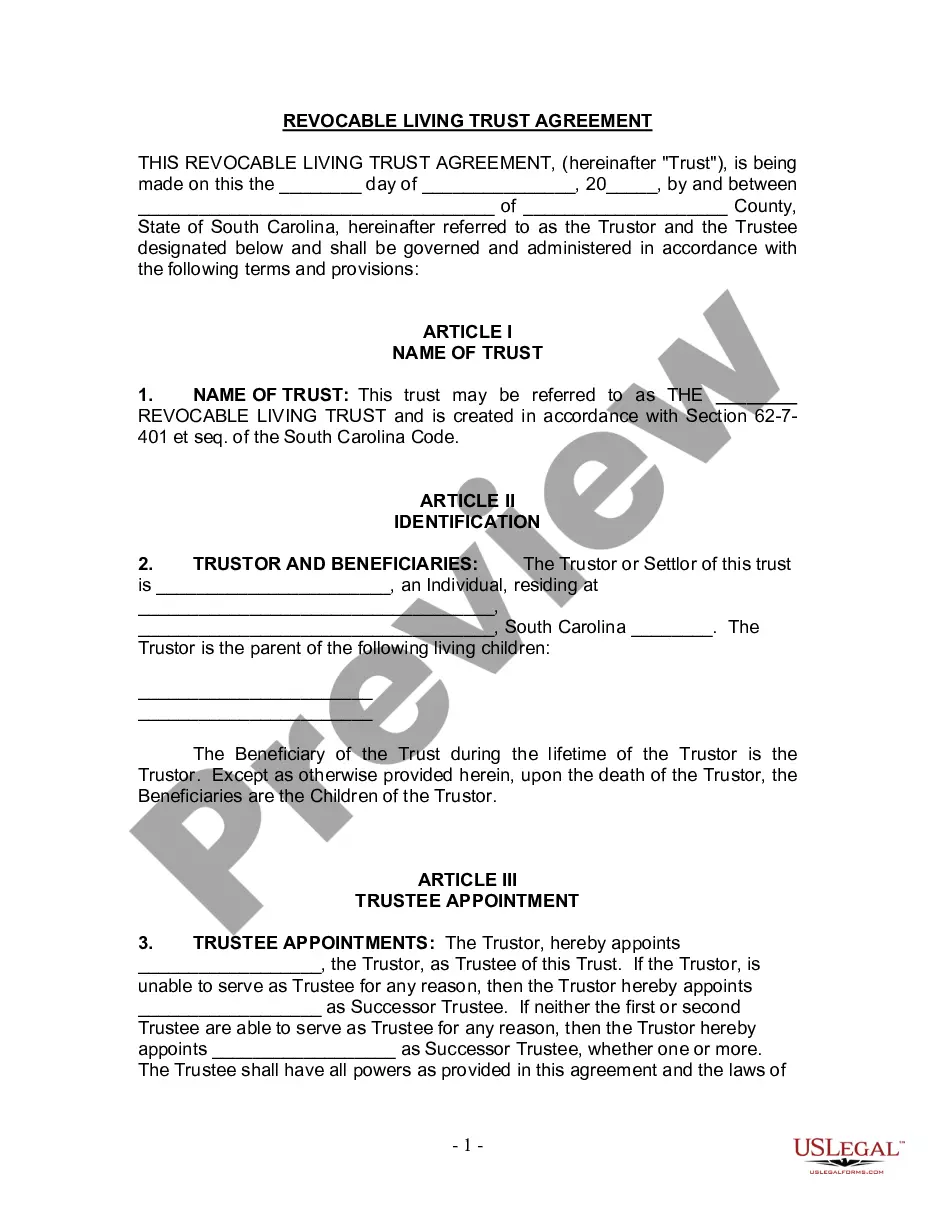
- Name of Trust: Defines the official designation of the trust.
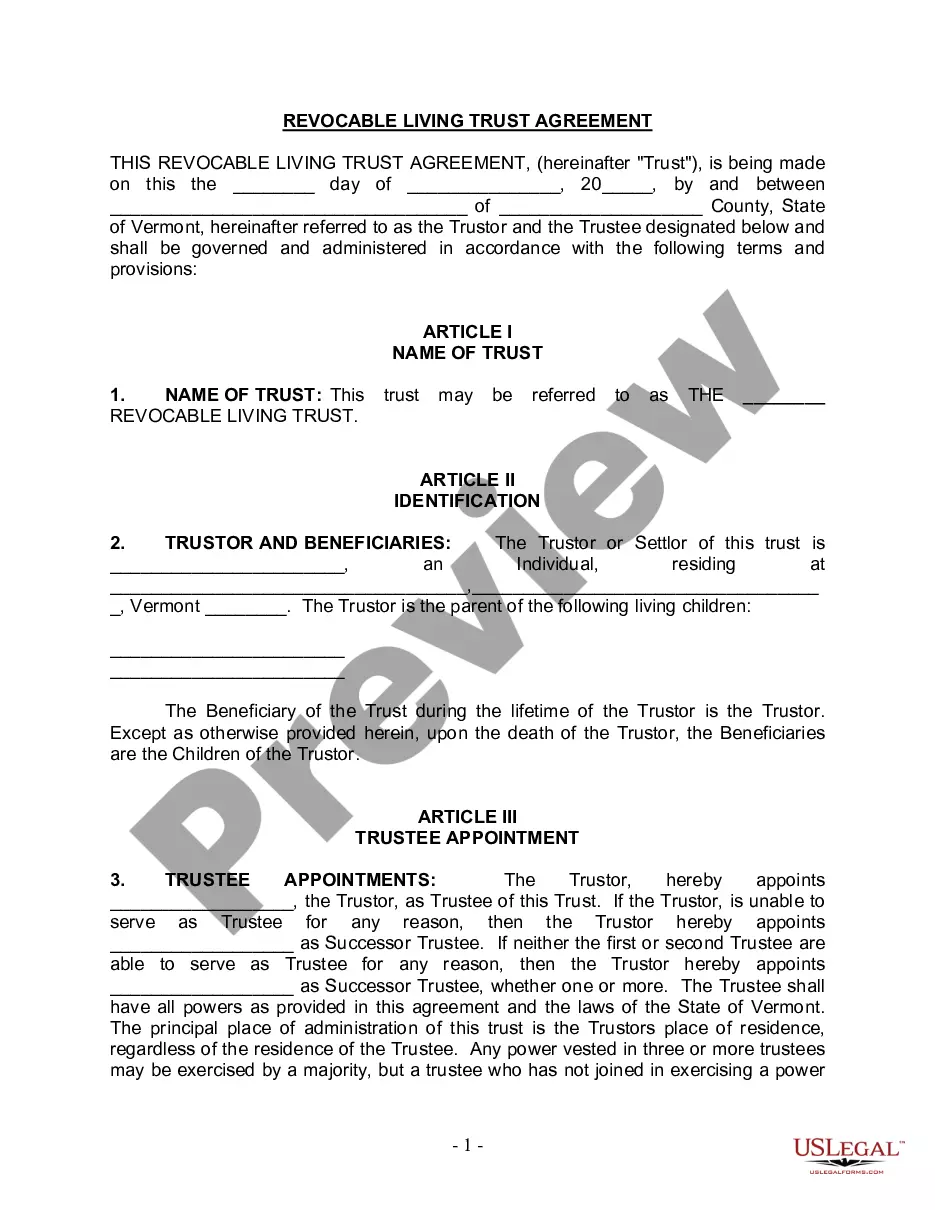
- Trustor and Beneficiaries: Identifies the creator of the trust and the individuals (typically children) who will benefit from it.
- Trustee Appointments: Specifies who will manage the trust assets, including successor trustees.
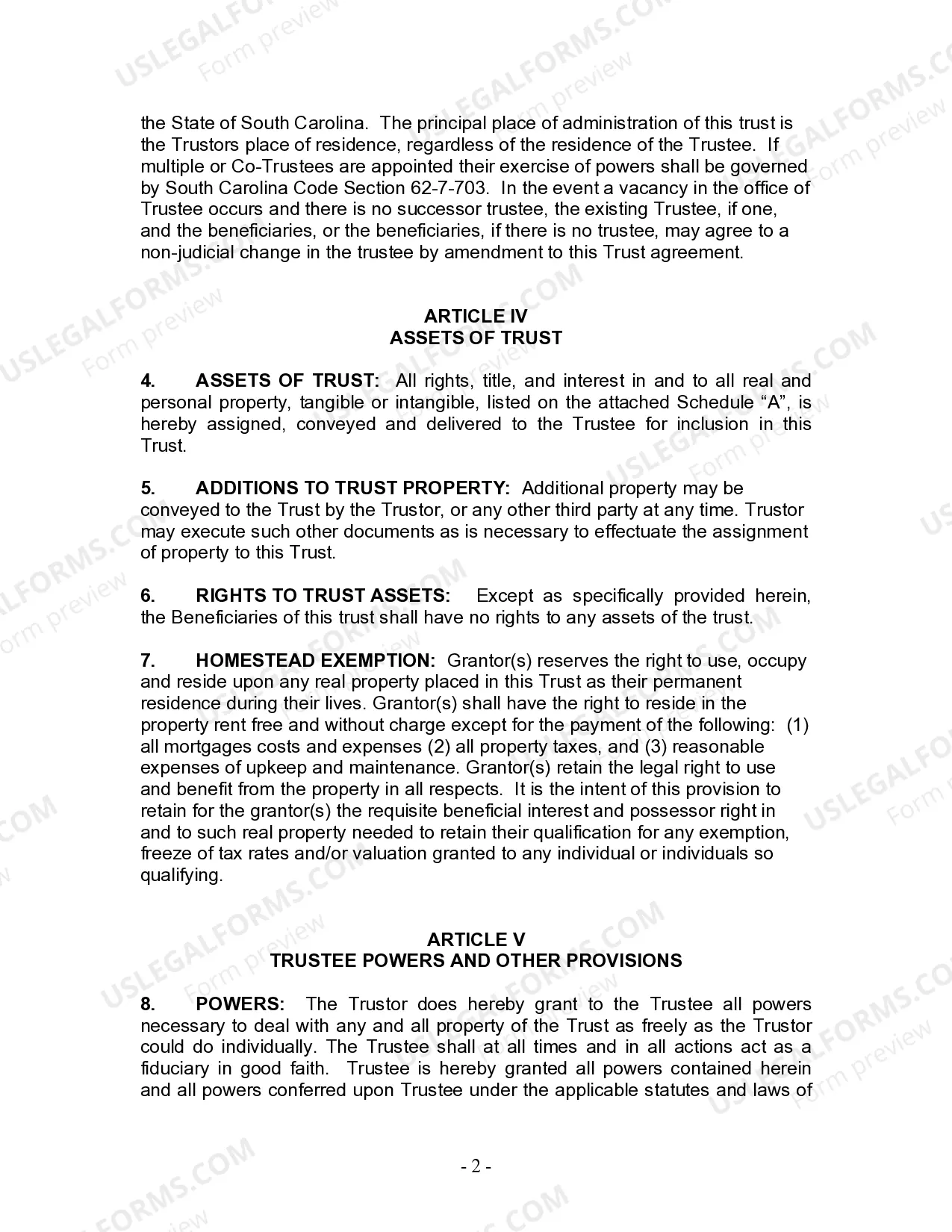
- Assets of Trust: Lists the properties and assets included in the trust.
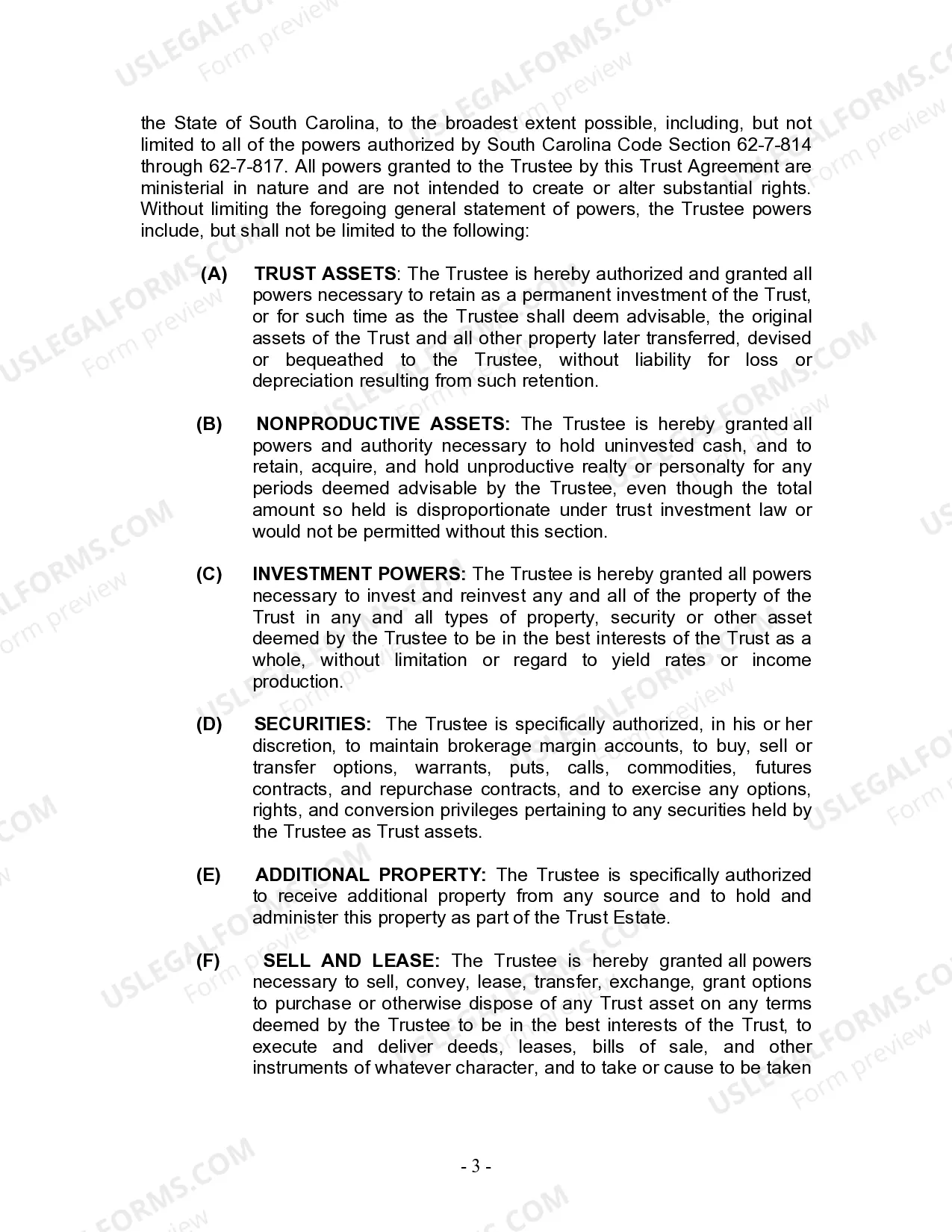
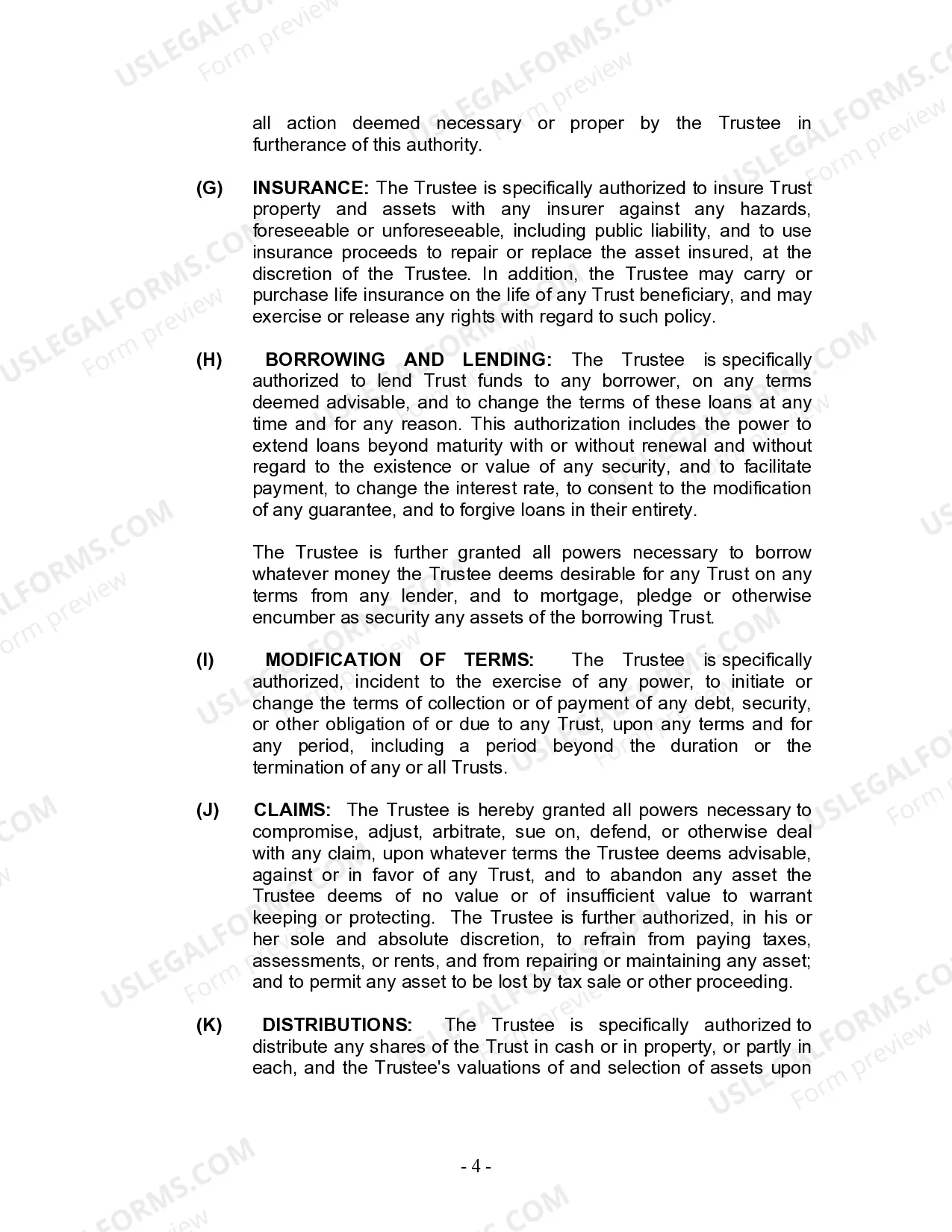
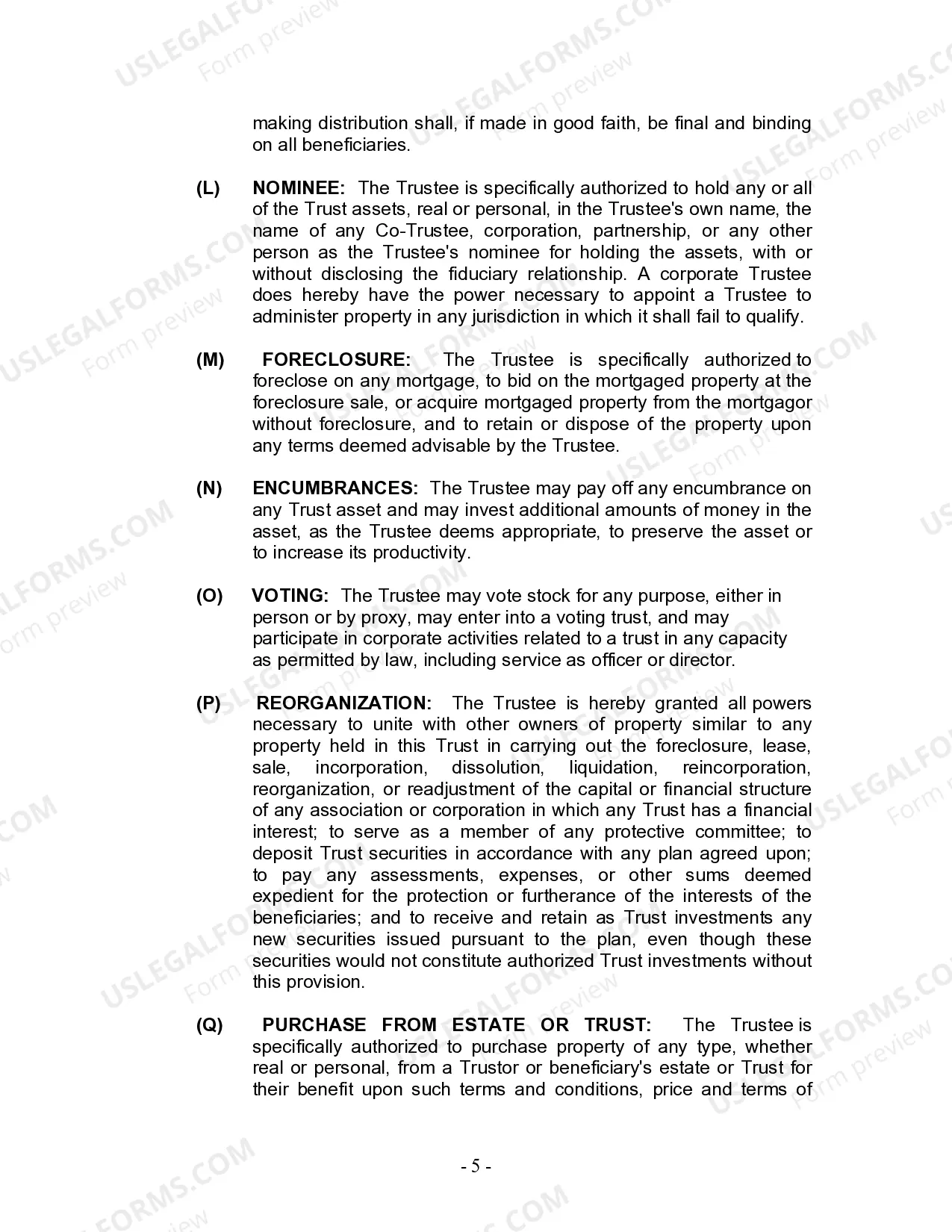
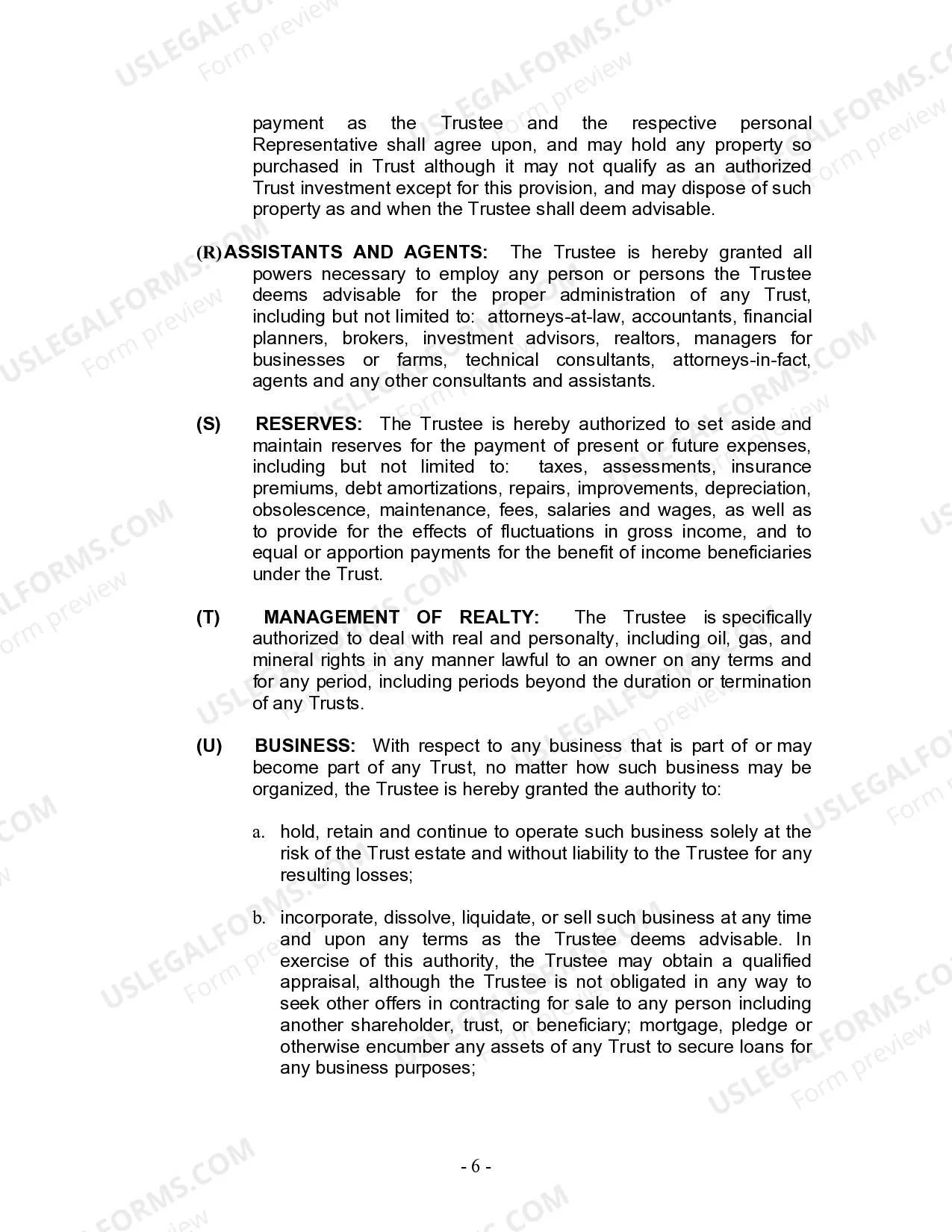
- Trustee Powers: Outlines the authority provided to the trustee to manage the trust assets.
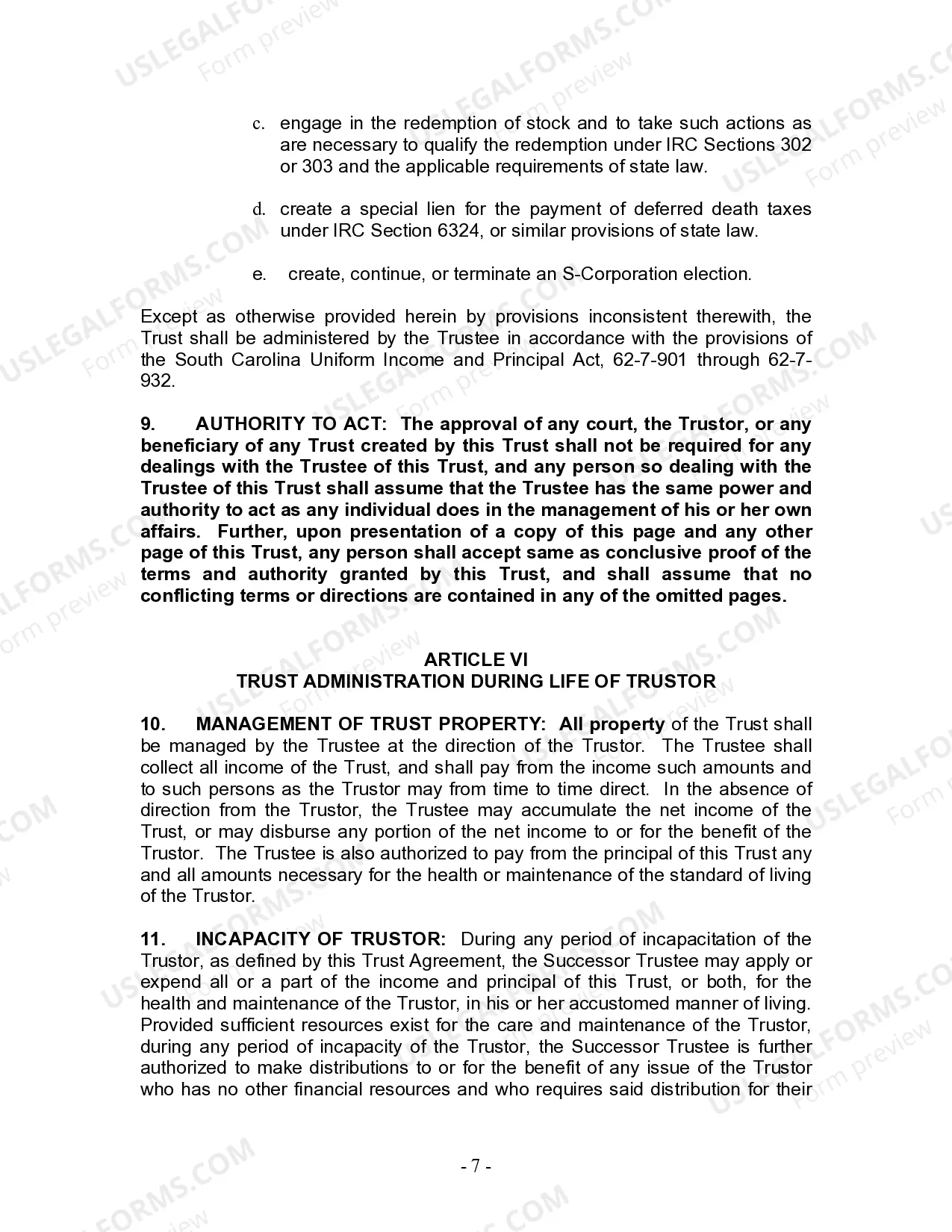
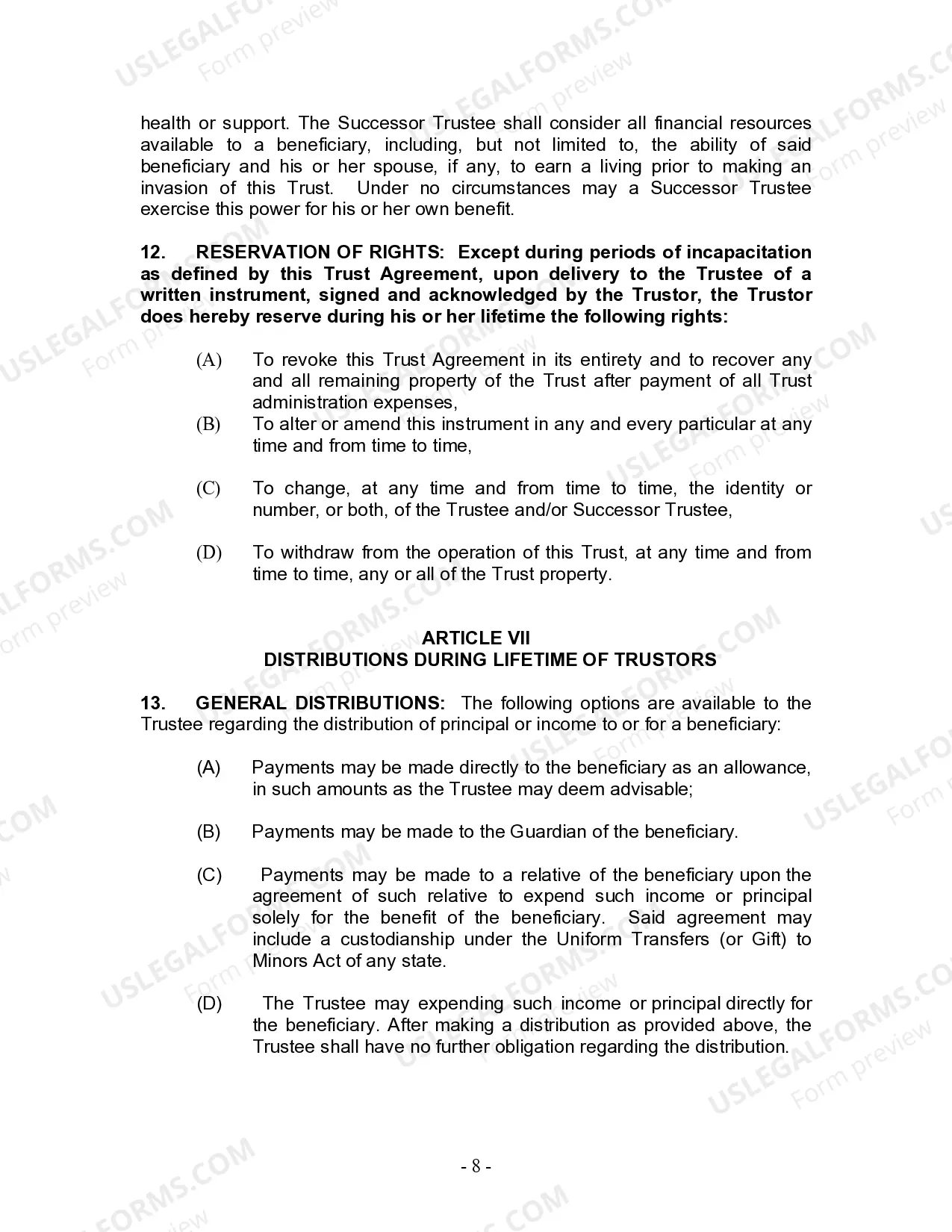
- Distrubition Provisions: Details how and when the assets will be distributed to the beneficiaries after the trustor's death.



When this form is needed
This form is ideal for individuals who are single, divorced, or widowed and have children. It is particularly useful if you wish to maintain control over your assets during your lifetime while ensuring a clear plan for their distribution upon your death. You should consider using this trust if you want to avoid probate proceedings, protect your children's inheritance, or manage complex assets.
Who should use this form
- Individuals who are single or have experienced divorce or widowhood.
- Parents who want to provide financial security for their children.
- Anyone looking to simplify the estate planning process and avoid probate.
- Individuals with significant assets or specific wishes for the distribution of their property.
How to prepare this document
- Identify the trustor (you) and provide your full name and address.
- Designate your children as beneficiaries, ensuring to list each child.
- Select a trustee (it can be yourself) and designate any successor trustees.
- List the assets you wish to include in the trust, detailing them as necessary.
- Ensure the document is signed and witnessed in accordance with South Carolina law.
Is notarization required?
This document requires notarization to meet legal standards. US Legal Forms provides secure online notarization powered by Notarize, allowing you to complete the process through a verified video call, available 24/7.
Get your form ready online
Our built-in tools help you complete, sign, share, and store your documents in one place.
Make edits, fill in missing information, and update formatting in US Legal Forms—just like you would in MS Word.
Download a copy, print it, send it by email, or mail it via USPS—whatever works best for your next step.
Sign and collect signatures with our SignNow integration. Send to multiple recipients, set reminders, and more. Go Premium to unlock E-Sign.
If this form requires notarization, complete it online through a secure video call—no need to meet a notary in person or wait for an appointment.
We protect your documents and personal data by following strict security and privacy standards.

Make edits, fill in missing information, and update formatting in US Legal Forms—just like you would in MS Word.

Download a copy, print it, send it by email, or mail it via USPS—whatever works best for your next step.

Sign and collect signatures with our SignNow integration. Send to multiple recipients, set reminders, and more. Go Premium to unlock E-Sign.

If this form requires notarization, complete it online through a secure video call—no need to meet a notary in person or wait for an appointment.

We protect your documents and personal data by following strict security and privacy standards.
Avoid these common issues
- Failing to specify all assets that should be included in the trust.
- Not updating the trust after major life changes, such as divorce or the birth of additional children.
- Overlooking the need to designate a successor trustee.
- Neglecting to have the document properly witnessed or notarized as required by law.
Why use this form online
- Convenience: Access and complete the form from the comfort of your home.
- Editability: Make changes easily as your circumstances or wishes evolve.
- Reliability: Ensure that the form meets state-specific legal standards through professional preparation.
Looking for another form?

Form popularity
FAQ
It is a revocable living trust that lets you manage assets during life and direct their distribution after death, without probate. This form is tailored for individuals who are single, divorced, or widowed with children. Core elements include Name of Trust, Trustor and Beneficiaries, Trustee Appointments, Assets of Trust, Trustee Powers, and Distribution Provisions. It supports keeping control of assets for your children.
Divorce or changes in family circumstances may require updating the trust to reflect your new status. You may need to remove an ex-spouse as beneficiary or trustee and adjust successor trustees. This form's sections on Trustor/Beneficiaries, Trustee Appointments, and Distribution Provisions guide you through the updates, and consult a licensed attorney for state-specific advice.
The form lets you specify how a home and other assets pass to your children, using Distribution Provisions and Assets of Trust. You can choose outright gifts or ongoing held-in-trust arrangements, and appoint a Trustee to manage the home. These provisions help ensure your home goes to your children as you intend.
No, not automatically. You decide beneficiaries and terms in the trust, and you can remove a spouse or adjust terms through the Trustor/Beneficiaries and Distribution Provisions. The form makes it clear who inherits and when, and you can update as circumstances change.
Common issues include failing to fund the trust—transferring assets into the trust—so they are actually controlled by the trust at death, or terms that are outdated or unclear. This form guides you to list assets, appoint Trustees, and define Distribution Provisions, but periodic reviews with an attorney are wise.
This form is tailored for someone who has or may have children, focusing on naming children as beneficiaries and appointing successor trustees to protect their interests. It also emphasizes child-focused distribution provisions, whereas a trust without children would not include these specific provisions.