Rhode Island Warranty Deed for Separate or Joint Property to Joint Tenancy
Overview of this form
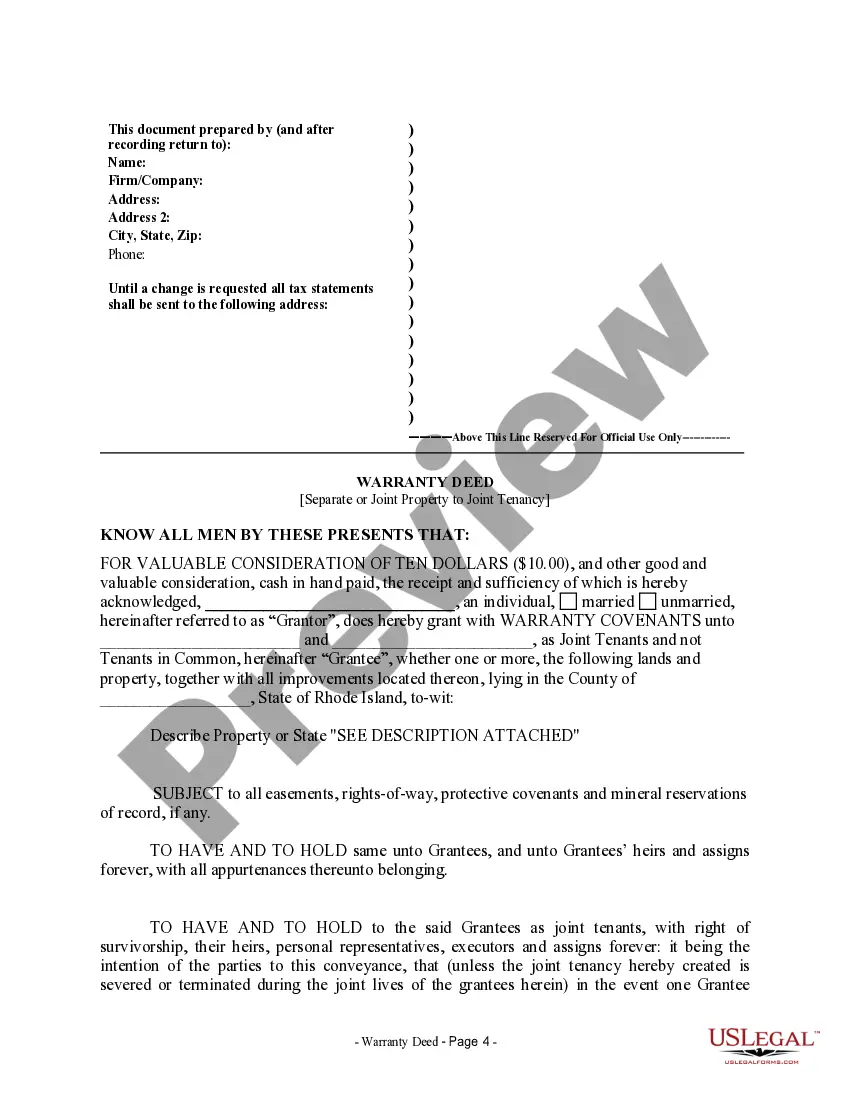
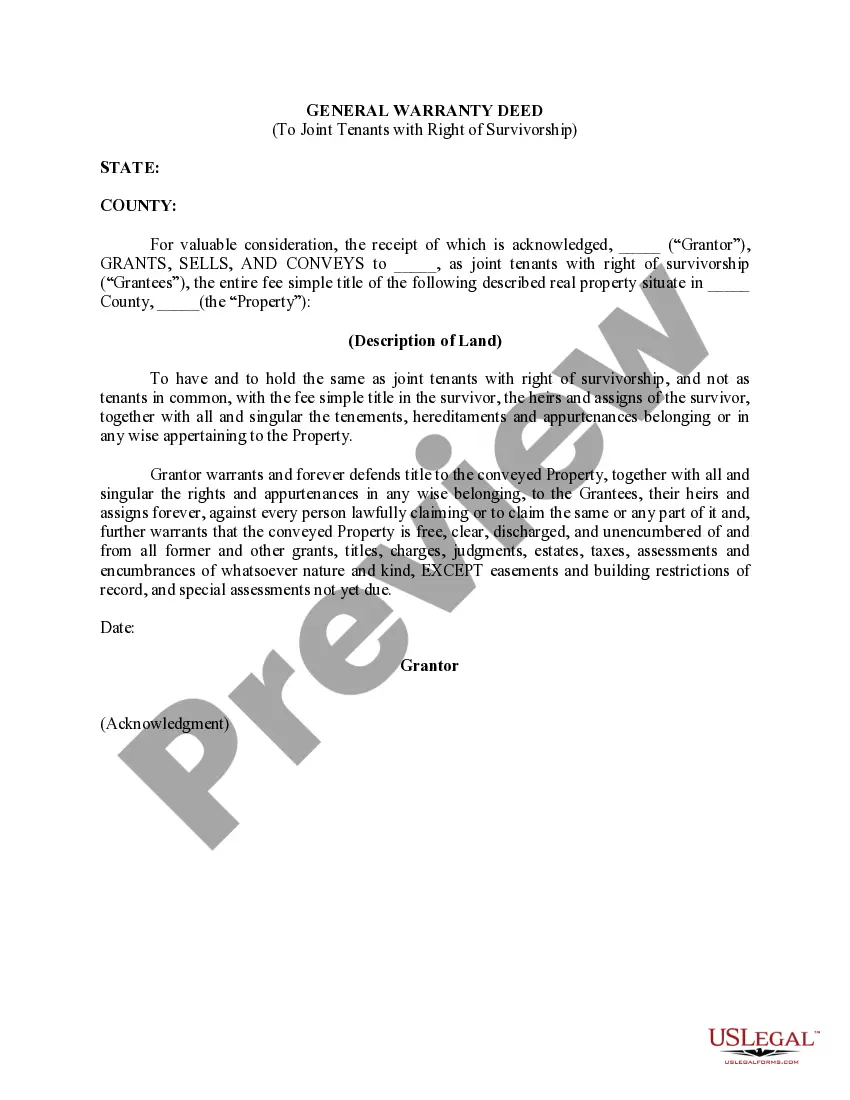
The Warranty Deed for Separate or Joint Property to Joint Tenancy is a legal document used to convert separate or jointly owned property into joint tenancy holding. This type of deed ensures that both parties have equal ownership and includes the right of survivorship, meaning if one owner passes away, the other automatically inherits their interest in the property. It is distinct from other deeds, such as quitclaim deeds, as it offers a warranty of title, providing added security for the grantees.
What’s included in this form
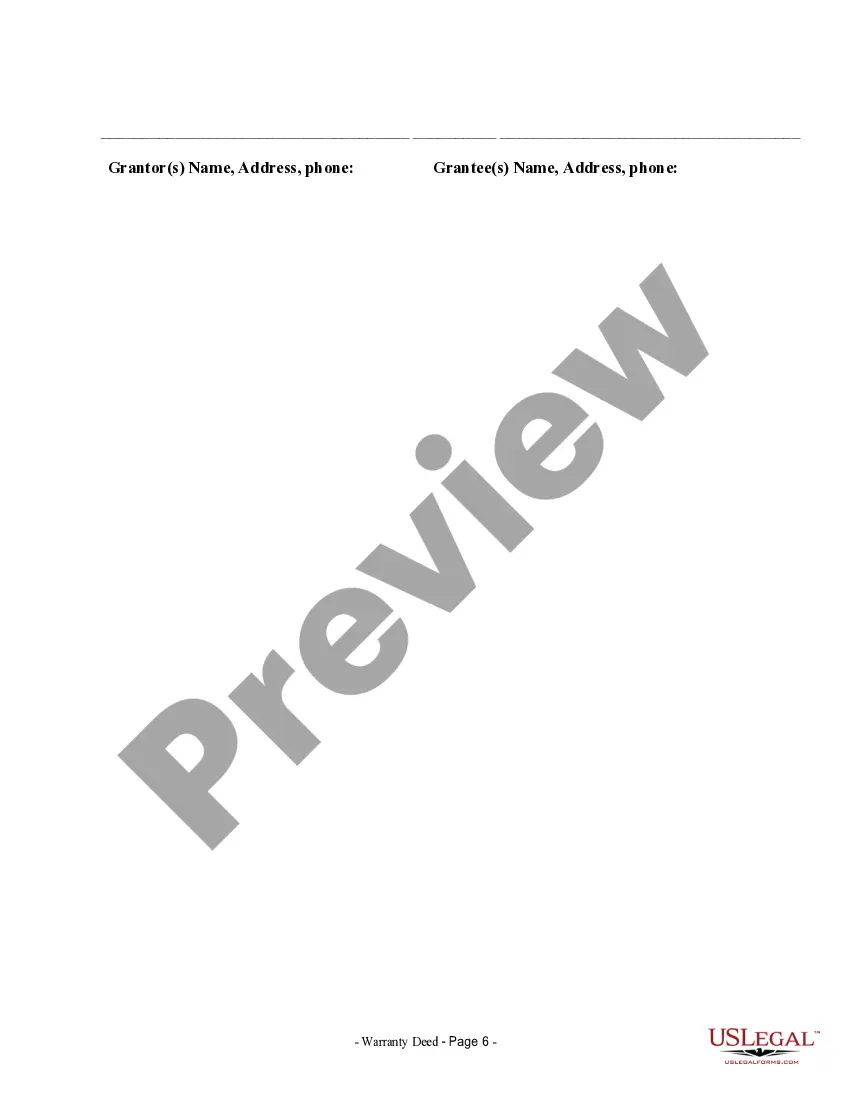
- Identification of the Grantor and Grantees
- Description of the property being transferred
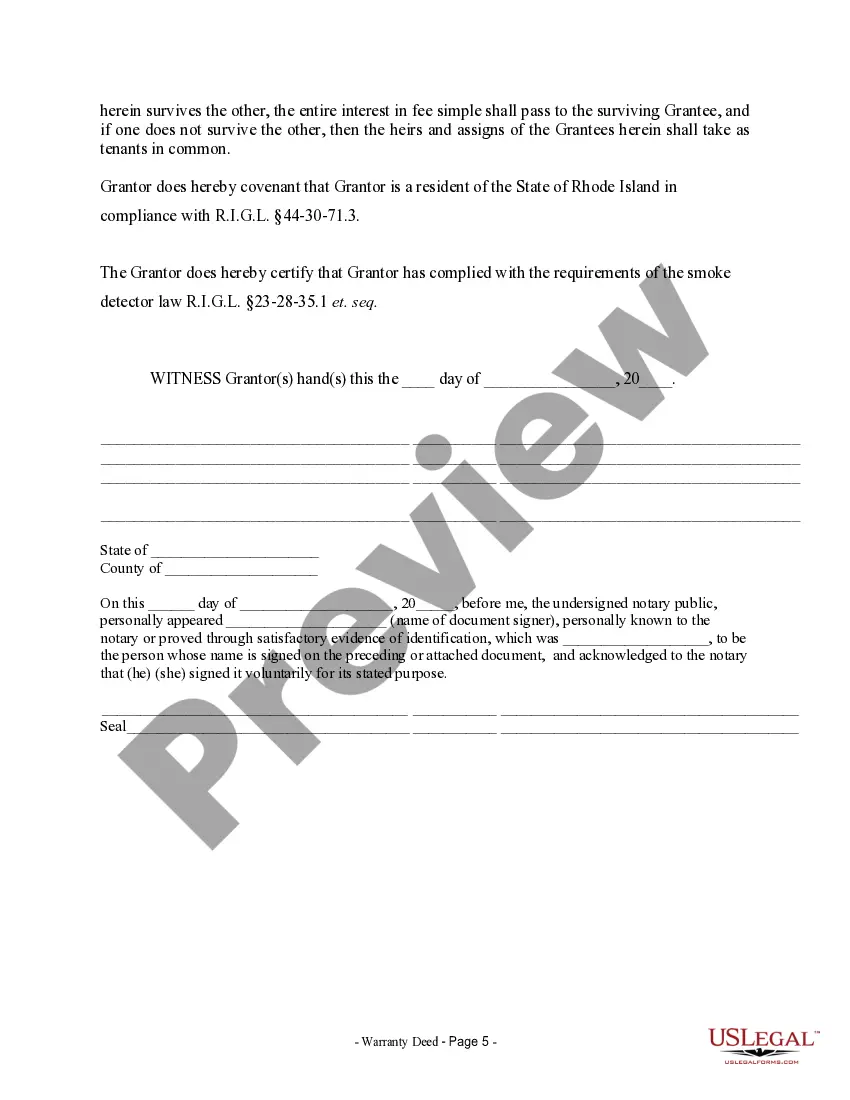
- Statement of joint tenancy with right of survivorship
- Compliance statements regarding residency and local laws
- Signature lines for Grantor and notary acknowledgment


Common use cases
This form is suitable when individuals wish to change the manner of holding title to a property they own from separate or joint ownership to joint tenancy. It is often used by couples or partners who want to ensure that upon the death of one owner, the property automatically passes to the surviving owner without going through probate.
Who this form is for
This form is intended for:
- Property owners looking to change property ownership structure
- Married couples or domestic partners
- Individuals wishing to provide for a spouse or partner in property matters
How to prepare this document
- Identify the Grantor (the person transferring the property) and Grantees (the people receiving the property).
- Provide a detailed description of the property being conveyed.
- Clearly state that the property is being held as joint tenants with right of survivorship.
- Sign and date the document in the presence of a notary public.
- Ensure compliance with local laws, including any required disclosures or certifications.
Notarization guidance
Yes, this form must be notarized to be legally valid. Notarization provides an added layer of authentication, ensuring that the signatures on the document are legitimate and properly executed. US Legal Forms offers integrated online notarization that is available 24/7, allowing you to complete the process securely via video call, ensuring compliance without the need for travel.
Get your form ready online
Our built-in tools help you complete, sign, share, and store your documents in one place.
Make edits, fill in missing information, and update formatting in US Legal Forms—just like you would in MS Word.
Download a copy, print it, send it by email, or mail it via USPS—whatever works best for your next step.
Sign and collect signatures with our SignNow integration. Send to multiple recipients, set reminders, and more. Go Premium to unlock E-Sign.
If this form requires notarization, complete it online through a secure video call—no need to meet a notary in person or wait for an appointment.
We protect your documents and personal data by following strict security and privacy standards.

Make edits, fill in missing information, and update formatting in US Legal Forms—just like you would in MS Word.

Download a copy, print it, send it by email, or mail it via USPS—whatever works best for your next step.

Sign and collect signatures with our SignNow integration. Send to multiple recipients, set reminders, and more. Go Premium to unlock E-Sign.

If this form requires notarization, complete it online through a secure video call—no need to meet a notary in person or wait for an appointment.

We protect your documents and personal data by following strict security and privacy standards.
Common mistakes
- Failing to provide a complete property description, which may lead to disputes.
- Not having the document notarized, which can render it invalid.
- Overlooking local law requirements, such as the smoke detector compliance statement.
Benefits of completing this form online
- Easy accessibility allows for quick completion from anywhere.
- Editable fields enable precise information entry, reducing errors.
- Instant downloads guarantee that you have a copy of your legal document at your convenience.
Legal use & context
- The Warranty Deed legally transfers property ownership, ensuring both parties hold equal rights.
- Establishes joint tenancy with right of survivorship, avoiding probate delays.
- Adheres to Rhode Island property laws, strengthening enforceability in legal proceedings.
Quick recap
- Use this form to convert property ownership into a joint tenancy arrangement.
- Ensure completeness and notarization for legal validity.
- Be aware of your jurisdictionâs specific requirements for property transfer.
Looking for another form?
Form popularity
FAQ
Key Takeaways. A property deed is a legal document that transfers the ownership of real estate from a seller to a buyer.General warranty deeds give the grantee the most protection, special warranty deeds give the grantee more limited protection, and a quitclaim deed gives the grantee the least protection under the law
Paired with title insurance, your warranty deed guarantees that the grantor is the rightful owner and transfers these rights and title to you as the grantee or new owner of the property. With a warranty deed, your title is clear.However, both the warranty and quitclaim deeds are not sales documents by any means.
A warranty deed guarantees that: The grantor is the rightful owner of the property and has the legal right to transfer the title.The title would withstand third-party claims to ownership of the property. The grantor will do anything to ensure the grantee's title to the property.
Quitclaim Deed. Deed of Trust. Warranty Deed. Grant Deed. Bargain and Sale Deed. Mortgage Deed.
A special warranty deed to real estate offers protection to the buyer through the seller's guarantee that the title has been free and clear of encumbrances during their ownership of the property. It does not guarantee clear title beyond their ownership.
A warranty deed is a document often used in real estate that provides the greatest amount of protection to the purchaser of a property. It pledges or warrants that the owner owns the property free and clear of any outstanding liens, mortgages, or other encumbrances against it.
It's important to note that a warranty deed does not actually prove the grantor has ownership (a title search is the best way to prove that), but it is a promise by the grantor that they are transferring ownership and if it turns out they don't actually own the property, the grantor will be responsible for compensating
Special warranties allow the transfer of property title between seller and buyer. The purchase of title insurance can mitigate the risk of prior claims to the special warranty deed.
With a Survivorship Deed in place, when one of the parties in a joint tenancy dies, the other party (or parties) takes over the deceased party's interest in the property instead of it passing to the deceased's heirs or beneficiaries.