Pennsylvania Lead Based Paint Disclosure for Rental Transaction
Overview of this form
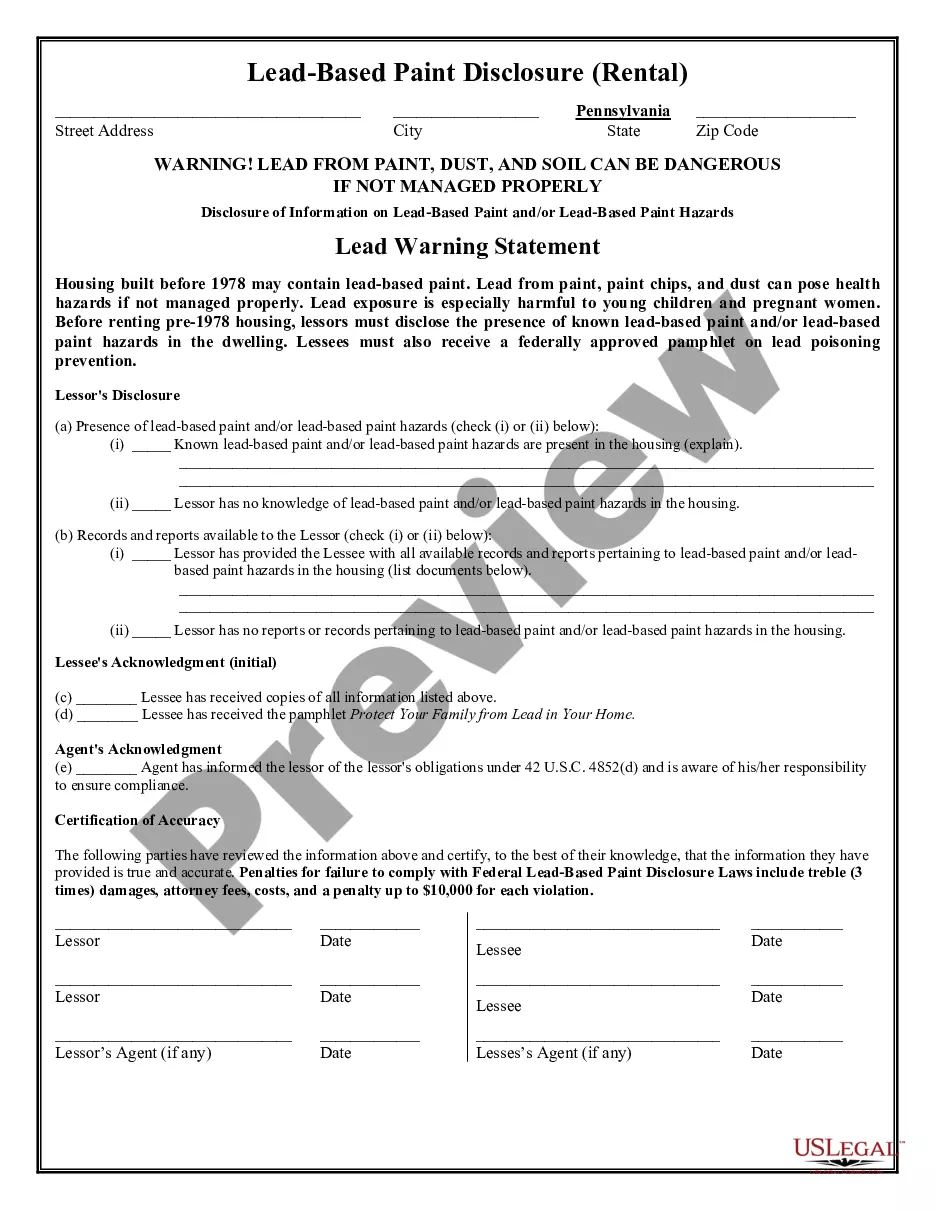
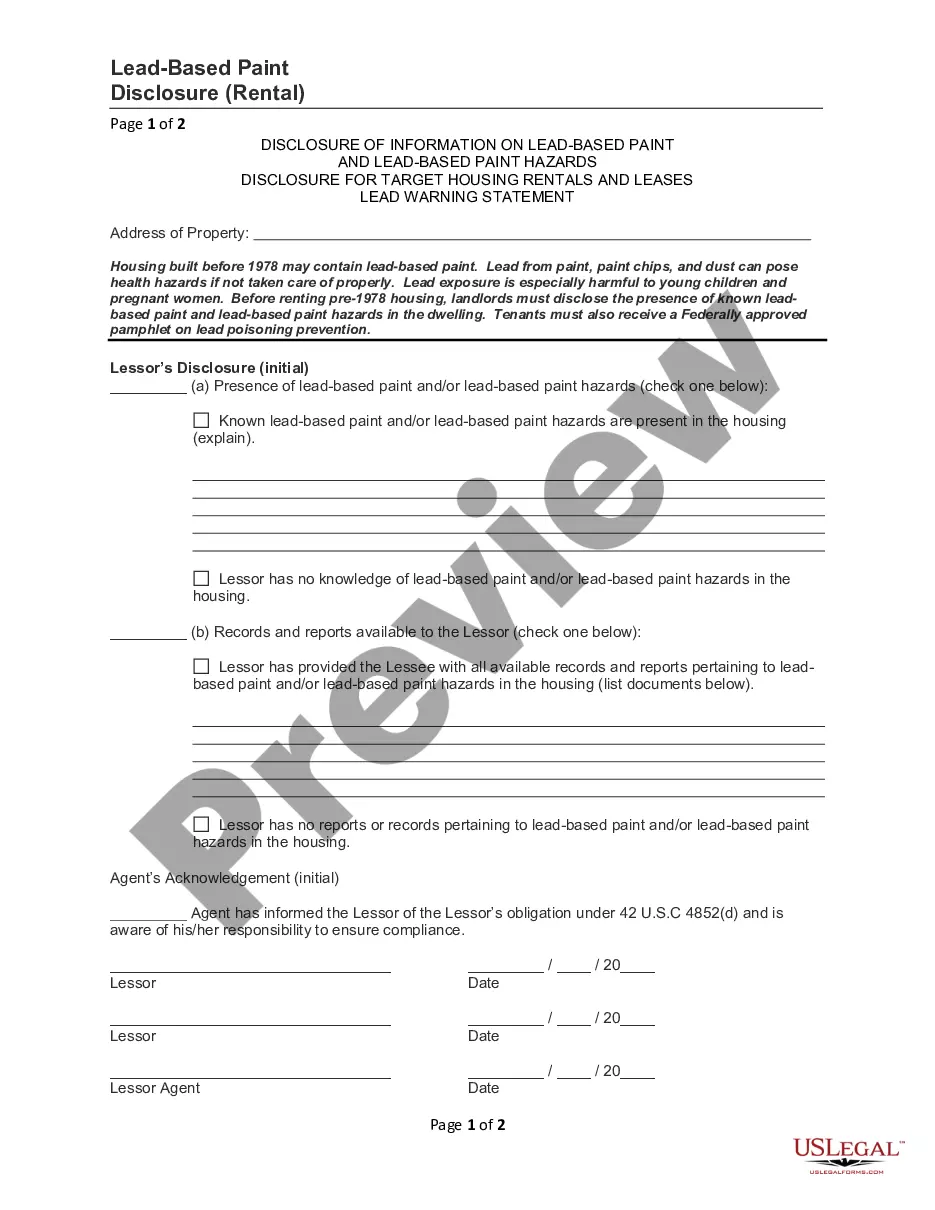
The Lead Based Paint Disclosure for Rental Transaction is a required document for renting residential properties built before 1978. This form ensures that landlords inform tenants about the presence of lead-based paint and any associated hazards, promoting safety for occupants, especially children and pregnant women. Unlike general rental agreements, this specific disclosure addresses health risks linked to older housing units, making it essential for compliance with federal laws.
What’s included in this form
- Property Address: Details of the rental unit, including street address, city, state, and zip code.
- Lead Warning Statement: A statement warning about the risks associated with lead exposure.
- Disclosure of Information: Sections for landlords to disclose known lead-based paint hazards or the absence of such knowledge.
- Record Availability: A clause to document if any records regarding lead hazards are provided by the landlord.
- Tenant Acknowledgment: Acknowledgment by tenants that they have received necessary information and the EPA pamphlet on lead safety.
- Certification of Accuracy: Signature fields for the landlord and tenant, along with the date, to validate the information disclosed.
When this form is needed
This form should be used whenever a rental property constructed before 1978 is being leased. It is crucial to complete this disclosure in scenarios where landlords and potential tenants enter into a rental agreement, ensuring that tenants are aware of any possible health risks from lead exposure. This form is not necessary for properties built in 1978 or later.
Who this form is for
- Landlords or lessors renting residential properties built before 1978.
- Tenants or lessees entering into rental agreements for older properties.
- Real estate agents involved in the rental transaction.
How to prepare this document
- Identify the property: Fill out the street address, city, state, and zip code of the rental unit.
- Provide the lead warning statement: Ensure the tenant is cautioned about the potential lead hazards associated with the property.
- Disclosure section: Indicate whether any known lead-based paint or hazards are present or state that the landlord has no knowledge of such issues.
- Document record availability: Check whether all available records regarding lead-based paint hazards have been provided to the tenant.
- Tenant acknowledgment: Ensure the tenant initials to confirm they received all necessary documents and the EPA pamphlet.
- Signature and dates: All parties must sign and date to certify the accuracy of the information provided.
Is notarization required?
Notarization is not commonly needed for this form. However, certain documents or local rules may make it necessary. Our notarization service, powered by Notarize, allows you to finalize it securely online anytime, day or night.
Get your form ready online
Our built-in tools help you complete, sign, share, and store your documents in one place.
Make edits, fill in missing information, and update formatting in US Legal Forms—just like you would in MS Word.
Download a copy, print it, send it by email, or mail it via USPS—whatever works best for your next step.
Sign and collect signatures with our SignNow integration. Send to multiple recipients, set reminders, and more. Go Premium to unlock E-Sign.
If this form requires notarization, complete it online through a secure video call—no need to meet a notary in person or wait for an appointment.
We protect your documents and personal data by following strict security and privacy standards.

Make edits, fill in missing information, and update formatting in US Legal Forms—just like you would in MS Word.

Download a copy, print it, send it by email, or mail it via USPS—whatever works best for your next step.

Sign and collect signatures with our SignNow integration. Send to multiple recipients, set reminders, and more. Go Premium to unlock E-Sign.

If this form requires notarization, complete it online through a secure video call—no need to meet a notary in person or wait for an appointment.

We protect your documents and personal data by following strict security and privacy standards.
Common mistakes
- Failing to complete the form for properties built before 1978.
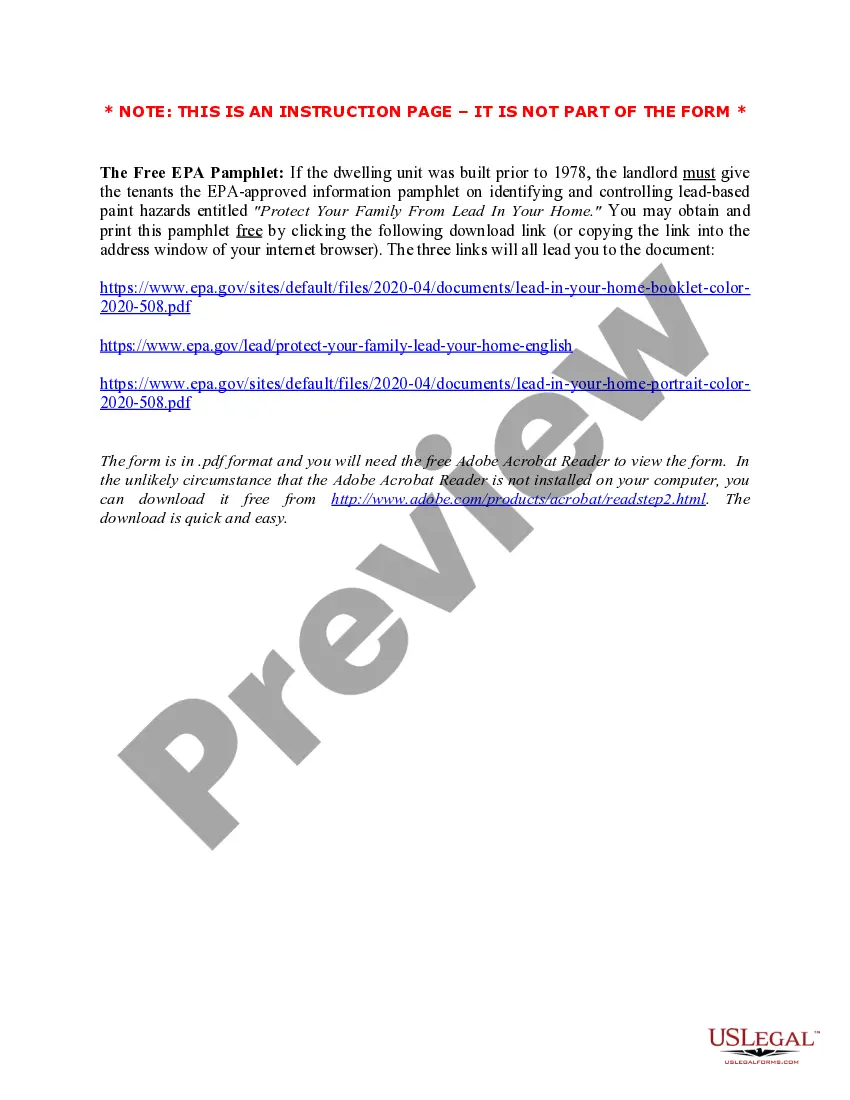
- Not providing the EPA pamphlet to the tenant.
- Landlords not signing the disclosure, which can lead to legal consequences.
- Incorrectly stating knowledge of lead-based paint hazards.
Advantages of online completion
- Convenience of downloading and printing the form at your convenience.
- Editable fields allow for customization to fit specific rental situations.
- Reliable templates drafted by licensed attorneys ensure compliance with legal requirements.
Looking for another form?

Form popularity
FAQ
Federal law requires you to provide certain important information about lead-based paint and/or lead-based paint hazards before a prospective buyer is obligated under a contract to purchase your home.Inform the seller of his or her obligations under the Real Estate Notification and Disclosure Rule.
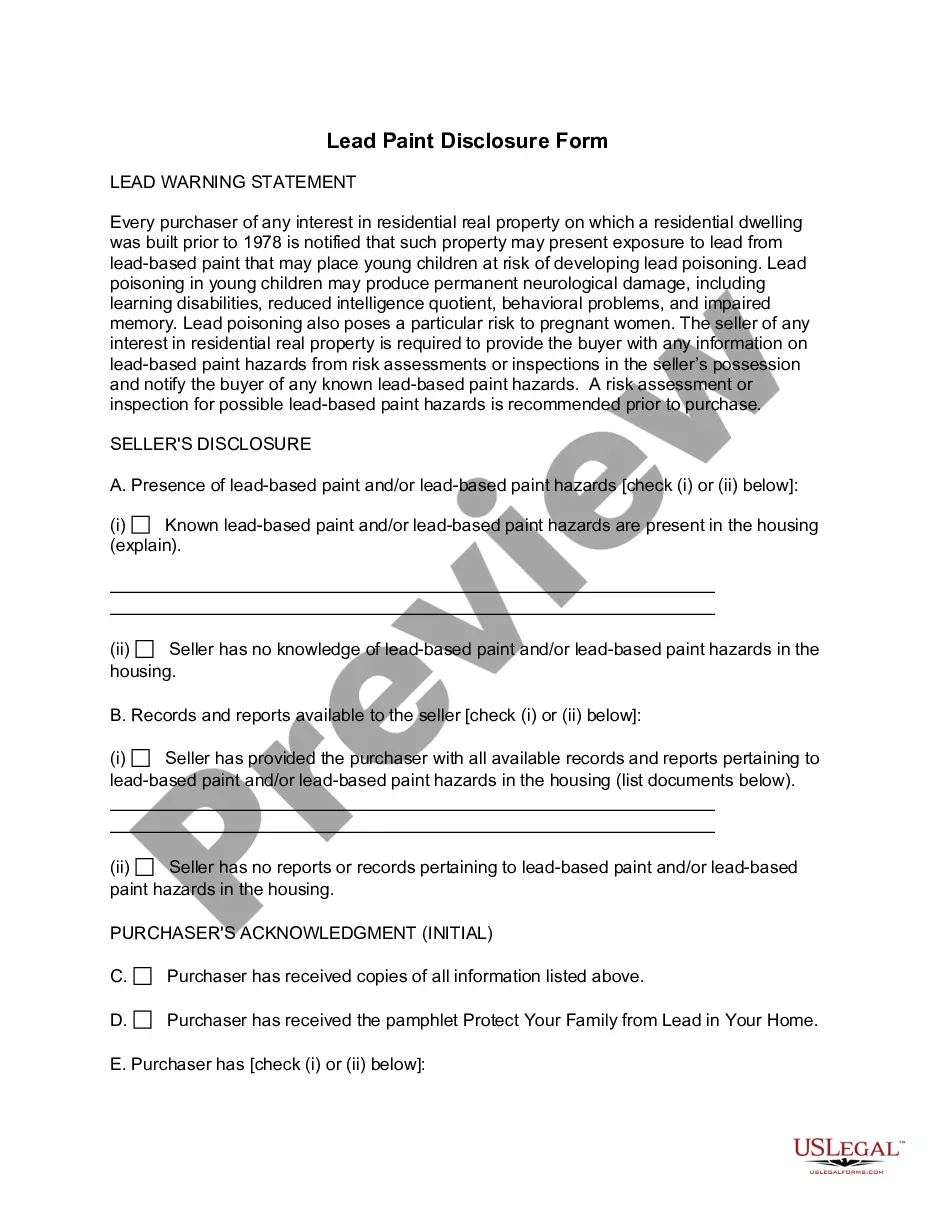
The seller of any interest in residential real property is required to provide the buyer with any information on lead-based paint hazards from risk assessments or inspections in the seller's possession and notify the buyer of any known lead-based paint hazards.
Immediately clean up any paint chips you find. Keep play areas clean. Don't let children chew on painted surfaces. Clean dust off of window sills and other surfaces on a regular basis, using a sponge, mop, or paper towels with warm water.
Under the Disclosure Rule, any seller or landlord must disclose information concerning lead-based paint and/or lead-based paint hazards when selling or leasing to any prospective purchaser or tenant of residential housing. The residential housing covered by the Disclosure Rule are those units built before 1978.
The lead-based paint disclosure form is a required form to be issued to all tenants and potential buyers for residential properties built before 1978.The forms were written to warn any new owners or tenants of the potential existence of this within the interior walls of the residence.
The Rule states that if an agent is involved in a transaction to sell target housing, the "Lead Warning Statement" must include a statement signed by the agent that the agent has informed the seller of the seller's legal obligations and that the agent is aware of his/her duty to ensure compliance with the Rule.