California Lead Based Paint Disclosure for Rental Transaction
About this form
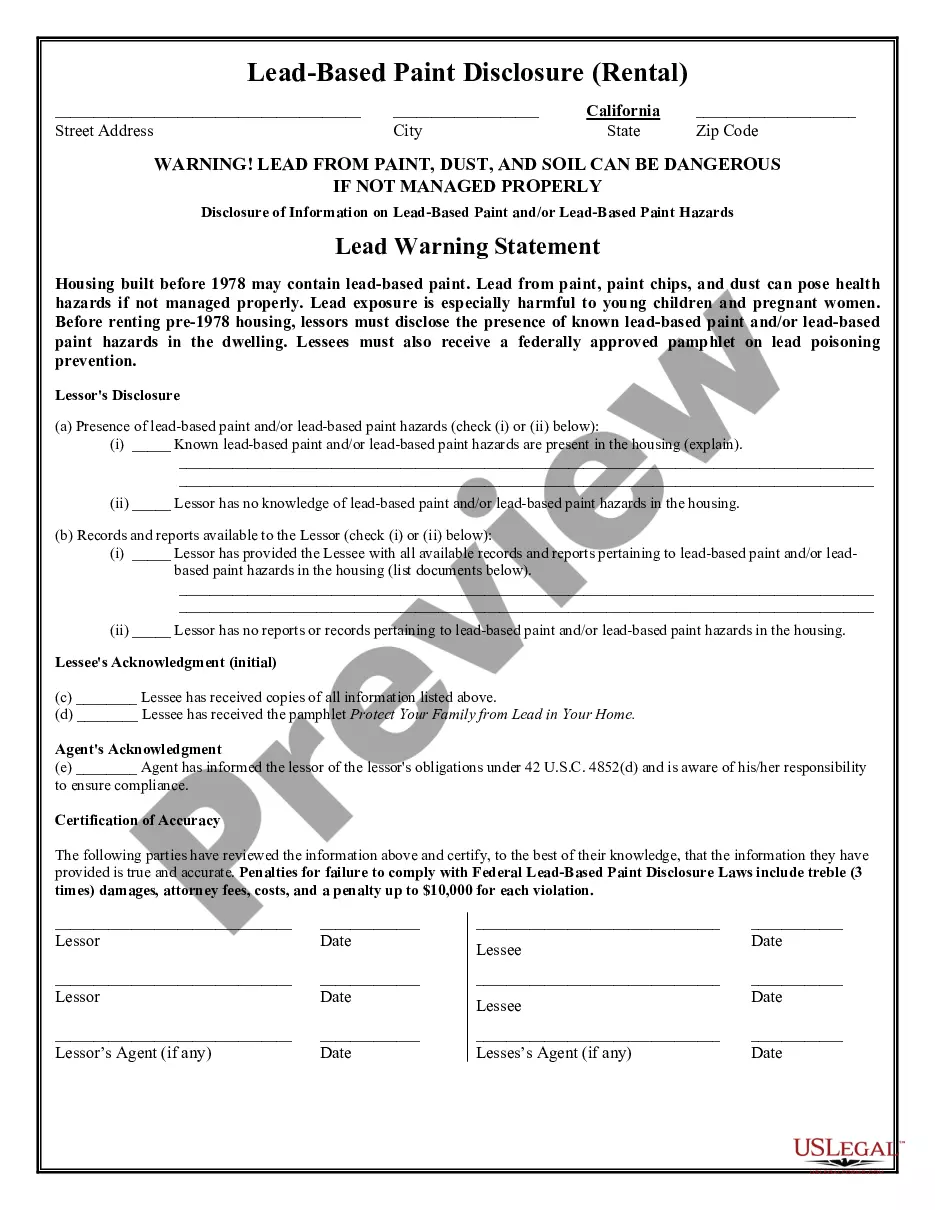
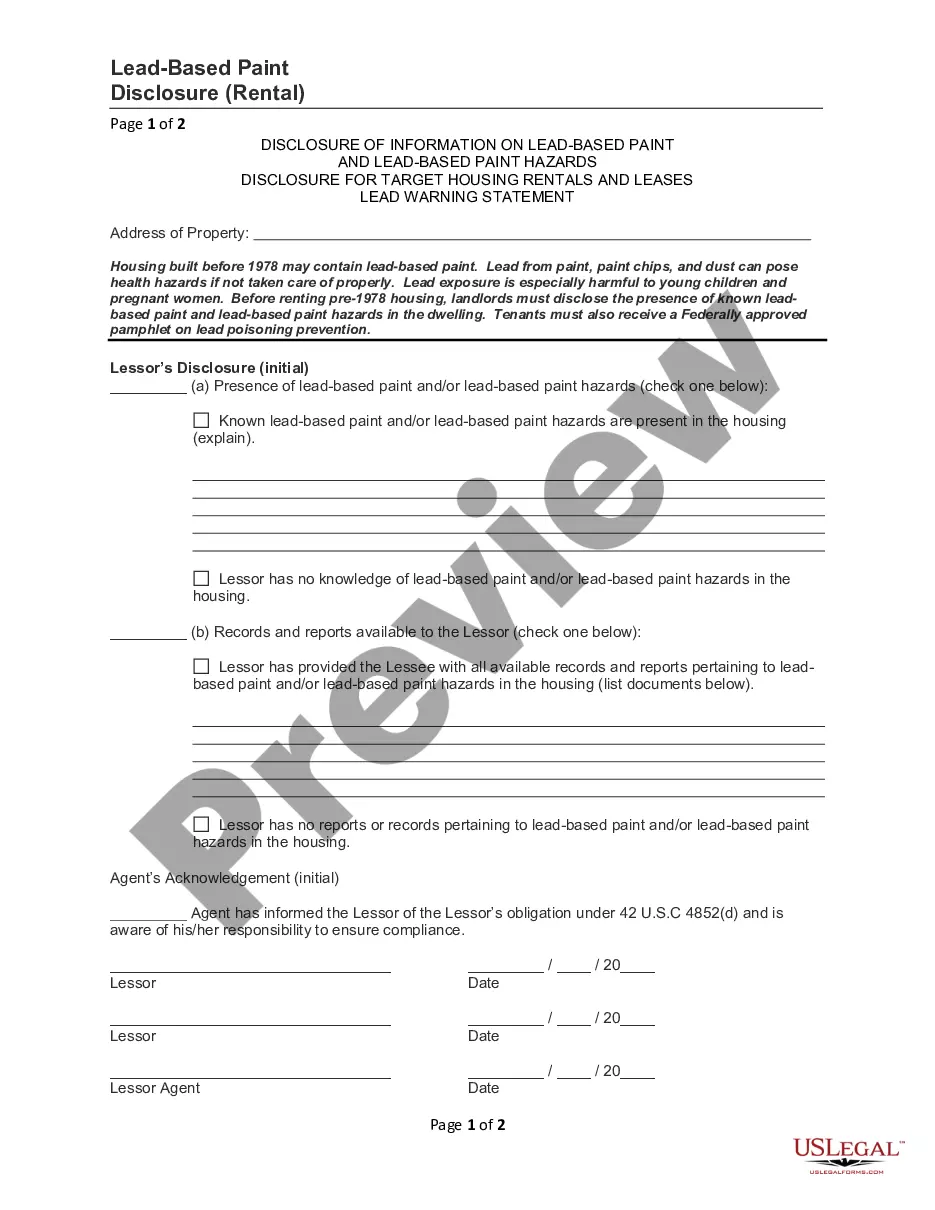
The Lead Based Paint Disclosure for Rental Transaction is a legal document required for landlords renting residential properties built before 1978. This form confirms whether lead-based paint or hazards exist in the dwelling, protecting tenants, especially children and pregnant women, from potential health risks. It differs from other rental agreements by specifically addressing concerns related to lead exposure, which is particularly significant in older homes.
Form components explained
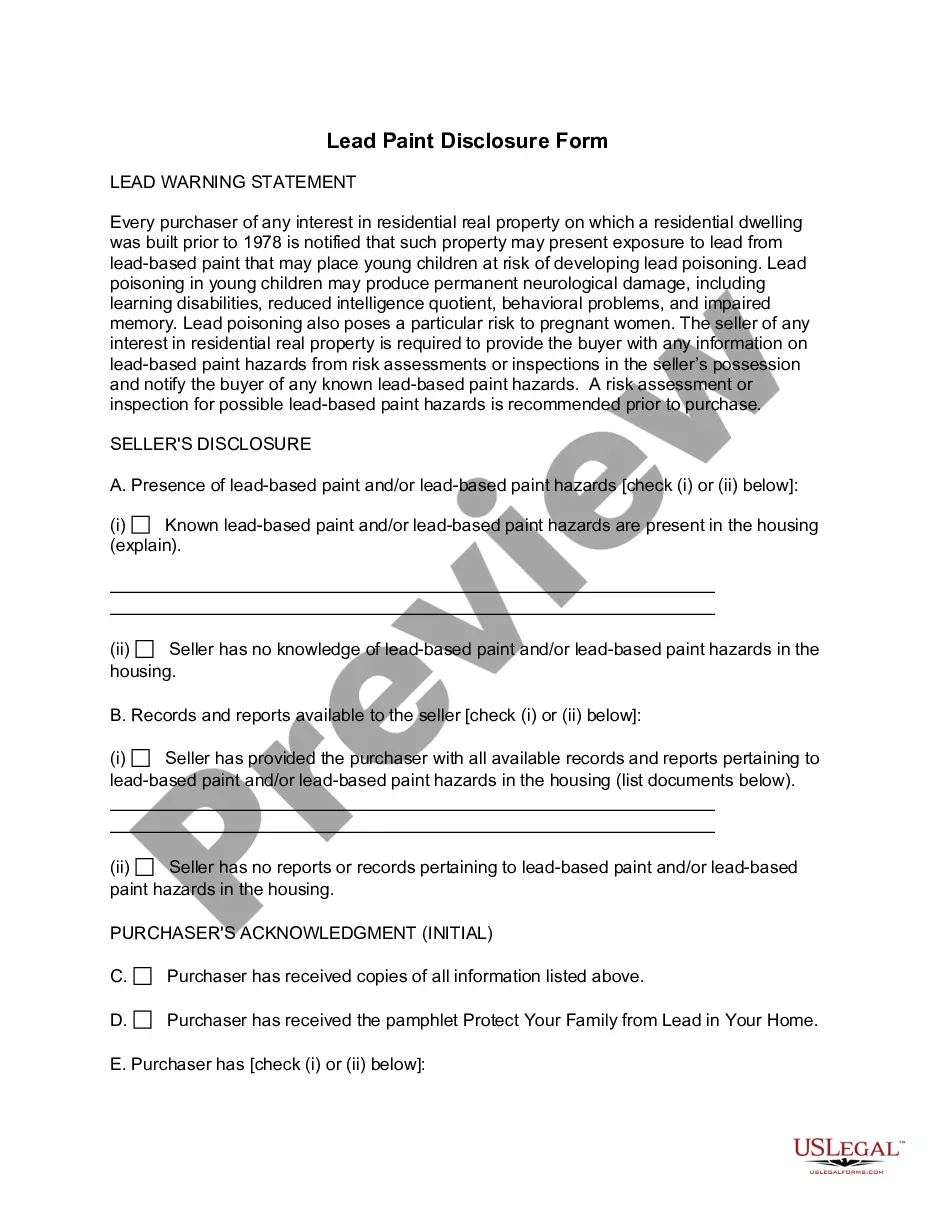
- Lead warning statement regarding the risks associated with lead-based paint.
- Disclosure of known lead-based paint and/or hazards present in the property.
- Records and reports related to lead exposure provided by the landlord.
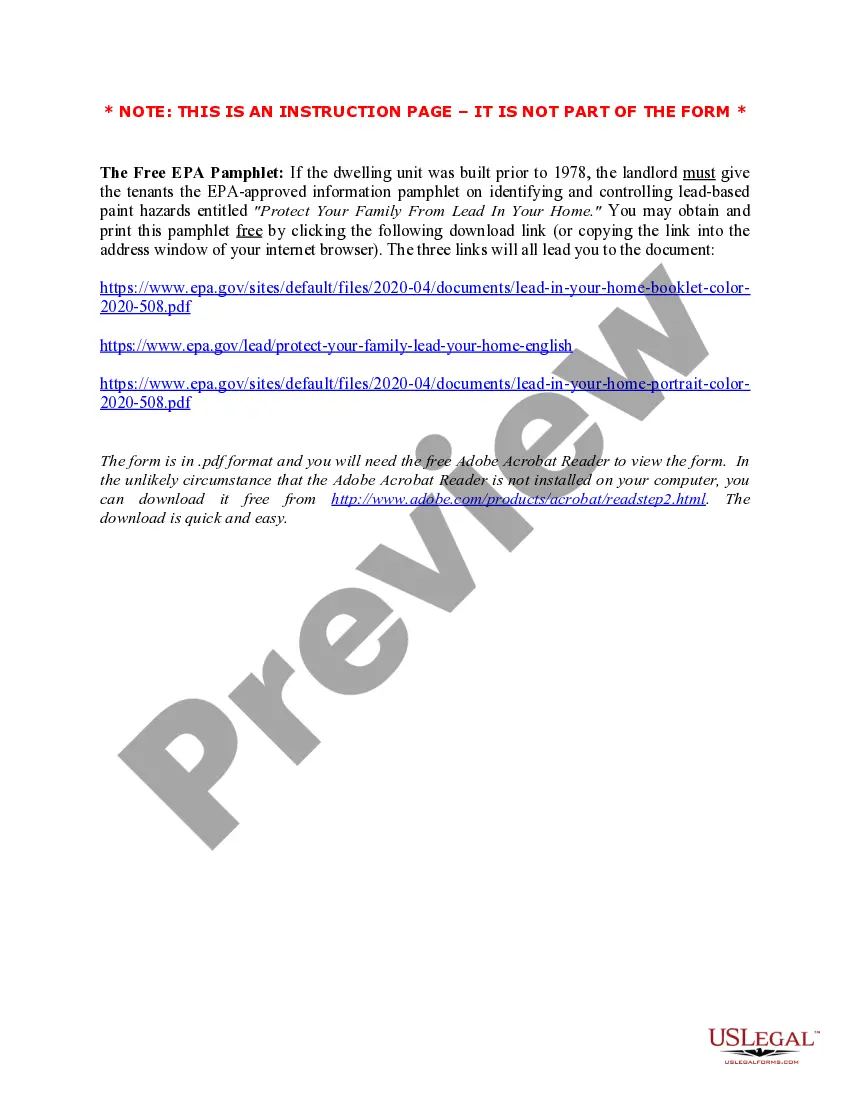
- Tenant acknowledgment of received information and EPA pamphlet.
- Certification of accuracy confirming the truthfulness of the information provided.
When this form is needed
This form is essential whenever a landlord rents a residential property constructed before 1978. It should be utilized during the rental agreement process to inform tenants of lead-based paint risks, ensuring compliance with federal regulations. It is particularly important in urban areas where older buildings are more common.
Intended users of this form
- Landlords or property managers renting residential units built before 1978.
- Tenants considering a lease for older residential properties.
- Agents representing landlords or tenants in the leasing process.
Instructions for completing this form
- Identify the parties involved: the landlord (lessor) and tenant (lessee).
- Specify the property address and ensure it's accurate.
- Check the appropriate boxes indicating the presence or absence of lead-based paint hazards.
- Provide any relevant records and reports concerning lead-based paint.
- Ensure both parties sign and date the form to finalize the agreement.
Does this document require notarization?
This form does not typically require notarization unless specified by local law. However, it is essential to ensure that all parties fully understand the document's contents and implications.
Get your form ready online
Our built-in tools help you complete, sign, share, and store your documents in one place.
Make edits, fill in missing information, and update formatting in US Legal Forms—just like you would in MS Word.
Download a copy, print it, send it by email, or mail it via USPS—whatever works best for your next step.
Sign and collect signatures with our SignNow integration. Send to multiple recipients, set reminders, and more. Go Premium to unlock E-Sign.
If this form requires notarization, complete it online through a secure video call—no need to meet a notary in person or wait for an appointment.
We protect your documents and personal data by following strict security and privacy standards.

Make edits, fill in missing information, and update formatting in US Legal Forms—just like you would in MS Word.

Download a copy, print it, send it by email, or mail it via USPS—whatever works best for your next step.

Sign and collect signatures with our SignNow integration. Send to multiple recipients, set reminders, and more. Go Premium to unlock E-Sign.

If this form requires notarization, complete it online through a secure video call—no need to meet a notary in person or wait for an appointment.

We protect your documents and personal data by following strict security and privacy standards.
Common mistakes to avoid
- Failing to disclose known lead-based paint hazards.
- Not providing the required EPA pamphlet to the tenant.
- Inaccurately completing the certification of accuracy section.
- Not ensuring both parties sign and date the document.
Advantages of online completion
- Quick and easily accessible legal form.
- Editable to include specific property details and conditions.
- Reliable and compliant with current federal regulations.
- Downloadable and printable for immediate use.
Legal use & context
- This form serves to protect both landlords and tenants from potential legal repercussions related to lead exposure.
- Failure to comply with lead disclosure laws can result in significant penalties for landlords, including monetary fines.
Main things to remember
- The form is mandatory for rentals in properties built before 1978.
- Landlords must disclose any known lead-based hazards to their tenants.
- Providing the EPA pamphlet is a crucial part of this process.
Looking for another form?

Form popularity
FAQ
In most situations, it is the responsibility of property owners to test for lead-based paint if the property is built before 1978. However, tenants can also request such testing if there are concerns about potential lead hazards. Addressing lead presence proactively benefits both parties and aligns with the compliance standards of the California Lead Based Paint Disclosure for Rental Transaction.
Typically, the landlord or property manager is responsible for providing the lead paint disclosure to the tenants. This disclosure must be given before the lease agreement is finalized, allowing tenants ample time to review the information. Utilizing resources like uslegalforms helps landlords easily generate compliant lead paint disclosure forms, ensuring adherence to the California Lead Based Paint Disclosure for Rental Transaction guidelines.
based paint disclosure form is a document that provides essential information to renters about the presence of leadbased paint in a rental property. This form outlines any known lead hazards and encourages tenants to conduct their own assessment if necessary. Understanding this form is crucial, as it relates directly to the California Lead Based Paint Disclosure for Rental Transaction requirements, ensuring tenants are informed and protected.
The seller of the property carries the primary responsibility for complying with the EPA lead-based paint disclosure obligations. This includes providing the lead disclosure form to prospective tenants before the lease agreement is signed. By taking this step, the seller not only adheres to the law but also fosters transparency in the rental transaction regarding potential lead hazards, in accordance with California Lead Based Paint Disclosure for Rental Transaction.
In a rental transaction under California law, both the landlord and the tenant are required to sign the lead-based paint disclosure form. This signature acknowledges that the tenant has received information regarding the potential risks of lead-based paint in the rental property. It is essential for landlords to ensure that this form is signed to comply with the California Lead Based Paint Disclosure for Rental Transaction regulations.
For rental properties, the requirement to conduct a lead hazard evaluation is waived under the California Lead Based Paint Disclosure for Rental Transaction. However, landlords still must provide tenants with the necessary disclosures. This means the emphasis is on informing tenants rather than requiring costly evaluations.
based paint disclosure is necessary when renting any residential property built before 1978. The California Lead Based Paint Disclosure for Rental Transaction mandates that landlords inform tenants about potential lead hazards. Failing to disclose this information could result in legal complications, so it's vital to follow these regulations closely.
All rental units built before 1978 require providing tenants with a lead-based paint disclosure. This is a strict requirement as outlined in the California Lead Based Paint Disclosure for Rental Transaction. By ensuring compliance, landlords protect tenant health and avoid potential liabilities.
Lead-based paint disclosure is necessary for all rental units built before 1978, including single-family homes and apartment complexes. This compliance with the California Lead Based Paint Disclosure for Rental Transaction is crucial for ensuring tenant safety. Not providing this information could lead to significant legal repercussions.
When renting a house in California, landlords must provide several disclosures including the California Lead Based Paint Disclosure for Rental Transaction. Additionally, you may need to inform tenants about the property's condition, security deposits, and any known hazards. Keeping these disclosures transparent helps build trust and protects both parties.