Pennsylvania Living Trust Property Record
Understanding this form
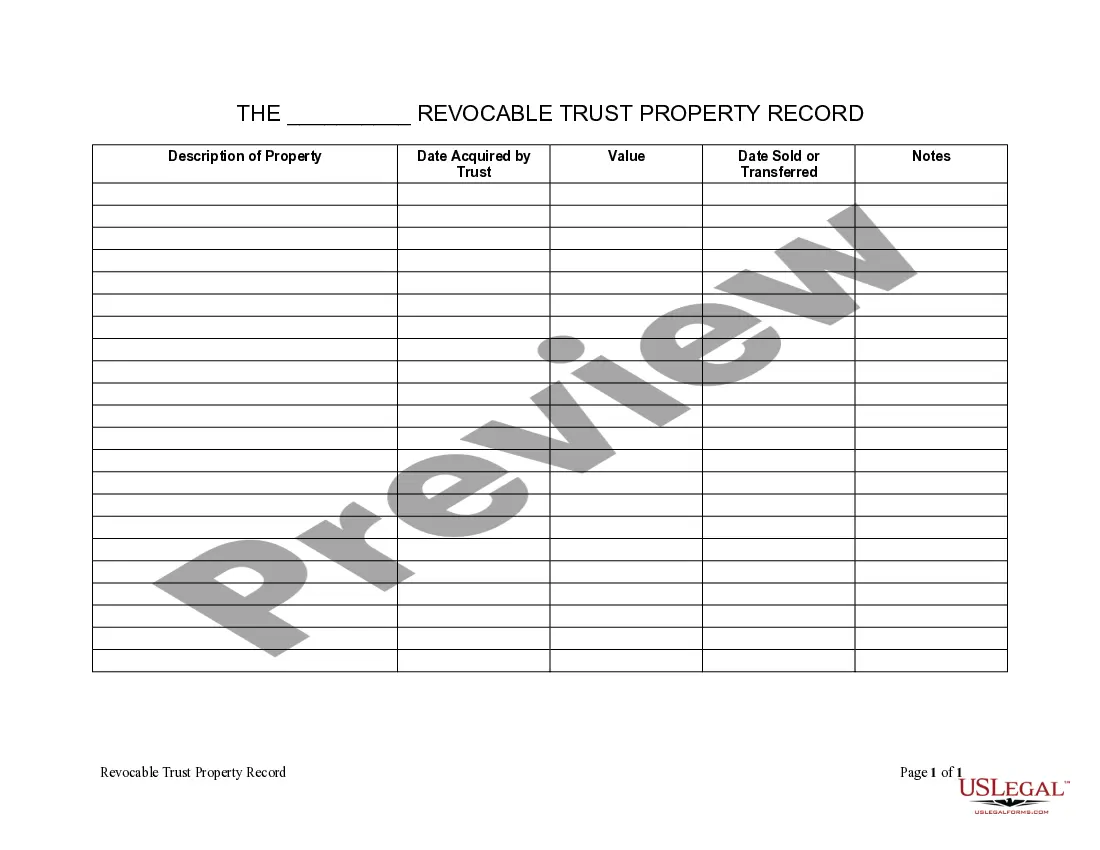
The Living Trust Property Record is a legal document used in estate planning to catalog assets held in a living trust. Unlike a standard inventory, this form allows a trustee to maintain a detailed account of all property, including real estate, personal items, and intellectual property. It is specifically designed to ensure clear and accurate tracking of trust assets, aiding in the management and distribution of these assets upon the trustor's passing.
Key components of this form
- Description of Property: Itemize each asset held in the trust.
- Date Acquired by Trust: Record when each asset was transferred into the trust.
- Value: Specify the current or appraised value of each asset.
- Date Sold or Transferred: Document when any asset is sold or handed over to beneficiaries.

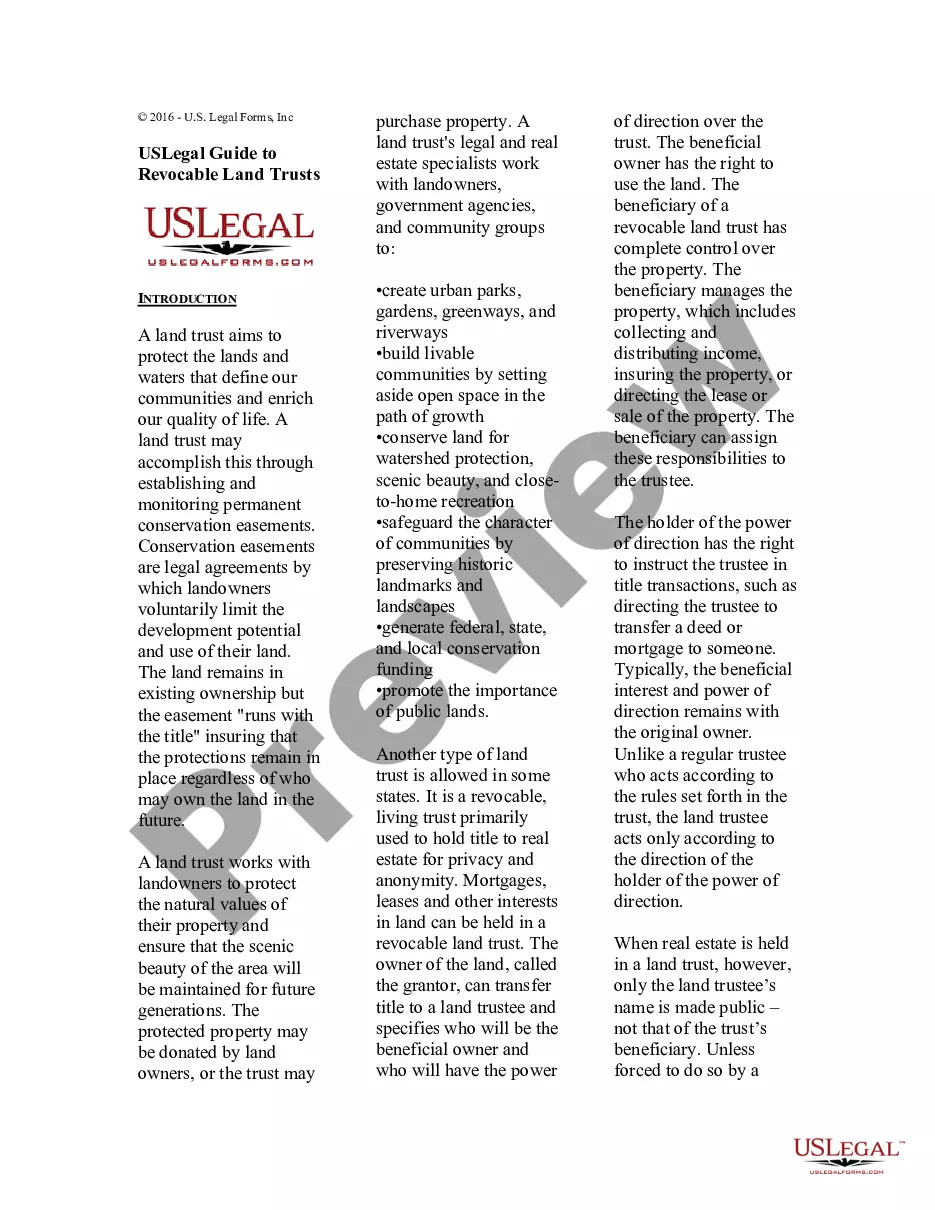
When to use this form
This form is useful when establishing a living trust or updating an existing one. It ensures that all assets are recorded for transparent management and distribution. Use this form if you are a trustee managing a trust and need to keep detailed records of its property for tax purposes or to ensure compliance with legal obligations.
Who can use this document
- Trustees managing a living trust.
- Individuals planning their estate and transferring assets into a trust.
- Beneficiaries seeking clarity on the trust's assets.
Completing this form step by step
- Gather a list of all assets intended to be placed in the trust.
- For each asset, provide a clear description and its value.
- Record the date each asset was acquired by the trust.
- If any asset has been sold or transferred, document the date of the transaction.
- Review the completed form for accuracy before finalizing it.
Notarization requirements for this form
Notarization is not commonly needed for this form. However, certain documents or local rules may make it necessary. Our notarization service, powered by Notarize, allows you to finalize it securely online anytime, day or night.
Get your form ready online
Our built-in tools help you complete, sign, share, and store your documents in one place.
Make edits, fill in missing information, and update formatting in US Legal Forms—just like you would in MS Word.
Download a copy, print it, send it by email, or mail it via USPS—whatever works best for your next step.
Sign and collect signatures with our SignNow integration. Send to multiple recipients, set reminders, and more. Go Premium to unlock E-Sign.
If this form requires notarization, complete it online through a secure video call—no need to meet a notary in person or wait for an appointment.
We protect your documents and personal data by following strict security and privacy standards.

Make edits, fill in missing information, and update formatting in US Legal Forms—just like you would in MS Word.

Download a copy, print it, send it by email, or mail it via USPS—whatever works best for your next step.

Sign and collect signatures with our SignNow integration. Send to multiple recipients, set reminders, and more. Go Premium to unlock E-Sign.

If this form requires notarization, complete it online through a secure video call—no need to meet a notary in person or wait for an appointment.

We protect your documents and personal data by following strict security and privacy standards.
Avoid these common issues
- Failing to include all assets or misidentifying property types.
- Not updating the form after changes, such as selling or transferring assets.
- Leaving out the date of acquisition or transfer for assets.
Why complete this form online
- Convenient access to a legally vetted form from anywhere.
- Time-saving download option, allowing for quick document preparation.
- Editable format ensures you can easily tailor the form to your specific needs.
Legal use & context
- The form is recognized legally in estate planning and trust management.
- It serves as an accountable record for asset management within trusts.
- Additionally, precise records help safeguard against disputes during estate distribution.
Looking for another form?
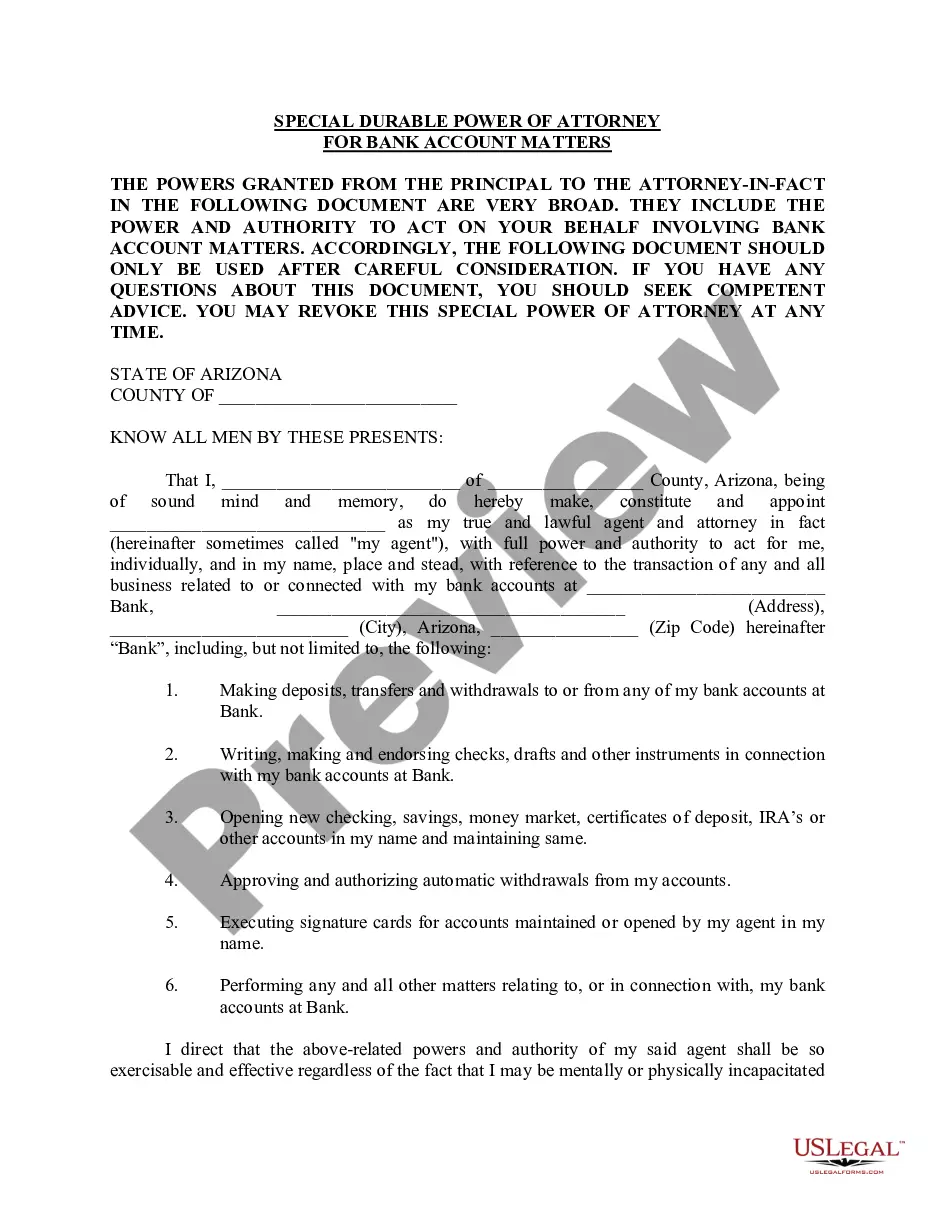
Form popularity
FAQ
Trusts are private documents and they typically remain private even after someone dies. The only way to obtain a copy of the Trust is to demand a copy from the Trustee (or whoever has a copy of the documents, if not the Trustee).
In California, a trust does not have to be recorded to be legal unless it holds title on real estate. If a trust does not hold title on real estate property, all assets held in the name of the trust are kept private. The trustee maintains a record of all trust property in a trust portfolio.
A trust is not considered confidential when the trustee is given discretion to provide statements to beneficiaries.However, families establishing irrevocable trusts to transfer wealth worry about the impact access to large sums of wealth could have on their beneficiaries.
If you can't find original living trust documents, you can contact the California Bar Association for assistance. Trusts aren't recorded anywhere, so you can't go to the County Recorder's office in the courthouse to ask to see a copy of the trust.
Trusts aren't public record, so they're not usually recorded anywhere. Instead, the trust attorney determines who is entitled to receive a copy of the document, even if state law doesn't require it.
Sometimes you can locate the family trust name in documents under the family name in the grantor/grantee index. Search the family trust name. After identifying the trust name, search for it in other documents at the clerk and recorder's office, such as in liens, mortgages, real property deeds and judgments.
Legally your Trust now owns all of your assets, but you manage all of the assets as the Trustee. This is the essential step that allows you to avoid Probate Court because there is nothing for the courts to control when you die or become incapacitated.
The owner, trustee and lender information is located under Contact Information of the Property Details page. RealtyTrac usually lists the names of the parties involved on the property, but if you have trouble contacting the owner, trustee or lender, below are some suggestions for tracking them down.
The recorder (or register) of deeds at the county courthouse is the usual stop to identify ownership. I'd start by telling that "trust manager" the purpose of your inquiry - to make a purchase offer on real estate held by the trust. He would know whether they are selling or holding it.