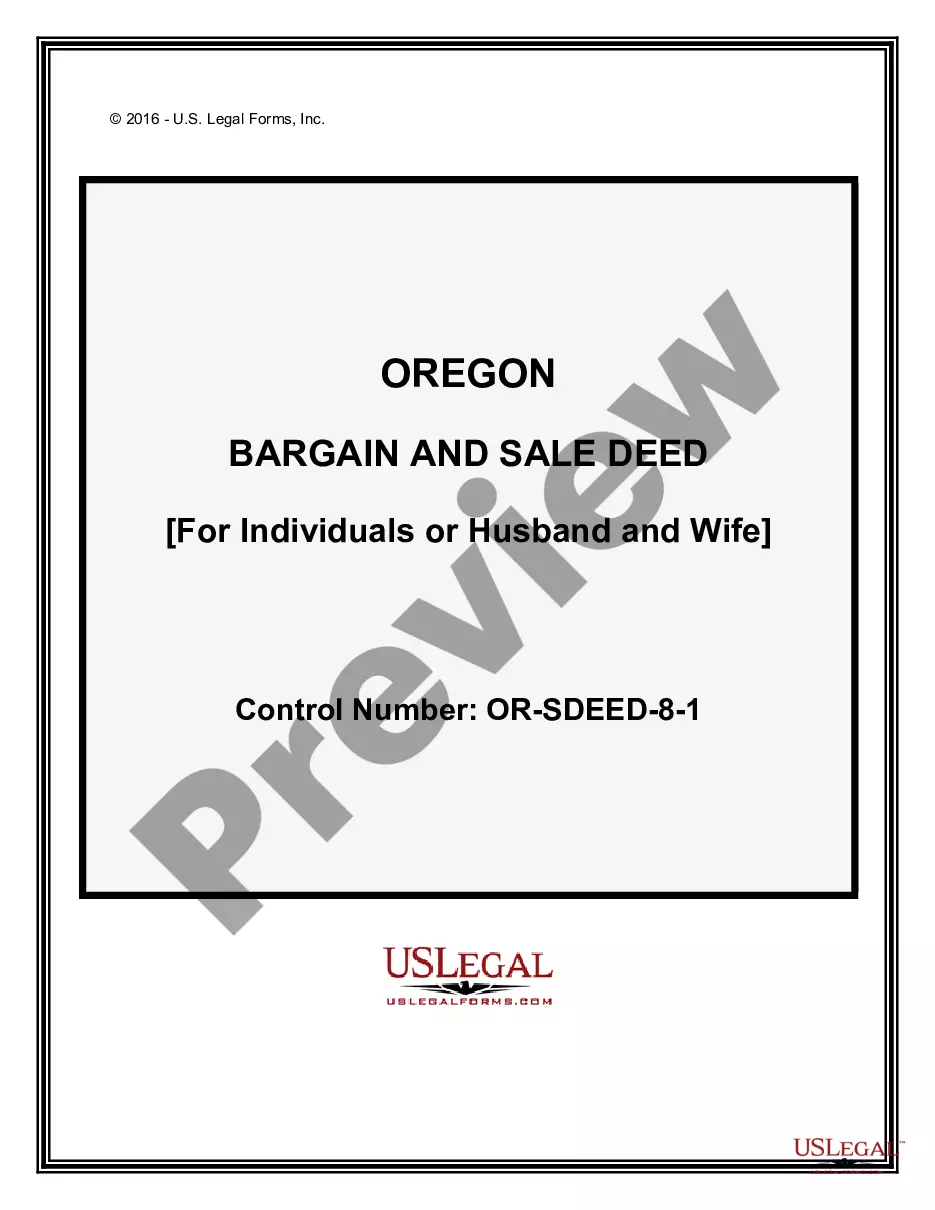
Oregon Bargain and Sale Deed for Individuals or Husband and Wife as Grantor
Overview of this form
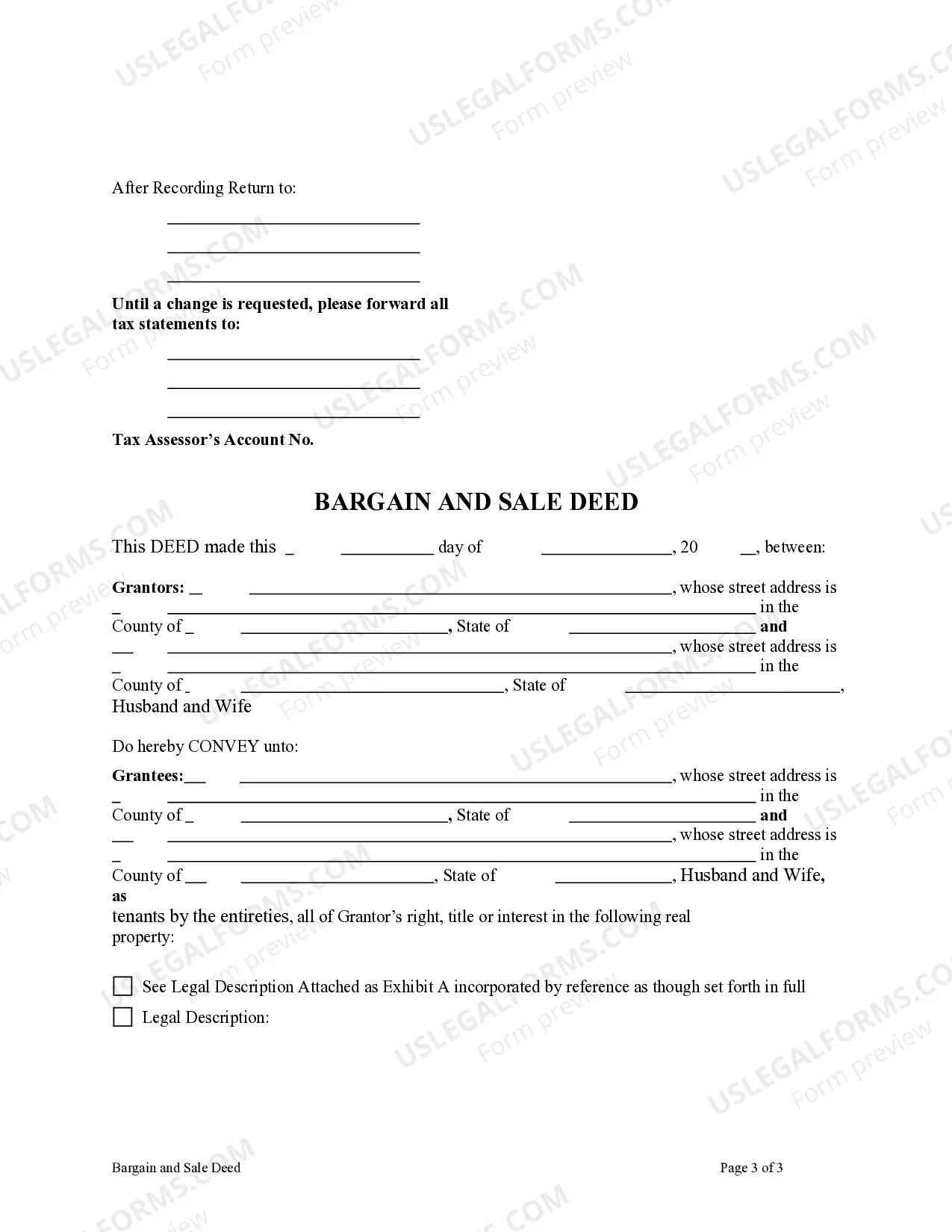
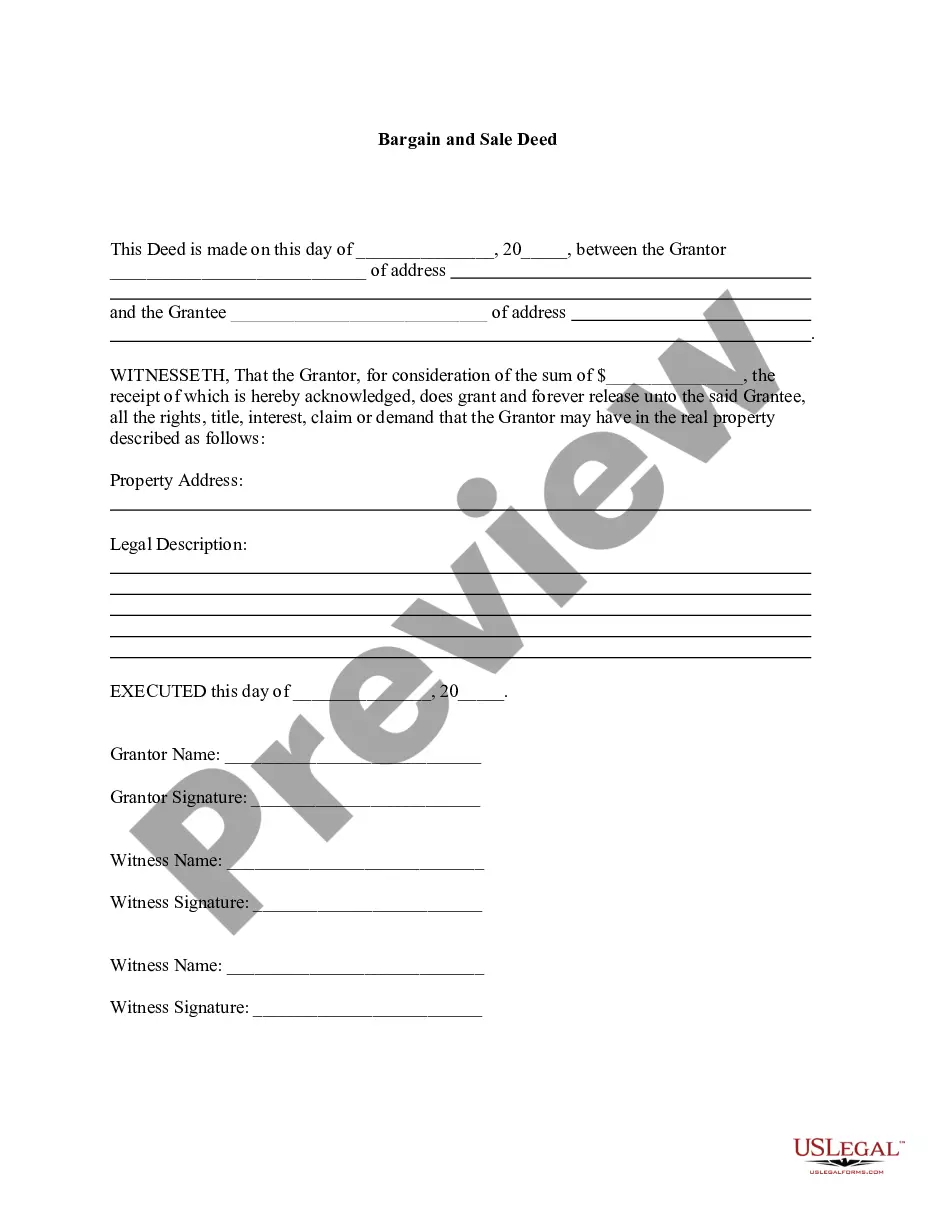
A Bargain and Sale Deed is a legal document used to transfer property ownership from one party to another, in this case, individuals or a married couple acting as grantors. This form indicates that the grantees hold title as joint tenants with the right of survivorship. This type of deed differs from warranty deeds by not guaranteeing any warranties for the propertyâs title, making it essential in situations where the grantor wishes to convey property without incurring further obligations or guarantees.
Form components explained
- Grantor: The individual or couple transferring ownership.
- Grantee: The person(s) receiving the ownership rights.
- Property Description: Detailed legal description of the property being transferred.
- Date: The date on which the deed is executed.
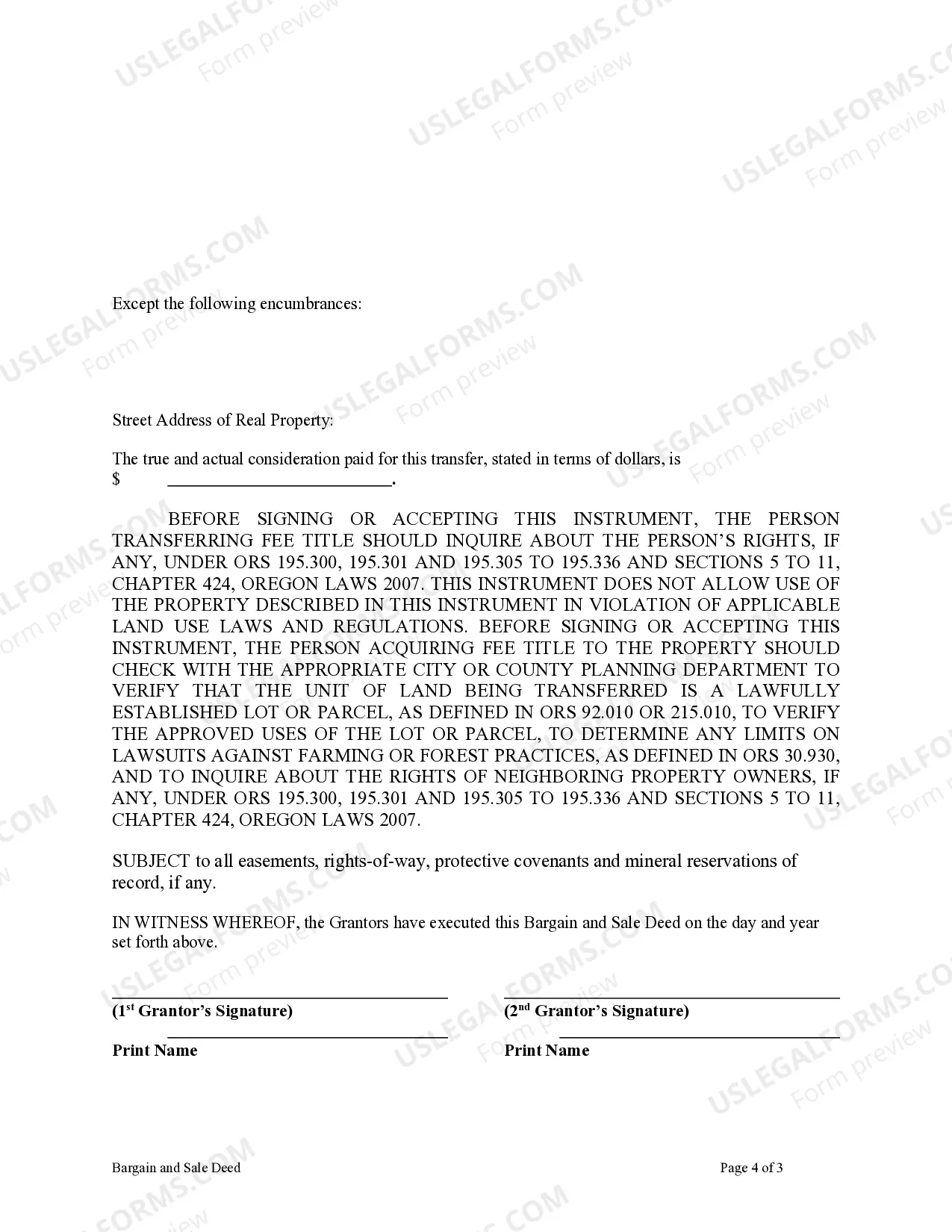
- Signatures: Required signatures from the grantors to validate the deed.
- Right of Survivorship Clause: Specifies that the surviving spouse or tenant retains ownership after the otherâs death.





Common use cases
This Bargain and Sale Deed should be used when individuals or a married couple wish to transfer property ownership without providing any warranty of the title. It is ideal in situations such as selling a property to a family member or a friend or conveying property within a trust or estate. Utilizing this form also helps simplify the transfer process while allowing for joint ownership rights to the new owners.
Who needs this form
- Individuals or married couples looking to transfer property ownership.
- Grantors who wish to convey property with limited legal obligations.
- Grantees seeking to hold title together with rights of survivorship.
- Estate planners managing property transfers within families.
How to prepare this document
- Identify the parties: Enter the full names of the grantors and grantees.
- Specify the property: Provide the complete legal description of the property being transferred.
- Enter the date: Note the date of the transfer at the defined location.
- Gather signatures: Ensure that all grantors sign the deed to finalize the transfer.
- Review the deed: Check all fields for accuracy and completeness before submission.
Is notarization required?
This form does not typically require notarization unless specified by local law. However, having the deed notarized can add an extra layer of verification and may be mandated in certain jurisdictions.
Get your form ready online
Our built-in tools help you complete, sign, share, and store your documents in one place.
Make edits, fill in missing information, and update formatting in US Legal Forms—just like you would in MS Word.
Download a copy, print it, send it by email, or mail it via USPS—whatever works best for your next step.
Sign and collect signatures with our SignNow integration. Send to multiple recipients, set reminders, and more. Go Premium to unlock E-Sign.
If this form requires notarization, complete it online through a secure video call—no need to meet a notary in person or wait for an appointment.
We protect your documents and personal data by following strict security and privacy standards.

Make edits, fill in missing information, and update formatting in US Legal Forms—just like you would in MS Word.

Download a copy, print it, send it by email, or mail it via USPS—whatever works best for your next step.

Sign and collect signatures with our SignNow integration. Send to multiple recipients, set reminders, and more. Go Premium to unlock E-Sign.

If this form requires notarization, complete it online through a secure video call—no need to meet a notary in person or wait for an appointment.

We protect your documents and personal data by following strict security and privacy standards.
Typical mistakes to avoid
- Not providing a full legal description of the property.
- Failing to obtain all necessary signatures from grantors.
- Leaving out the date of execution.
- Omitting the right of survivorship clause if applicable.
Benefits of using this form online
- Convenience of downloading and completing the form from anywhere.
- Editability of the form fields allows for quick corrections.
- Access to templates developed by licensed attorneys for enhanced reliability.
Main things to remember
- The Bargain and Sale Deed allows for joint tenancy with right of survivorship.
- Properly complete and notarize the form for validity.
- Check state-specific requirements before use.
Looking for another form?


Form popularity
FAQ
Buying property with this type of deed is not necessarily a bad idea, but it is advisable to take some precautions. If possible, a title search should be conducted to look for any clouds on the title and to see how difficult it would be to release them.
The quitclaim deed provides no warranties; it conveys the interest the grantor had in the propertynothing more.The bargain and sale deed indicates that the grantor has title; but property might come with encumbrances and defects.
Bargain and sale deeds are statutory in Oregon under ORS 93.860. A bargain and sale deed conveys the grantor's "entire interest in the described property at the date of the deed which the deed purports to convey" but does not provide covenants of title (ORS 93.860(2, 3)).
A quitclaim deed only transfers the grantor's interests in a piece of real estate. It does not create any warranties on the title.A warranty deed contains a guarantee that the grantor has legal title and rights to the real estate. A quitclaim deed offers little to no protection to the grantee.
Quitclaim deeds are most often used to transfer property between family members. Examples include when an owner gets married and wants to add a spouse's name to the title or deed, or when the owners get divorced and one spouse's name is removed from the title or deed.
Bargain and sale deeds are most often used when property is transferred after a foreclosure, tax sale, or the settlement of a deceased person's estate. They may also be used in the same situations as a quitclaim deed, although they give the grantee a little more protection.