Oklahoma Option to Purchase Package
Overview of this form package
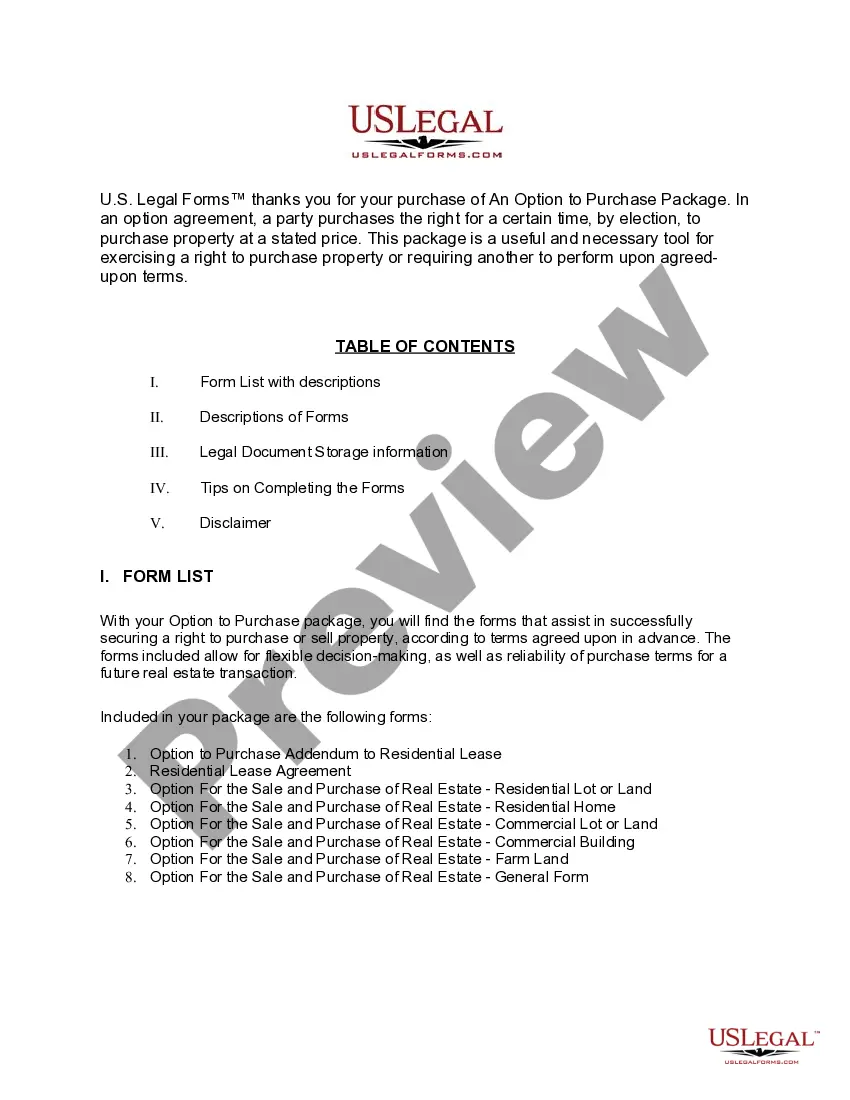
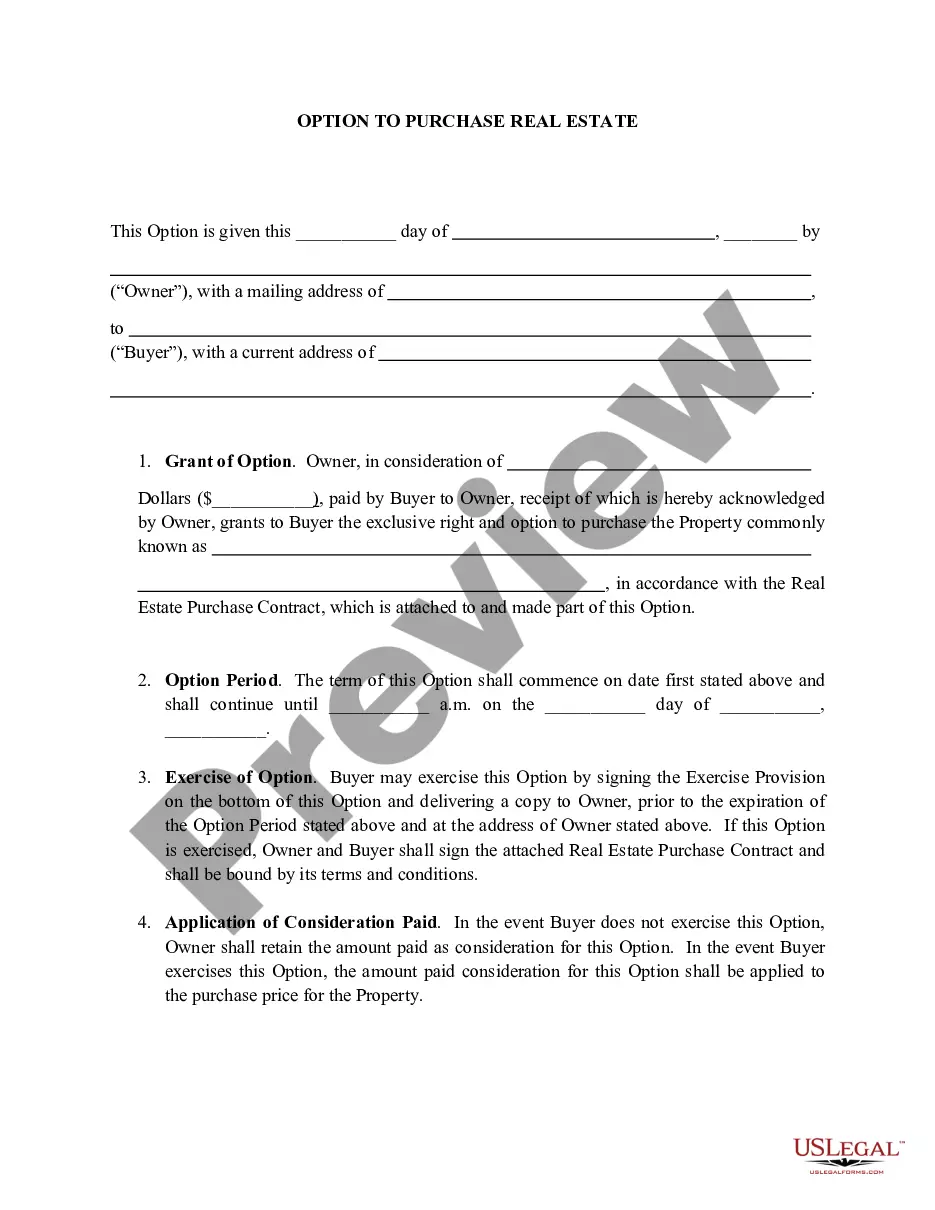
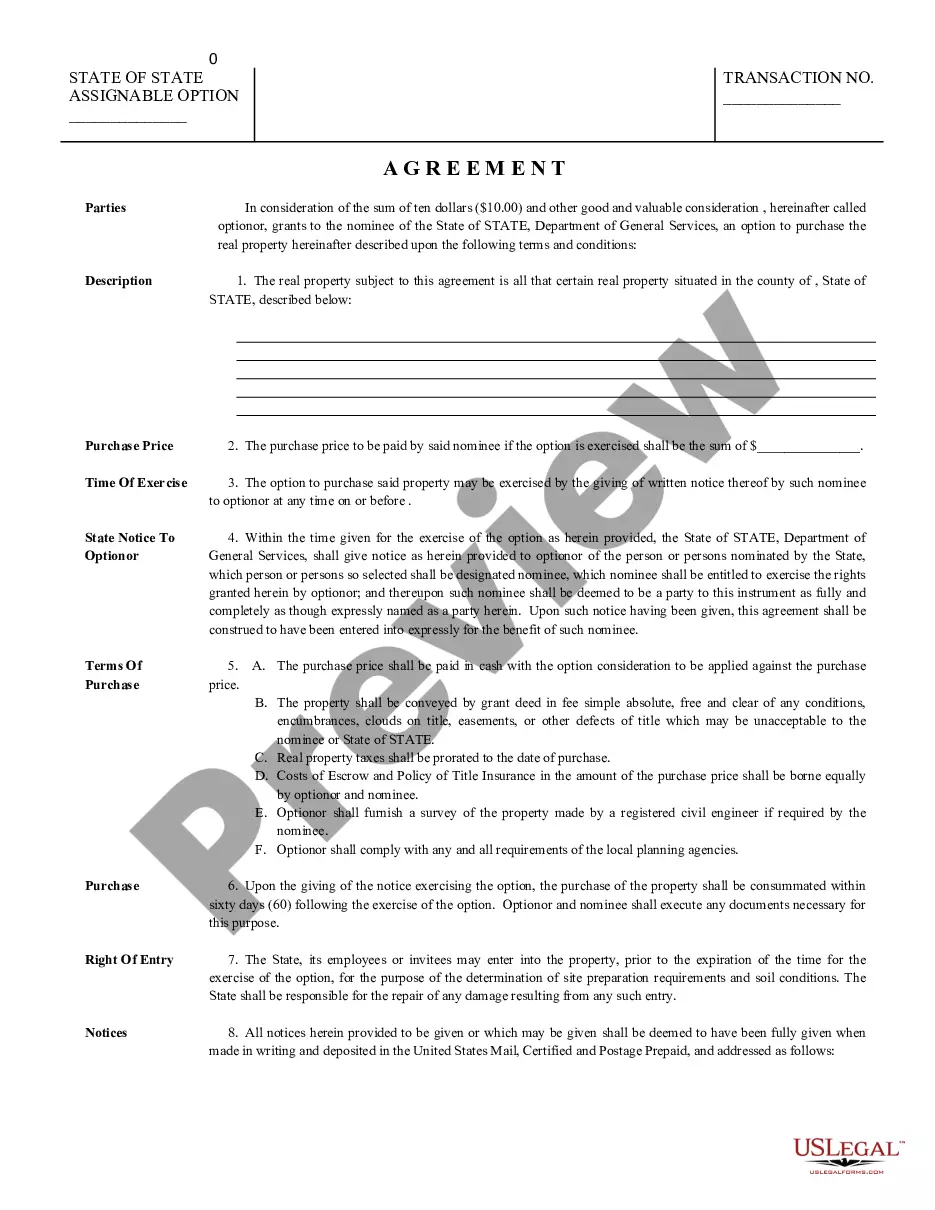
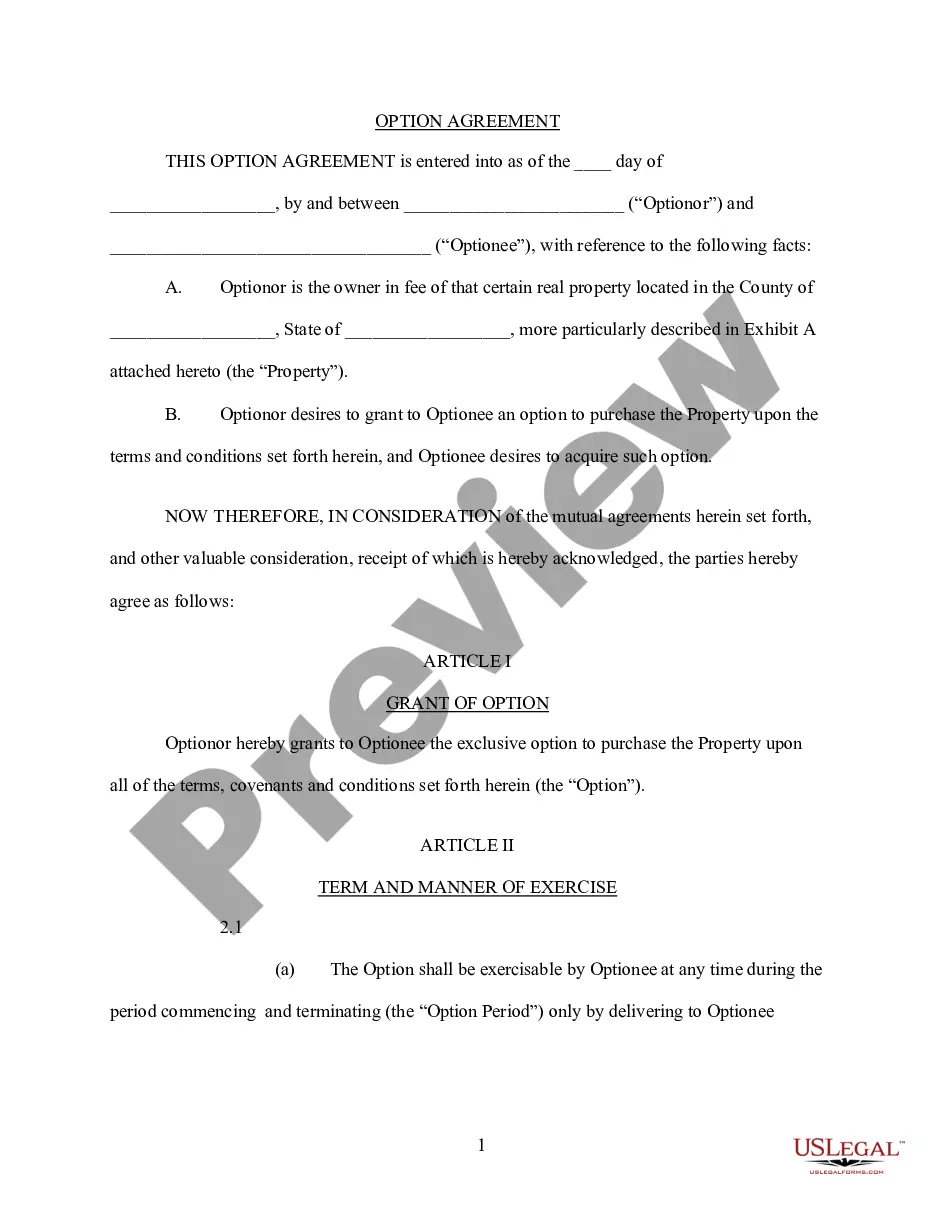
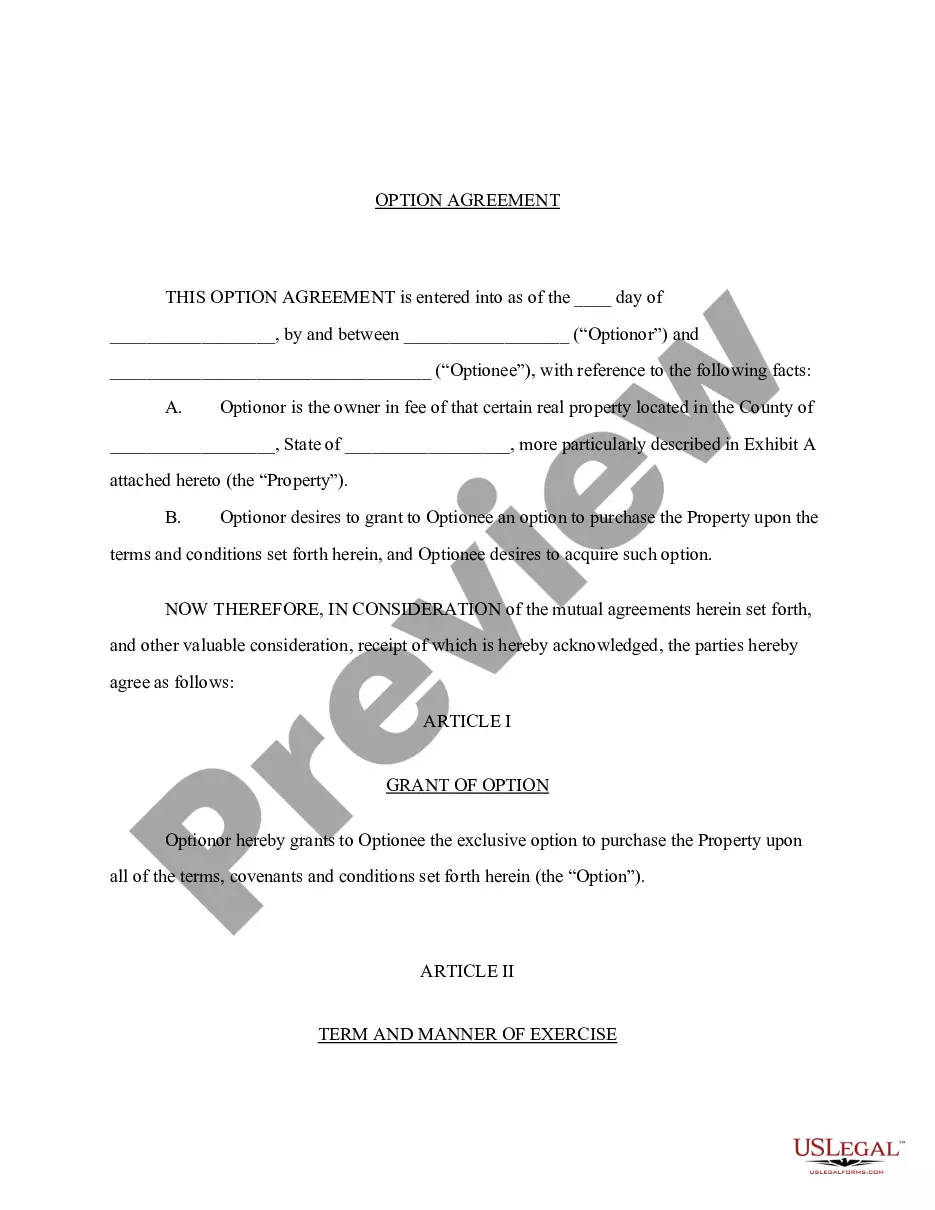
The Oklahoma Option to Purchase Package contains essential forms that allow individuals or entities to secure the right to purchase property under previously agreed-upon terms. This package is distinct from traditional purchase contracts, as it allows a party to reserve the option to buy property at a specified price within a set timeframe without obligating them to complete the purchase immediately. This flexibility can benefit both buyers and sellers in real estate transactions.
Forms included in this package
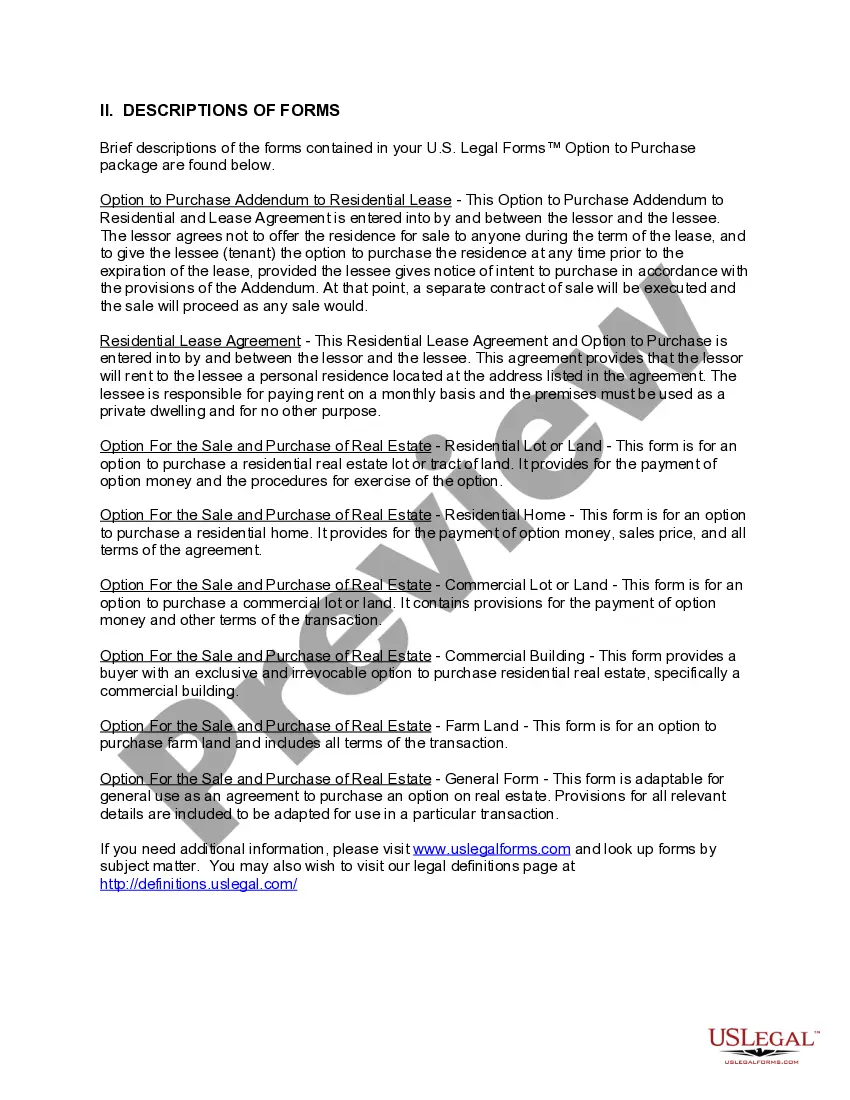
- Option to Purchase Addendum to Residential Lease - Lease or Rent to Own
- Residential Rental Lease Agreement
- Option For the Sale and Purchase of Real Estate - Residential Lot or Land
- Option For the Sale and Purchase of Real Estate - Residential Home
- Option For the Sale and Purchase of Real Estate - Commercial Lot or Land
- Option For the Sale and Purchase of Real Estate - Commercial Building
- Option For the Sale and Purchase of Real Estate - Farm Land
- Option For the Sale and Purchase of Real Estate - General Form
When to use this form package
This package should be used in the following situations:
- When a tenant wants to secure the option to purchase the property they are renting.
- When a buyer seeks to lock in the purchase price of a residential home, commercial property, or land.
- When real estate negotiations involve multiple offers and the seller wishes to offer potential buyers a chance to secure their option.
Who should use this form package
- Real estate investors looking for flexible investment options.
- Individuals entering a lease agreement who want the right to purchase the rental property.
- Landlords who wish to offer tenants the option to buy.
- Commercial property developers and buyers.
- Anyone looking to enter a real estate transaction with clear terms and conditions.
Instructions for completing these forms
- Review all included forms carefully to understand your rights and obligations.
- Identify the parties involved in the agreement and enter their details in the appropriate fields.
- Specify the property details, including address and description, in the forms provided.
- Enter the purchase price and any other terms that have been agreed upon.
- Have all parties sign the necessary documents to formalize the agreement.
Do forms in this package need to be notarized?
Some forms in this package require notarization to be legally valid. US Legal Forms provides secure online notarization powered by Notarize, allowing you to complete the process through a verified video call, available 24/7.
Get your form ready online
Our built-in tools help you complete, sign, share, and store your documents in one place.
Make edits, fill in missing information, and update formatting in US Legal Forms—just like you would in MS Word.
Download a copy, print it, send it by email, or mail it via USPS—whatever works best for your next step.
Sign and collect signatures with our SignNow integration. Send to multiple recipients, set reminders, and more. Go Premium to unlock E-Sign.
If this form requires notarization, complete it online through a secure video call—no need to meet a notary in person or wait for an appointment.
We protect your documents and personal data by following strict security and privacy standards.

Make edits, fill in missing information, and update formatting in US Legal Forms—just like you would in MS Word.

Download a copy, print it, send it by email, or mail it via USPS—whatever works best for your next step.

Sign and collect signatures with our SignNow integration. Send to multiple recipients, set reminders, and more. Go Premium to unlock E-Sign.

If this form requires notarization, complete it online through a secure video call—no need to meet a notary in person or wait for an appointment.

We protect your documents and personal data by following strict security and privacy standards.
Common mistakes to avoid
- Failing to specify the duration of the option period.
- Not clearly stating the purchase price or potential changes to it.
- Leaving out important parties or signatures on the forms.
- Ignoring local regulations that may affect the transaction.
Why complete this package online
- Convenience of downloading forms immediately for personal use.
- Editable formats that allow tailored terms to suit individual circumstances.
- Access to legally vetted documents created by licensed attorneys, ensuring reliability.
Looking for another form?
Form popularity
FAQ
A lease-option is a contract in which a landlord and tenant agree that, at the end of a specified period, the renter can buy the property. The tenant pays an up-front option fee and an additional amount each month that goes toward the eventual down payment.
A lease-option-to-buy arrangement can be a solution for some potential homebuyers, but it's not right for everyone. If you're not certain that you're going to be able to purchase the rental home at the end of the lease period, you might be better served with a standard rental agreement.
Typically, the seller grants the buyer an option to purchase the property based on the terms and conditions in the Option to Purchase, in return of a sum of money from the buyer called the Option Fee. The Option Fee is typically 1% of the sale price of the property, but is negotiable between parties.
How long does an option last? An option typically lasts 24 months but the timeframe to exercise is completely negotiable at the agreement stage.
Document everything in writing. Keep a written record of everything that is agreed on, and be careful to use the right terms in the agreement. Consult an attorney. Use separate agreements. Keep the term short. Take a security deposit. Pay like an owner. Factor in repair costs. Don't give large rent credits.
The strike price of $70 means that the stock price must rise above $70 before the call option is worth anything; furthermore, because the contract is $3.15 per share, the break-even price would be $73.15.
Details to include: Tenant/Buyer: The name and address of the party who is leasing the property and obtaining the option to purchase. Property: The address and legal description of the property. Rent Payments: The amount of the monthly rent payments and any late fees.
Sell one out-of-the-money put option for every 100 shares of stock you'd like to own. Wait for the stock price to decrease to the put options' strike price. If the options are assigned by the options exchange, buy the underlying shares at the strike price.
The primary difference is that an option contract entitles the buyer to the option to purchase the items at a later time, whereas a firm offer gives the buyer the right to buy the items outright at any time.