Oklahoma New State Resident Package
Overview of this form package
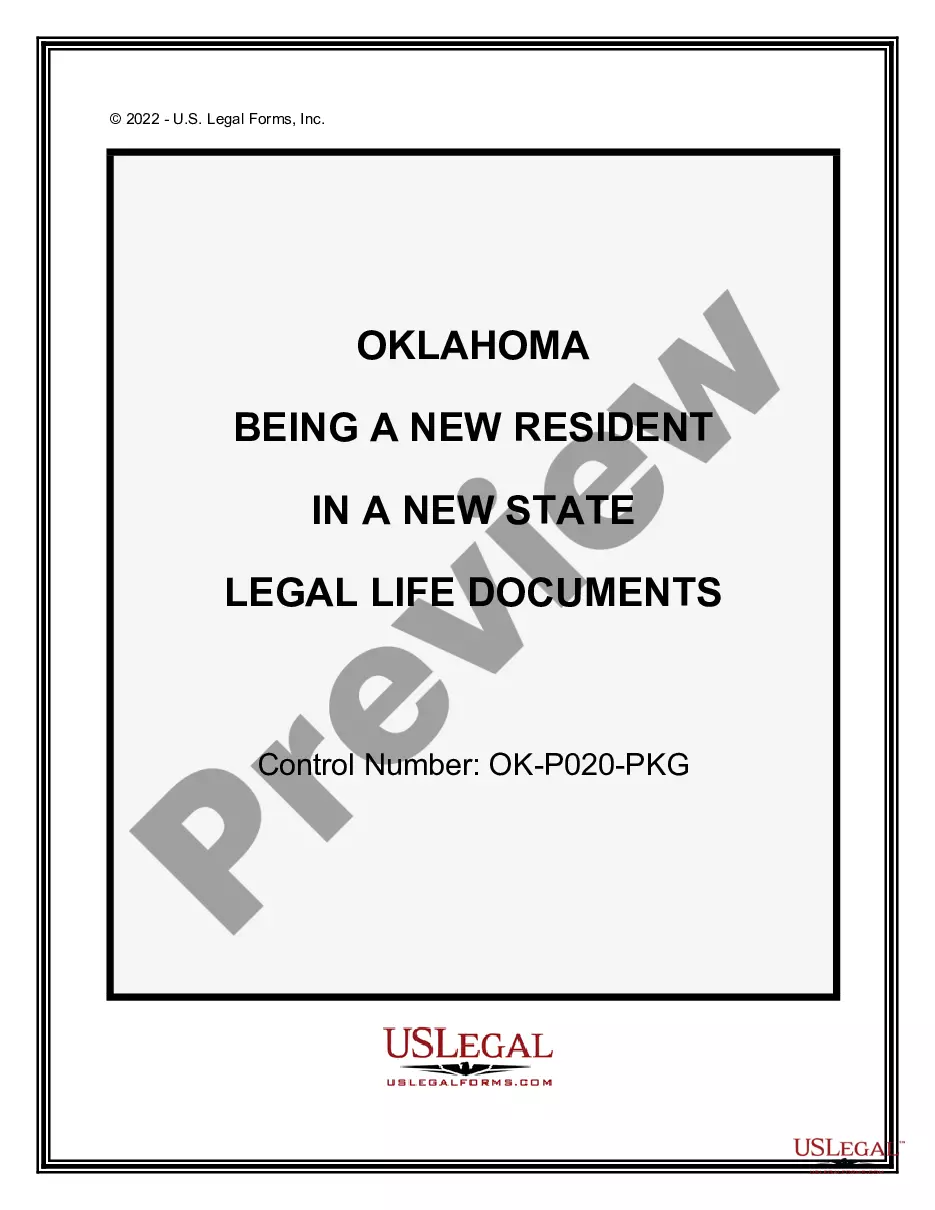
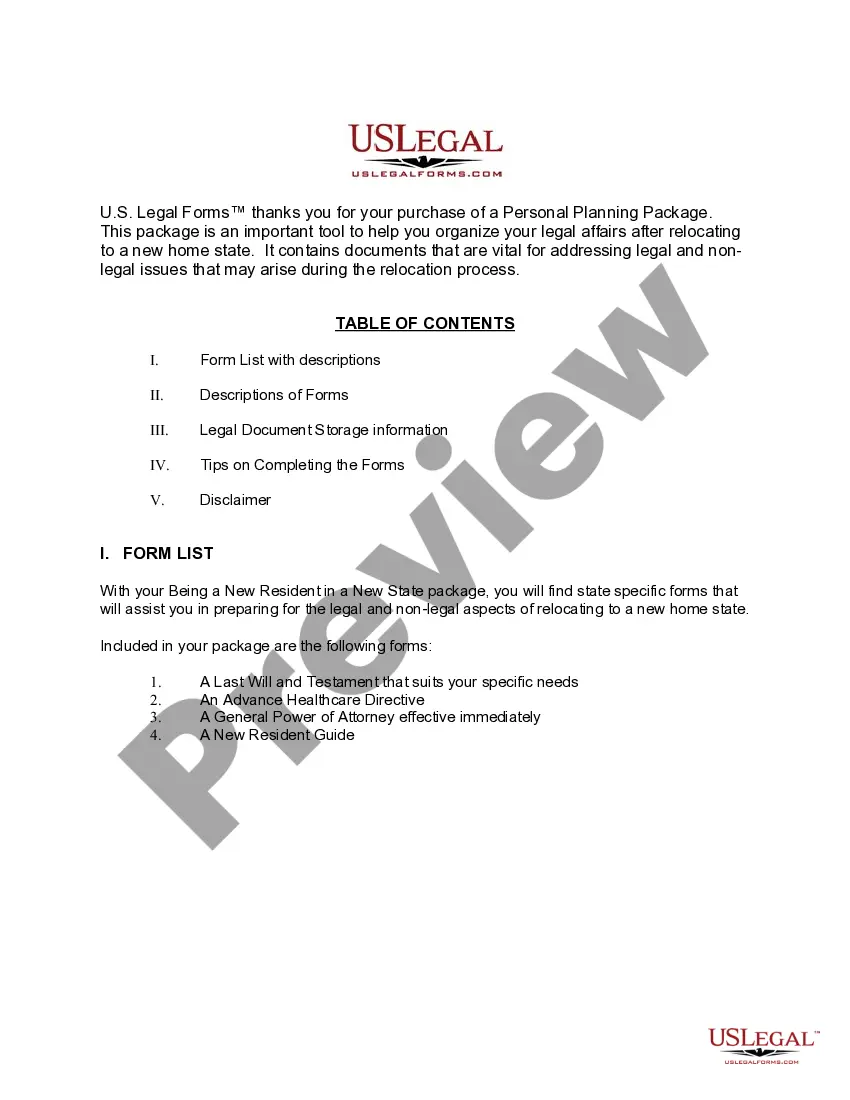
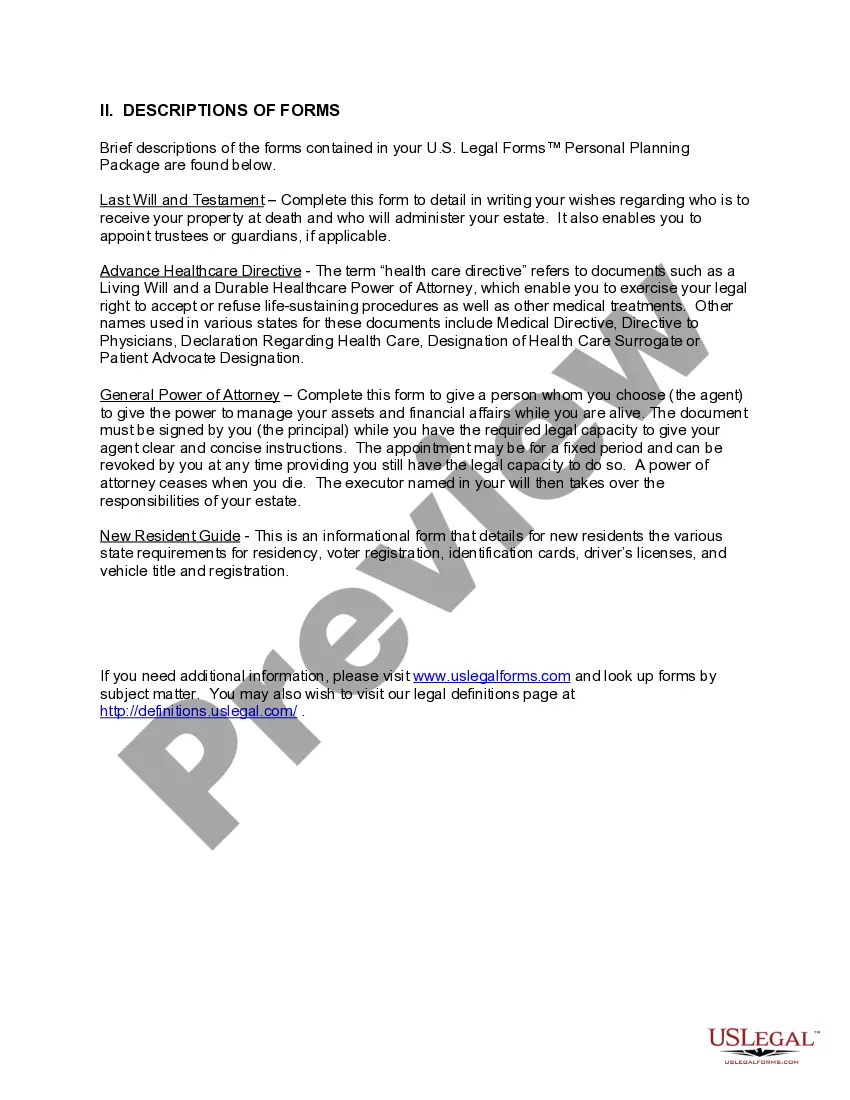
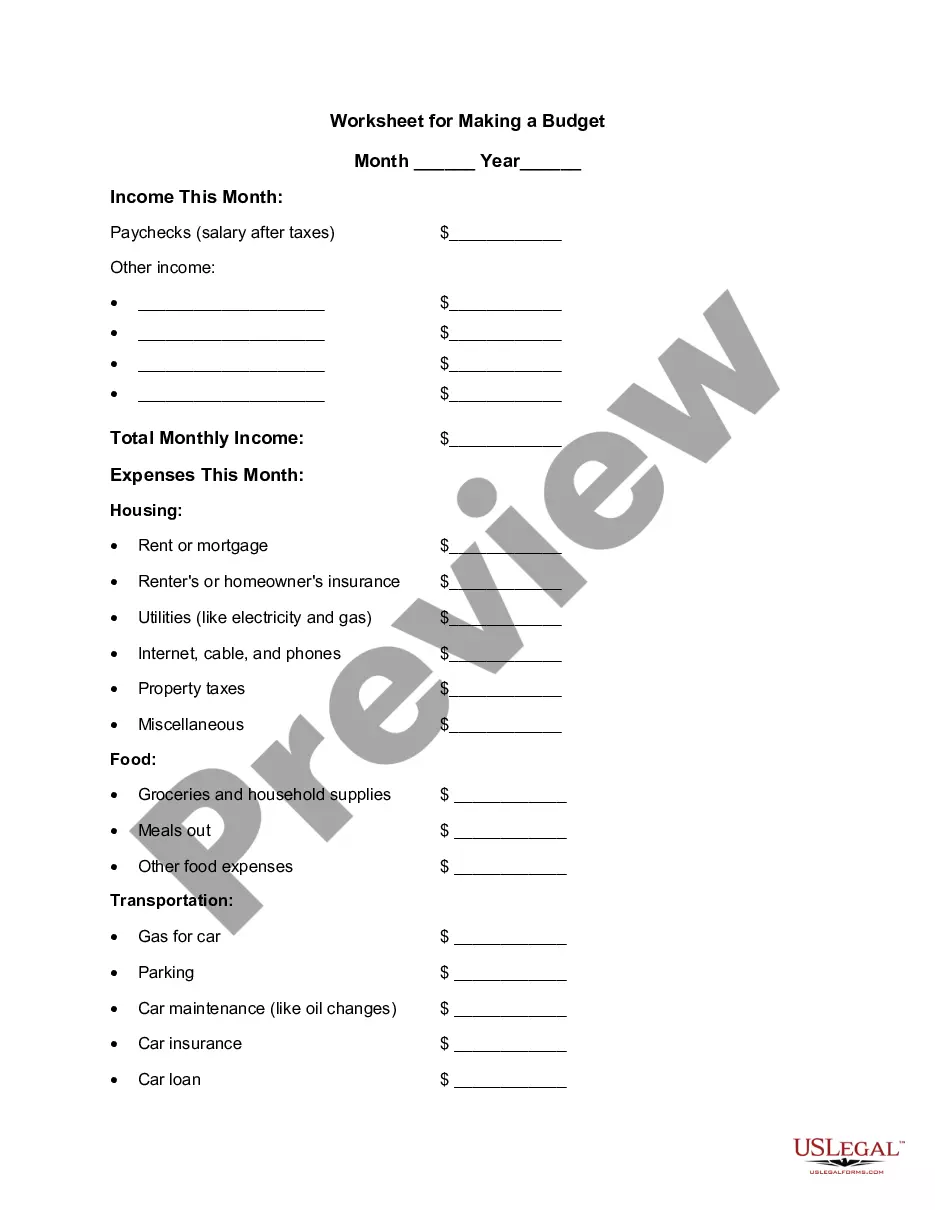
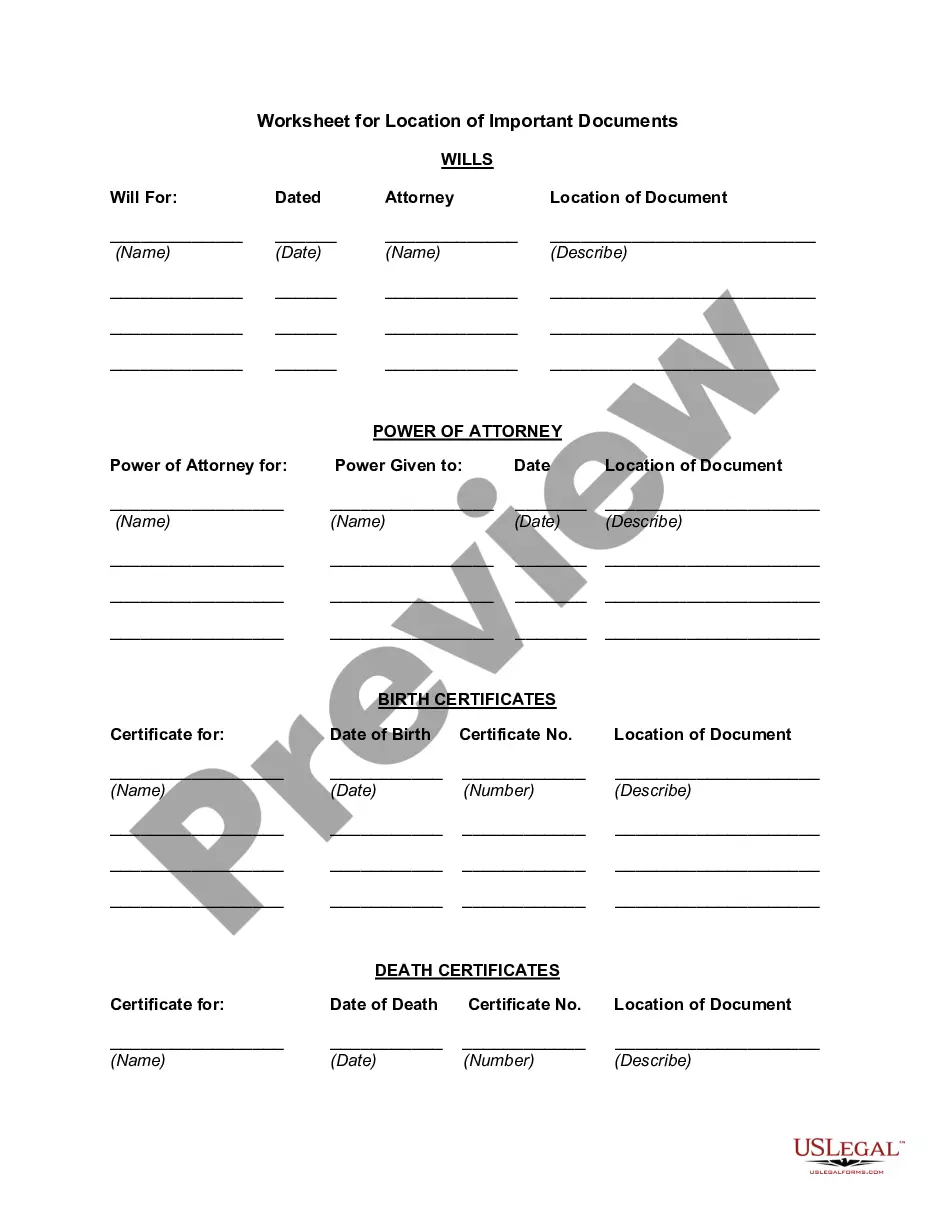
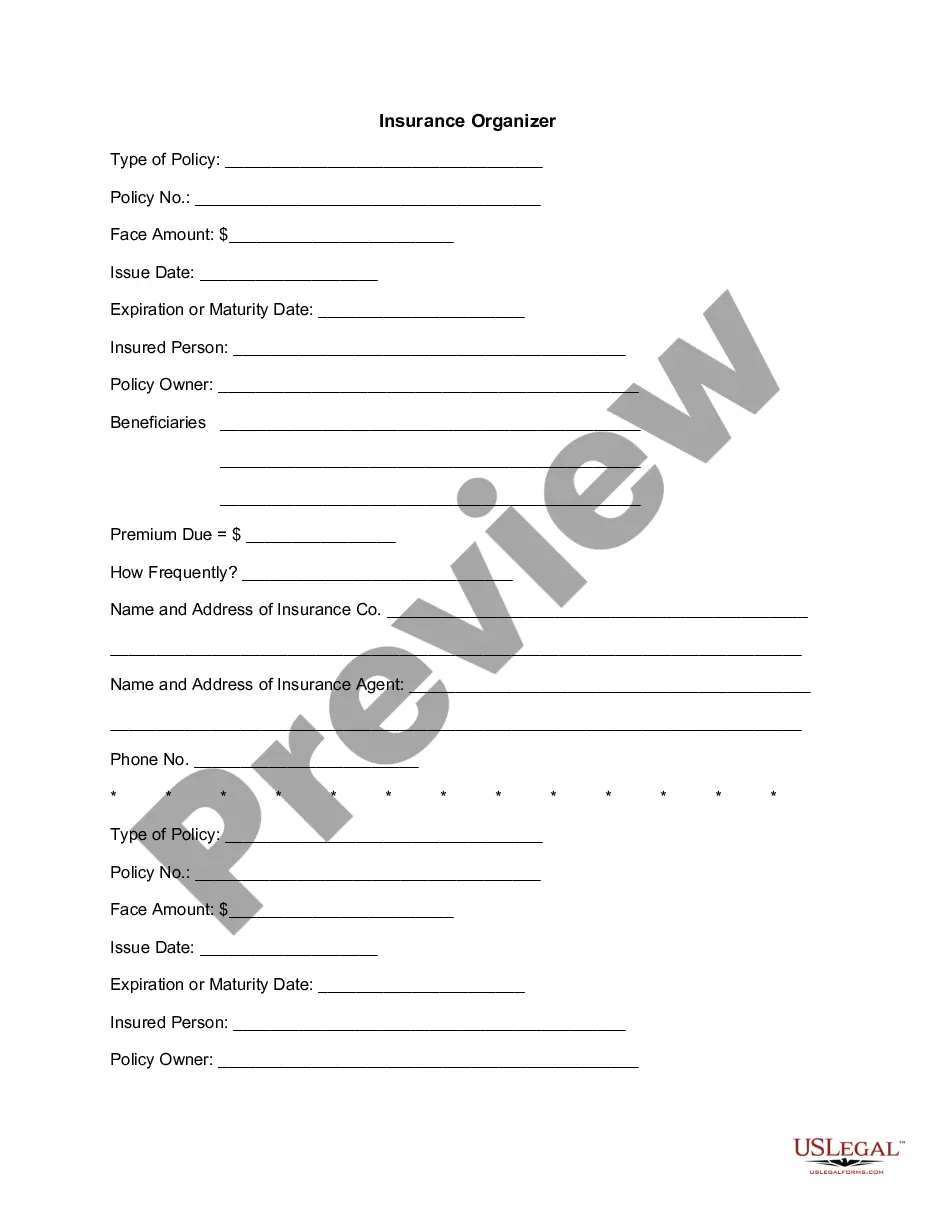
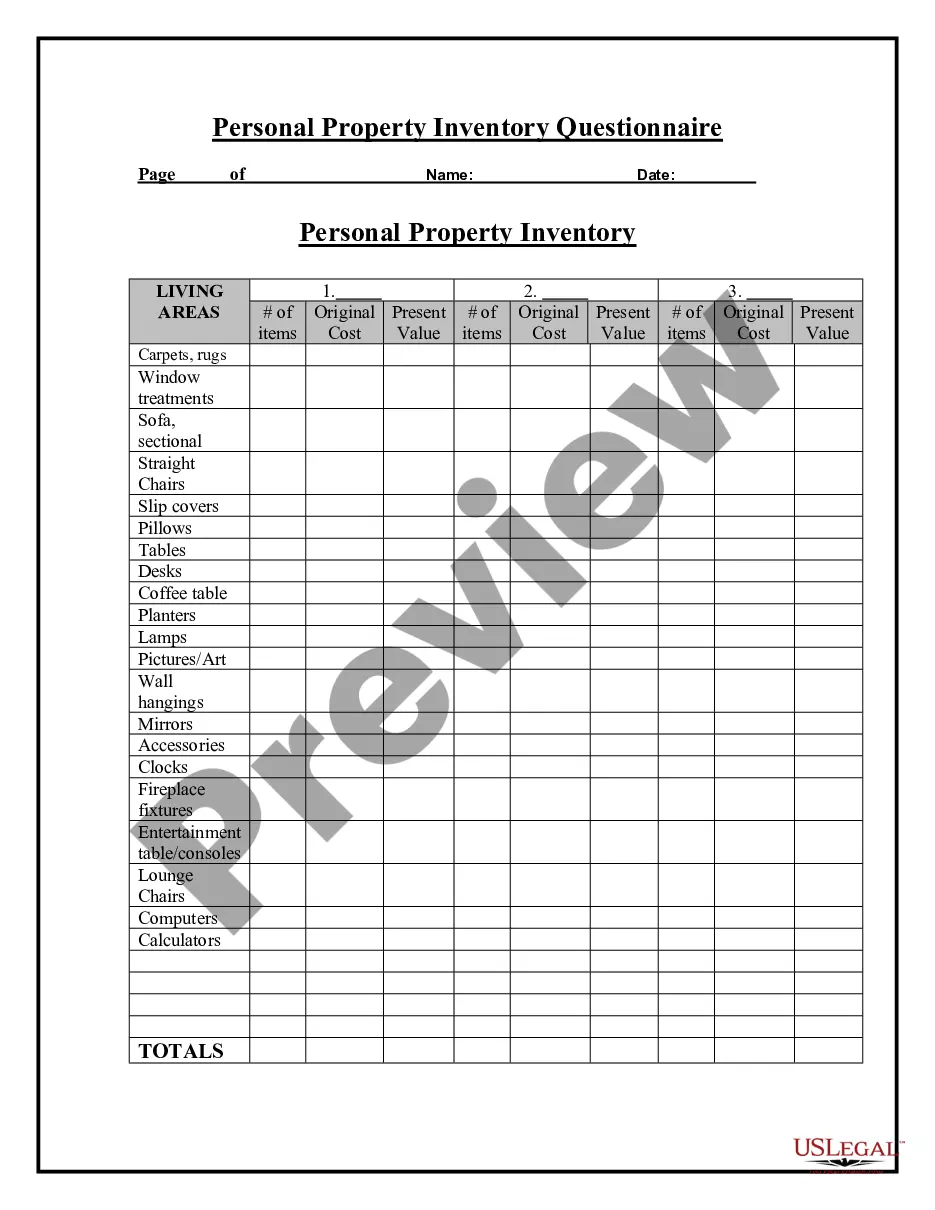
The Oklahoma New State Resident Package is a carefully curated collection of essential legal documents for those who have recently relocated to Oklahoma. This package provides the necessary forms to help you organize your legal and non-legal affairs after moving to a new home state. Unlike other general packages, this one includes state-specific documents that reflect Oklahoma laws and regulations.
Documents contained in this package
Situations where these forms applies
This form package is useful in various situations, such as:
- Establishing a legal framework for your estate planning after moving.
- Making decisions about healthcare and end-of-life care through advance directives.
- Granting someone authority to handle your financial affairs through a power of attorney.
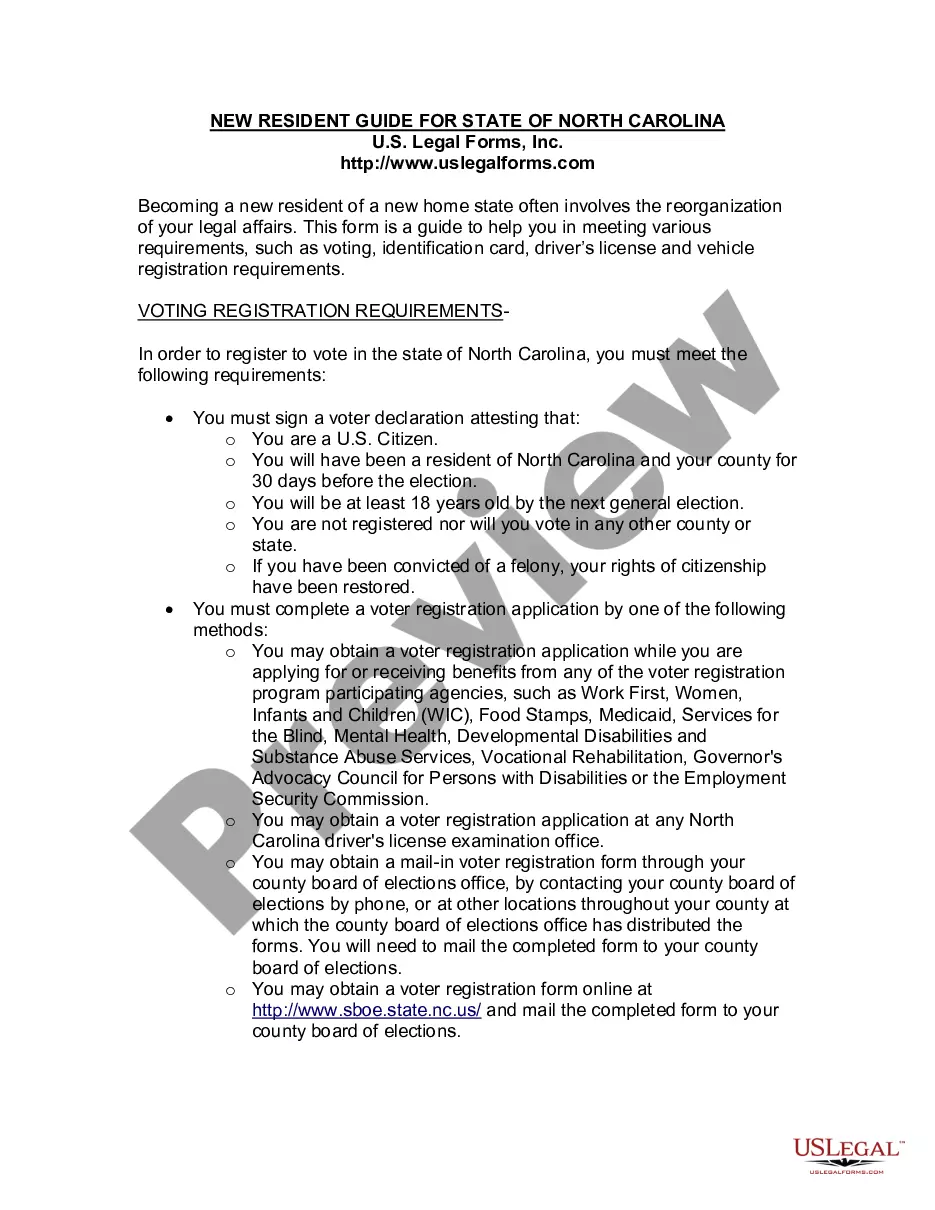
- Understanding local residency requirements, voter registration, and legal obligations as a new resident.
Intended users of this form package
- Individuals or families relocating to Oklahoma.
- New residents who need to set up their estate planning, healthcare decisions, and financial management.
- People seeking to understand their rights and responsibilities as new residents in Oklahoma.
Completing these forms step by step
- Review all included forms carefully to understand their purpose.
- Fill out the Last Will and Testament, designating beneficiaries and preferences for your estate.
- Complete the Advance Healthcare Directive by specifying your choices regarding medical treatment and appointing a healthcare surrogate.
- Execute the General Power of Attorney by selecting an agent to manage your financial affairs.
- Refer to the New Resident Guide for information on residency requirements, voter registration processes, and other important local information.
Notarization details for included forms
Forms in this package typically do not require notarization unless required by local law. It is important to review each form carefully to ensure compliance with any specific requirements in Oklahoma.
Get your form ready online
Our built-in tools help you complete, sign, share, and store your documents in one place.
Make edits, fill in missing information, and update formatting in US Legal Forms—just like you would in MS Word.
Download a copy, print it, send it by email, or mail it via USPS—whatever works best for your next step.
Sign and collect signatures with our SignNow integration. Send to multiple recipients, set reminders, and more. Go Premium to unlock E-Sign.
If this form requires notarization, complete it online through a secure video call—no need to meet a notary in person or wait for an appointment.
We protect your documents and personal data by following strict security and privacy standards.
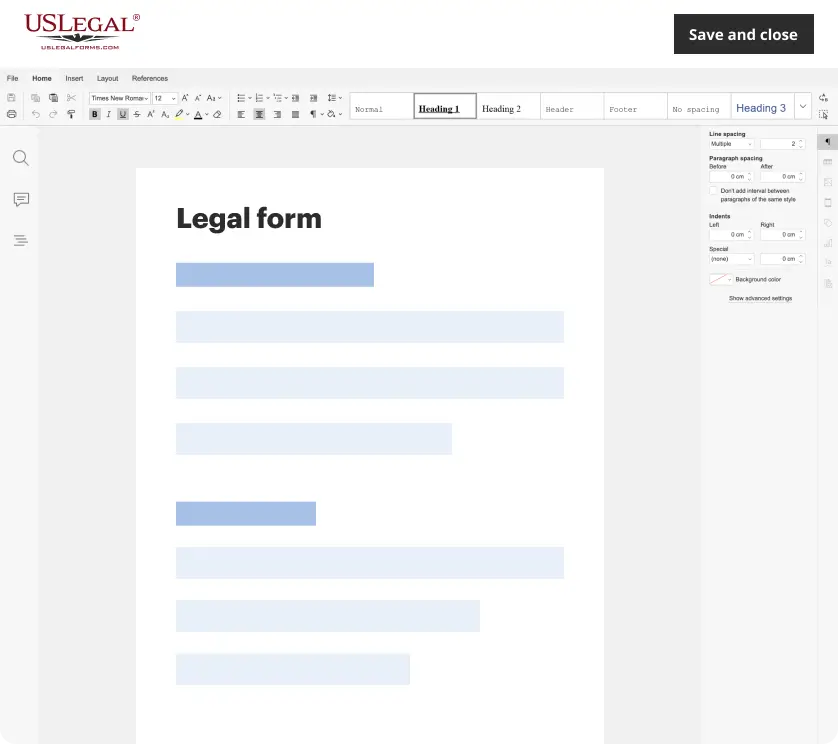
Make edits, fill in missing information, and update formatting in US Legal Forms—just like you would in MS Word.
Download a copy, print it, send it by email, or mail it via USPS—whatever works best for your next step.
Sign and collect signatures with our SignNow integration. Send to multiple recipients, set reminders, and more. Go Premium to unlock E-Sign.

If this form requires notarization, complete it online through a secure video call—no need to meet a notary in person or wait for an appointment.
We protect your documents and personal data by following strict security and privacy standards.
Typical mistakes to avoid
- Failing to update beneficiary information in the Last Will and Testament.
- Not clearly defining healthcare preferences in the Advance Healthcare Directive.
- Overlooking the necessity of signing and dating all forms properly.
- Ignoring state-specific requirements outlined in the New Resident Guide.
Benefits of using this package online
- Convenience: Easily download forms from the comfort of your home.
- Editability: Modify forms as needed to suit your specific situation.
- Reliability: Access documents validated by licensed attorneys familiar with Oklahoma law.
Main things to remember
- The Oklahoma New State Resident Package offers tailored legal documents for new residents.
- Utilizing this package can simplify your transition to Oklahoma regarding legal matters.
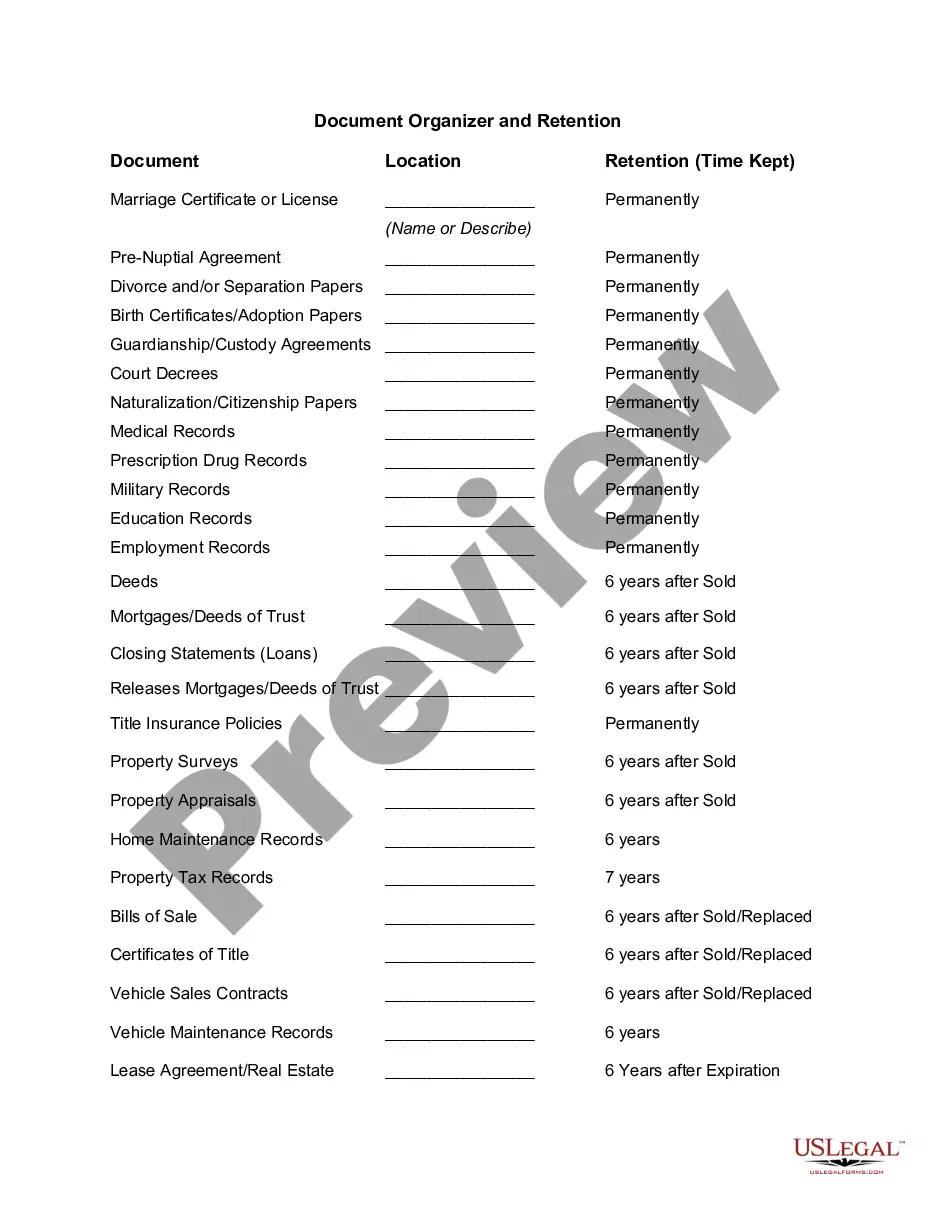
- Proper completion and storage of documents are crucial for their effectiveness.
- Consulting a legal professional can provide additional peace of mind and clarify any complex issues.
Looking for another form?



Form popularity
FAQ
To file your back tax returns, you will need the W-2s or 1099 forms you received for those tax years to report your income. If you are eligible for deductions and credits, you must also gather any receipts or other supporting records that prove your eligibility to claim them.
If You Lived in Two States You'll have to file two part-year state tax returns if you moved across state lines during the tax year. One return will go to your former state, and one will go to your new state.
Where do I file? The general rule of thumb is that you need to file taxes where you earned the money. That means you need to file a nonresident state return in the state where you worked. If you have non-work income (such as interest, income from side hustling, etc.), you'll declare that in the state where you live.
Introduction. In addition to federal income taxes, U.S. citizens are liable for various state taxes as well. While some states do not levy a state income tax, all states assess some form of tax, such as sales or use taxes. And some of these taxes will require you to submit a separate state tax form each year.
File Your Oklahoma 511 for Free Using OkTAP The Oklahoma Tax Commission is offering free online filing of full-year resident Oklahoma income tax returns through our OkTAP system. Requirements to file using OkTAP: Must be filing a full-year resident return (Form 511) for the current year.
File as if both the resident and the nonresident civilian were Oklahoma residents on Form 511. Use the married filing joint filing status, and report all income. A tax credit (Form 511TX) may be used to claim credit for taxes paid to another state, if applicable.
Oklahoma Residents If you filed a federal return as an Oklahoma resident or if you earned more than $12,500 (married, filing separately), $15,000 (single), $19,000 (head of household), or $25,000 (married, filing jointly), you are required to file an Oklahoma state income tax return.
The Oklahoma taxable income of a part-year individual or nonresident individual shall be calculated as if all income were earned in Oklahoma, using Form 511NR.After the taxable income is calculated, it is prorated using a percentage of the AGI from Oklahoma sources divided by the AGI from all sources.