Oklahoma Mutual Wills containing Last Will and Testaments for Man and Woman living together not Married with No Children
What is this form?
This form is a Mutual Will containing Last Will and Testaments designed for a man and a woman living together who are not married and have no children. It serves as a legal document to outline how their individual properties will be distributed upon death, ensuring that each partner can leave their belongings to the other. This form is distinct from standard wills because it includes mutual agreements regarding property distribution and is tailored specifically for cohabiting couples without children.
Key parts of this document
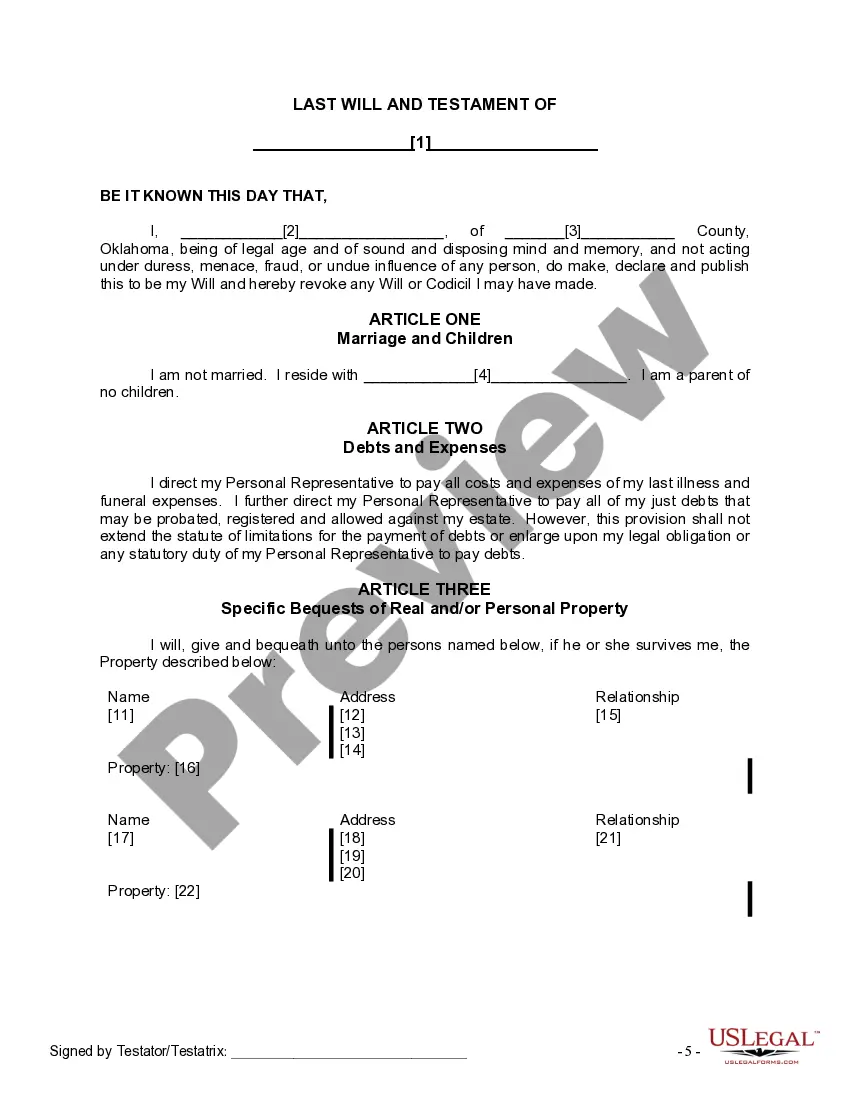
- Article One: Declares the authorship of the will and specifies that neither partner is married or has children.
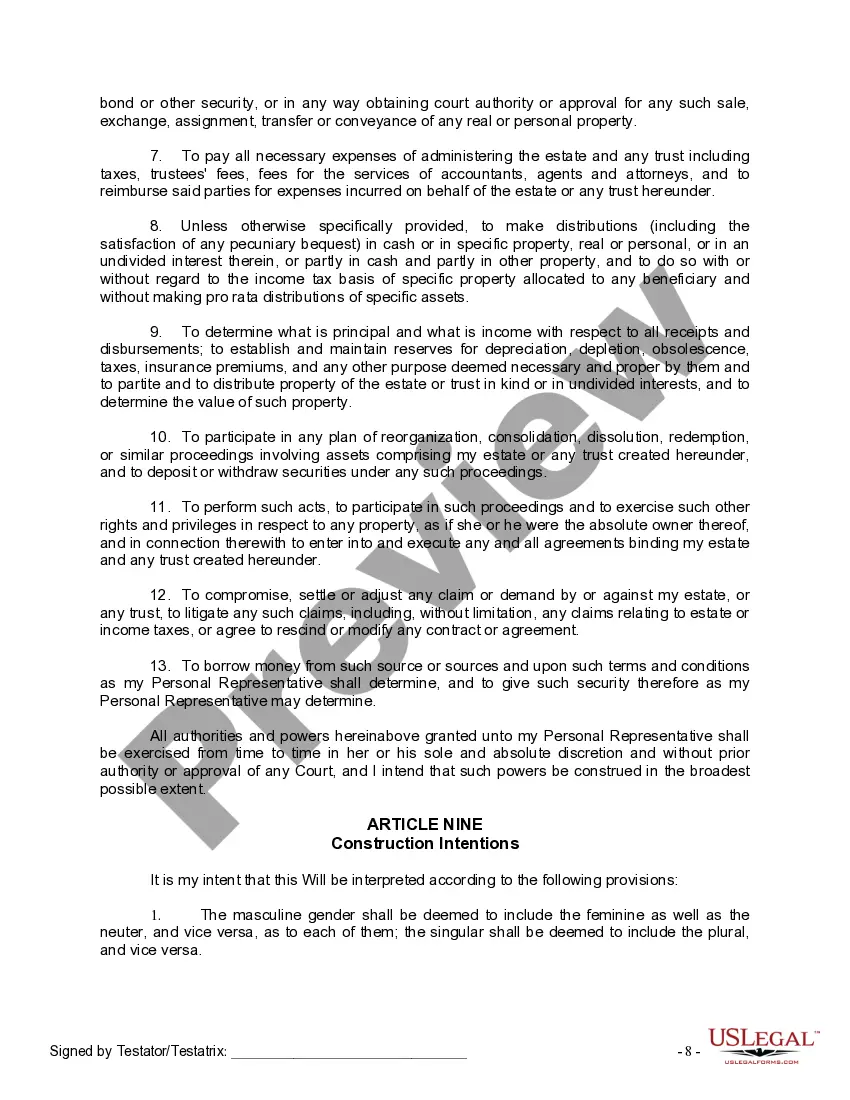
- Article Three: Allows for specific bequests of property to named individuals.
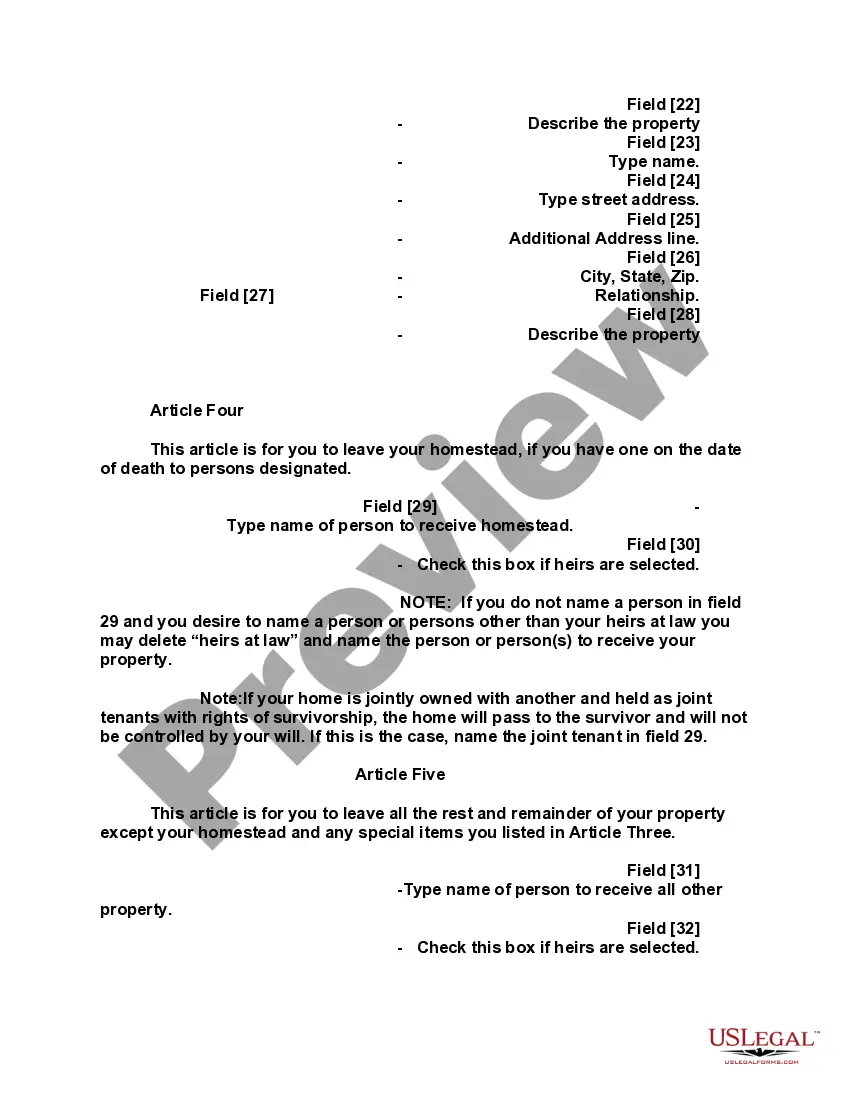
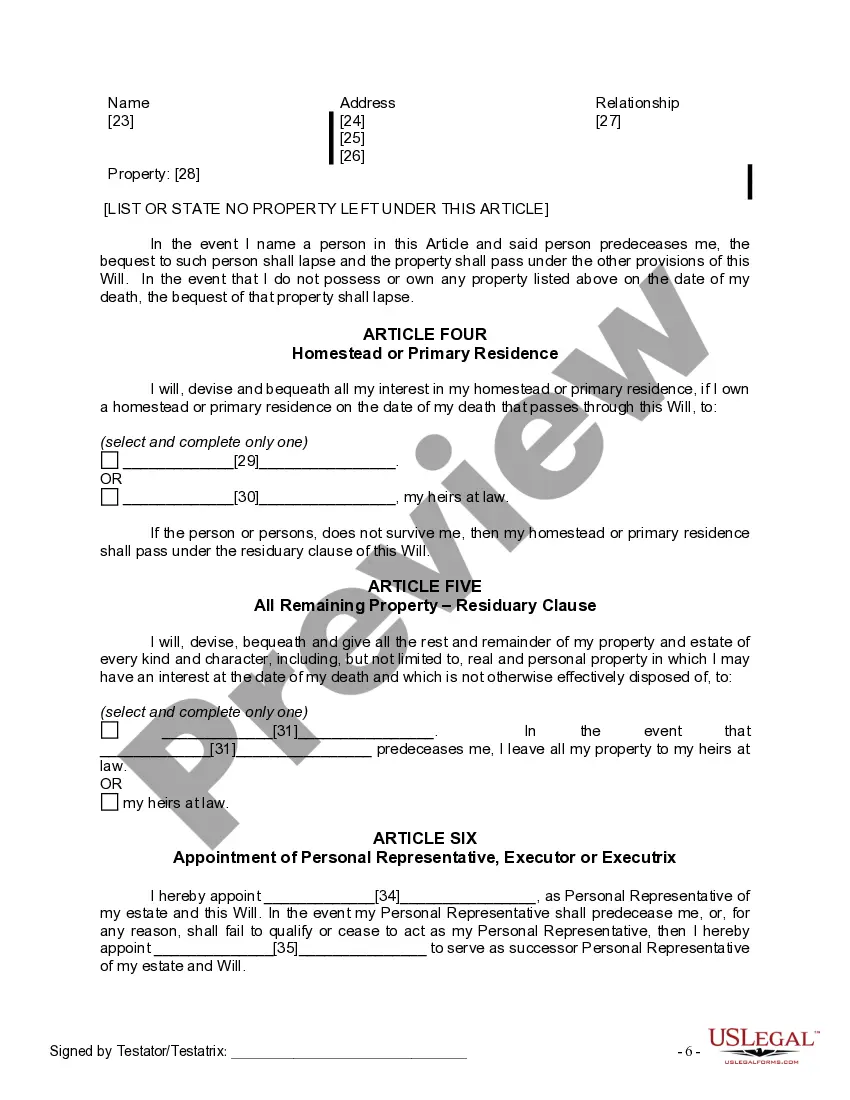
- Article Four: Designates the homestead to be passed to a specified person or heirs.
- Article Five: Distributes all remaining property not specifically bequeathed.
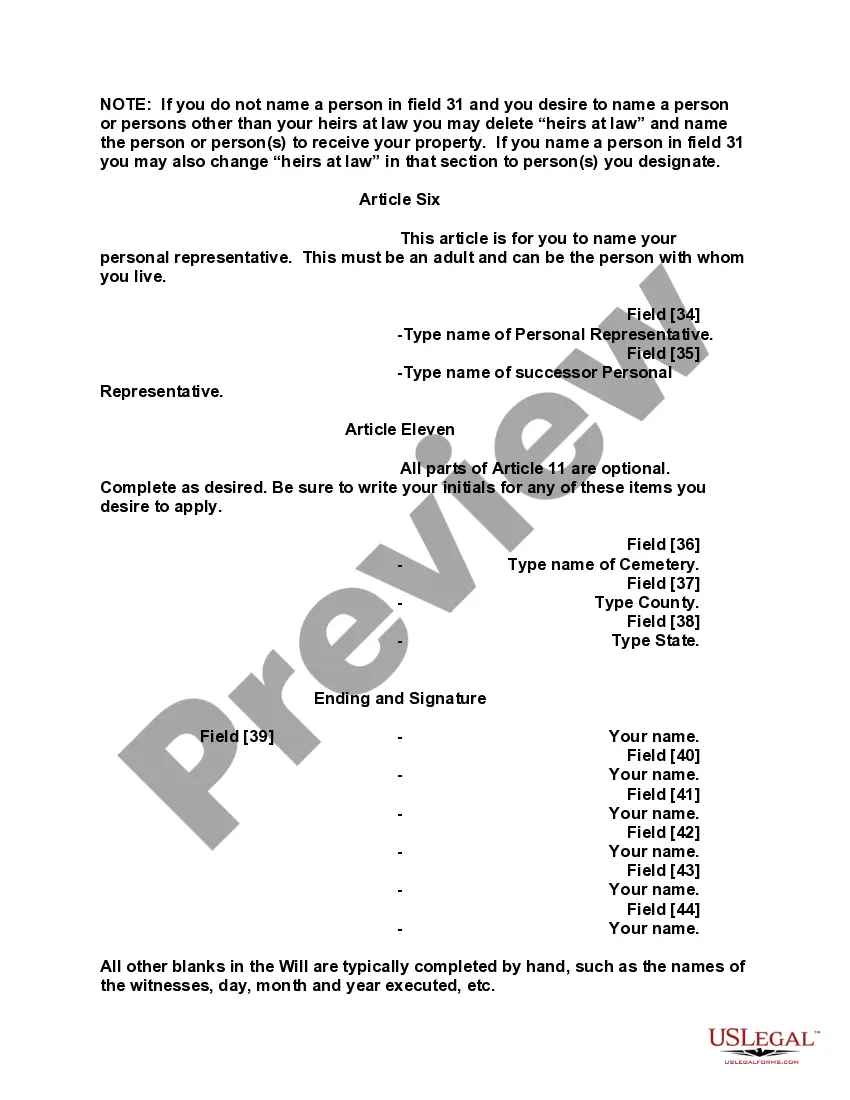
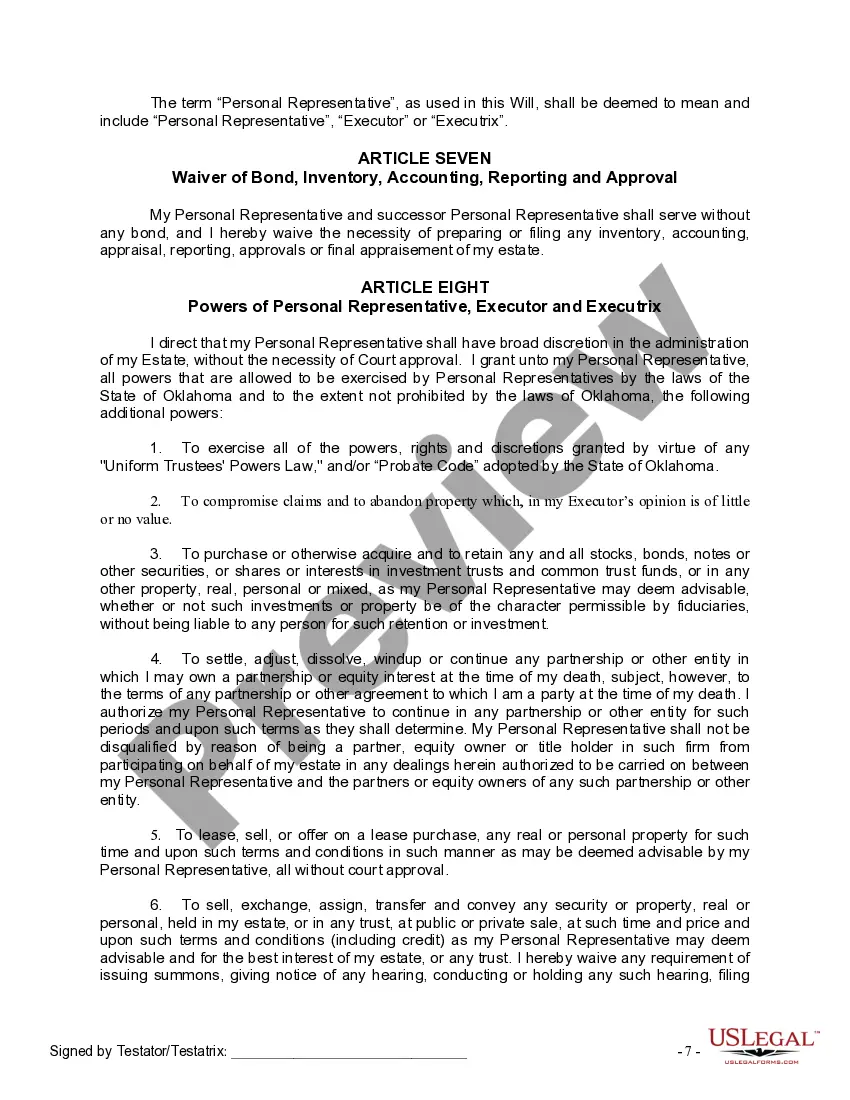
- Article Six: Appoints a Personal Representative to manage the estate.



When to use this document
This form should be used when couples who live together but are not legally married wish to designate how their assets will be handled after their passing. It is ideal for partners who want to ensure their partner inherits specific belongings, provides clarity on property ownership, and exercises control over their estate's distribution even in the absence of children.
Who should use this form
- Couples living together without a legal marriage.
- Partners who want to ensure their property is inherited by one another.
- Individuals seeking to establish mutual wills for clarity in estate planning.
Steps to complete this form
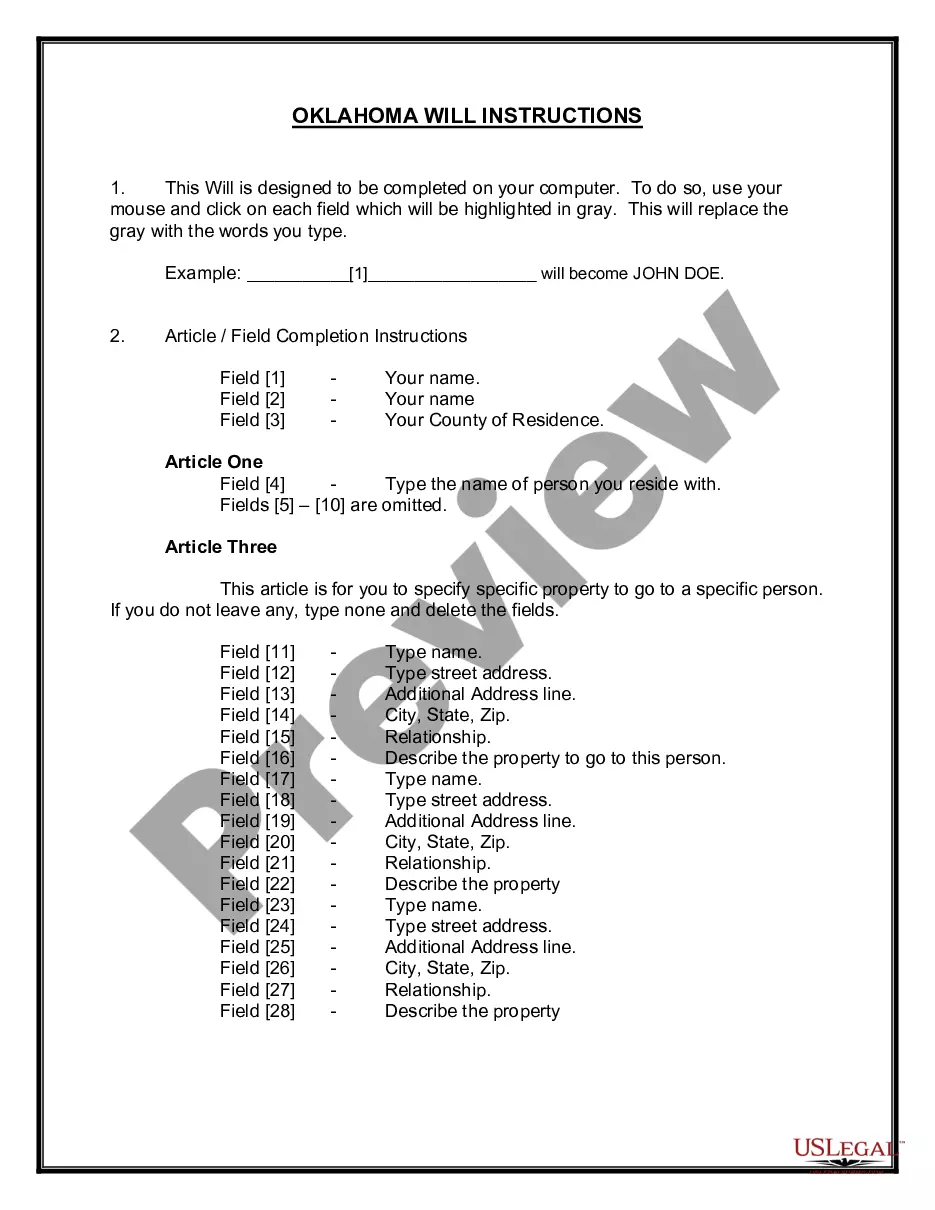
- Open the document on your computer and fill in highlighted fields with your information.
- Specify your living arrangement and identify the partner you reside with.
- Designate specific properties you wish to leave to particular individuals in Article Three.
- Select individuals to receive your homestead and any remaining possessions in Articles Four and Five.
- Appoint a trusted Personal Representative to manage your estate in Article Six and provide their details.
Notarization requirements for this form
To make this form legally binding, it must be notarized. Our online notarization service, powered by Notarize, lets you verify and sign documents remotely through an encrypted video session.
Get your form ready online
Our built-in tools help you complete, sign, share, and store your documents in one place.
Make edits, fill in missing information, and update formatting in US Legal Forms—just like you would in MS Word.
Download a copy, print it, send it by email, or mail it via USPS—whatever works best for your next step.
Sign and collect signatures with our SignNow integration. Send to multiple recipients, set reminders, and more. Go Premium to unlock E-Sign.
If this form requires notarization, complete it online through a secure video call—no need to meet a notary in person or wait for an appointment.
We protect your documents and personal data by following strict security and privacy standards.

Make edits, fill in missing information, and update formatting in US Legal Forms—just like you would in MS Word.

Download a copy, print it, send it by email, or mail it via USPS—whatever works best for your next step.

Sign and collect signatures with our SignNow integration. Send to multiple recipients, set reminders, and more. Go Premium to unlock E-Sign.

If this form requires notarization, complete it online through a secure video call—no need to meet a notary in person or wait for an appointment.

We protect your documents and personal data by following strict security and privacy standards.
Typical mistakes to avoid
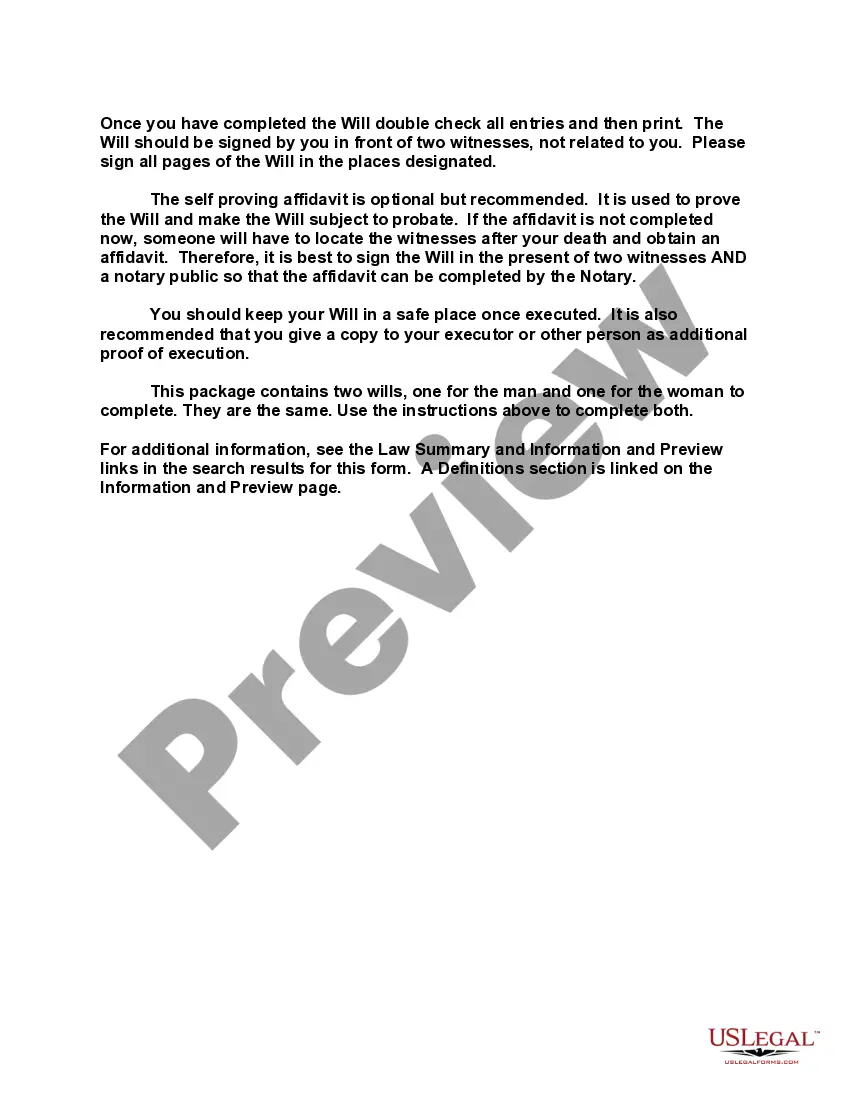
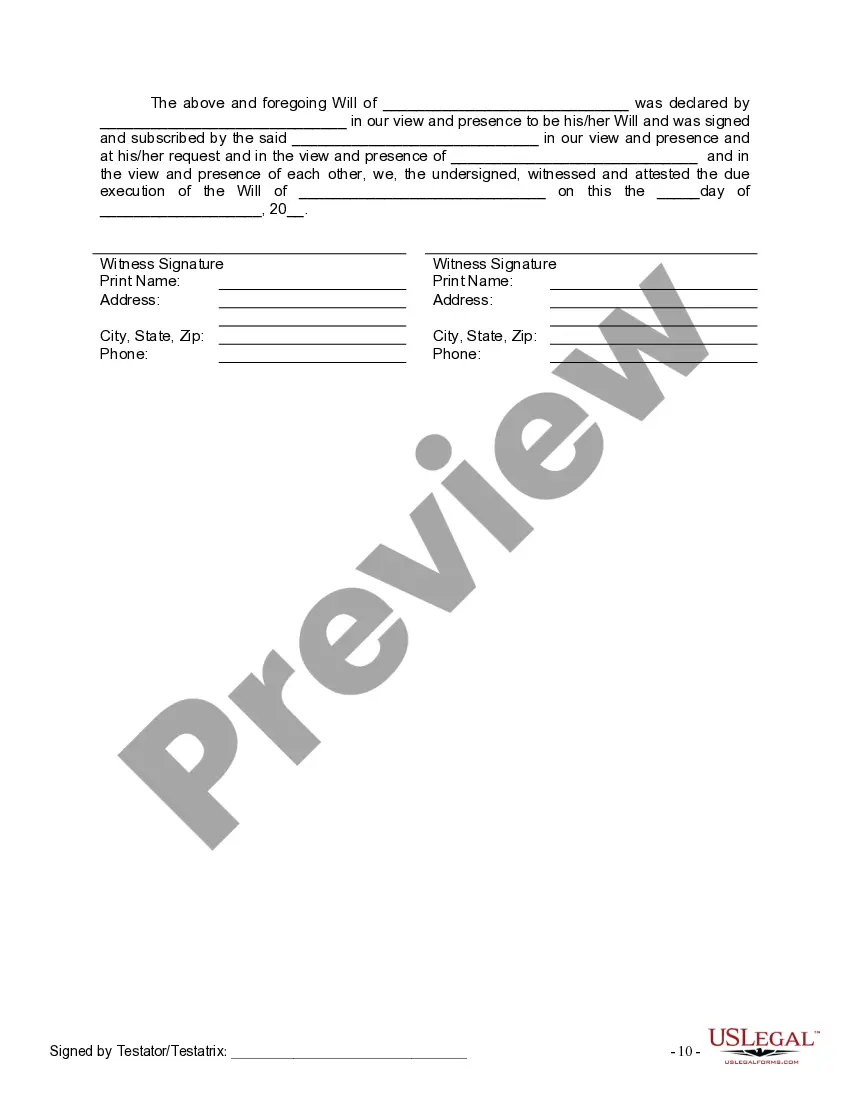
- Failing to have the will signed by two witnesses, which may invalidate the document.
- Not clearly specifying property or heirs, leading to potential disputes.
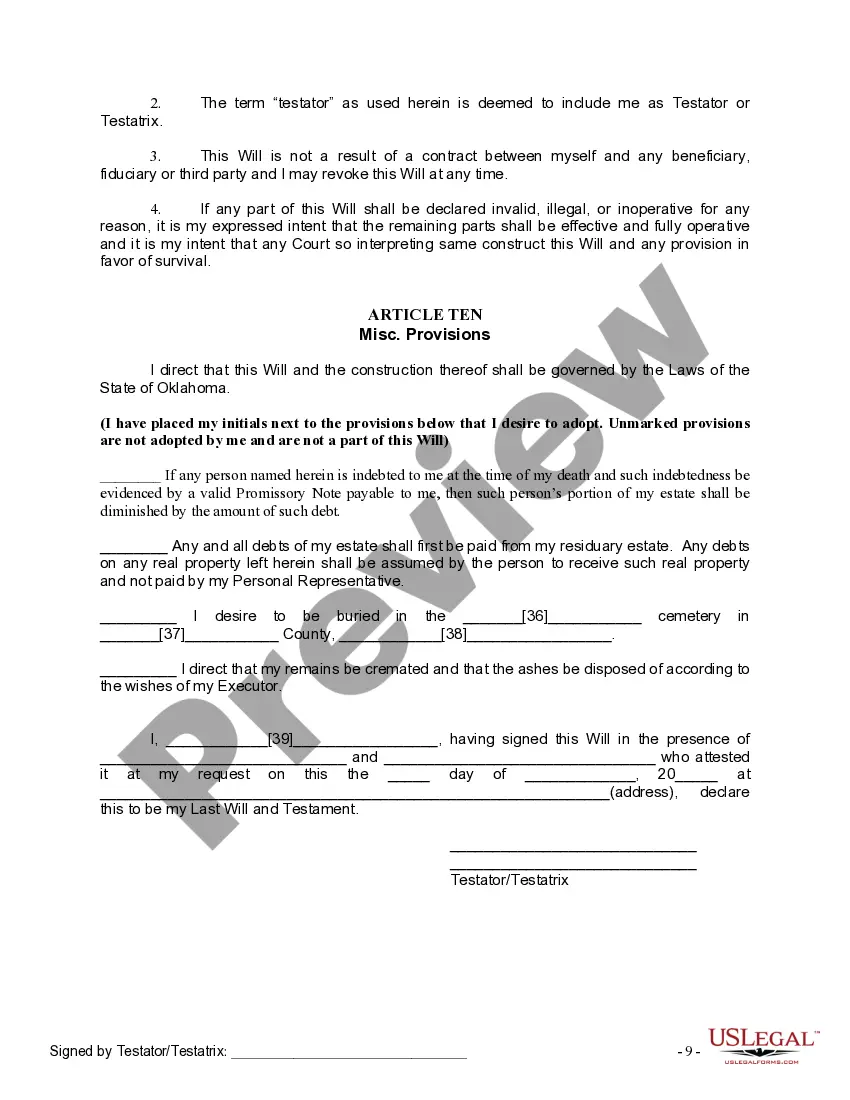
- Overlooking the completion of the self-proving affidavit, which can complicate probate.
Why complete this form online
- Convenience of filling out the form from your home without needing to visit a lawyer.
- Editability allows for easy updates if your situation changes.
- Access to attorney-drafted documents providing legal assurance and clarity.
Legal use & context
- This mutual will is enforceable under Oklahoma law, providing clear guidelines for asset distribution.
- It ensures that the desires of both partners are honored, mitigating potential conflicts or legal challenges.
Quick recap
- This Mutual Will package offers legal protection for couples who live together without marriage.
- Specific attention should be given to valid execution requirements including signatures and witnesses.
- Utilizing this form can simplify the estate planning process and ensure desired outcomes regarding asset distribution.
Legal terms and meanings
- Mutual Will: A legal document where two people agree to leave their assets to each other.
- Personal Representative: An individual appointed to manage the deceased's estate according to the will's instructions.
- Self-Proving Affidavit: A notarized statement affirming the execution of a will, used to simplify the probate process.
Looking for another form?
Form popularity
FAQ
Value your estate. Get an idea of what your estate will be worth by drawing up a list of your assets and debts. Decide how you want to divide your estate. You may decide to leave a donation to a charity. Choose your executors. Write your will. Sign your will.
Contrary to popular belief, you do not need to have an attorney draft a will for you. Anyone can write this document on their own, and as long as it meets all of the legal requirements of the state, courts will recognize one you wrote yourself.
Married couples often execute wills which are identical in their provisions, frequently giving the estate to the surviving spouse or if the spouse does not survive to the children.However, not every mirror will is a "mutual will", indeed very few mirror wills are mutual wills.
Most single people should have a will. A will can help you determine who will get your property (including your home, business, pets, and digital assets), name guardians for your children, and name an executor. A will also puts your wishes in writing so there's no confusion about your intentions.
Property in a living trust. One of the ways to avoid probate is to set up a living trust. Retirement plan proceeds, including money from a pension, IRA, or 401(k) Stocks and bonds held in beneficiary. Proceeds from a payable-on-death bank account.
Bank accounts. Brokerage or investment accounts. Retirement accounts and pension plans. A life insurance policy.
Create the initial document. Start by titling the document Last Will and Testament" and including your full legal name and address. Designate an executor. Appoint a guardian. Name the beneficiaries. Designate the assets. Ask witnesses to sign your will. Store your will in a safe place.
Include personal identifying information. Include a statement about your age and mental status. Designate an executor. Decide who will take care of your children. Choose your beneficiaries. List your funeral details. Sign and date your Last Will and Testament.