Ohio Notices, Resolutions, Simple Stock Ledger and Certificate
Overview of this form
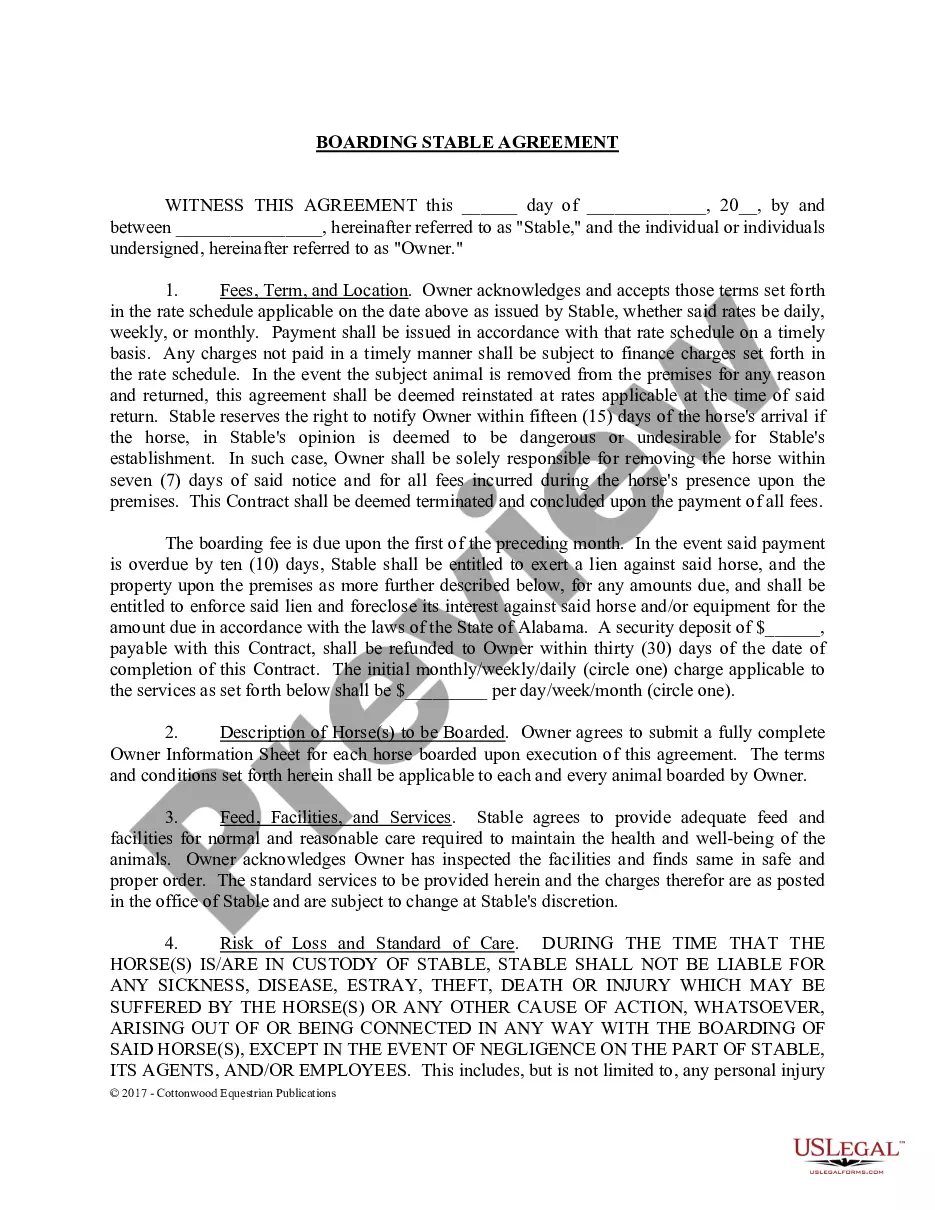
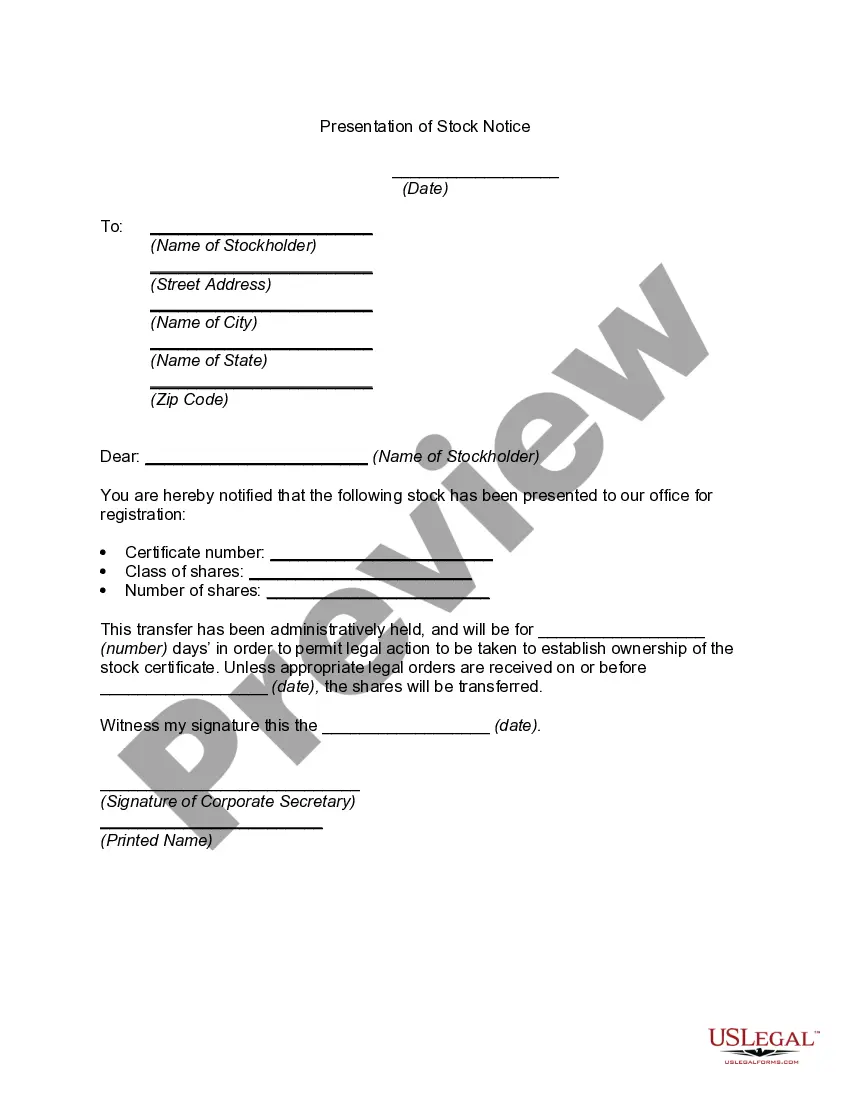
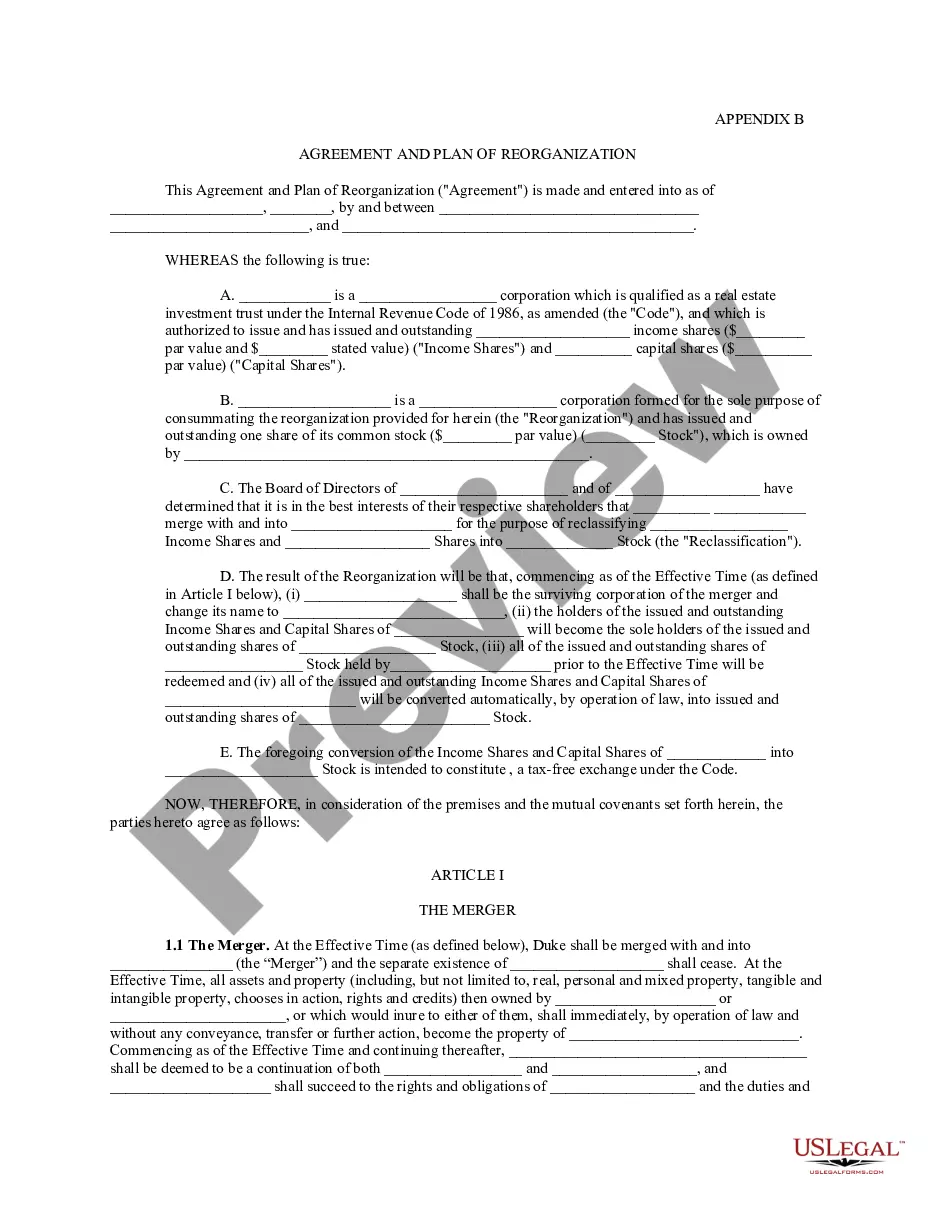
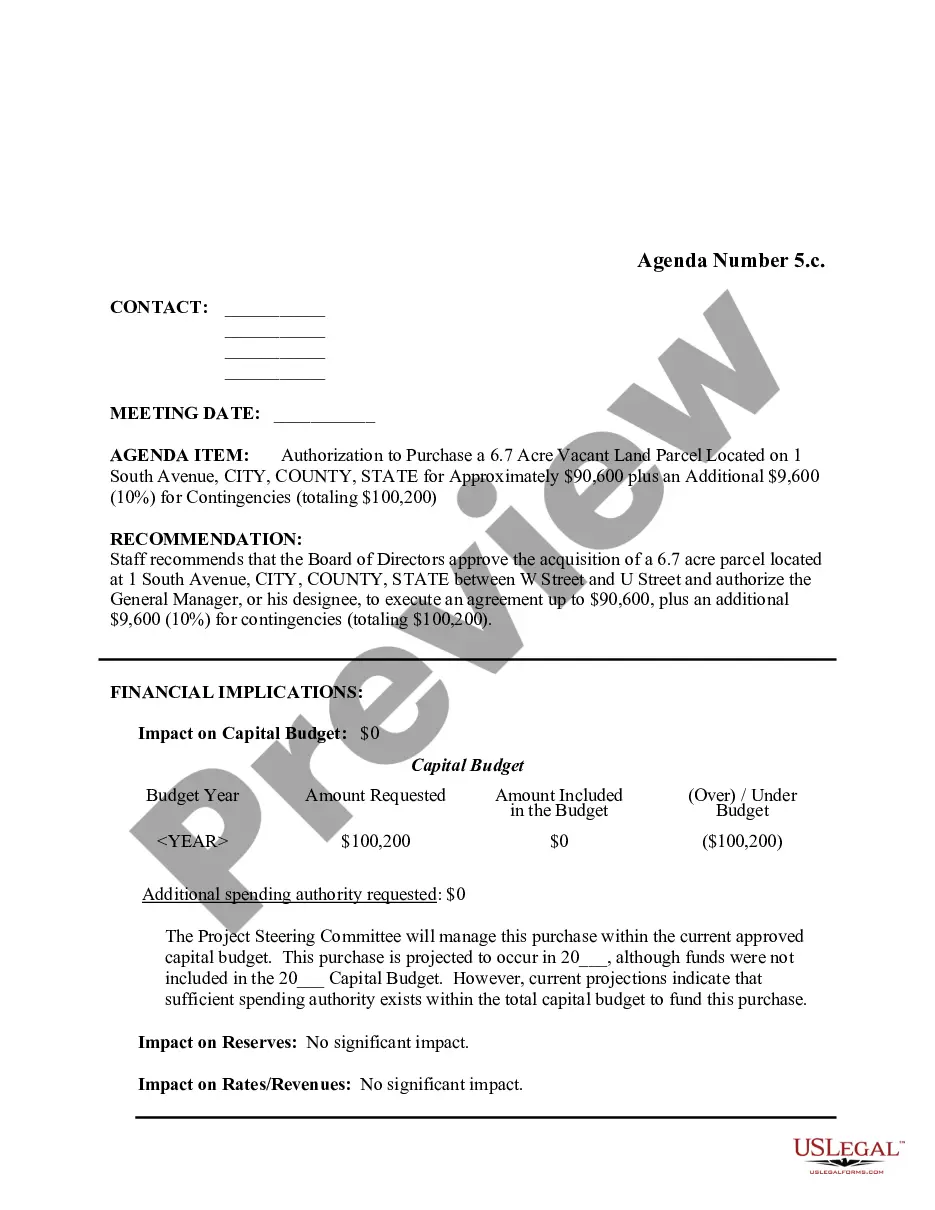
This form package includes Notices of Meetings, Corporate Resolutions, a Stock Ledger, and a sample Stock Certificate, collectively referred to as Notices, Resolutions, Simple Stock Ledger and Certificate. These legal documents are essential for corporations to conduct official business meetings, document decisions made by directors and shareholders, manage stock transfers, and issue stock certificates. This form package is tailored for corporate needs and differs from other general corporate documents by providing specific templates for notices, resolutions, and stock-related records.
What’s included in this form
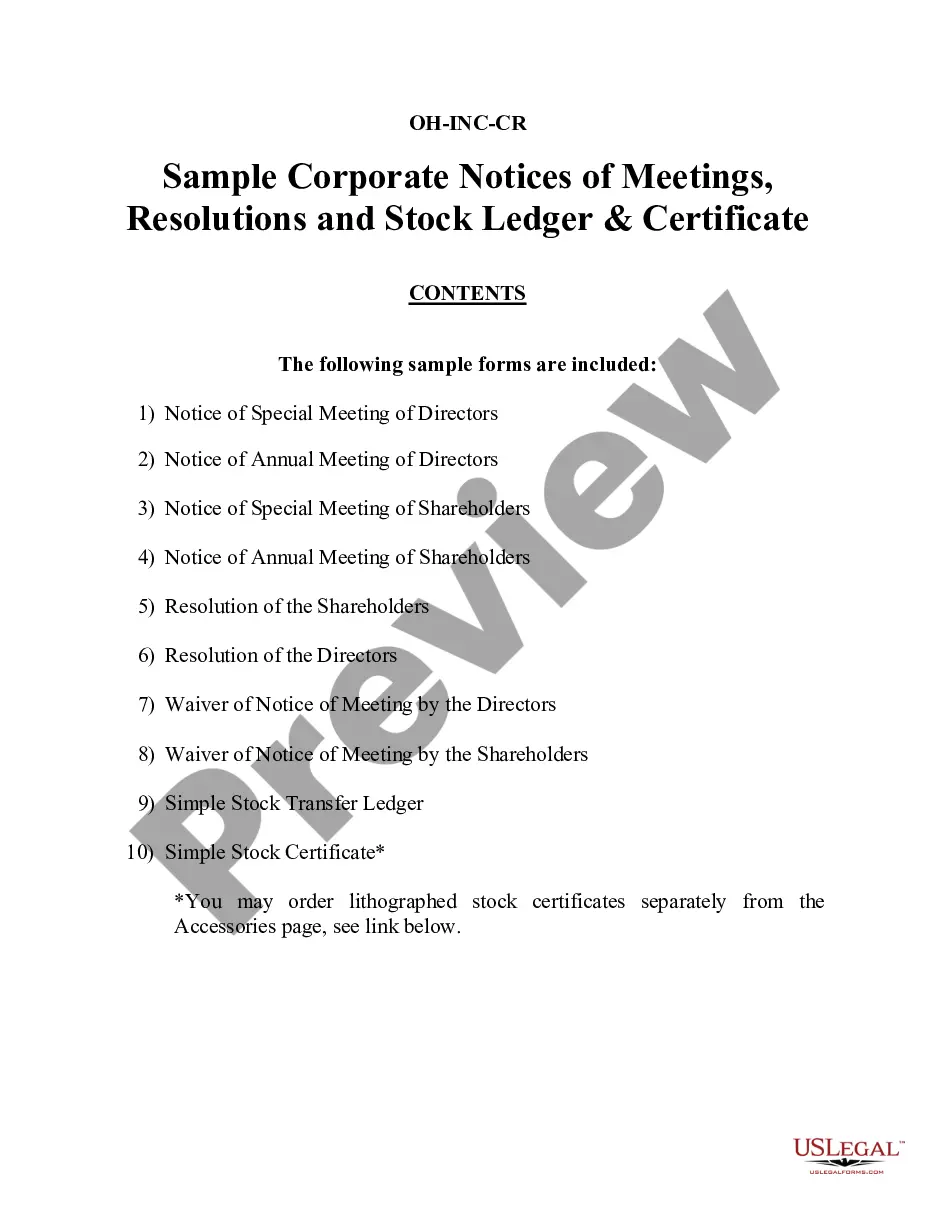
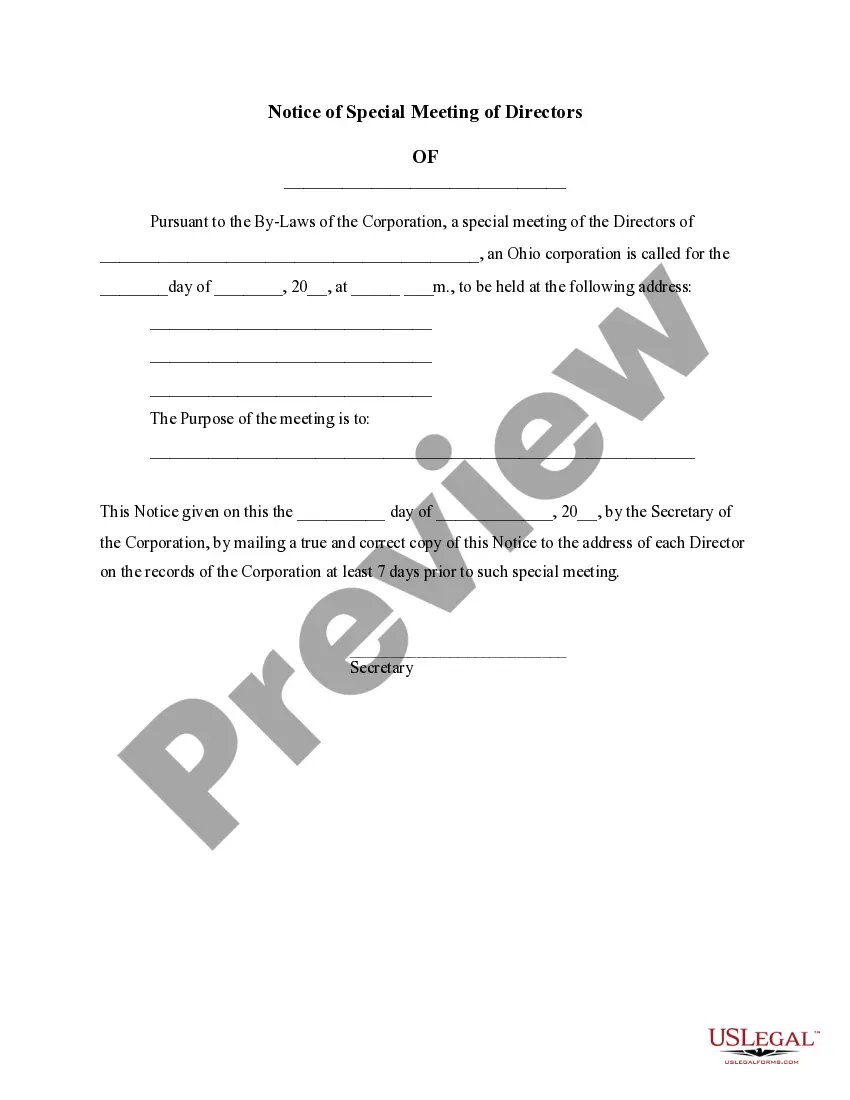
- Notice of Special Meeting of Directors
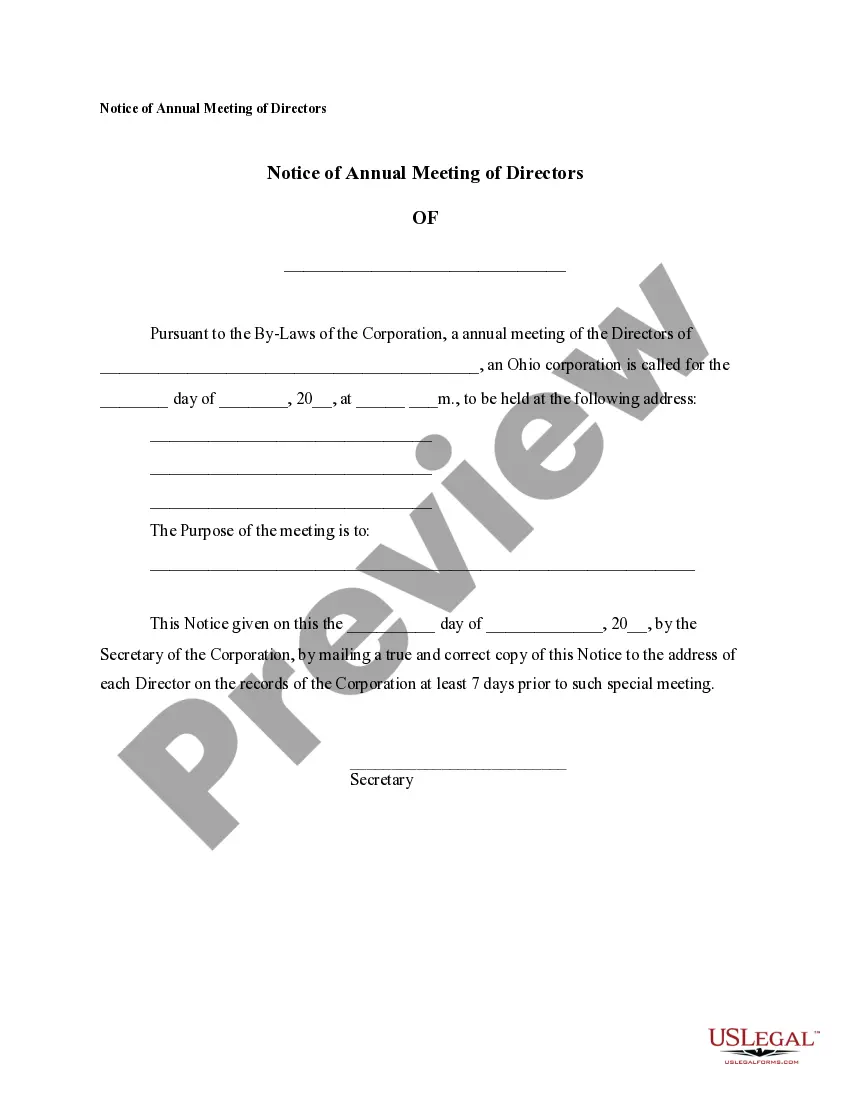
- Notice of Annual Meeting of Directors
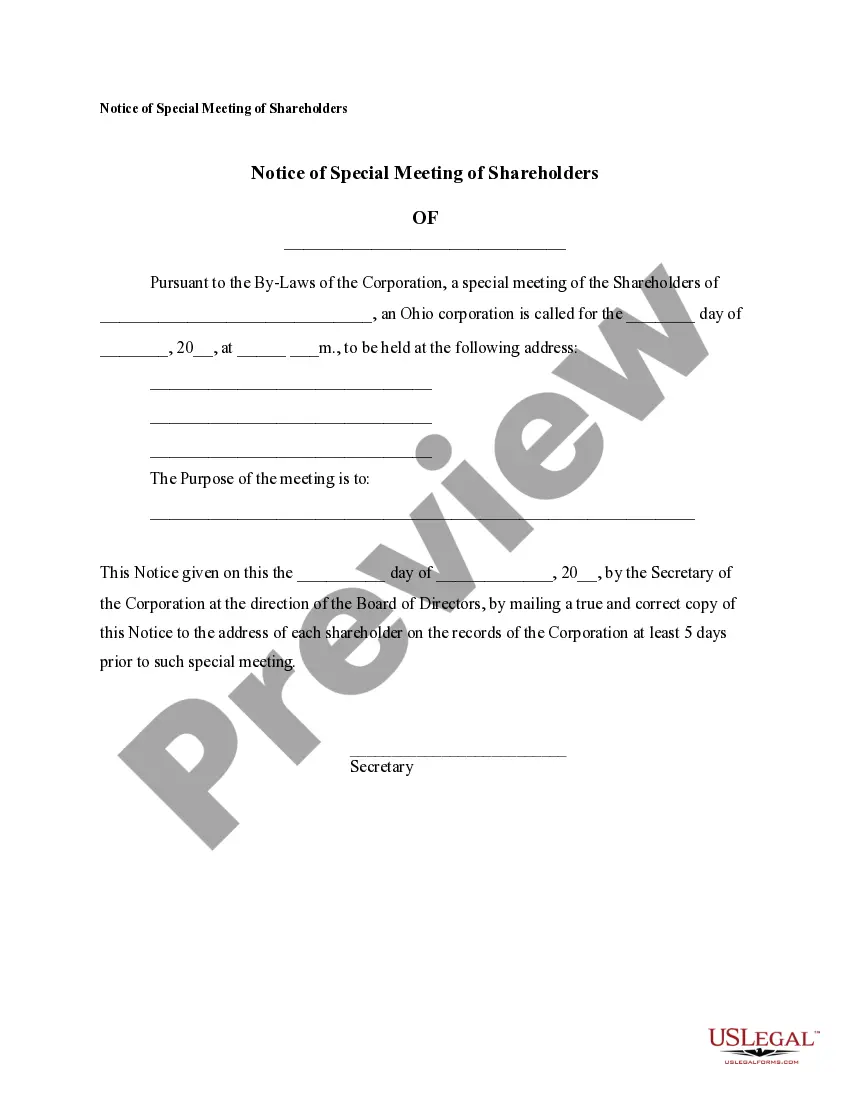
- Notice of Special Meeting of Shareholders
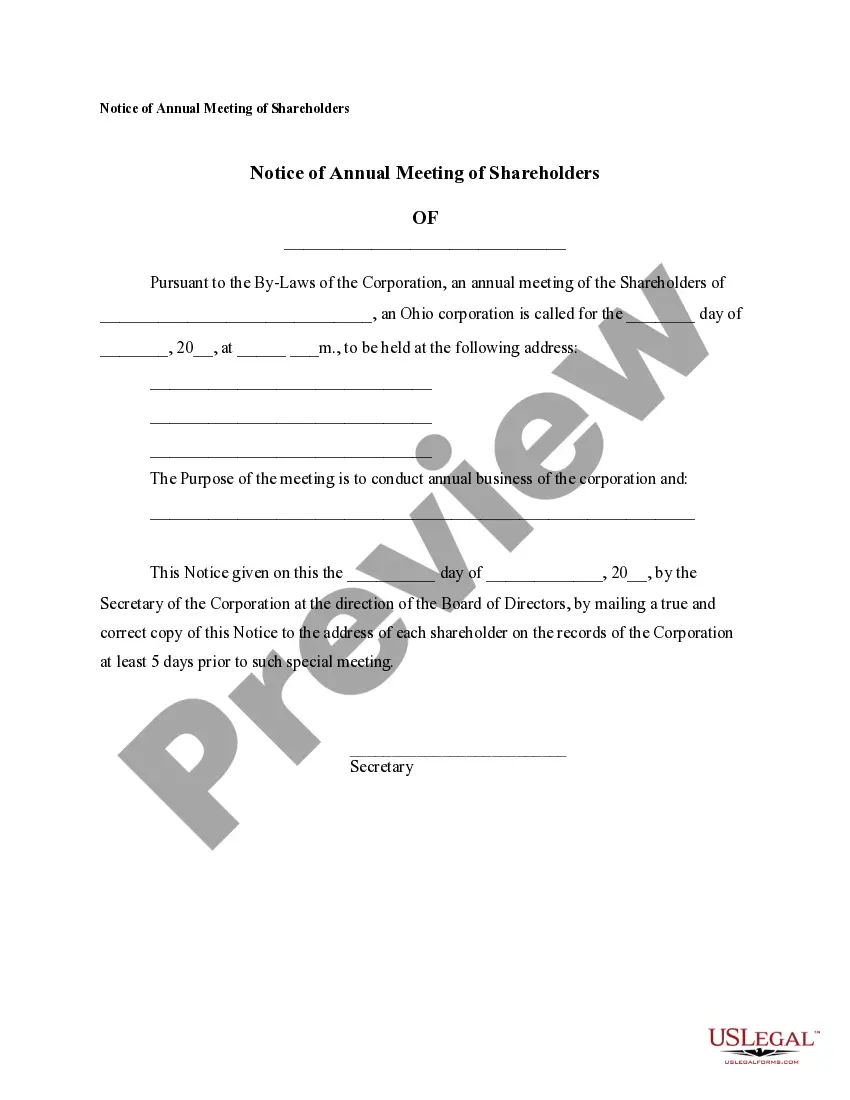
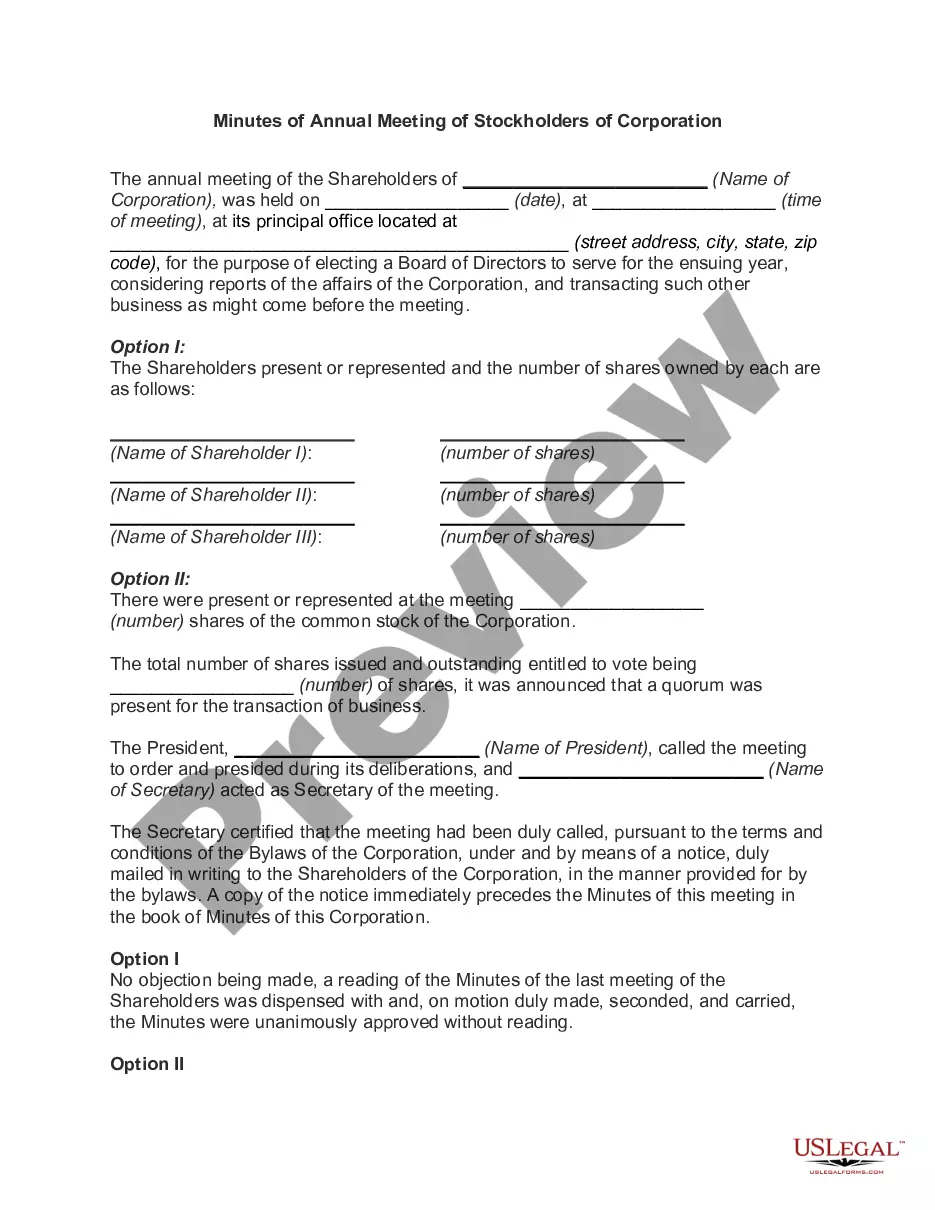
- Notice of Annual Meeting of Shareholders
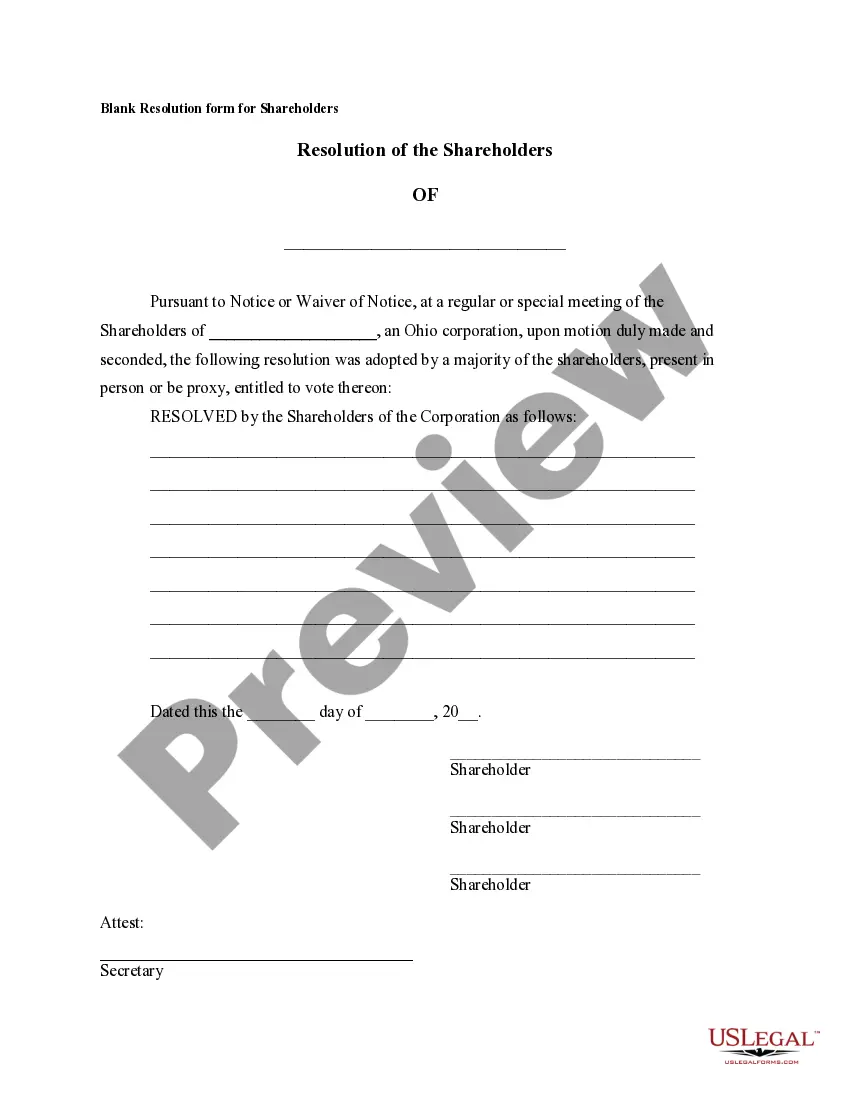
- Resolution of the Shareholders
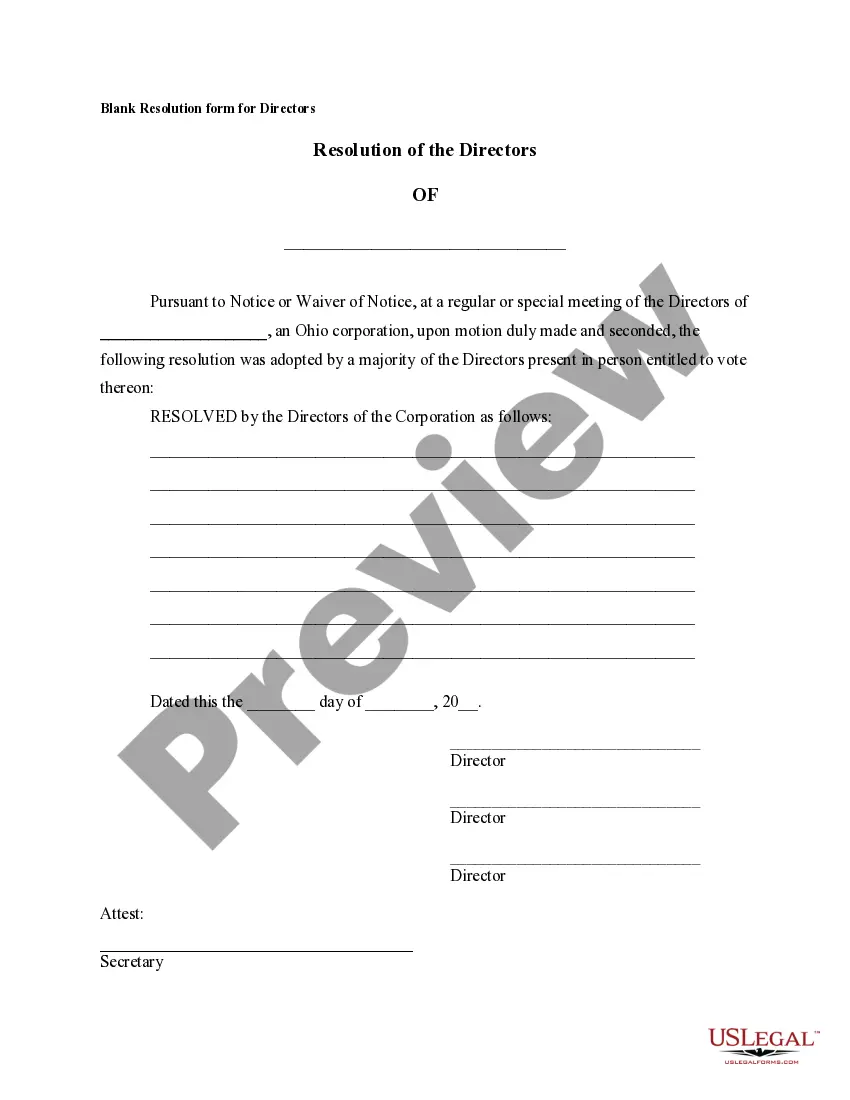
- Resolution of the Directors
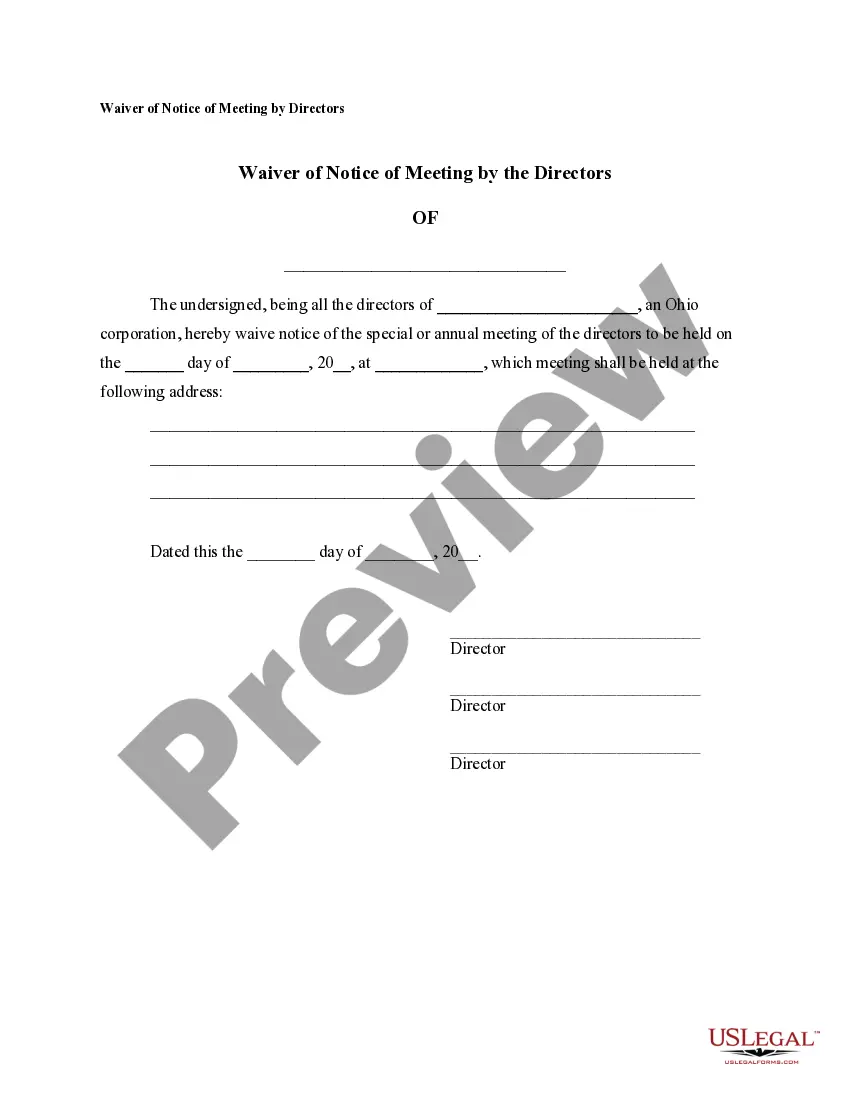
- Waiver of Notice of Meeting by the Directors
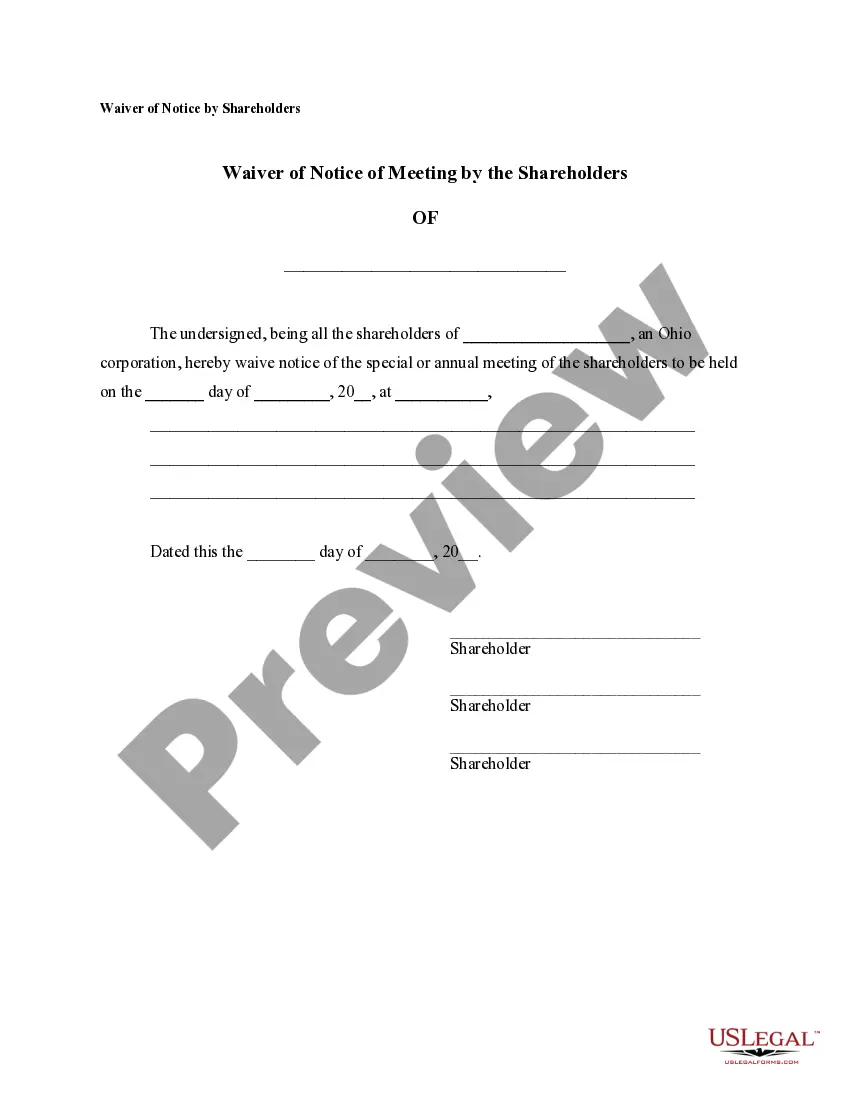
- Waiver of Notice of Meeting by the Shareholders
- Simple Stock Transfer Ledger
- Simple Stock Certificate

When to use this form
This form package should be used whenever a corporation needs to organize and document official meetings, such as annual or special meetings of directors and shareholders. It is also necessary for recording important corporate resolutions and managing stock ownership, transfers, and issuances. If you are starting a new corporation or managing an existing one, having these documents ready is crucial for compliance and transparency.
Who needs this form
Individuals and entities that should consider using this form include:
- Corporate directors and shareholders
- Business owners looking to manage corporate governance
- Companies planning official meetings or resolutions
- Entities needing to document stock transfers and issuances
How to prepare this document
To complete this form package, follow these steps:
- Identify the appropriate template for your needs (meeting notice, resolution, stock ledger, or certificate).
- Fill in the corporation's name and other required details, such as dates and addresses.
- Clearly state the purpose of each meeting or resolution.
- Ensure that all necessary parties (directors or shareholders) sign where required.
- Distribute the notices to all relevant parties in accordance with your corporationâs by-laws.
Does this document require notarization?
This form does not typically require notarization unless specified by local law. It's important to check your state's regulations regarding notarization for corporate documents to ensure compliance.
Get your form ready online
Our built-in tools help you complete, sign, share, and store your documents in one place.
Make edits, fill in missing information, and update formatting in US Legal Forms—just like you would in MS Word.
Download a copy, print it, send it by email, or mail it via USPS—whatever works best for your next step.
Sign and collect signatures with our SignNow integration. Send to multiple recipients, set reminders, and more. Go Premium to unlock E-Sign.
If this form requires notarization, complete it online through a secure video call—no need to meet a notary in person or wait for an appointment.
We protect your documents and personal data by following strict security and privacy standards.
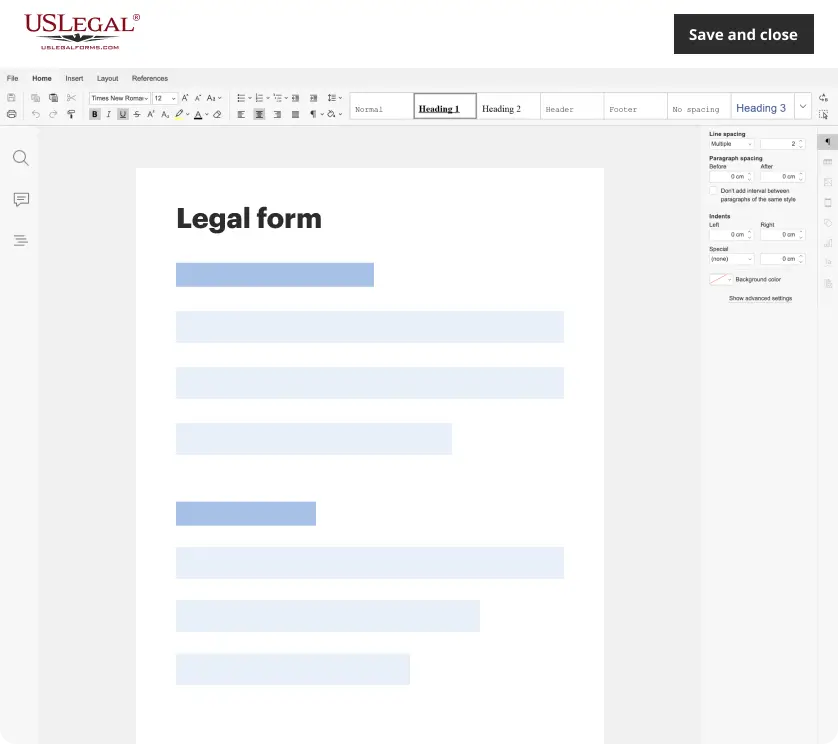
Make edits, fill in missing information, and update formatting in US Legal Forms—just like you would in MS Word.
Download a copy, print it, send it by email, or mail it via USPS—whatever works best for your next step.
Sign and collect signatures with our SignNow integration. Send to multiple recipients, set reminders, and more. Go Premium to unlock E-Sign.

If this form requires notarization, complete it online through a secure video call—no need to meet a notary in person or wait for an appointment.
We protect your documents and personal data by following strict security and privacy standards.
Common mistakes
- Failing to provide proper notice to all directors or shareholders.
- Not obtaining the required signatures on resolutions.
- Using outdated templates that do not comply with current laws.
- Neglecting to maintain an accurate stock ledger record.
Why use this form online
- Convenience of accessible and downloadable forms from anywhere.
- Editability allows customization based on specific corporate needs.
- Reliability of templates created by licensed attorneys for legal accuracy.
Main things to remember
- This form package contains essential documents for corporate meetings and governance.
- Proper completion and distribution of these forms are crucial for legal compliance.
- Understanding the specific requirements in your state can prevent legal issues.
Looking for another form?
Form popularity
FAQ
First, look for any signs that suggest the stock certificate is still valid. A valid stock certificate bears the name of the beneficiary. Also, all seals and signatures should be undamaged. In other words, there should be no hole punches or stamps over any of the seals or signatures on the certificate.
In the digital age, you can prove stock ownership without holding a physical certificate. However, if an investor wants a stock certificate, he can request that his brokerage house issue a certificate, or they can contact the company that issued the stocks.
A unique share certificate number. the company's name and company registration number. the registered office address of the company. the name of the shareholder. the contact address of the shareholder. the number of shares covered by the share certificate.
Applicable Law: In the first lines, you have to write the name of the state where the company was incorporated. Company Identification: Then, you have to write the name of the corporation and its legal address. Name of the shareholder: The next line is meant for the shareholder's name.
The number uniquely identifies the certificate and is used to track ownership. Often there are two or more boxes with the number on the front of the certificate. The CUSSIP number, assigned by the Securities Exchange Commission (SEC), is also printed on the certificate.
Stock shares do not have an expiration date.This may be the case with an old stock certificate you found in a trunk, but it will not hurt to check it out.
Help Guide. A stock transfer ledger is a document in a corporation's record books that is used to keep an accurate record of all of the corporation's stock transactions. It includes the relevant details anytime corporate shares are issued, sold, or otherwise transferred.
Call a discount or full-service brokerage house and provide the CUSIP number, which is unique to each individual stock certificate, and stock brokerages can use this number to find out exactly the status of the company. Most larger discount brokerage houses will do this search for free, but be sure to ask first.
If the stock is for a recognized company that's still in business, your task is relatively easy. If there's no cancellation stamp on the certificate, any brokerage can cash it in for you (but you'll need to provide the necessary paperwork proving you inherited it).