Ohio Living Trust for Individual Who is Single, Divorced or Widow (or Widower) with Children
About this form
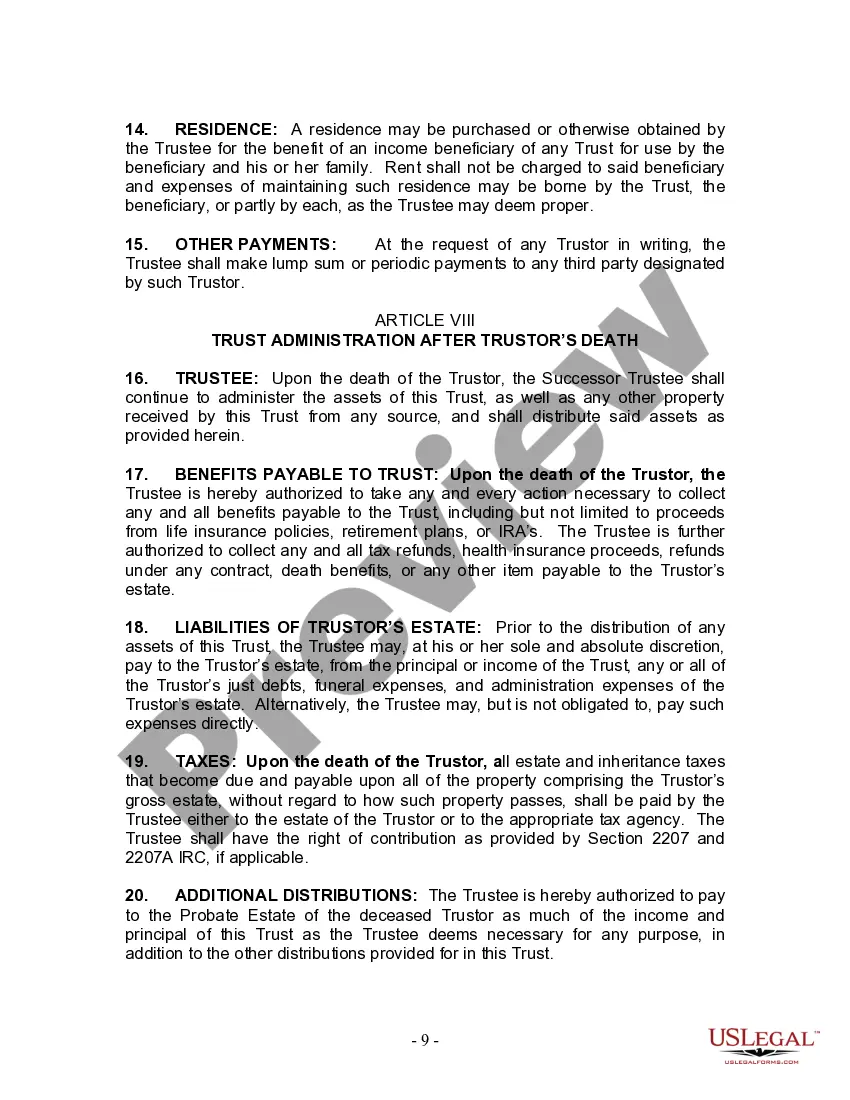
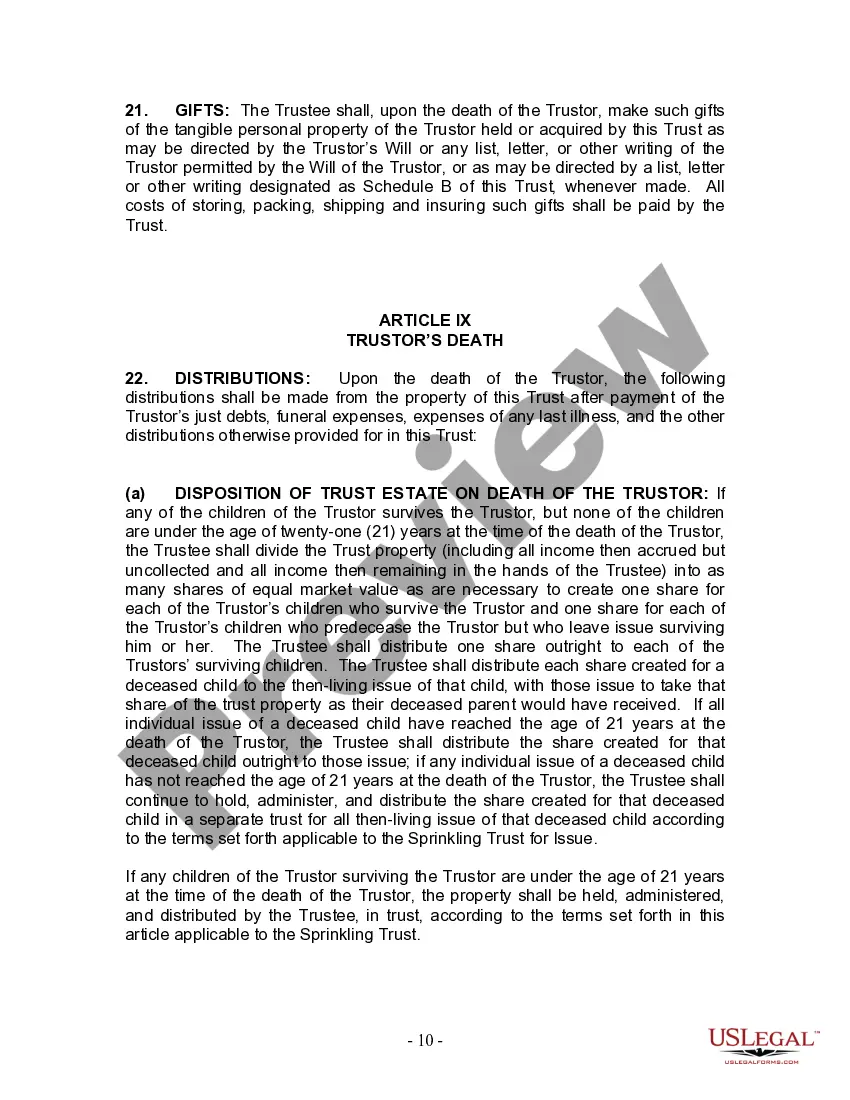
This Living Trust form is designed for individuals who are single, divorced, or widowed with children. It allows the creator, known as the Trustor, to place their assets into the trust to manage their estate and ensure their property is distributed according to their wishes after their death. Unlike a will, a living trust helps avoid probate, enabling a smoother transition of assets to beneficiaries. This form is essential for effective estate planning and can be created and managed according to one's preferences while the Trustor is still alive.
What’s included in this form
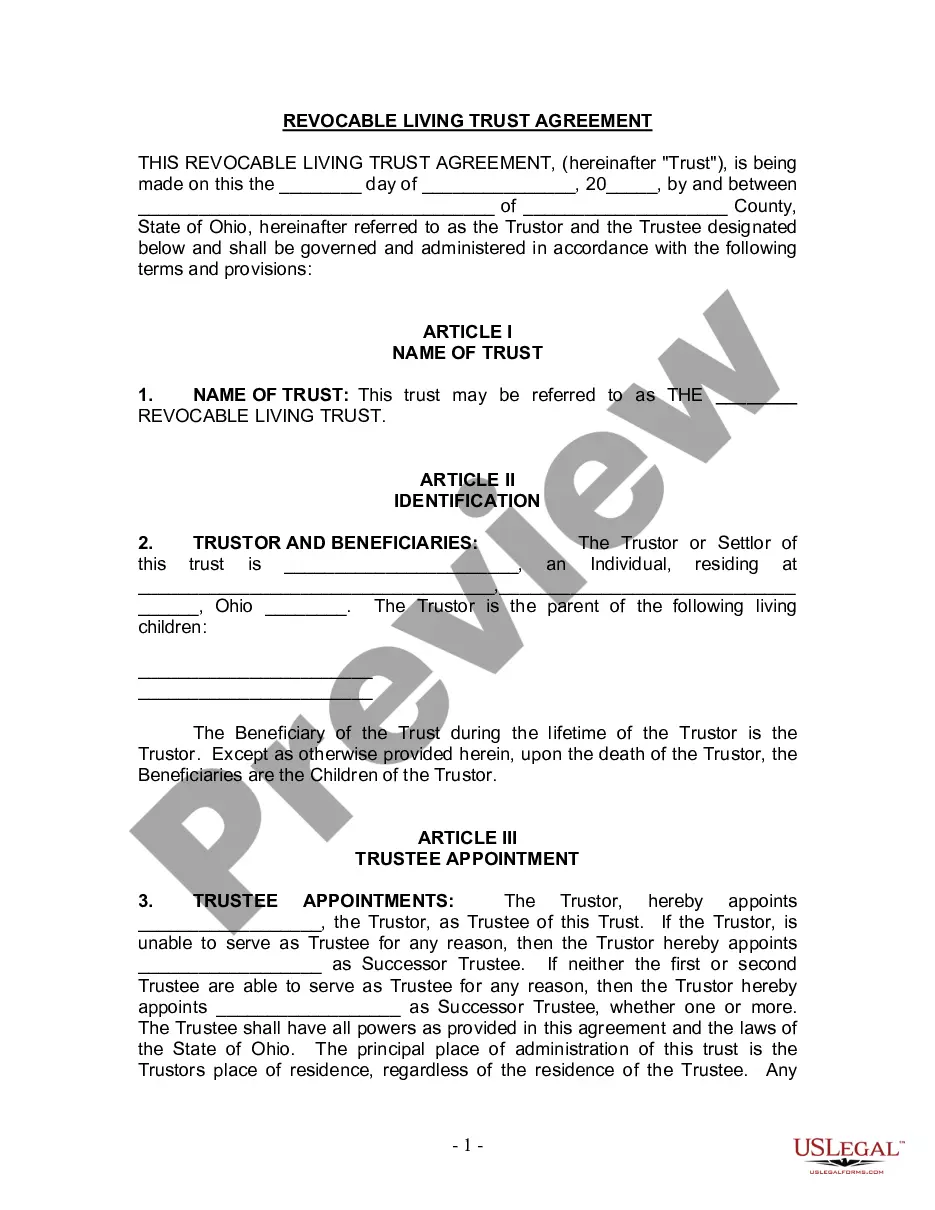
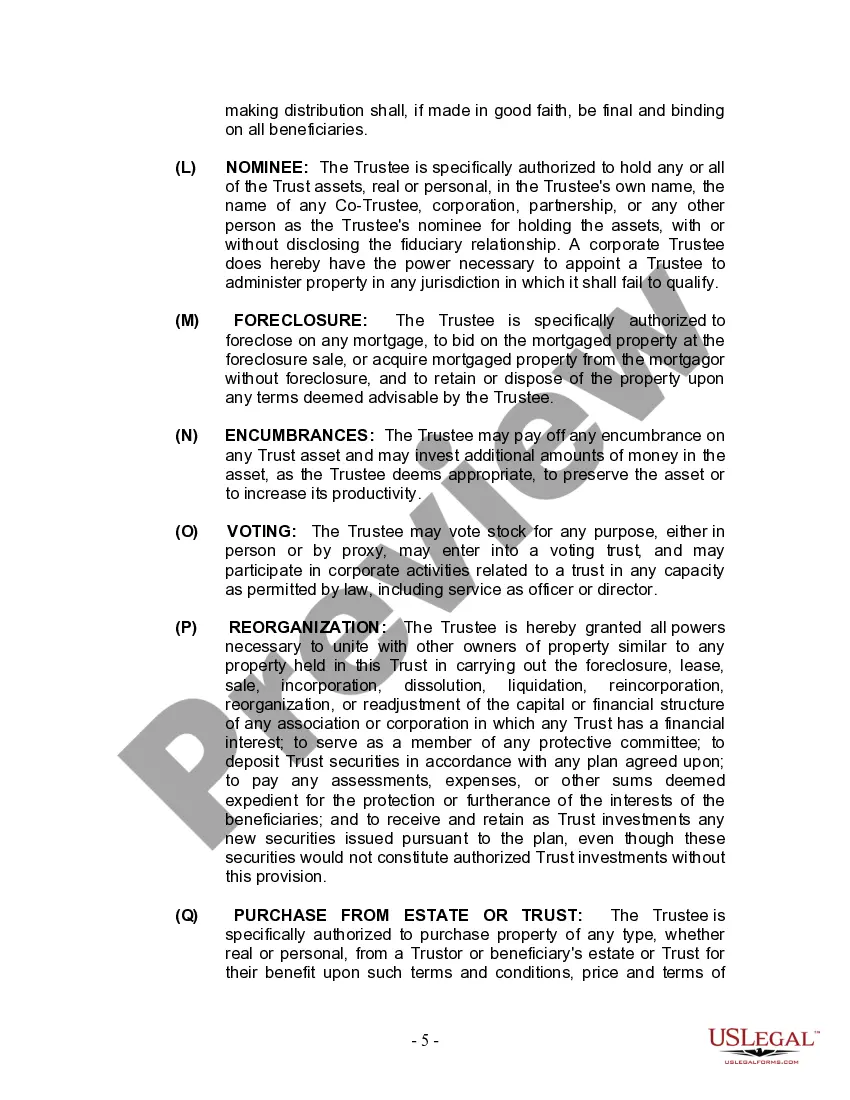
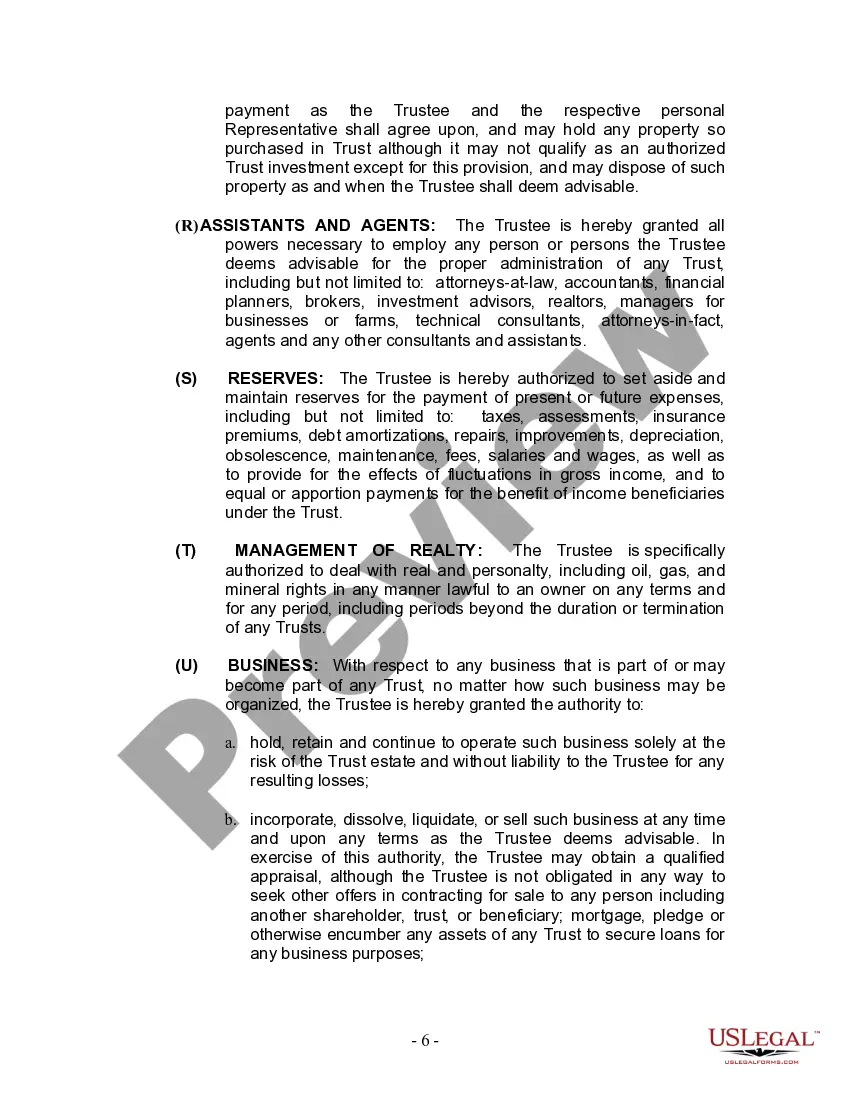
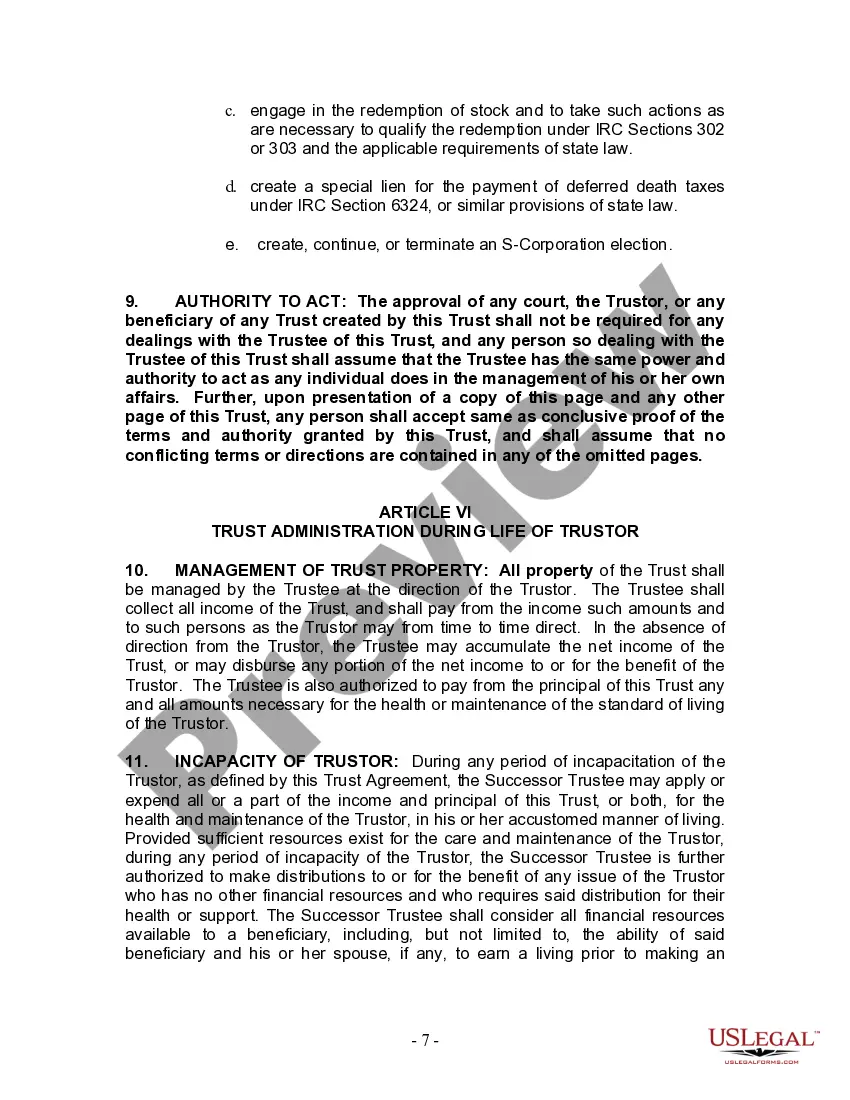
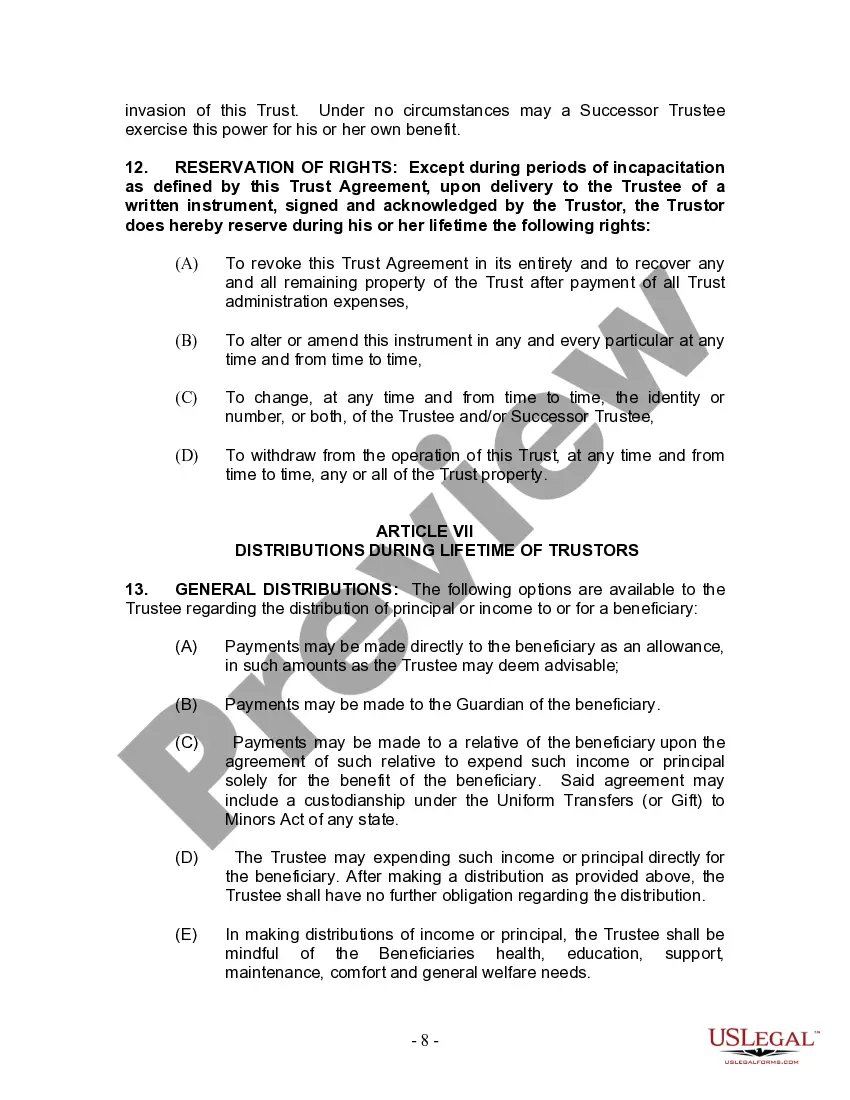
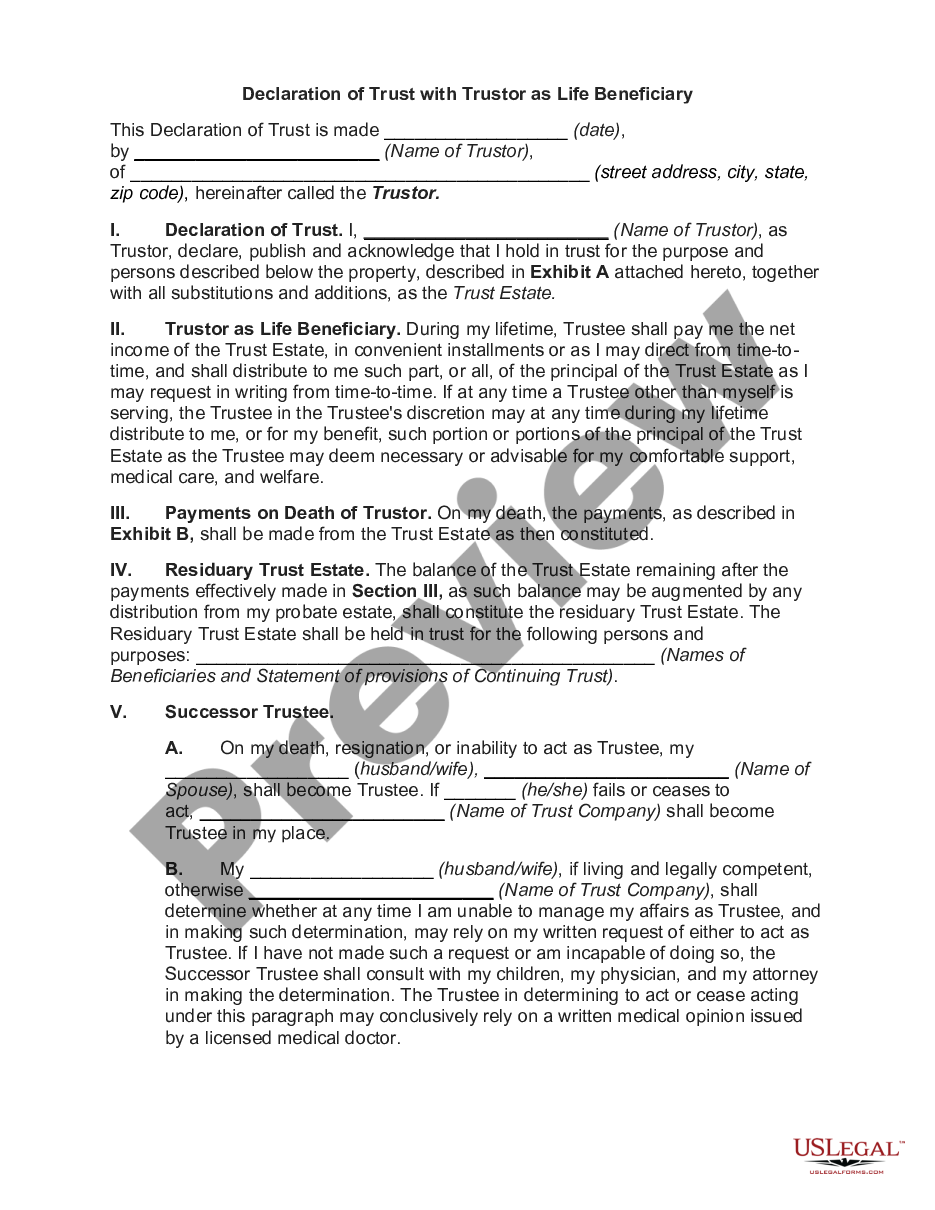
- Name of Trust: The official name of the living trust is specified.
- Trustor Identification: Information about the Trustor and their children is included.
- Trustee Appointment: The Trustor appoints themselves and, if necessary, successor trustees to manage the trust.
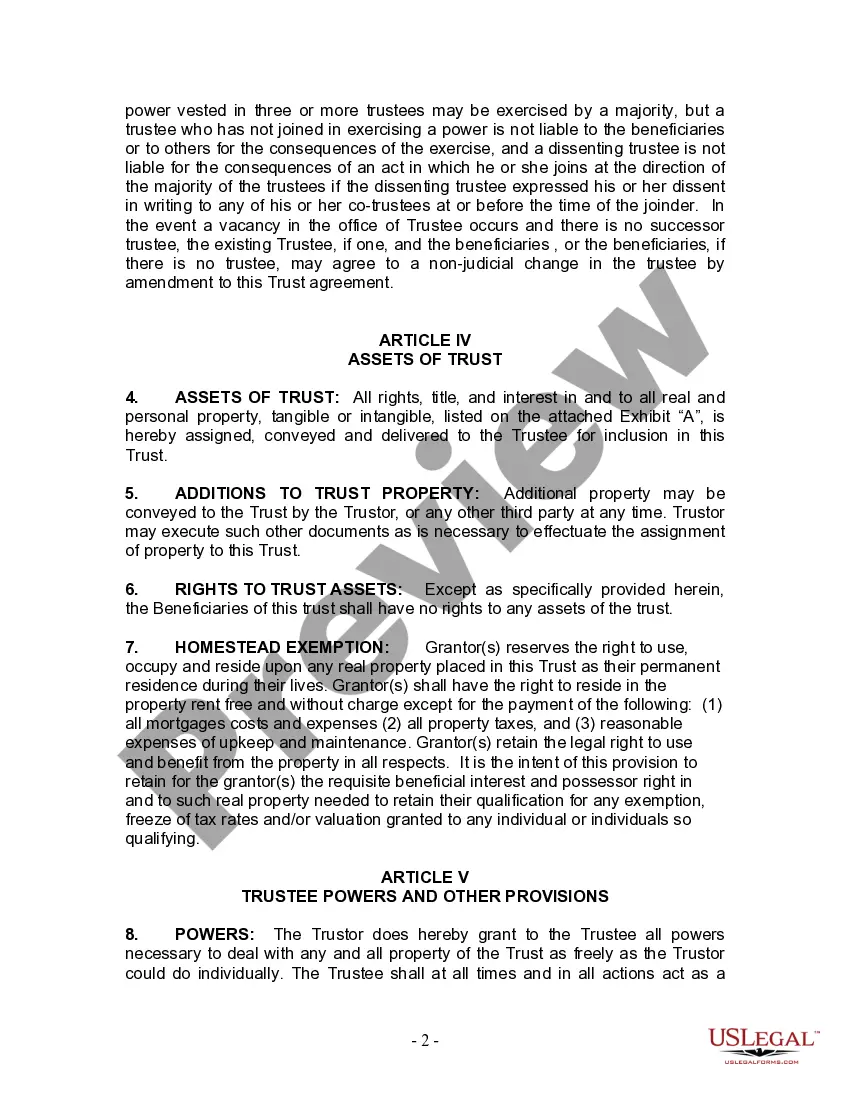
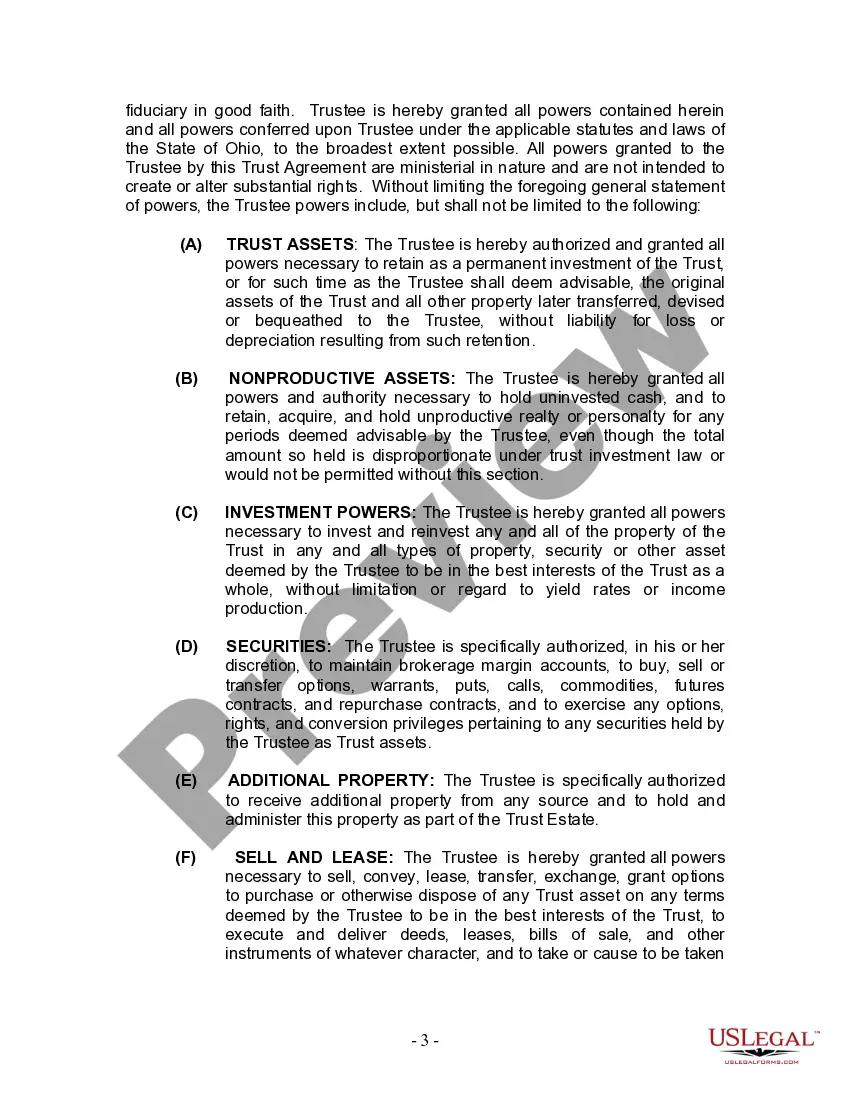
- Assets of Trust: Details about the property and assets being transferred into the trust are listed.
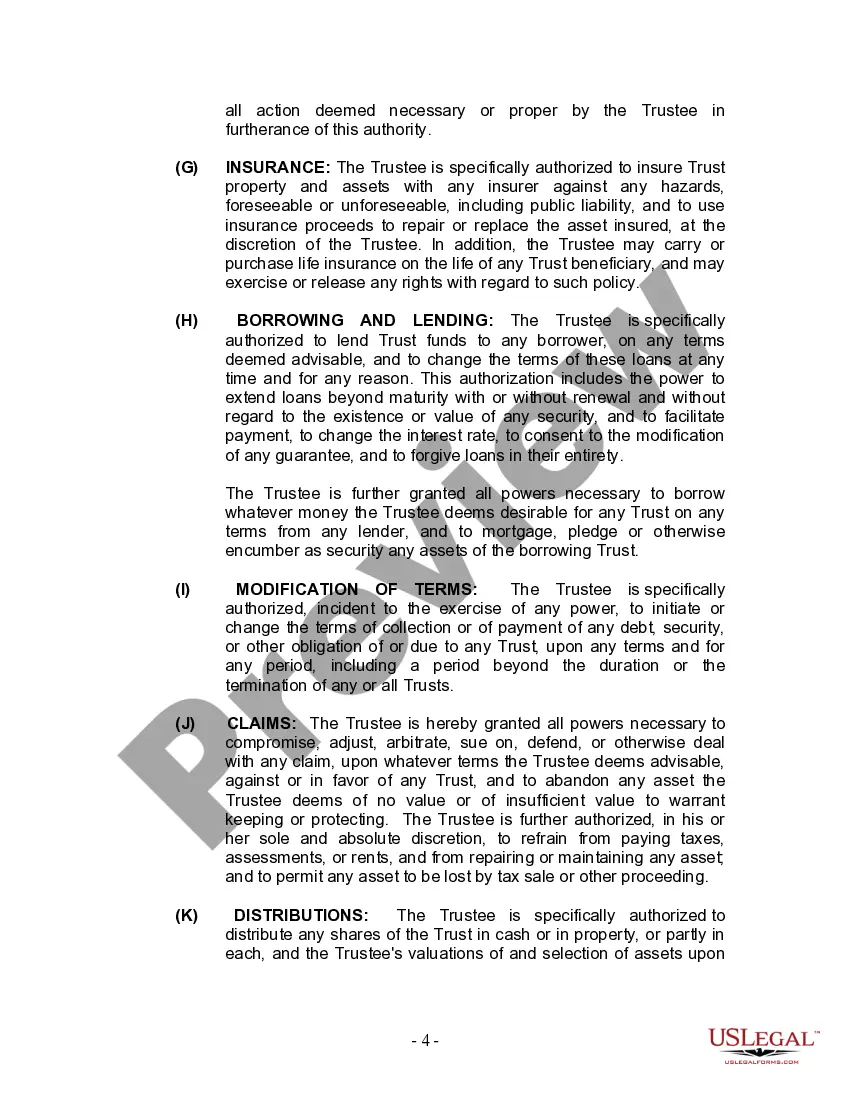
- Distribution Provisions: Guidelines for how and when the assets are distributed to beneficiaries are outlined.



When to use this form
This Living Trust form is beneficial in various scenarios, including when an individual wants to ensure their children receive their assets directly, avoid the lengthy probate process, and maintain control over their assets during their lifetime. It's especially useful for those who have experienced divorce or loss of a spouse and are looking to provide for their children while planning for their estate.
Intended users of this form
- Individuals who are single, divorced, or widowed.
- Parents who want to secure their children's inheritance.
- Anyone interested in avoiding probate for their estate.
- Individuals looking for a flexible and manageable estate planning option.
- Those who want to maintain control and management of their assets during their lifetime.
Instructions for completing this form
- Identify the parties by filling in the Trustor's information, including their name and address.
- Designate the name of the Living Trust and provide any necessary property information to include in the trust.
- Appoint the trustee(s) responsible for managing the trust, including any successor trustees.
- Specify the distribution provisions, outlining how the assets will be allocated to the beneficiaries upon the Trustor's death.
- Sign and date the form in front of a notary public to validate the trust legally.
Is notarization required?
This document requires notarization to meet legal standards. US Legal Forms provides secure online notarization powered by Notarize, allowing you to complete the process through a verified video call, available 24/7.
Get your form ready online
Our built-in tools help you complete, sign, share, and store your documents in one place.
Make edits, fill in missing information, and update formatting in US Legal Forms—just like you would in MS Word.
Download a copy, print it, send it by email, or mail it via USPS—whatever works best for your next step.
Sign and collect signatures with our SignNow integration. Send to multiple recipients, set reminders, and more. Go Premium to unlock E-Sign.
If this form requires notarization, complete it online through a secure video call—no need to meet a notary in person or wait for an appointment.
We protect your documents and personal data by following strict security and privacy standards.
Make edits, fill in missing information, and update formatting in US Legal Forms—just like you would in MS Word.
Download a copy, print it, send it by email, or mail it via USPS—whatever works best for your next step.
Sign and collect signatures with our SignNow integration. Send to multiple recipients, set reminders, and more. Go Premium to unlock E-Sign.

If this form requires notarization, complete it online through a secure video call—no need to meet a notary in person or wait for an appointment.
We protect your documents and personal data by following strict security and privacy standards.
Common mistakes
- Failing to list all assets to be included in the trust.
- Not updating the trust after major life changes, such as marriage, divorce, or the birth of a child.
- Inadequately appointing successor trustees, which can lead to confusion after the Trustor's death.
- Not properly documenting the trust with necessary signatures and notarization.
Benefits of completing this form online
- Immediate access to a legally compliant living trust template customized for Ohio law.
- The ability to edit and personalize the form according to individual needs easily.
- Convenience of downloading and printing the form at home or office at any time.
- Assurance that the form is prepared by licensed attorneys, ensuring its validity.
What to keep in mind
- This Living Trust provides a way to manage and distribute your assets without probate.
- It is suitable for single, divorced, or widowed individuals with children.
- Completing this form accurately ensures your wishes are respected and can provide peace of mind.
Looking for another form?



Form popularity
FAQ
This form is a revocable living trust designed for individuals who are single, divorced, or widowed with children. It lets the Trustor transfer assets into the trust to manage property during life and distribute assets to beneficiaries after death, while helping avoid probate. It can be created and adjusted by the Trustor while alive to fit family needs.
Common mistakes include failing to accurately identify the Trustor and their children, not appointing a reliable trustee (and successors), failing to transfer assets into the trust (funding the trust), and leaving the distribution provisions vague or incomplete. These gaps can undermine probate avoidance and the intended control over assets described in this form.
Yes. A financial advisor can help with planning and implementing this Ohio Living Trust for Individual Who Is Single, Divorced or Widow with Children, including identifying assets to fund the trust, selecting a trustee, and shaping distribution provisions. For legal questions or to ensure state-law compliance, consult a licensed attorney.
Like other living trusts, this form is designed to avoid probate and provide lifetime asset management. A potential downside is the need to fund the trust and maintain it over time, which can add ongoing administration. The form specifies the trust name, Trustor Identification, Trustee Appointment, Assets of Trust, and Distribution Provisions to guide setup.
Having a living trust can help a parent with children avoid probate and maintain control over asset management during life and after death. This Ohio Living Trust for Individual Who Is Single, Divorced or Widow with Children focuses on naming the Trustor, identifying children, appointing a trustee, listing assets, and outlining distribution provisions to beneficiaries.
It is tailored for individuals who are single, divorced, or widowed with children, with emphasis on protecting a child’s inheritance and ongoing asset management while the Trustor is alive. The form highlights the components—Trust name, Trustor Identification, Trustee Appointment, Assets of Trust, and Distribution Provisions—to fit a family-focused Ohio estate plan.