Ohio Quitclaim Deed from Individual to Two Individuals in Joint Tenancy
About this form
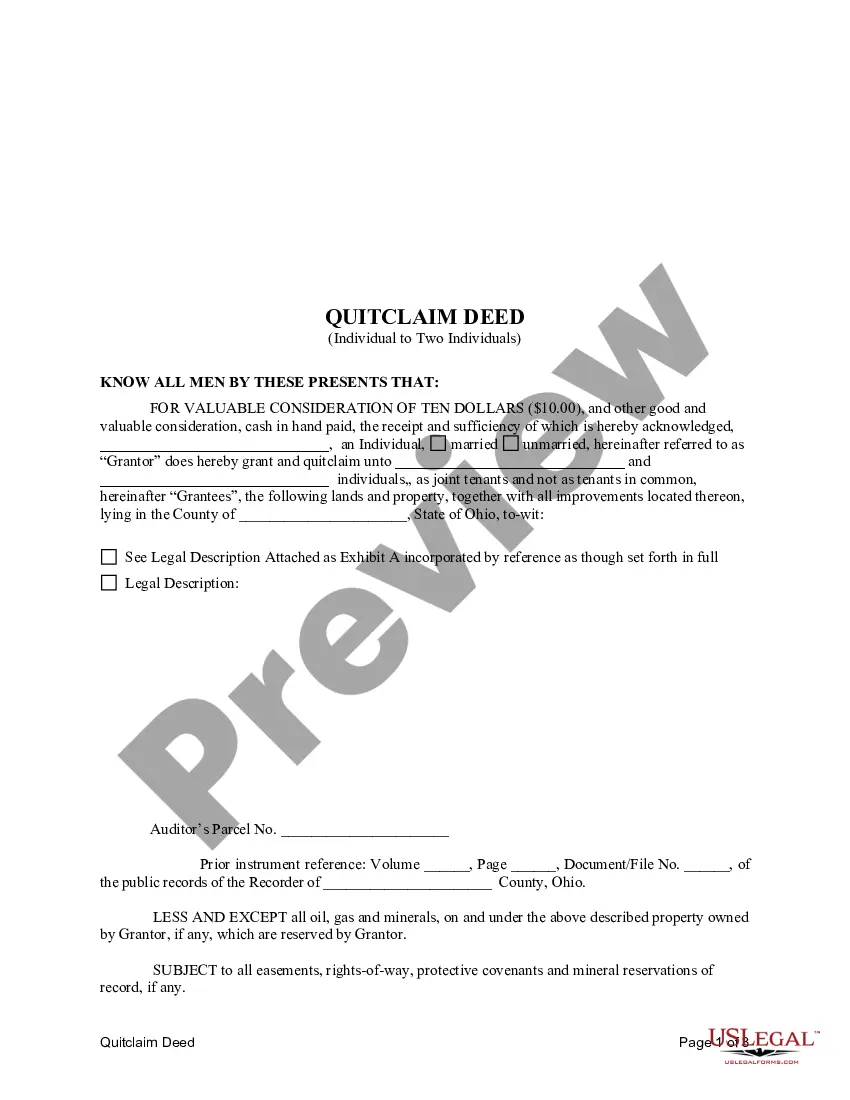
The Quitclaim Deed from Individual to Two Individuals in Joint Tenancy is a legal document used to transfer property ownership from one individual (the Grantor) to two individuals (the Grantees) who will hold the property in a joint tenancy arrangement. This type of deed is particularly useful when the Grantor wants to convey their property without making any guarantees regarding its title, thus simplifying the transfer process. It allows the Grantees to benefit from the right of survivorship, ensuring that, upon the death of either Grantee, the surviving Grantee automatically receives full ownership of the property.
Form components explained
- Identification of the Grantor and Grantees
- Legal description of the property being transferred
- Clauses detailing the conveyance of property rights
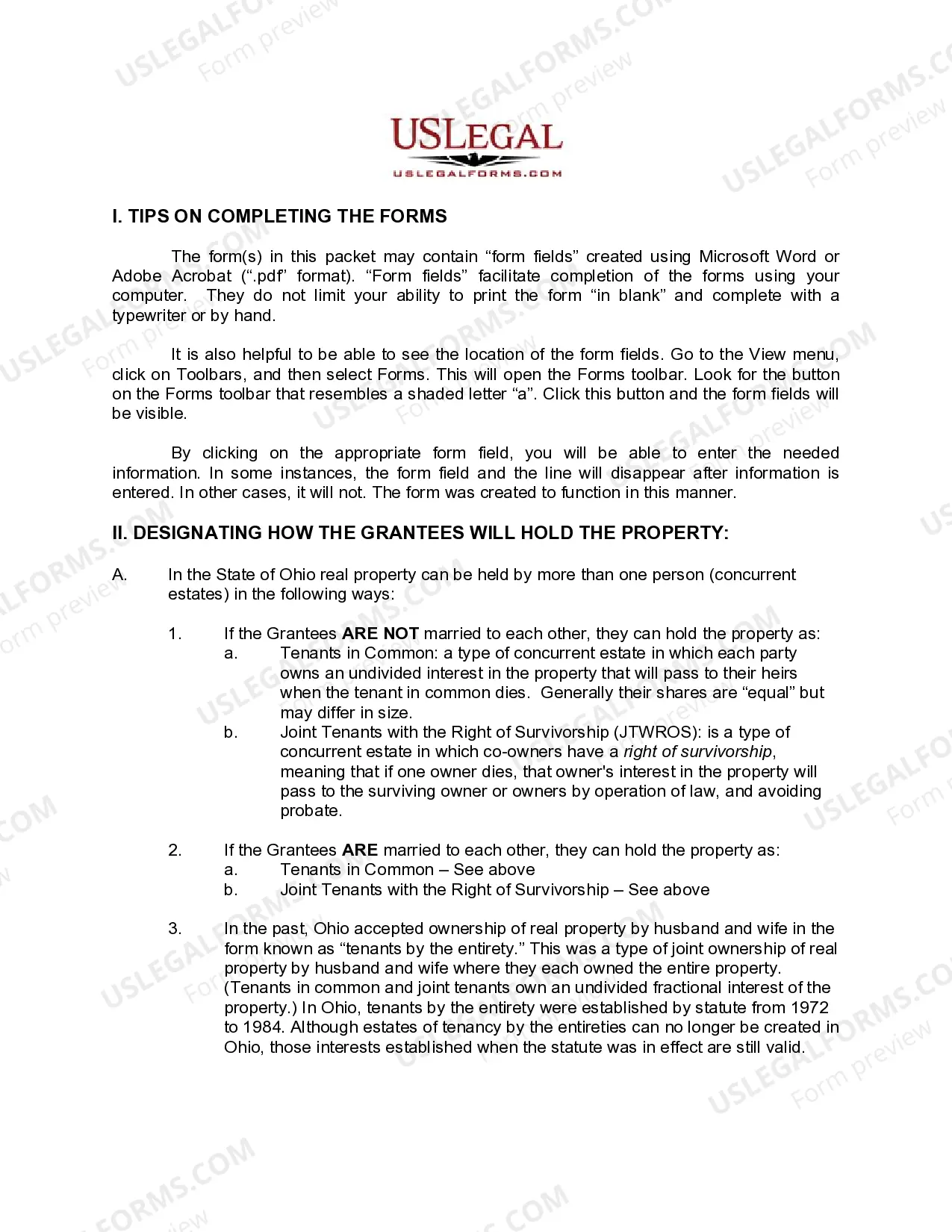
- Indication of whether the Grantees will hold the property as joint tenants or tenants in common
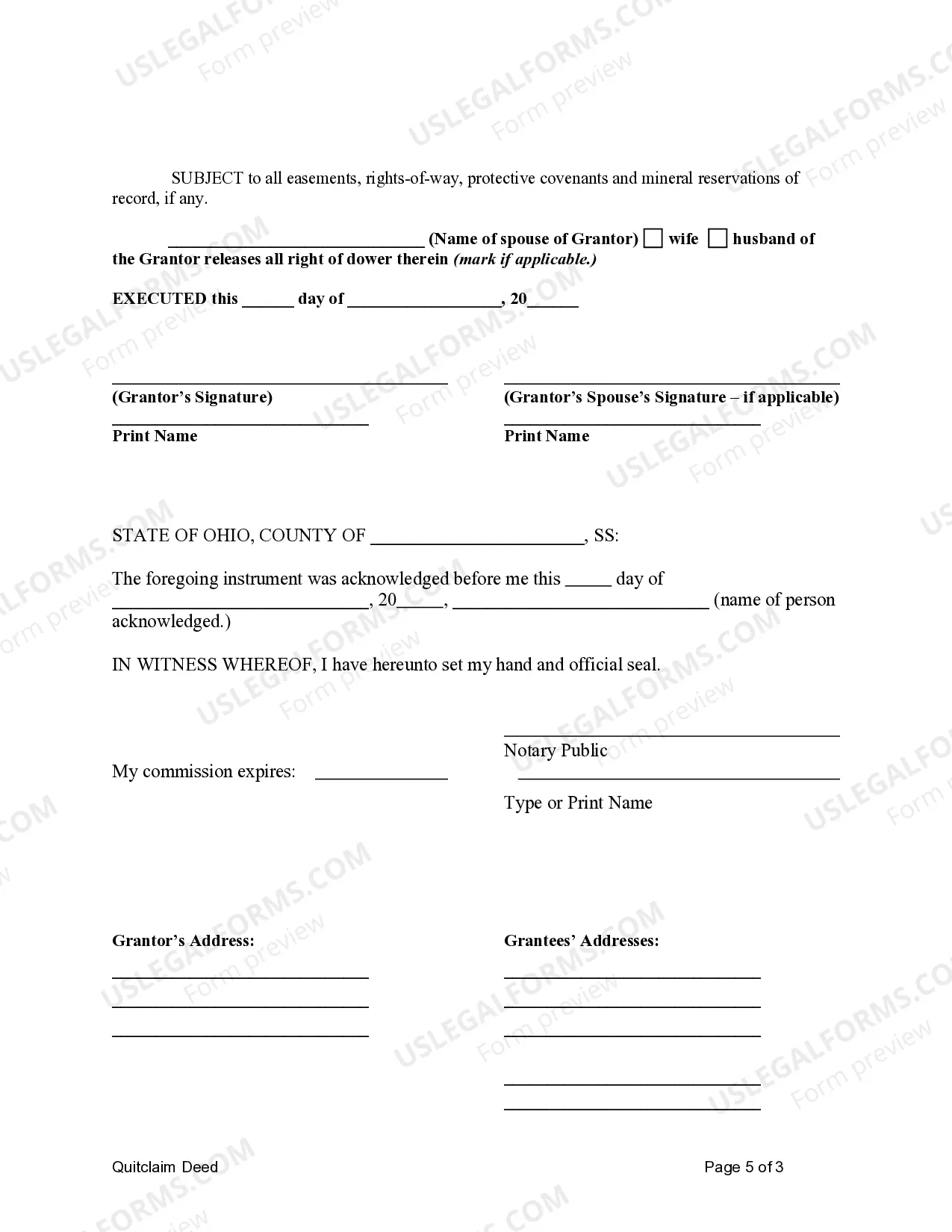
- Grantorâs signature along with optional spouseâs signature





When to use this document
This Quitclaim Deed is used when an individual wishes to transfer property to two people in a joint tenancy. Common scenarios include family members wanting to co-own a family home or friends purchasing an investment property together. It's particularly intended for situations where the Grantor wishes to waive any claims to the property and provide the Grantees the rights of survivorship.
Who this form is for
- Individuals transferring property ownership to two others
- Those looking to establish joint ownership with rights of survivorship
- Anyone needing to simplify the transfer process without warranties
How to prepare this document
- Identify the parties involved: the Grantor and the two Grantees.
- Fill in the legal description of the property being transferred.
- Indicate whether the Grantees will hold the property as joint tenants or tenants in common.
- Ensure the Grantor and, if applicable, their spouse sign the document.
- Complete any required witness or notarization steps as mandated by local laws.
Does this document require notarization?
This form does not typically require notarization unless specified by local law. However, having the document notarized can enhance its legitimacy and streamline potential future property transactions.
Get your form ready online
Our built-in tools help you complete, sign, share, and store your documents in one place.
Make edits, fill in missing information, and update formatting in US Legal Forms—just like you would in MS Word.
Download a copy, print it, send it by email, or mail it via USPS—whatever works best for your next step.
Sign and collect signatures with our SignNow integration. Send to multiple recipients, set reminders, and more. Go Premium to unlock E-Sign.
If this form requires notarization, complete it online through a secure video call—no need to meet a notary in person or wait for an appointment.
We protect your documents and personal data by following strict security and privacy standards.

Make edits, fill in missing information, and update formatting in US Legal Forms—just like you would in MS Word.

Download a copy, print it, send it by email, or mail it via USPS—whatever works best for your next step.

Sign and collect signatures with our SignNow integration. Send to multiple recipients, set reminders, and more. Go Premium to unlock E-Sign.

If this form requires notarization, complete it online through a secure video call—no need to meet a notary in person or wait for an appointment.

We protect your documents and personal data by following strict security and privacy standards.
Mistakes to watch out for
- Failing to accurately describe the property may lead to legal complications.
- Not specifying how the Grantees will hold the property (joint tenancy vs. tenants in common).
- Omitting signatures or names, which can invalidate the deed.
Benefits of using this form online
- Convenience of completing the form at your own pace.
- Editability ensures accuracy before printing and signing.
- Access to attorney-reviewed templates for legal peace of mind.
Legal use & context
- This Quitclaim Deed effectively conveys all rights the Grantor has to the property to the Grantees.
- It is enforceable in Ohio under state law, ensuring compliance during the transfer of ownership.
- Parties should be aware that a quitclaim deed does not guarantee clear title or ownership of the property.
Key takeaways
- A Quitclaim Deed facilitates the transfer of property without warranties.
- It is especially beneficial for creating joint tenancy with rights of survivorship.
- Ensure all parties fully understand their rights and responsibilities before completing the form.
Looking for another form?

Form popularity
FAQ
If the quitclaim deed requires the signature of all co-owners, the deed is invalid unless all co-owners have signed it and the deed is then delivered to the grantee.If one individual owns real estate and desires to add a co-owner such as a spouse, a quitclaim deed might be used.
An Ohio quit claim deed is a legal document that adheres to state law, and legally transfers the ownership interest of a property from one person to the next. This form of transfer comes with no warranties or guarantees that the property title is clear, and the seller has the authority to sell the property.
In states like California and Florida, the spouses may use a quitclaim deed to transfer the property without warranting title. Other stateslike Texasrecognize a similar type of deed called a deed without warranty.
A quitclaim deed transfers title but makes no promises at all about the owner's title.A person who signs a quitclaim deed to transfer property they do not own results in no title at all being transferred since there is no actual ownership interest. The quitclaim deed only transfers the type of title you own.
It is also crucial that a spouse know about the loan, even if he or she is not on the mortgage. In general, the spouse must sign a deed of trust, the Truth in Lending and Right to Cancel documents. By signing these documents, they are simply acknowledging the existence of the mortgage.
A quitclaim deed affects ownership and the name on the deed, not the mortgage. Because quitclaim deeds expose the grantee to certain risks, they are most often used between family members and where there is no exchange of money.Quitclaim deeds transfer title but do not affect mortgages.
In order to transfer ownership of the marital home pursuant to a divorce, one spouse is going to need to sign a quitclaim deed, interspousal transfer deed, or a grant deed, in order to convey the title to the property.
If you sign a quitclaim deed to release yourself from ownership of the property or a claim to the title, then that doesn't mean you are no longer held accountable for the mortgage payment.Otherwise, you may be held responsible for unpaid payments despite no longer having a claim to the title.