Alaska Landlord Agreement to allow Tenant Alterations to Premises
What is this form?
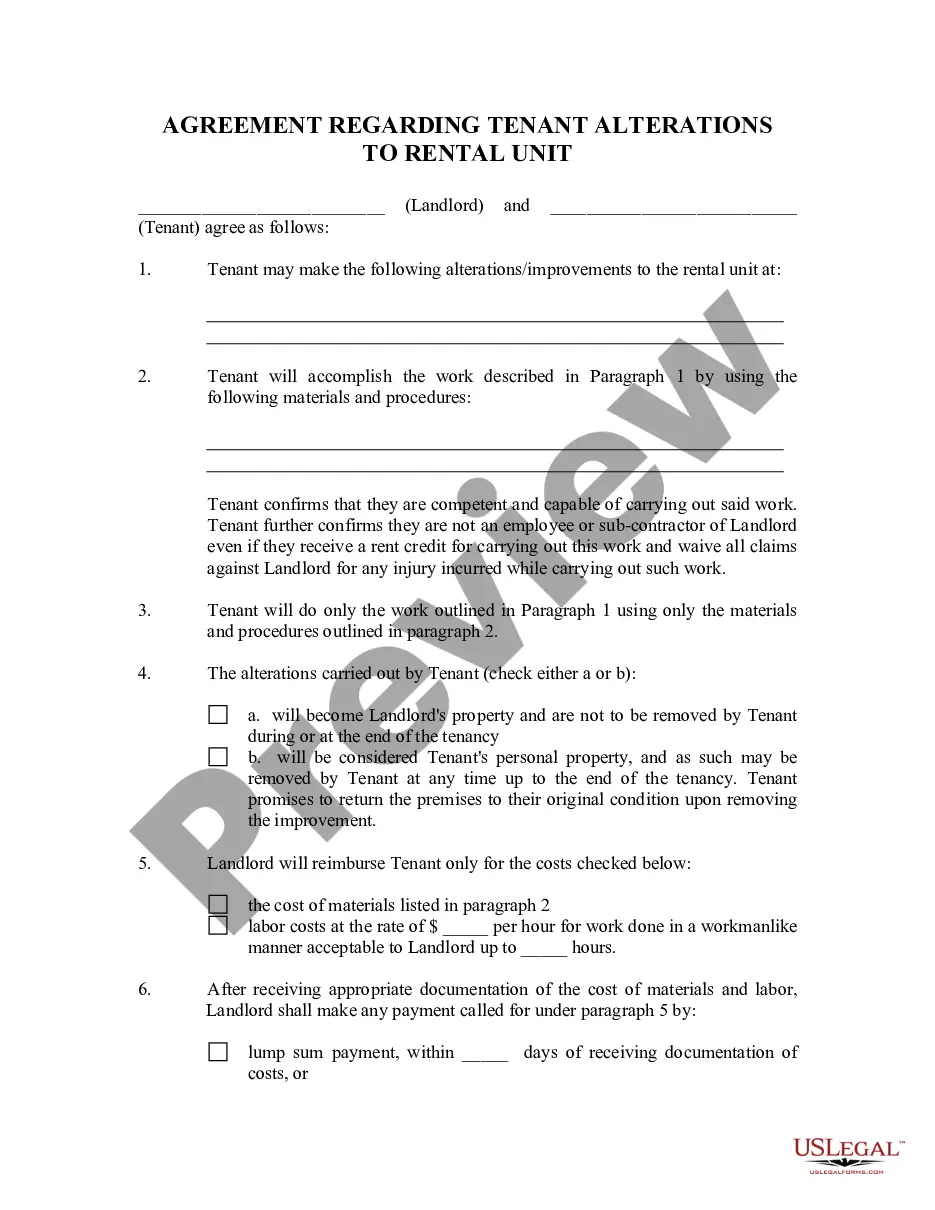
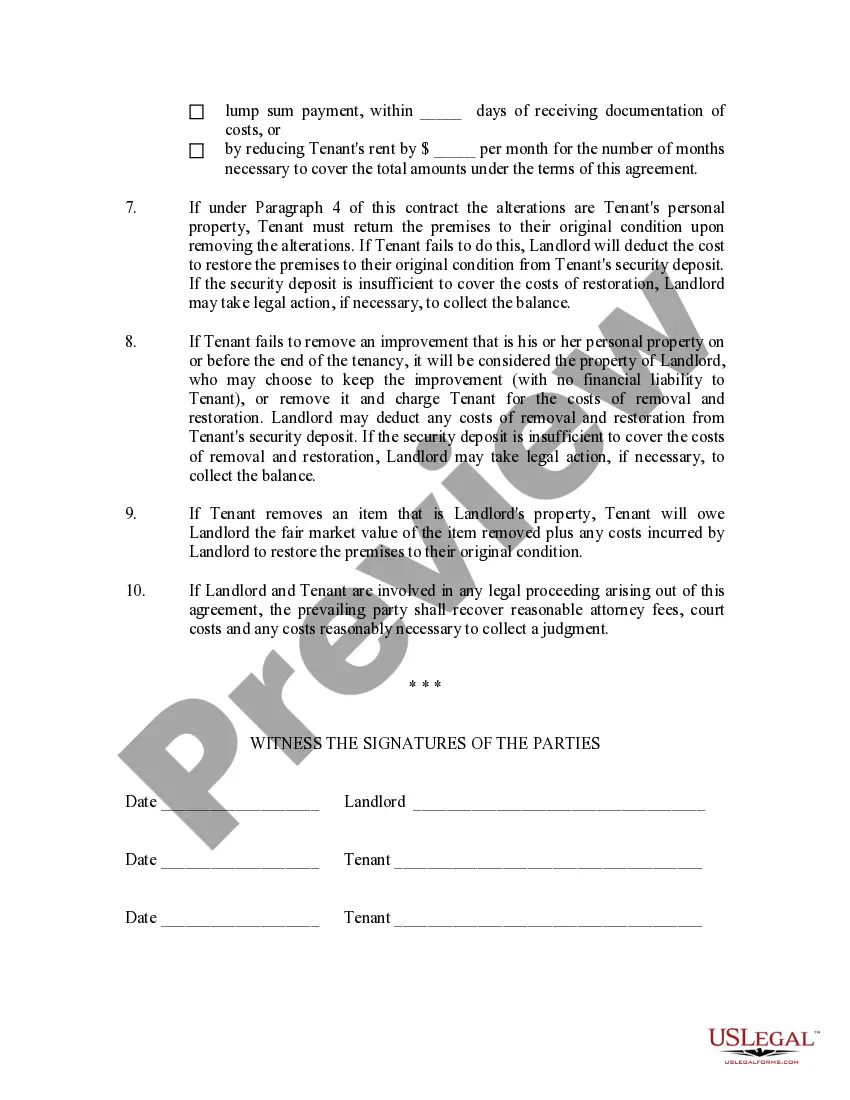
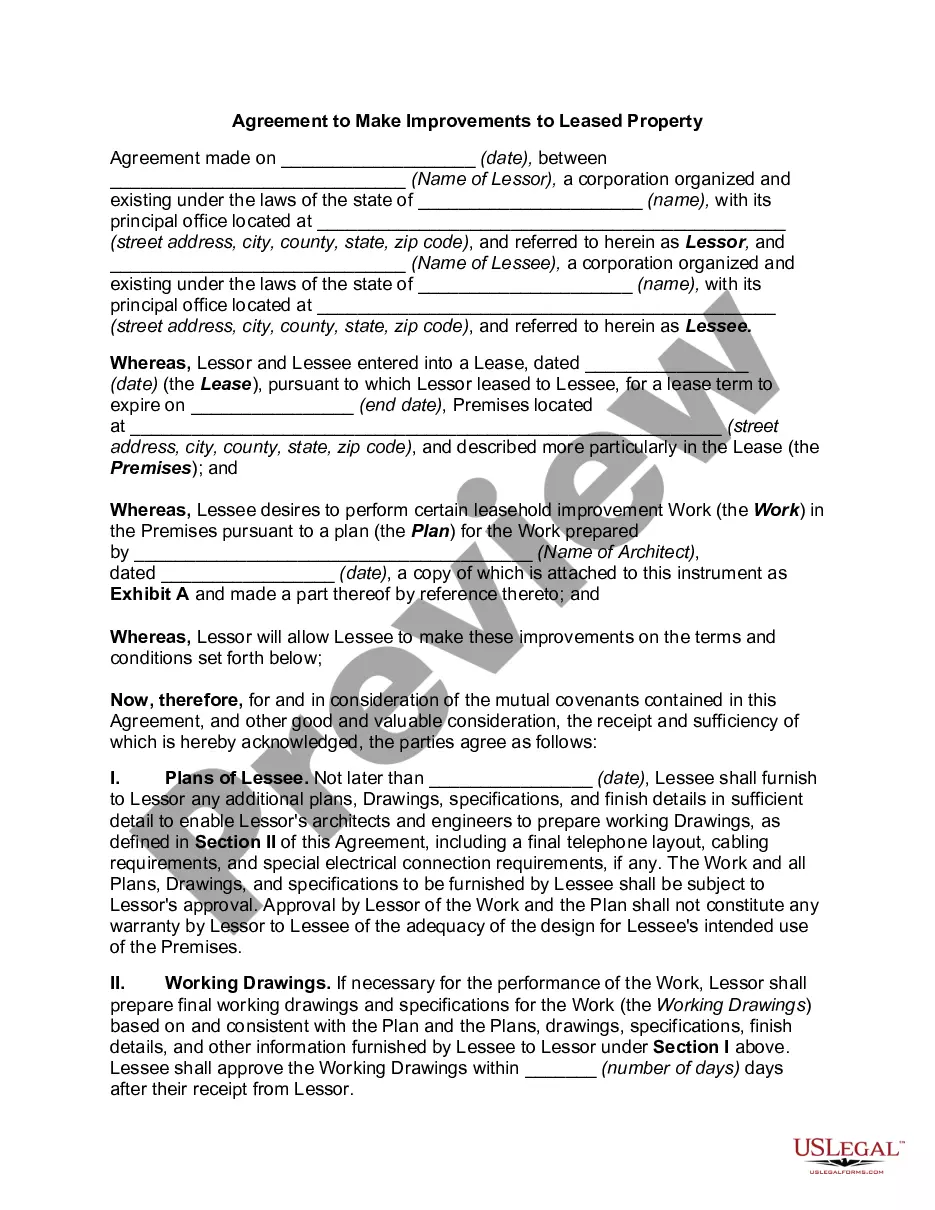
The Landlord Agreement to allow Tenant Alterations to Premises is a legal document that outlines the rights and responsibilities of both landlords and tenants when a tenant wishes to make changes to a rented property. This agreement is crucial for preventing misunderstandings about what alterations can be made, who will pay for them, and the ownership of those changes. It serves a different purpose than standard lease agreements by specifically addressing alterations and improvements to the premises.
Key components of this form
- Identification of the parties involved: landlord and tenant.
- Section detailing the specific alterations or improvements permitted by the tenant.
- Clarification on whether the alterations become the landlord's property or remain with the tenant.
- Reimbursement details regarding costs of materials and labor associated with the alterations.
- Provisions concerning the restoration of the premises upon removal of alterations.
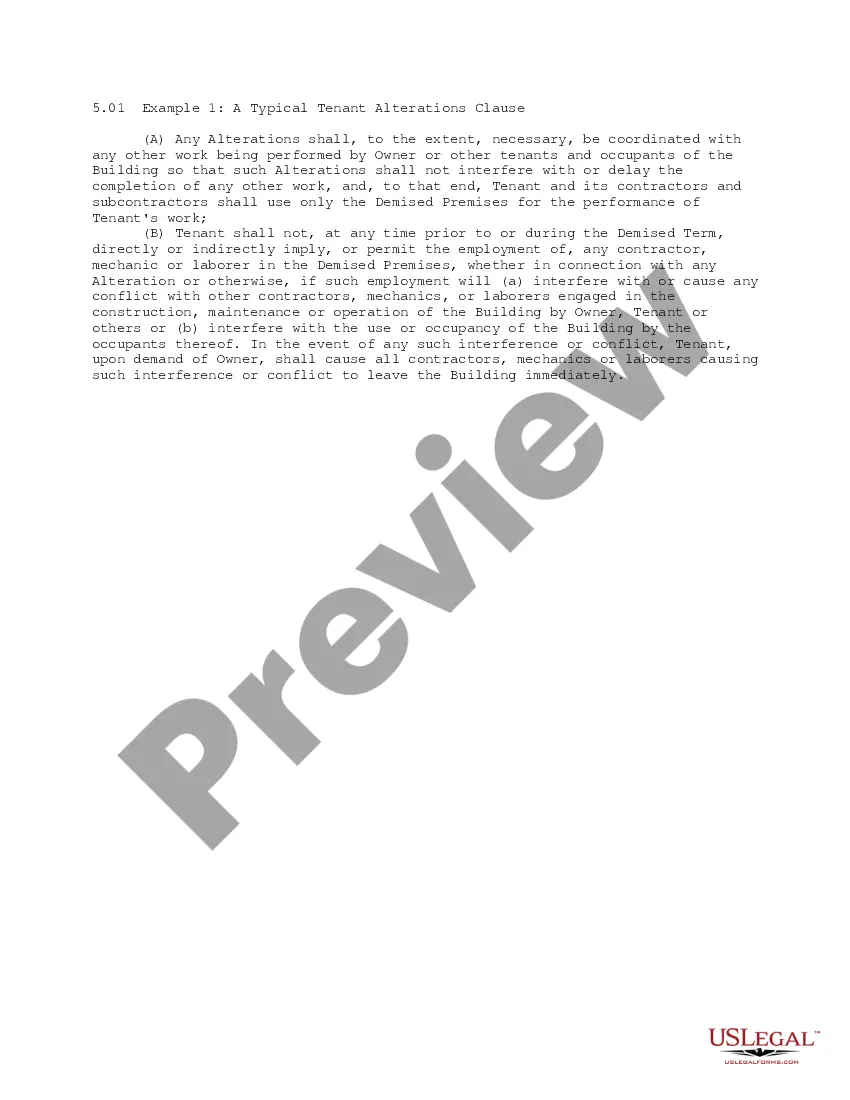
Situations where this form applies
This agreement should be used when a tenant wishes to make modifications to a rental property that could affect its appearance, functionality, or value. Scenarios include renovating a kitchen, installing shelves, or painting walls. Having a written agreement ensures both parties are aware of the terms and avoids disputes when the tenancy ends.
Who should use this form
This agreement is intended for:
- Landlords who want to establish clear guidelines for tenant alterations.
- Tenants who plan to make improvements to their rented space and wish to ensure proper reimbursement and terms for their alterations.
- Property managers looking for a standardized form to streamline tenant modifications.
How to prepare this document
- Identify and write down the names of the landlord and tenant at the beginning of the document.
- Clearly describe the intended alterations or improvements in the designated section.
- Decide whether the alterations will be owned by the landlord or the tenant, and check the appropriate box.
- Fill in the costs for materials and the labor rate if reimbursement will be provided.
- Ensure all parties sign and date the agreement to make it legally binding.
Is notarization required?
This form usually doesn’t need to be notarized. However, local laws or specific transactions may require it. Our online notarization service, powered by Notarize, lets you complete it remotely through a secure video session, available 24/7.
Get your form ready online
Our built-in tools help you complete, sign, share, and store your documents in one place.
Make edits, fill in missing information, and update formatting in US Legal Forms—just like you would in MS Word.
Download a copy, print it, send it by email, or mail it via USPS—whatever works best for your next step.
Sign and collect signatures with our SignNow integration. Send to multiple recipients, set reminders, and more. Go Premium to unlock E-Sign.
If this form requires notarization, complete it online through a secure video call—no need to meet a notary in person or wait for an appointment.
We protect your documents and personal data by following strict security and privacy standards.

Make edits, fill in missing information, and update formatting in US Legal Forms—just like you would in MS Word.

Download a copy, print it, send it by email, or mail it via USPS—whatever works best for your next step.

Sign and collect signatures with our SignNow integration. Send to multiple recipients, set reminders, and more. Go Premium to unlock E-Sign.

If this form requires notarization, complete it online through a secure video call—no need to meet a notary in person or wait for an appointment.

We protect your documents and personal data by following strict security and privacy standards.
Common mistakes to avoid
- Failing to specify the exact alterations approved.
- Not addressing reimbursement procedures clearly.
- Omitting signatures or dates, which can render the agreement unenforceable.
- Neglecting to discuss what happens to the alterations upon lease termination.
Benefits of using this form online
- Convenience of accessing and completing the form from anywhere.
- Editability allows users to customize the agreement to their specific situations.
- Reliability, knowing the document is drafted by licensed attorneys to meet legal standards.
Legal use & context
- This agreement serves as a legally binding document outlining responsibilities related to tenant alterations.
- It helps prevent disputes over property modifications and ensures clarity on property ownership post-tenancy.
- Understanding local landlord-tenant laws is essential for enforceability of the terms laid out in this document.
Summary of main points
- This agreement clarifies the terms under which a tenant may alter rental property.
- It protects the rights and obligations of both landlords and tenants.
- Proper completion and adherence to this form can help avoid disputes in the future.
Looking for another form?
Form popularity
FAQ
This means that you must tell your landlord in writing that you are moving. The form you use to do this is called a Tenant's Notice to Terminate the Tenancy (Form N9). You can get this form from the Landlord and Tenant Board. See Where to get help for contact information for the Board. It is best to use the Form N9.
Form N12 is a notice to end the tenancy that can be given to the tenant if the rental unit is required for residential use by someone such as a landlord, purchaser, or caregiver.
Please address your written suggestions to the Department of Taxation, P.O. Box 259, Honolulu, HI, 96809-0259, or email them to Tax.Directors.Office@hawaii.gov. Each year, thousands of individuals file and pay their taxes electronically.
Rent Increases: RCW 59.18. 140 requires landlords to give tenants 60 Days' notice before increasing the rent. In a month-to-month rental, the landlord must give you 60 Days' written notice before each rent increase (except in certain subsidized rental units, the landlord must give you at least 30 days written notice).
An N11: Agreement to End the Tenancy - is a form stating that the landlord and tenant both want to end a lease, and has to be signed by both of them. If you want to stay in your unit, you can refuse to sign the N11.
So landlords, if a tenant gives you an N9 notice which is short notice, accept it with good grace and try and re-rent the unit and get on with your life.If a landlord and tenant sign an N11, the tenant cannot be sued for short notice, and the landlord has in effect acquiesced to the short notice.
An N11: Agreement to End the Tenancy - is a form stating that the landlord and tenant both want to end a lease, and has to be signed by both of them.
(a) A landlord shall provide a minimum of one key or key-set per rental unit for each adult occupant, without charge. (b) Additional Keys/Key-Sets. A tenant may request keys/key-sets in addition to those provided pursuant to Section 37.13(a) for his or her convenience.