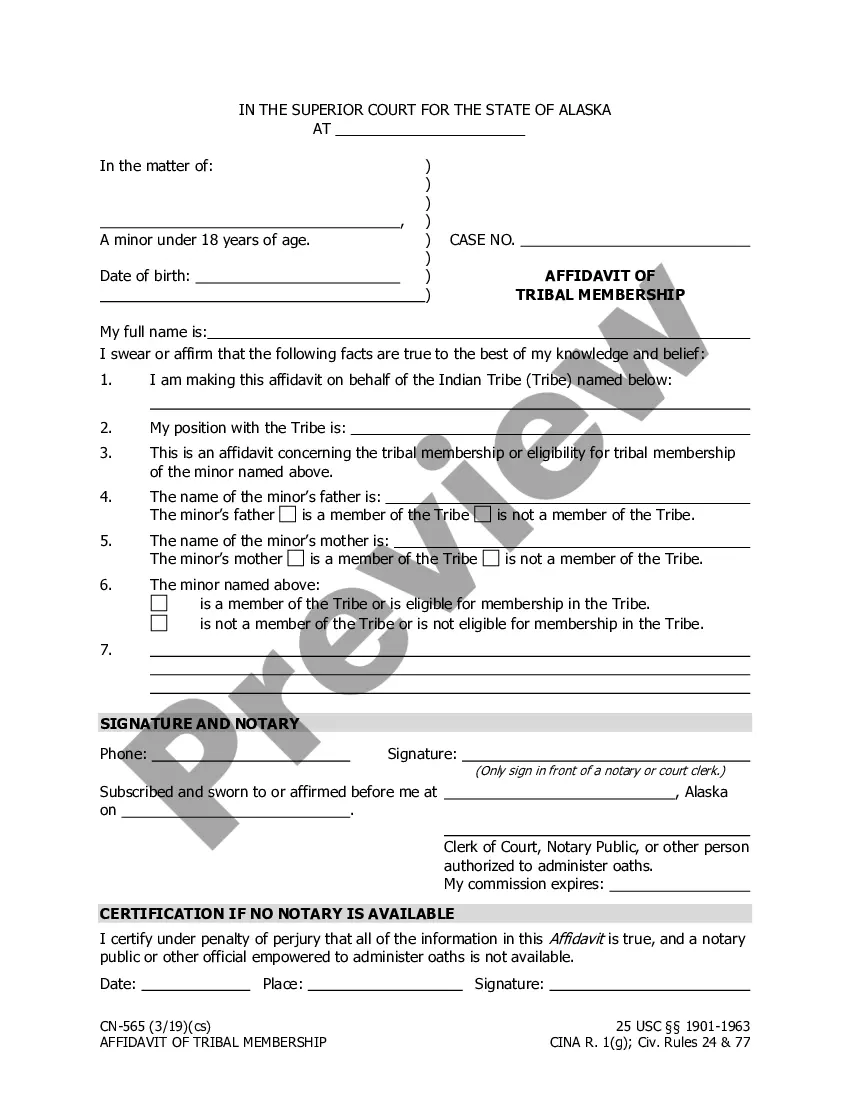
Ohio Heirship Affidavit - Descent
What is this form?
The Heirship Affidavit - Descent is a legal document used to declare the heirs of a deceased individual. Its primary purpose is to establish rightful ownership of personal and real property in cases where the deceased did not leave a will. This affidavit differs from a probate process by providing a straightforward means for heirs to assert their rights and claim assets without court intervention, making it essential in settling estates without wills.
Key components of this form
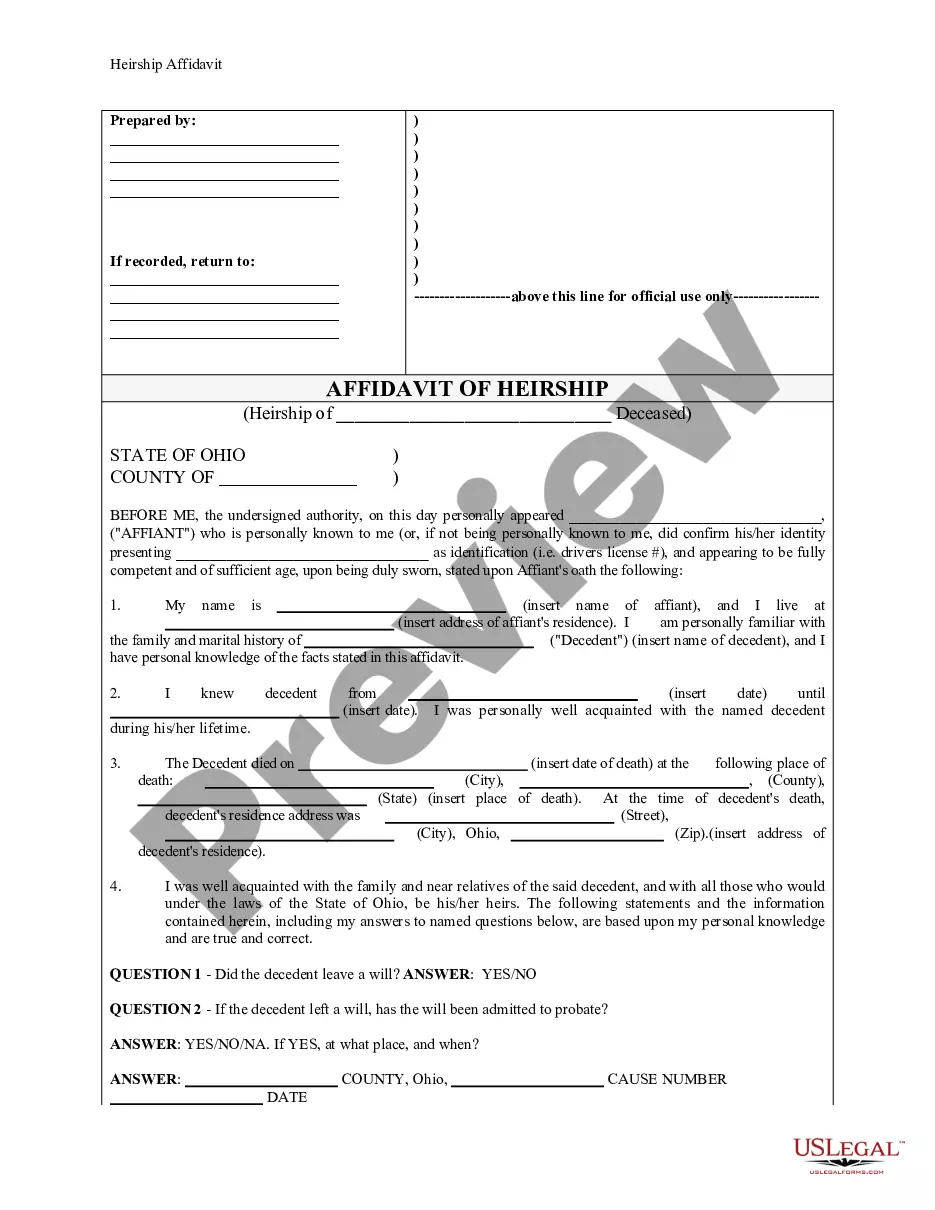
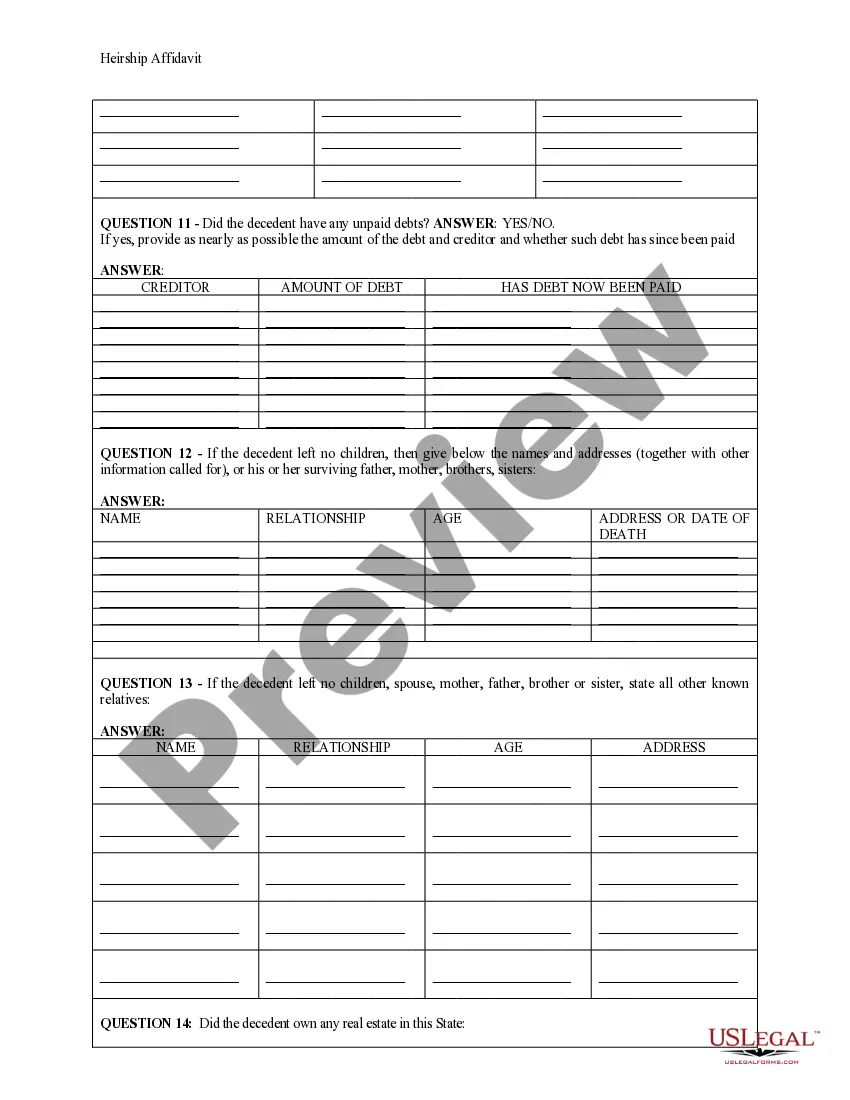
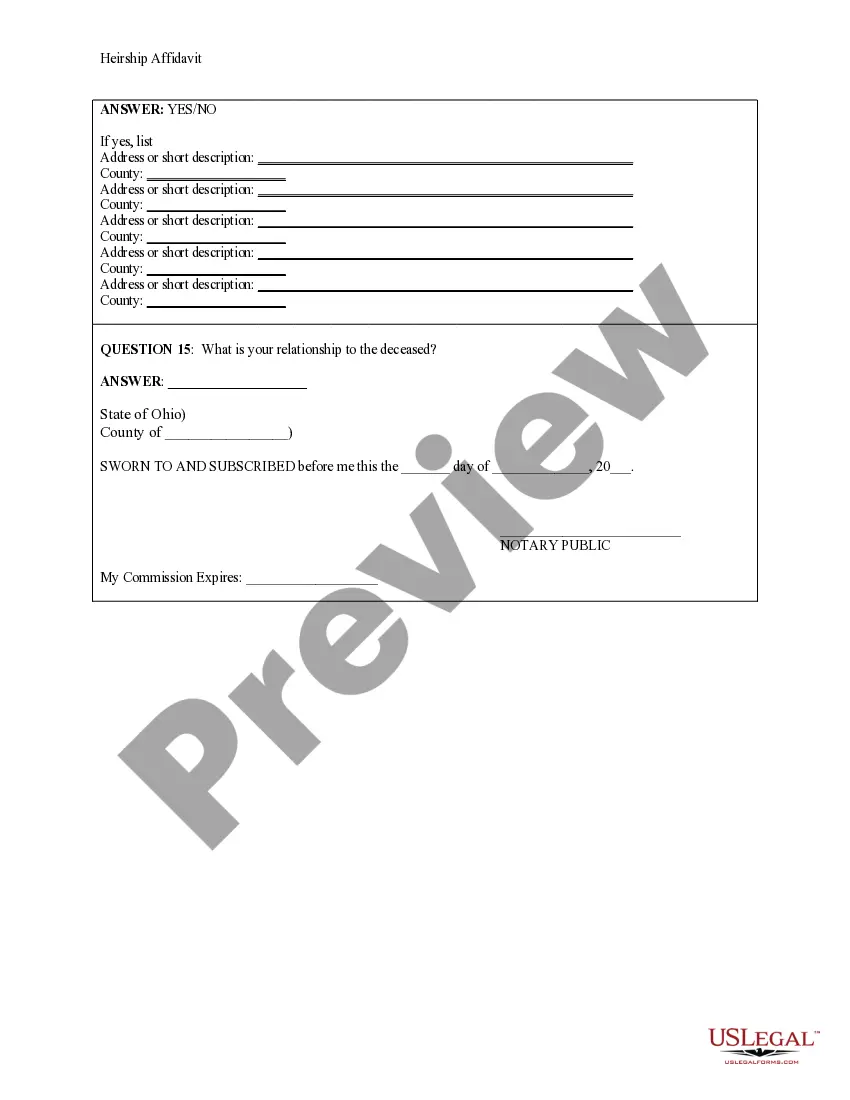
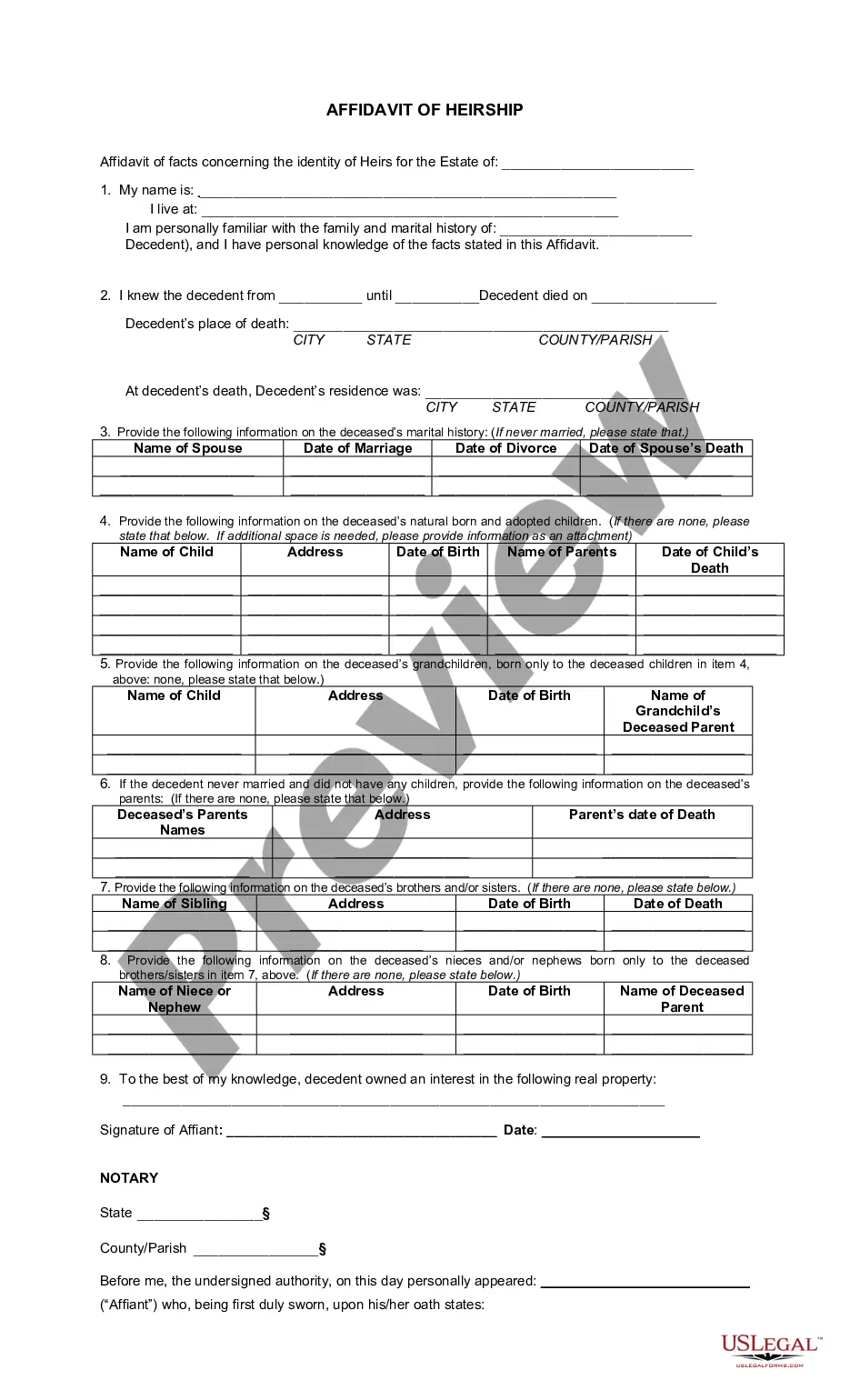
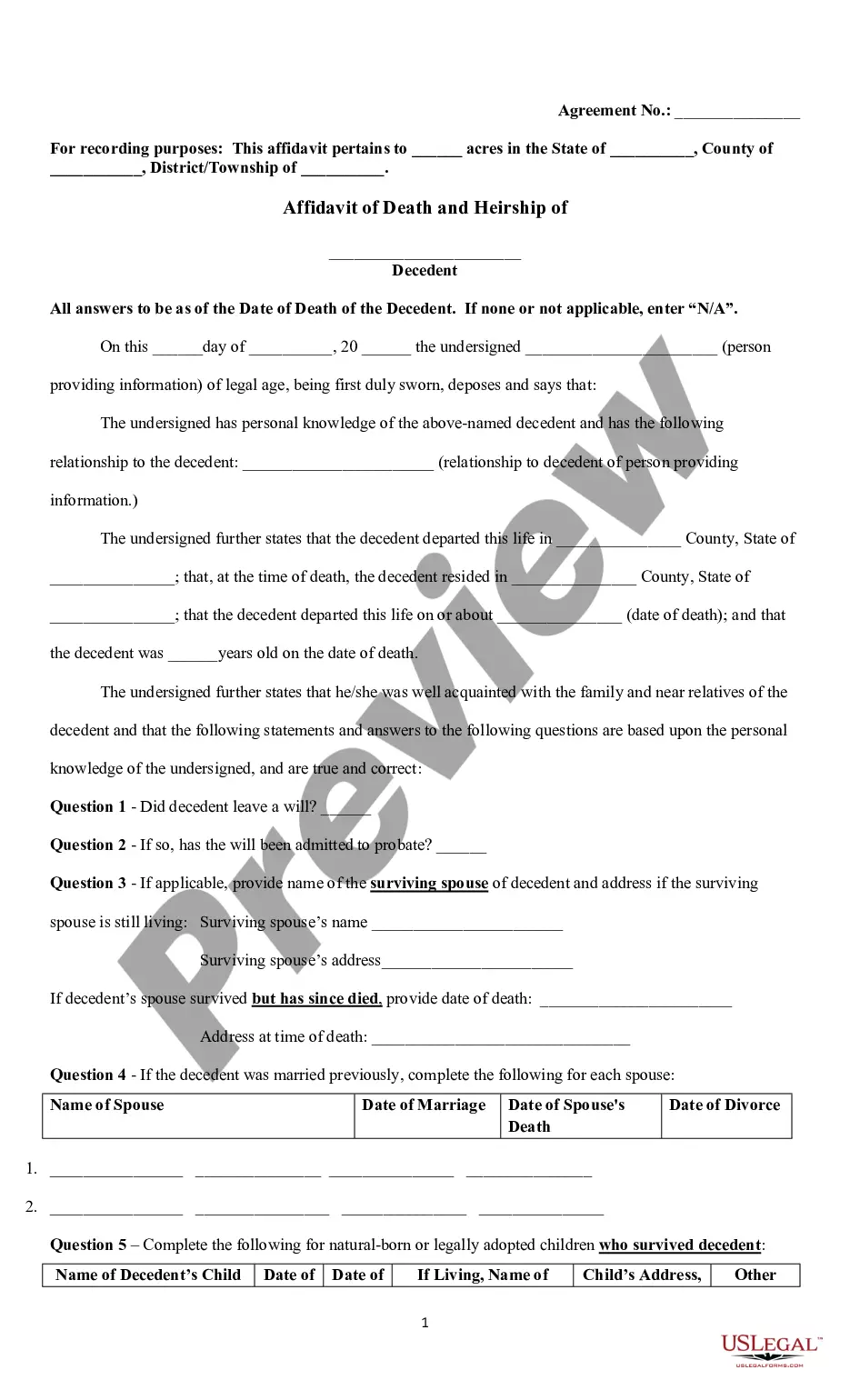
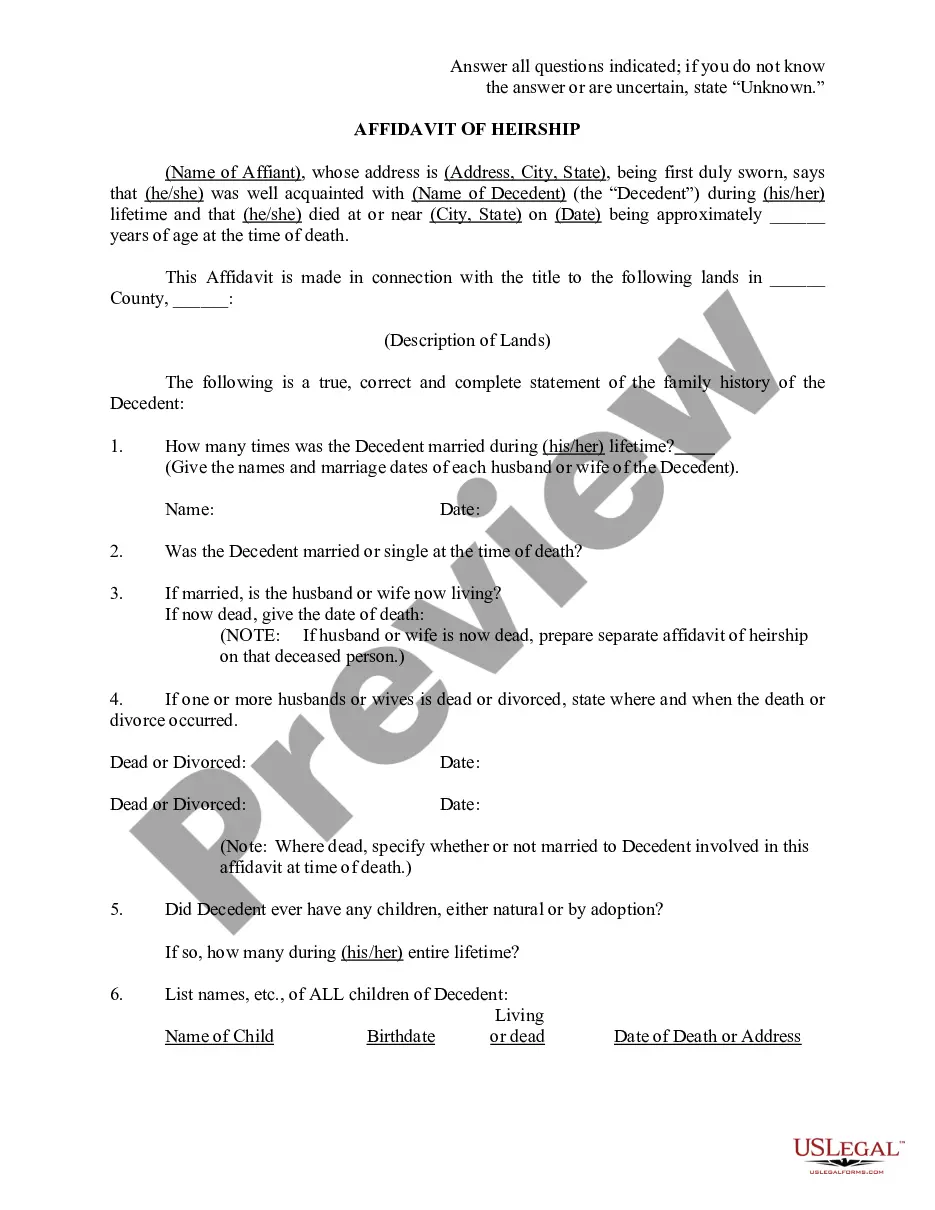
- Affiant's personal information, including name and address.
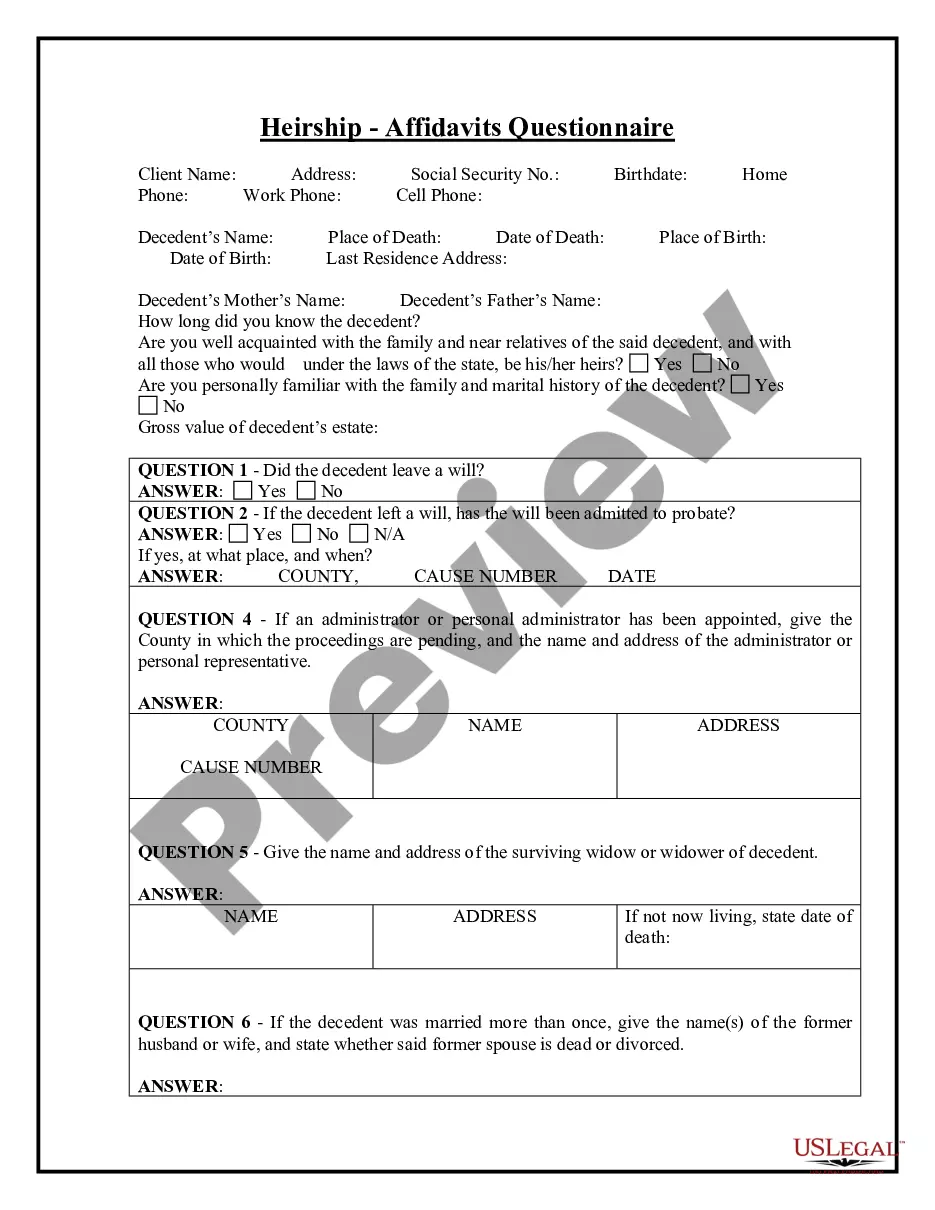
- Details of the deceased, such as name, date of death, and last residence.
- Questions regarding the presence of a will and its probate status.
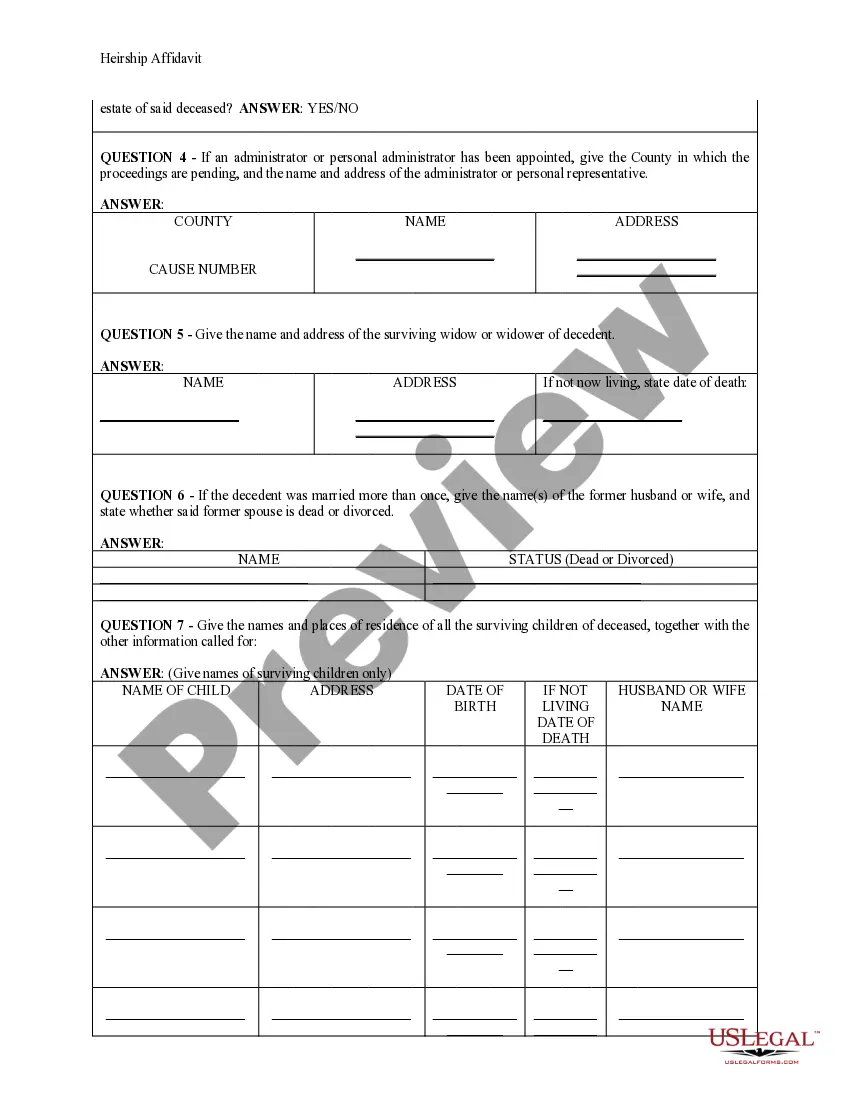
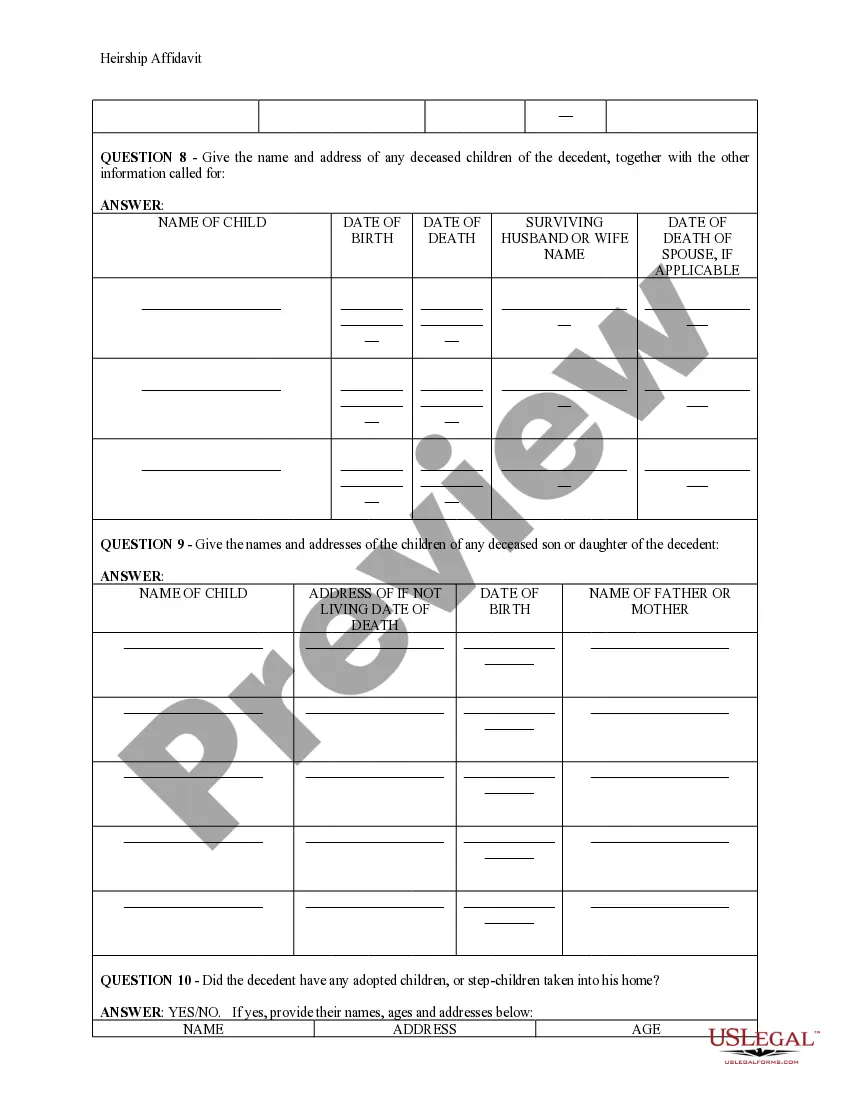
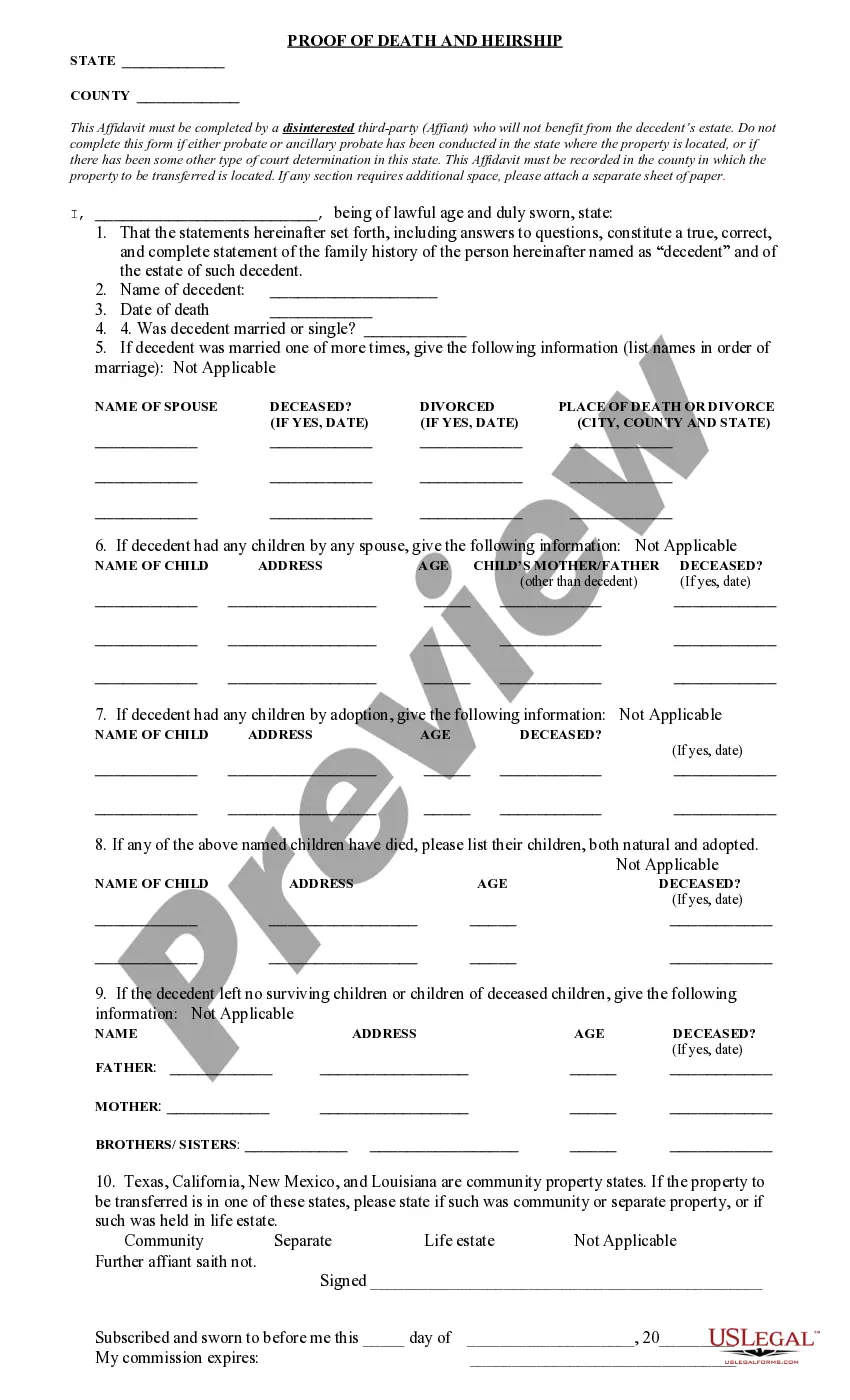
- Information about surviving family members and their relationships to the deceased.
- Details on any real estate owned by the deceased.
- Affidavit signature and notarization confirmation.
When to use this document
This form is typically used when an individual passes away without a will, and their heirs need to establish their right to inherit property. For example, if a deceased individual has a surviving child and no formal estate has been opened, the heir can present this affidavit when selling the property to demonstrate legal ownership. This document is vital in situations where property division is necessary but without the complexities of the probate court.
Who this form is for
This form is intended for:
- Heirs of a deceased person who died without a will.
- Individuals who are not heirs but have knowledge about the deceased's family and can confirm heirship.
- People involved in property transactions related to an estate where the decedent did not leave a will.
How to prepare this document
- Identify the affiant by entering their name and address at the beginning of the affidavit.
- Provide details about the deceased, including their name, date of death, and last residence address.
- Answer questions regarding the existence of a will and any probate proceedings that may have occurred.
- List the names and addresses of all surviving heirs and any deceased children along with relevant dates.
- Affix the signature of the affiant and ensure the affidavit is notarized by a licensed notary public.
Does this document require notarization?
Yes, this form must be notarized to be legally valid. Notarization ensures that the affidavit is executed properly, confirming the identity of the affiant and their understanding of the document. US Legal Forms offers integrated online notarization services, available 24/7 via secure video calls, providing a reliable solution without the hassle of travel.
Get your form ready online
Our built-in tools help you complete, sign, share, and store your documents in one place.
Make edits, fill in missing information, and update formatting in US Legal Forms—just like you would in MS Word.
Download a copy, print it, send it by email, or mail it via USPS—whatever works best for your next step.
Sign and collect signatures with our SignNow integration. Send to multiple recipients, set reminders, and more. Go Premium to unlock E-Sign.
If this form requires notarization, complete it online through a secure video call—no need to meet a notary in person or wait for an appointment.
We protect your documents and personal data by following strict security and privacy standards.

Make edits, fill in missing information, and update formatting in US Legal Forms—just like you would in MS Word.

Download a copy, print it, send it by email, or mail it via USPS—whatever works best for your next step.

Sign and collect signatures with our SignNow integration. Send to multiple recipients, set reminders, and more. Go Premium to unlock E-Sign.

If this form requires notarization, complete it online through a secure video call—no need to meet a notary in person or wait for an appointment.

We protect your documents and personal data by following strict security and privacy standards.
Avoid these common issues
- Failing to provide complete and accurate information about the deceased.
- Not answering all questions on the form, which can lead to delays or disputes.
- Having the affiant sign the document without proper notarization.
- Inaccurately listing heirs or excluding relevant family members.
Benefits of using this form online
- Immediate access to a legally-compliant document tailored to your needs.
- Editable form that allows for personal customization without legal jargon.
- Increased convenience with options for online notarization, reducing the need for in-person visits.
- Affordable solution compared to traditional legal services, saving both time and money.
Looking for another form?

Form popularity
FAQ
An affidavit of heirship is needed to transfer a deceased person's interest in real or personal property to his or her heirs when the decedent dies without leaving a last will and testament or without disposing of all of his or her property in a will.
An affidavit is used for the purpose of proving in court that a claim is true, and is typically used in conjunction with witness statements and other corroborating evidence. Through an affidavit, an individual swears that the information contained within is true to the best of their knowledge.
An affidavit of heirship (in some states referred to as a declaration of heirship) is a legal document used to determine the right to inheritance of a deceased individual's assets.
Does an affidavit of heirship need to be recorded in Texas? Yes, after the affidavit is signed and executed, it must be filed with the county deed records where the decedent's real property is located.
Maximum $100,000 for spouses, $35,000 for non-spouses. Laws R.C. 2113.03. Step 1 Enter the name of the person who died. Step 2 Enter the date of death. Step 3 Enter the address of decedent's address at the time of death.
Heirship Proceedings in Texas An heirship proceeding is a court proceeding used to determine who an individual's heirs are.This process involves a court-appointed attorney who investigates the deceased individual's family history and confirms to the court the identity of the heirs.
An Ohio estate qualifies as a small estate if the value of the probate estate is: $35,000 or less; OR. $100,000 or less and the entire estate goes to the decedent's surviving spouse whether under a valid will or under intestacy.
An Affidavit of Heirship is a sworn statement that heirs can use in some states to establish property ownership when the original owner dies intestate. Affidavits of Heirship are generally used when the decedent only left real property, personal property, or had a small estate.