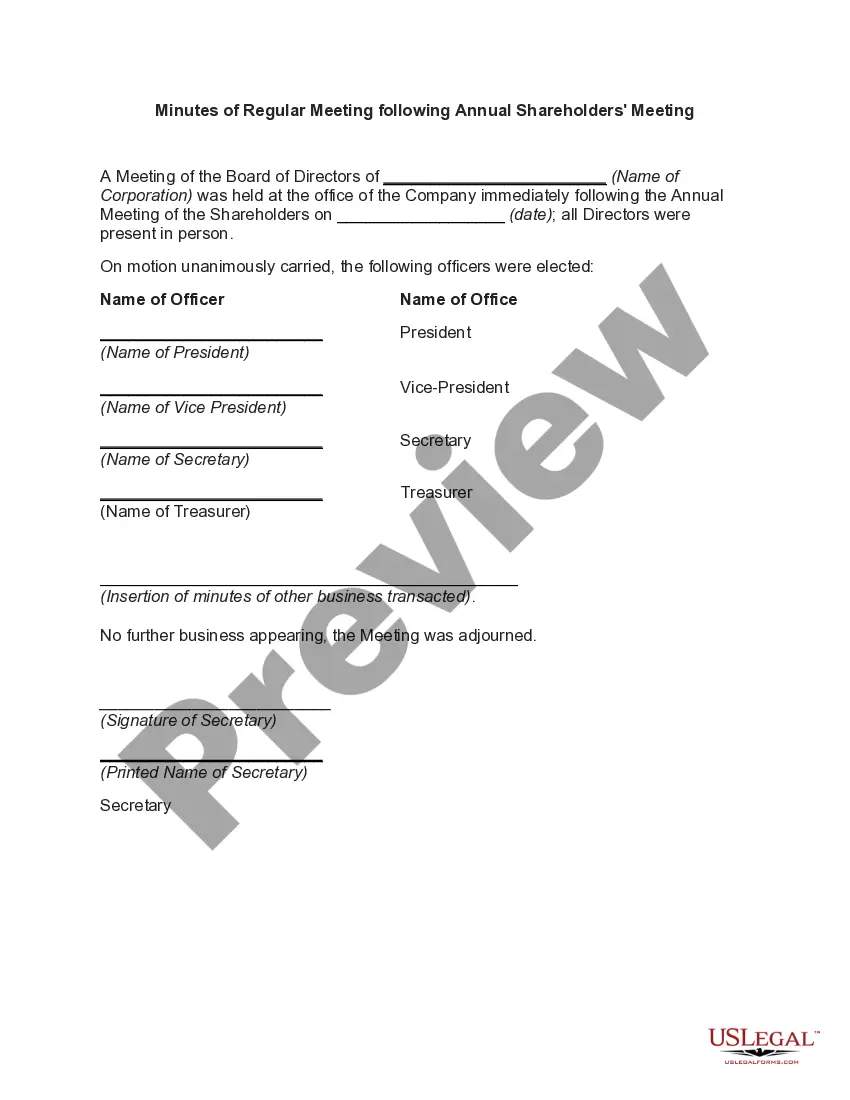
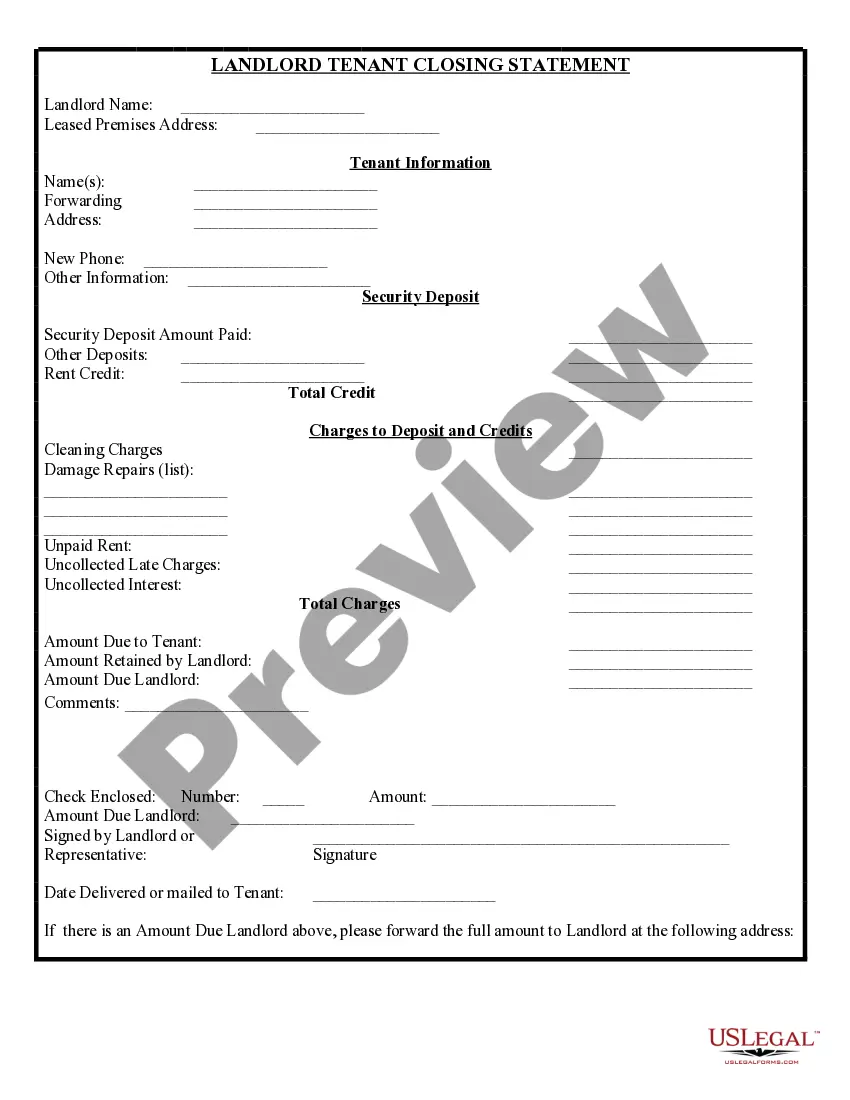
New York Landlord Tenant Closing Statement to Reconcile Security Deposit
About this form
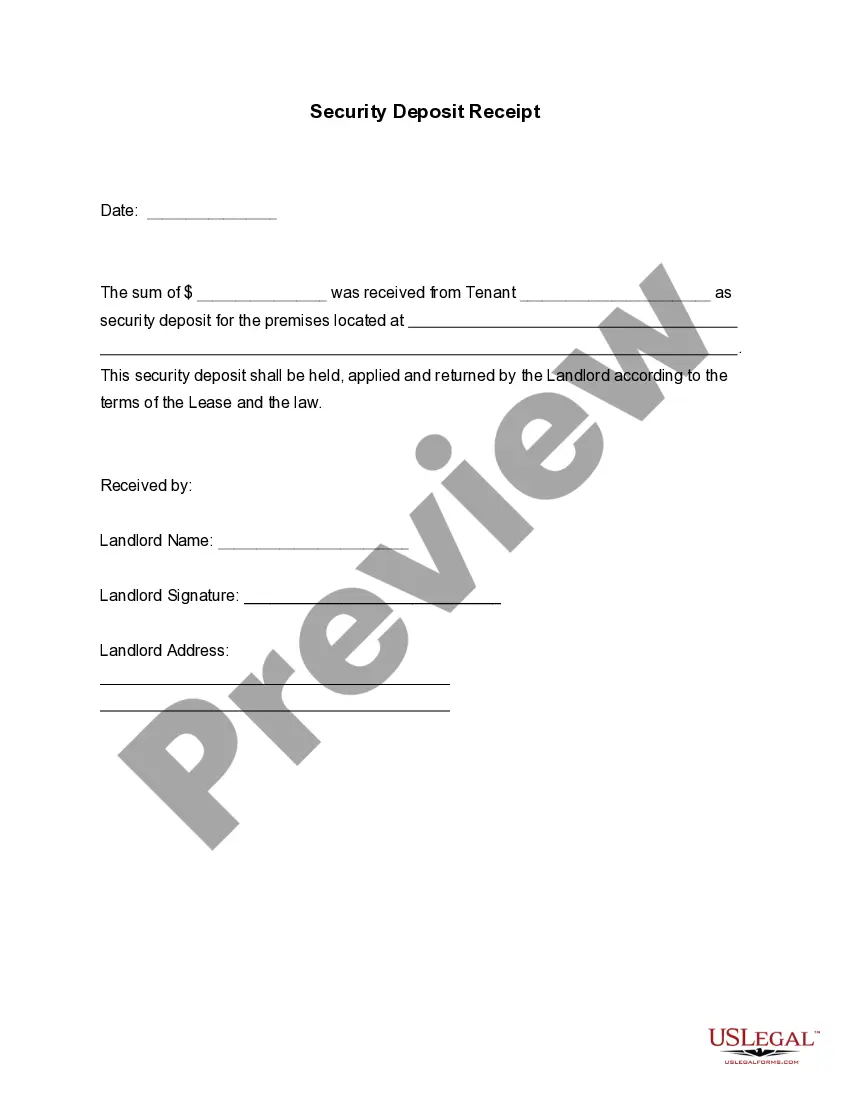
This Landlord Tenant Closing Statement to Reconcile Security Deposit is a document that allows landlords to accurately account for the security deposit and any deductions made from it. This form serves to clarify for both the landlord and tenant the amounts held as a security deposit, the deductions taken, and the total owed to the tenant upon the termination of a lease. It is crucial for maintaining transparency and legal compliance regarding the handling of security deposits.
Key components of this form
- Identification of the landlord and tenant involved in the lease agreement.
- Details of the security deposit amount received and any interest accrued.
- List of deductions made, including repairs or cleaning costs.
- Total amount returned to the tenant, if applicable.
- Signatures of both parties to acknowledge the reconciliation of the security deposit.
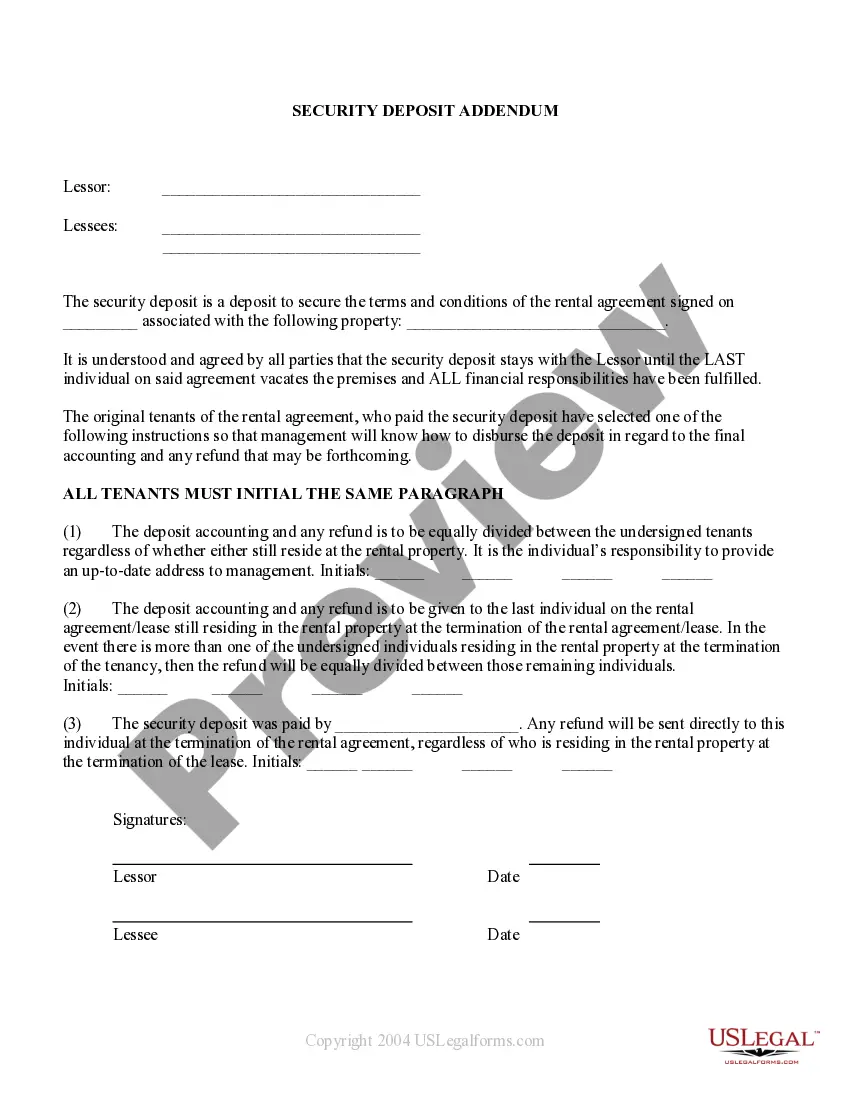
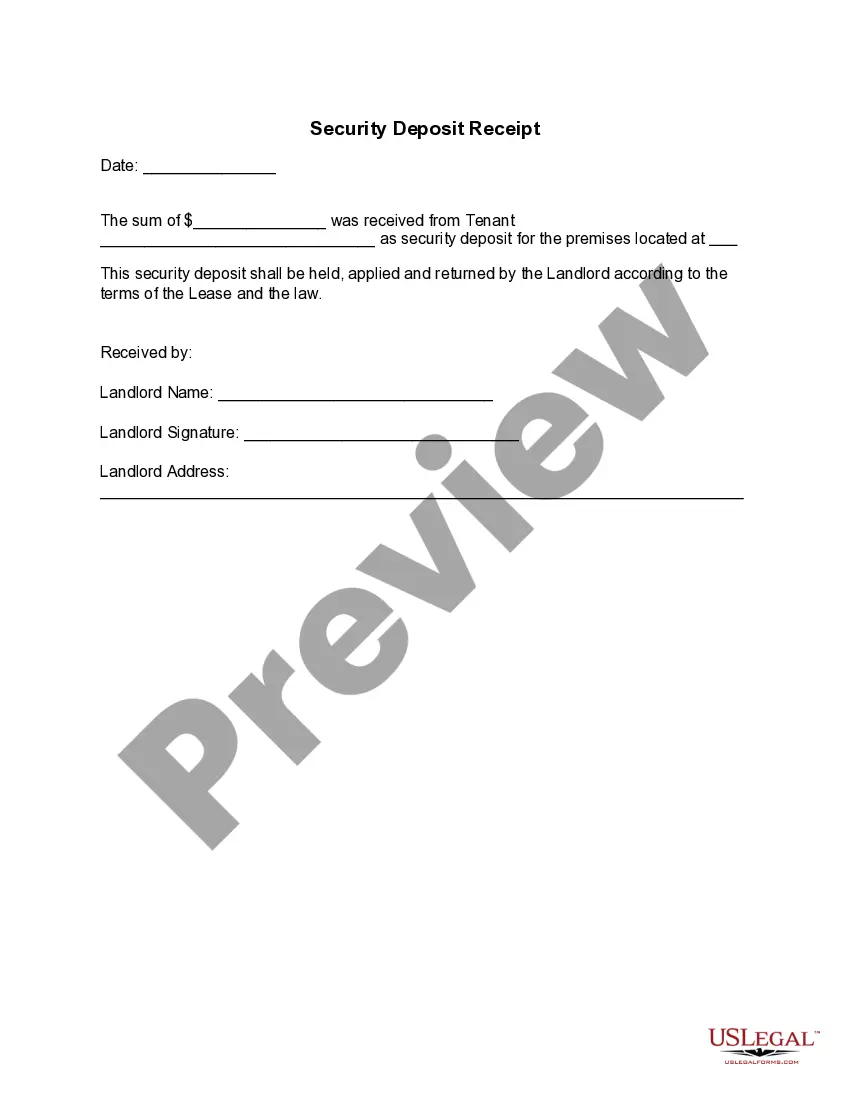
Common use cases
This form is used at the end of a lease when a tenant is moving out and the landlord needs to provide a detailed statement of the security deposit accounted for. It helps to settle any disputes regarding the return of the security deposit by clearly documenting the deductions made for damages or unpaid rent. Use this form when a tenant vacates the property and you need to reconcile the security deposit before returning any remaining funds.
Who needs this form
- Landlords managing rental properties who collect security deposits.
- Tenants who are vacating a rental property and expect a return of their security deposit.
- Property management companies overseeing rental agreements.
- Individuals or entities engaged in leasing residential units.
Steps to complete this form
- Identify the names of the landlord and tenant at the top of the form.
- Clearly state the total security deposit amount collected from the tenant.
- List any deductions taken from the security deposit, detailing the reason for each charge.
- Calculate and provide the final amount to be returned to the tenant.
- Have both parties sign and date the form to acknowledge the reconciliation.
Does this form need to be notarized?
This form does not typically require notarization unless specified by local law. However, having a notarized signature can help to later verify the validity of the agreements made in the closing statement.
Get your form ready online
Our built-in tools help you complete, sign, share, and store your documents in one place.
Make edits, fill in missing information, and update formatting in US Legal Forms—just like you would in MS Word.
Download a copy, print it, send it by email, or mail it via USPS—whatever works best for your next step.
Sign and collect signatures with our SignNow integration. Send to multiple recipients, set reminders, and more. Go Premium to unlock E-Sign.
If this form requires notarization, complete it online through a secure video call—no need to meet a notary in person or wait for an appointment.
We protect your documents and personal data by following strict security and privacy standards.

Make edits, fill in missing information, and update formatting in US Legal Forms—just like you would in MS Word.

Download a copy, print it, send it by email, or mail it via USPS—whatever works best for your next step.

Sign and collect signatures with our SignNow integration. Send to multiple recipients, set reminders, and more. Go Premium to unlock E-Sign.

If this form requires notarization, complete it online through a secure video call—no need to meet a notary in person or wait for an appointment.

We protect your documents and personal data by following strict security and privacy standards.
Mistakes to watch out for
- Failing to provide detailed explanations for deductions from the security deposit.
- Not obtaining signatures from both the landlord and tenant.
- Missing out on the required timelines for returning the security deposit.
- Not keeping a copy of the completed form for personal records.
Benefits of using this form online
- Immediate access to professionally drafted legal templates.
- Easy editing capabilities to tailor the form to specific situations.
- Time-saving process without the need for attorney visits.
- Downloadable for your records, ensuring you have a copy for future reference.
Legal use & context
- Enforceable as a legal record of the security deposit reconciliation process.
- Intended to protect the rights of both the landlord and tenant.
- Can be used as evidence in case of disputes regarding the return of the security deposit.
Quick recap
- The Landlord Tenant Closing Statement is crucial for reconciling security deposits when a tenant vacates.
- Clear documentation protects both landlords and tenants from potential disputes.
- Users must adhere to state laws to ensure the form is legally compliant.
- Completing this form accurately prevents common errors that could lead to legal challenges.
Looking for another form?
Form popularity
FAQ
Concisely review the main facts and lay out the reasons your landlord owes you money. Include copies of relevant letters and agreements, such as your notice to move out. Ask for exactly what you want, such as the full amount of your deposit within ten days. Cite state security deposit law.
The landlord is entitled to deduct from the rental deposit any expenses incurred repairing any damage to the property which occurred during the tenancy. The remainder of the money must then be refunded to the tenant no later than 14 days after the restoration of the property as dictated by the Act.
The date of the letter and the landlord's full name and address. The address of the residence you rented and the date you moved in. A statement that you've been paying your rent timely and that you are current with your payments.
Security deposits are assets or liabilities, so you cannot deduct them as expenses as a tenant and you need not declare them as income on income tax returns as a landlord until you use them.
Security Deposit Received: $1,000. Interest on Deposit (if required by lease or law): $N/A. TOTAL CREDIT (sum of lines 1 and 2): $1,000. Itemized Repairs and Related Losses: Necessary Cleaning: Total Cleaning & Repair (sum of lines 4 and 5) $400. Amount Owed (line 3 minus the sum of line 6)
If the security deposit is for a residential property without furniture, the security deposit may equal 2 times the rent. If the residence is furnished, the landlord may charge up to 3 times the rent. There is no restriction on the amount of the security deposit for the rental of a commercial property.
Mail your landlord a letter requesting that she return your deposit. Be polite and simply inform the landlord that you have vacated the property and would appreciate the return of your deposit once she has had a chance to complete any checks and paperwork.
Unpaid rent at the end of the tenancy. Unpaid bills at the end of the tenancy. Stolen or missing belongings that are property of the landlord. Direct damage to the property and it's contents (owned by the landlord)
Worn carpets or tile flooring. Faded paint. Loose door handles. Dust. Fading silver finish on bathroom fixtures.