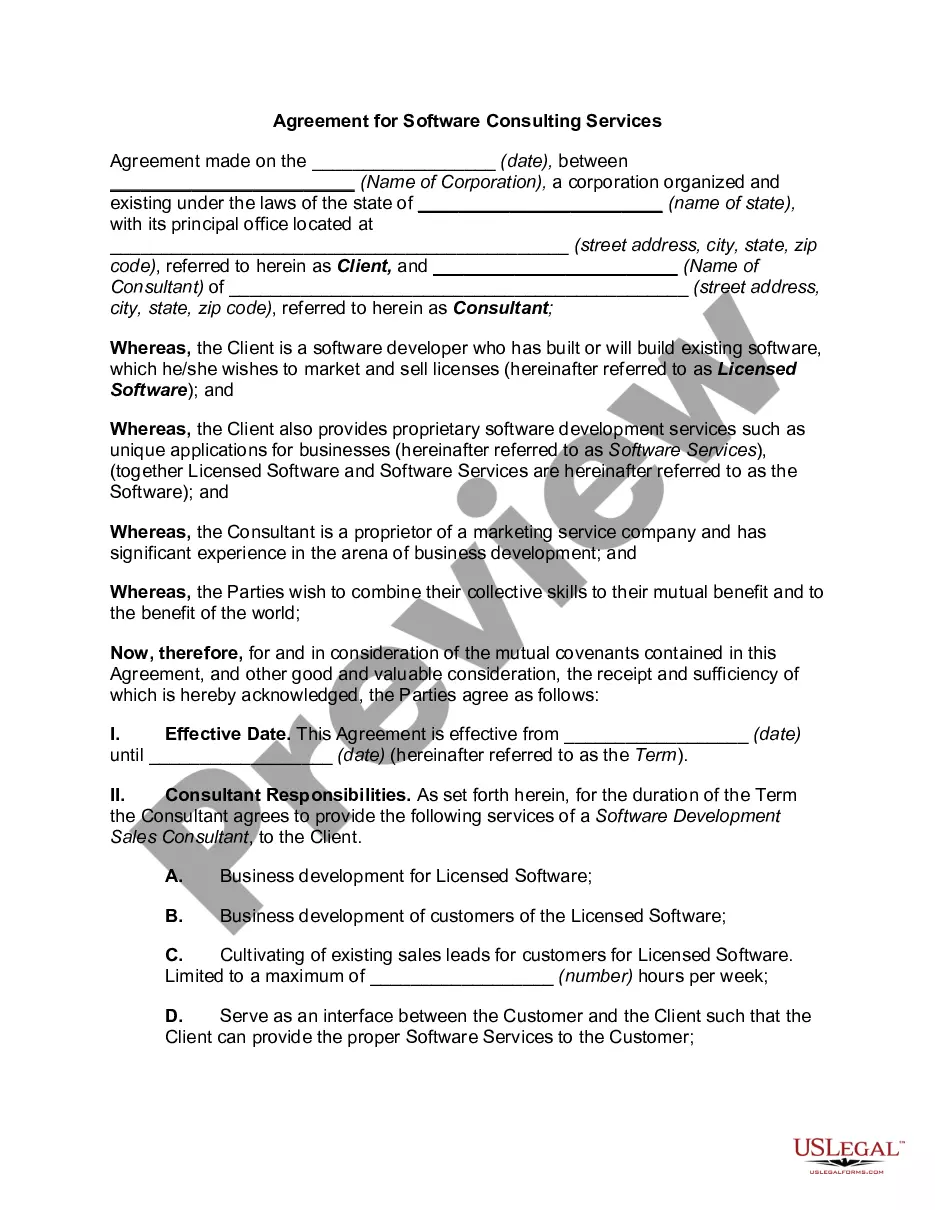
New York Landlord Agreement to allow Tenant Alterations to Premises
What this document covers
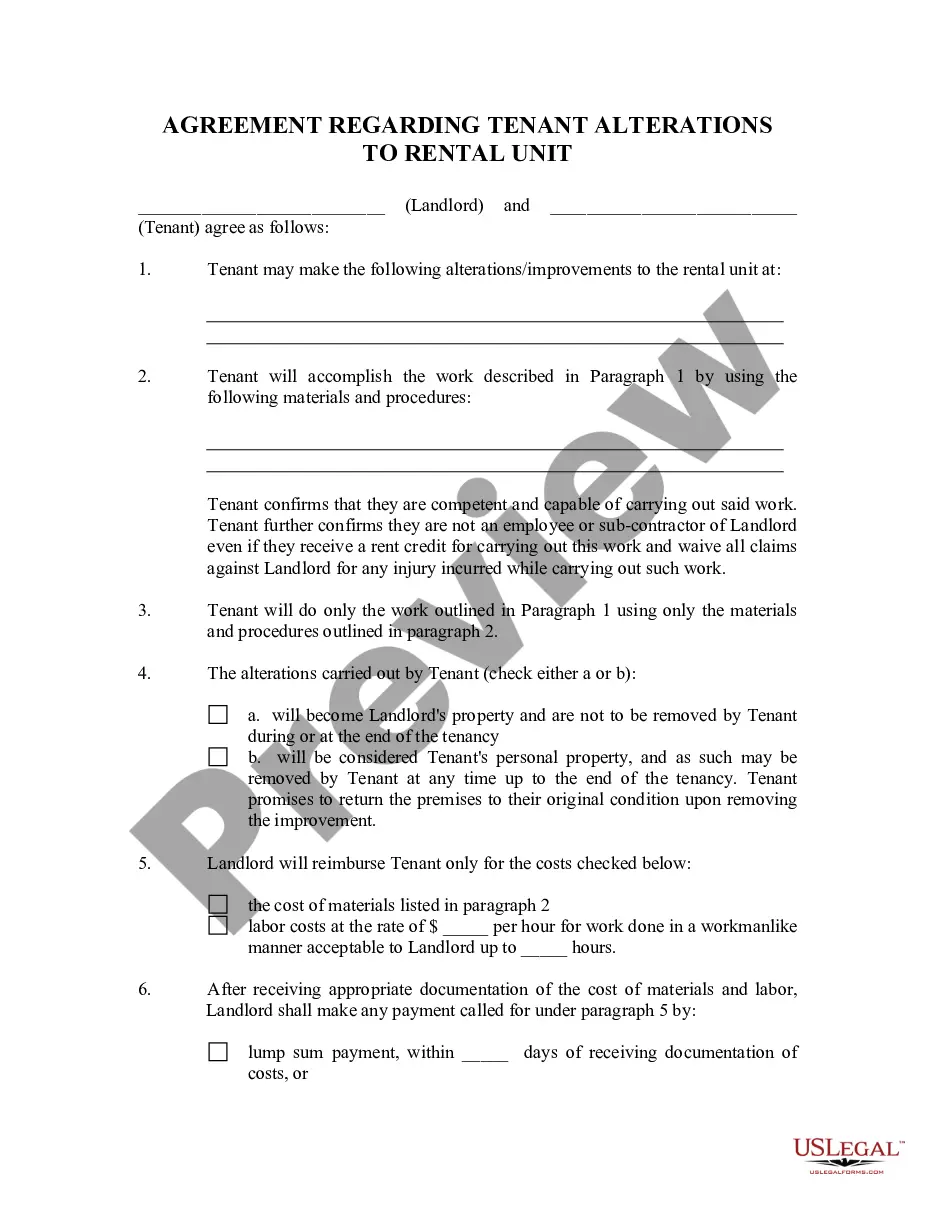
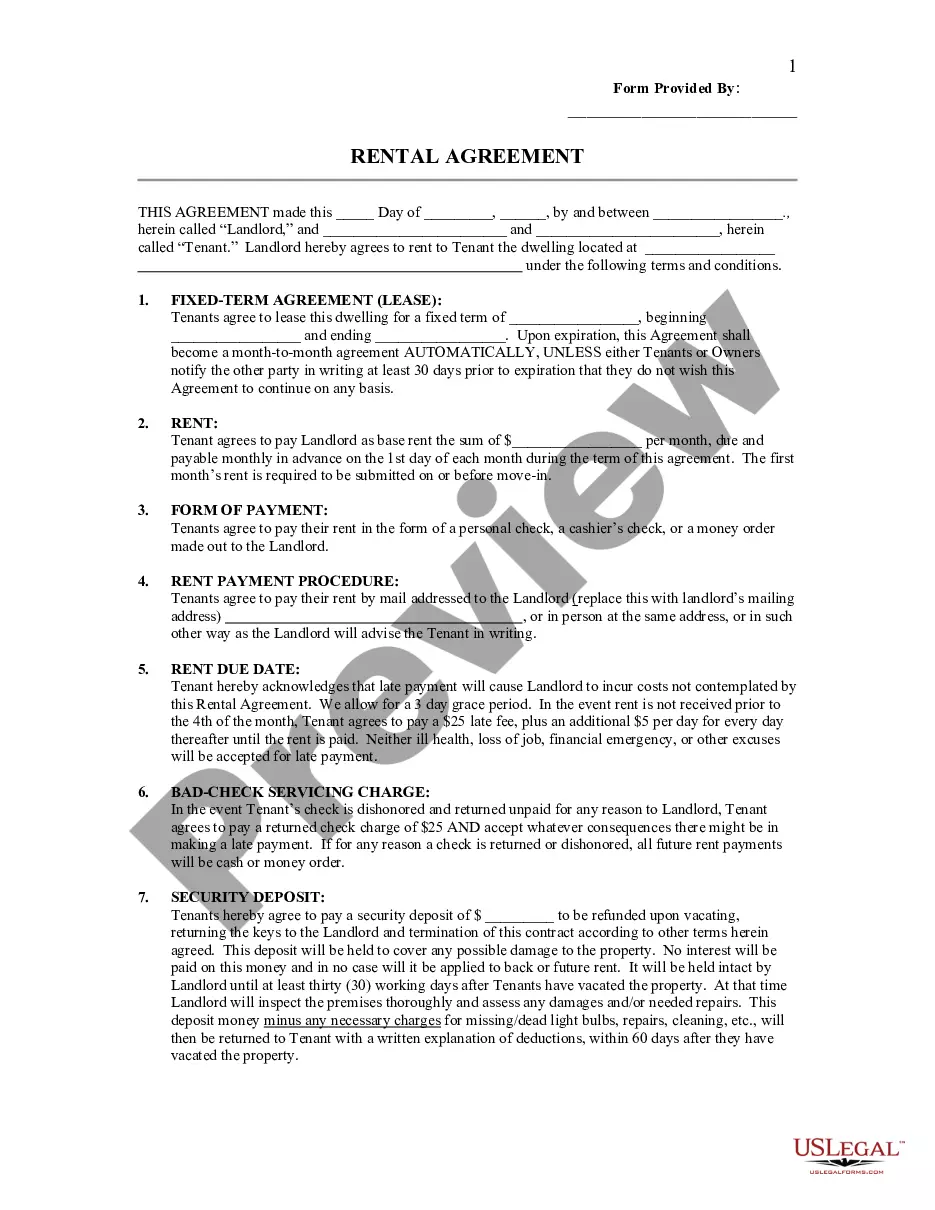
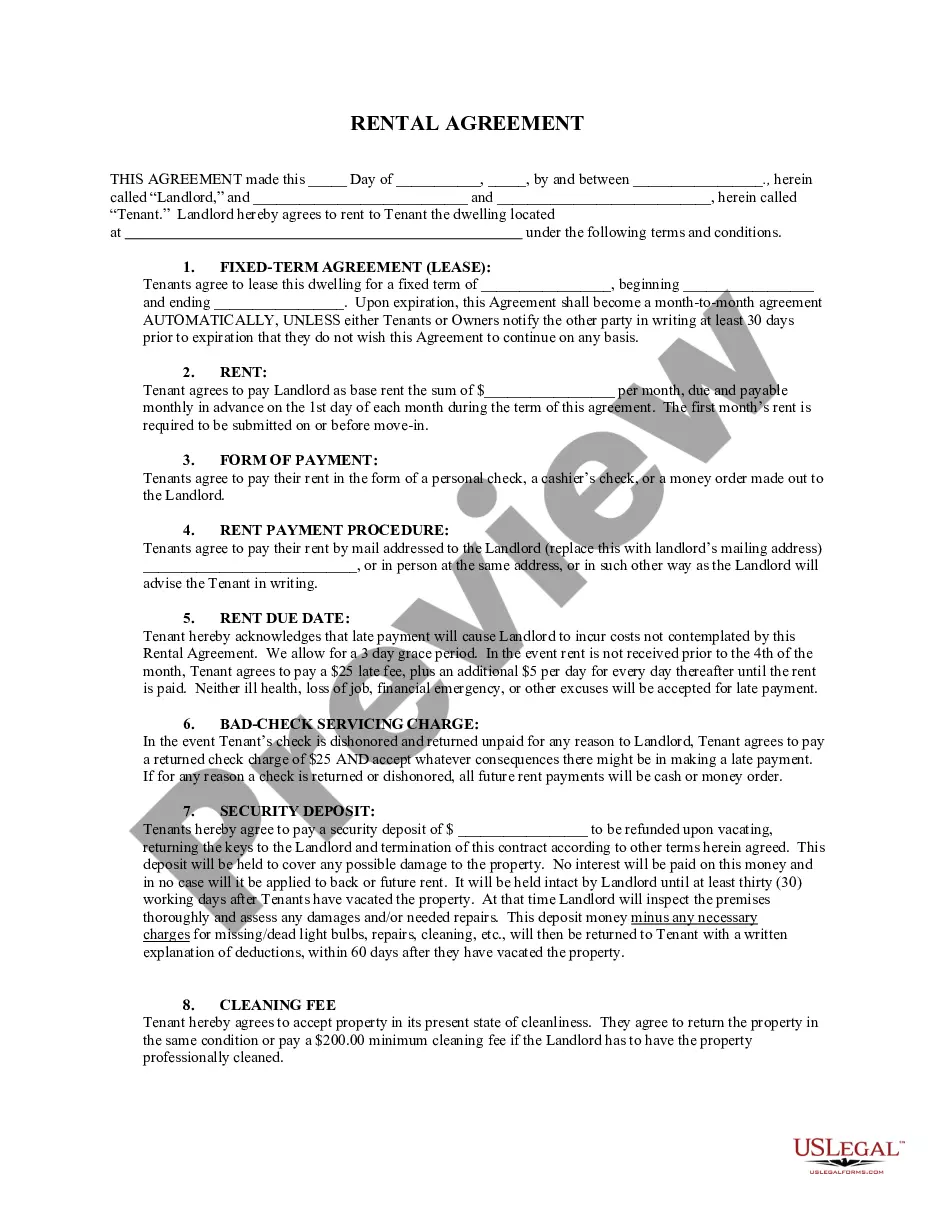
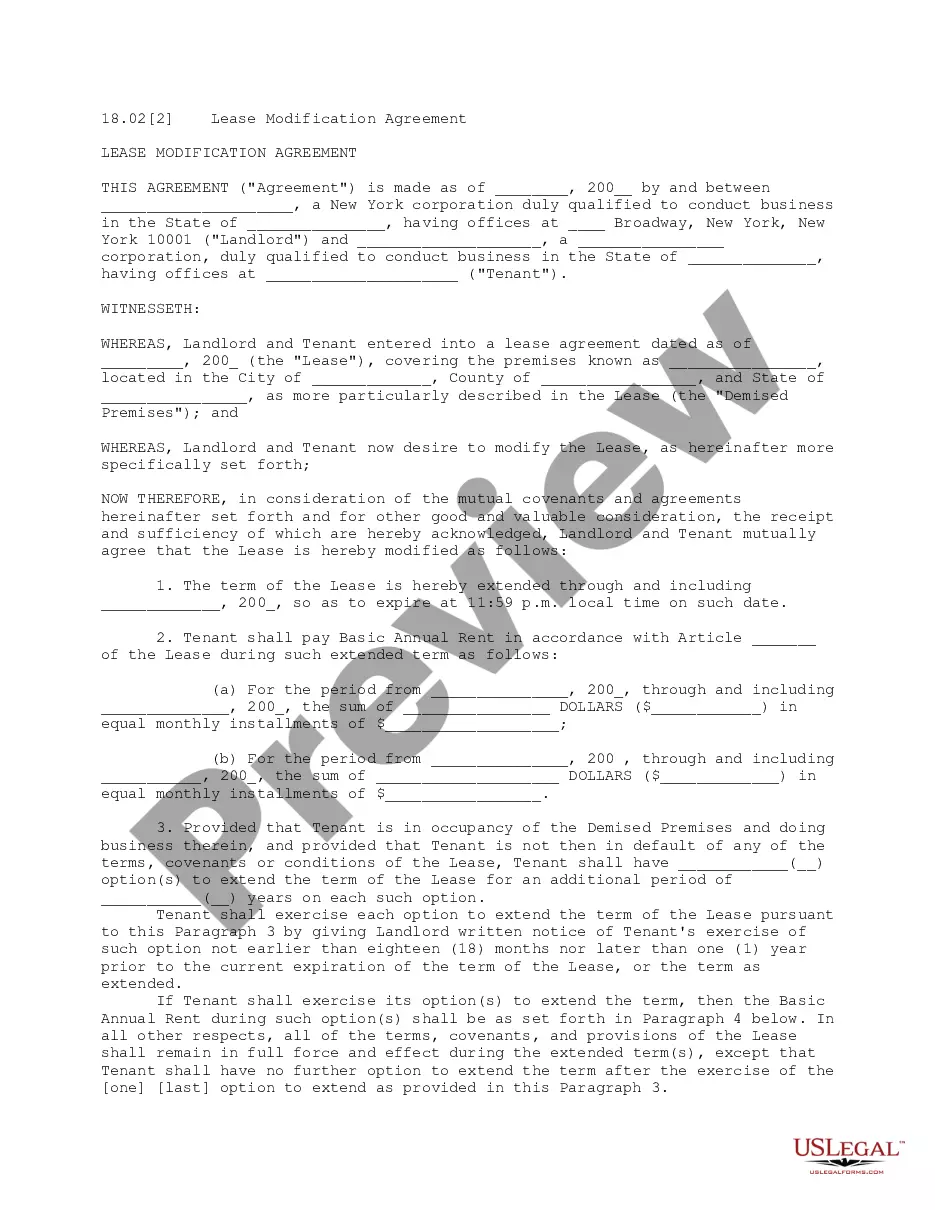
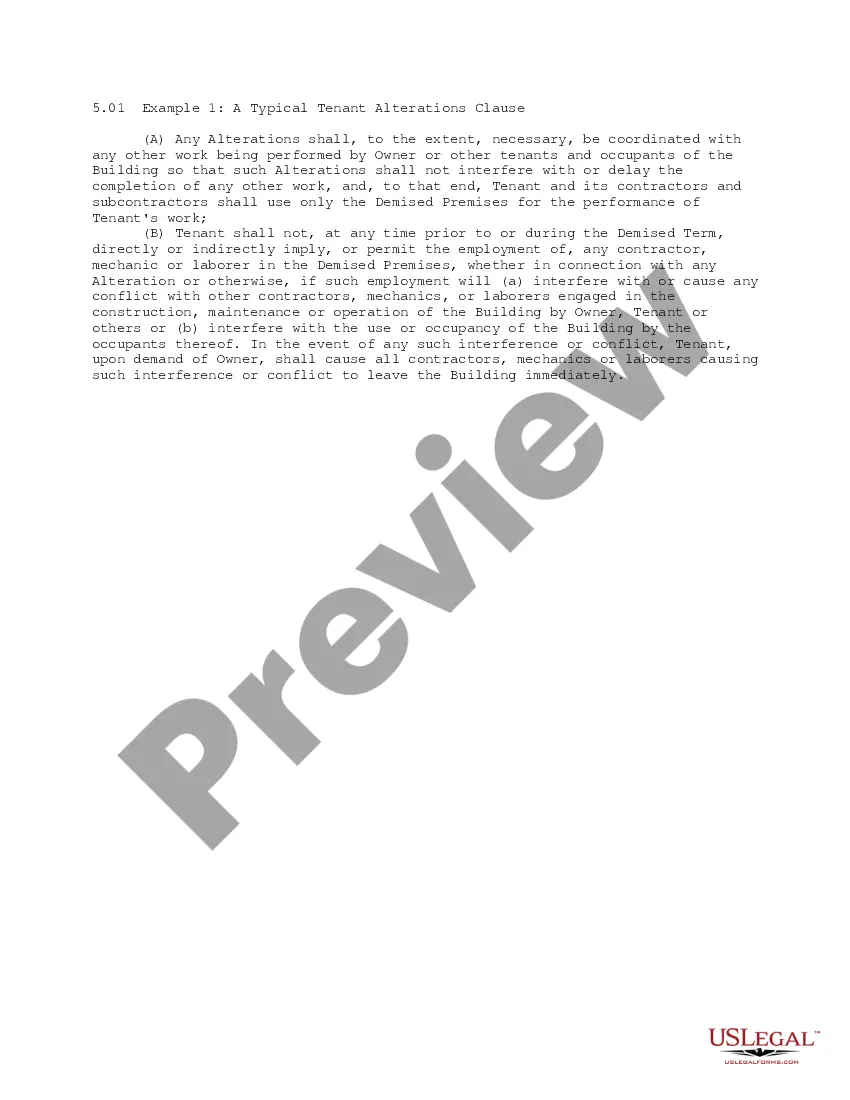
The Landlord Agreement to allow Tenant Alterations to Premises is a legal document that establishes the terms under which a tenant may make changes or improvements to a rental property. This agreement serves to clarify responsibilities regarding the alterations, who pays for them, and whether these changes become the landlord's property. Unlike a general lease agreement, this form focuses specifically on tenant modifications and the conditions that govern them, protecting both the landlord's and tenant's interests.
Form components explained
- Identification of the landlord and tenant involved in the agreement.
- A detailed description of the permitted alterations and improvements.
- Provisions regarding ownership of the alterations, specifying whether they belong to the landlord or the tenant.
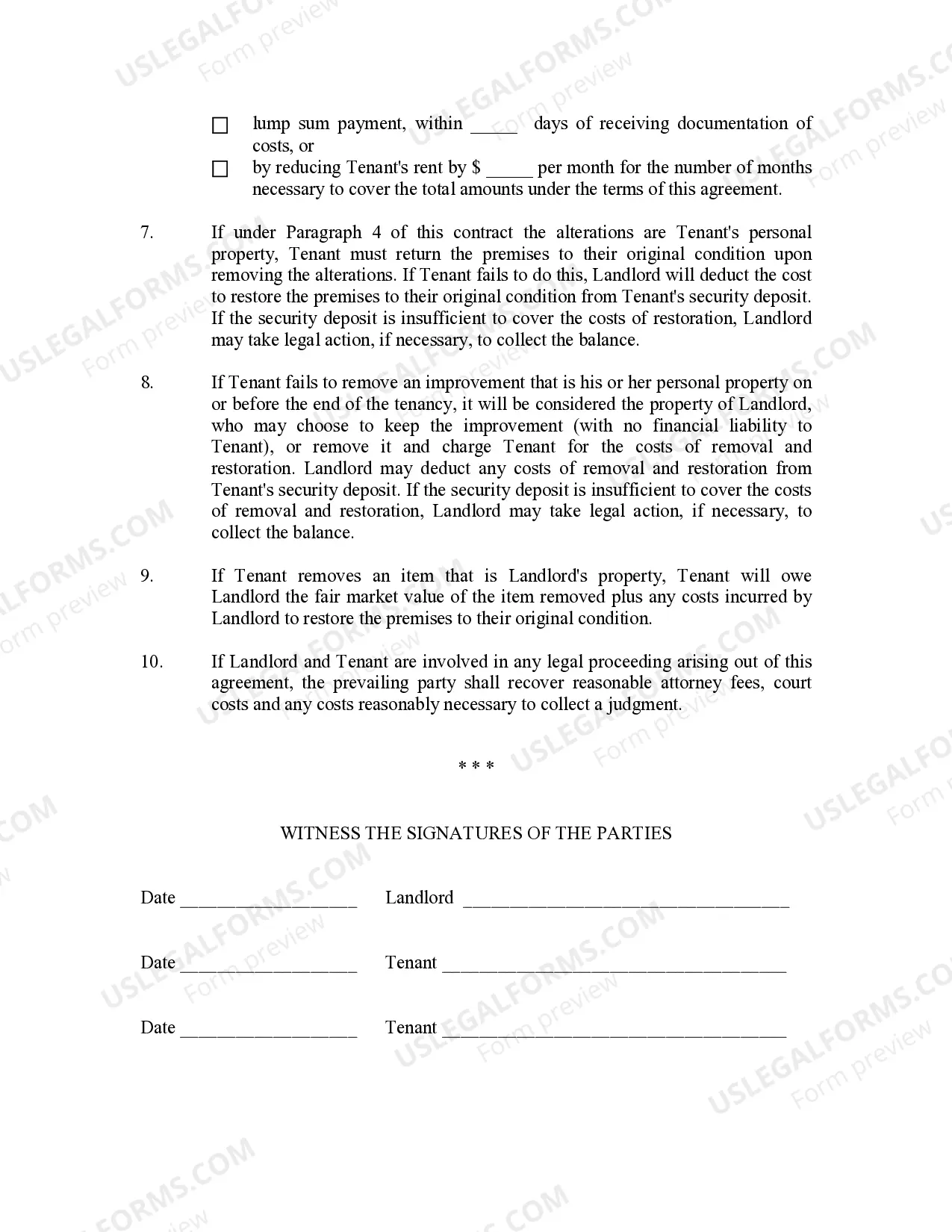
- Reimbursement details outlining costs for materials and labor.
- Conditions for returning the premises to their original state upon the removal of alterations.
- Legal ramifications concerning the failure to meet agreement terms, including cost recoveries and deposit deductions.
When this form is needed
This form is necessary when a tenant wishes to make changes to their rented premises, such as renovations, decor alterations, or structural modifications. It should be used whenever the landlord needs to approve these alterations formally and define the terms to prevent agreement disputes later. Situations like a tenant wanting to modify a kitchen or bathroom, install shelving, or change fixtures can all require this agreement to ensure clarity and compliance with property standards.
Who can use this document
- Landlords who want to provide tenants with the flexibility to make alterations to their rental property while maintaining control over the alterations.
- Tenants who seek permission to modify their living space in ways that will enhance their comfort and usability of the premises.
- Real estate agents or property managers acting on behalf of landlords or tenants needing to document agreed-upon alterations.
How to complete this form
- Identify the landlord and tenant by filling in their full names and contact information at the top of the form.
- Specify the address of the rental unit where alterations will occur.
- Clearly outline the alterations or improvements the tenant wishes to make within the designated section.
- Detail the reimbursement terms regarding labor and material costs, including maximum hours and rates.
- Both parties must sign and date the document to validate the agreement.
Does this form need to be notarized?
Notarization is not commonly needed for this form. However, certain documents or local rules may make it necessary. Our notarization service, powered by Notarize, allows you to finalize it securely online anytime, day or night.
Get your form ready online
Our built-in tools help you complete, sign, share, and store your documents in one place.
Make edits, fill in missing information, and update formatting in US Legal Forms—just like you would in MS Word.
Download a copy, print it, send it by email, or mail it via USPS—whatever works best for your next step.
Sign and collect signatures with our SignNow integration. Send to multiple recipients, set reminders, and more. Go Premium to unlock E-Sign.
If this form requires notarization, complete it online through a secure video call—no need to meet a notary in person or wait for an appointment.
We protect your documents and personal data by following strict security and privacy standards.
Make edits, fill in missing information, and update formatting in US Legal Forms—just like you would in MS Word.
Download a copy, print it, send it by email, or mail it via USPS—whatever works best for your next step.
Sign and collect signatures with our SignNow integration. Send to multiple recipients, set reminders, and more. Go Premium to unlock E-Sign.

If this form requires notarization, complete it online through a secure video call—no need to meet a notary in person or wait for an appointment.
We protect your documents and personal data by following strict security and privacy standards.
Avoid these common issues
- Failing to define the alterations clearly, which can lead to disputes.
- Not including reimbursement terms or agreeing on cost limits.
- Skipping signatures, which can render the agreement unenforceable.
- Ignoring state-specific regulations that could invalidate parts of the form.
Benefits of completing this form online
- Quick access to a legally vetted form tailored to meet your specific needs.
- Ability to edit the form easily to customize it for your situation.
- Ensures that both parties have clear, written documentation of their agreement.
- Reduces the potential for misunderstandings and disputes in the future.
Looking for another form?



Form popularity
FAQ
Related DefinitionsStructural alteration means a change to the supporting members of a structure, including foundations, bearing walls or partitions, columns, beams, girders, or any structural change in the roof or in the exterior walls.
Generally, in California, tenants may remove improvements they have made to the property, if they do so before they return possession of the property to the landlord. When removing a fixture, the tenant must repair or compensate the landlord to return the premises to its pre-improvement condition.
Can a tenant claim for improvements made during the lease? The position differs in the case of immovable and movable property. Tenant can claim for:The claim arises only once the lease is terminated and lessee vacated the property.
Generally, in California, tenants may remove improvements they have made to the property, if they do so before they return possession of the property to the landlord. When removing a fixture, the tenant must repair or compensate the landlord to return the premises to its pre-improvement condition.
The definition of an alteration is a revision. Remodeling a house is an example of an alteration. The act or procedure of altering.
These alterations will almost always be cosmetic changes, involving paint, floor coverings, plastering, and window coverings.
The purpose of the covenant is to protect the landlord from the tenant effecting alterations and additions which damage the property interests of the landlord. Alteration will usually be construed as anything that alters the form or construction of the building.
An alteration is defined as a limited construction project for an existing building that comprises the modification or replacement of one or a number of existing building systems or components. Alterations are less than total building modernizations.