New York Warranty Deed from Husband and Wife to Corporation
Understanding this form
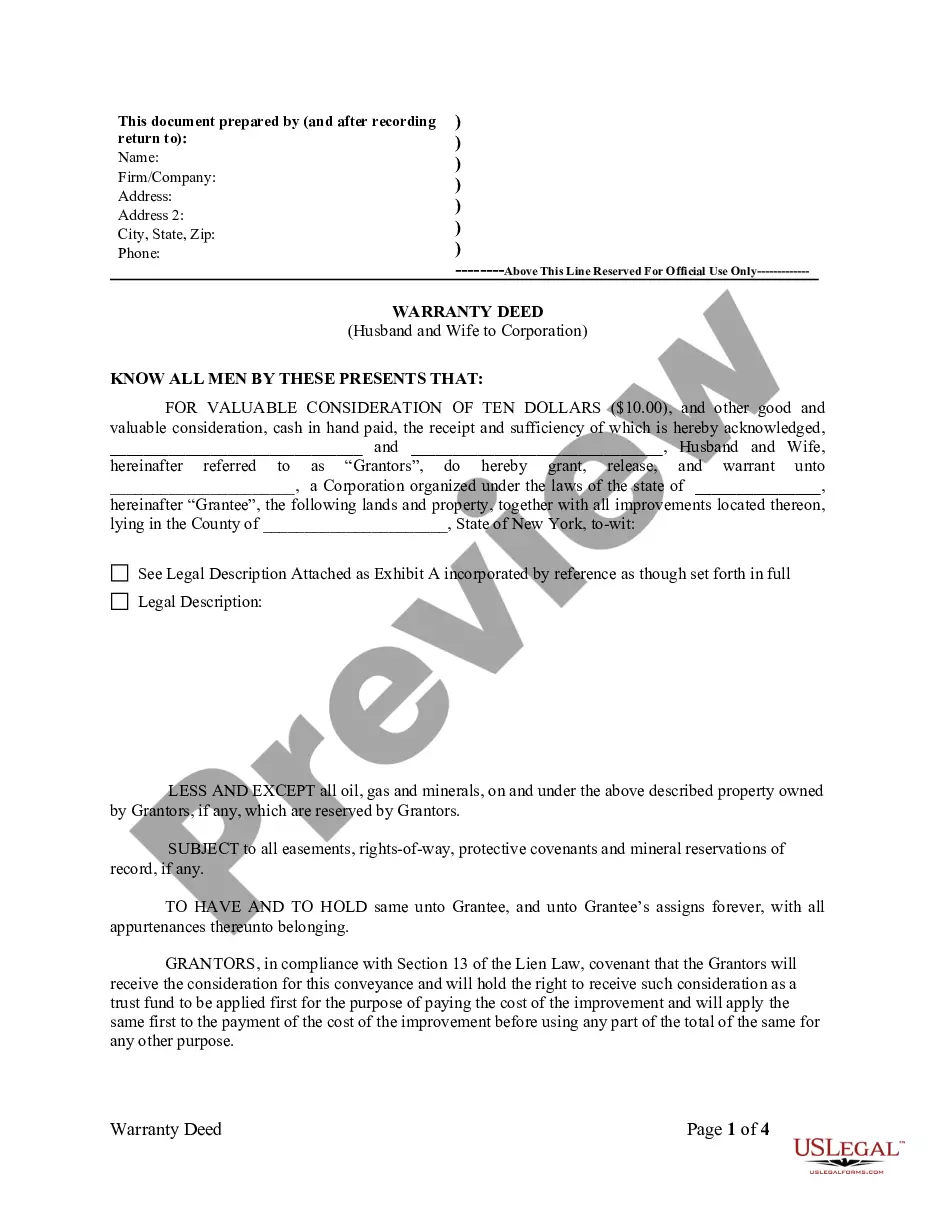
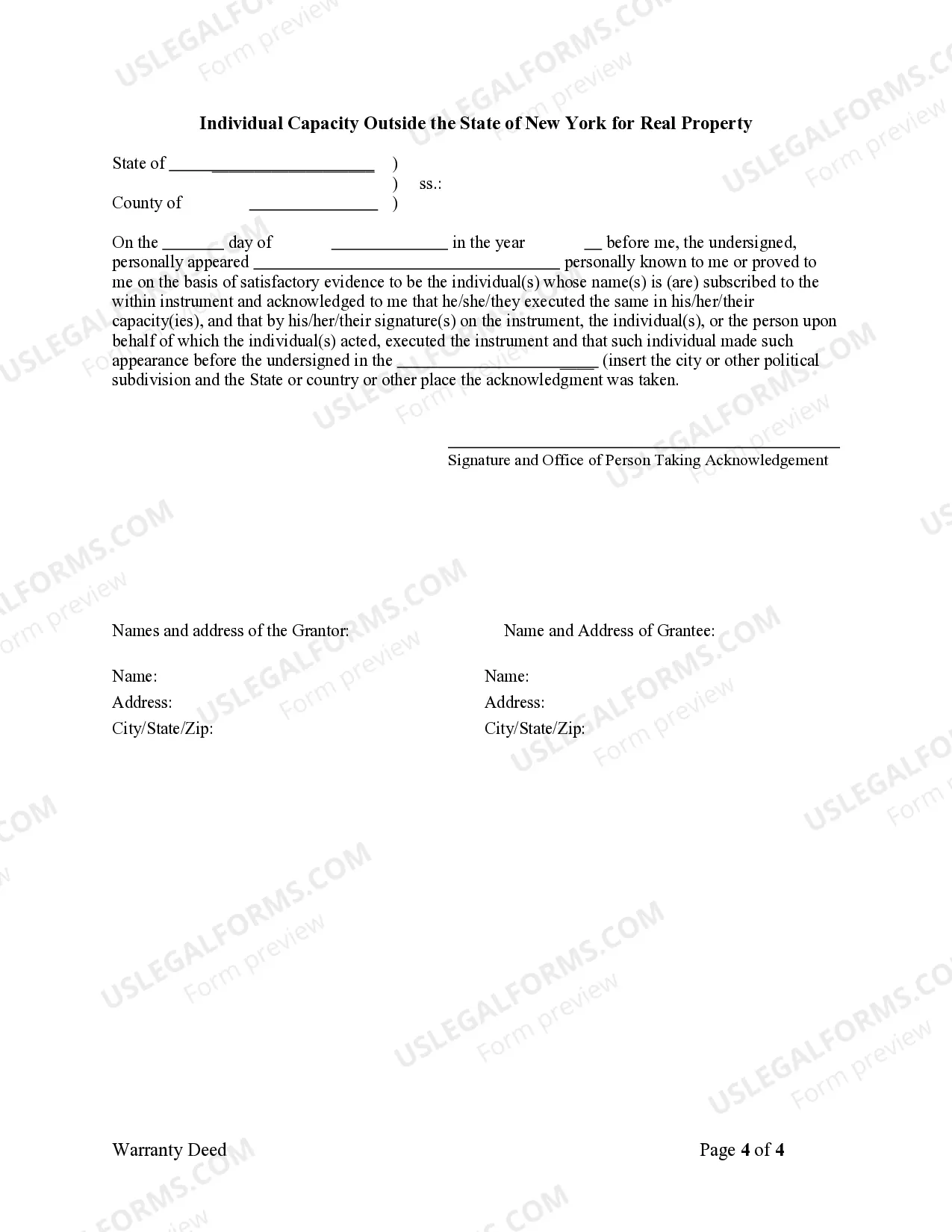
The Warranty Deed from Husband and Wife to Corporation is a legal document that facilitates the transfer of property ownership from a married couple to a corporate entity. This form ensures that the grantors, who are the husband and wife, convey their property rights to the corporation while reserving specific rights to any oil, gas, and minerals associated with the property. It is essential to note that a warranty deed provides a guarantee of clear title, distinguishing it from other types of deeds, such as quitclaim deeds, which do not offer such warranties.
Key parts of this document
- Grantors: The husband and wife executing the deed.
- Grantee: The corporation receiving the property.
- Legal Description: A detailed description of the property being transferred, included as an exhibit.
- Consideration: A clause ensuring that the grantors will receive payment as a trust fund for property improvements.
- Covenants: Promises made by the grantors about their right to sell the property and the absence of encumbrances.




Common use cases
This form is appropriate in situations where a married couple wishes to transfer their property interests to a corporation. This scenario often arises in business contexts, such as when couples decide to incorporate a business and transfer personal property into the corporate entity or during estate planning to make the property part of the corporation's assets.
Intended users of this form
- Married couples looking to transfer property to a corporation.
- Owners who want to ensure the property remains within a corporate structure for liability or operational purposes.
- Individuals involved in estate planning where business assets may be transferred to a corporation.
How to complete this form
- Identify the parties involved: the husband and wife as the grantors and the corporation as the grantee.
- Specify the property by including the legal description, often attached as an exhibit.
- Detail the consideration to be received by the grantors for the transfer.
- Include any necessary covenants and guarantees regarding the title and encumbrances.
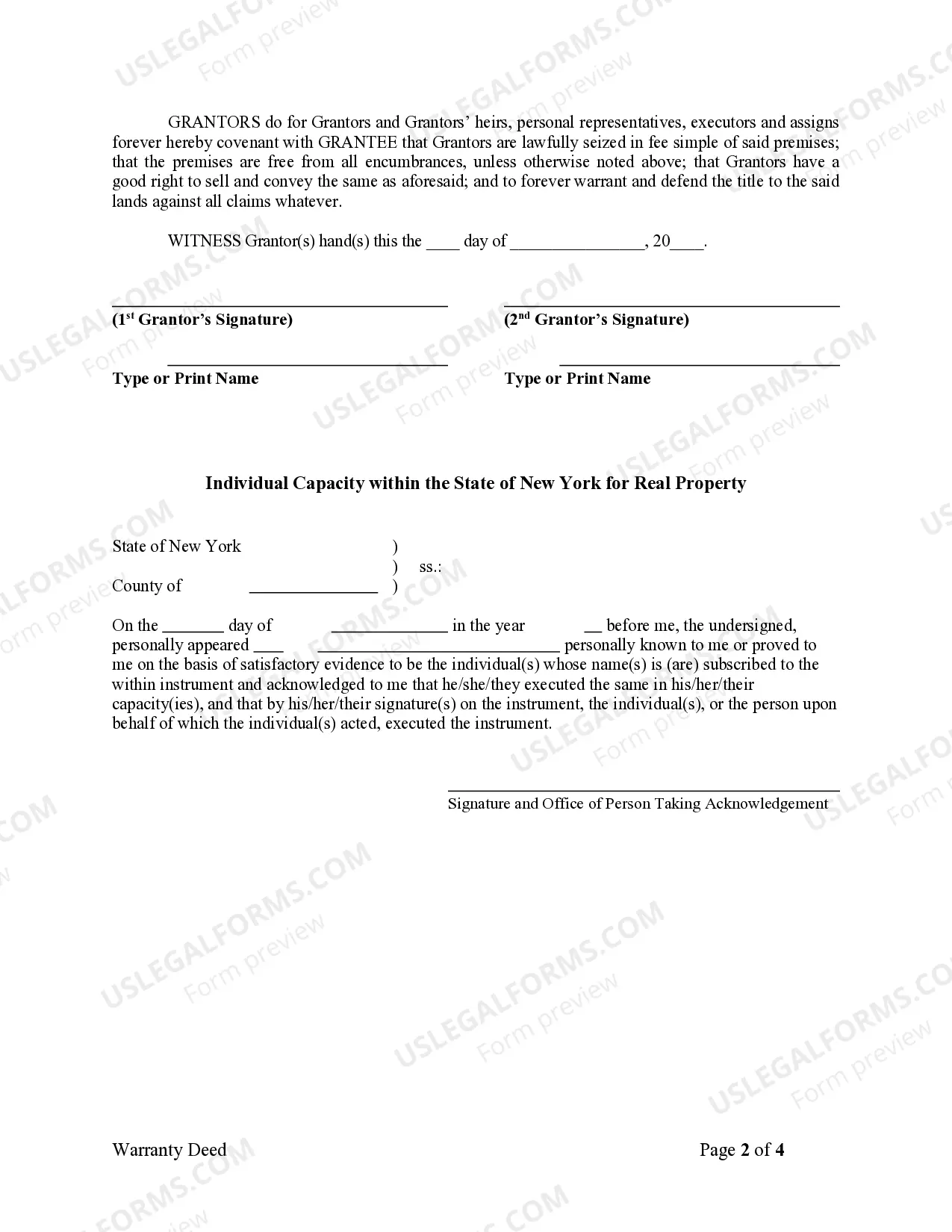
- Obtain signatures from both grantors and the appropriate person representing the corporation.
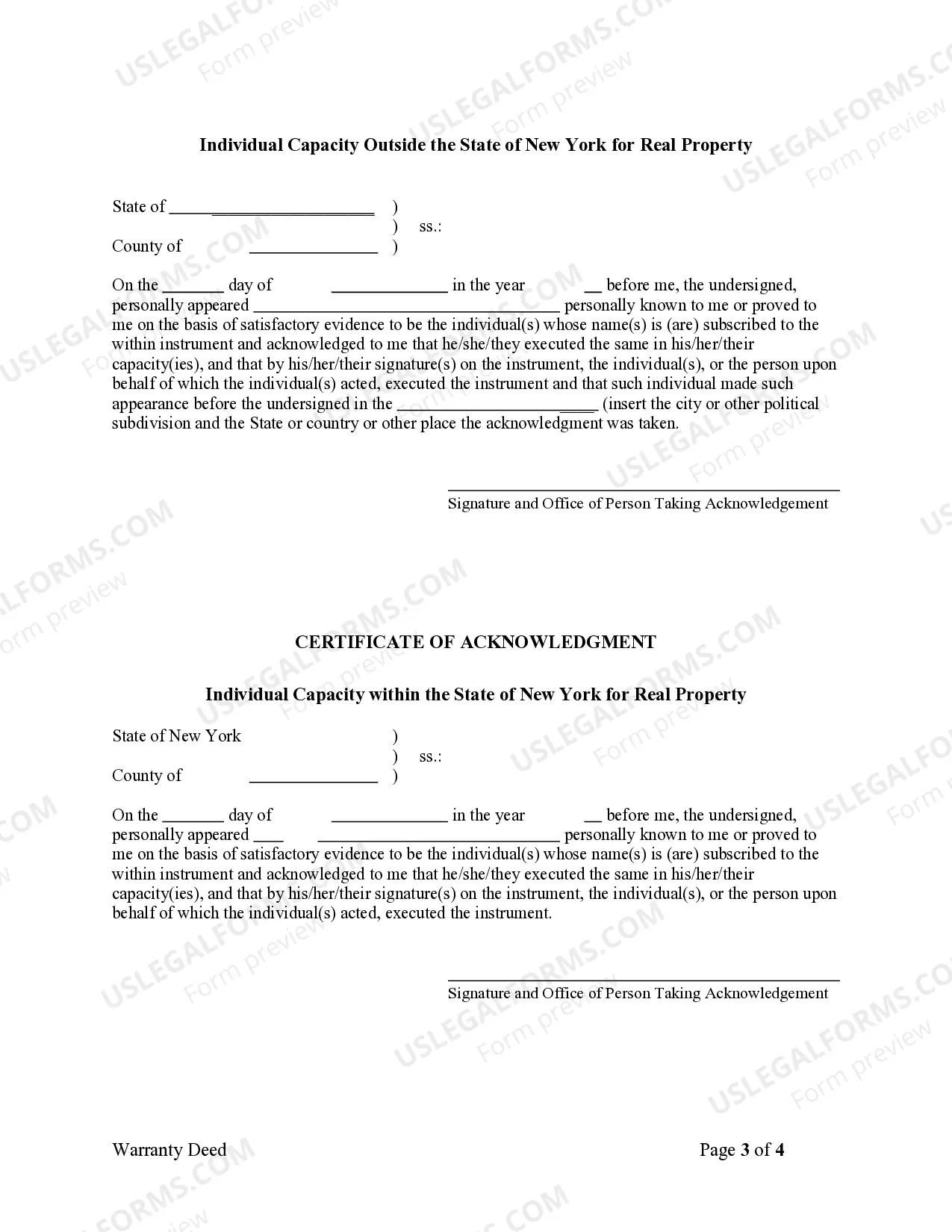
- If required, make necessary arrangements for notarization of the deed.
Does this document require notarization?
This document requires notarization to meet legal standards. US Legal Forms provides secure online notarization powered by Notarize, allowing you to complete the process through a verified video call, available 24/7.
Get your form ready online
Our built-in tools help you complete, sign, share, and store your documents in one place.
Make edits, fill in missing information, and update formatting in US Legal Forms—just like you would in MS Word.
Download a copy, print it, send it by email, or mail it via USPS—whatever works best for your next step.
Sign and collect signatures with our SignNow integration. Send to multiple recipients, set reminders, and more. Go Premium to unlock E-Sign.
If this form requires notarization, complete it online through a secure video call—no need to meet a notary in person or wait for an appointment.
We protect your documents and personal data by following strict security and privacy standards.

Make edits, fill in missing information, and update formatting in US Legal Forms—just like you would in MS Word.

Download a copy, print it, send it by email, or mail it via USPS—whatever works best for your next step.

Sign and collect signatures with our SignNow integration. Send to multiple recipients, set reminders, and more. Go Premium to unlock E-Sign.

If this form requires notarization, complete it online through a secure video call—no need to meet a notary in person or wait for an appointment.

We protect your documents and personal data by following strict security and privacy standards.
Typical mistakes to avoid
- Failing to include a complete legal description of the property.
- Not specifying the consideration to be received clearly.
- Omitting signatures or failing to have the deed notarized when required.
- Not checking for existing encumbrances that may affect the transfer.
Advantages of online completion
- Convenience: Access and complete the form from anywhere at any time.
- Editability: Easily make any necessary adjustments before finalizing the document.
- Reliability: Use forms drafted by licensed attorneys to ensure legal compliance.
Looking for another form?

Form popularity
FAQ
What Is the Difference Between a Warranty Deed & a Survivorship Deed?A warranty deed is the most comprehensive and provides the most guarantees. Survivorship isn't so much a deed as a title. It's a way to co-own property where, upon the death of one owner, ownership automatically passes to the survivor.
To change the deed in New York City, as we discussed, we will need a deed signed and notorized by the grantor. Additionally, the deed must also be filed and recorded with the Office of the City Register along with transfer documents which identify if any taxes are due.
A warranty deed, also known as a general warranty deed, is a legal real estate document between the seller (grantor) and the buyer (grantee). The deed protects the buyer by pledging that the seller holds clear title to the property and there are no encumbrances, outstanding liens, or mortgages against it.
A special warranty deed is a deed to real estate where the seller of the propertyknown as the grantorwarrants only against anything that occurred during their physical ownership. In other words, the grantor doesn't guarantee against any defects in clear title that existed before they took possession of the property.
A warranty deed is a higher level of protection produced by the seller upon the real estate closing. It includes a full legal description of the property, and confirms the title is clear and free from all liens, encumbrances, or title defects. Most property sales make use of a warranty deed.
Corporate warranty deeds offer the seller's guarantee to the buyer in regards to the validity of the chain of title. Generally, special warranty deeds only protect against problems occurring since the seller purchased the property.
The fees to file a New York quitclaim deed vary from county to county, but some of the fees are similar. As of 2018, the basic fee for filing a quitclaim deed of residential or farm property is $125, while the fee for all other property is $250. These fees are for the RP-5217 form.
It's important to note that a warranty deed does not actually prove the grantor has ownership (a title search is the best way to prove that), but it is a promise by the grantor that they are transferring ownership and if it turns out they don't actually own the property, the grantor will be responsible for compensating