New York Warranty Deed - Two Individuals to One Individual
Understanding this form
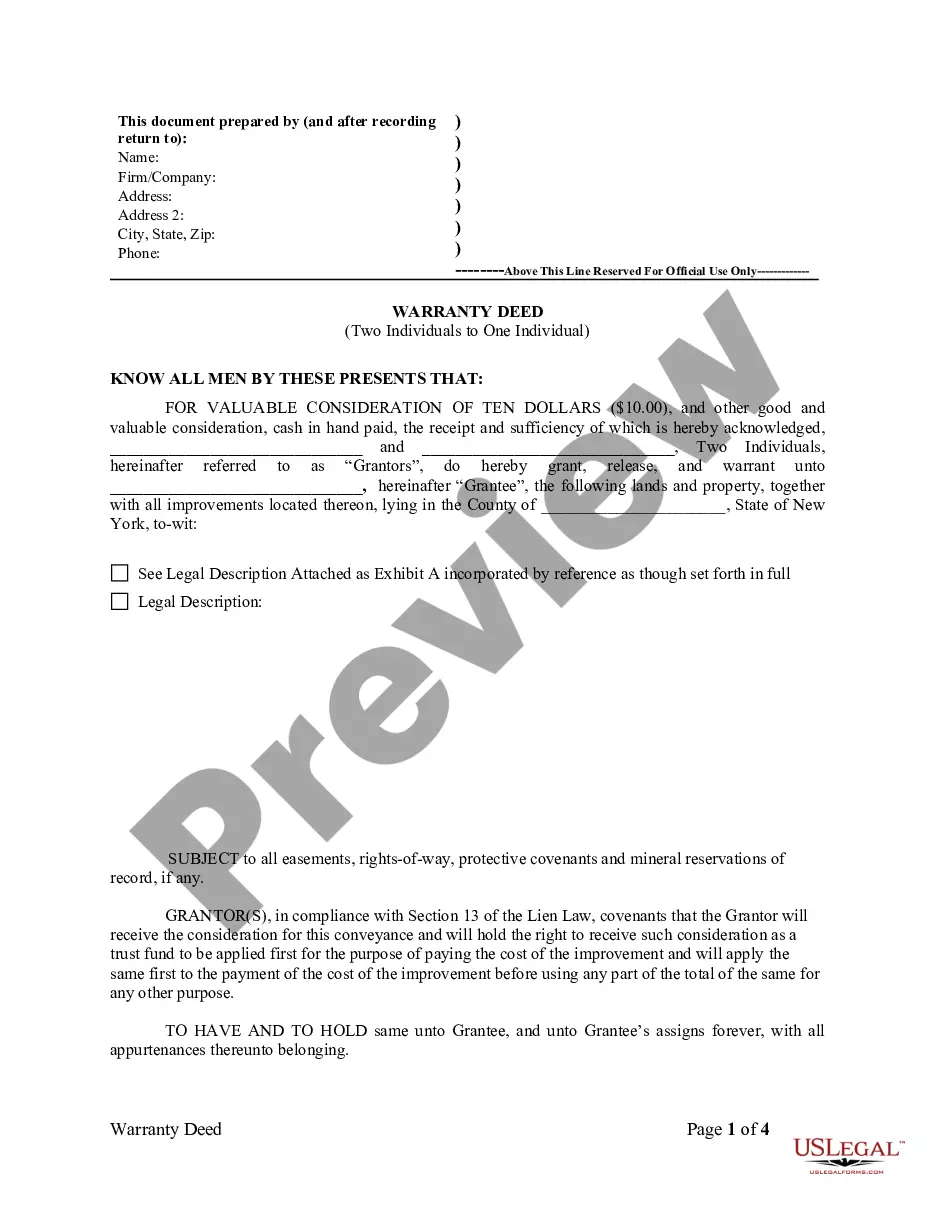
This form is a Warranty Deed designed for situations where two individuals, referred to as Grantors, are transferring property to one individual, known as the Grantee. The Warranty Deed serves to convey and ensure the property is free from any legal claims. Unlike a quitclaim deed, this type of deed provides a legal guarantee that the Grantors have the right to sell the property and that it is free of encumbrances, making it a reliable option for property transfers.
Key components of this form
- Identification of Grantors (two individuals) and Grantee (one individual).
- Legal description of the property being transferred.
- Covenant of warranty, guaranteeing clear title to the property.
- Consideration clause indicating the reason for the transfer.
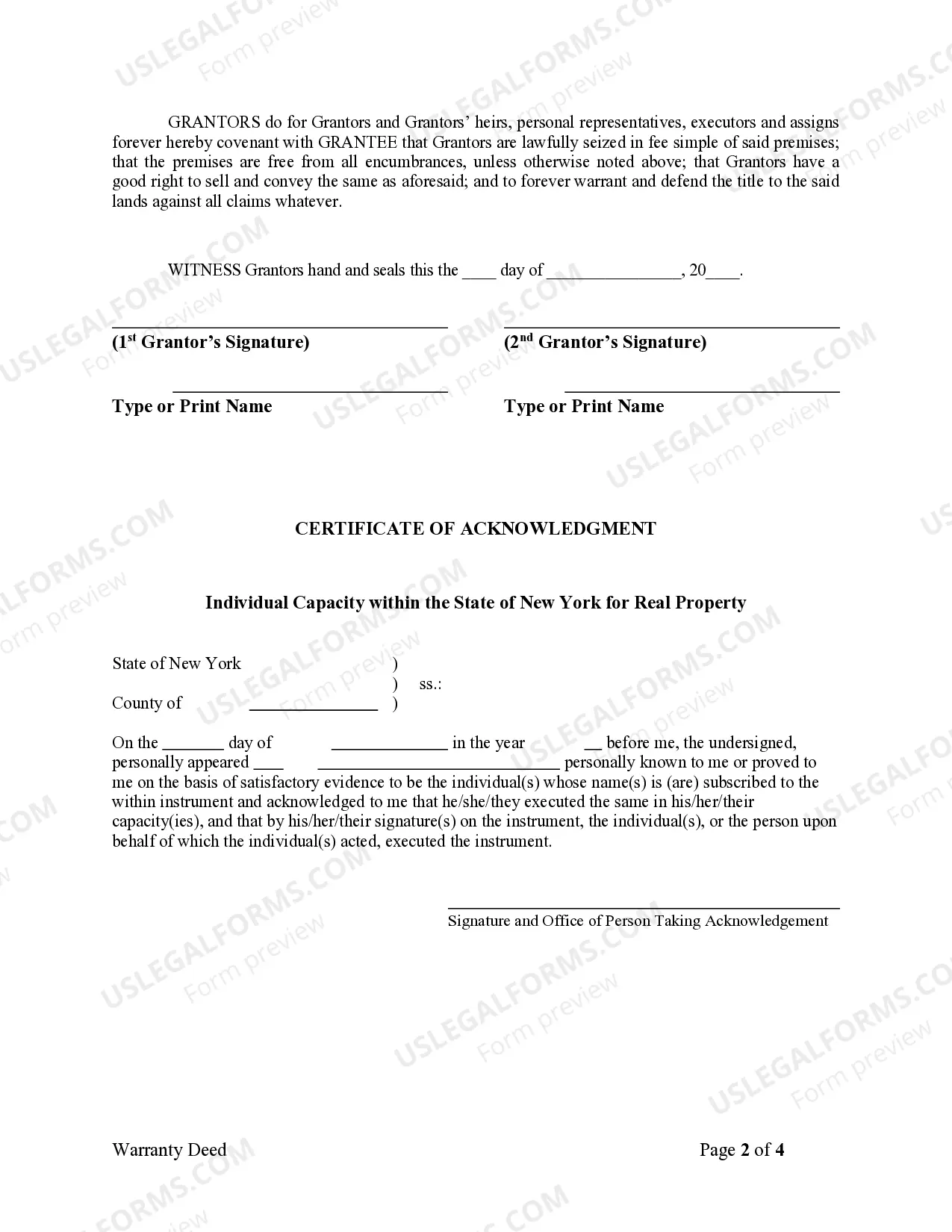
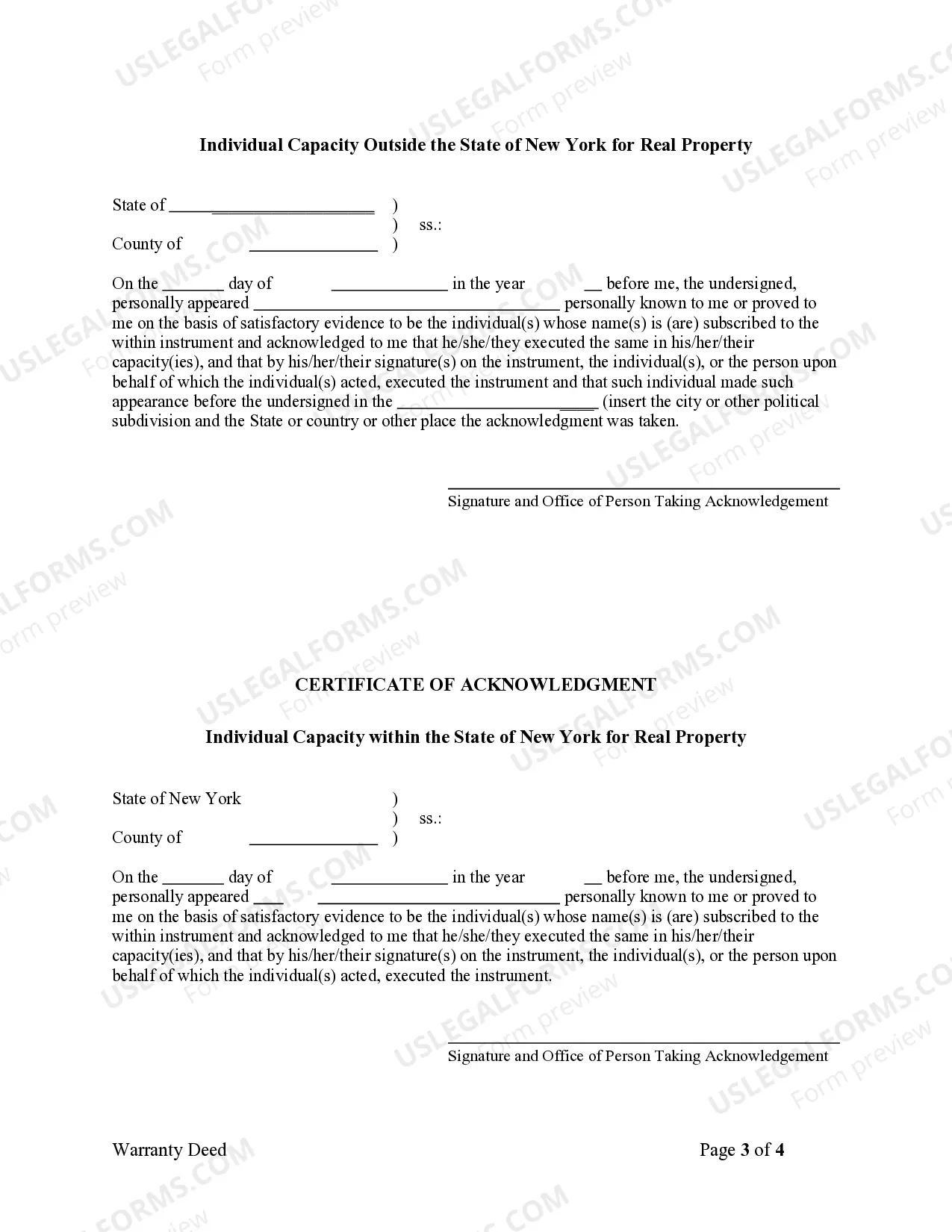
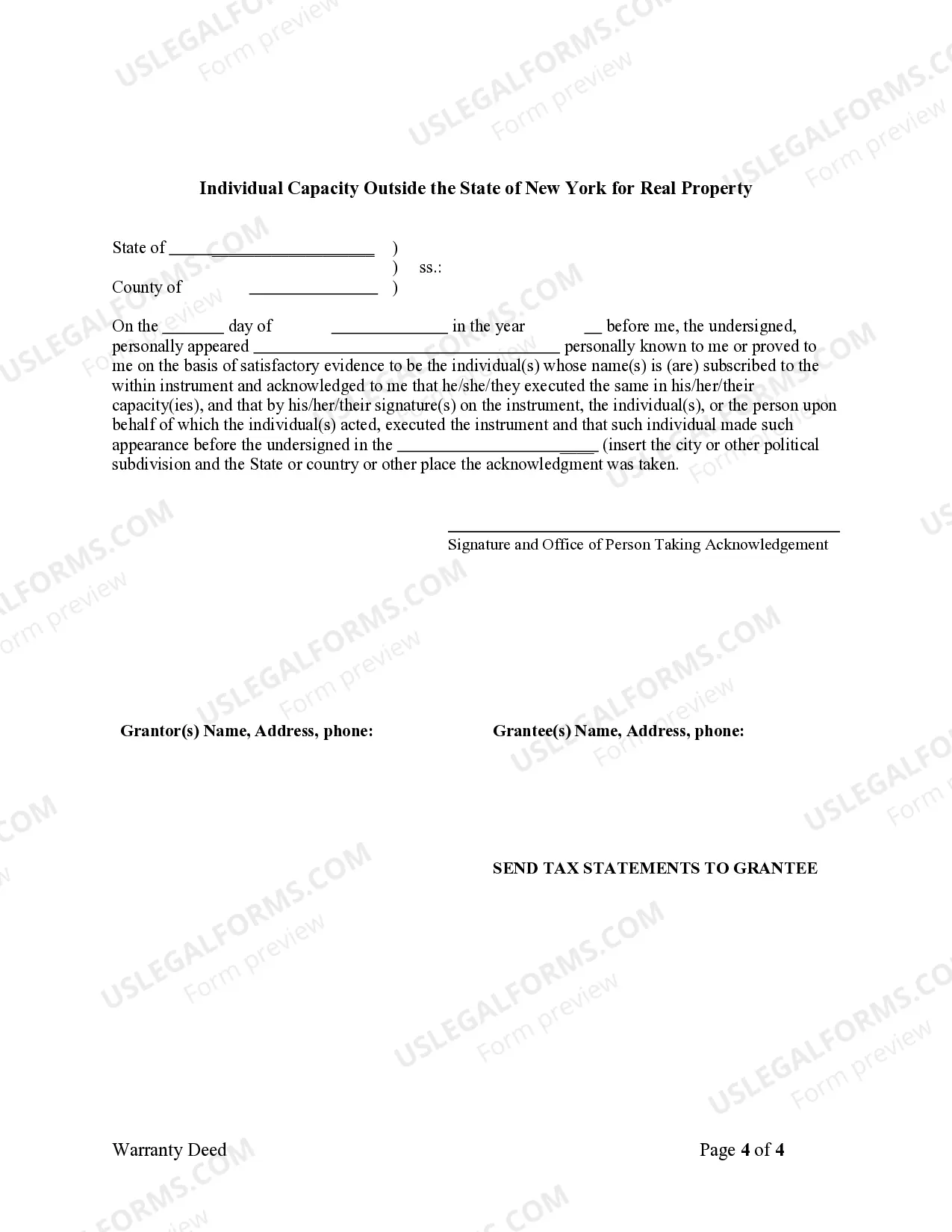
- Signature lines for all parties involved and the acknowledgement section.



Common use cases
This Warranty Deed is useful in various circumstances, such as when two co-owners of a property want to transfer their interest to one individual, possibly as part of a sale, gift, or estate planning. It can also be used when individuals want to consolidate property ownership for personal or financial reasons.
Who this form is for
- Individuals who jointly own property and wish to transfer ownership to a single person.
- Heirs or beneficiaries managing estate distributions.
- Anyone looking to ensure a clear title during property transfers.
How to prepare this document
- Identify the Grantors and the Grantee, ensuring correct legal names are used.
- Provide the legal description of the property being transferred.
- Indicate the consideration being exchanged for the property.
- Review and sign the deed in the presence of a notary public if required.
- File the completed Warranty Deed with the appropriate local jurisdiction office, typically the county recorder's office.
Is notarization required?
This document requires notarization to meet legal standards. US Legal Forms provides secure online notarization powered by Notarize, allowing you to complete the process through a verified video call, available 24/7.
Get your form ready online
Our built-in tools help you complete, sign, share, and store your documents in one place.
Make edits, fill in missing information, and update formatting in US Legal Forms—just like you would in MS Word.
Download a copy, print it, send it by email, or mail it via USPS—whatever works best for your next step.
Sign and collect signatures with our SignNow integration. Send to multiple recipients, set reminders, and more. Go Premium to unlock E-Sign.
If this form requires notarization, complete it online through a secure video call—no need to meet a notary in person or wait for an appointment.
We protect your documents and personal data by following strict security and privacy standards.
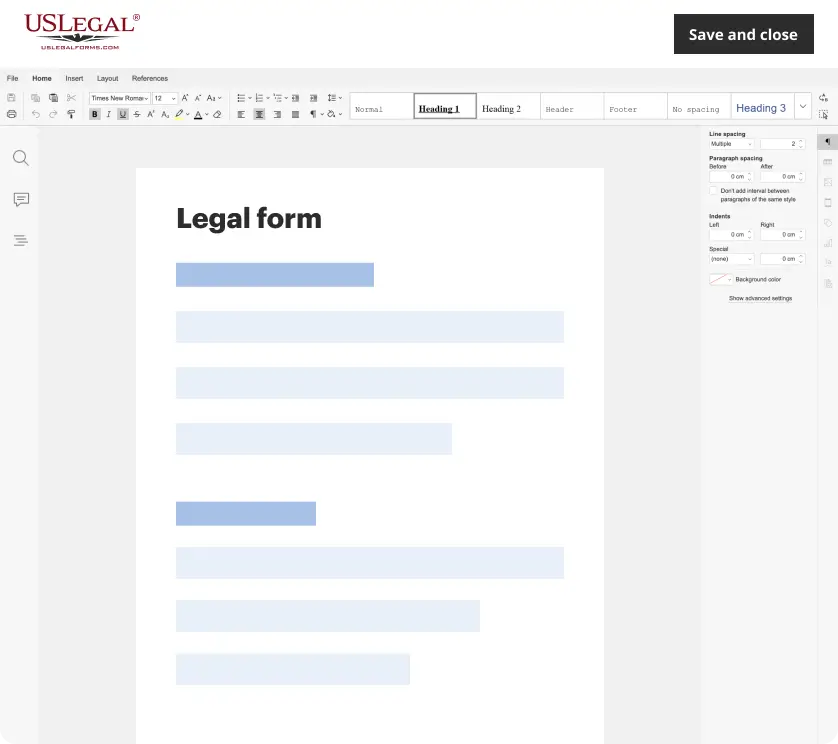
Make edits, fill in missing information, and update formatting in US Legal Forms—just like you would in MS Word.
Download a copy, print it, send it by email, or mail it via USPS—whatever works best for your next step.
Sign and collect signatures with our SignNow integration. Send to multiple recipients, set reminders, and more. Go Premium to unlock E-Sign.

If this form requires notarization, complete it online through a secure video call—no need to meet a notary in person or wait for an appointment.
We protect your documents and personal data by following strict security and privacy standards.
Avoid these common issues
- Failing to provide a complete legal description of the property.
- Not having the document notarized when required.
- Incorrectly identifying Grantors and Grantee.
Advantages of online completion
- Convenient access to forms that are drafted by licensed attorneys.
- Editable templates that allow for customization.
- Quick download options, allowing immediate use without delays.
Main things to remember
- A Warranty Deed ensures that property is transferred with a guarantee of clear title.
- It is essential to correctly identify all parties involved in the transaction.
- Notarization is typically required for this form to be valid.
Looking for another form?
Form popularity
FAQ
It is possible to be named on the title deed of a home without being on the mortgage. However, doing so assumes risks of ownership because the title is not free and clear of liens and possible other encumbrances.If a mortgage exists, it's best to work with the lender to make sure everyone on the title is protected.
You would simply prepare a deed to you and your fiance. You would then have to prepare and execute the other necessary forms take them to the clerks office and file them. I suggest that you consult with a local attorney. They can do this at a modest cost.
It's important to note that a warranty deed does not actually prove the grantor has ownership (a title search is the best way to prove that), but it is a promise by the grantor that they are transferring ownership and if it turns out they don't actually own the property, the grantor will be responsible for compensating
The only way to forcibly change the ownership status is through a legal action and the resultant court order. However, if an owner chooses to be removed from the deed, it is simply a matter of preparing a new deed transferring that owner's interest in the property.
Special warranties allow the transfer of property title between seller and buyer. The purchase of title insurance can mitigate the risk of prior claims to the special warranty deed.
It will not protect against title issues that arose prior to the time the seller took occupancy. Consequently, it offers less protection to buyers, and more protection to sellers, than a general warranty deed, which is the most common option for selling or buying a property.
A special warranty deed to real estate offers protection to the buyer through the seller's guarantee that the title has been free and clear of encumbrances during their ownership of the property. It does not guarantee clear title beyond their ownership.
A warranty deed guarantees that: The grantor is the rightful owner of the property and has the legal right to transfer the title.The title would withstand third-party claims to ownership of the property. The grantor will do anything to ensure the grantee's title to the property.