Nevada Full Reconveyance of Deed of Trust by Individual Trustee
Understanding this form
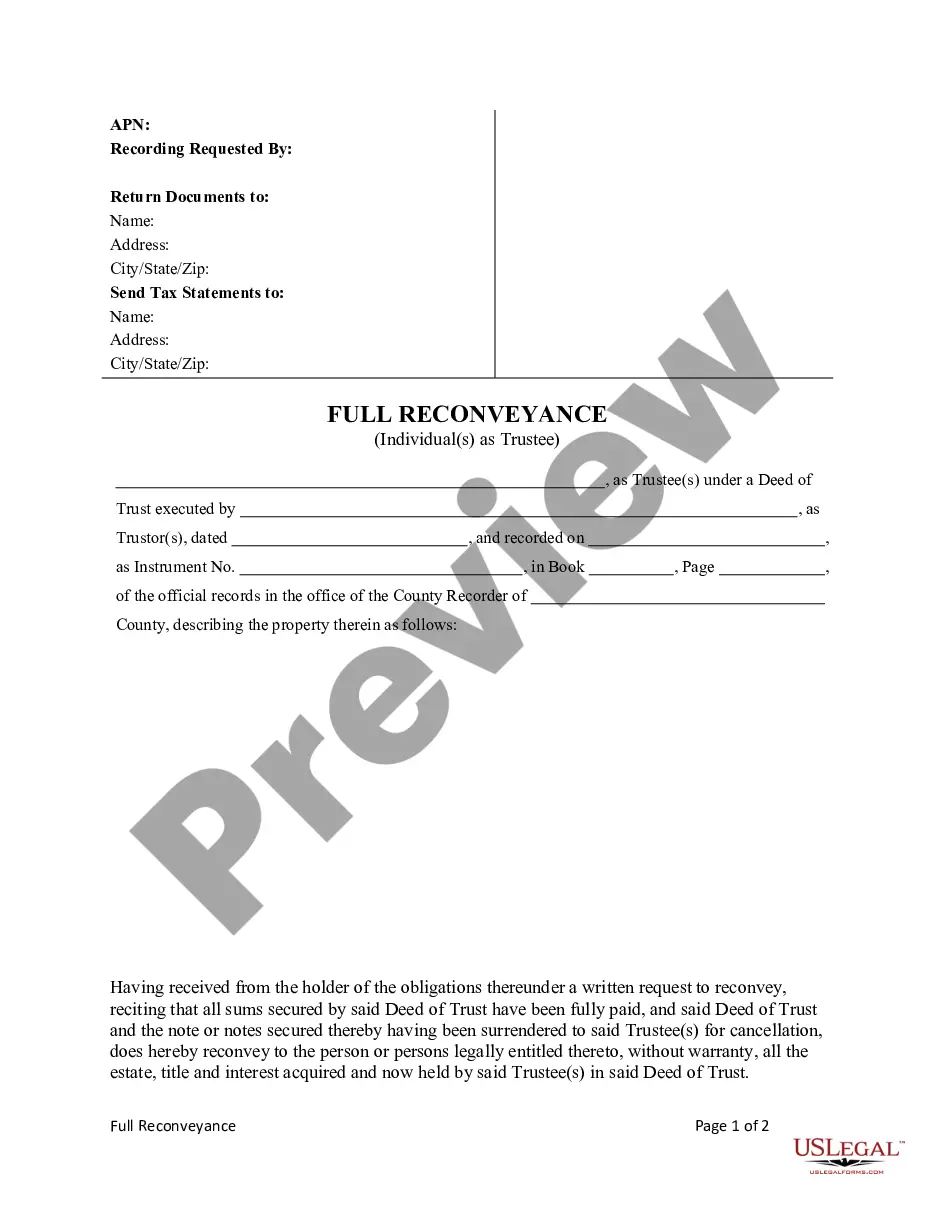
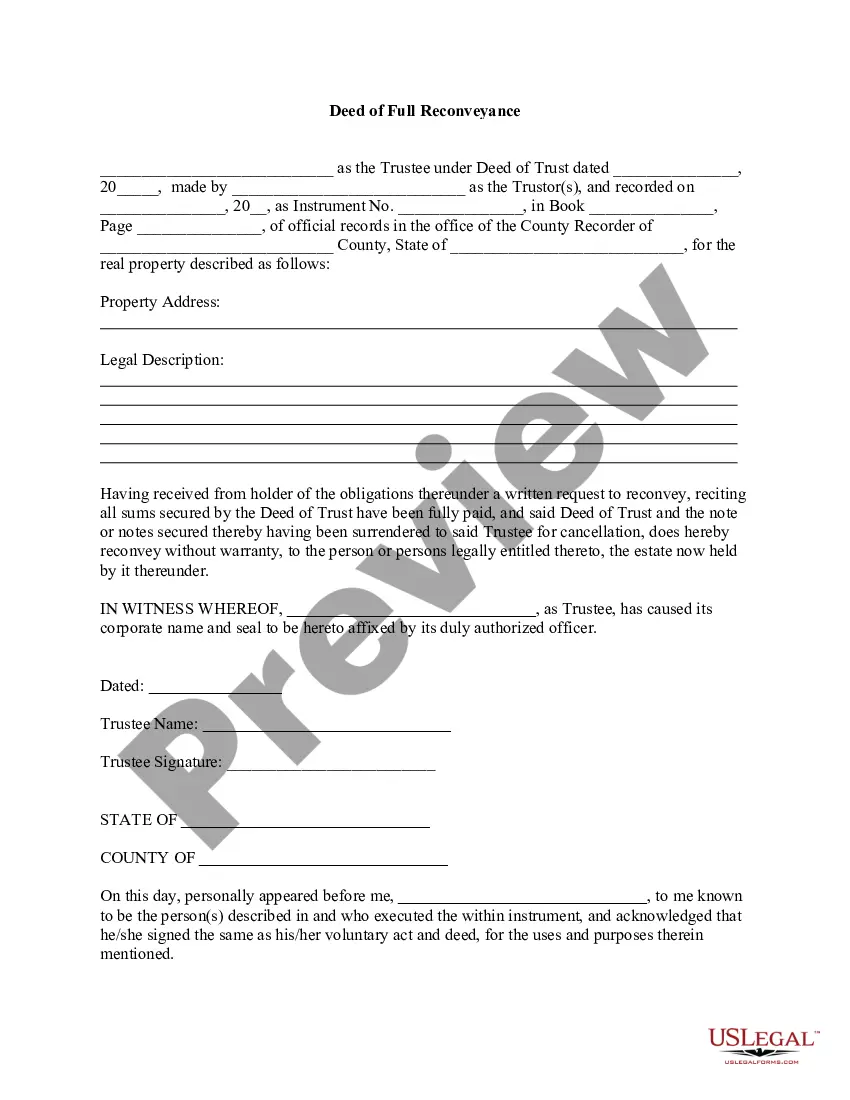
The Full Reconveyance of Deed of Trust by Individual Trustee is a legal document used in Nevada to formally satisfy or release a deed of trust. This form serves to notify all involved parties that the mortgage obligation has been fulfilled and the mentioned real estate is no longer encumbered by any mortgage. Unlike similar forms, this one specifically addresses situations where an individual trustee is involved in the reconveyance process.
Key components of this form
- Identification of the parties involved, including the trustee and the trustor.
- Details about the real estate being reconveyed.
- Specification of the original deed of trust information.
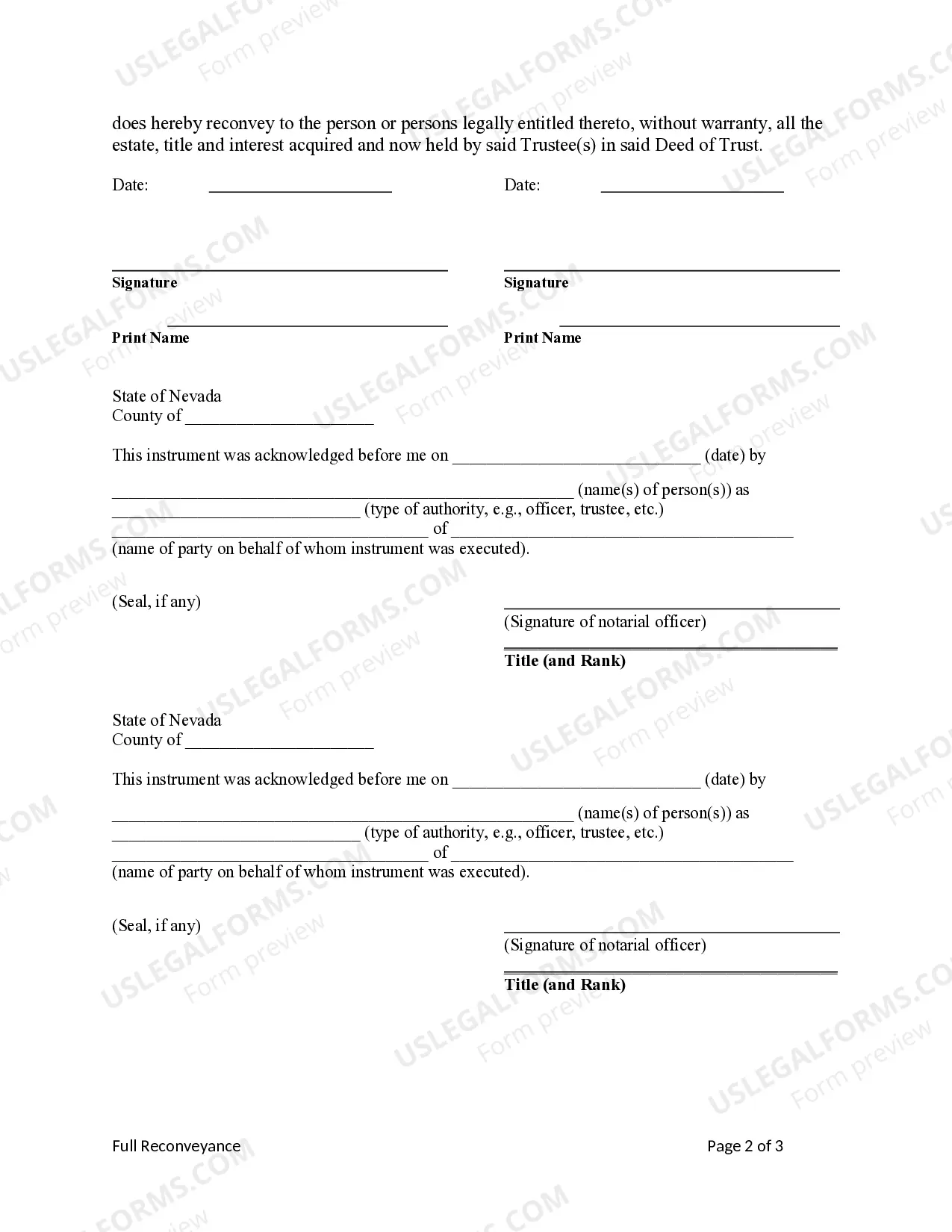
- Signatures of the trustee and acknowledgment by a notary public.
- Date of execution to establish the timing of the reconveyance.



When to use this form
This form should be used when a deed of trust in Nevada has been fully paid off or satisfied, and the trustee needs to formally release the associated property from the deed of trust. Scenarios may include the sale of property, refinancing, or any instance when the mortgage is no longer applicable. The reconveyance indicates to the borrower and public that the mortgage liability is cleared.
Who needs this form
- Individual trustees who are responsible for managing the deed of trust.
- Trustors or property owners who have repaid their mortgage.
- Real estate professionals involved in property transactions in Nevada.
Completing this form step by step
- Identify all parties involved and ensure their names are correctly spelled.
- Specify the property details, including the address and legal description.
- Fill in the information about the original deed of trust, including the date of execution.
- Have the trustee sign the document, indicating their authority to reconvey the deed.
- Arrange for the signature to be notarized in accordance with Nevada law.
Notarization requirements for this form
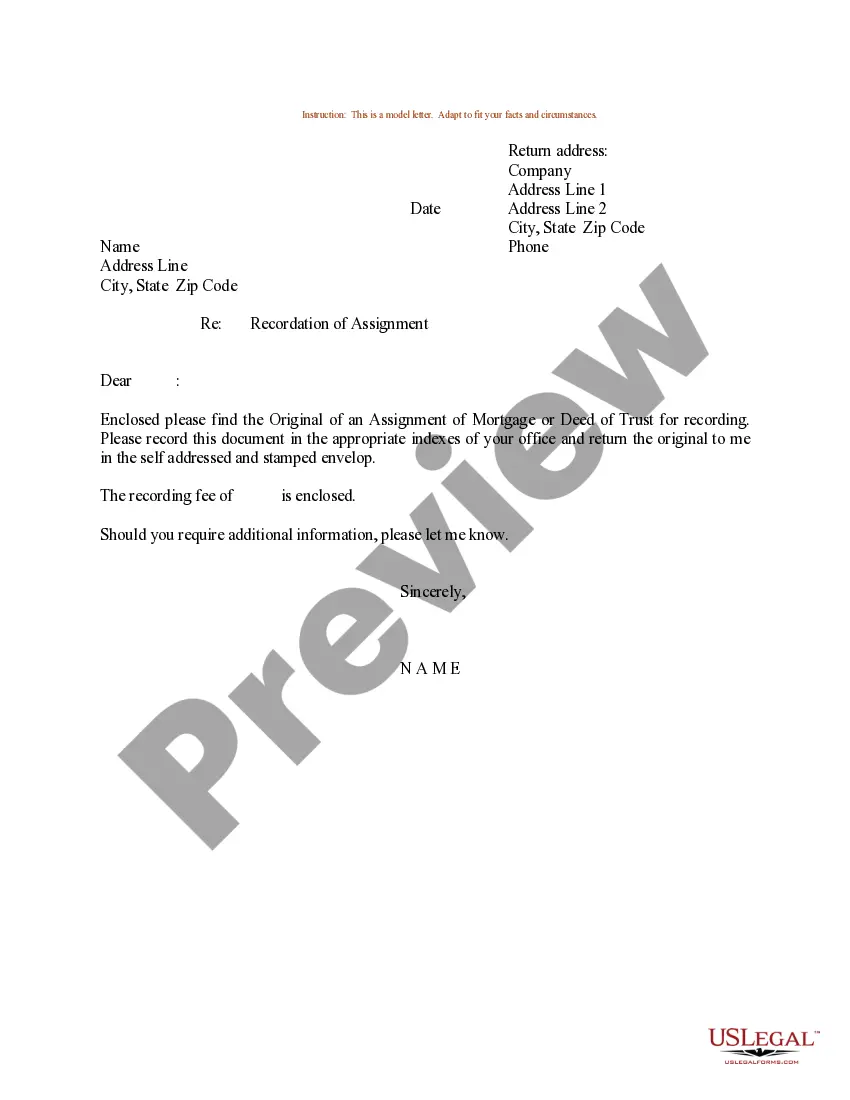
This document requires notarization to meet legal standards. US Legal Forms provides secure online notarization powered by Notarize, allowing you to complete the process through a verified video call, available 24/7.
Get your form ready online
Our built-in tools help you complete, sign, share, and store your documents in one place.
Make edits, fill in missing information, and update formatting in US Legal Forms—just like you would in MS Word.
Download a copy, print it, send it by email, or mail it via USPS—whatever works best for your next step.
Sign and collect signatures with our SignNow integration. Send to multiple recipients, set reminders, and more. Go Premium to unlock E-Sign.
If this form requires notarization, complete it online through a secure video call—no need to meet a notary in person or wait for an appointment.
We protect your documents and personal data by following strict security and privacy standards.
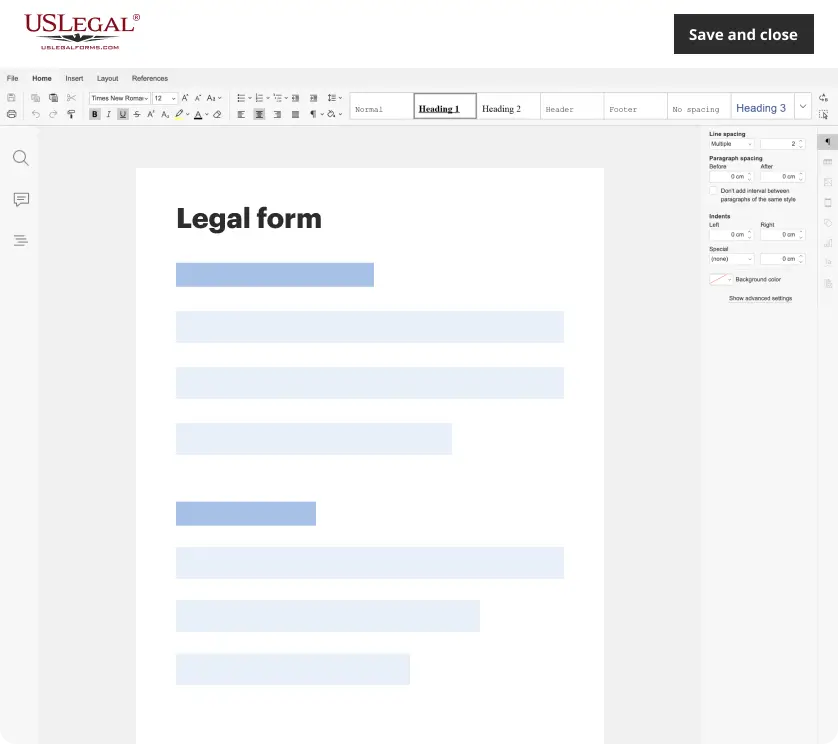
Make edits, fill in missing information, and update formatting in US Legal Forms—just like you would in MS Word.
Download a copy, print it, send it by email, or mail it via USPS—whatever works best for your next step.
Sign and collect signatures with our SignNow integration. Send to multiple recipients, set reminders, and more. Go Premium to unlock E-Sign.

If this form requires notarization, complete it online through a secure video call—no need to meet a notary in person or wait for an appointment.
We protect your documents and personal data by following strict security and privacy standards.
Common mistakes
- Failing to correctly identify all parties involved in the deed of trust.
- Omitting important property details or legal descriptions.
- Not notarizing the document, which may invalidate the reconveyance.
- Using incorrect or outdated forms that do not comply with Nevada law.
Advantages of online completion
- Convenience of downloading the form anytime without visiting a lawyer's office.
- Editability to ensure all information is accurate and tailored to your needs.
- Access to professionally drafted forms, ensuring compliance with legal standards.
Looking for another form?

Form popularity
FAQ
The trustee's primary function is to hold and maintain a property title for the borrower and the lender for the duration of the loan. Therefore, it is the trustee who retains factual ownership and control of the property in question, not the lender.
Only until the debt is paid off by the borrower can a deed of reconveyance then be used to clear the deed of trust from the title to the property. The document is signed by the trustee, whose signature must be notarized.
A mortgage holder issues a deed of reconveyance to indicate that the borrower has been released from the mortgage debt. The deed transfers the property title from the lender, also called the beneficiary, to the borrower. This document is most commonly used when a mortgage has been paid in full.
Property cannot be conveyed to a grantee who does not exist. Thus, a deed to a grantee who is dead at the time of delivery is void. For example, a deed recorded by the grantor is presumed to have been delivered.For example, a deed is voidable if it was obtained by fraud in the inducement.
A deed of trust involves three parties: the borrower, the lender, and the trustee.The trustee holds title to the property until the trustor has fully repaid the loan to the beneficiary, at which time the lender notifies the trustee, who then transfers full title of the property to the trustor.
The person who owns the property usually signs a promissory note and a deed of trust. The deed of trust does not have to be recorded to be valid.
The deed must be signed by the party or parties making the conveyance or grant; and 7.
Giving the wrong legal address for the property or the wrong amount of the debt can render the deed unenforceable. In some cases, the error is easy to fix, and the court will rule the deed is enforceable.
In order to clear the Deed of Trust from the title to the property, a Deed of Reconveyance must be recorded with the Country Recorder or Recorder of Deeds. If the Trustee/Beneficiary fails to record a satisfaction within the set time limits, the Trustee/Beneficiary may be responsible for damages as set out by statute.