Nevada Limited Power of Attorney where you Specify Powers with Sample Powers Included
Understanding this form
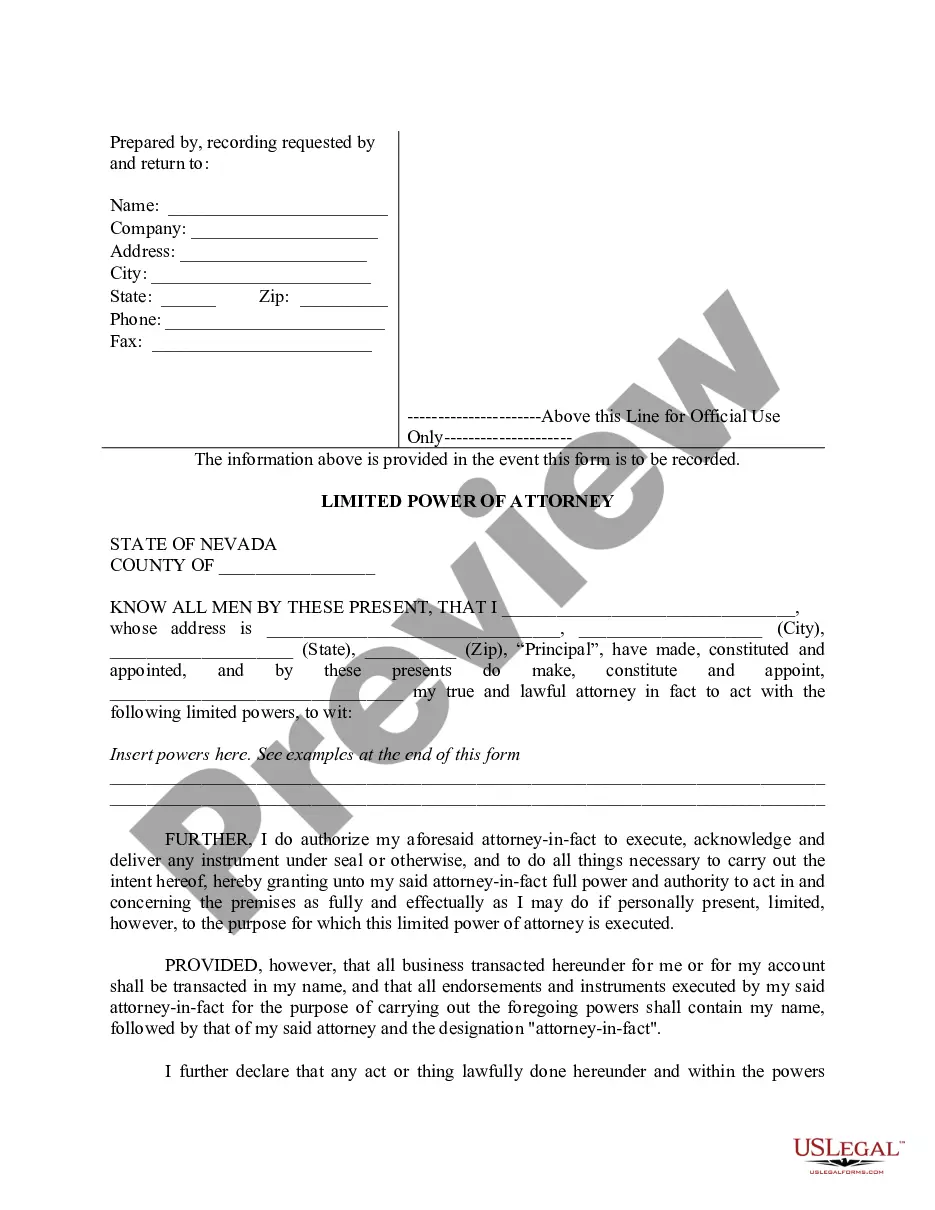
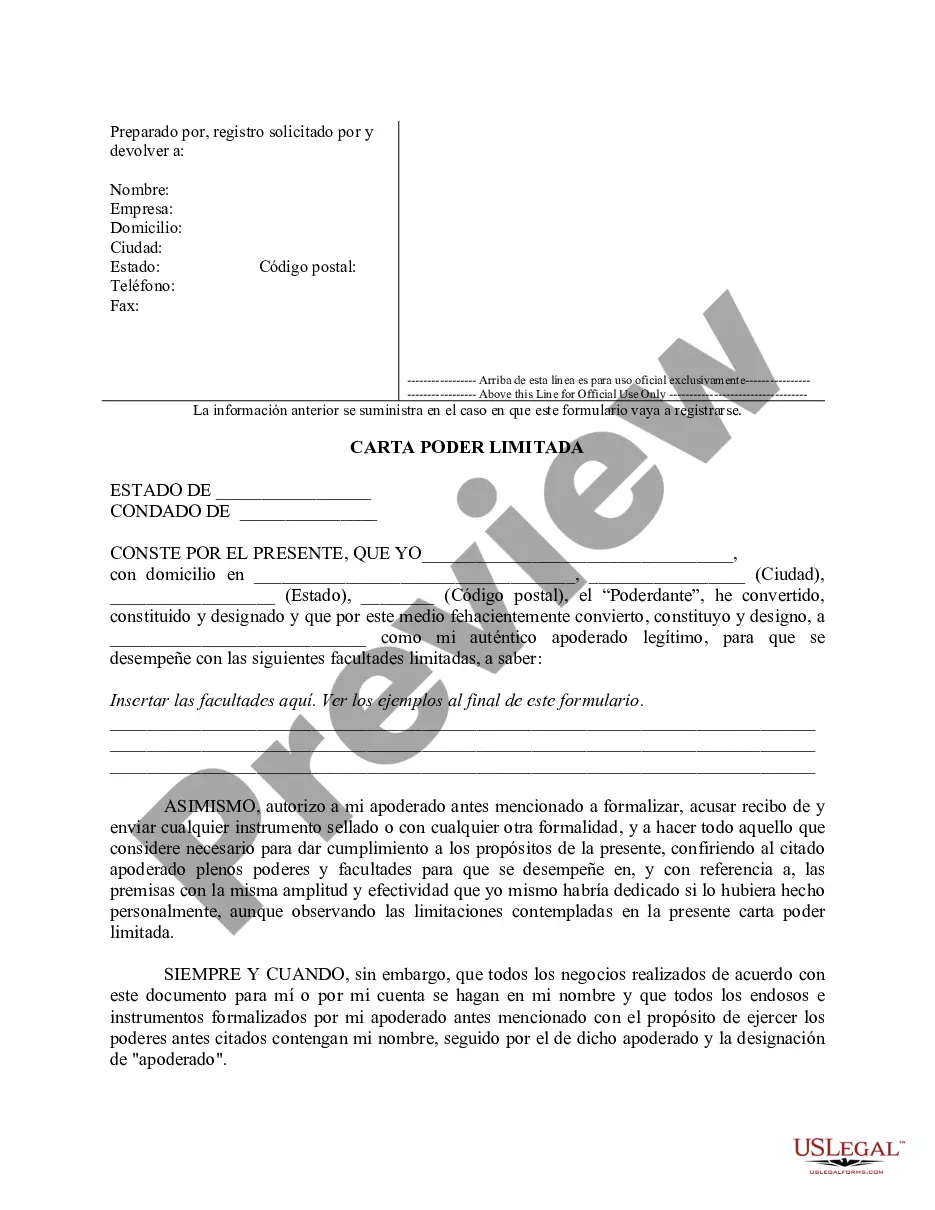
This form is a Limited Power of Attorney for Nevada that allows you, the principal, to specify particular powers to grant to an appointed agent. Unlike a general power of attorney, which grants broad authority, this document limits the powers based on your specifications. It is useful when you need someone to handle specific transactions or decisions on your behalf while retaining control over other areas of your affairs.
Main sections of this form
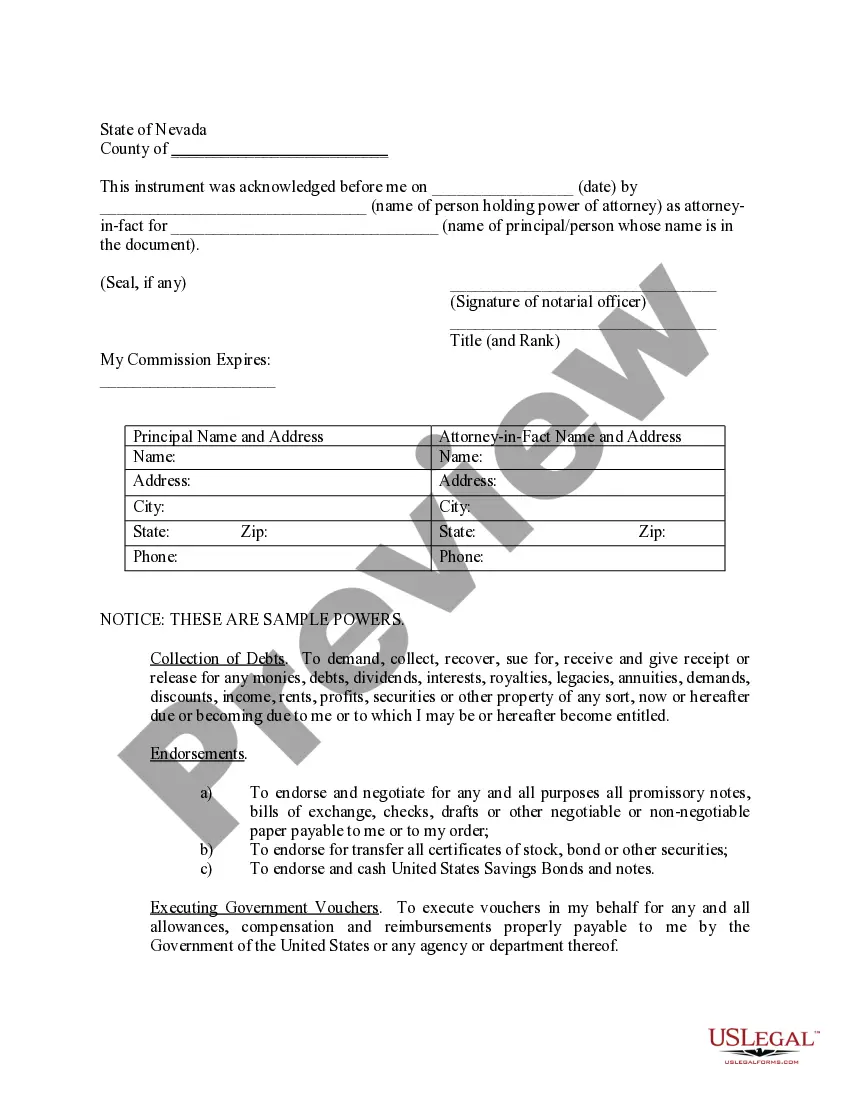
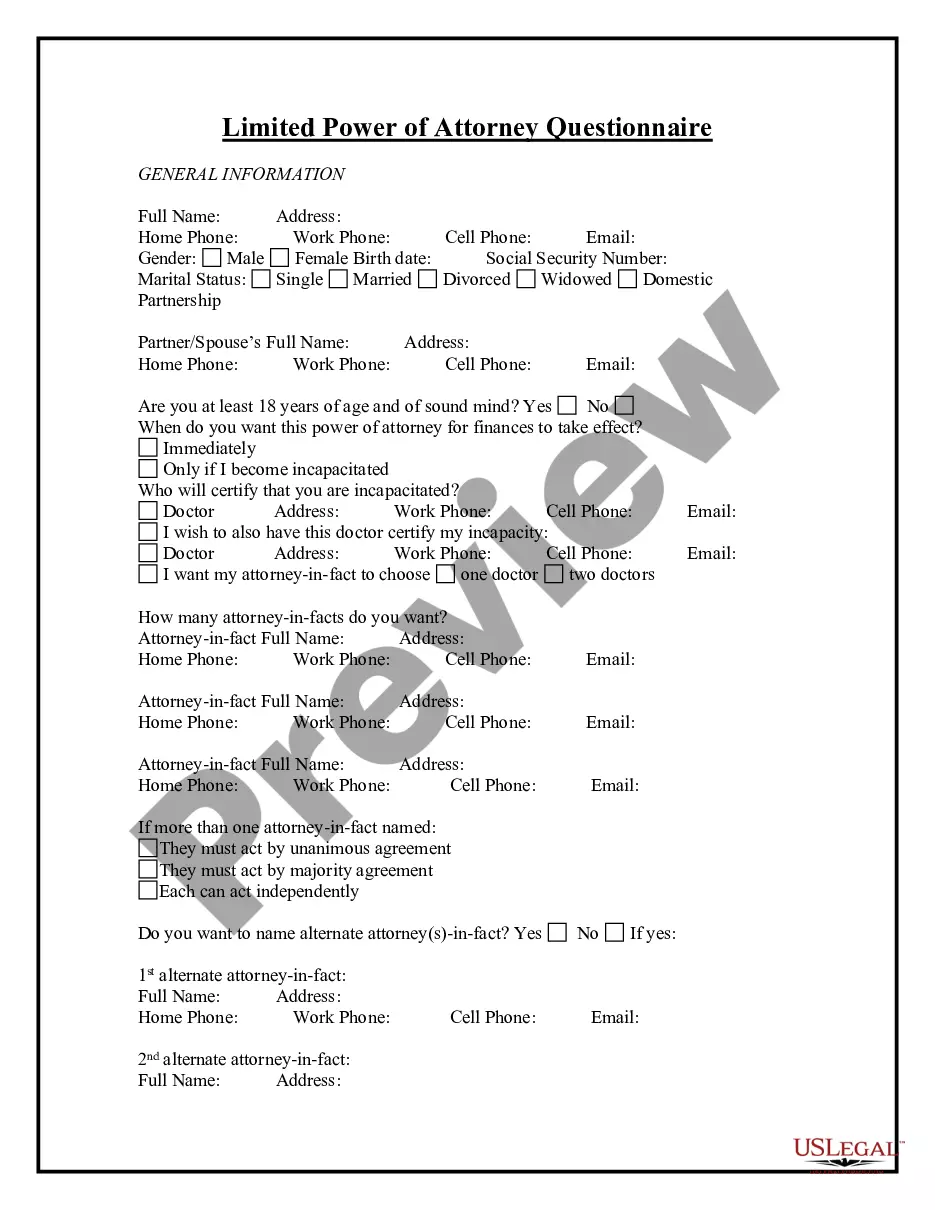
- Identification of the principal and agent with addresses.
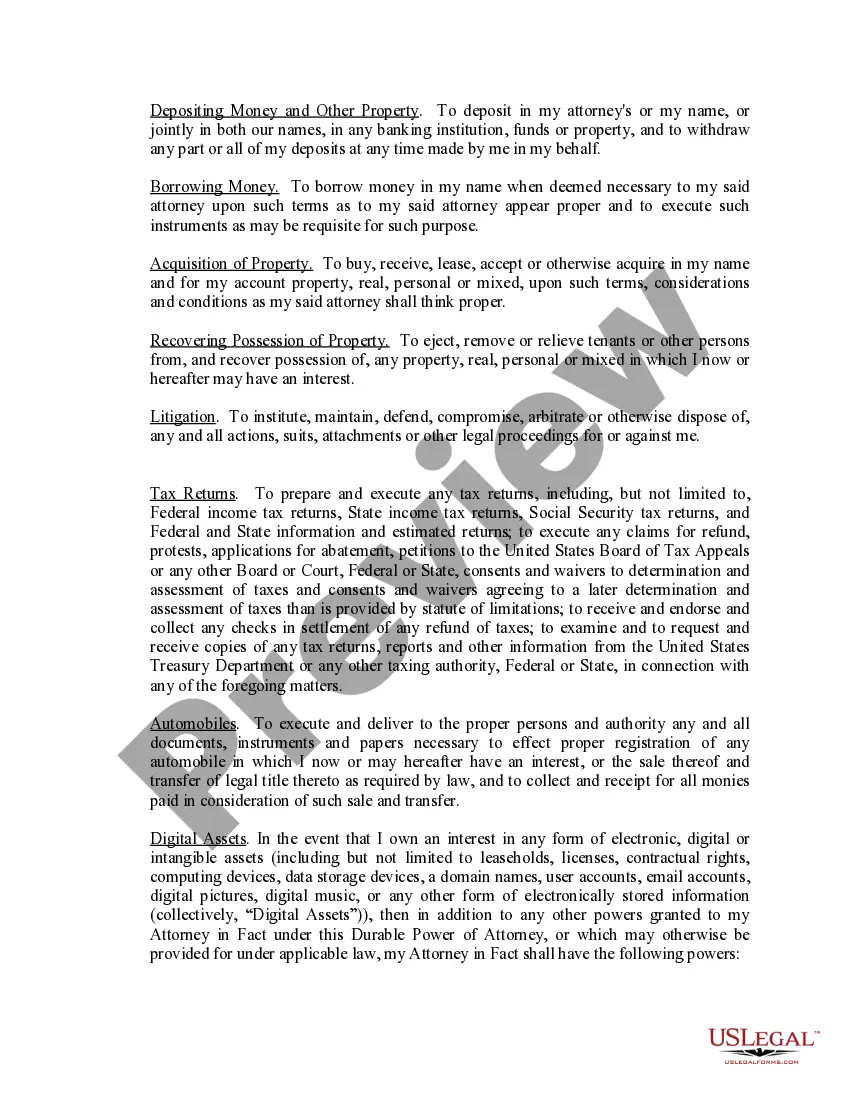
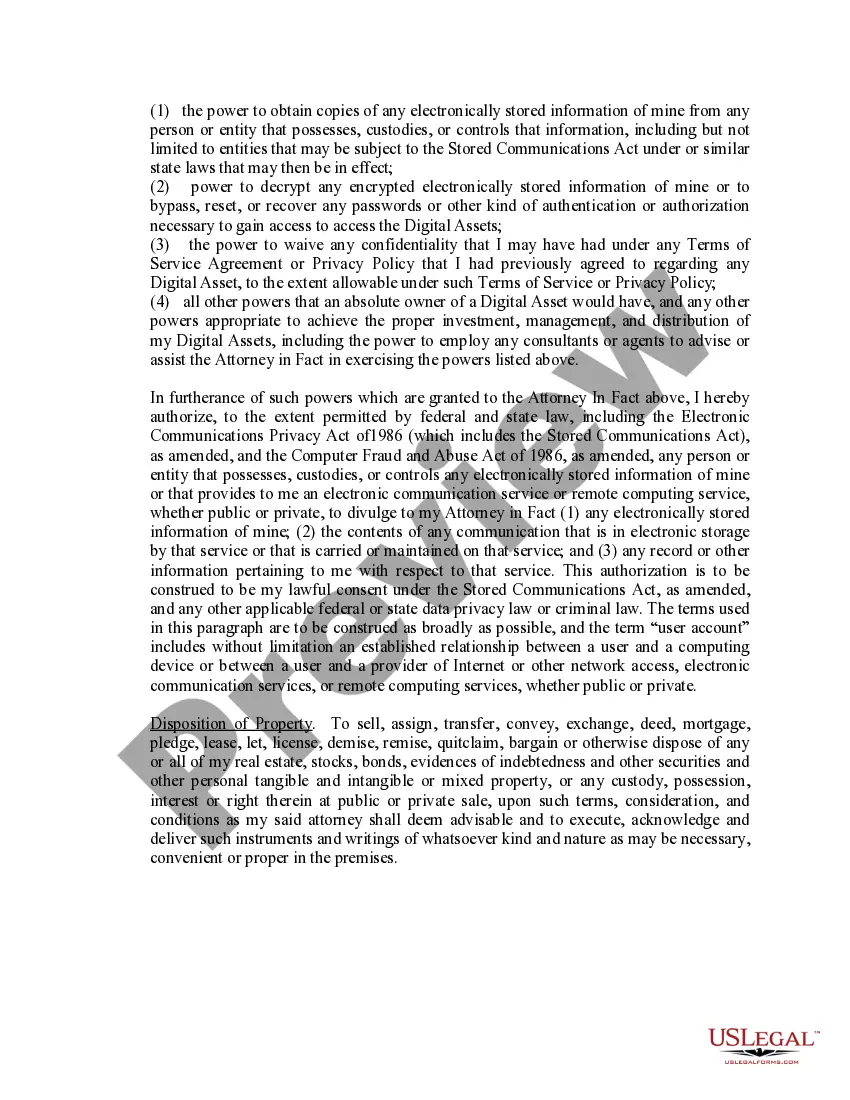
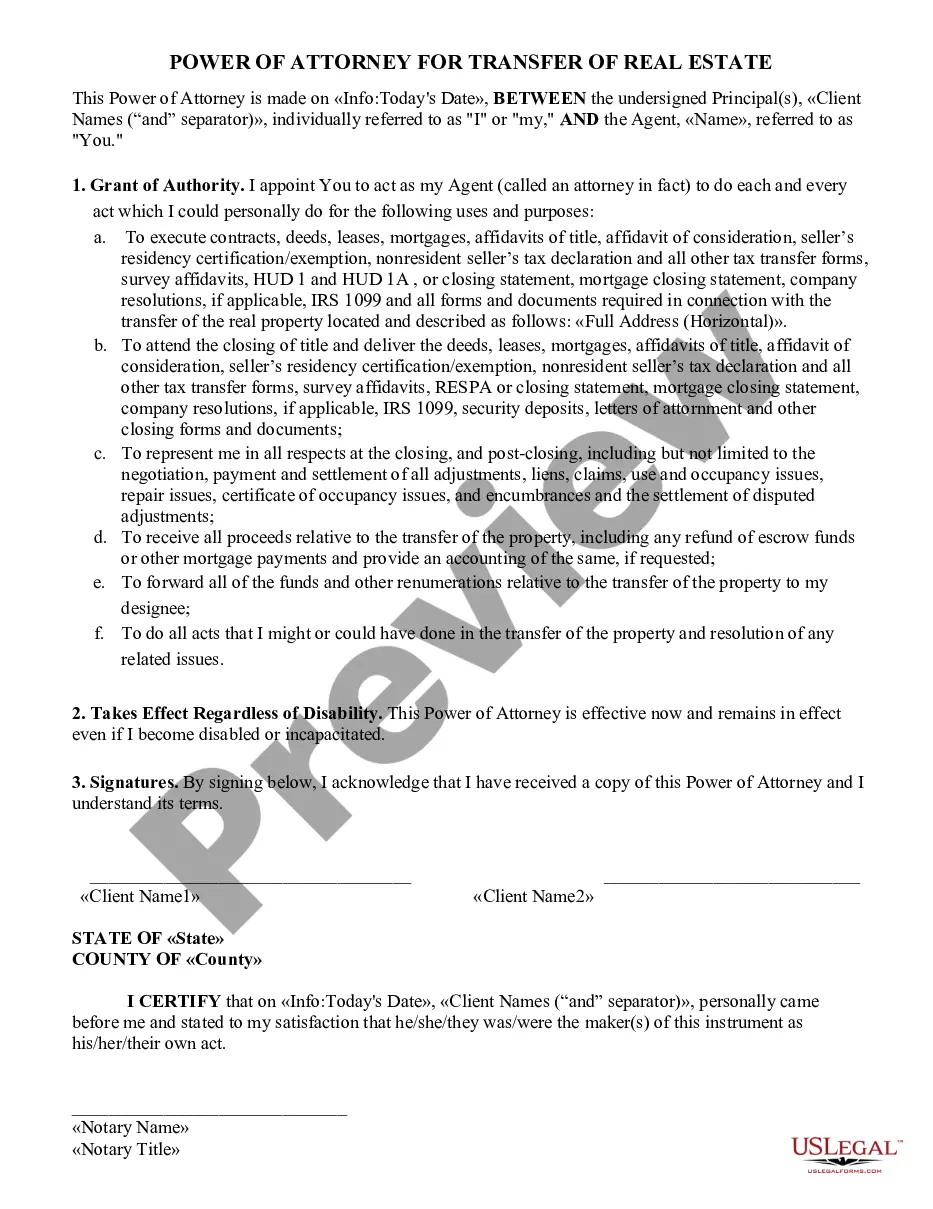
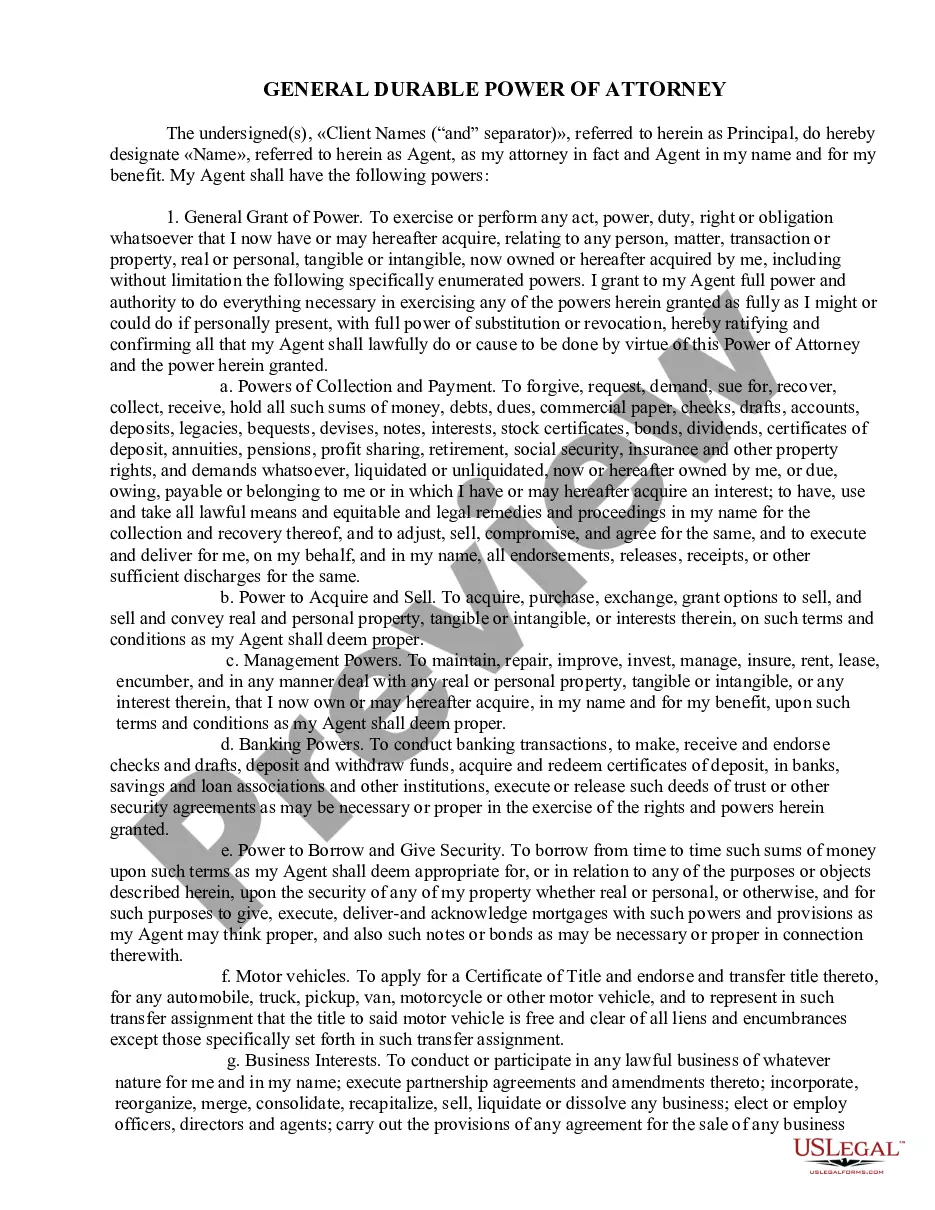
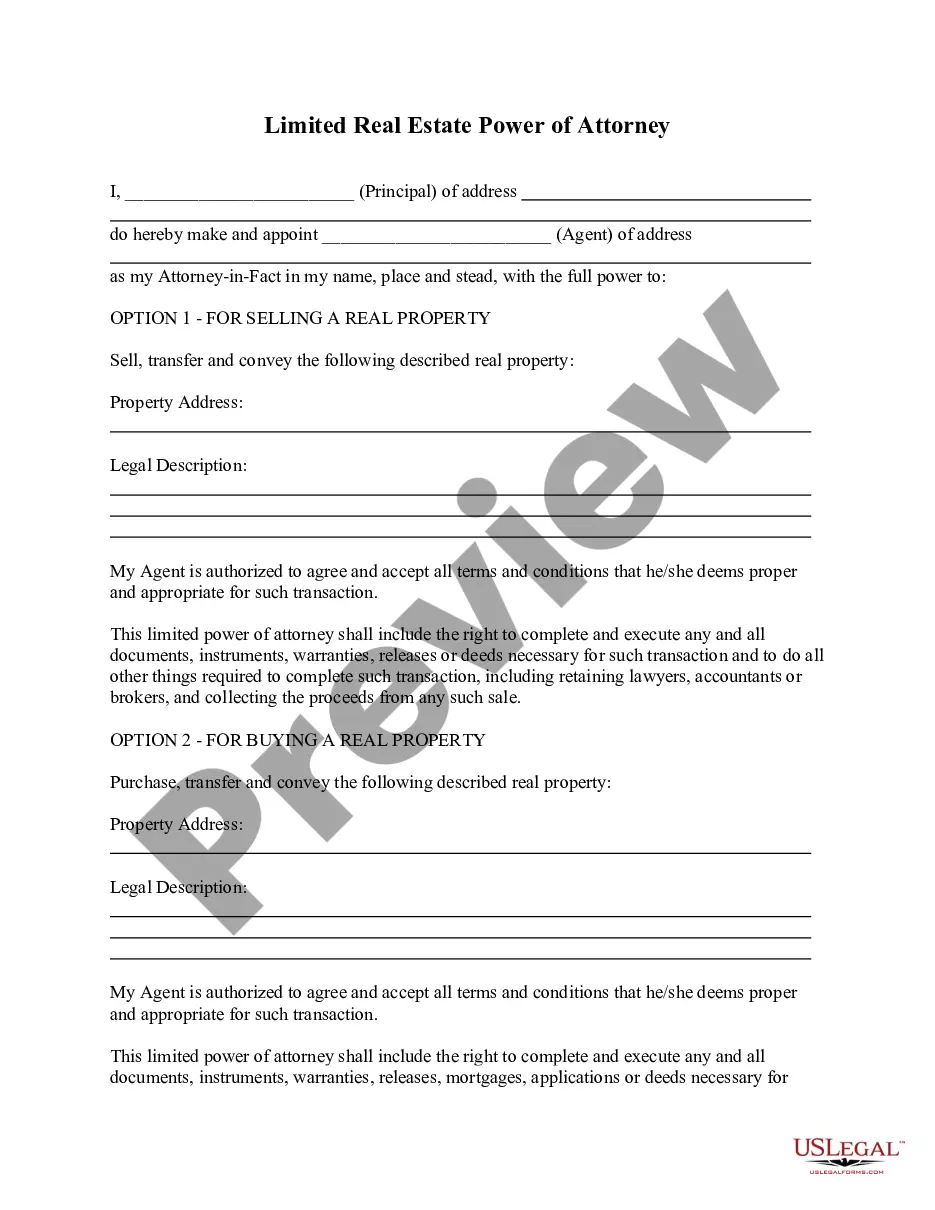
- Clearly stated limited powers that the agent is authorized to execute.
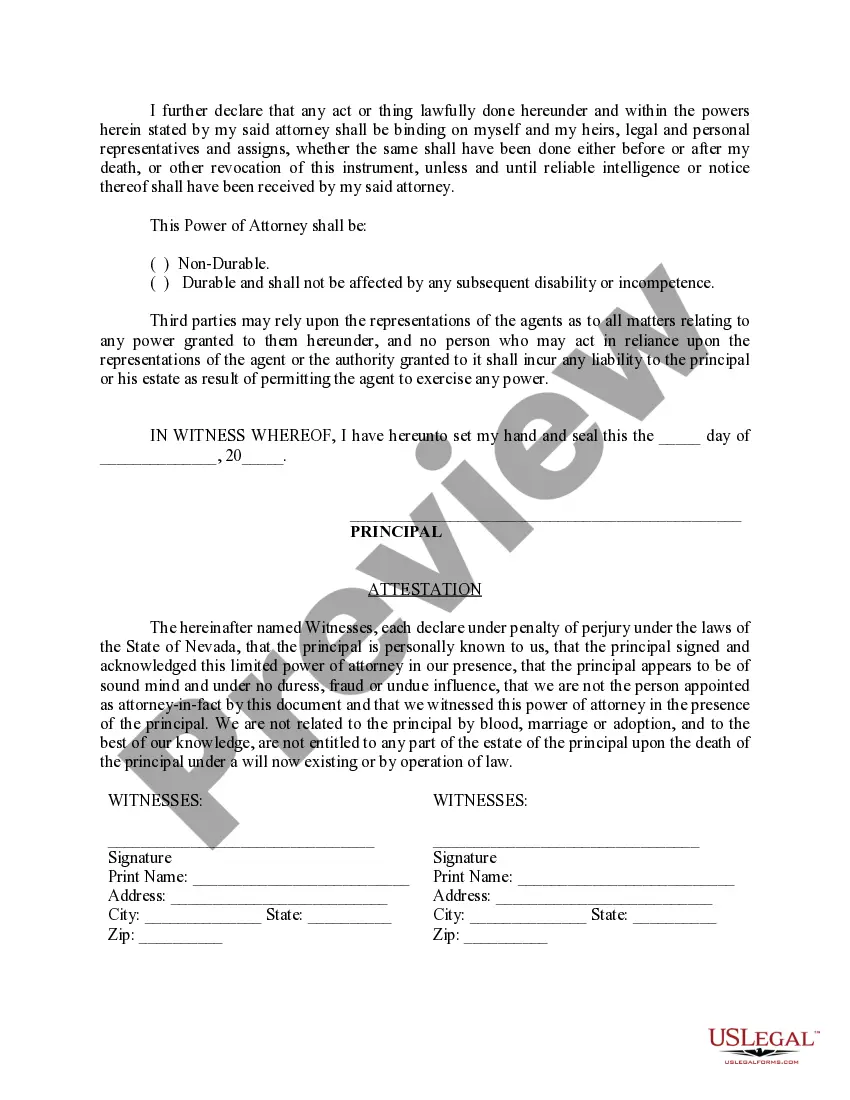
- Selection of whether the power of attorney is non-durable or durable.
- Witness signatures and acknowledgment for legal validation.
- Sample powers included for reference and customization.
When to use this form
This Limited Power of Attorney form can be used in various situations such as granting someone the authority to manage real estate transactions, handle financial matters, or make specific medical decisions while you are unable to do so. It's particularly useful in situations where you are temporarily unavailable or incapacitated, allowing your designated agent to act in your best interest based on the powers you specify.
Who this form is for
- Individuals seeking to delegate specific legal or financial powers to another person.
- Persons who are temporarily unable to manage their affairs due to travel, illness, or other reasons.
- Those wanting to retain control over certain aspects while delegating others to a trusted agent.
Completing this form step by step
- Identify yourself as the principal and provide your contact information.
- Clearly name and provide the contact information of your selected agent.
- Specify the powers that your agent is authorized to carry out.
- Choose whether the power of attorney is durable or non-durable.
- Sign the document in the presence of witnesses who will also sign the form.
- If necessary, have the document notarized for additional legal validity.
Does this form need to be notarized?
Notarization is required for this form to take effect. Our online notarization service, powered by Notarize, lets you verify and sign documents remotely through an encrypted video session, available 24/7.
Get your form ready online
Our built-in tools help you complete, sign, share, and store your documents in one place.
Make edits, fill in missing information, and update formatting in US Legal Forms—just like you would in MS Word.
Download a copy, print it, send it by email, or mail it via USPS—whatever works best for your next step.
Sign and collect signatures with our SignNow integration. Send to multiple recipients, set reminders, and more. Go Premium to unlock E-Sign.
If this form requires notarization, complete it online through a secure video call—no need to meet a notary in person or wait for an appointment.
We protect your documents and personal data by following strict security and privacy standards.

Make edits, fill in missing information, and update formatting in US Legal Forms—just like you would in MS Word.

Download a copy, print it, send it by email, or mail it via USPS—whatever works best for your next step.

Sign and collect signatures with our SignNow integration. Send to multiple recipients, set reminders, and more. Go Premium to unlock E-Sign.

If this form requires notarization, complete it online through a secure video call—no need to meet a notary in person or wait for an appointment.

We protect your documents and personal data by following strict security and privacy standards.
Common mistakes
- Failing to specify all desired powers, leading to ambiguity.
- Not signing the document in front of required witnesses.
- Leaving out essential information such as addresses of the principal or agent.
- Forgetting to date the document upon signing.
Benefits of completing this form online
- Convenience of completing the form from anywhere at any time.
- Editability allows for customization to fit your specific needs.
- Reliability of forms prepared by licensed attorneys, ensuring compliance with applicable laws.
Legal use & context
- This Limited Power of Attorney is enforceable in the state of Nevada, contingent upon compliance with local laws regarding its execution.
- It clarifies the agent's authority, minimizing disputes over what powers were granted.
- The choice between durable and non-durable ensures flexibility depending on the principal's needs.
Key takeaways
- The Limited Power of Attorney lets you specify exactly what powers to grant your agent.
- It is particularly useful for managing affairs during times of absence or incapacity.
- The form adheres to the laws of Nevada, ensuring its validity and enforceability.
- Notarization is required to give the document legal standing.
Looking for another form?

Form popularity
FAQ
Limited Power of Attorney (LPOA) is an authorization that permits a portfolio manager to perform specific functions on behalf of the account owner. In general, the LPOA allows the manager to execute an agreed-upon investment strategy and take care of routine related business without contacting the account holder.
A Power of Attorney might be used to allow another person to sign a contract for the Principal. It can be used to give another person the authority to make health care decisions, do financial transactions, or sign legal documents that the Principal cannot do for one reason or another.
General Power of Attorney. Durable Power of Attorney. Special or Limited Power of Attorney. Springing Durable Power of Attorney.
1. Durable Power of Attorney. A durable power of attorney, or DPOA, is effective immediately after you sign it (unless stated otherwise), and allows your agent to continue acting on your behalf if you become incapacitated.
A power of attorney is accepted in all states, but the rules and requirements differ from state to state.The person named in a power of attorney to act on your behalf is commonly referred to as your "agent" or "attorney-in-fact." With a valid power of attorney, your agent can take any action permitted in the document.
Power of Attorney broadly refers to one's authority to act and make decisions on behalf of another person in all or specified financial or legal matters.Durable POA is a specific kind of power of attorney that remains in effect even after the represented party becomes mentally incapacitated.
A general power of attorney is comprehensive and gives your attorney-in-fact all the powers and rights that you have yourself. For example, a general power of attorney may give your attorney-in-fact the right to sign documents for you, pay your bills, and conduct financial transactions on your behalf.
A limited power of attorney grants the representative that you choose (the agent or attorney-in-fact) the power to act on your behalf under limited circumstances.Under a general power of attorney, the agent or attorney-in-fact can do anything that you can do.