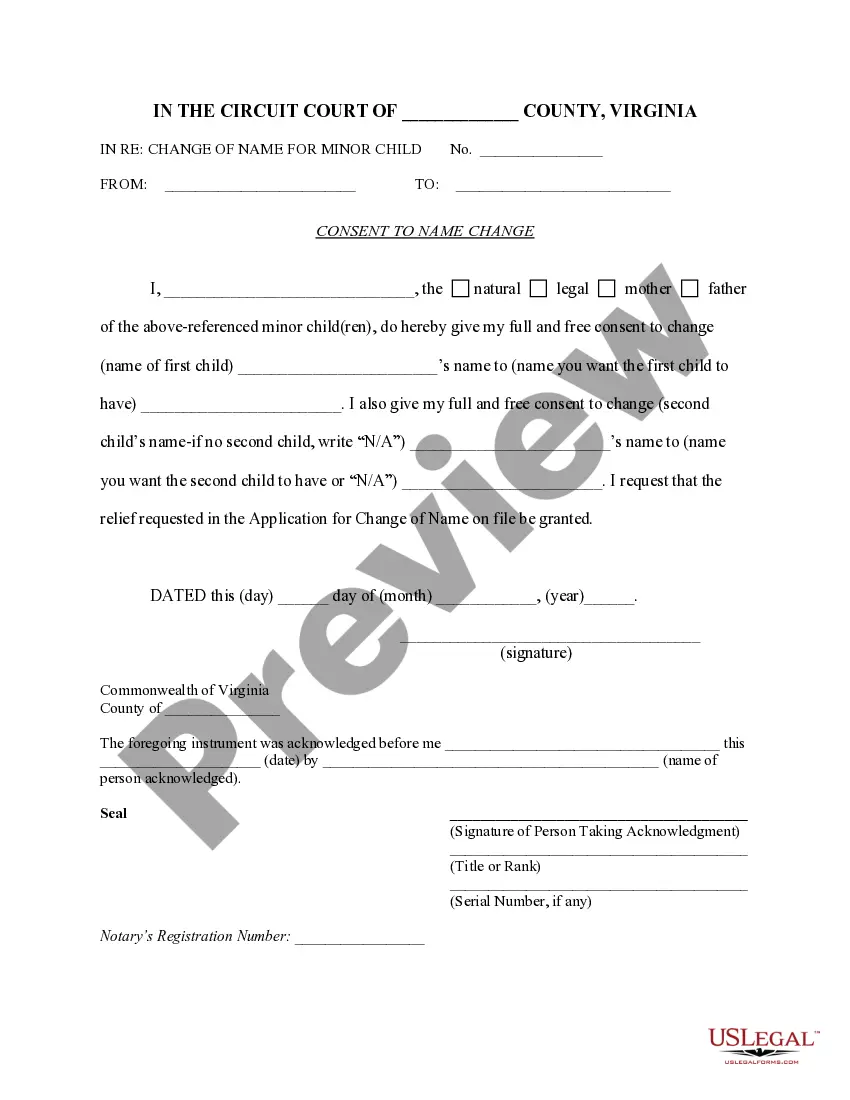
Iowa Quitclaim deed

Understanding this form
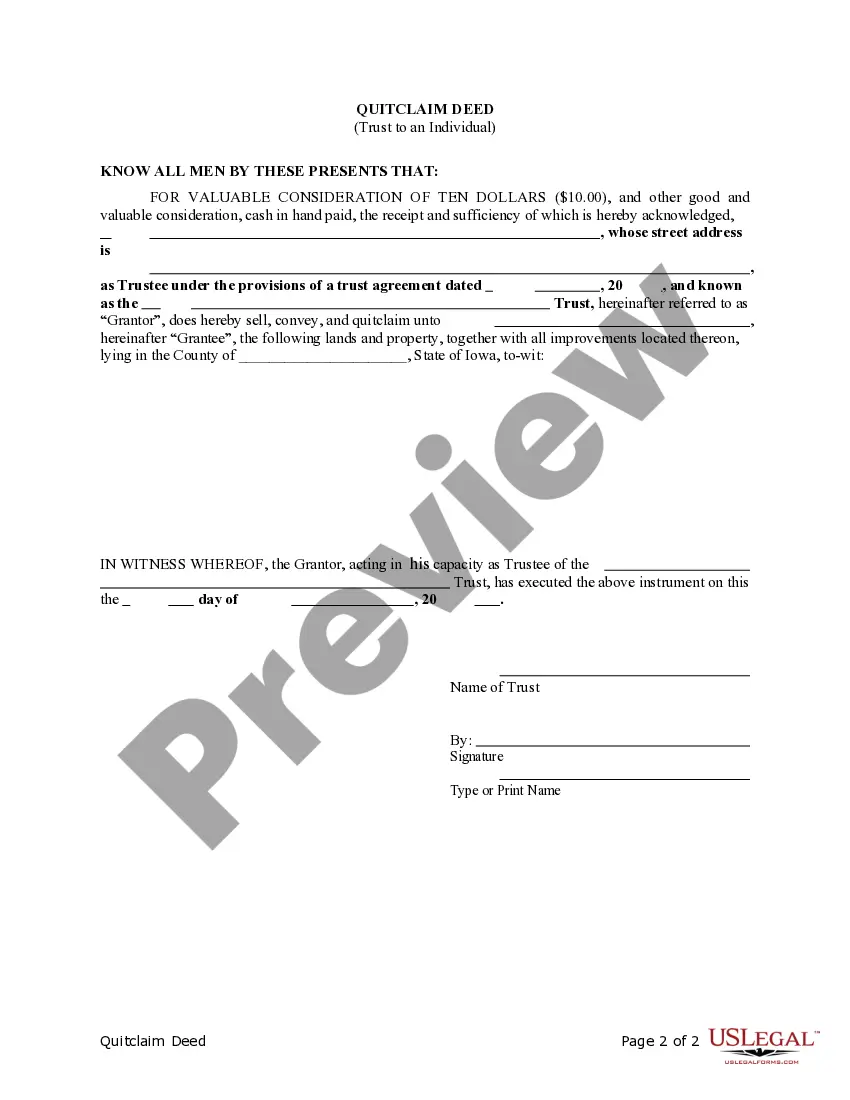
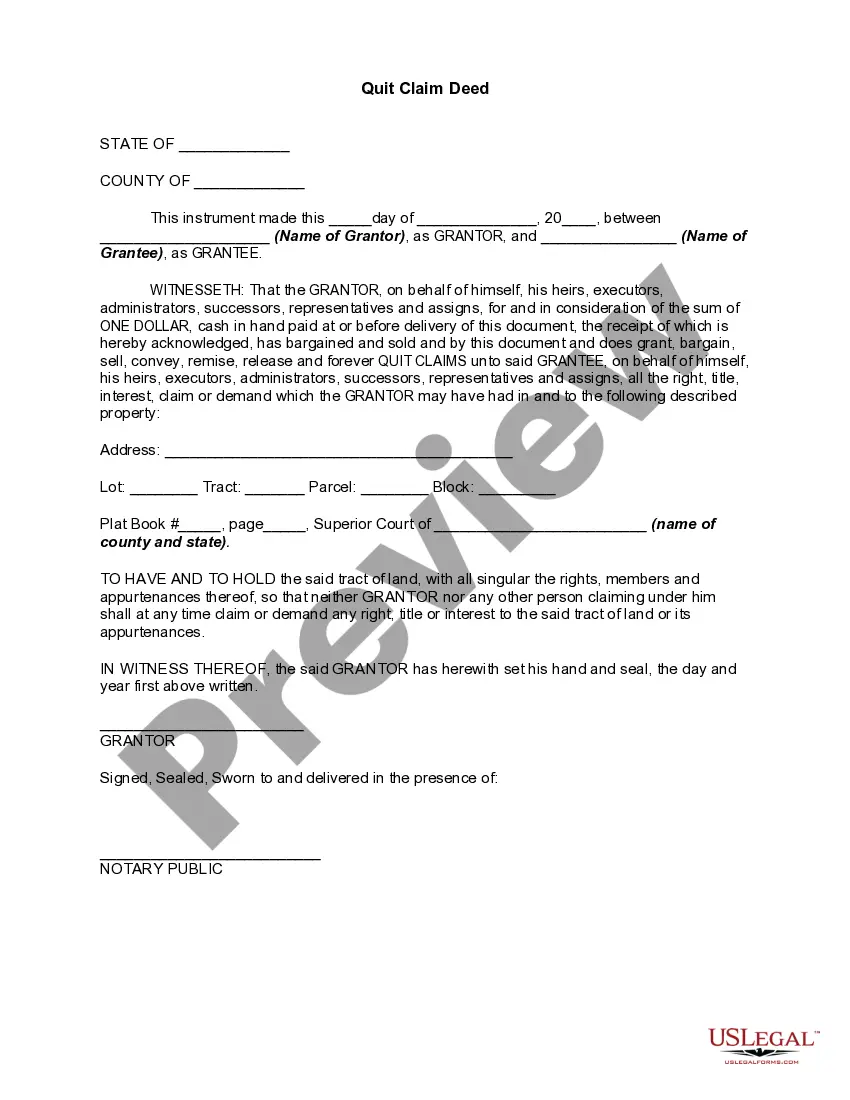
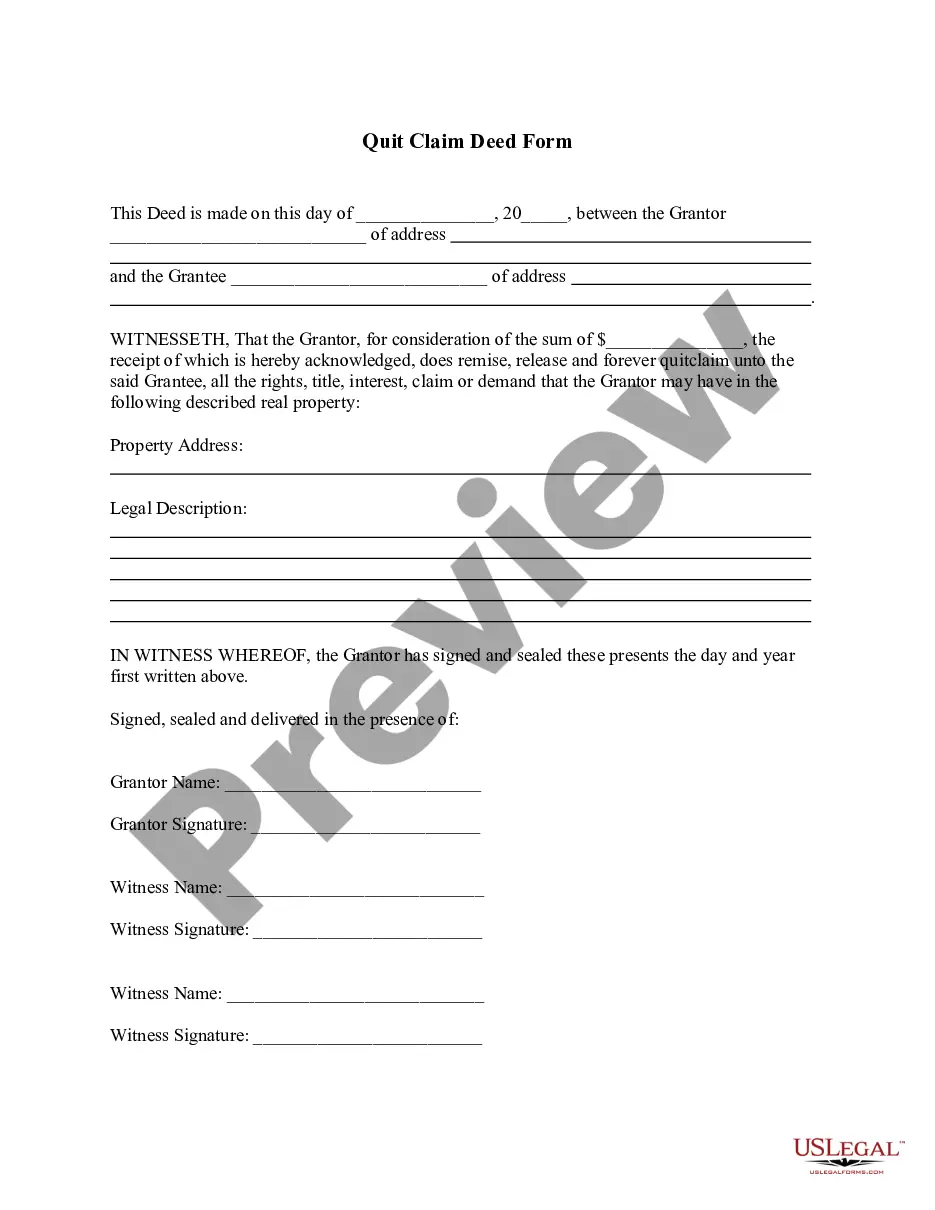
A quitclaim deed is a legal document used to transfer property ownership from one party to another without any guarantees or warranties regarding the property title. In this form, the grantor is a trust, and the grantee is an individual. Unlike a warranty deed, a quitclaim deed does not assure the buyer that the seller holds clear title to the property. This document is especially useful for transferring property between family members or into a trust.
Key parts of this document
- Grantor: The party transferring property, identified as a trust.
- Grantee: The party receiving property, identified as an individual.
- Property Description: A clear and detailed description of the property being transferred.
- Effective Date: The date when the ownership transfer becomes legally effective.
- Signatures: Signatures of the grantor and any witnesses, as required by state law.



When to use this document
This quitclaim deed is suitable when you want to transfer property ownership without the need for extensive legal guarantees. Common scenarios include transferring ownership to a family member, placing property into a trust, or clearing up title issues between parties. It is also often used in divorce proceedings or estate settlements where title clarity is essential.
Who can use this document
- Individuals looking to transfer property ownership quickly and informally.
- Trustees managing trust property and transferring real estate to beneficiaries.
- Family members engaged in property transfers, such as parents to children.
- Estate executors handling property transfer as part of an estate settlement.
How to prepare this document
- Identify the parties: Clearly specify the grantor (trust) and grantee (individual).
- Specify the property: Provide a detailed description of the property being transferred.
- Enter the effective date: Write the date on which the transfer of ownership takes effect.
- Obtain signatures: Have the grantor sign the document, along with any necessary witnesses.
- File the deed: Depending on state requirements, file the completed deed with the appropriate county office.
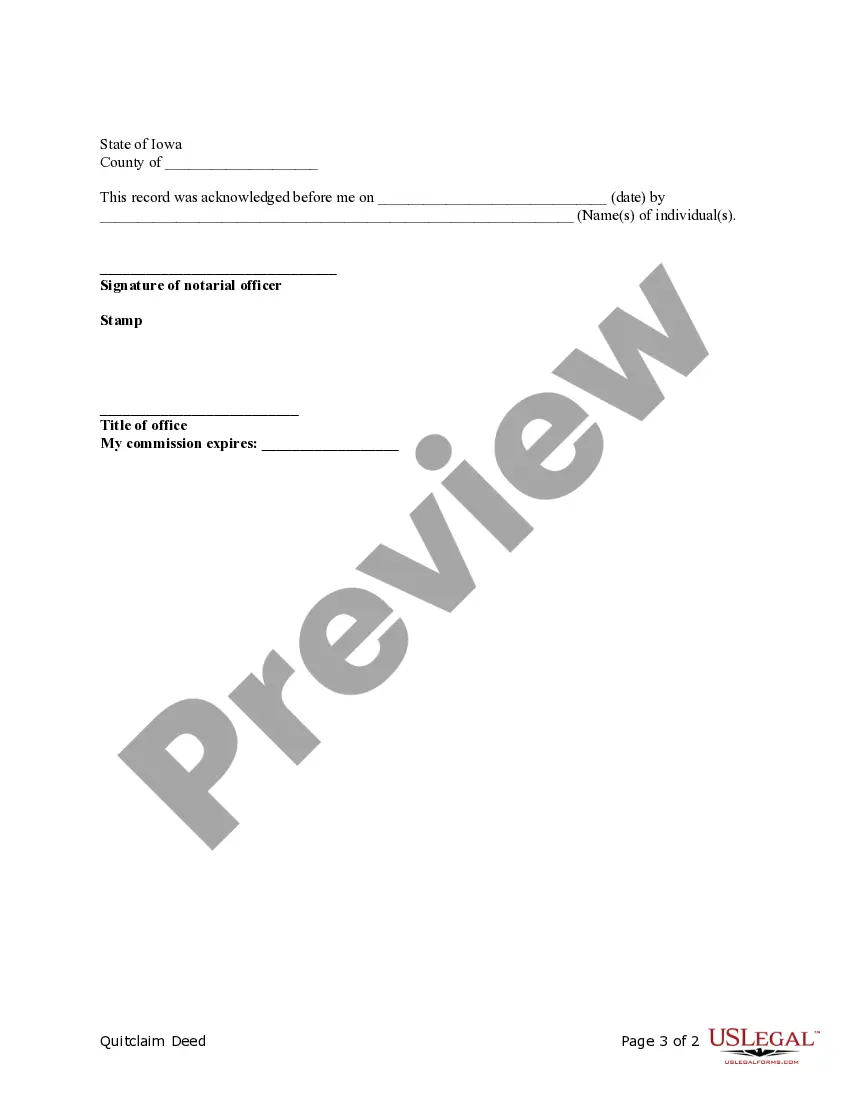
Does this form need to be notarized?
This form does not typically require notarization unless specified by local law. However, notarization can enhance the legality of the deed and is often recommended to prevent disputes over authenticity.
Get your form ready online
Our built-in tools help you complete, sign, share, and store your documents in one place.
Make edits, fill in missing information, and update formatting in US Legal Forms—just like you would in MS Word.
Download a copy, print it, send it by email, or mail it via USPS—whatever works best for your next step.
Sign and collect signatures with our SignNow integration. Send to multiple recipients, set reminders, and more. Go Premium to unlock E-Sign.
If this form requires notarization, complete it online through a secure video call—no need to meet a notary in person or wait for an appointment.
We protect your documents and personal data by following strict security and privacy standards.

Make edits, fill in missing information, and update formatting in US Legal Forms—just like you would in MS Word.

Download a copy, print it, send it by email, or mail it via USPS—whatever works best for your next step.

Sign and collect signatures with our SignNow integration. Send to multiple recipients, set reminders, and more. Go Premium to unlock E-Sign.

If this form requires notarization, complete it online through a secure video call—no need to meet a notary in person or wait for an appointment.

We protect your documents and personal data by following strict security and privacy standards.
Common mistakes
- Failing to provide a clear description of the property.
- Not having the document signed by all necessary parties.
- Neglecting to check state-specific filing requirements.
- Forgetting to enter the effective date, leading to potential disputes over ownership timing.
Why complete this form online
- Convenience: Download the quitclaim deed anytime from any location.
- Editability: Customize the form to meet specific needs easily.
- Reliability: Forms are drafted by licensed attorneys to ensure compliance with legal standards.
Looking for another form?
Form popularity
FAQ
You can obtain a copy of a quitclaim deed from the county clerk or recorder's office where the property is located. Many counties provide online access to these records, making it easier than ever to find the documentation you need. If you are specifically looking for an Iowa Quitclaim deed, check the Iowa Secretary of State's website or use US Legal Forms for a streamlined experience. This platform ensures you get the right forms and instructions quickly.
You can obtain a copy of your quitclaim deed by contacting the county recorder's office that holds the original document. They may allow you to request a copy online, by mail, or in person. It's essential to have relevant details like the property address and deed number handy, especially if it’s an Iowa Quitclaim deed. Alternatively, you can use US Legal Forms to simplify the process of acquiring your document.
To look up a deed in Ohio, you can visit the county recorder's office where the property is located. Most counties offer online databases for you to search for deeds by name, address, or parcel number. This process allows you to view property records, including any Iowa Quitclaim deeds associated with the property. If you need assistance, consider using US Legal Forms to guide you through the process.
The pros of an Iowa Quitclaim deed include the ease of use and speed of transferring property without extensive legal processes. They are particularly advantageous for informal transactions among acquaintances or family members. However, the cons involve the lack of warranties and potential for unresolved ownership issues, which could lead to disputes later. Carefully evaluate both sides before proceeding with a quit claim deed.
Individuals who benefit most from an Iowa Quitclaim deed typically include family members engaged in informal property transfers, such as parents gifting property to their children. Also, those who need a quick resolution for transferring a property without the costs associated with traditional methods can find this option appealing. It's an efficient way to facilitate ownership changes, especially in close relationships.
The dangers of using an Iowa Quitclaim deed mainly lie in their lack of guarantees. Since these deeds do not confirm the grantor's ownership, the grantee may inadvertently assume risks related to undisclosed liens or property disputes. Furthermore, once the deed is executed, it becomes challenging to reverse the transfer if complications arise. Always consider these risks when opting for a quit claim deed.
Iowa Quitclaim deeds come with notable disadvantages. First, they do not guarantee that the grantor actually holds clear title to the property, leaving the grantee vulnerable to ownership disputes. Additionally, these deeds do not provide any warranties, meaning that if issues arise after the transfer, the grantee has limited recourse. It's crucial to weigh these factors before proceeding with a quit claim deed.
To file an Iowa Quitclaim deed, first complete the deed form with the necessary information, including the names of the grantor and grantee, and a legal description of the property. Next, sign the document in the presence of a notary public. Finally, submit the signed deed to the county recorder’s office in the county where the property is located. Utilizing USLegalForms can simplify this process, as they provide step-by-step guidance to ensure your deed is filled out correctly.
An Iowa quitclaim deed does not override a will, as the deed transfers ownership regardless of any existing wills. If you transfer a property via a quitclaim deed, that property's title will be held by the new owner, regardless of what the will states. Therefore, it's crucial to review both your deeds and your estate plan to ensure your intentions are clear.
Yes, you can create an Iowa quitclaim deed yourself, as it is a straightforward document. Many people use templates available online which simplify the drafting process. However, to ensure that all legal requirements are met, consider utilizing a platform like US Legal Forms, which provides forms and guidance tailored to your state's regulations.