Nevada Revocable Living Trust for Husband and Wife with No Children
Overview of this form
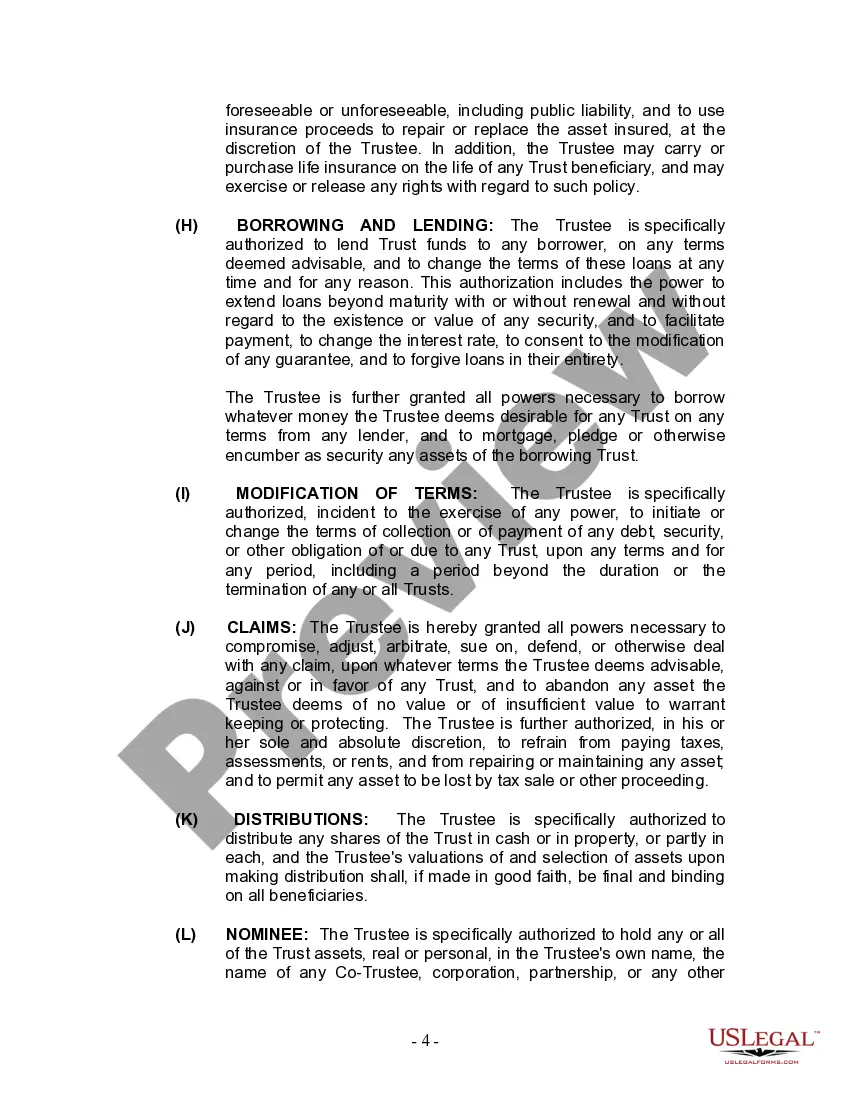
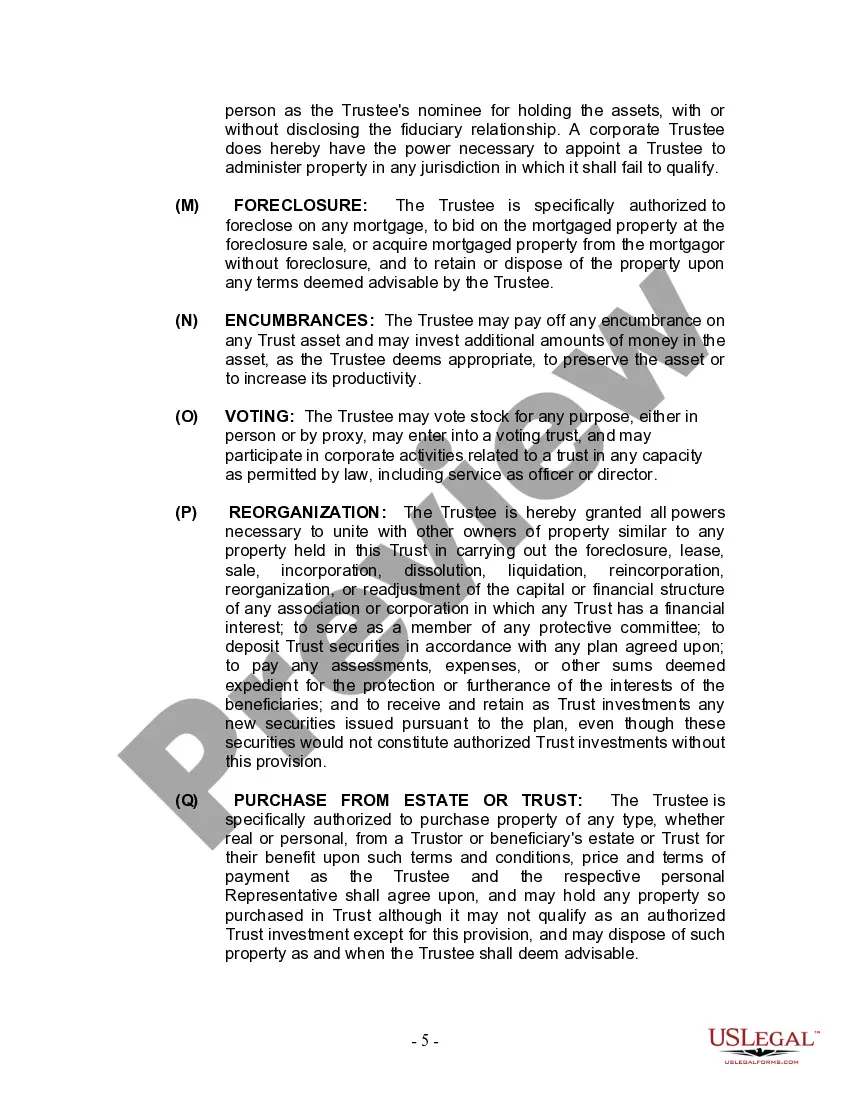
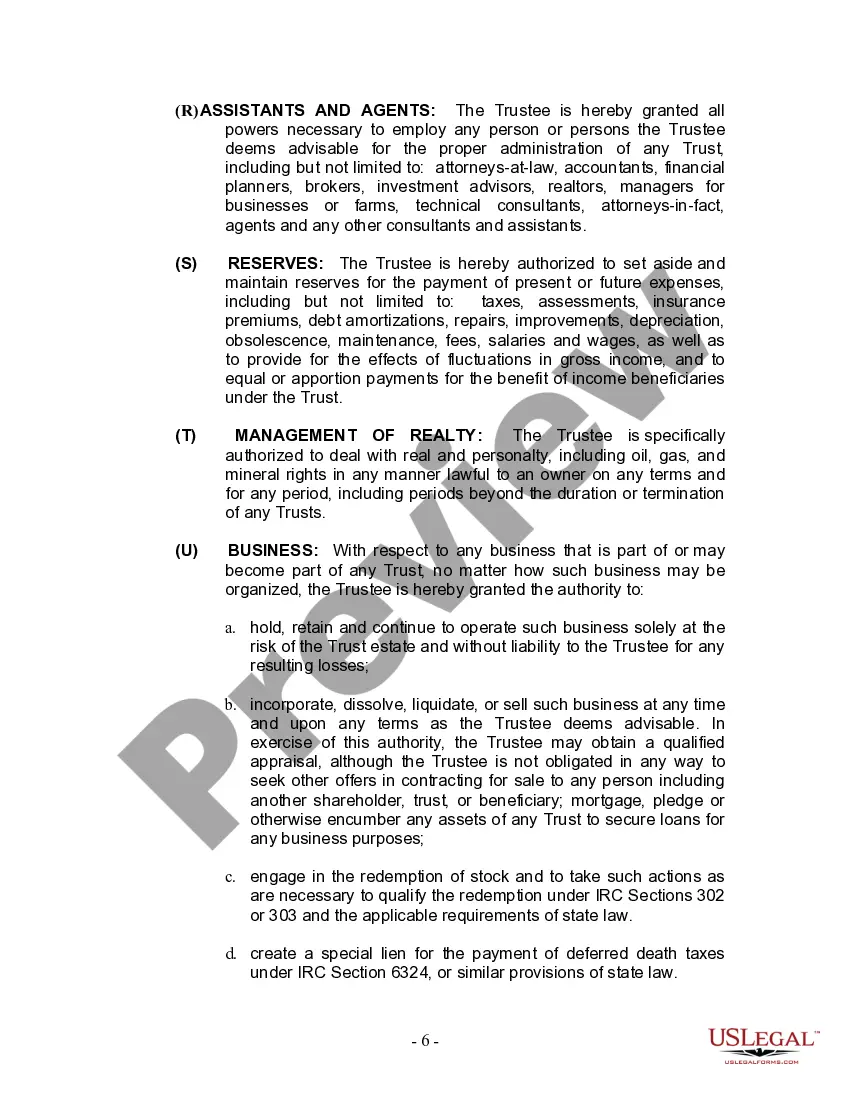
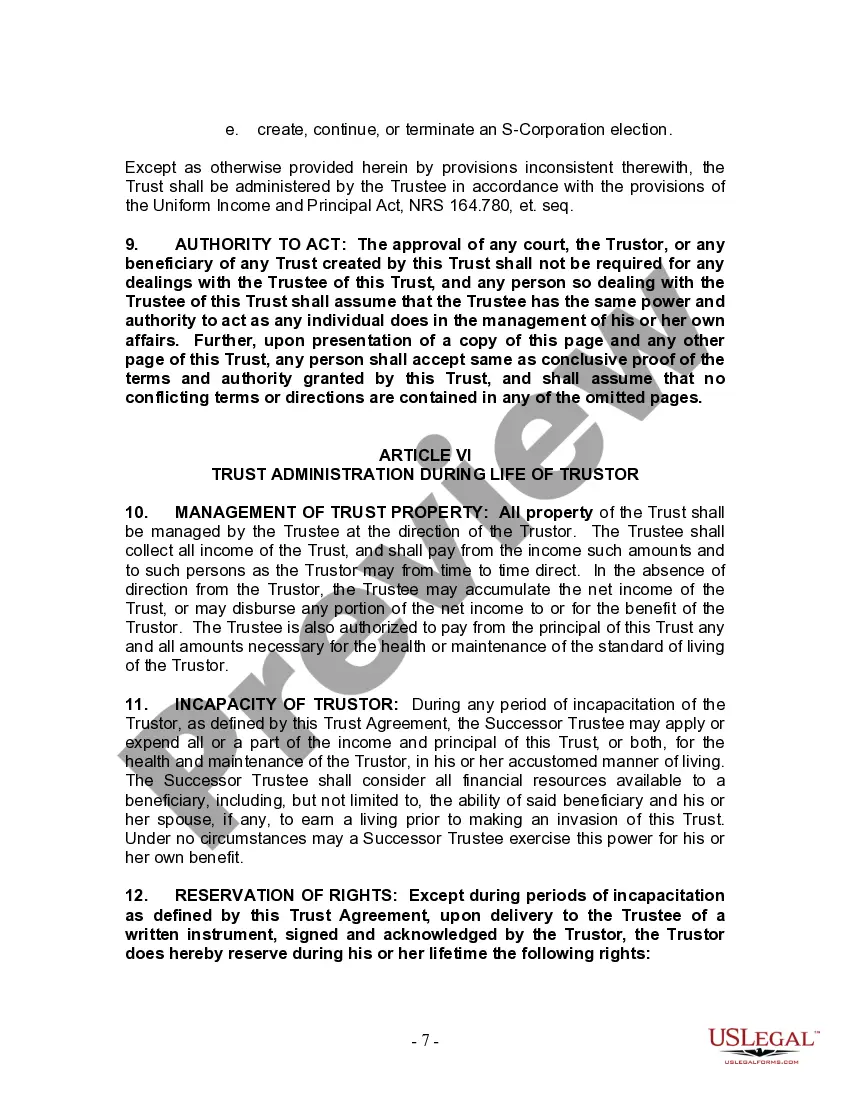
The Revocable Living Trust for Husband and Wife with No Children is a legal document that establishes a trust during the lifetime of the couple. This living trust allows the husband and wife to place their assets and property within the trust for the purposes of estate planning. Unlike a will, which goes through probate, a living trust allows for the direct transfer of assets to designated beneficiaries after the trustor's death, ensuring a smoother transition of property without court intervention.
Key parts of this document
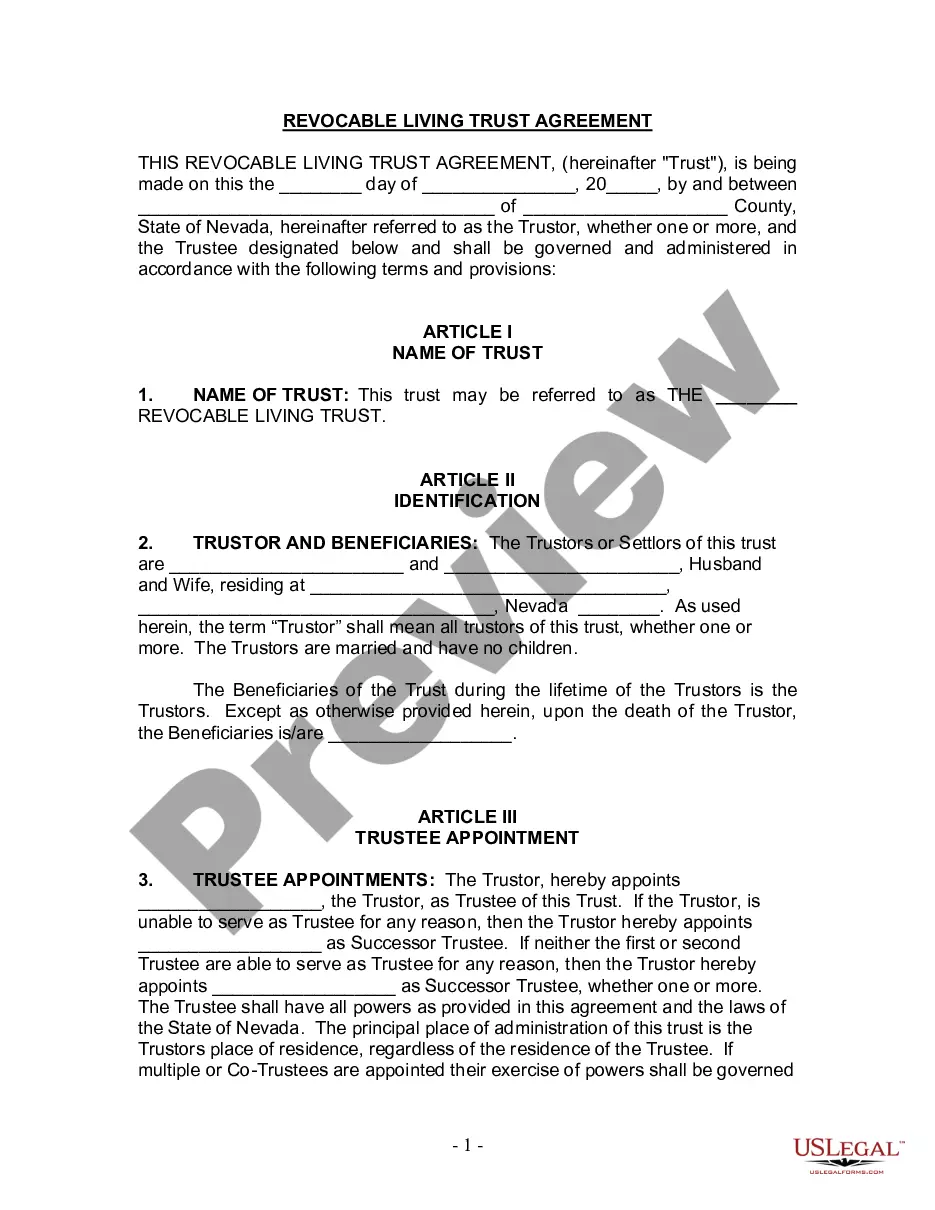
- Name of Trust: The document outlines how the trust is named.
- Identification of Trustors: Identifies the husband and wife as the creators of the trust.
- Appointment of Trustee: Specifies who will manage the trust's assets during their lifetime and after death.
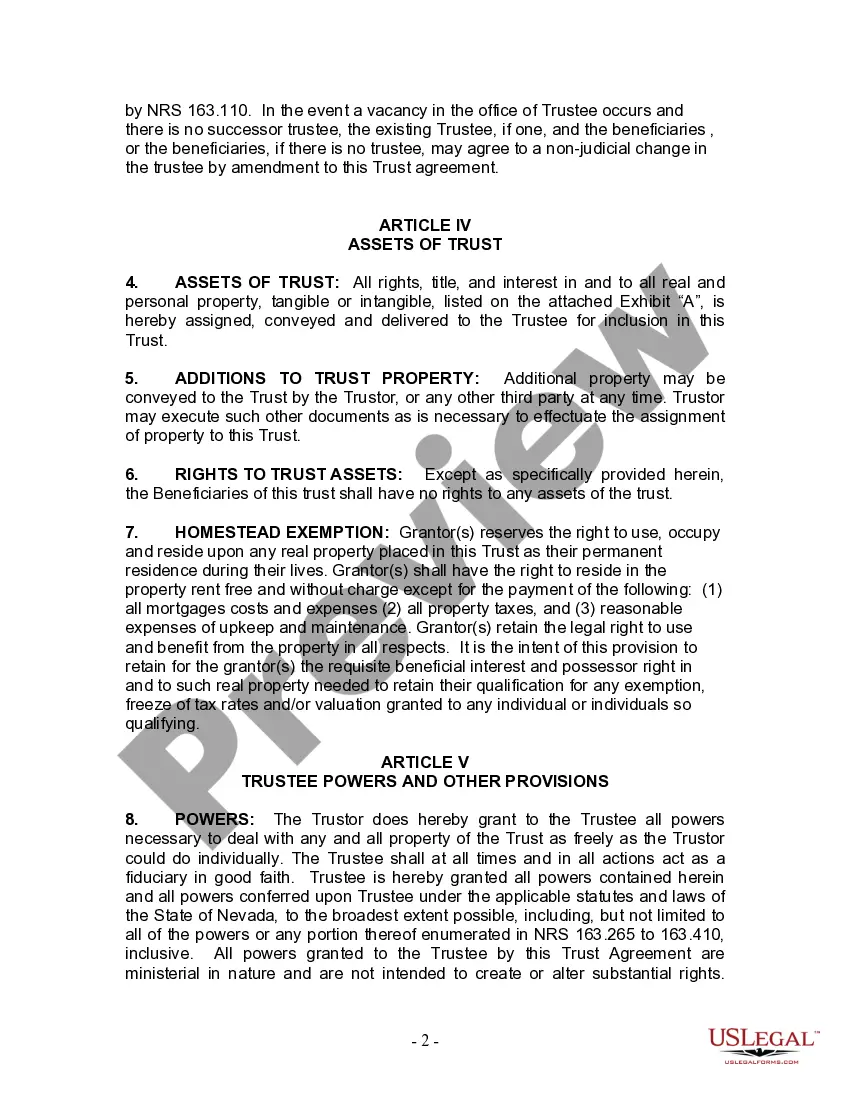
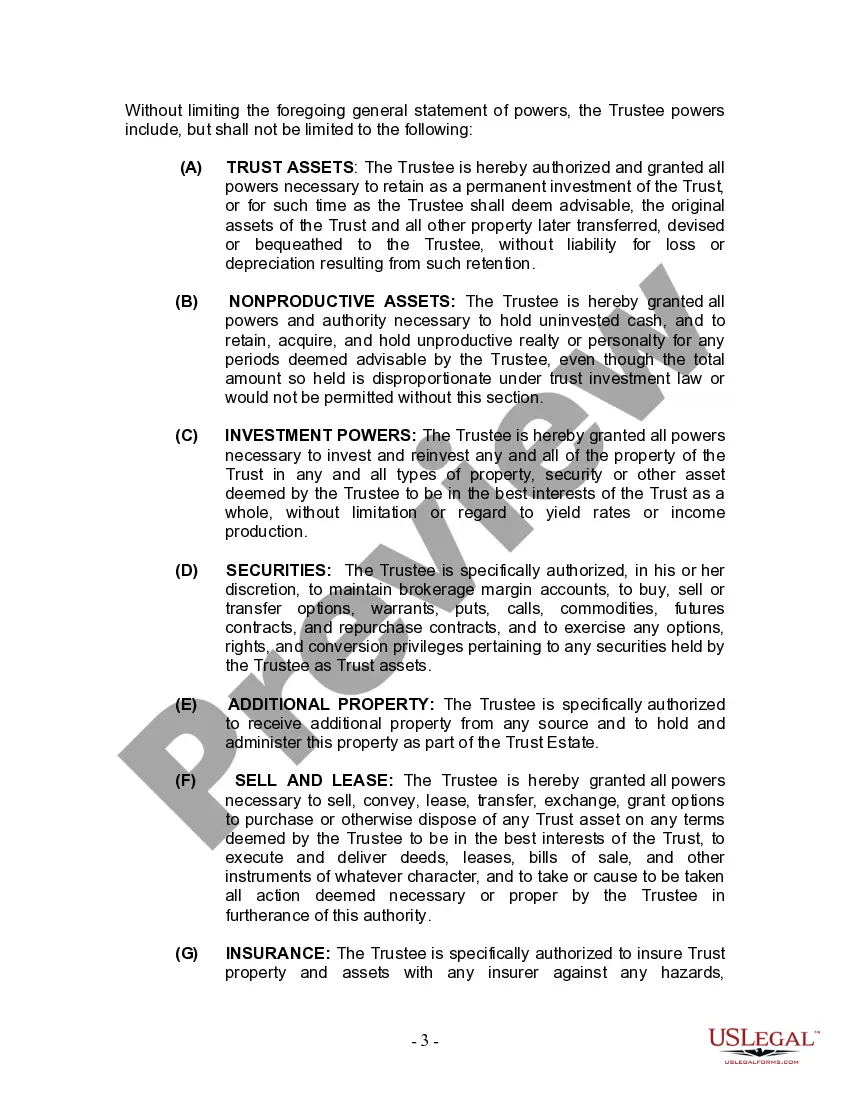
- Assets of Trust: Details the assets included within the trust and provisions for adding future assets.
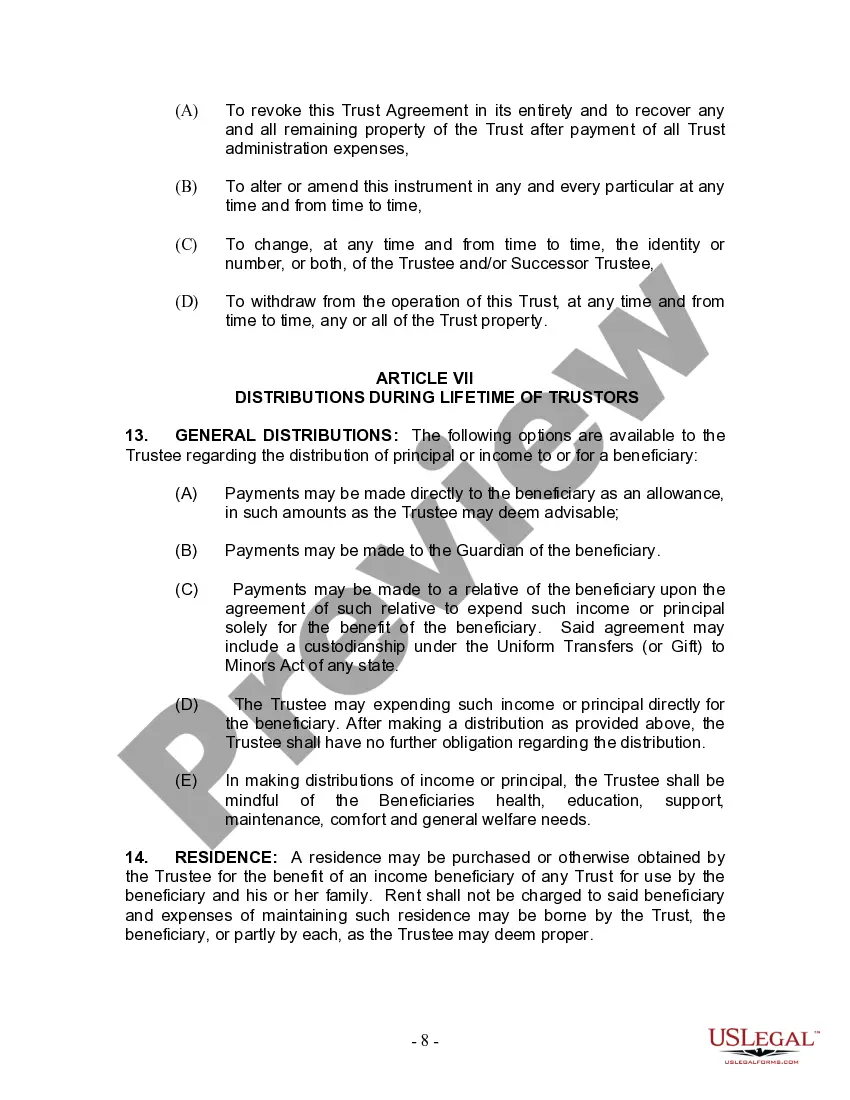
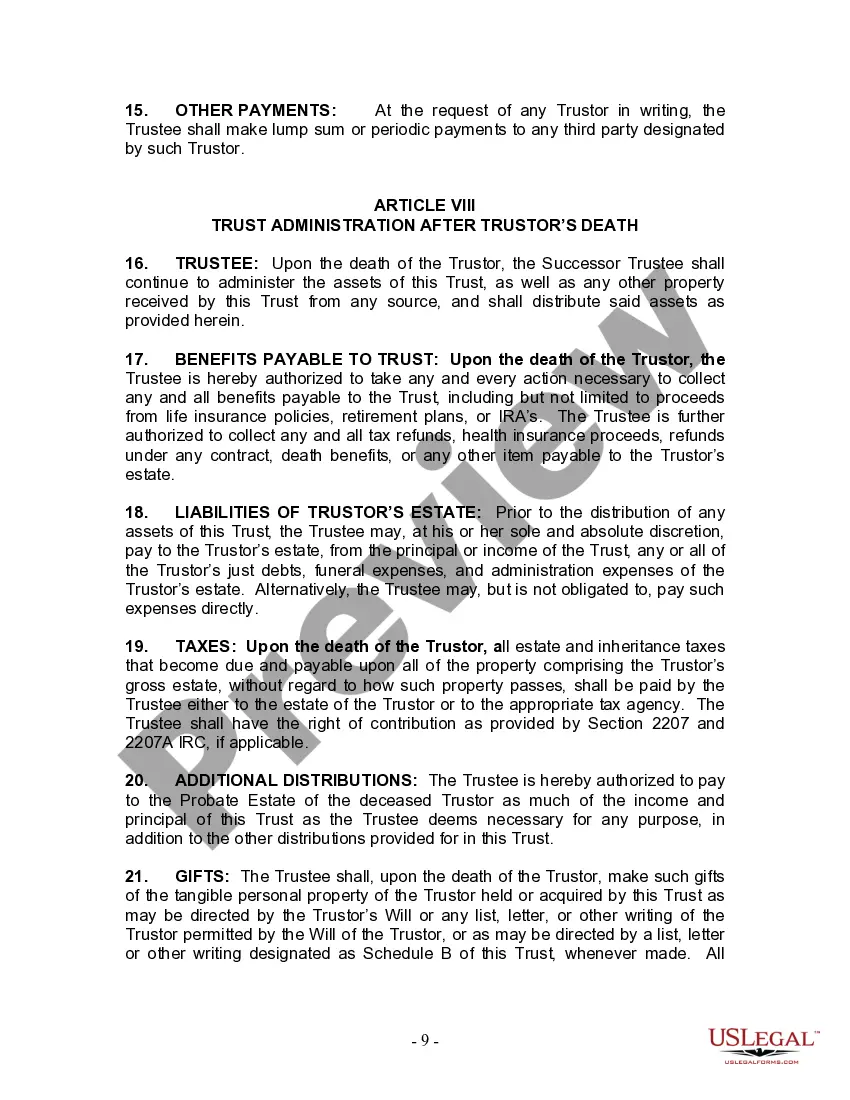
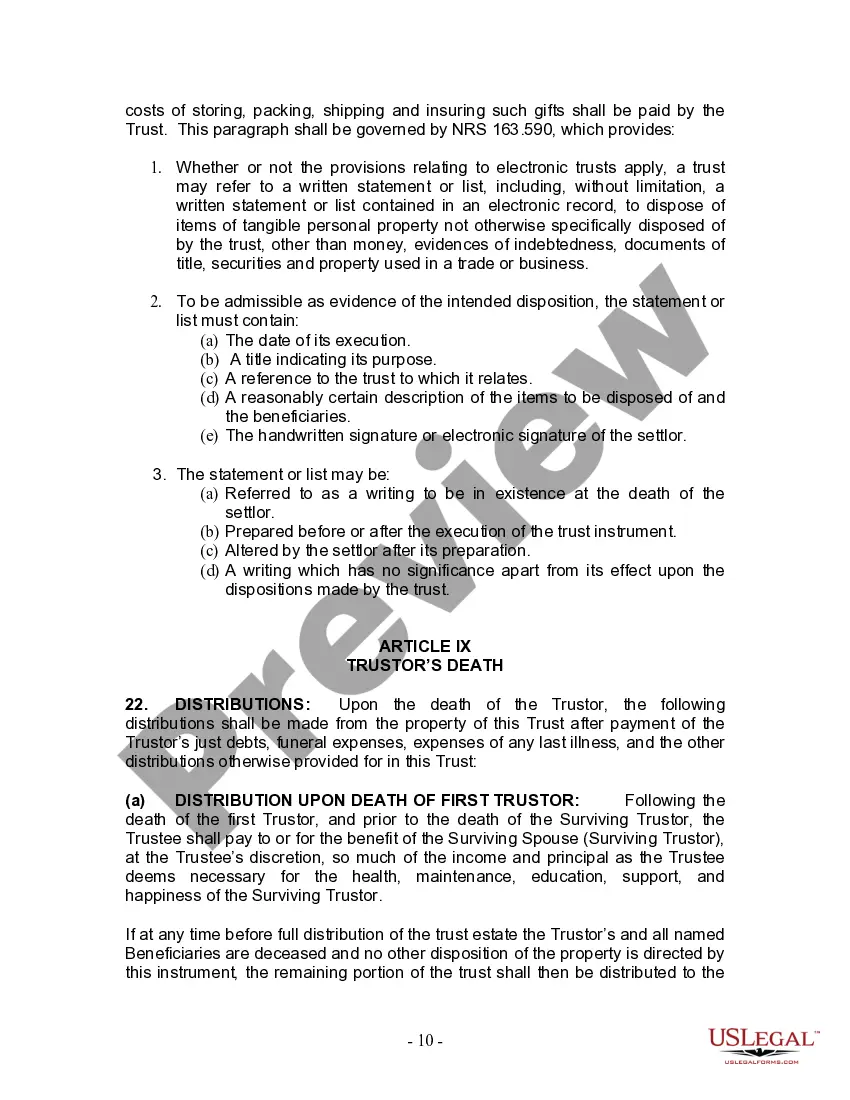
- Distribution Upon Death: Defines how and when assets are distributed to beneficiaries after the death of the trustors.





Situations where this form applies
This form is particularly useful for married couples without children who wish to manage their assets effectively and avoid the probate process after their passing. It can also accommodate any future changes in property ownership or financial circumstances, allowing for added flexibility in estate planning.
Who this form is for
- Married couples looking to establish control over their assets.
- Couples who want to ensure the swift transfer of assets without probate upon death.
- Individuals planning for possible incapacity and how their assets will be managed.
How to prepare this document
- Identify the parties involved: Write the names and addresses of both trustors.
- Specify the trust name: Fill in the designated name for the revocable living trust.
- Appoint a trustee: Choose who will manage the trust assets during and after the trustors' lifetime.
- List trust assets: Detail all assets to be included in the trust in the section provided.
- Sign and notarize the document: Ensure all signatures are completed, and the form is notarized as required.
Notarization requirements for this form
To make this form legally binding, it must be notarized. Our online notarization service, powered by Notarize, lets you verify and sign documents remotely through an encrypted video session.
Get your form ready online
Our built-in tools help you complete, sign, share, and store your documents in one place.
Make edits, fill in missing information, and update formatting in US Legal Forms—just like you would in MS Word.
Download a copy, print it, send it by email, or mail it via USPS—whatever works best for your next step.
Sign and collect signatures with our SignNow integration. Send to multiple recipients, set reminders, and more. Go Premium to unlock E-Sign.
If this form requires notarization, complete it online through a secure video call—no need to meet a notary in person or wait for an appointment.
We protect your documents and personal data by following strict security and privacy standards.

Make edits, fill in missing information, and update formatting in US Legal Forms—just like you would in MS Word.

Download a copy, print it, send it by email, or mail it via USPS—whatever works best for your next step.

Sign and collect signatures with our SignNow integration. Send to multiple recipients, set reminders, and more. Go Premium to unlock E-Sign.

If this form requires notarization, complete it online through a secure video call—no need to meet a notary in person or wait for an appointment.

We protect your documents and personal data by following strict security and privacy standards.
Common mistakes to avoid
- Failing to list all assets intended for the trust.
- Not appointing a backup successor trustee.
- Incomplete or incorrect signatures, including the notarization.
Benefits of using this form online
- Convenience of accessing and completing the form anytime from anywhere.
- Editability allows for easy adjustments as personal circumstances change.
- Reliable templates created by licensed attorneys ensure legal compliance.
Legal use & context
- A living trust provides legal protection and control over the transfer of assets upon death.
- This document is enforceable under Nevada law and designed to comply with state regulations.
- It is essential that both Trustors fully understand their rights and obligations before signing.
Summary of main points
- This living trust is tailored for married couples without children.
- It helps avoid probate, ensuring a smoother transition of assets.
- Fill out the form correctly by designating trustors, trustees, assets, and ensuring notarization.
Looking for another form?
Form popularity
FAQ
Choose whether to make an individual or shared trust. Decide what property to include in the trust. Choose a successor trustee. Decide who will be the trust's beneficiaries who will get the trust property. Create the trust document. Sign the document in front of a notary public.
California is a community property state, which means that following the death of a spouse, the surviving spouse will have entitlement to one-half of the community property (i.e., property that was acquired over the course of the marriage, regardless of which spouse acquired it).
Many married couples own most of their assets jointly with the right of survivorship. When one spouse dies, the surviving spouse automatically receives complete ownership of the property. This distribution cannot be changed by Will.
California is a community property state, which means that following the death of a spouse, the surviving spouse will have entitlement to one-half of the community property (i.e., property that was acquired over the course of the marriage, regardless of which spouse acquired it).
Under Hindu Law: the wife has a right to inherit the property of her husband only after his death if he dies intestate. Hindu Succession Act, 1956 describes legal heirs of a male dying intestate and the wife is included in the Class I heirs, and she inherits equally with other legal heirs.
Wives : A wife is entitled to an equal share of her husband's property like other entitled heirs. If there are no sharers, she has full right to the entire property.She is also entitled to maintenance, support and shelter from husband, and if staying in a joint family, from the family.
Married partners and civil partners. Married partners or civil partners inherit under the rules of intestacy only if they are actually married or in a civil partnership at the time of death. So if you are divorced or if your civil partnership has been legally ended, you can't inherit under the rules of intestacy.
When one spouse dies, the surviving spouse automatically receives complete ownership of the property. This distribution cannot be changed by Will.Because the surviving spouse becomes the outright owner of the property, he or she will need a Will to direct its disposition at his or her subsequent death.
Community Property in California Inheritance LawsCalifornia is a community property state, which is a policy that only applies to spouses and domestic partners.The only property that doesn't become community property automatically are gifts and inheritances that one spouse receives.