New Mexico Warranty Deed for Husband and Wife Converting Property from Tenants in Common to Joint Tenancy
What this document covers
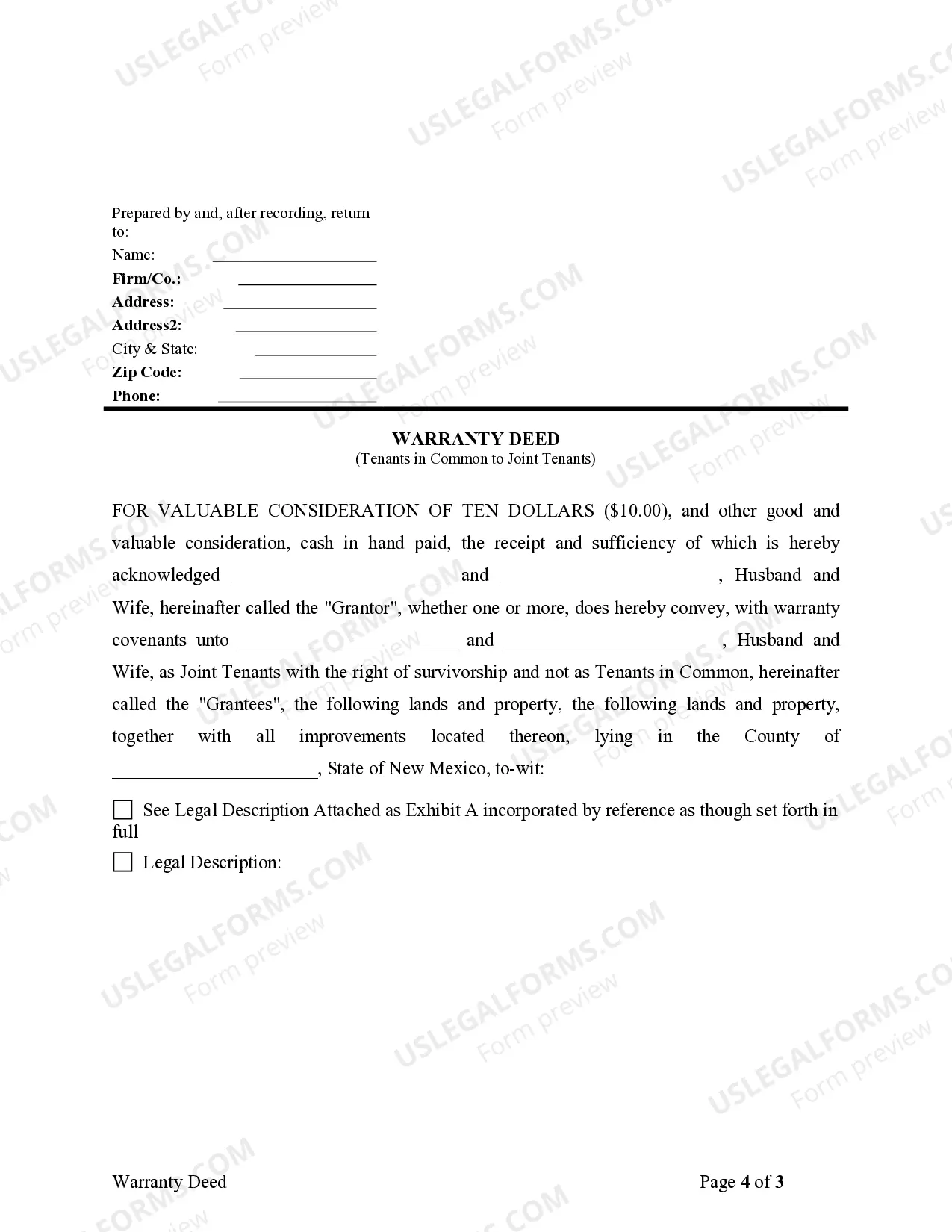
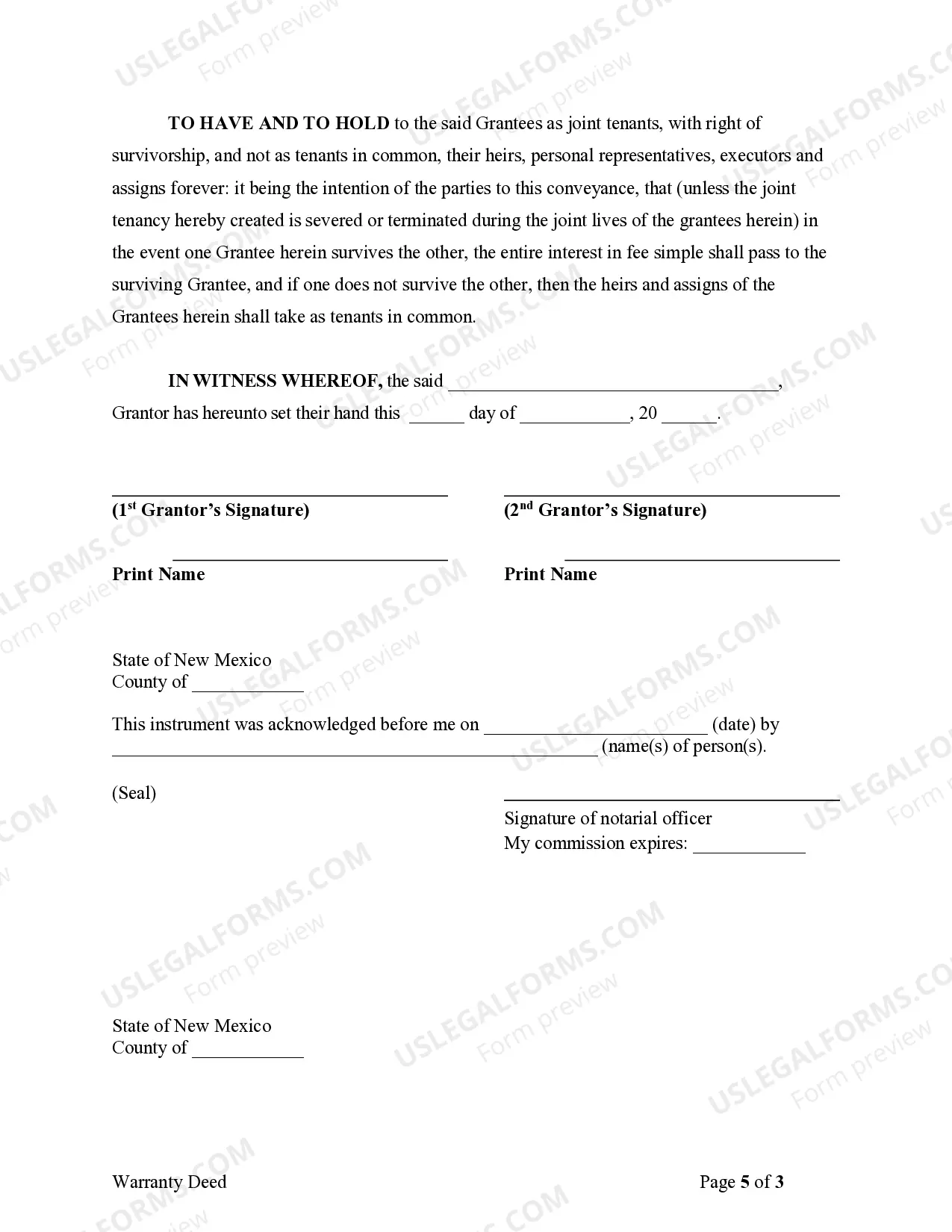
This Warranty Deed is a legal document used by a husband and wife who hold title to a property as tenants in common and wish to convert that ownership to joint tenancy. This form differs from other deeds, such as a quitclaim deed, as it includes warranty covenants, meaning the grantors assure the grantees that they have clear title to the property without any liens or claims against it. The primary purpose is to establish joint tenancy, which allows for the right of survivorship, ensuring that in the event of one spouse's death, the surviving spouse automatically receives full ownership of the property.
Form components explained
- Name and address of the grantors (husband and wife).
- Name and address of the grantees (husband and wife).
- A legal description of the property being conveyed.
- Consideration amount, typically stated as ten dollars.





When to use this document
This form should be used when a married couple decides to change their ownership structure of a property from tenants in common to joint tenants. This scenario often arises in estate planning, where couples want to ensure the property passes directly to the surviving spouse without going through probate.
Who can use this document
- Married couples holding property as tenants in common.
- Couples looking to simplify the transfer of property upon death.
- Homeowners seeking to strengthen rights to the shared property.
How to complete this form
- Identify the grantors, including full names and addresses.
- Identify the grantees, using the same details as grantors if they are the same parties.
- Provide a detailed legal description of the property being transferred.
- Enter the consideration amount of ten dollars as part of the transfer.
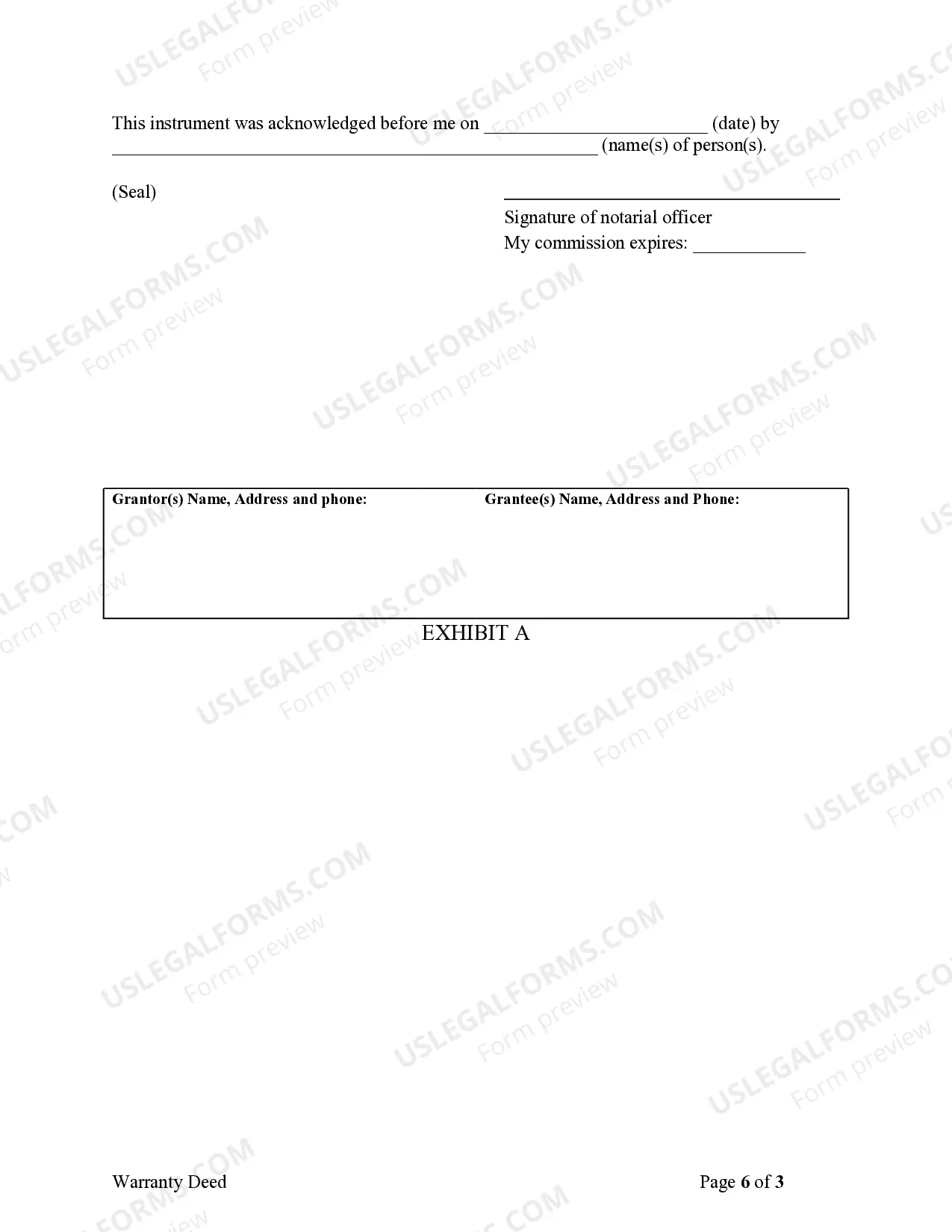
- Sign and date the document as required, ensuring that both grantors acknowledge the transfer.
Notarization requirements for this form
To make this form legally binding, it must be notarized. Our online notarization service, powered by Notarize, lets you verify and sign documents remotely through an encrypted video session.
Get your form ready online
Our built-in tools help you complete, sign, share, and store your documents in one place.
Make edits, fill in missing information, and update formatting in US Legal Forms—just like you would in MS Word.
Download a copy, print it, send it by email, or mail it via USPS—whatever works best for your next step.
Sign and collect signatures with our SignNow integration. Send to multiple recipients, set reminders, and more. Go Premium to unlock E-Sign.
If this form requires notarization, complete it online through a secure video call—no need to meet a notary in person or wait for an appointment.
We protect your documents and personal data by following strict security and privacy standards.

Make edits, fill in missing information, and update formatting in US Legal Forms—just like you would in MS Word.

Download a copy, print it, send it by email, or mail it via USPS—whatever works best for your next step.

Sign and collect signatures with our SignNow integration. Send to multiple recipients, set reminders, and more. Go Premium to unlock E-Sign.

If this form requires notarization, complete it online through a secure video call—no need to meet a notary in person or wait for an appointment.

We protect your documents and personal data by following strict security and privacy standards.
Common mistakes to avoid
- Failing to include the correct legal description of the property.
- Not having both spouses sign the document.
- Omitting the consideration amount.
Benefits of using this form online
- Convenience of downloading and completing the form at your own pace.
- Editability allows for personalization of the document before printing.
- Access to forms created by licensed attorneys, enhancing reliability.
Looking for another form?
Form popularity
FAQ
Each party has a full ownership interest in the property. The property will pass instantly to the survivor upon the death of the other without probate. Conveyance by one party without the other breaks the joint tenancy. Seller warrants that he/she has good title and will warrant and defend title.
You can assign your tenancy to your husband, wife or civil partner if they live with you. If you don't live with a married or civil partner, you can assign to any of the following family members, but only if the person has lived with you for at least 1 year: an unmarried partner. an adult child or grandchild.
Serve a written notice of the change (a 'notice of severance') on the other owners - a conveyancer can help you do this. Download and fill in form SEV to register a restriction without the other owners' agreement. Prepare any supporting documents you need to include.
Serve a written notice of the change (a 'notice of severance') on the other owners - a conveyancer can help you do this. Download and fill in form SEV to register a restriction without the other owners' agreement. Prepare any supporting documents you need to include.
Change from tenants in common to joint tenantsYou need the agreement of all the other joint owners to change from being tenants in common to joint tenants. A solicitor, conveyancer or legal executive can also make the application for you.
First step is to ensure that the property is owned as 'Tenants in common'. Solicitors can do this for a modest cost. Advise the solicitor to insert the new ownership fraction (eg 99%wife/1%husband). It is advisable to keep both names to simplify future changes between the spouses without changing the title deeds.
In estate law, joint tenancy is a special form of ownership by two or more persons of the same property. The individuals, who are called joint tenants, share equal ownership of the property and have the equal, undivided right to keep or dispose of the property. Joint tenancy creates a Right of Survivorship.
Change from tenants in common to joint tenantsYou need the agreement of all the other joint owners to change from being tenants in common to joint tenants. A solicitor, conveyancer or legal executive can also make the application for you.
In California, most married couples hold real property (such as land and buildings) as joint tenants with right of survivorship.For instance, many married couples share real property as joint tenants. This way, upon the death of a spouse, the surviving spouse will own 100% share of the property.