New Mexico Application for Sublease
What is this form?
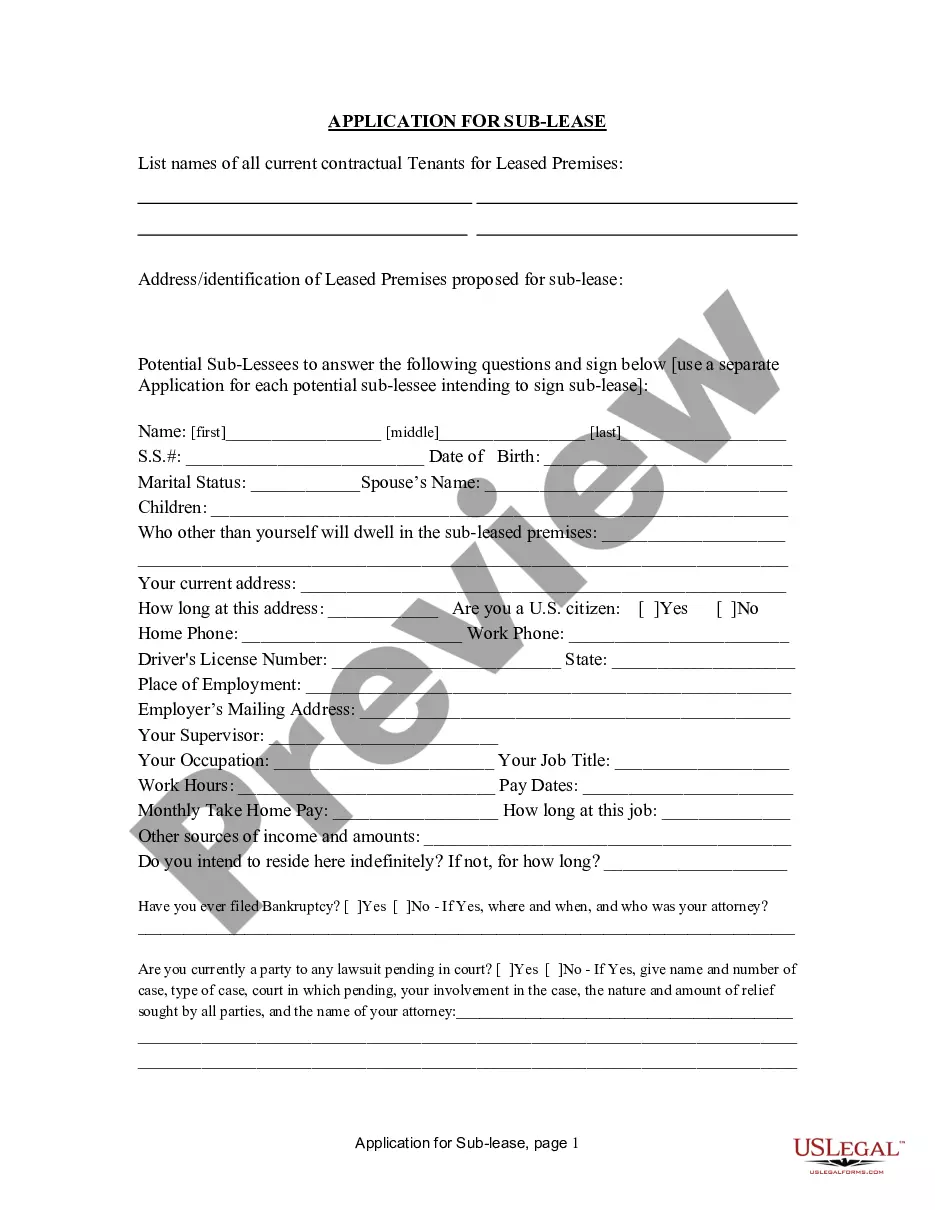
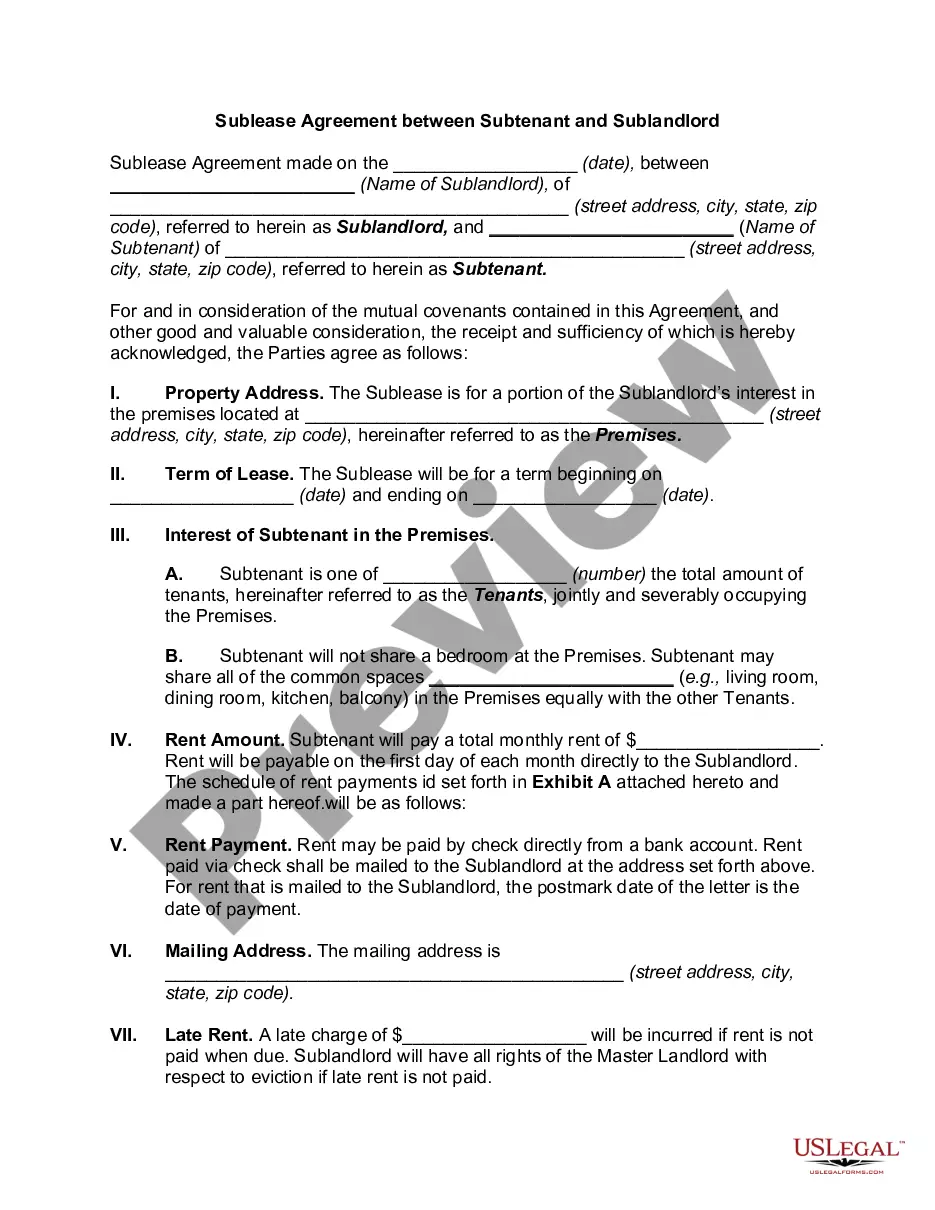
The Application for Sublease is a legal document that allows a potential sub-tenant to apply to the landlord for permission to sublet a rental property. This form gathers necessary information about the applicant that the landlord will use to decide whether to approve or deny the sublease request. It is different from a standard lease application, as it specifically pertains to subleasing arrangements.
Key parts of this document
- Applicant's marital status and dependents' information.
- Details about the current address and length of residence.
- Employment and income information, including job title and pay details.
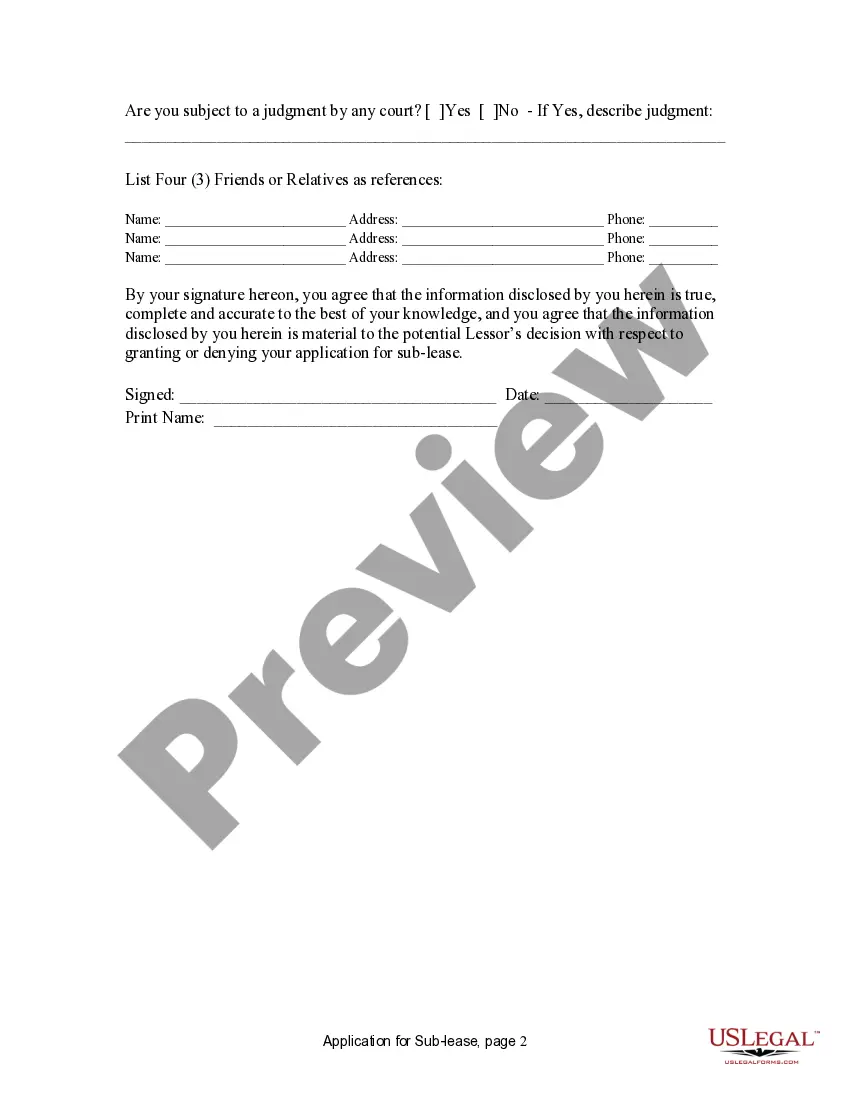
- Reference section for friends or relatives.
- Questions regarding bankruptcy, pending lawsuits, or court judgments.
- Affirmation of the truthfulness of the provided information.
Situations where this form applies
You should use the Application for Sublease when you, as a tenant, wish to sublet your rental property to another individual. This form is particularly important when your original lease states that subletting requires the landlordâs approval. Submitting this application allows the landlord to assess the suitability of the proposed sub-tenant.
Who this form is for
This form is intended for:
- Current tenants who want to sublet their leased property.
- Potential sub-tenants applying to live in the sub-leased premises.
Completing this form step by step
- Provide your personal details, including marital status and children's names.
- Fill in your current address and how long you have lived there.
- Detail your employment information, including job title, employer's address, and income.
- List references as required in the designated section.
- Answer questions related to legal issues, such as bankruptcy or ongoing lawsuits.
- Sign and date the application confirming the accuracy of the information.
Does this form need to be notarized?
This form does not typically require notarization unless specified by local law. Ensure to check your local regulations to confirm whether notarization is needed for your application.
Get your form ready online
Our built-in tools help you complete, sign, share, and store your documents in one place.
Make edits, fill in missing information, and update formatting in US Legal Forms—just like you would in MS Word.
Download a copy, print it, send it by email, or mail it via USPS—whatever works best for your next step.
Sign and collect signatures with our SignNow integration. Send to multiple recipients, set reminders, and more. Go Premium to unlock E-Sign.
If this form requires notarization, complete it online through a secure video call—no need to meet a notary in person or wait for an appointment.
We protect your documents and personal data by following strict security and privacy standards.

Make edits, fill in missing information, and update formatting in US Legal Forms—just like you would in MS Word.

Download a copy, print it, send it by email, or mail it via USPS—whatever works best for your next step.

Sign and collect signatures with our SignNow integration. Send to multiple recipients, set reminders, and more. Go Premium to unlock E-Sign.

If this form requires notarization, complete it online through a secure video call—no need to meet a notary in person or wait for an appointment.

We protect your documents and personal data by following strict security and privacy standards.
Mistakes to watch out for
- Failing to provide complete contact details for references.
- Not disclosing financial issues, such as bankruptcy or lawsuits, that may affect your application.
- Submitting the application without a signature or date.
- Not following up with the landlord to confirm receipt of the application.
Benefits of completing this form online
- Convenience of downloading and completing the form at your own pace.
- Editable fields to help ensure all necessary information is accurately provided.
- Access to professionally drafted forms created by licensed attorneys.
- Time-saving option compared to traditional methods of obtaining legal forms.
Legal use & context
- The Application for Sublease is legally binding once submitted and could impact future rental agreements.
- It is advisable to keep a copy of the completed application for your records.
- Laws regarding subleasing can differ based on local statutes; always verify compliance with your state regulations.
Main things to remember
- Always verify your lease agreement regarding subleasing rights.
- Complete all sections of the Application for Sublease to avoid delays.
- Understand any local requirements that could affect the approval of your sublease.
Looking for another form?

Form popularity
FAQ
Collect each party's information. Include specifics about your property. Consider all of the property's utilities and services. Know the terms of your lease. Set the monthly rent amount and due date. Calculate any additional fees. Determine a payment method. Consider your rights and obligations.
Provide all relevant documents. You'll need the following documents for your rental application: Have a completed set of documentation for all applicants. Write a cover letter. Prove you can pay the rent. Get your references ready. Secure a guarantor.
Keep in mind you should only tell tenants that you've rented the unit to other applicants if it is true. Prospective tenants could claim you are rejecting them based on discriminating reasons. To avoid this, you can always just say, We're sorry but we've rejected your application.
The Tenant Doesn't Make Enough Income. The Tenant Smokes. The Tenant Has a Pet. The Tenant's Income Isn't Verified. The Tenant Has Been Convicted of a Crime. The Tenant Does Not Have Rental History. The Tenant Has a History of Damaging Property and Not Paying Rent. The Tenant Provides False Information.
Online Rental Applications Can Reduce the Risk of Identity Theft. With more and more personal data moving online, your prospective tenants want to make sure that their information is safe. There are identity theft scams that will scoop a tenant's information, including that person's credit information.
You lack references or have poor references Not providing any references, or having someone give you a poor reference, could cause the apartment manager or landlord to deny your application.
Make sure you have all the correct documentation. Save time and apply online. Get your housemates into gear. Be on time to inspections. Be presentable at the inspection. Be reasonable and pleasant on the day of the inspection. Follow up.
To deny a tenant application, you need to let the prospective tenant know that you will not be selecting their application by sending them an adverse action letter. This letter informs the tenant why they are being denied, and if there is any way that their application can be reconsidered.
Collect each party's information. Include specifics about your property. Consider all of the property's utilities and services. Know the terms of your lease. Set the monthly rent amount and due date. Calculate any additional fees. Determine a payment method. Consider your rights and obligations.