South Dakota Marital Domestic Separation and Property Settlement Agreement Minor Children no Joint Property or Debts where Divorce Action Filed
About this form
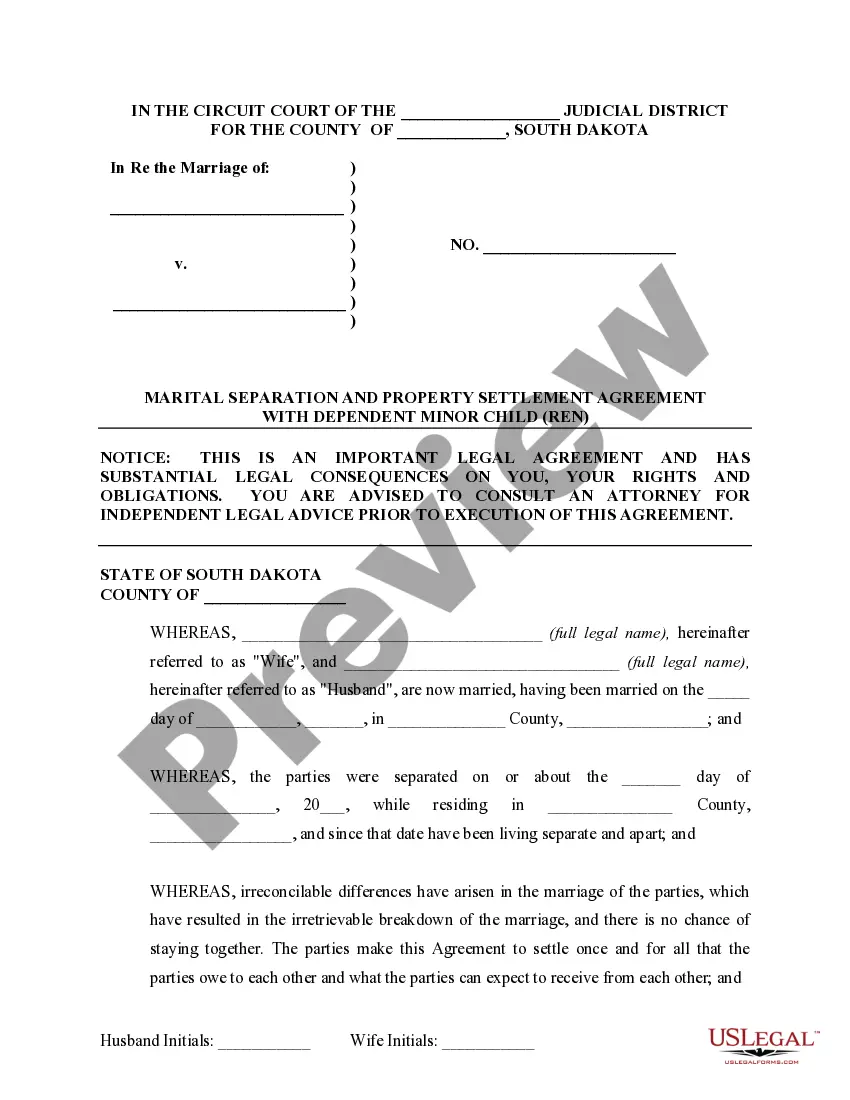
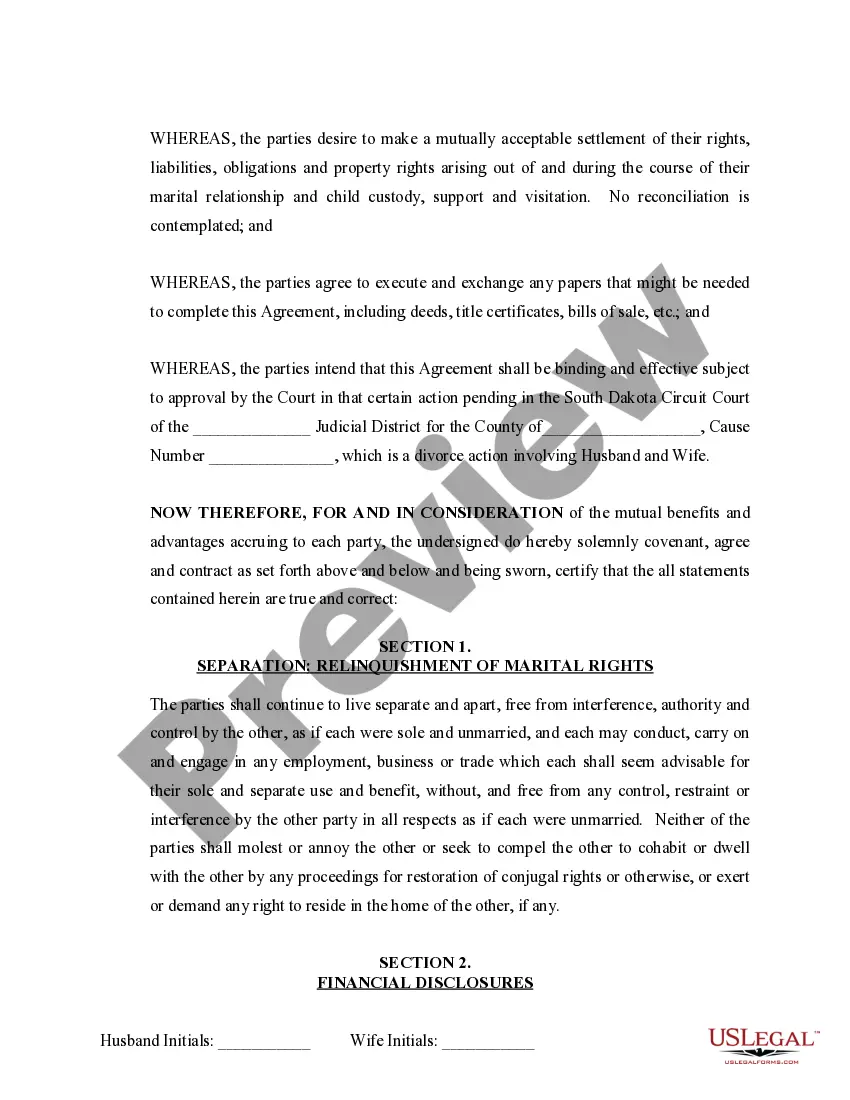
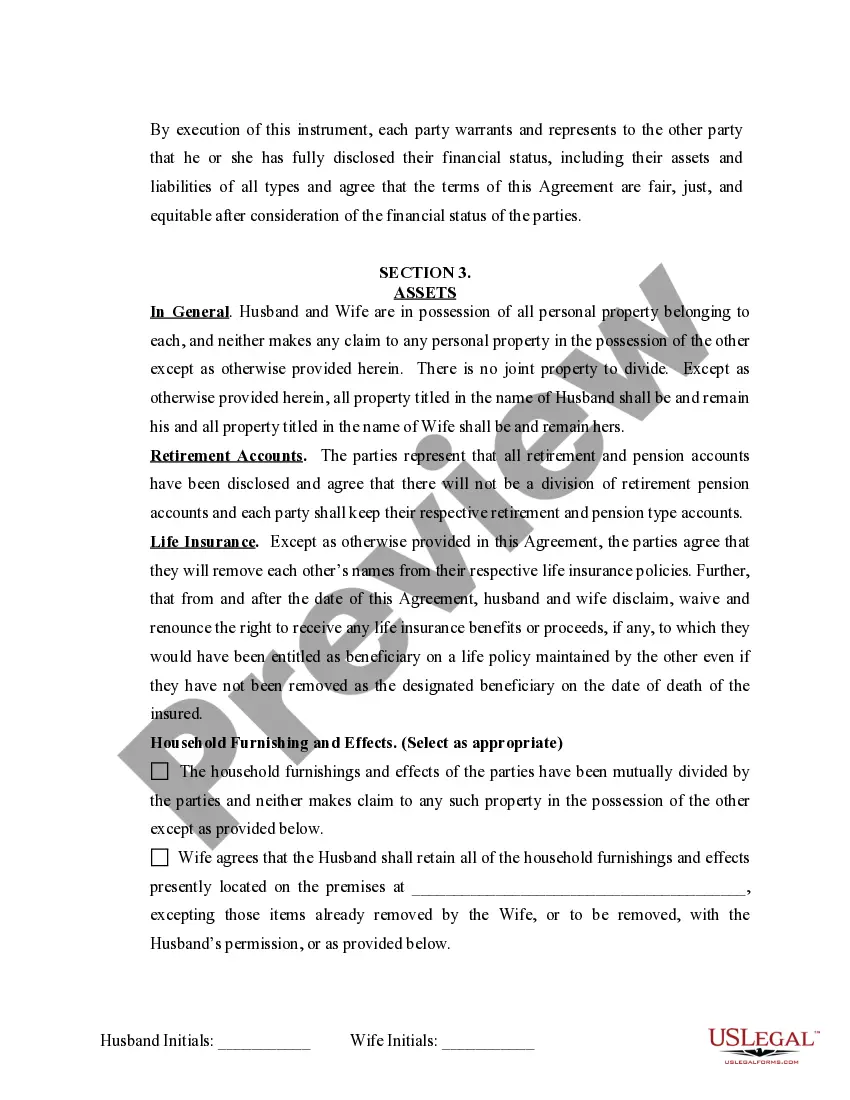
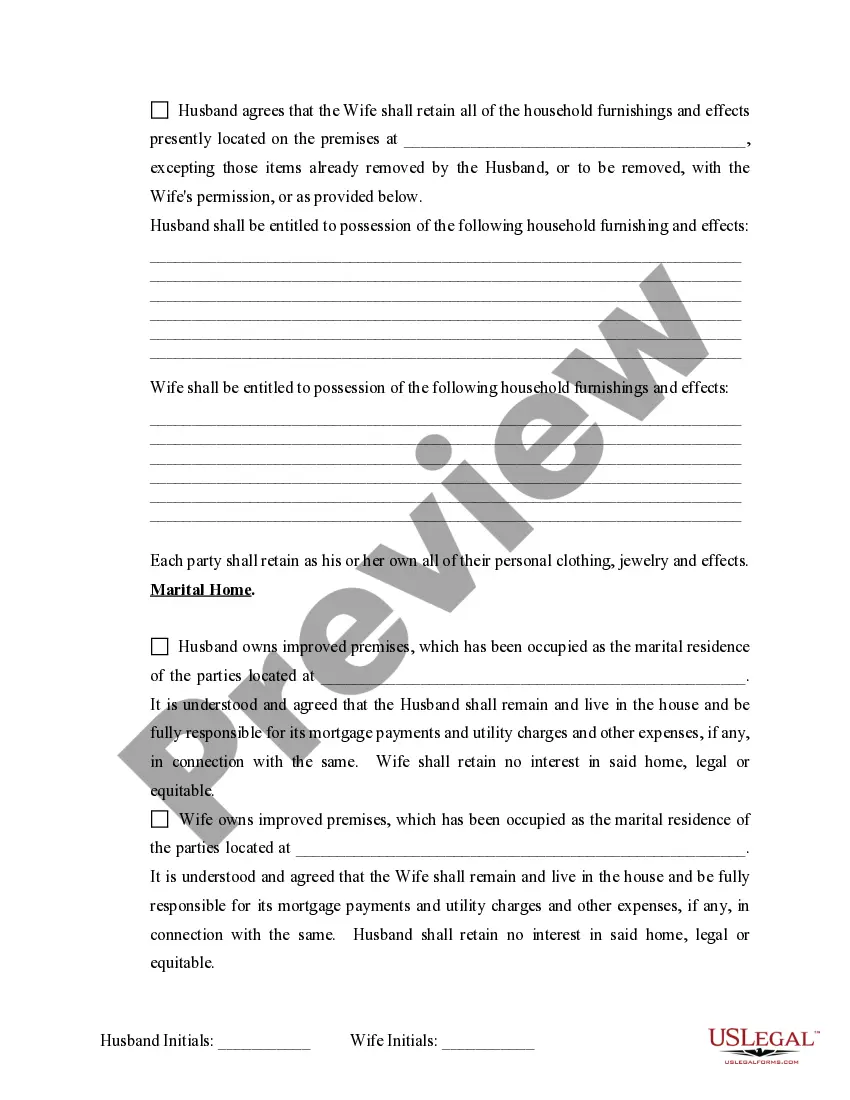
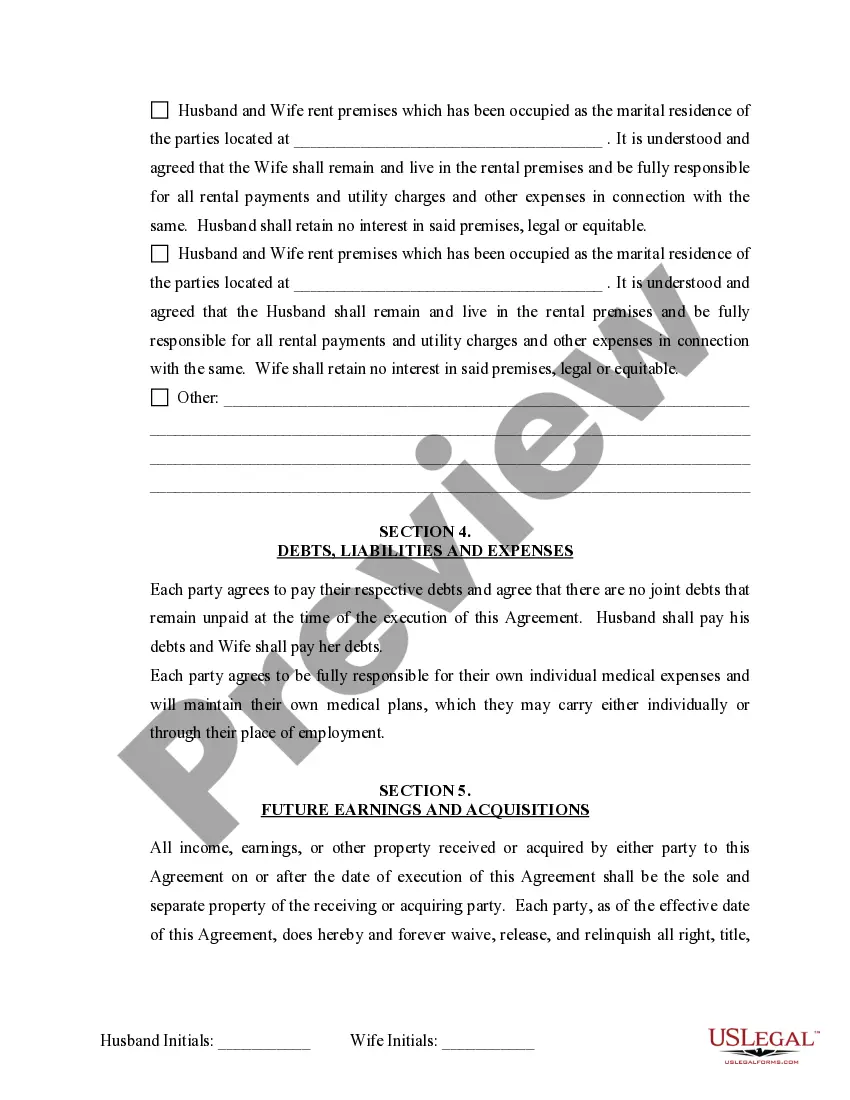
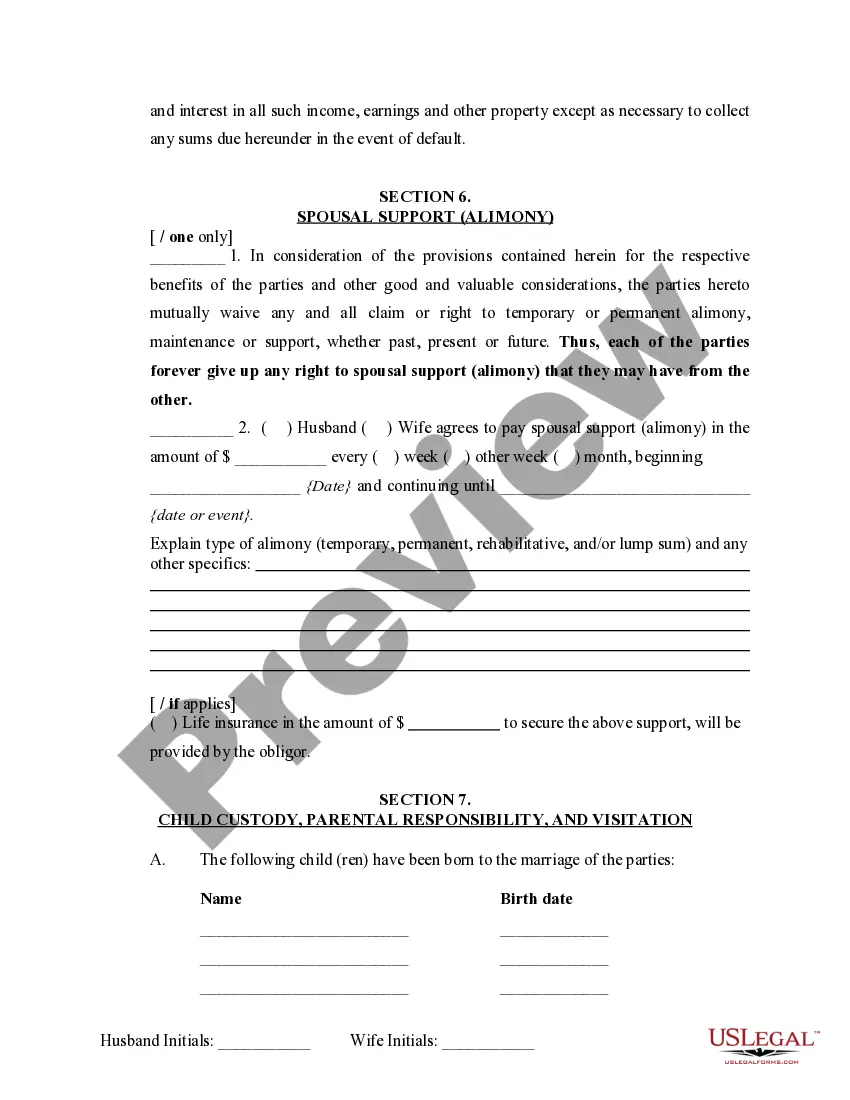
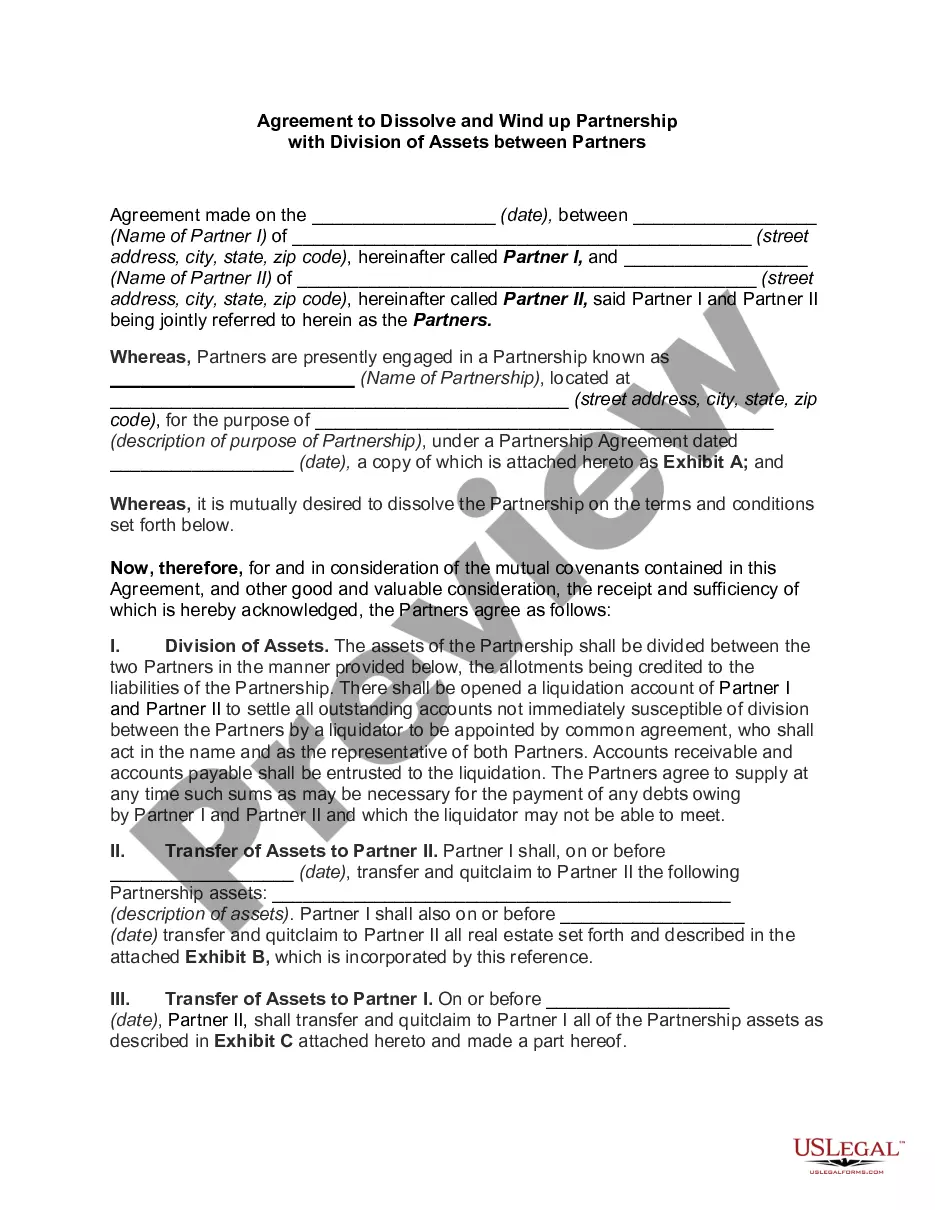
The Marital Domestic Separation and Property Settlement Agreement is a legal document specifically designed for couples with minor children who have filed for divorce. This agreement is necessary for parties without joint property or debts, and it includes provisions for child custody, visitation, child support, and potentially alimony. Unlike other divorce agreements, this form does not involve property division, focusing instead on the care and responsibilities regarding the children involved.
What’s included in this form
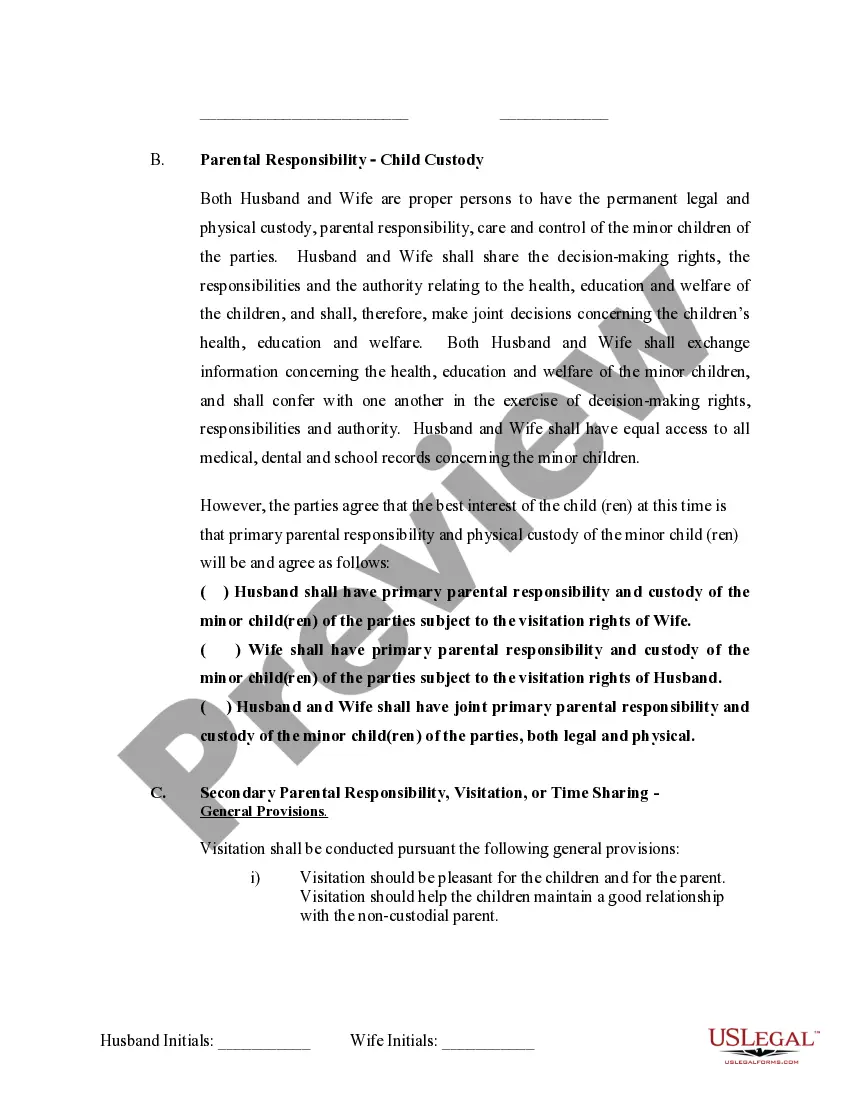
- Detailed custody arrangements for minor children, including physical and legal custody.
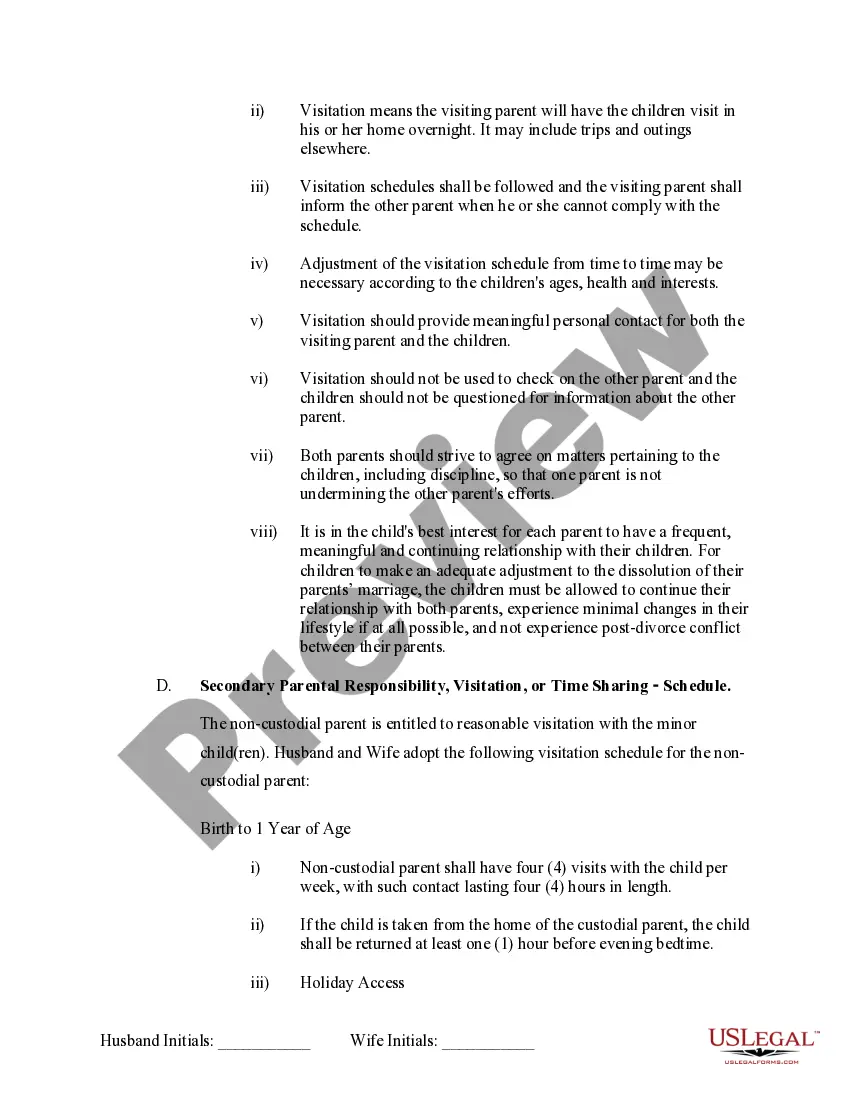
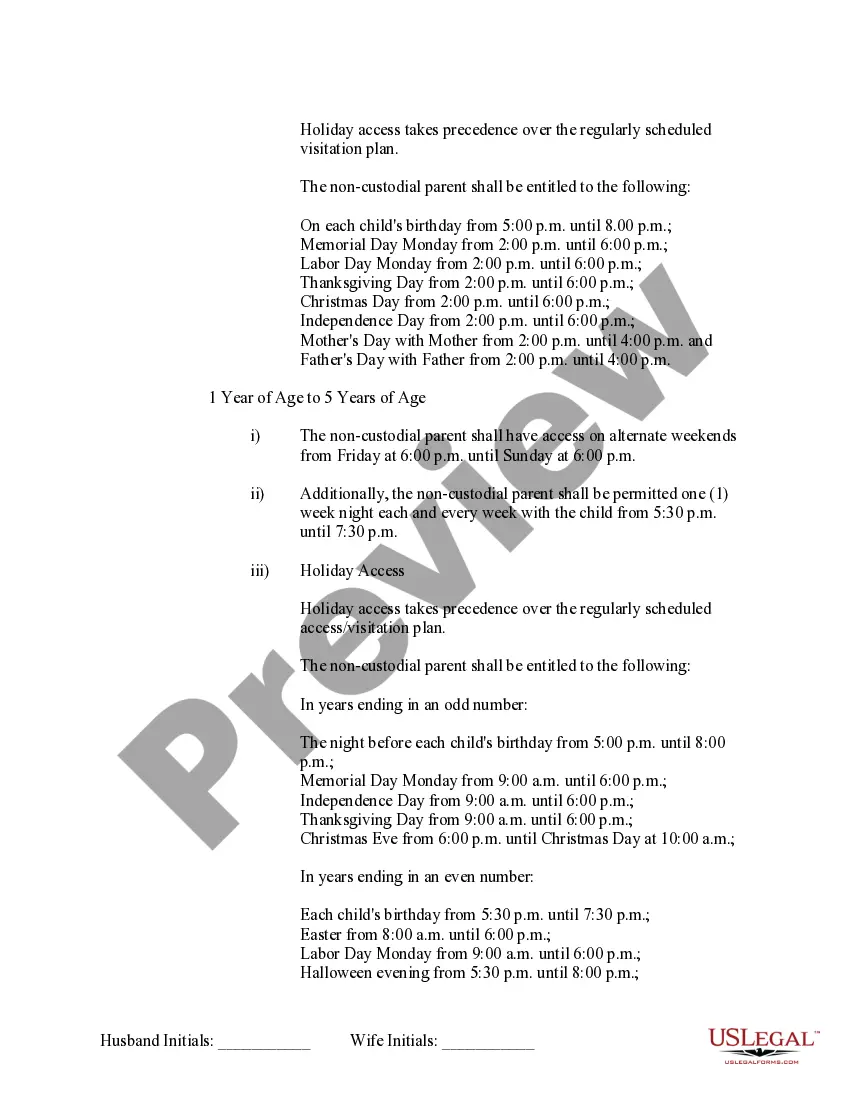
- Visitation schedules to ensure meaningful parent-child relationships.
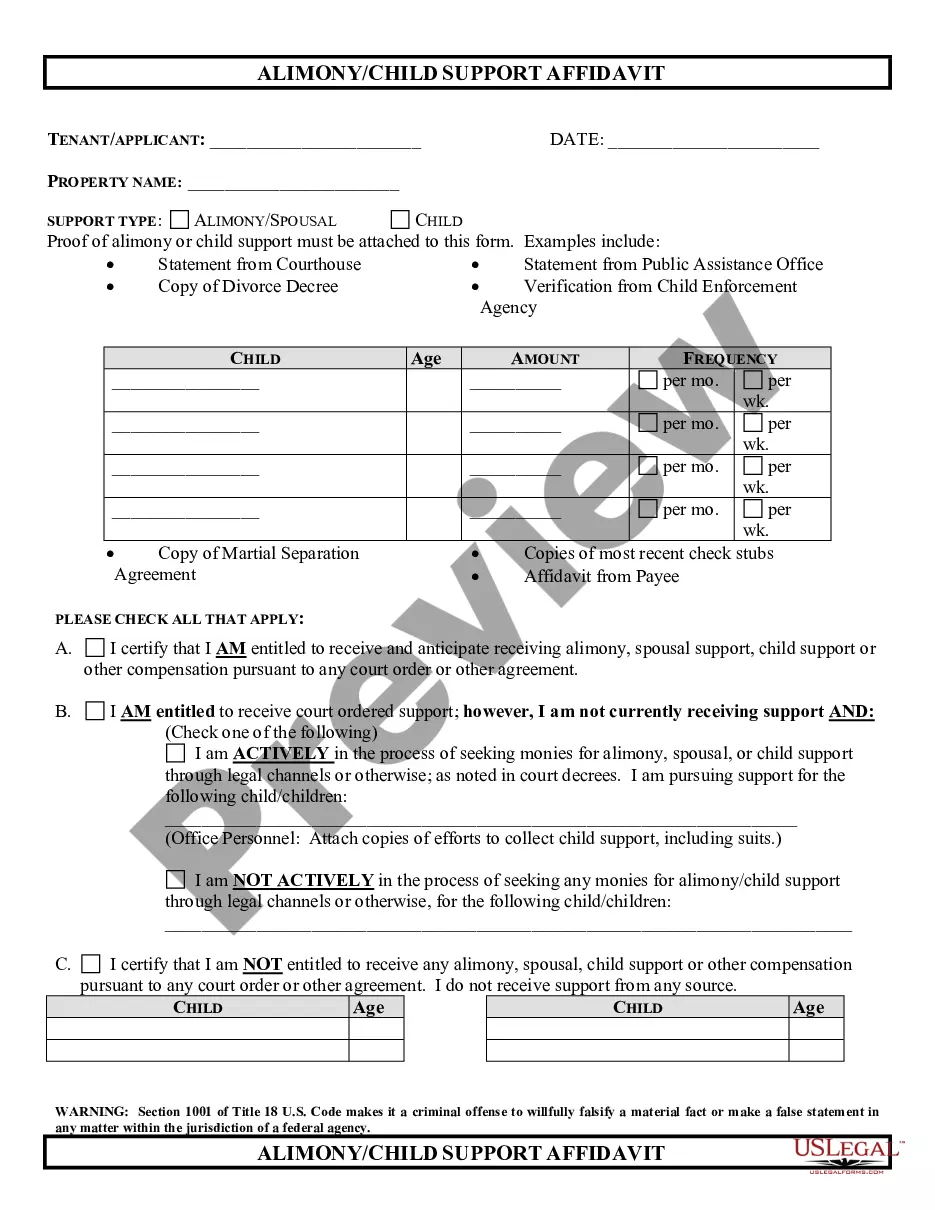
- Sections for outlining child support obligations, including the amount and payment schedule.
- Provisions addressing any agreements on spousal support or alimony.
- Mutual indemnity clauses to protect each party against claims related to debts.

When to use this document
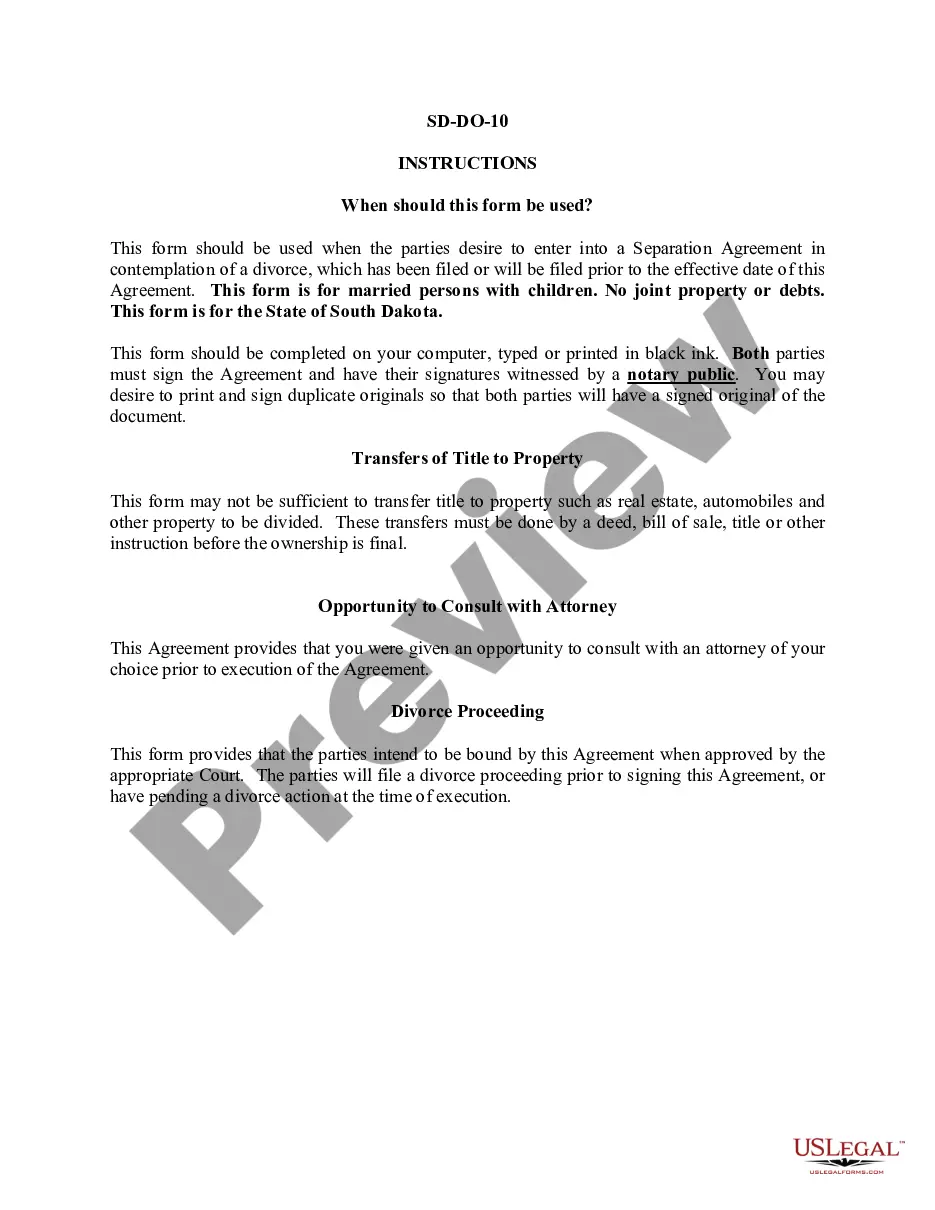
This form should be used when two parents with minor children wish to establish a formal separation agreement during a divorce action that is either already filed or will be filed in the near future. It is most applicable for couples who do not share any joint property or debts, focusing solely on the welfare of their children.
Who this form is for
This form is intended for:
- Married individuals who have minor children and are seeking a divorce.
- Couples with no joint property or debts to settle.
- Parents who wish to formalize custody and visitation arrangements outside of court.
- Parties who have already filed for divorce and need a clear settlement agreement.
Steps to complete this form
- Identify and include the full legal names of both parties and the details of the marriage.
- Clearly outline custody arrangements, specifying which parent will have primary custody and addressing visitation rights.
- Detail any child support obligations, including amounts and payment frequencies.
- Both parties must sign the agreement and ensure that their signatures are witnessed by a notary public.
- Retain a copy of the signed agreement for each partyâs records.
Does this form need to be notarized?
Yes, this form must be notarized to be legally valid. Both parties need to sign the agreement in the presence of a notary public, which helps prevent future disputes regarding the authenticity of the document. US Legal Forms offers integrated online notarization that is secure and available 24/7.
Get your form ready online
Our built-in tools help you complete, sign, share, and store your documents in one place.
Make edits, fill in missing information, and update formatting in US Legal Forms—just like you would in MS Word.
Download a copy, print it, send it by email, or mail it via USPS—whatever works best for your next step.
Sign and collect signatures with our SignNow integration. Send to multiple recipients, set reminders, and more. Go Premium to unlock E-Sign.
If this form requires notarization, complete it online through a secure video call—no need to meet a notary in person or wait for an appointment.
We protect your documents and personal data by following strict security and privacy standards.

Make edits, fill in missing information, and update formatting in US Legal Forms—just like you would in MS Word.

Download a copy, print it, send it by email, or mail it via USPS—whatever works best for your next step.

Sign and collect signatures with our SignNow integration. Send to multiple recipients, set reminders, and more. Go Premium to unlock E-Sign.

If this form requires notarization, complete it online through a secure video call—no need to meet a notary in person or wait for an appointment.

We protect your documents and personal data by following strict security and privacy standards.
Mistakes to watch out for
- Failing to provide accurate personal details of both parties.
- Not specifying all financial obligations clearly, particularly concerning child support.
- Overlooking the need for notarization which can invalidate the agreement.
- Neglecting to include comprehensive visitation schedules that consider the children's needs.
Why use this form online
- Convenience: You can complete the form at your own pace without the stress of a time limit.
- Editability: Easily make changes and updates to fit your specific situation before finalizing the document.
- Reliability: Access a template reviewed and drafted by licensed attorneys, ensuring legal soundness.
Looking for another form?

Form popularity
FAQ
If the Marital Settlement Agreement is incorporated into the decree, it becomes a court order and is enforceable by the court's contempt powers. If you don't incorporate it into the decree, it simply becomes a contract between you and your spouse, which you later have to sue in a separate action to enforce.
South Dakota is not a community property state; it is an all property state.All property in a divorce is divided into two categories, marital and non-marital property. Marital property is typically defined as all property obtained during the course of a marriage.
Property one spouse owned alone, before the marriage, or acquired by gift or inheritance during the marriage, is that spouse's separate property in California.California law also provides that property spouses acquire before a divorce, but after the date of separation, is separate property.
Marital Settlement Agreements, reached between the parties in writing and signed by the parties, become legally binding when approved by the court at the time of the final court hearing.Once approved by the court, such post judgment stipulations do become legally binding and enforceable between the parties.
Enforcing an MSA must be done by filing a formal request or motion (legal paperwork) with the court. You will need to show the court how your ex-spouse failed to follow the terms of the agreement. There are many reasons you may need to ask the court to assist you with enforcing your agreement.
Your divorce settlement agreement should cover everything that is important to you, including custody of your children, child support payments, alimony, and the separation of your property, such as your family home, vehicles, and other assets.
Grounds are legally acceptable reasons for divorce. You can get a divorce in South Dakota without claiming that your spouse is at fault (a no-fault divorce). The judge can grant you a no-fault divorce if the judge finds that there are irreconcilable differences between you and your spouse.
In South Dakota, either spouse in a divorce can request alimony. However, the court will only award support if the requesting spouse demonstrates a need for financial support and that the other spouse can pay.each spouse's earning capacity. the financial condition of each spouse after property division in the divorce.
Common law property states The common law system provides that property acquired by one member of a married couple is owned completely and solely by that person. Under this legal framework, if the title or deed to a piece of property is put in the names of both spouses, the property belongs to both spouses.