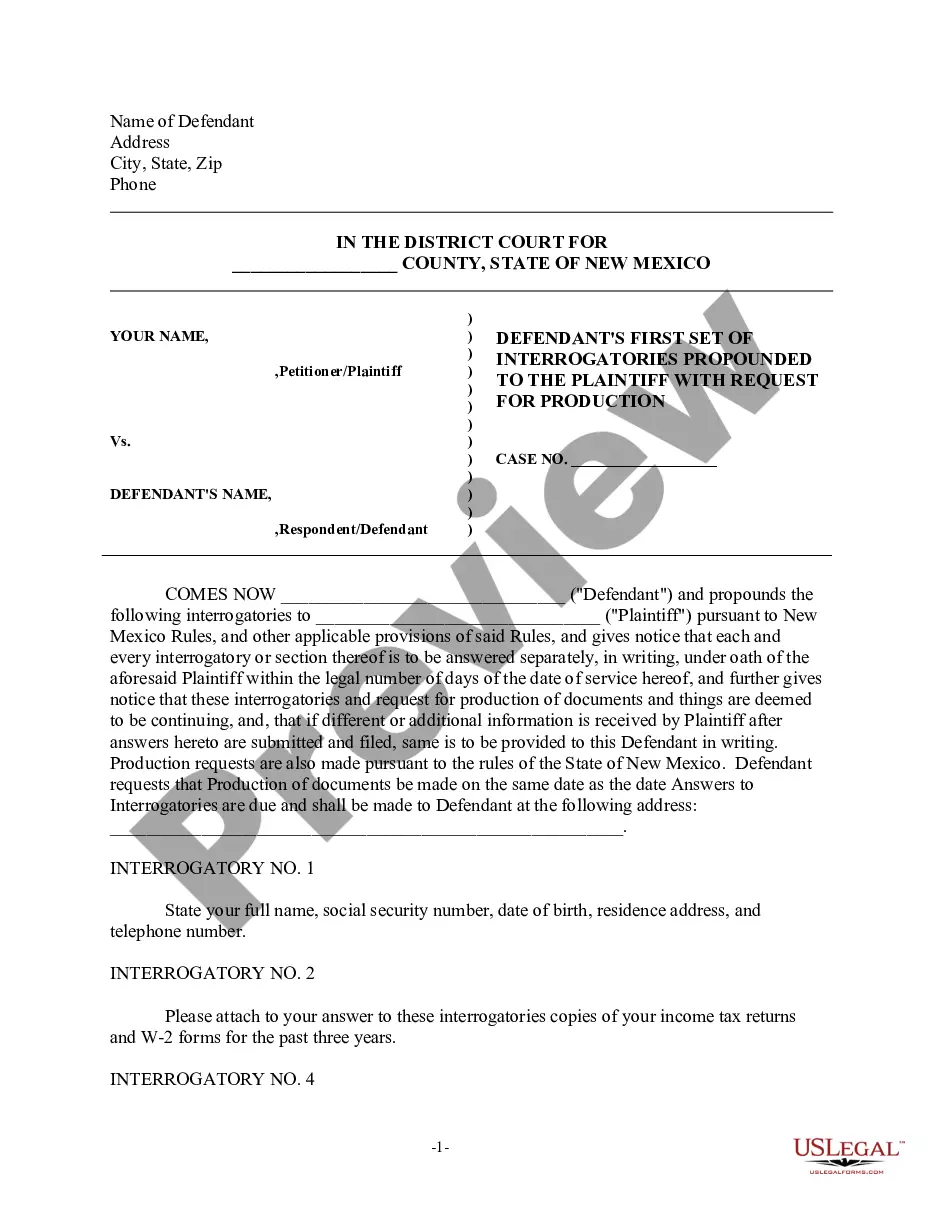
New Mexico Discovery Interrogatories from Defendant to Plaintiff with Production Requests
Understanding this form
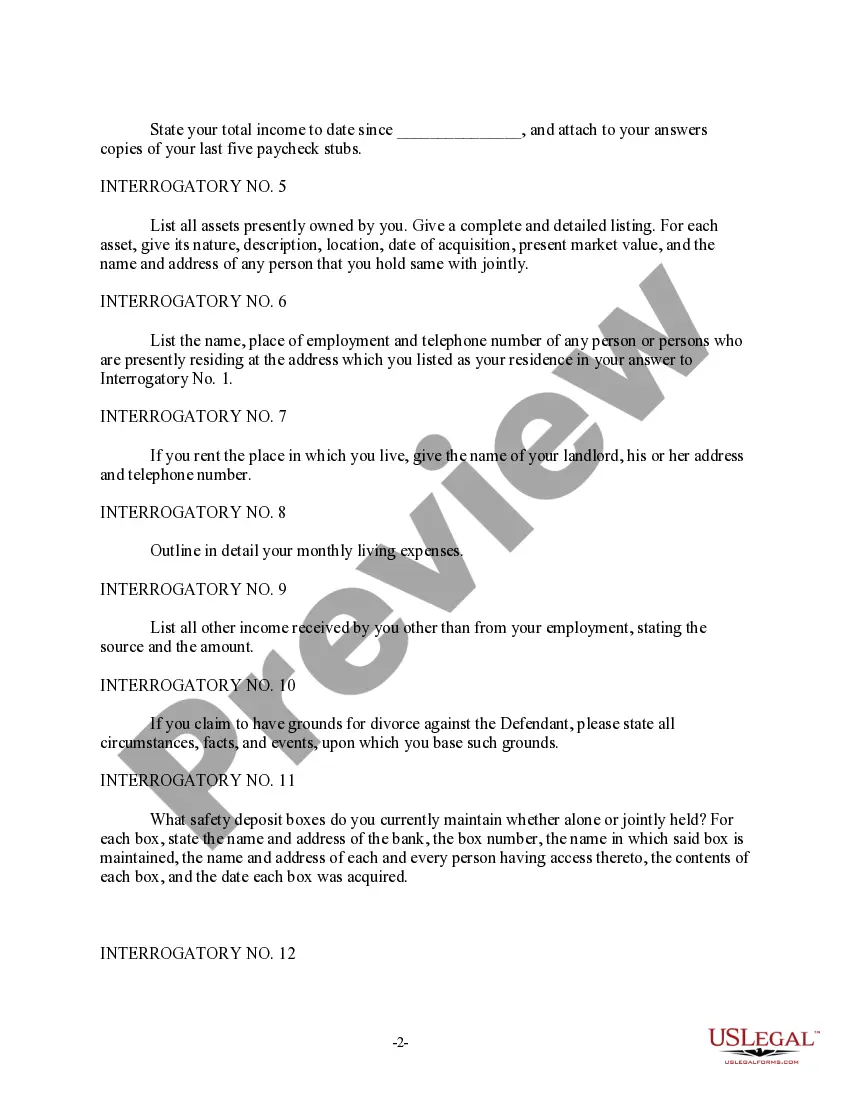
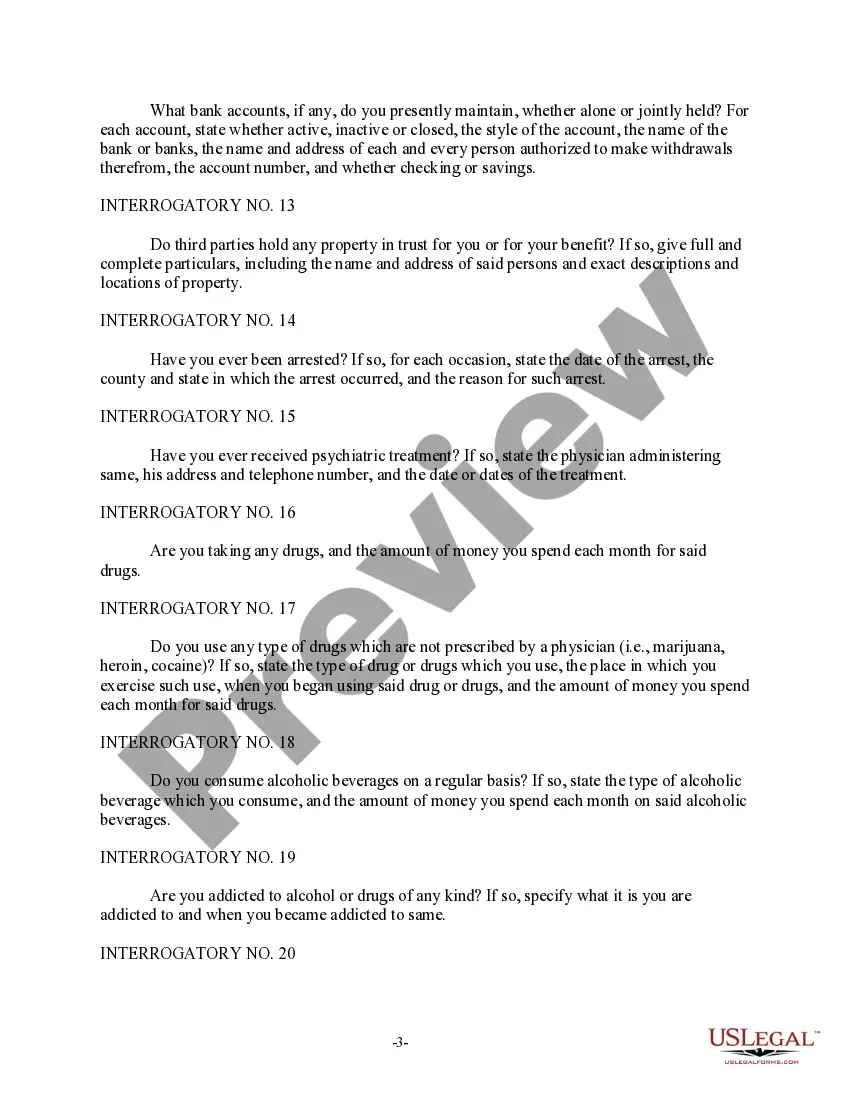
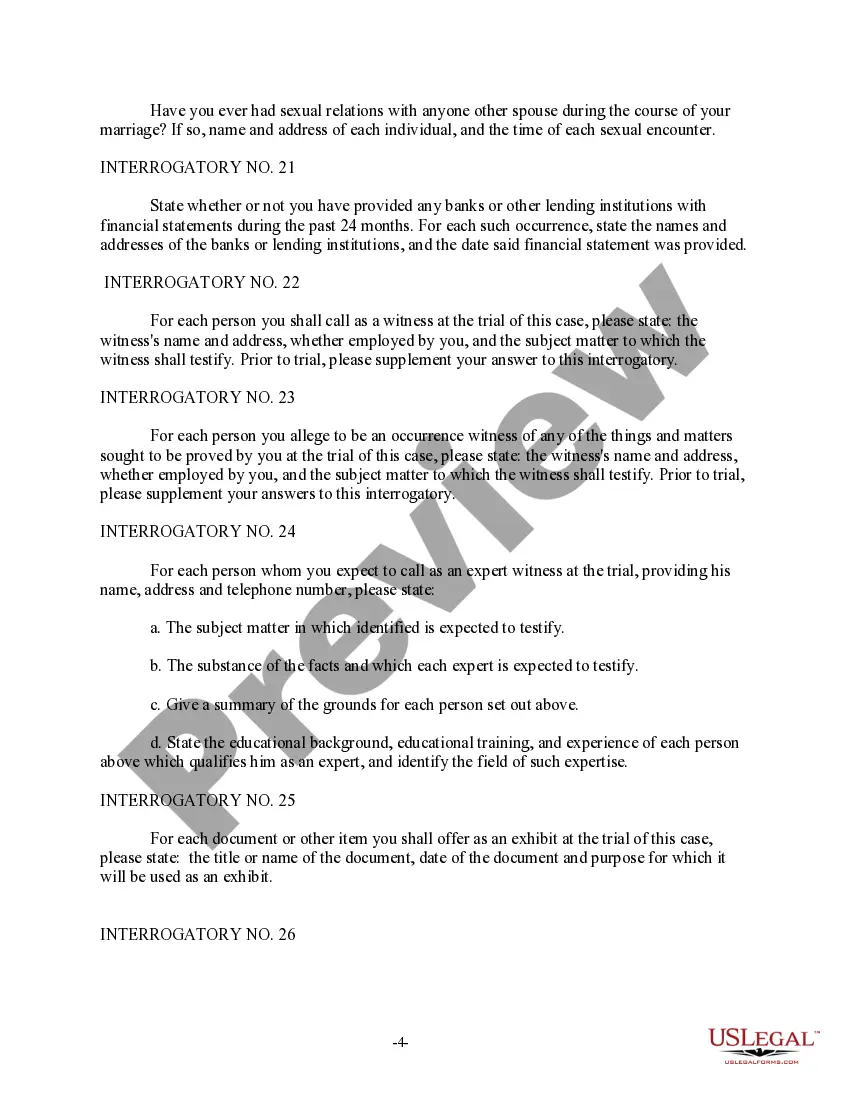
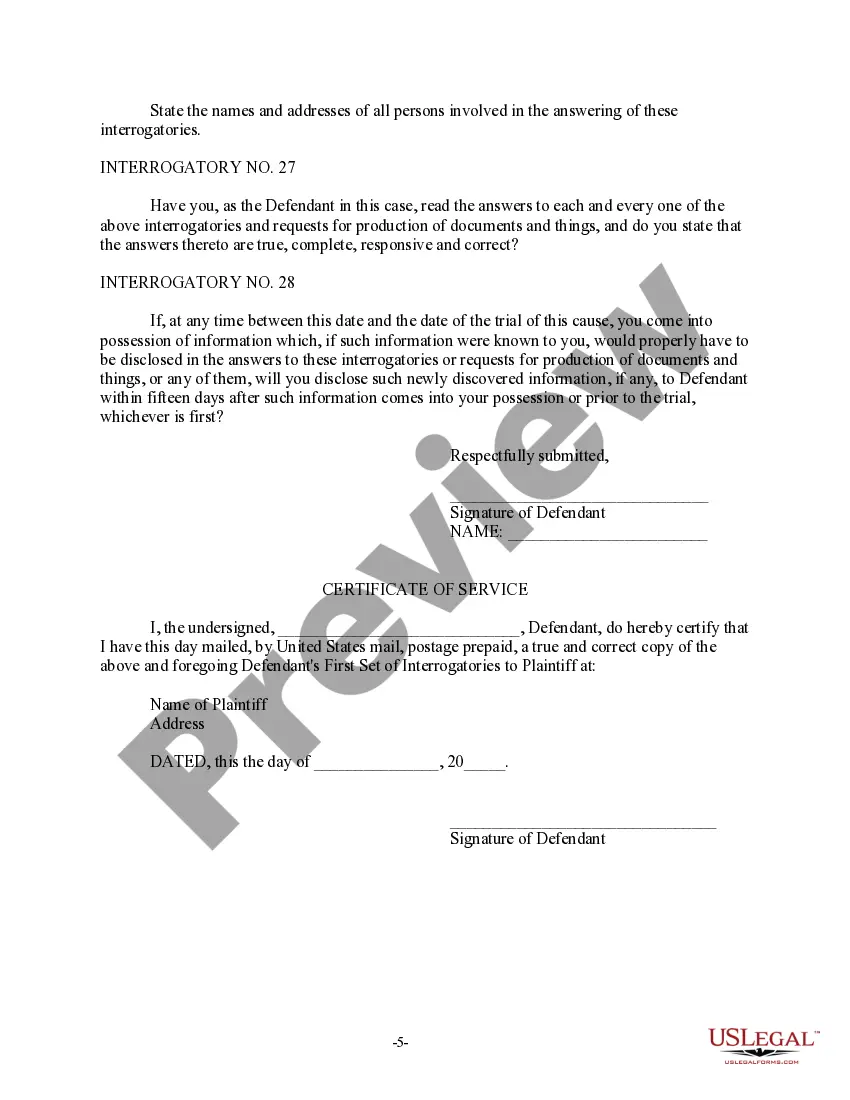
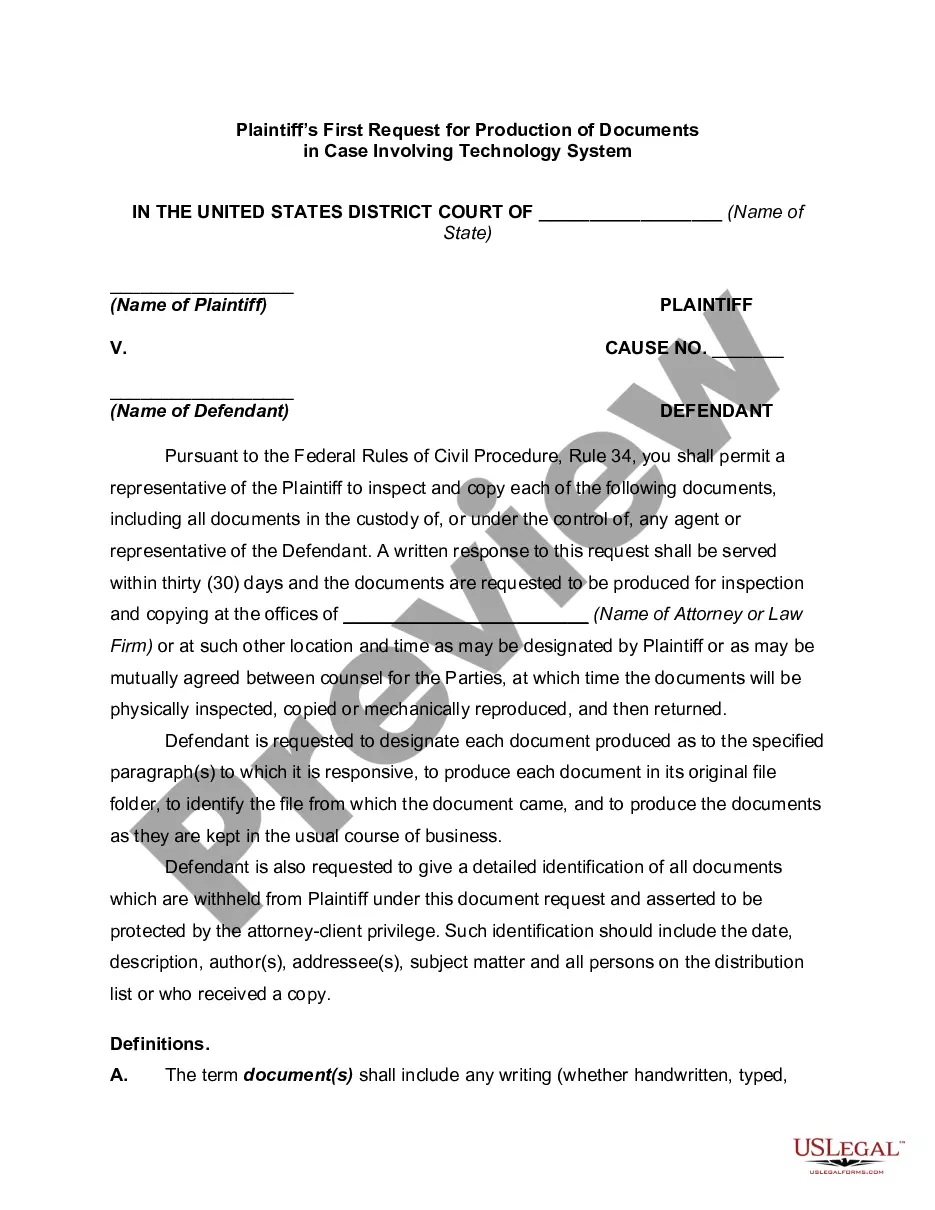
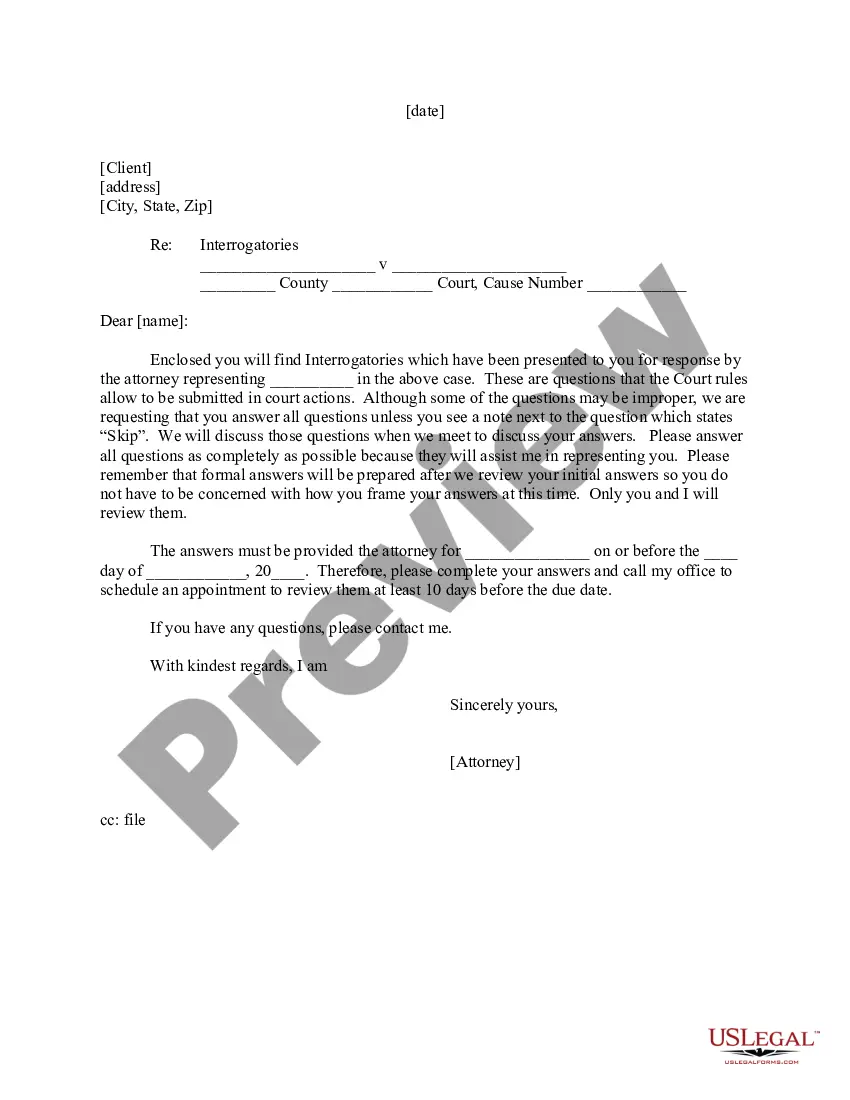
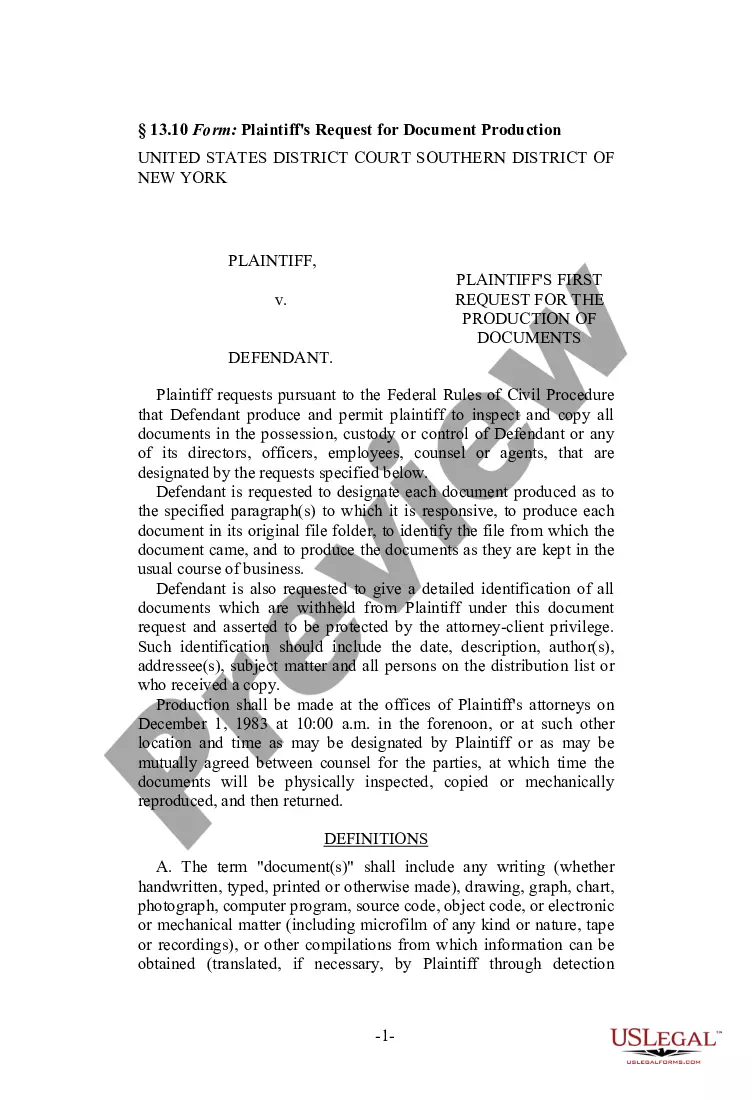
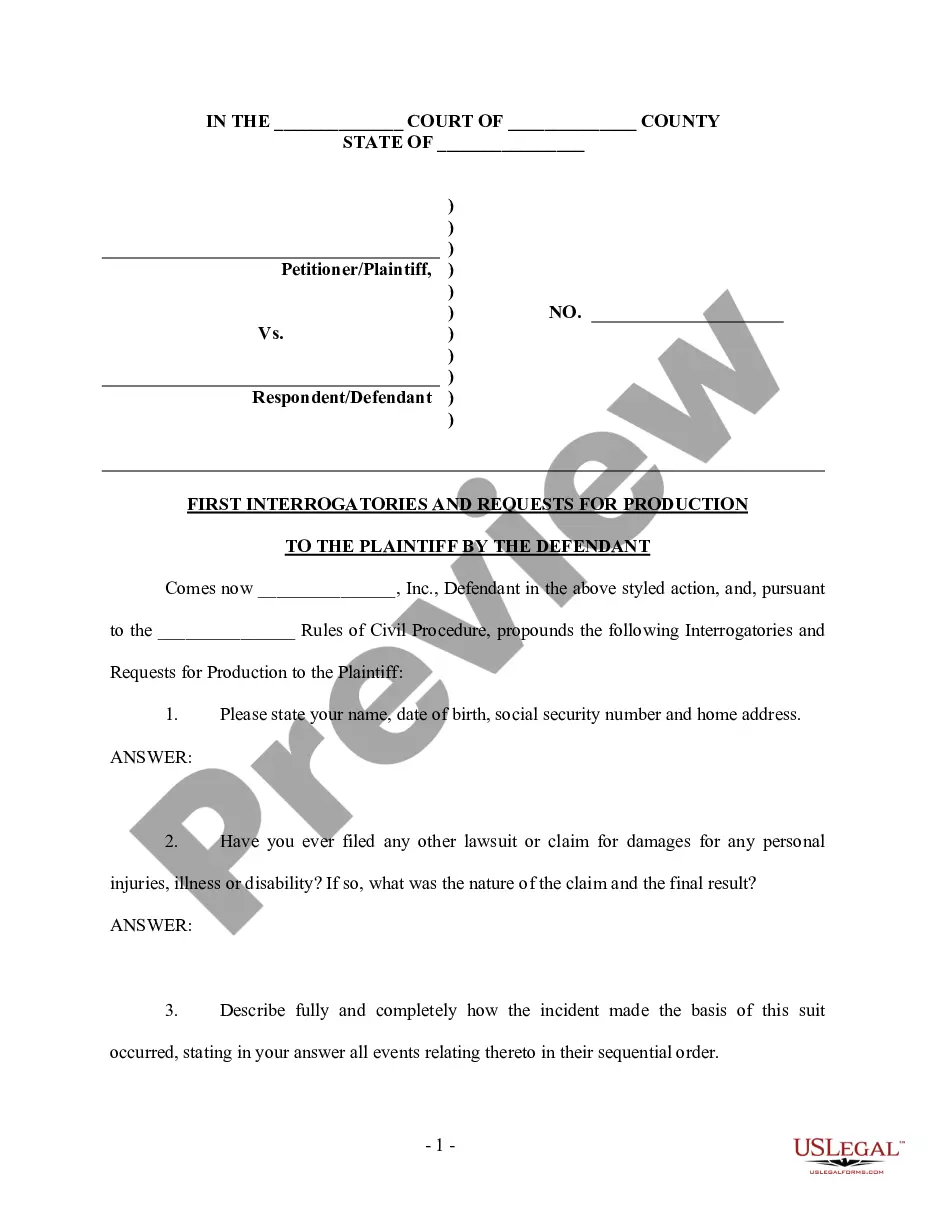
The "Discovery Interrogatories from Defendant to Plaintiff with Production Requests" is a legal document designed for use in divorce proceedings. It allows the defendant to pose questions and request specific documents from the plaintiff during the discovery phase. This form is crucial for gathering pertinent information to prepare for trial and for settling any disputes regarding assets, income, and other relevant issues. Unlike other forms, this document includes both interrogatoriesâstructured questionsâand requests for document production, aiming to comprehensively collect necessary evidence for the case.
What’s included in this form
- Contact information fields to identify both parties involved.
- A series of interrogatories that the plaintiff must answer truthfully and fully.
- Requests for production of key financial documents, such as tax returns and paycheck stubs.
- Sections for outlining assets, liabilities, and monthly expenses.
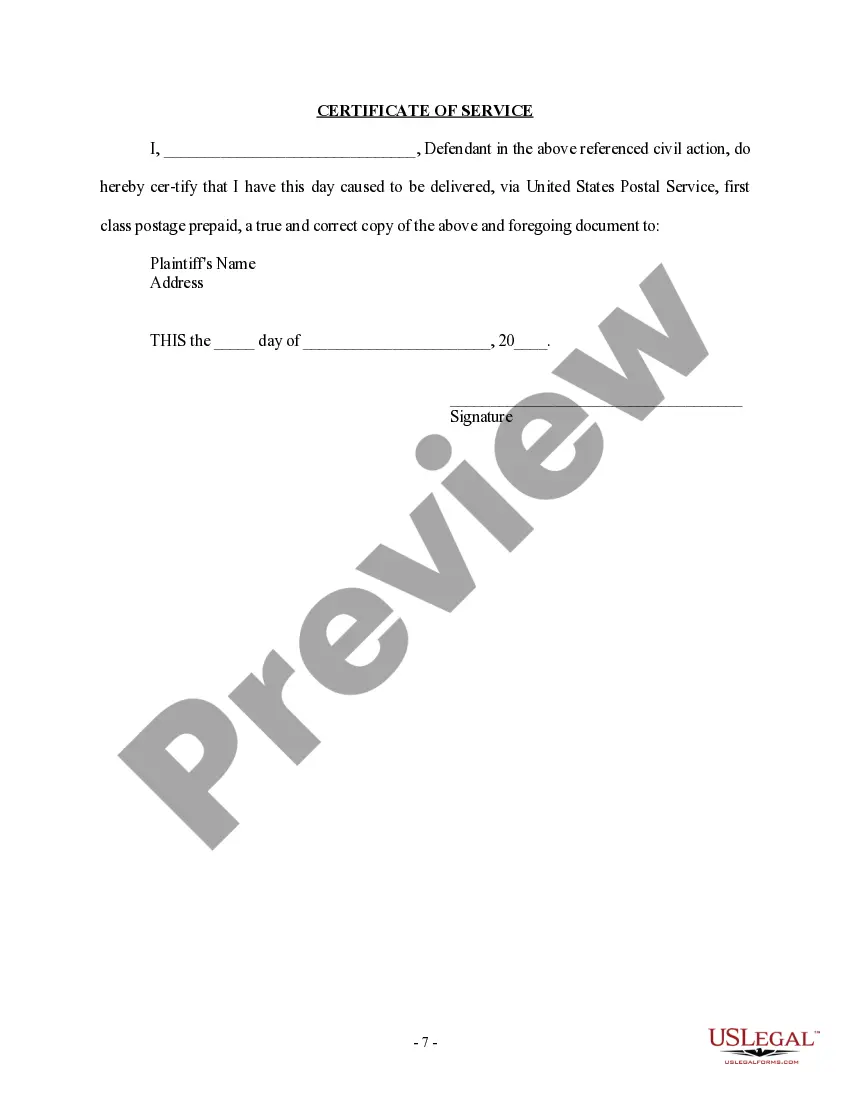
- Provisions for compliance, including timelines for responses and obligations to disclose new information.
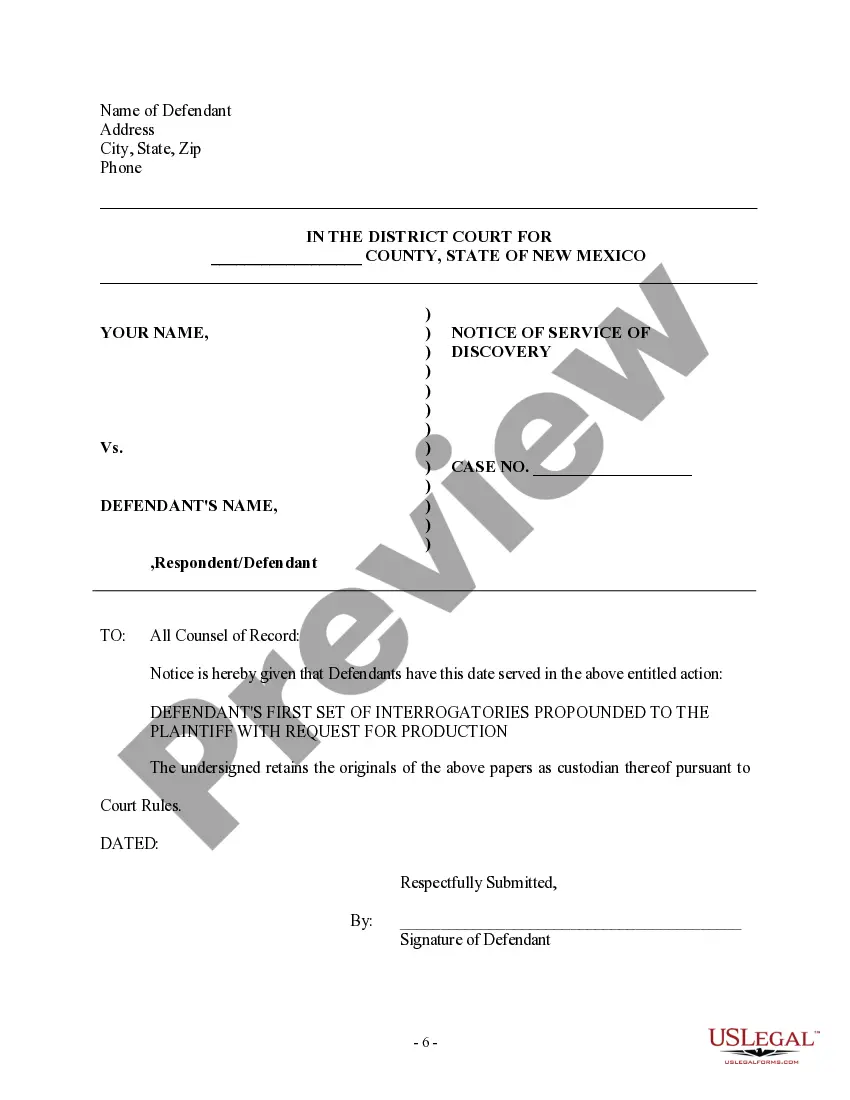
- A notice section for serving the documents to all counsel involved in the case.

Situations where this form applies
This form should be used during divorce proceedings when the defendant needs to obtain critical information from the plaintiff. It is particularly useful when there are questions regarding financial disclosures, asset divisions, or any claims made by the plaintiff that may affect the outcome of the case. The discovery process is a key phase of litigation, making this form a vital tool for defendants seeking clarity and supporting evidence.
Who can use this document
- Defendants in divorce cases seeking necessary information from the plaintiff.
- Lawyers representing defendants who need to compile evidence related to the divorce.
- Individuals who want to ensure their rights and interests are protected during divorce proceedings.
Completing this form step by step
- Identify all parties by filling in their names and contact information at the top of the form.
- Answer the interrogatories clearly and completely, ensuring all questions are addressed.
- Attach relevant financial documents as requested, such as tax returns and paycheck stubs.
- Review the entire form for accuracy and completeness before submission.
- Ensure timely filing with the court and delivery to the plaintiff, as specified in the notice section.
Notarization requirements for this form
This form does not typically require notarization unless specified by local law. It is essential, however, to check any specific court rules that may apply in your jurisdiction.
Get your form ready online
Our built-in tools help you complete, sign, share, and store your documents in one place.
Make edits, fill in missing information, and update formatting in US Legal Forms—just like you would in MS Word.
Download a copy, print it, send it by email, or mail it via USPS—whatever works best for your next step.
Sign and collect signatures with our SignNow integration. Send to multiple recipients, set reminders, and more. Go Premium to unlock E-Sign.
If this form requires notarization, complete it online through a secure video call—no need to meet a notary in person or wait for an appointment.
We protect your documents and personal data by following strict security and privacy standards.

Make edits, fill in missing information, and update formatting in US Legal Forms—just like you would in MS Word.

Download a copy, print it, send it by email, or mail it via USPS—whatever works best for your next step.

Sign and collect signatures with our SignNow integration. Send to multiple recipients, set reminders, and more. Go Premium to unlock E-Sign.

If this form requires notarization, complete it online through a secure video call—no need to meet a notary in person or wait for an appointment.

We protect your documents and personal data by following strict security and privacy standards.
Common mistakes to avoid
- Failing to answer all interrogatories thoroughly, which may lead to objections or sanctions.
- Omitting necessary supporting documents when requested.
- Not adhering to the required timeline for responses, which could jeopardize your case.
- Providing inaccurate or incomplete information, leading to potential legal consequences.
Why complete this form online
- Access to professionally drafted forms ensures legal compliance and accuracy.
- Convenient online access allows for easy downloading and editing.
- Immediate availability helps you expedite your legal processes without unnecessary delays.
- Reduced risk of errors through guided layout and prompts within the form.
Legal use & context
- This form is recognized in New Mexico courts as a valid method of gathering necessary information during divorce litigation.
- Failure to comply with discovery requests can result in legal disadvantages, such as denied evidence or sanctions from the court.
Key takeaways
- The discovery interrogatories are essential for defendants to gather information from plaintiffs in divorce cases.
- Complete and accurate responses to interrogatories are crucial for upholding your rights.
- Using this form ensures adherence to New Mexico legal standards for divorce proceedings.
- Always review local court rules before filing to avoid mistakes that could affect your case.
Looking for another form?


Form popularity
FAQ
SUMMARY: Failure to timely answer discovery or refusal to answer discovery has two important and potentially catastrophic consequences. You may waive your right to object to the discovery even if the other party has no right to the information requested. In other words, you may be forced to give it to them.
The purpose of discovery is to allow the parties to obtain full knowledge of the issues and facts of the lawsuit before going to trial. An experienced family law attorney will use discovery to help you identify the various strengths and weaknesses of each side of the case.
That disclosure is accomplished through a methodical process called "discovery." Discovery takes three basic forms: written discovery, document production and depositions. See 's Stages of a Personal Injury Case section for related articles and resources.
The plaintiff must respond by the deadline. There are different ways to make sure you get each kind of discovery if the plaintiff does not give it to you by the deadline. If the plaintiff does not respond to the court order, then you can file a Motion to Dismiss and you may win your case.
This is the formal process of exchanging information between the parties about the witnesses and evidence they'll present at trial. Discovery enables the parties to know before the trial begins what evidence may be presented.One of the most common methods of discovery is to take depositions.
What Is a Request for Production of Documents? A request for production is a discovery device used to gain access to documents, electronic data, and physical items held by an opposing party in a legal matter. The aim is to gain insight into any relevant evidence that the opposing party holds.
Interrogatories are a part of the "discovery" stage of a civil case.During discovery, the parties request and exchange information and documents. Interrogatories and depositions form the bulk of the discovery process. Unlike many legal documents, interrogatories do not need to be filed with the court.
Interrogatories, which are written questions about things that are relevant or important to the case. (NRCP 33; JCRCP 33) Requests for production of documents or things, which are written requests that demand the other side provide particular documents or items.
In general, the discovery rule means that the statute of limitations starts to run when the patient discovers or reasonably should discover the injury.If enough time passes, a statute of repose may prevent you from bringing the claim, even if you could not reasonably have discovered the injury.