New Jersey Last Will and Testament with All Property to Trust called a Pour Over Will
What this document covers
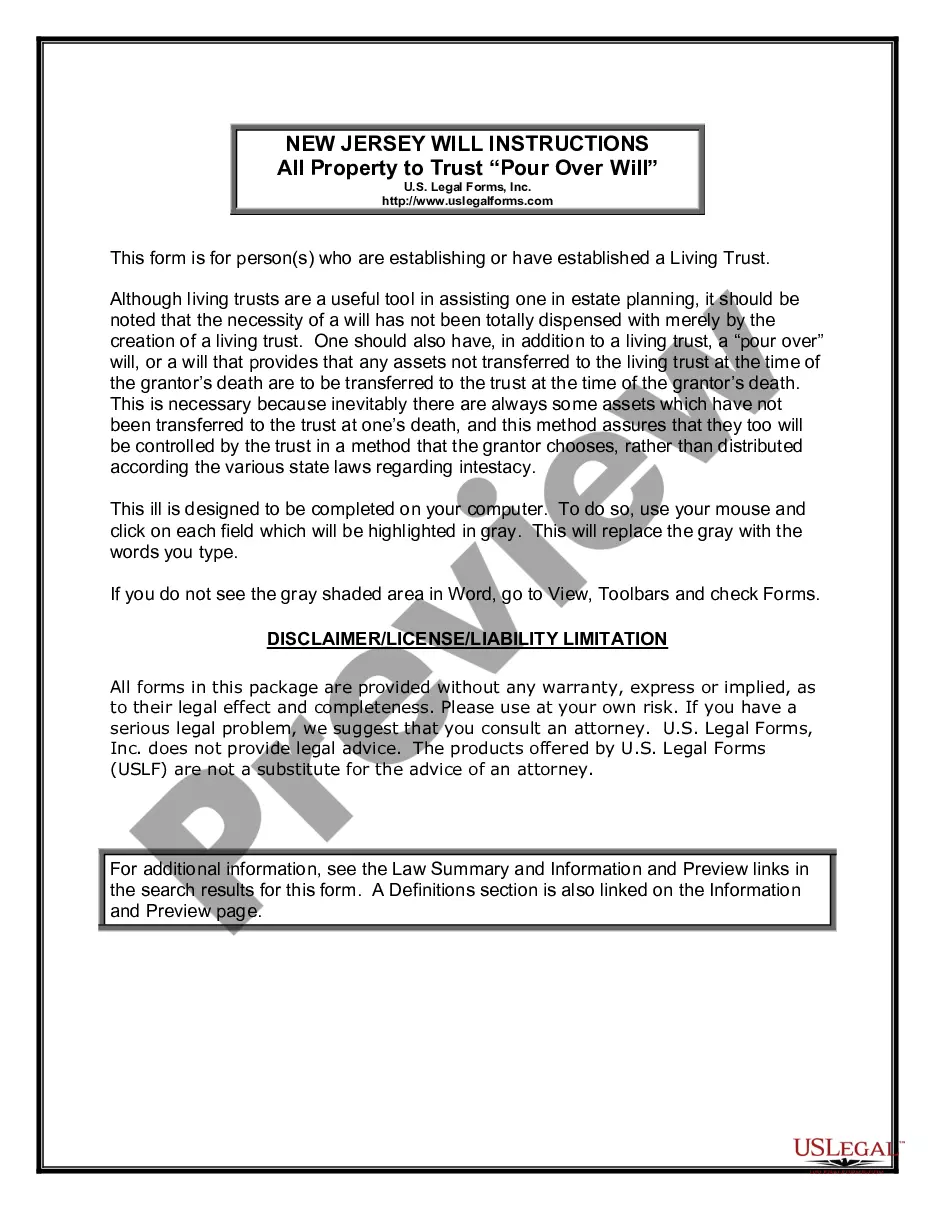
This Last Will and Testament, also known as a Pour Over Will, is a legal document that ensures all property not previously directed to a living trust is transferred to that trust upon your death. This form is particularly useful for individuals who have created or wish to create a living trust, as it acts as a safeguard to manage assets that may not have been transferred to the trust before death. A Pour Over Will simplifies estate planning by consolidating assets into one trust, rather than leaving them subject to state intestacy laws.
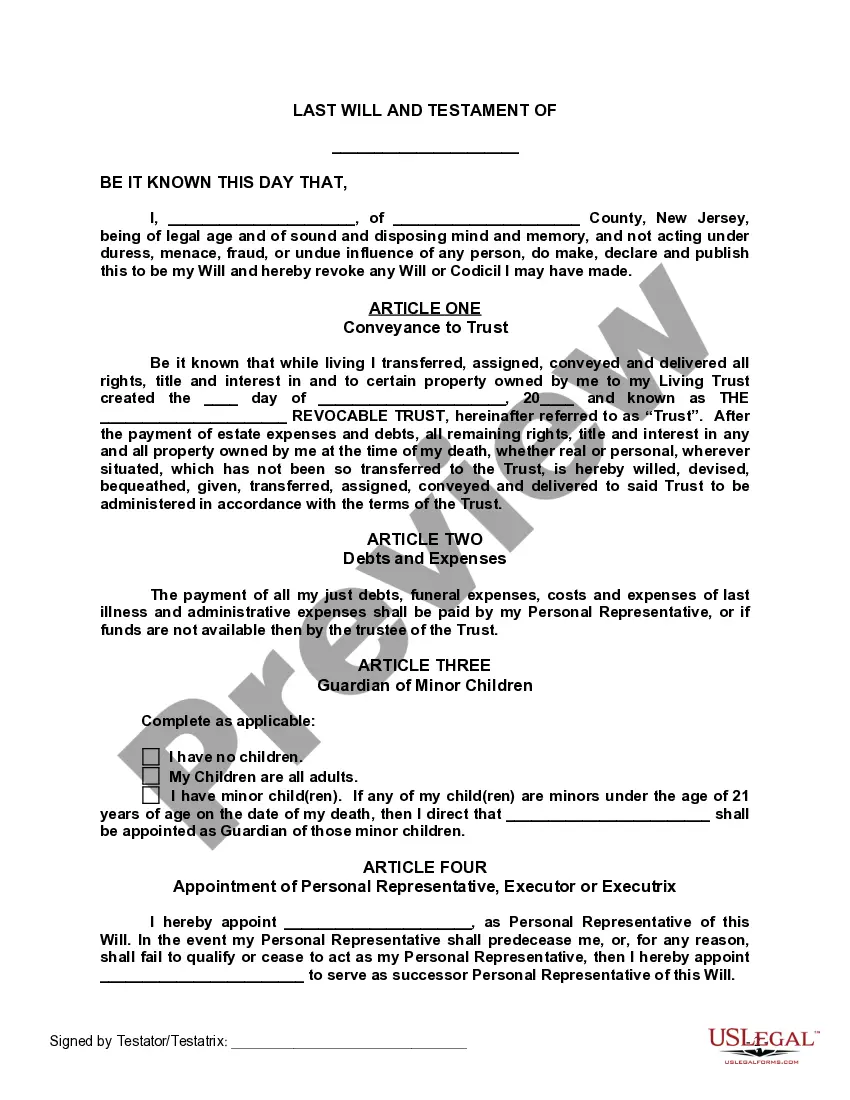
Main sections of this form
- Preamble: Identifying the testator and revoking previous wills.
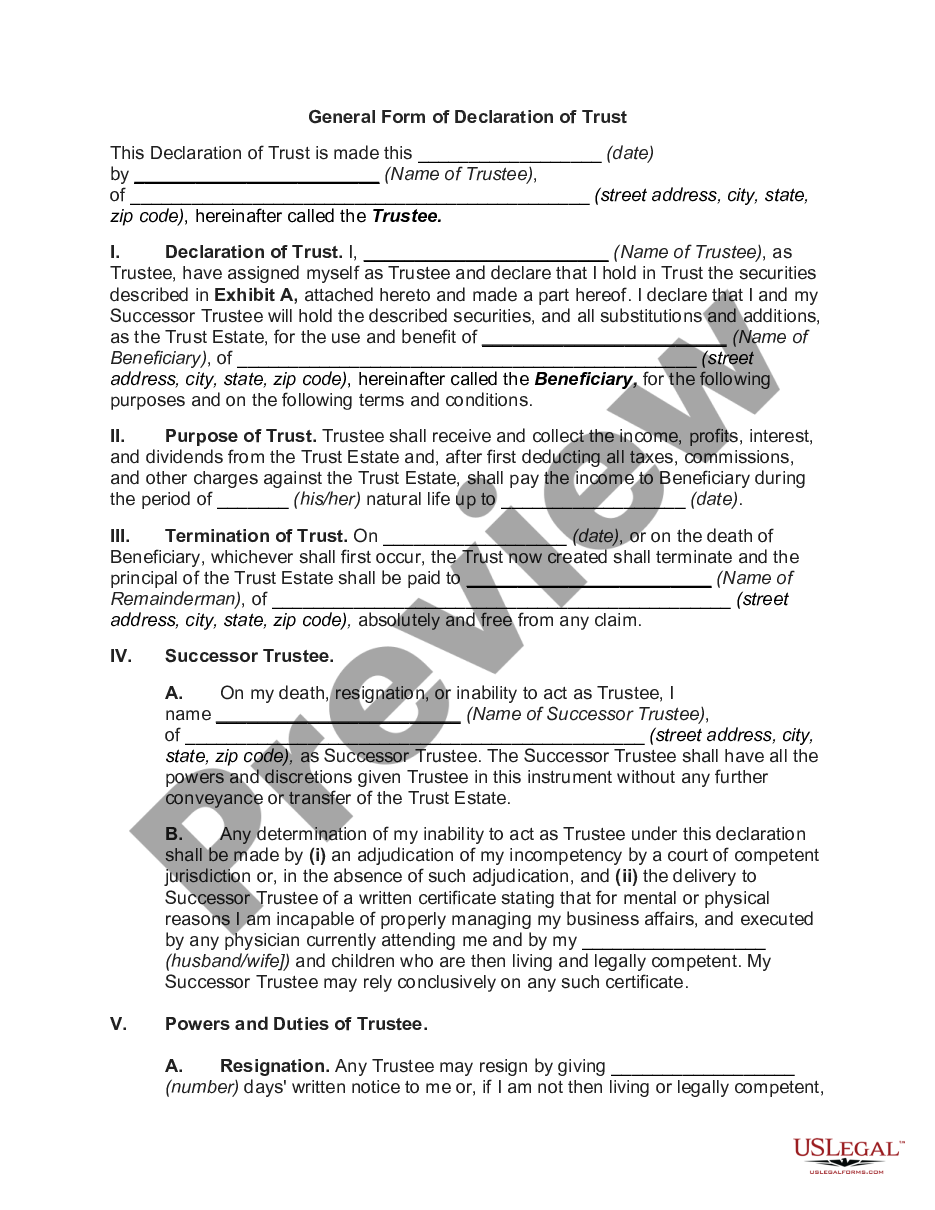
- Conveyance to Trust: Assigning all untransferred property to the existing living trust.
- Debts and Expenses: Outlining the responsibility for paying debts and expenses after death.
- Guardian of Minor Children: Designating a guardian for any minors, if applicable.
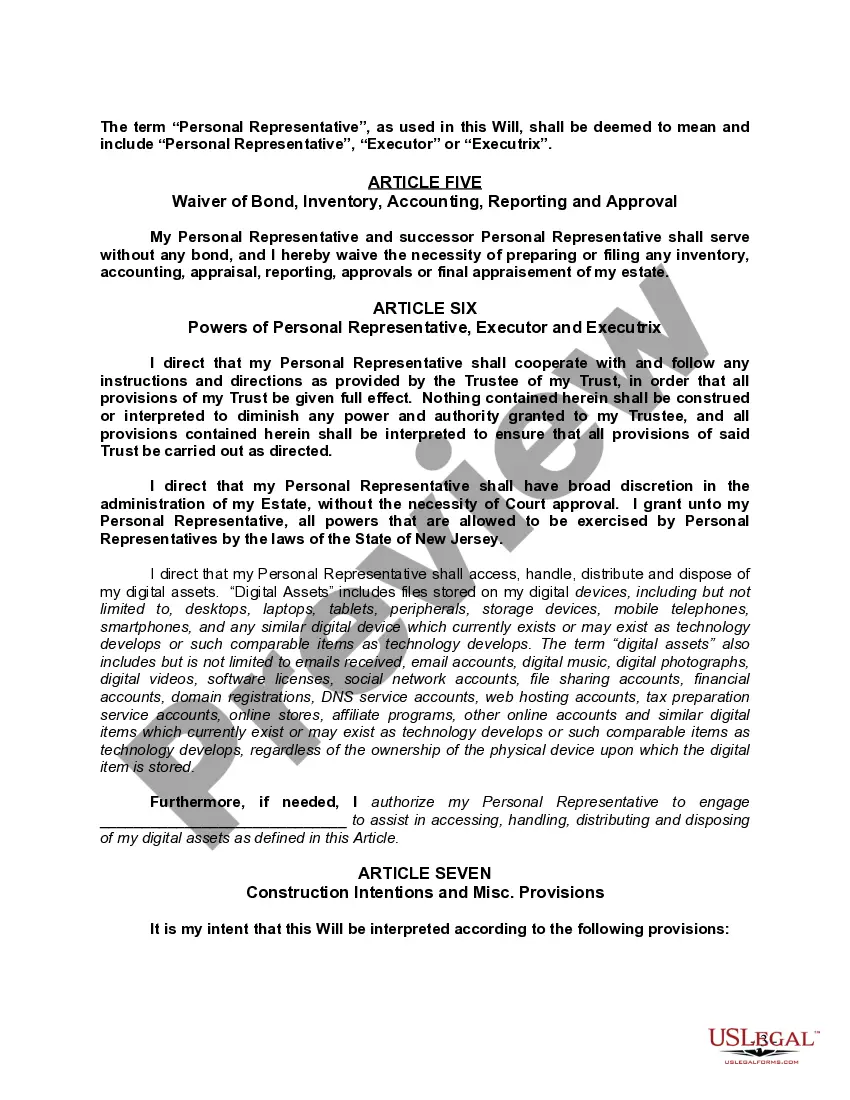
- Appointment of Personal Representative: Naming the executor responsible for managing the estate.
- Waiver of Bond: Declaring that no bond will be required for the personal representative.
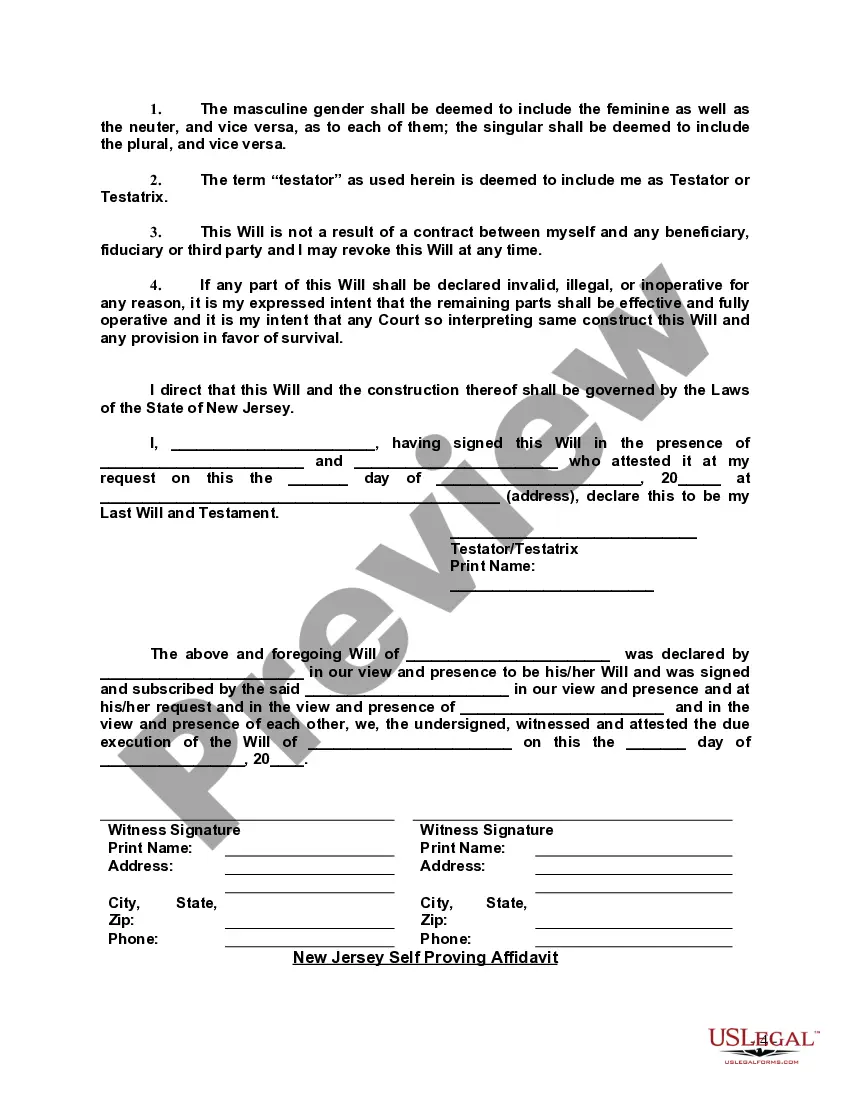
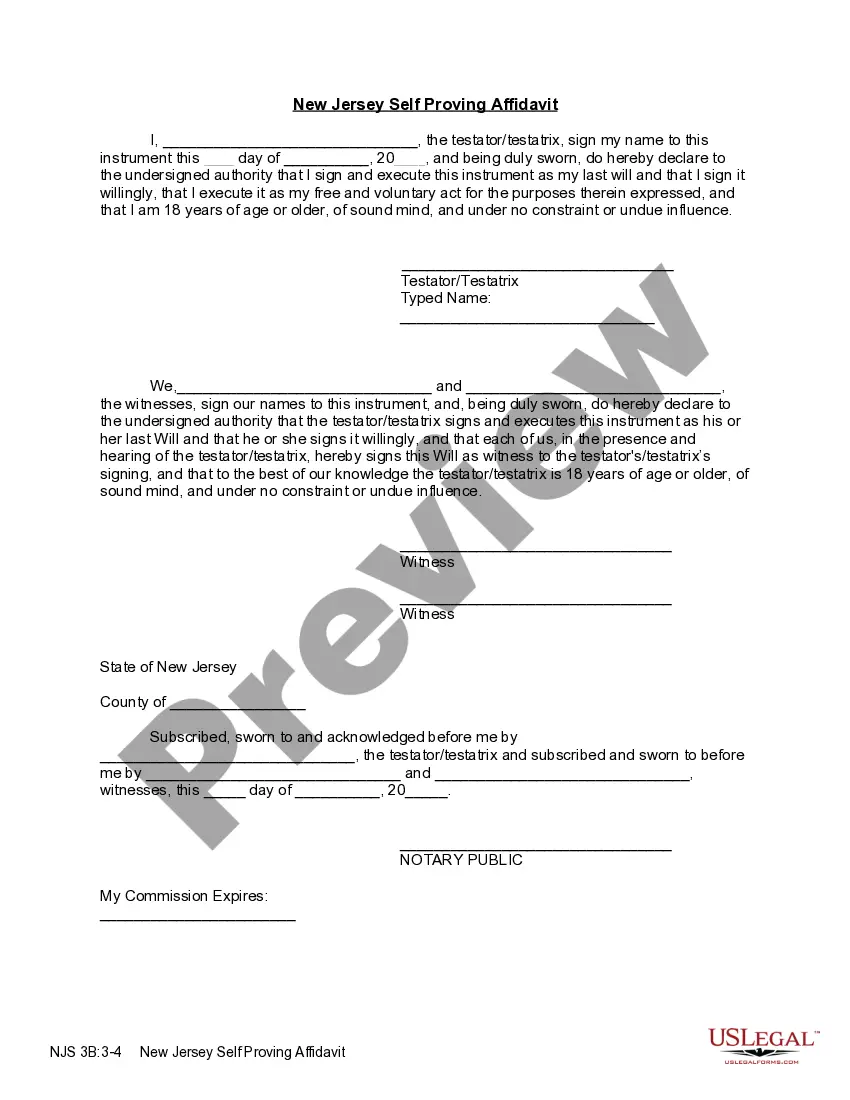
- Self-Proving Affidavit: Confirmation that the will is valid and executed according to legal requirements.



When to use this form
Use this Pour Over Will when you have established a living trust and wish to ensure that any remaining assets are transferred to it upon your death. It is especially important if you have acquired new property or assets that have not yet been included in your trust. This will help maintain your estate plan's effectiveness and control over your assets.
Who this form is for
- Individuals who have created a living trust and want to ensure comprehensive control over their assets.
- People who may have acquired assets after establishing their trust.
- Those who wish to avoid the complexities of intestacy laws for untransferred assets.
- Persons with minor children who need to designate guardianship in the event of their passing.
Instructions for completing this form
- Identify the parties: Enter your legal name as the testator along with your county and state.
- Specify the trust: Clearly state the name and date of your existing living trust.
- Complete the guardian section: If applicable, appoint a guardian for any minor children.
- Designate a personal representative: Name the individual you wish to appoint as executor or personal representative of your will.
- Sign the will: Ensure you and your witnesses sign the document according to legal requirements, including the self-proving affidavit.
Is notarization required?
Yes, this form must be notarized to be legally valid. A notary public must witness the signing of the will to ensure authenticity. US Legal Forms offers integrated online notarization, providing secure video calls for convenience, available 24/7 without the need for travel.
Get your form ready online
Our built-in tools help you complete, sign, share, and store your documents in one place.
Make edits, fill in missing information, and update formatting in US Legal Forms—just like you would in MS Word.
Download a copy, print it, send it by email, or mail it via USPS—whatever works best for your next step.
Sign and collect signatures with our SignNow integration. Send to multiple recipients, set reminders, and more. Go Premium to unlock E-Sign.
If this form requires notarization, complete it online through a secure video call—no need to meet a notary in person or wait for an appointment.
We protect your documents and personal data by following strict security and privacy standards.

Make edits, fill in missing information, and update formatting in US Legal Forms—just like you would in MS Word.

Download a copy, print it, send it by email, or mail it via USPS—whatever works best for your next step.

Sign and collect signatures with our SignNow integration. Send to multiple recipients, set reminders, and more. Go Premium to unlock E-Sign.

If this form requires notarization, complete it online through a secure video call—no need to meet a notary in person or wait for an appointment.

We protect your documents and personal data by following strict security and privacy standards.
Mistakes to watch out for
- Failing to sign the will in the presence of witnesses.
- Not appointing a personal representative or guardian for minor children.
- Leaving assets out of the trust, which can lead to intestacy issues.
- Not updating the will as life circumstances change, such as acquiring new properties or changes in family status.
Benefits of completing this form online
- Convenience of completing the form on your computer, ensuring easy access and editability.
- Templates are drafted by licensed attorneys, providing peace of mind about legal compliance.
- Immediate access to your completed forms once downloaded, allowing for prompt execution.
- Guidance through the process with integrated instructions, minimizing the risk of errors.
Main things to remember
- A Pour Over Will organizes and transfers all remaining assets to a living trust upon death.
- This legal document is crucial for individuals with living trusts to ensure comprehensive estate planning.
- Complete and notarize the will properly to ensure it meets legal standards and protects your intentions.
- Regularly review and update your will as your life circumstances change to keep it relevant and effective.
Looking for another form?



Form popularity
FAQ
Bank accounts. Brokerage or investment accounts. Retirement accounts and pension plans. A life insurance policy.
In New Jersey, the will must be in writing. You must sign your own will, witnessed by two individuals over 18 (You must be at least age 18 as well.) Then, the witnesses must sign the document. If you wish to go the extra step, you can bring your two witnesses to a notary and do the signing there.
Create the initial document. Start by titling the document Last Will and Testament" and including your full legal name and address. Designate an executor. Appoint a guardian. Name the beneficiaries. Designate the assets. Ask witnesses to sign your will. Store your will in a safe place.
Value your estate. Get an idea of what your estate will be worth by drawing up a list of your assets and debts. Decide how you want to divide your estate. You may decide to leave a donation to a charity. Choose your executors. Write your will. Sign your will.
Include personal identifying information. Include a statement about your age and mental status. Designate an executor. Decide who will take care of your children. Choose your beneficiaries. List your funeral details. Sign and date your Last Will and Testament.
In most cases, the surviving owner or heir obtains the title to the home, the former owner's death certificate, a notarized affidavit of death, and a preliminary change of ownership report form. When all these are gathered, the transfer gets recorded, the fees are paid, and the county issues a new title deed.
Contrary to popular belief, you do not need to have an attorney draft a will for you. Anyone can write this document on their own, and as long as it meets all of the legal requirements of the state, courts will recognize one you wrote yourself.
You can bequeath property, or transfer it upon death, by writing a will. In the will, you'll name the beneficiary for your property, which is the person who will receive it when you die. Drafting a will is easy, and you can do it yourself.
What makes a will valid in New Jersey? A person must be at least 18 years old and mentally competent to create a valid will. Generally, this means they understand the purpose of the will and know what they wish to happen to their property. The testator, as well as two witnesses, must sign a typed will.