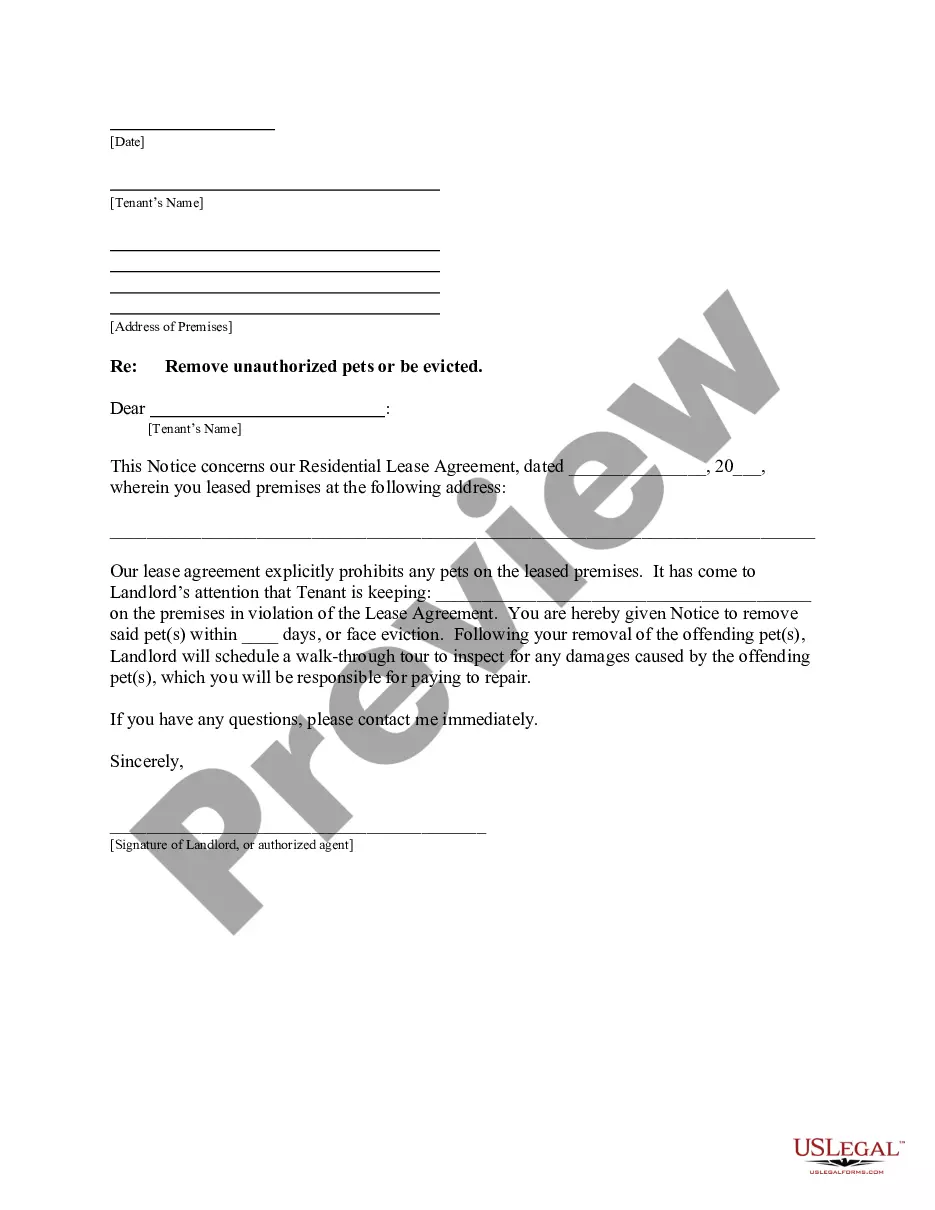
New Hampshire Limited Power of Attorney where you Specify Powers with Sample Powers Included
Overview of this form
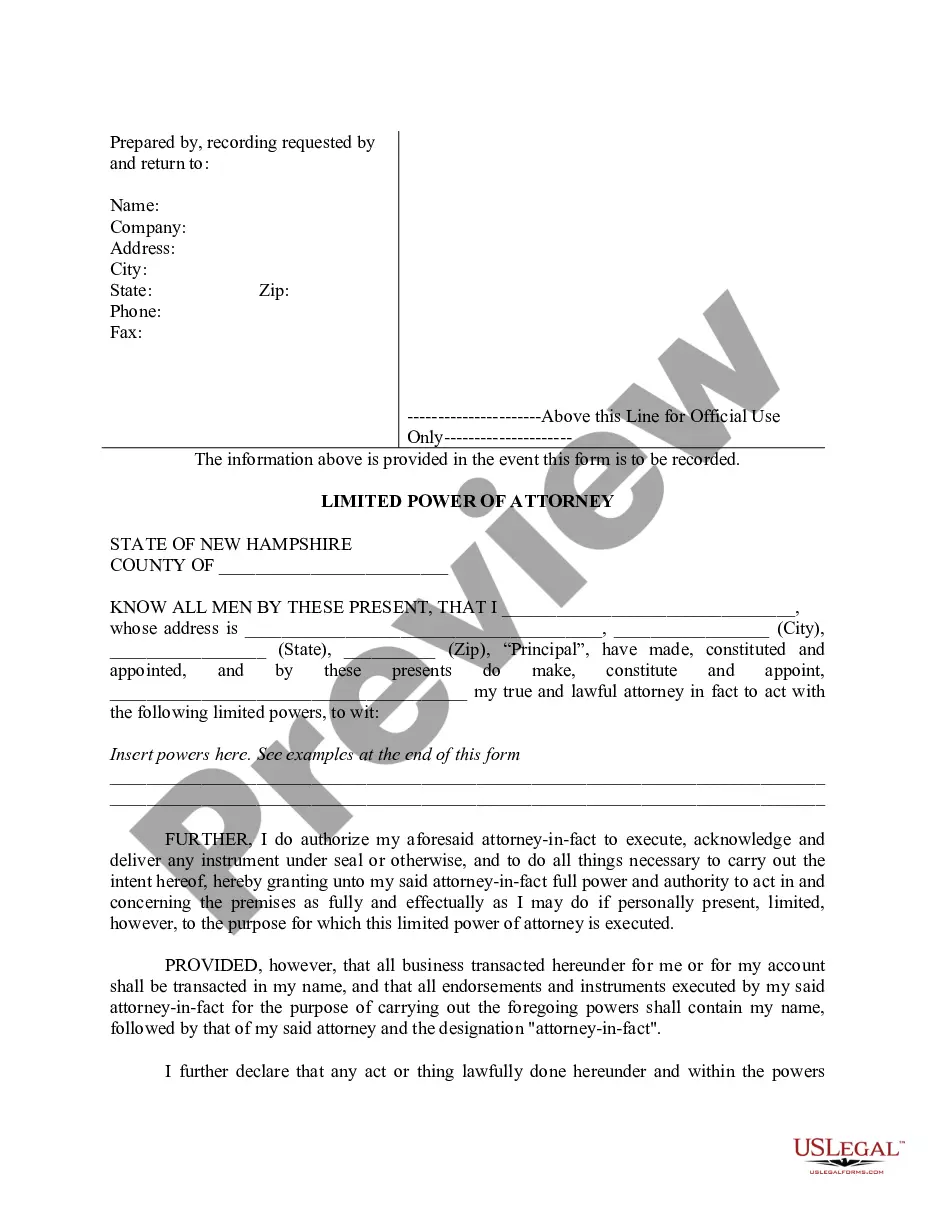
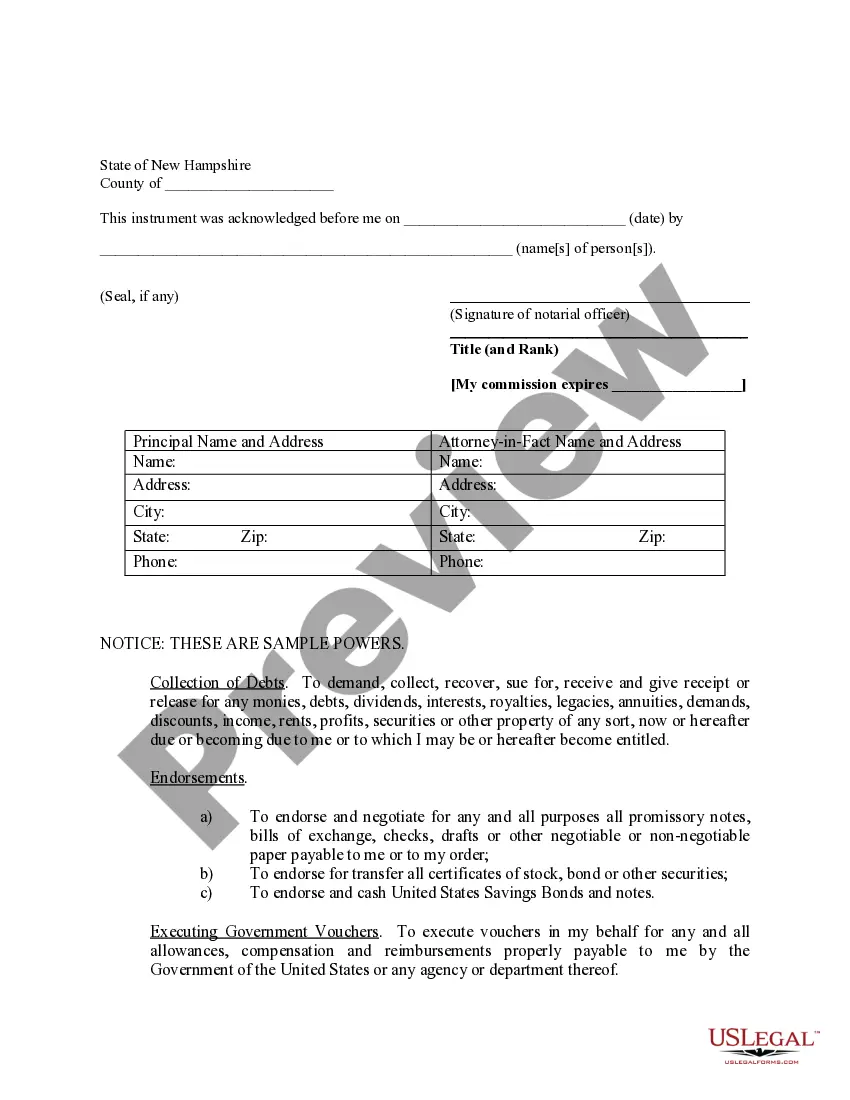
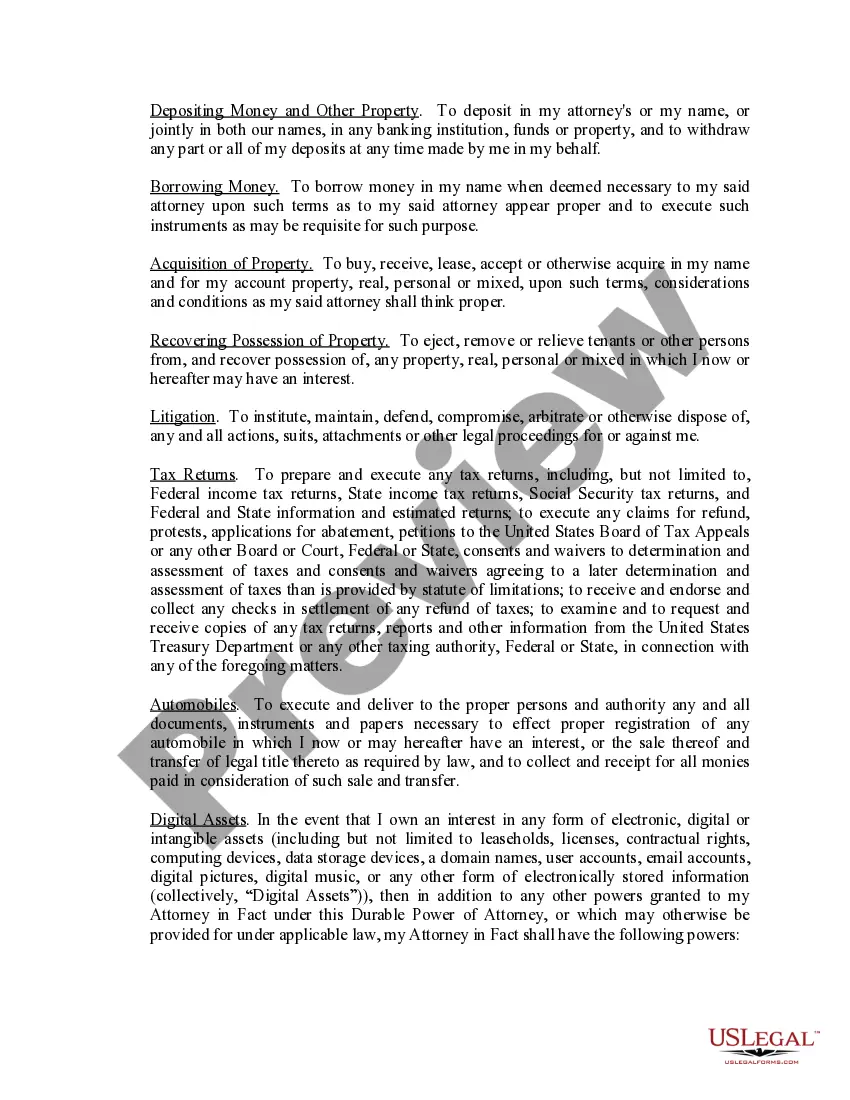
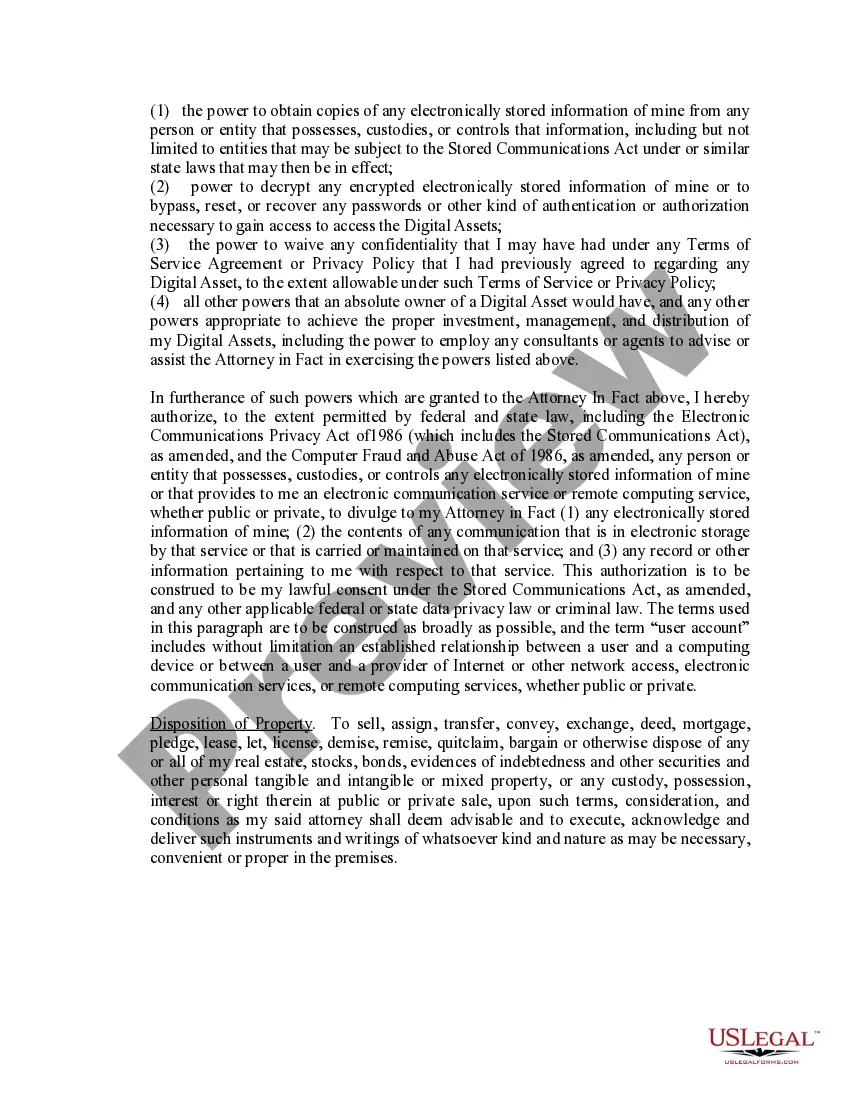
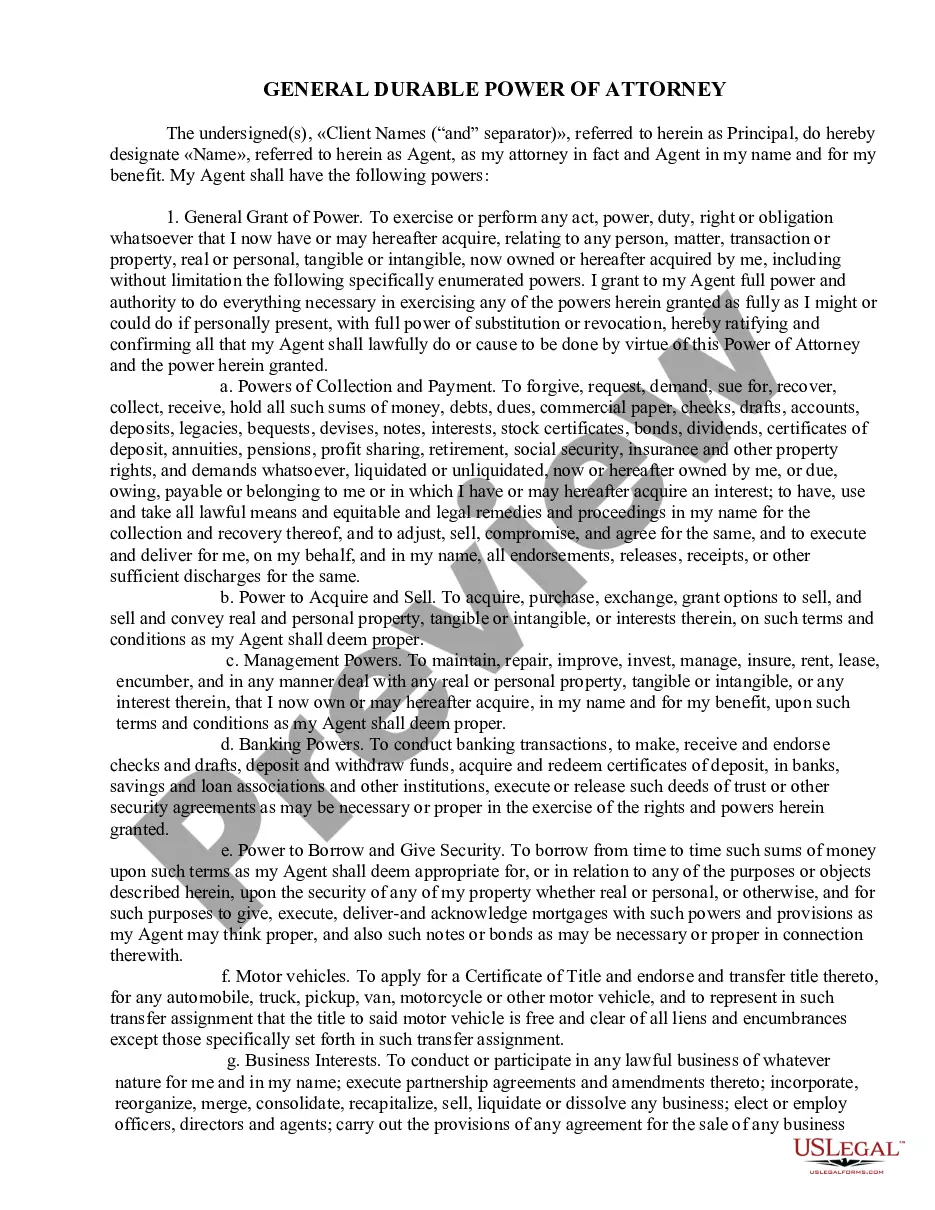
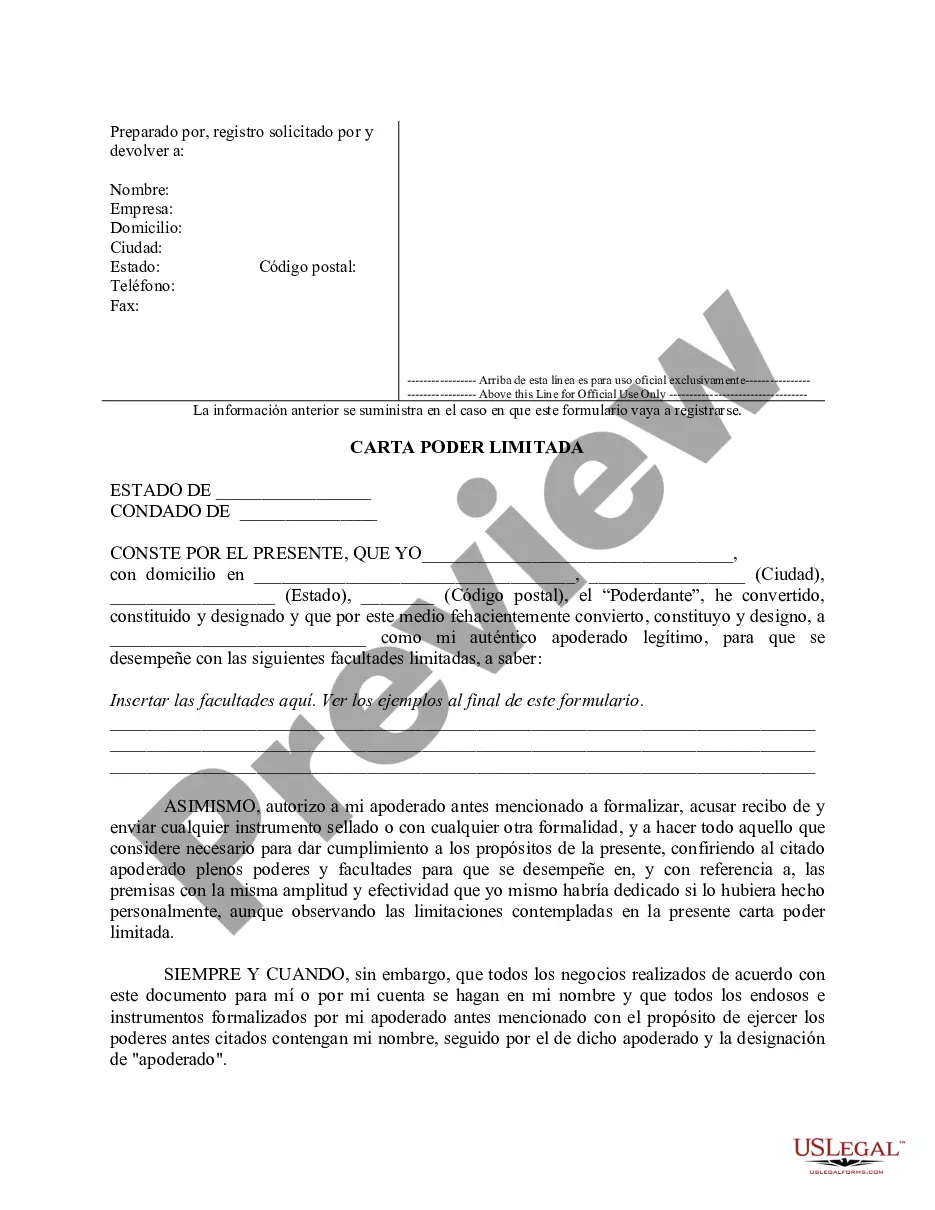
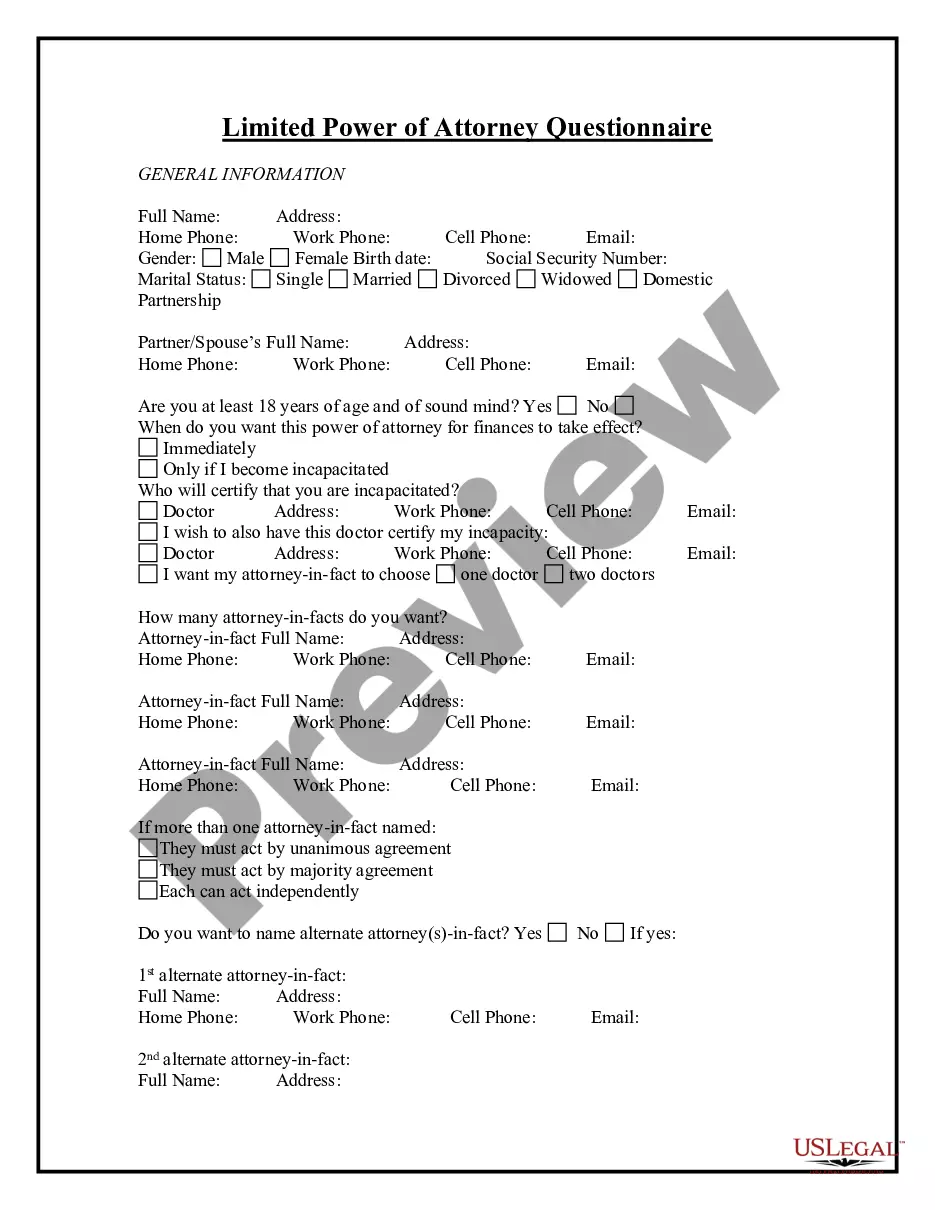
The Limited Power of Attorney allows you to specify particular powers you grant to an agent in New Hampshire. Unlike a general power of attorney, which provides broad authority, this form lets you control the scope of powers to be delegated. It includes sample powers for guidance, which you can customize or delete based on your needs.
Key components of this form
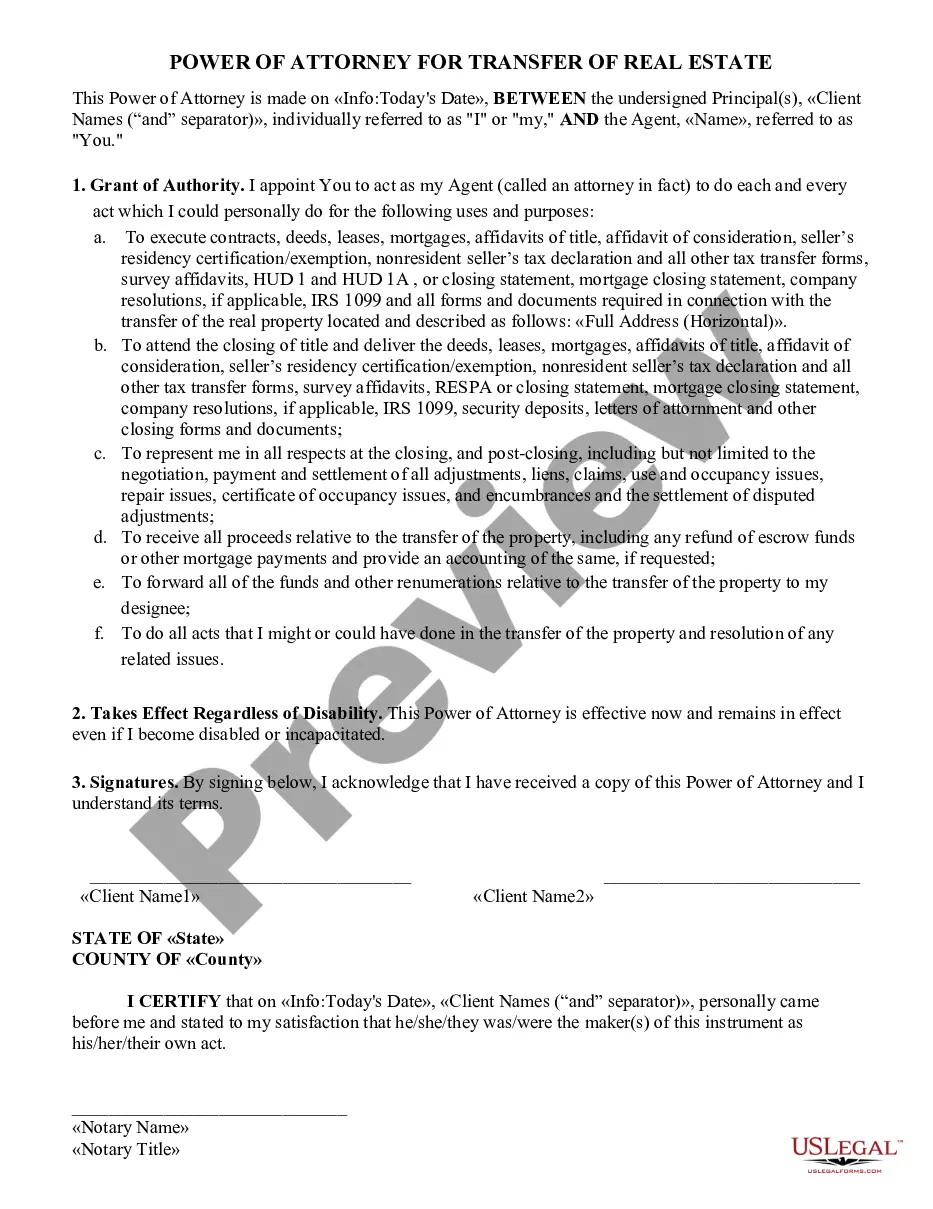
- Principal's details: Includes the name and address of the person granting the power.
- Agent's details: Identifies the individual receiving the powers.
- Specified powers: A section where you can outline the limited powers given to the agent, based on provided examples.
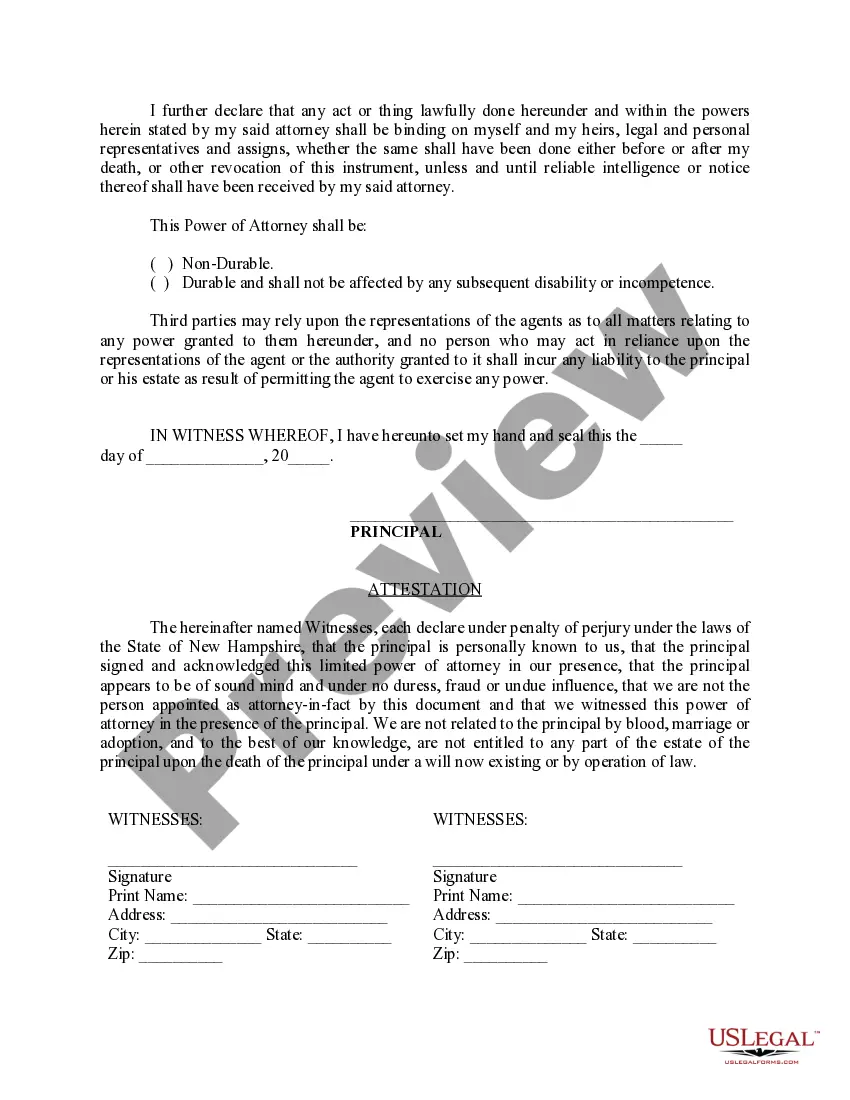
- Durability option: Indicates whether this power of attorney is durable or non-durable.
- Witnesses and notarial acknowledgment: Provides space for witnesses to sign and a notary section for validity.
When this form is needed
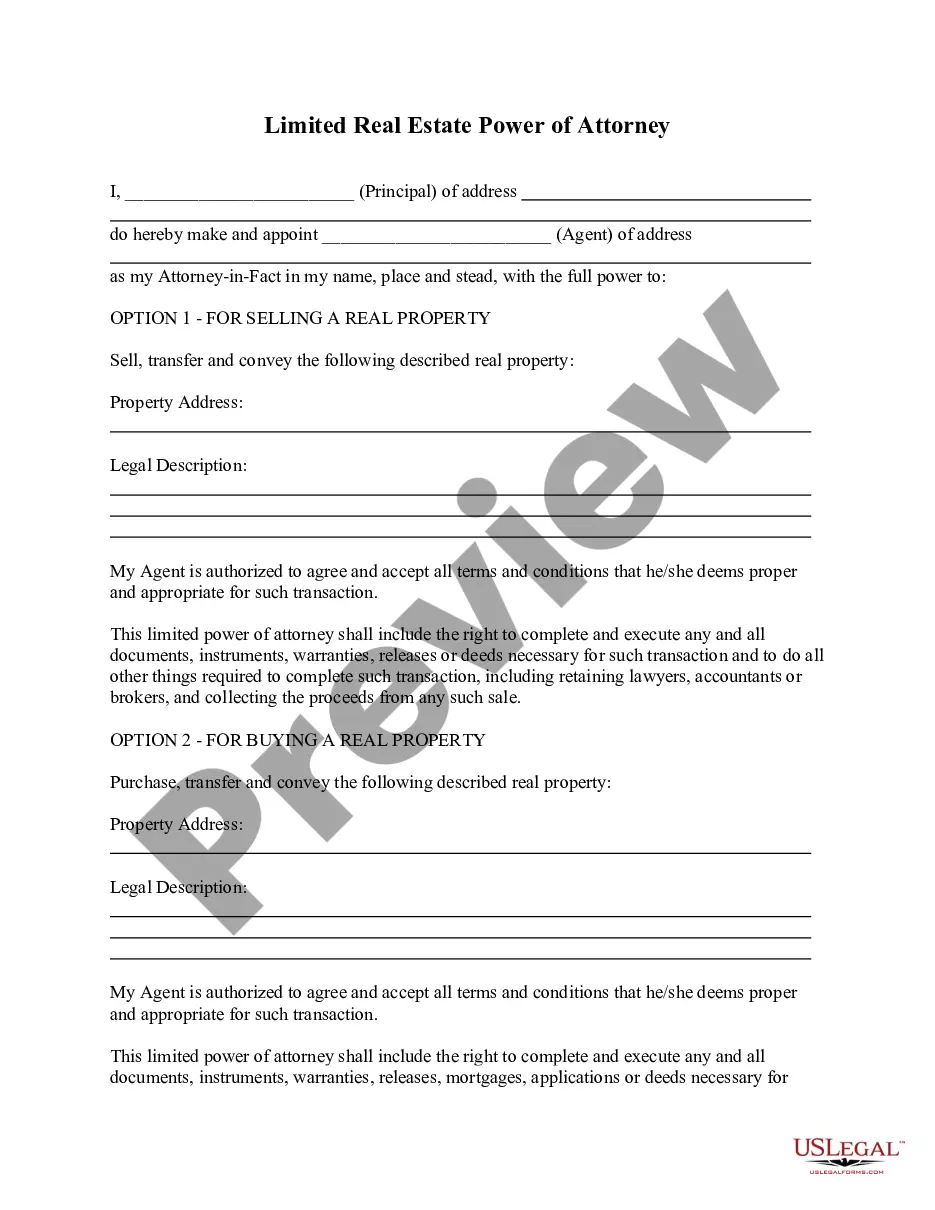
This form is useful when you need someone to act on your behalf for specific tasks but want to limit their authority. For instance, you may want an agent to handle financial transactions, sign documents, or manage certain property matters while retaining control over other aspects of your affairs. It is appropriate in situations where you may be temporarily unavailable or unable to manage these tasks yourself.
Intended users of this form
- Individuals needing assistance with specific legal or financial matters.
- People who want to delegate authority without granting unfettered power.
- Persons preparing for temporary incapacity or unavailability.
- Residents of New Hampshire who require a power of attorney tailored to their specific wishes.
How to prepare this document
- Identify the parties: Fill in the names and addresses of both the principal and the agent.
- Specify the powers: Clearly outline the specific powers you wish to grant to your agent, using the sample powers for reference.
- Select durability: Indicate whether the power of attorney will be non-durable or durable.
- Sign and date: The principal must sign and date the document to establish its validity.
- Gather witnesses: Ensure that at least two witnesses sign the document, confirming they are not the agent or related to the principal.
- Notarize if necessary: Depending on your situation, have the document notarized to enhance its legal standing.
Does this document require notarization?
This form needs to be notarized to ensure legal validity. US Legal Forms provides secure online notarization powered by Notarize, allowing you to complete the process through a verified video call, available anytime.
Get your form ready online
Our built-in tools help you complete, sign, share, and store your documents in one place.
Make edits, fill in missing information, and update formatting in US Legal Forms—just like you would in MS Word.
Download a copy, print it, send it by email, or mail it via USPS—whatever works best for your next step.
Sign and collect signatures with our SignNow integration. Send to multiple recipients, set reminders, and more. Go Premium to unlock E-Sign.
If this form requires notarization, complete it online through a secure video call—no need to meet a notary in person or wait for an appointment.
We protect your documents and personal data by following strict security and privacy standards.

Make edits, fill in missing information, and update formatting in US Legal Forms—just like you would in MS Word.

Download a copy, print it, send it by email, or mail it via USPS—whatever works best for your next step.

Sign and collect signatures with our SignNow integration. Send to multiple recipients, set reminders, and more. Go Premium to unlock E-Sign.

If this form requires notarization, complete it online through a secure video call—no need to meet a notary in person or wait for an appointment.

We protect your documents and personal data by following strict security and privacy standards.
Mistakes to watch out for
- Failing to specify which powers are granted, leading to ambiguity.
- Not identifying the agent clearly, which could cause confusion later.
- Omitting witness signatures, which may invalidate the form.
- Not notarizing the document when it may be required for certain transactions.
Why complete this form online
- Convenience of downloading and printing the form from home.
- Ability to customize the form easily to meet your specific needs.
- Access to forms prepared by licensed attorneys, ensuring legal compliance.
- Immediate availability to suit your timeline without waiting for physical documents.
Quick recap
- A Limited Power of Attorney allows you to grant specific powers to an appointed agent.
- This form is suitable for anyone needing assistance with defined legal responsibilities.
- Ensure the form is properly signed, witnessed, and notarized for legal effectiveness.
- Clear specification of powers reduces the risk of misunderstanding and misuse of authority.
Looking for another form?
Form popularity
FAQ
A power of attorney (POA) is a legal document giving one person (the agent or attorney-in-fact) the power to act for another person (the principal). The agent can have broad legal authority or limited authority to make legal decisions about the principal's property, finances, or medical care.
A special power of attorney is a legal document that authorizes one person, called an agent or an attorney in fact, to act on behalf of another person, known as the principal, under specific, clearly laid-out circumstances.
A limited power of attorney grants the representative that you choose (the agent or attorney-in-fact) the power to act on your behalf under limited circumstances.Under a general power of attorney, the agent or attorney-in-fact can do anything that you can do.
Durable & Non-Durable Power of Attorney. Of each of the five kinds of power of attorney, durable and non-durable are found to be the most common. Medical Power of Attorney. Springing Power of Attorney. Limited Power of Attorney.
General Power of Attorney. Durable Power of Attorney. Special or Limited Power of Attorney. Springing Durable Power of Attorney.
Non-Durable Power of Attorney. Durable Power of Attorney. Special or Limited Power of Attorney. Medical Power of Attorney. Springing Power of Attorney. Create Your Power of Attorney Now.
General Power of Attorney. Durable Power of Attorney. Special or Limited Power of Attorney. Springing Durable Power of Attorney.
The name and address of the principal. The ID, physical address, and agent's details. A reason to get the SPA. Date and the place where one will sign that form. The principal's signature. The principal's name, identification number, and the ID expiry date.
1. Durable Power of Attorney. A durable power of attorney, or DPOA, is effective immediately after you sign it (unless stated otherwise), and allows your agent to continue acting on your behalf if you become incapacitated.