New Hampshire Commercial Sublease
What this document covers
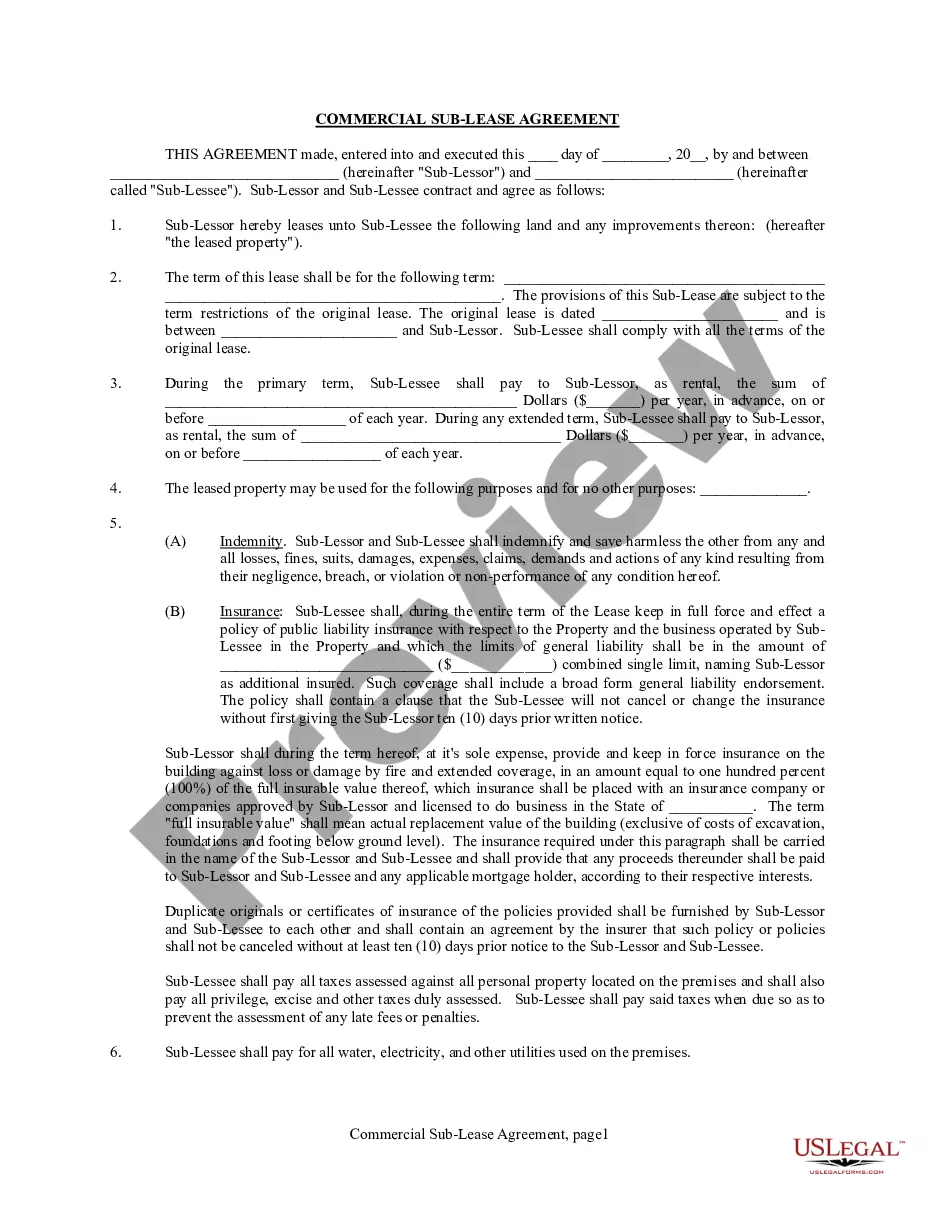
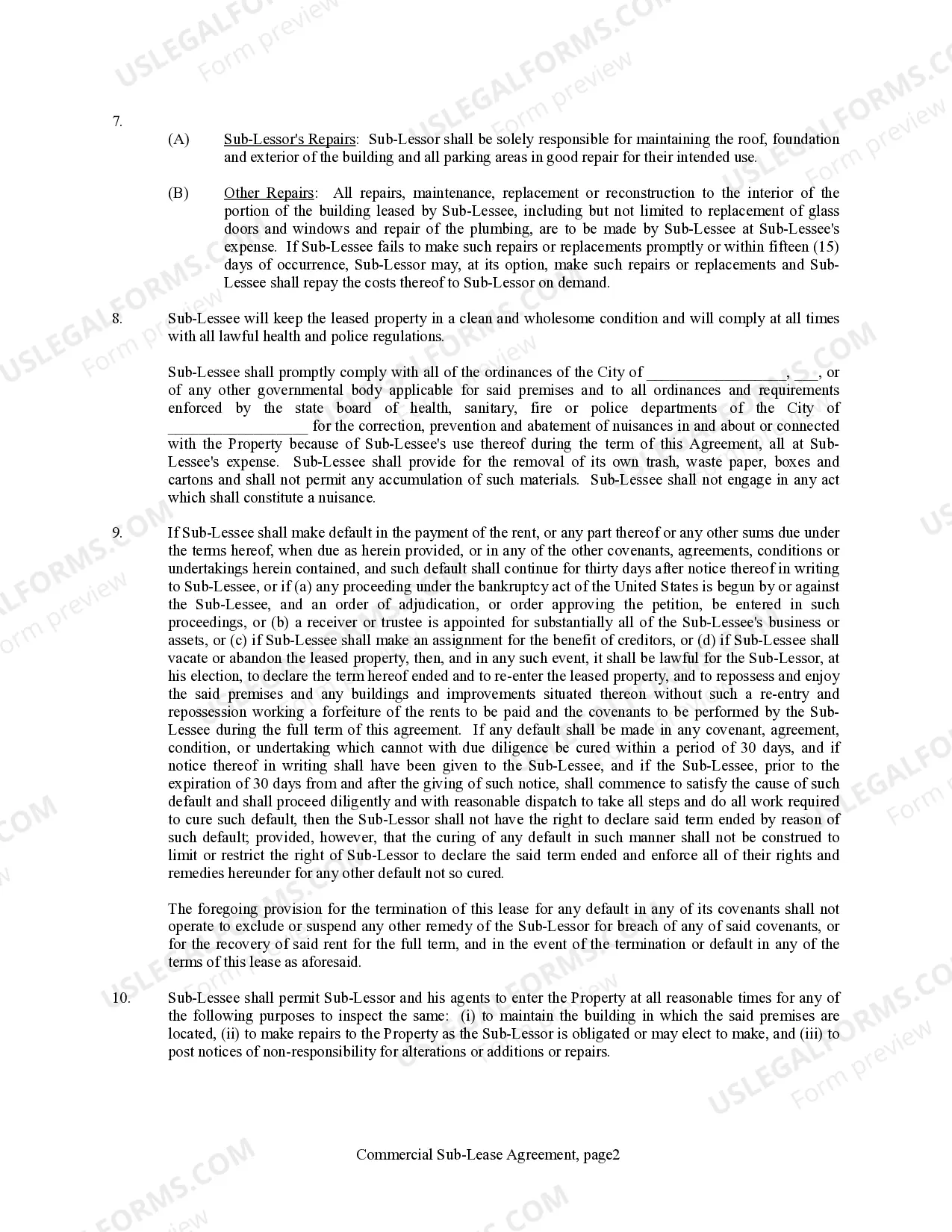
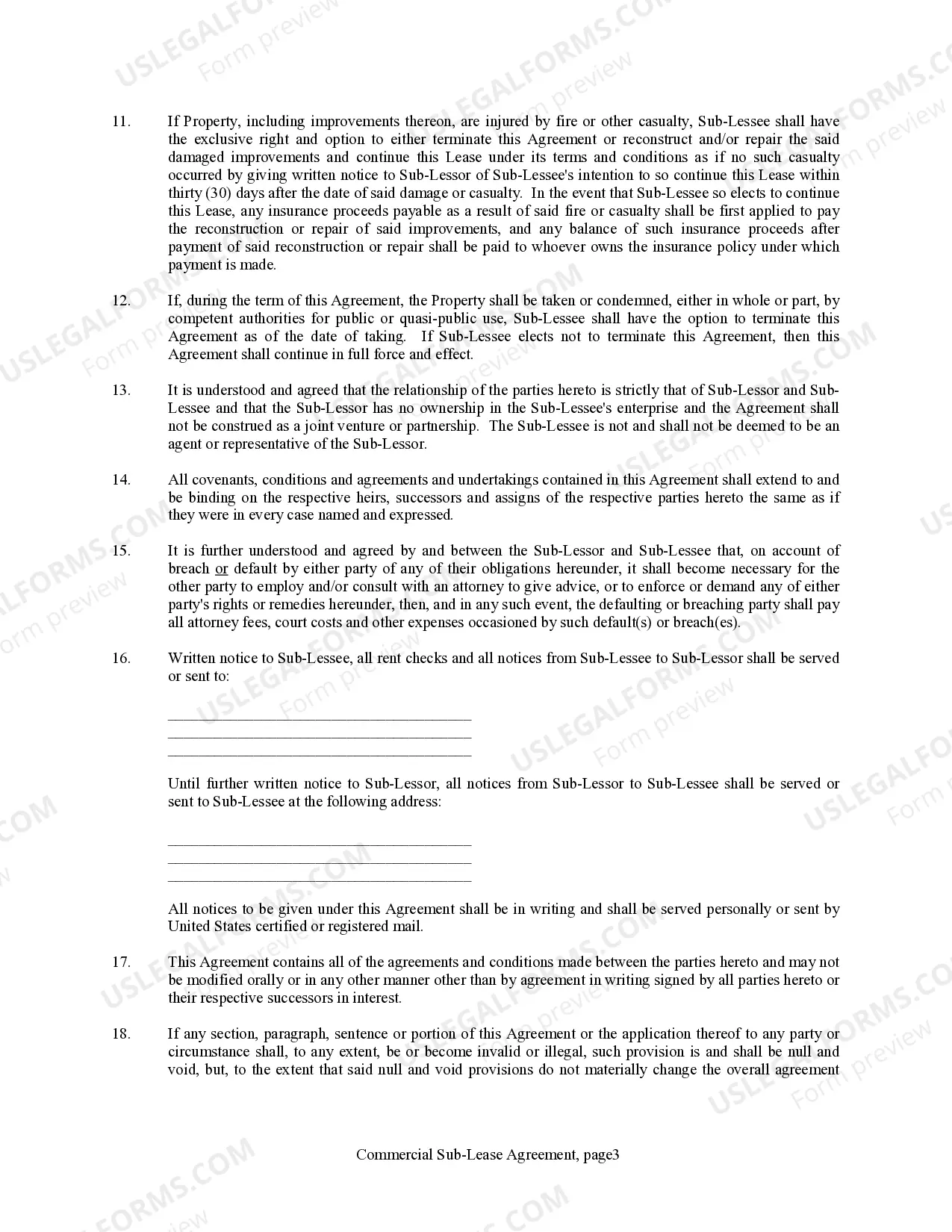
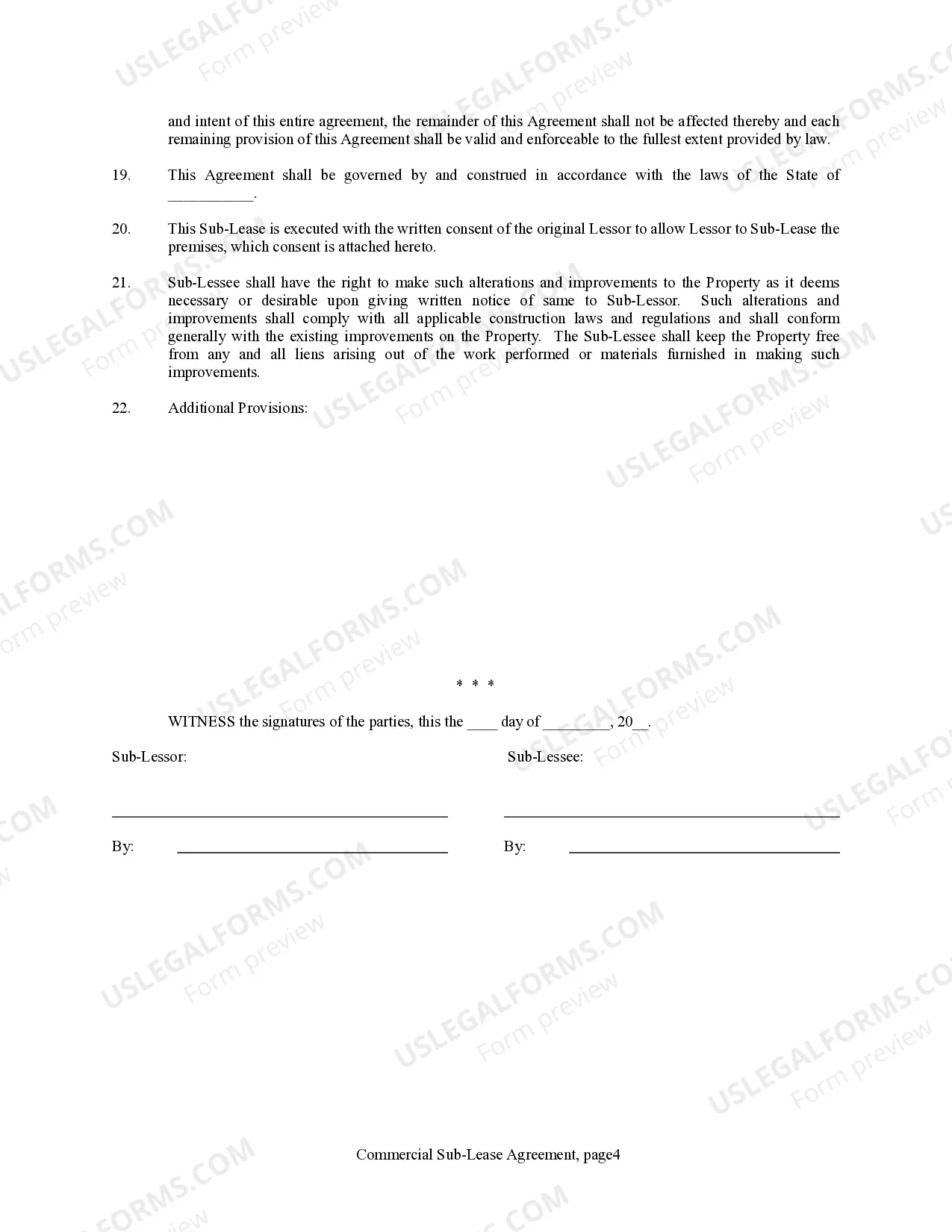
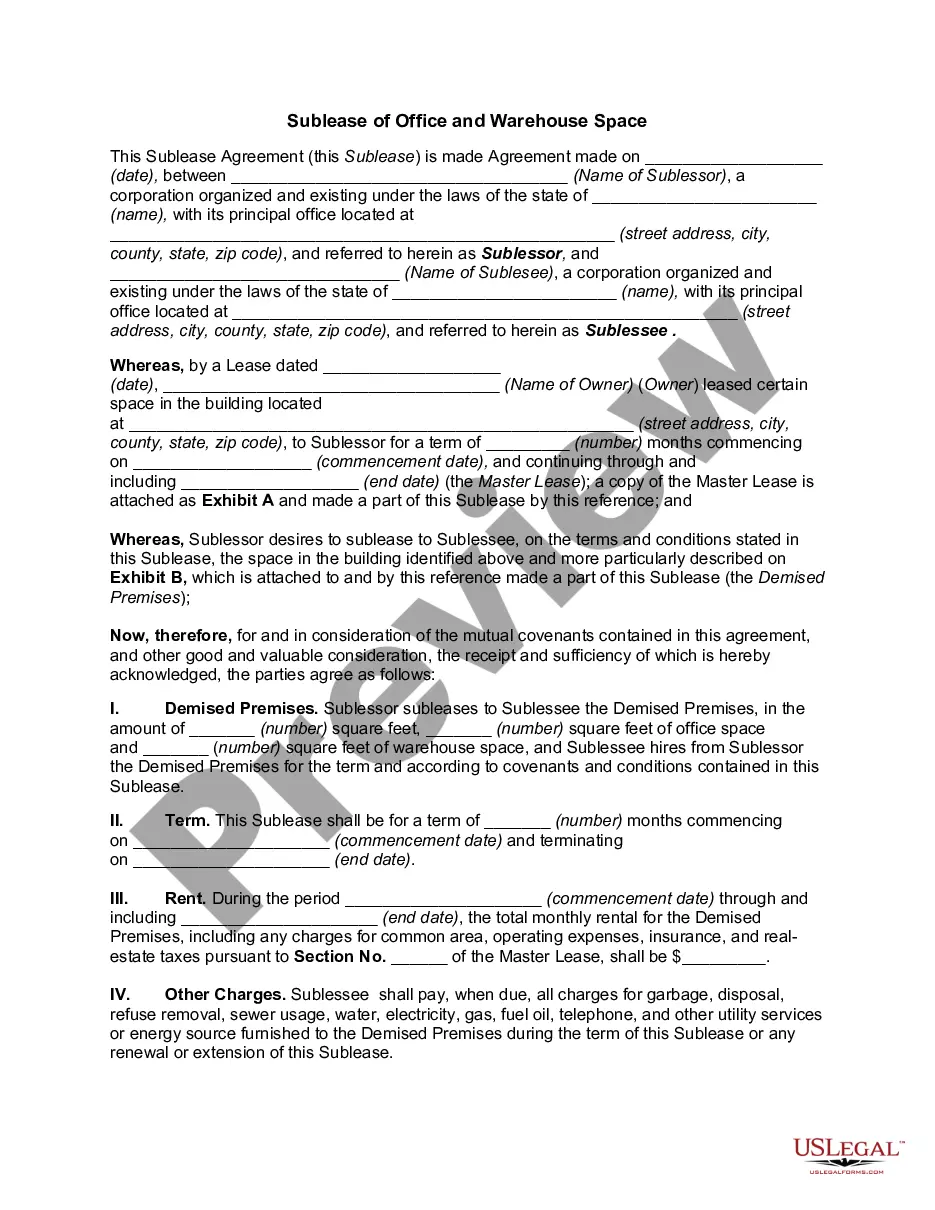
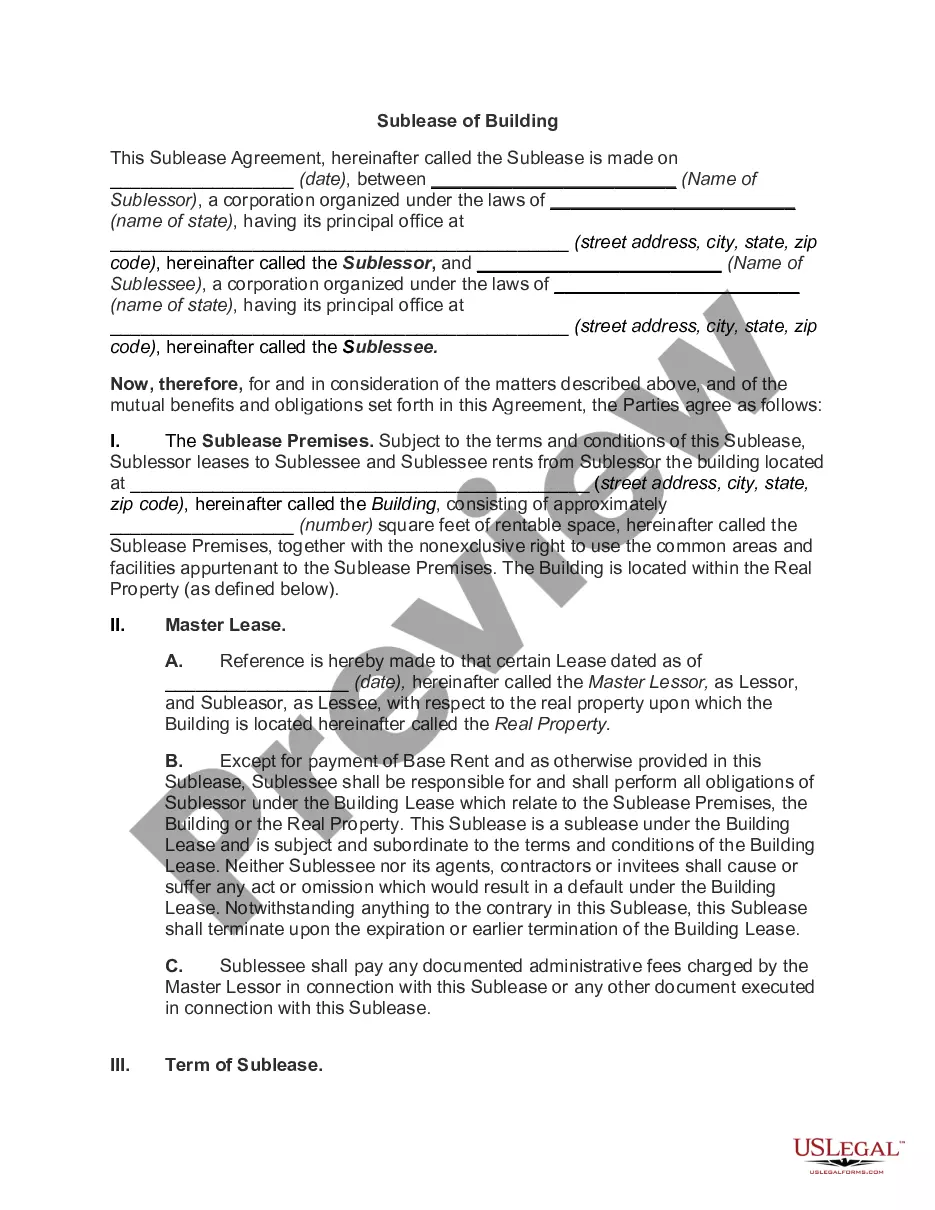
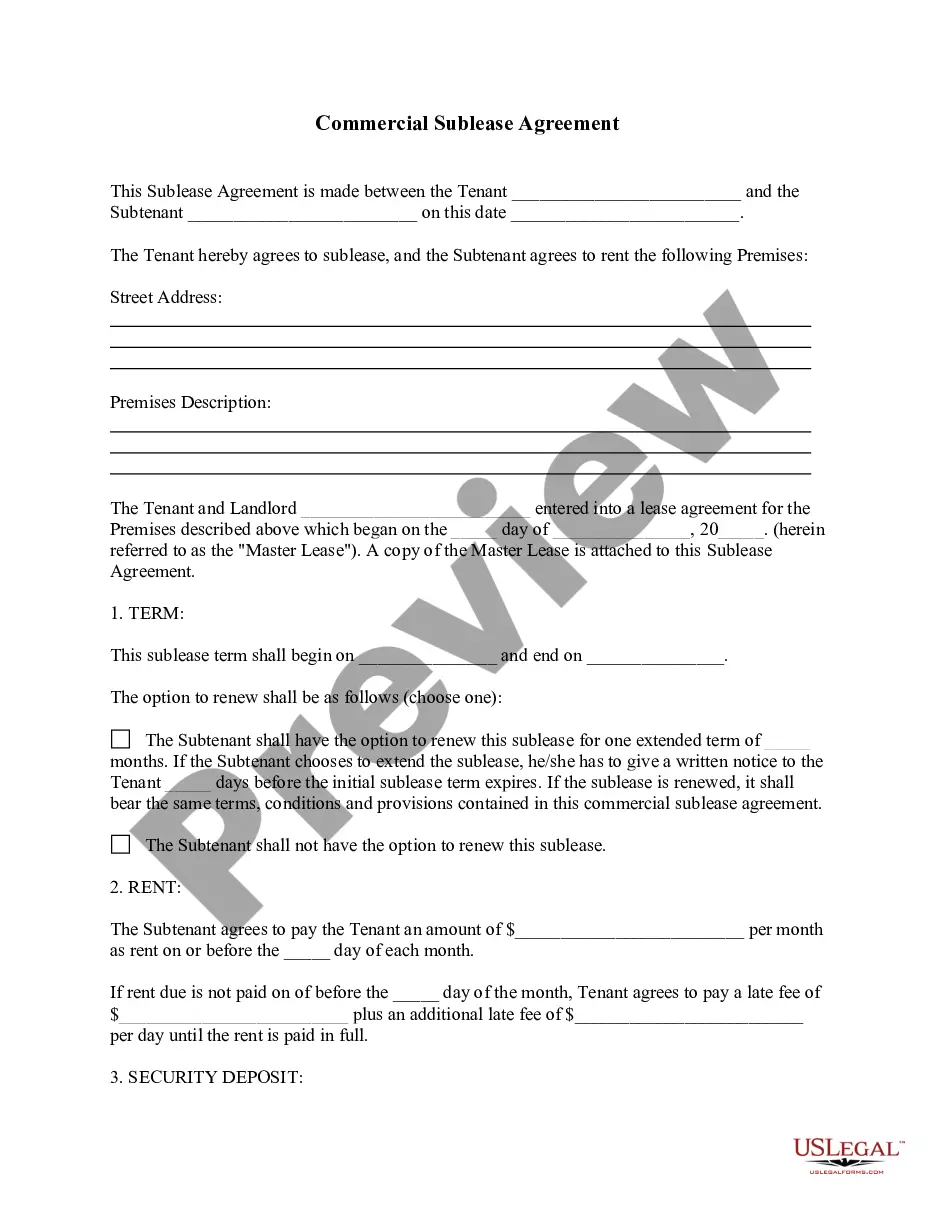
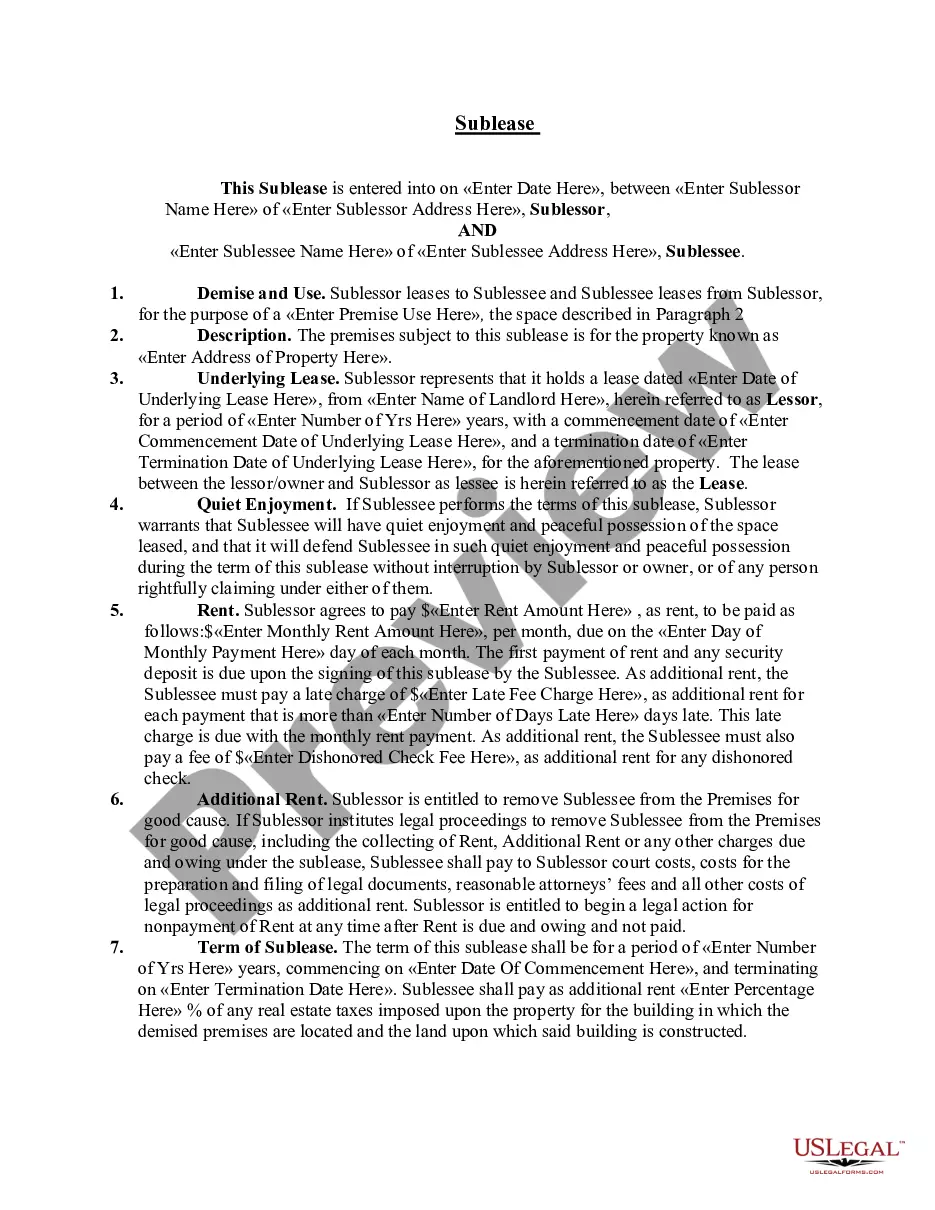
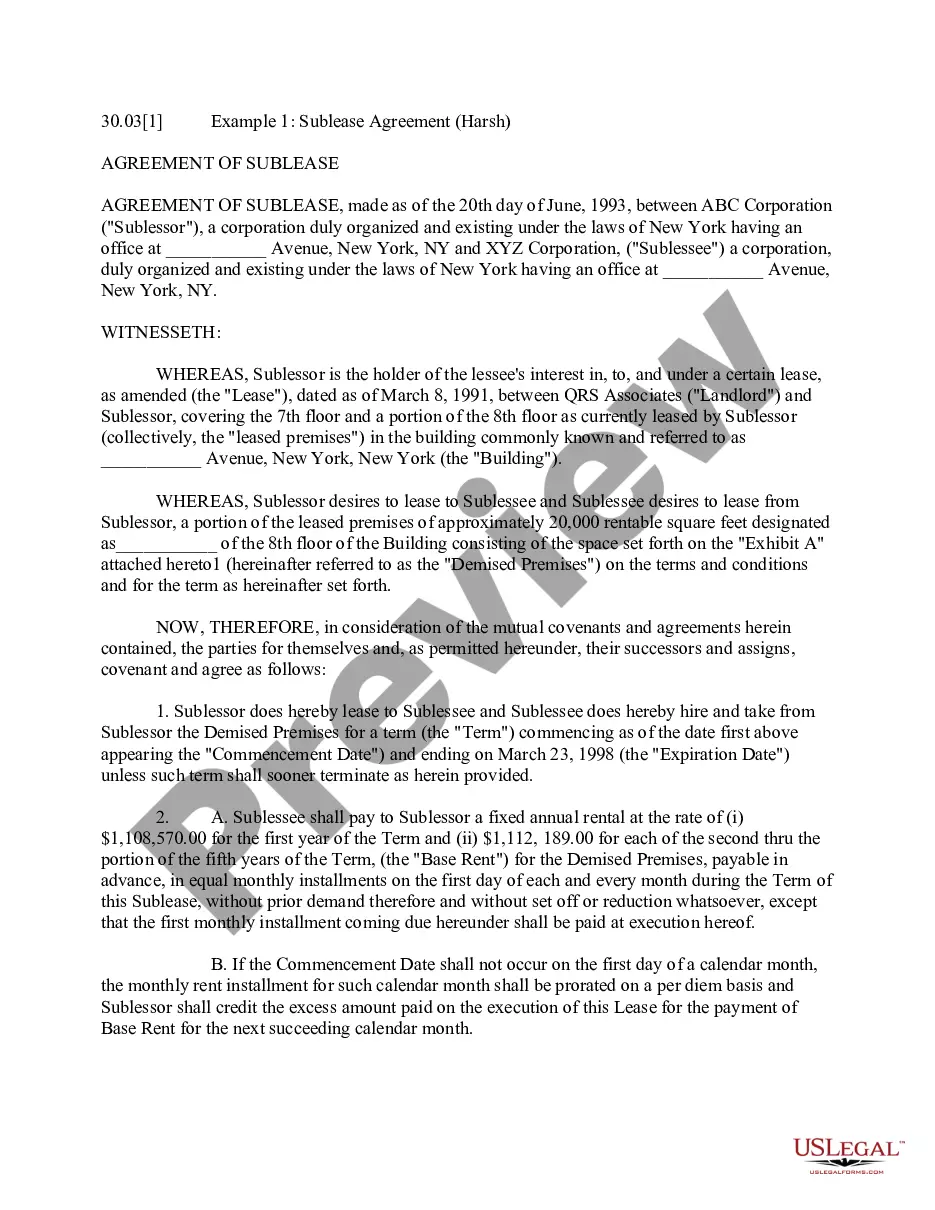
The Commercial Sublease form is a legal document that allows a tenant (Sub-Lessor) to lease commercial property to another party (Sub-Lessee) while remaining bound by the terms of the original lease agreement. This form helps facilitate the rental arrangement and ensure compliance with both the primary lease and applicable regulations, differing from other rental agreements by specifically addressing commercial properties and subleasing arrangements.
Form components explained
- Identification of parties: This section details the names of the Sub-Lessor and Sub-Lessee.
- Description of the property: Specifies the land and any improvements being leased.
- Lease term: Defines the duration of the sublease.
- Rent payment details: Outlines payment amounts and due dates.
- Insurance requirements: Specifies the need for public liability insurance and coverage limits.
- Maintenance responsibilities: Clarifies which party is responsible for repairs and upkeep of the leased property.
Situations where this form applies
This form is essential when a current tenant (Sub-Lessor) wishes to re-lease a portion or the entirety of their rented commercial space to another tenant (Sub-Lessee). Scenarios may include businesses downsizing, sharing office space, or needing to vacate the property temporarily while ensuring rental income continues. It is also used when the original lease permits subleasing, ensuring legal compliance and protection for both parties involved.
Intended users of this form
This form is intended for:
- Current tenants of commercial properties looking to sublease part or all of their space.
- Landlords or property managers who require a formal subleasing agreement from their tenants.
- Businesses needing to temporarily fill vacant space without terminating their primary lease.
Completing this form step by step
- Identify the parties involved by filling in the names of the Sub-Lessor and Sub-Lessee.
- Specify the property details, including the address and any improvements on the land.
- Enter the term of the lease and agreed rental amounts, including due dates.
- Detail the intended use of the leased property and any insurance requirements.
- Sign the document to produce a legal contract binding both parties.
Is notarization required?
This form does not typically require notarization unless specified by local law. However, it is advisable to check if additional requirements exist based on the jurisdiction in which the property is located.
Get your form ready online
Our built-in tools help you complete, sign, share, and store your documents in one place.
Make edits, fill in missing information, and update formatting in US Legal Forms—just like you would in MS Word.
Download a copy, print it, send it by email, or mail it via USPS—whatever works best for your next step.
Sign and collect signatures with our SignNow integration. Send to multiple recipients, set reminders, and more. Go Premium to unlock E-Sign.
If this form requires notarization, complete it online through a secure video call—no need to meet a notary in person or wait for an appointment.
We protect your documents and personal data by following strict security and privacy standards.

Make edits, fill in missing information, and update formatting in US Legal Forms—just like you would in MS Word.

Download a copy, print it, send it by email, or mail it via USPS—whatever works best for your next step.

Sign and collect signatures with our SignNow integration. Send to multiple recipients, set reminders, and more. Go Premium to unlock E-Sign.

If this form requires notarization, complete it online through a secure video call—no need to meet a notary in person or wait for an appointment.

We protect your documents and personal data by following strict security and privacy standards.
Common mistakes to avoid
- Failing to ensure the original lease permits subleasing.
- Not specifying the property details or rent amounts adequately.
- Overlooking insurance requirements and liability clauses.
- Neglecting to outline maintenance responsibilities clearly within the lease.
Why complete this form online
- Convenient access to legally vetted forms anytime, saving time and effort.
- Easy customization to fit specific needs for subleasing agreements.
- Immediate download for quick use, reducing the need for lengthy appointment schedules.
- Reliability with forms drafted by licensed legal professionals, ensuring legal compliance.
Quick recap
- The Commercial Sublease form is essential for legal subleasing of commercial property.
- It outlines the rights and responsibilities of landlords and tenants clearly.
- Customizing the form for state-specific laws is crucial for enforceability.
- Using this form online offers convenience and ensures compliance with legal standards.
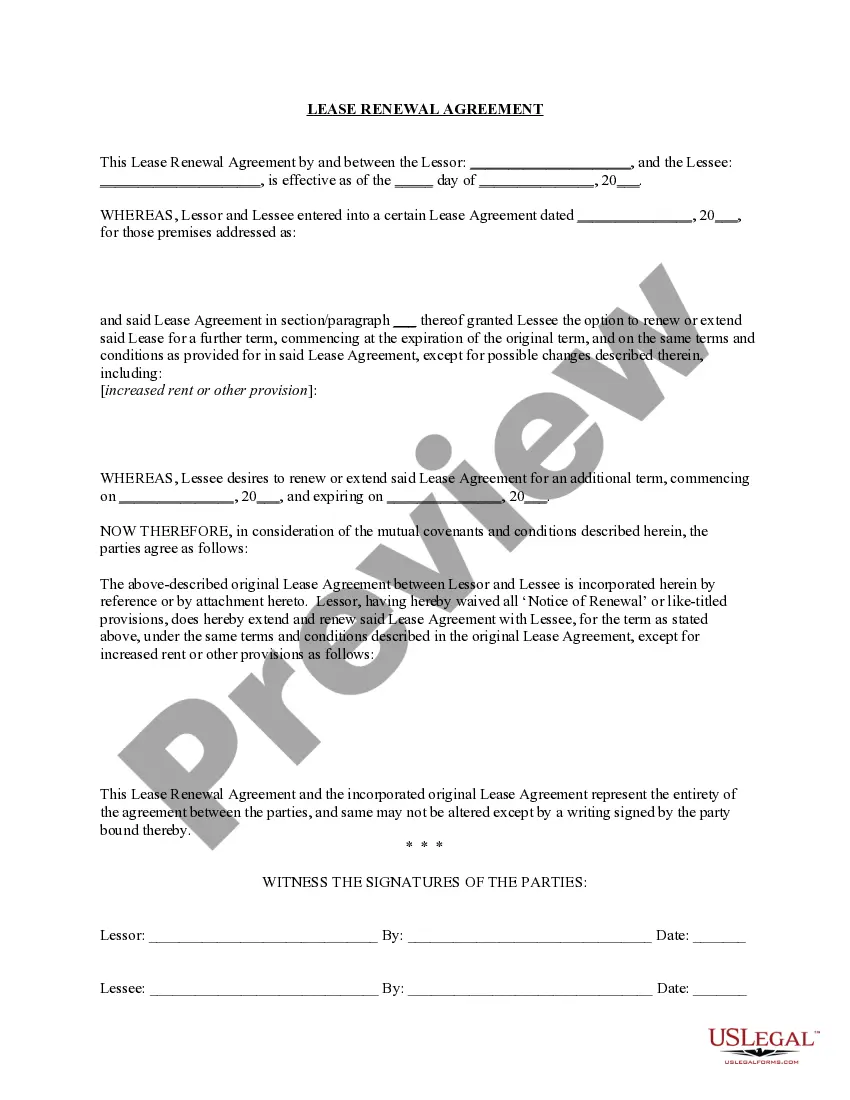
Looking for another form?
Form popularity
FAQ
To know what rights you have as a subletter, as well as if you're allowed to be there in the first place, make sure to read the original lease between the landlord and the original renter before signing a sublet agreement. Also know that you have the chance to negotiate a rental price with the original renter.
Note Any alteration to the rent must be marked by Revenue NSW. The power of attorney does not have to be registered in the General Registry of Deeds where the term of the sublease, including any options of renewal, does not exceed 3 years, see s52 Powers of Attorney Act 2003.
In California, subletting is only legal if you have your landlord's written consent.Additionally, you're still responsible to your landlord for any rental payments, damages, or lease violations, so be sure you have a written sublease agreement with the new tenant to protect yourself.
On your sublease agreement, include a list of various areas of the property (including the subtenant's room, hardwood floors, walls, exterior, etc.) and note its condition. And since you and your subtenant will need to abide by the original lease that you signed, it's important to include this with your sublease.
In short, subletting allows a new renter to take over the lease directly with the landlord, while subleasing involves renting all or part of the space to another renter through the original renter.
Early Termination of a Sublease The subtenant is also required to give reasons for leaving the premises. A sublease can be terminated early if the subtenant is willing to pay the rent until the end of the month and an amount in addition to this.
Each state has different laws regarding subtenancy, with most landlords prohibiting subletting a property without prior permission. If subletting occurs without the landlord's knowledge, that landlord has the right to serve a three-day notice of eviction to both the tenant and the sublessor.
The names of the parties (the tenant, the subtenant and the landlord); information of the master/original lease; the term of the sublease and whether the sublease is fixed or periodic; and. the amount of rent payable (if different from the master lease).