Minnesota Closing Statement

Overview of this form
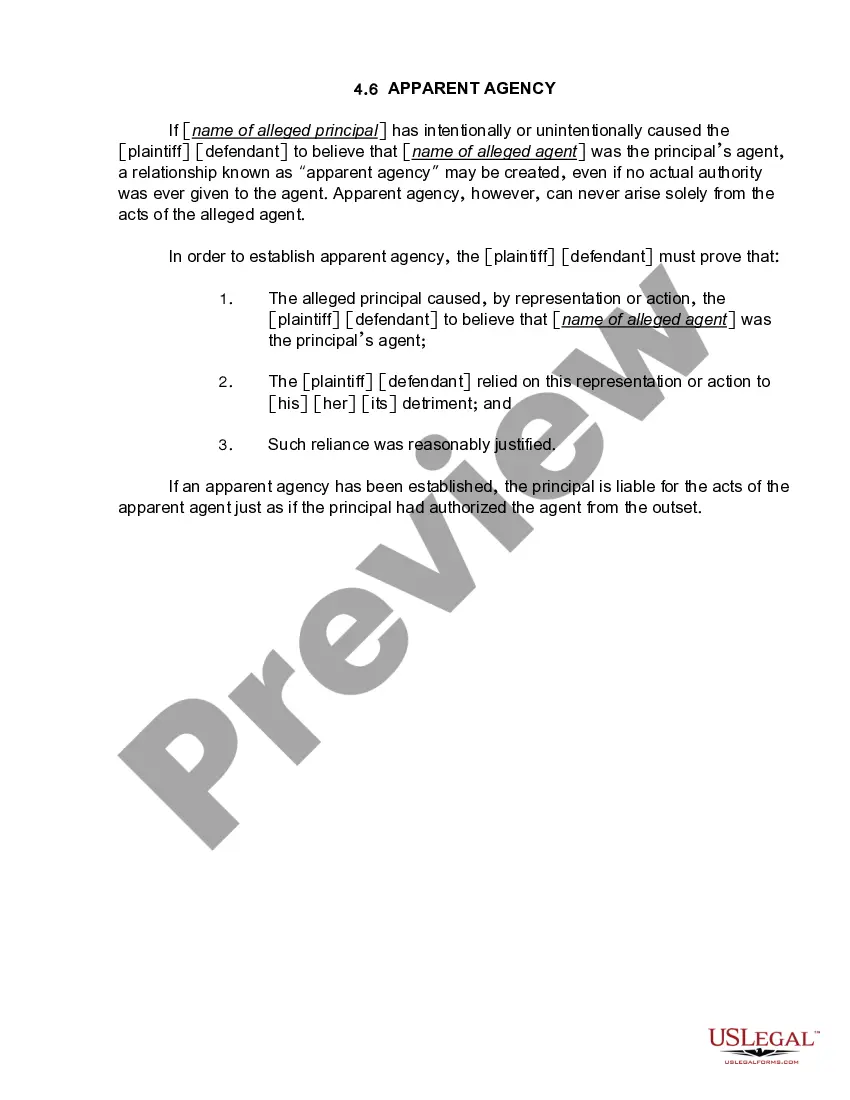
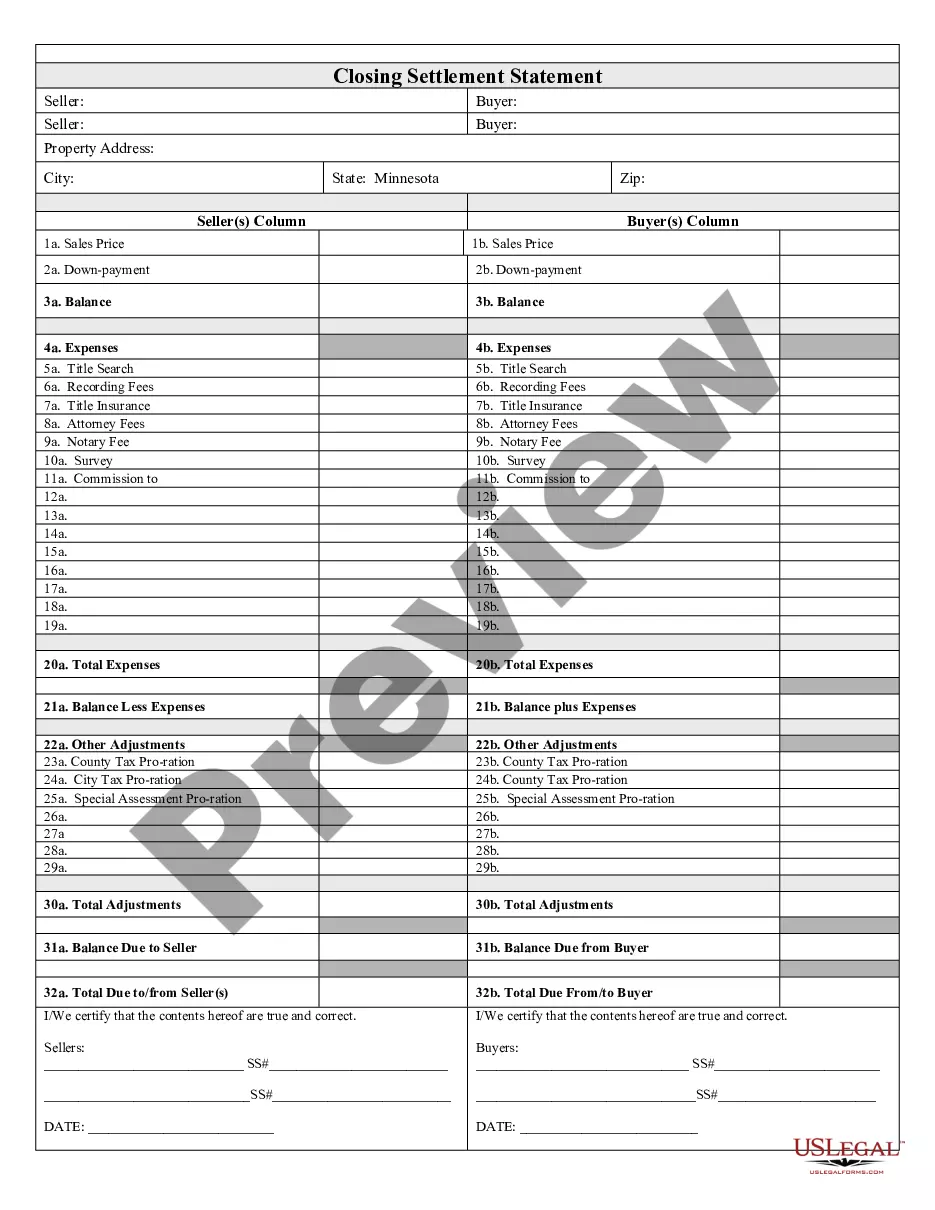
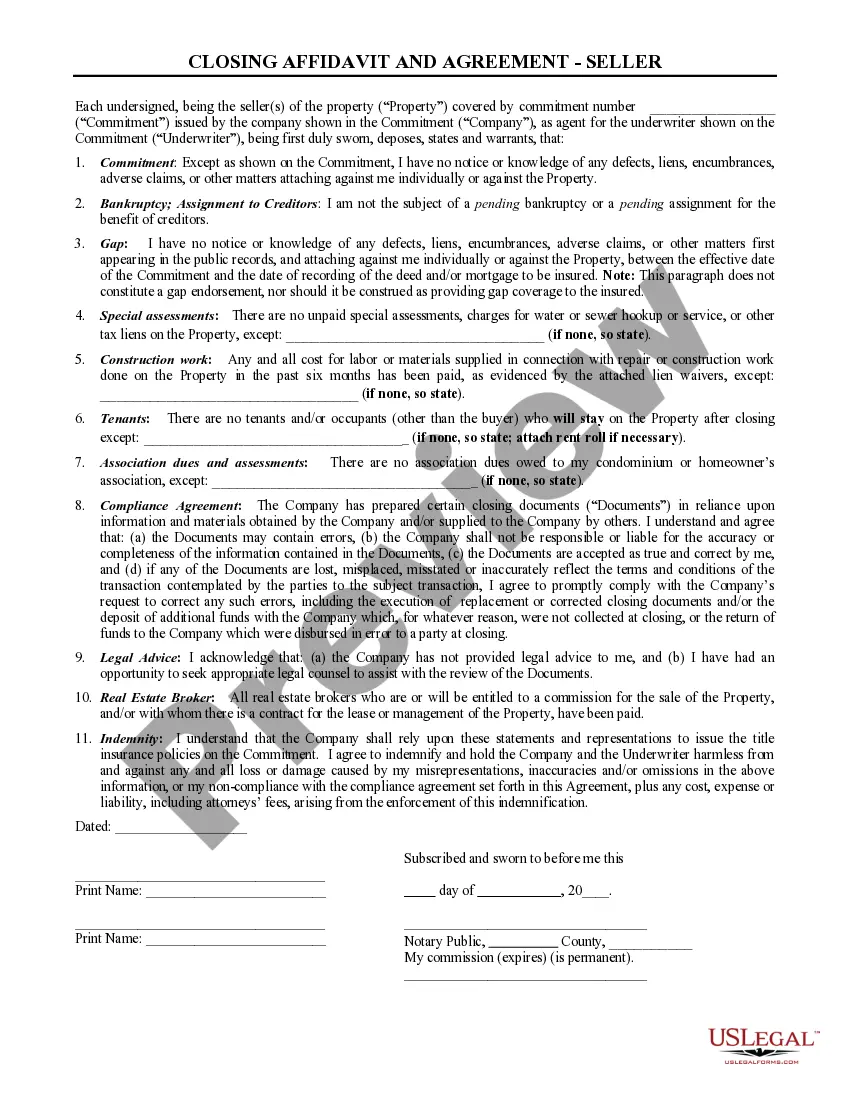
The Closing Statement is a crucial document in a real estate transaction, especially when the sale involves cash payment or owner financing. This form provides a comprehensive summary of the financial details of the transaction, including verified expenses and balances that both the seller and buyer must sign. Unlike other settlement statements, this document specifically outlines all costs associated with the sale in a clear and organized manner.
What’s included in this form
- Expenses: A detailed breakdown of all costs associated with the transaction.
- Balance calculations: Indicates what is owed by or to the parties involved.
- Tax pro-rations: Outlines adjustments for county and city taxes.
- Commission details: Specifies any commissions paid to agents involved in the sale.
- Certification of accuracy: Signatures of both seller and buyer confirm the statement's correctness.

Common use cases
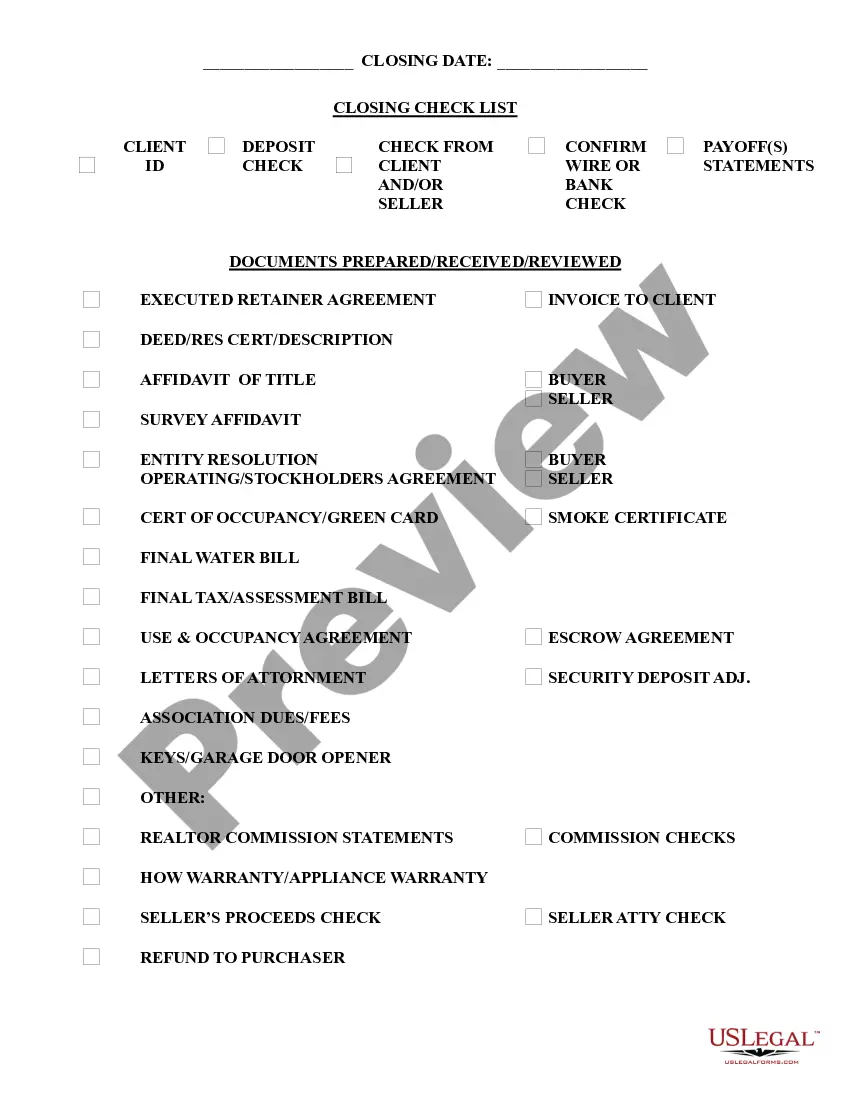
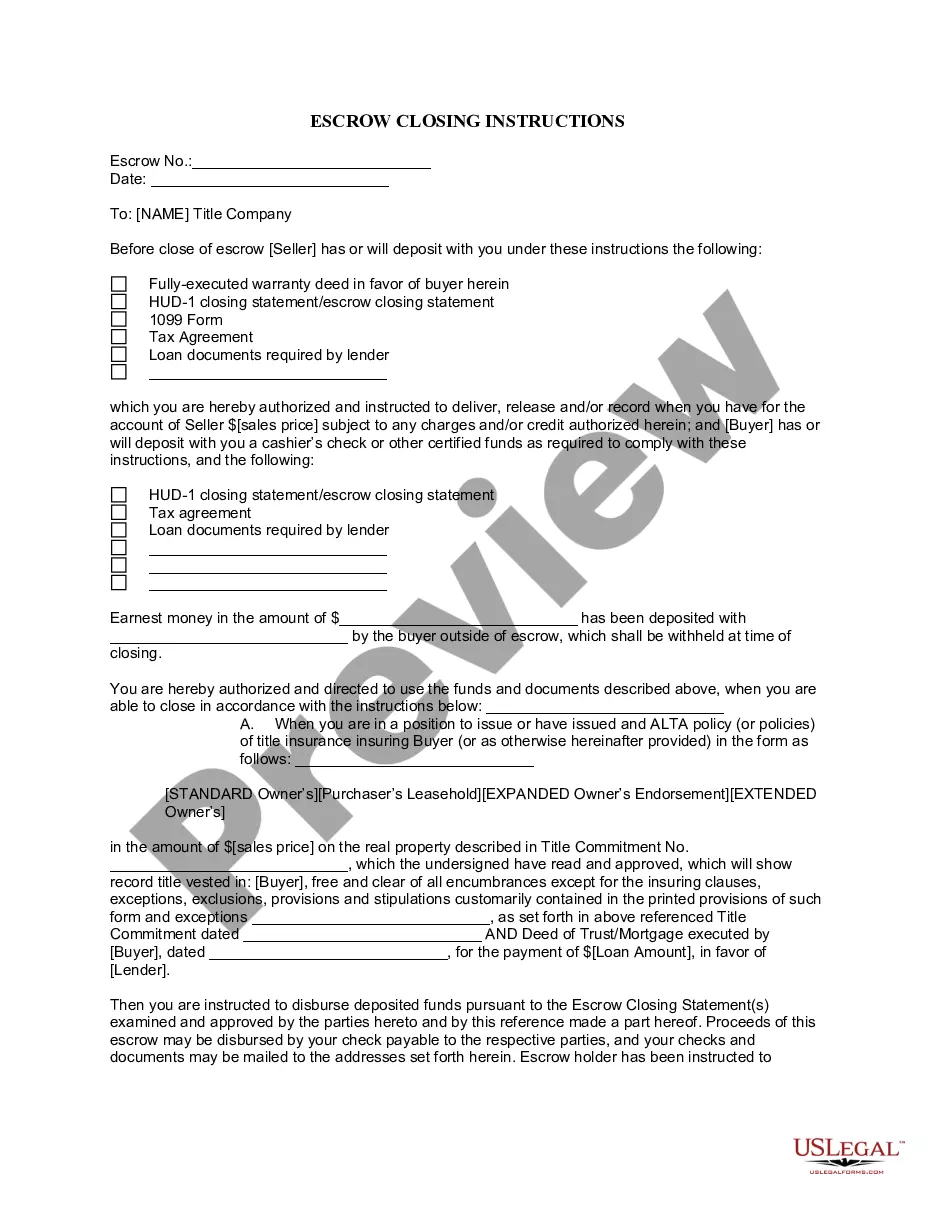
This form is essential whenever a real estate transaction is finalized, specifically in cases of cash sales or owner financing. Use the Closing Statement to ensure all parties are aware of the financial aspects and obligations of the transaction, helping to prevent disputes and misunderstandings after the sale is complete.
Who this form is for
- Home buyers and sellers involved in a cash transaction.
- Parties engaged in owner-financed sales.
- Real estate agents who assist in the closing process.
- Attorneys representing either the buyer or seller in a real estate deal.
Completing this form step by step
- Identify the parties: Input the names and contact information of the seller and buyer.
- Specify the property: Clearly describe the property being sold, including the address and any relevant details.
- List expenses: Fill in all applicable expenses, including fees for title searches, recording, and insurance.
- Calculate balances: Determine and enter the total due to or from each party after expenses and adjustments.
- Sign and date: Ensure that both the buyer and seller sign the form, certifying its accuracy.
Notarization requirements for this form
This form does not typically require notarization unless specified by local law. Ensure to check your state's regulations regarding notarization for real estate documents.
Get your form ready online
Our built-in tools help you complete, sign, share, and store your documents in one place.
Make edits, fill in missing information, and update formatting in US Legal Forms—just like you would in MS Word.
Download a copy, print it, send it by email, or mail it via USPS—whatever works best for your next step.
Sign and collect signatures with our SignNow integration. Send to multiple recipients, set reminders, and more. Go Premium to unlock E-Sign.
If this form requires notarization, complete it online through a secure video call—no need to meet a notary in person or wait for an appointment.
We protect your documents and personal data by following strict security and privacy standards.

Make edits, fill in missing information, and update formatting in US Legal Forms—just like you would in MS Word.

Download a copy, print it, send it by email, or mail it via USPS—whatever works best for your next step.

Sign and collect signatures with our SignNow integration. Send to multiple recipients, set reminders, and more. Go Premium to unlock E-Sign.

If this form requires notarization, complete it online through a secure video call—no need to meet a notary in person or wait for an appointment.

We protect your documents and personal data by following strict security and privacy standards.
Typical mistakes to avoid
- Failing to include all necessary expenses, leading to inaccurate totals.
- Not obtaining signatures from both parties, making the form invalid.
- Omitting tax pro-rations or other adjustments, causing confusion later.
- Incorrectly calculating balances due or amounts financed.
Why complete this form online
- Convenience of immediate access to the form from any location.
- Editability to tailor the document specifically to the transaction's needs.
- Reliability from trusted templates drafted by licensed attorneys.
Summary of main points
- The Closing Statement is essential for documenting the financial terms of a real estate transaction.
- Both the buyer and seller must review and sign the form for it to be valid.
- Common mistakes include missing expenses and signatures; avoid these for a smoother closing process.
Looking for another form?
Form popularity
FAQ
Closing an estate in Minnesota involves several key steps, starting with filing the will and petitioning for probate. After this, you must notify heirs, inventory assets, and settle debts. Finally, you'll prepare a Minnesota Closing Statement to finalize the distribution of the estate. For a smooth process, consider using US Legal Forms, as it provides the necessary templates and guidance to navigate estate closing effectively.
In Minnesota, sellers must provide a Minnesota Closing Statement that details the condition of the property and any known issues. This includes information about structural defects, pest infestations, and environmental hazards. Buyers should carefully review this document to understand what they are purchasing. Utilizing platforms like US Legal Forms can help ensure that you comply with all disclosure requirements.
You can obtain your Minnesota property tax statement through your local county's website or tax assessor’s office. Each county in Minnesota has its own process for distributing these statements, often providing online access for convenience. If you encounter challenges, UsLegalForms offers resources that can guide you in retrieving your property tax statement efficiently. Make sure to check your county's guidelines for the most accurate information.
While many Minnesota court records are accessible online, not all records may be available due to privacy concerns or specific case types. You can visit the Minnesota Judicial Branch website to find resources and links to available records. Additionally, for more detailed information, services like UsLegalForms can assist you in navigating the process of obtaining court records. Always check for the latest updates on accessibility.
You should typically receive your Minnesota Closing Statement at least three days before your closing date. This timeframe allows you to review the statement and address any discrepancies with your lender or real estate agent. It is crucial to verify the details to ensure a smooth closing process. If you have not received it within this timeframe, consider reaching out to your closing agent for clarification.
The virus which causes COVID-19 is thought to be mostly spread by respiratory droplets released when people talk, cough or sneeze. Wearing a mask stops these droplets from spreading to others. This is extra important because 30-45% of people with COVID-19 do not have symptoms but can still spread the virus.
The Centers for Disease Control and Prevention (CDC) report there is no evidence to suggest that COVID-19 can be transmitted through food grown in the United States or imported from other countries. However, food safety is important at all times and the MDA helps to ensure that food is produced and sold in a safe manner.
Saliva tests are provided to all Minnesotans at no cost, whether or not you have insurance.
As of July 25, 2020, per the Governor's Executive Order 20-81, people in Minnesota are required to wear a face covering in all indoor businesses and public indoor spaces, unless alone.
Like other outdoor activities, going to a playground is allowed under the stay at home order. Families and guardians should be careful to ensure children wash hands after touching play structures and maintain six feet of space from other children as much as possible. Although the Governor's order doesn't close playgrounds, they may be closed by local authorities.