New Hampshire Limited Liability Company LLC Formation Package
Overview of this form package
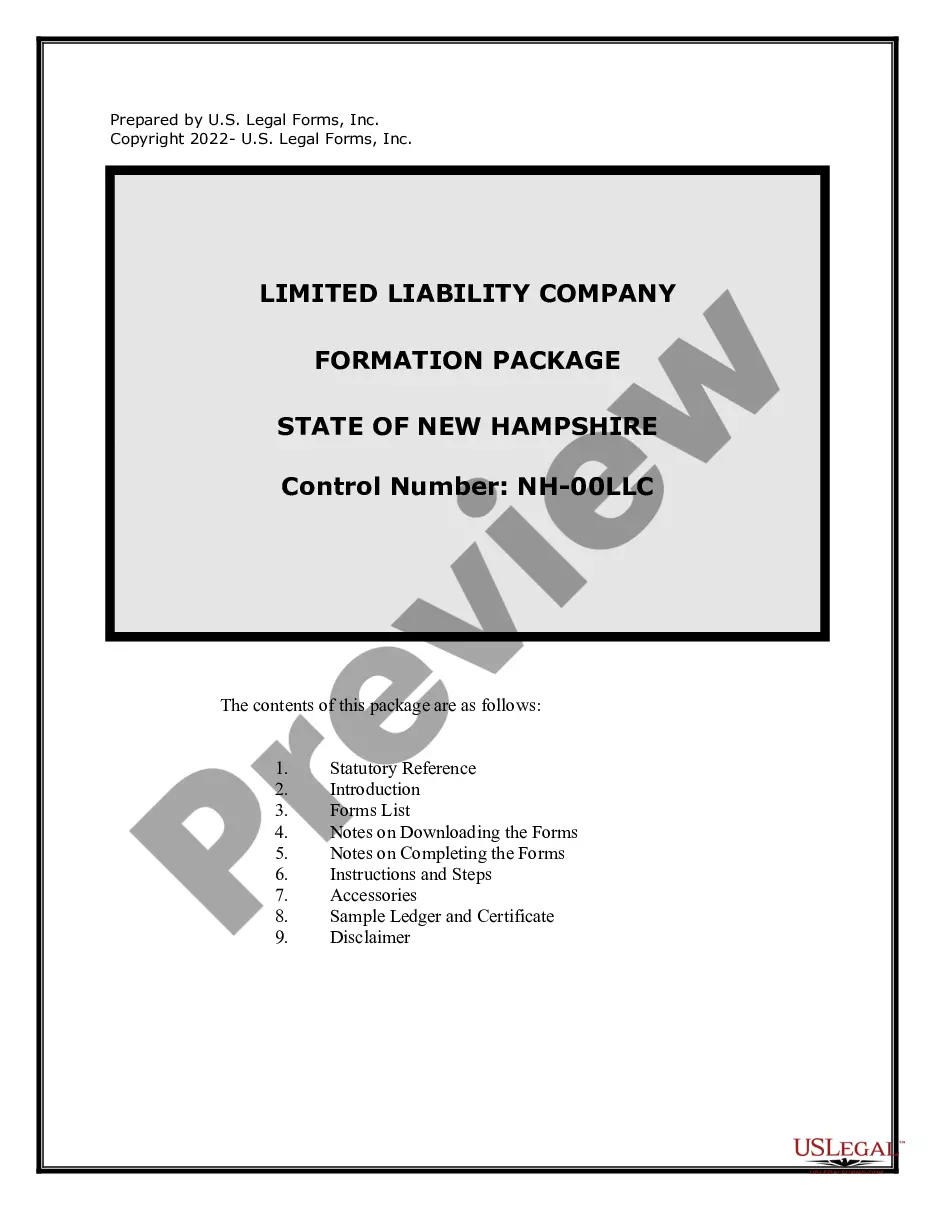
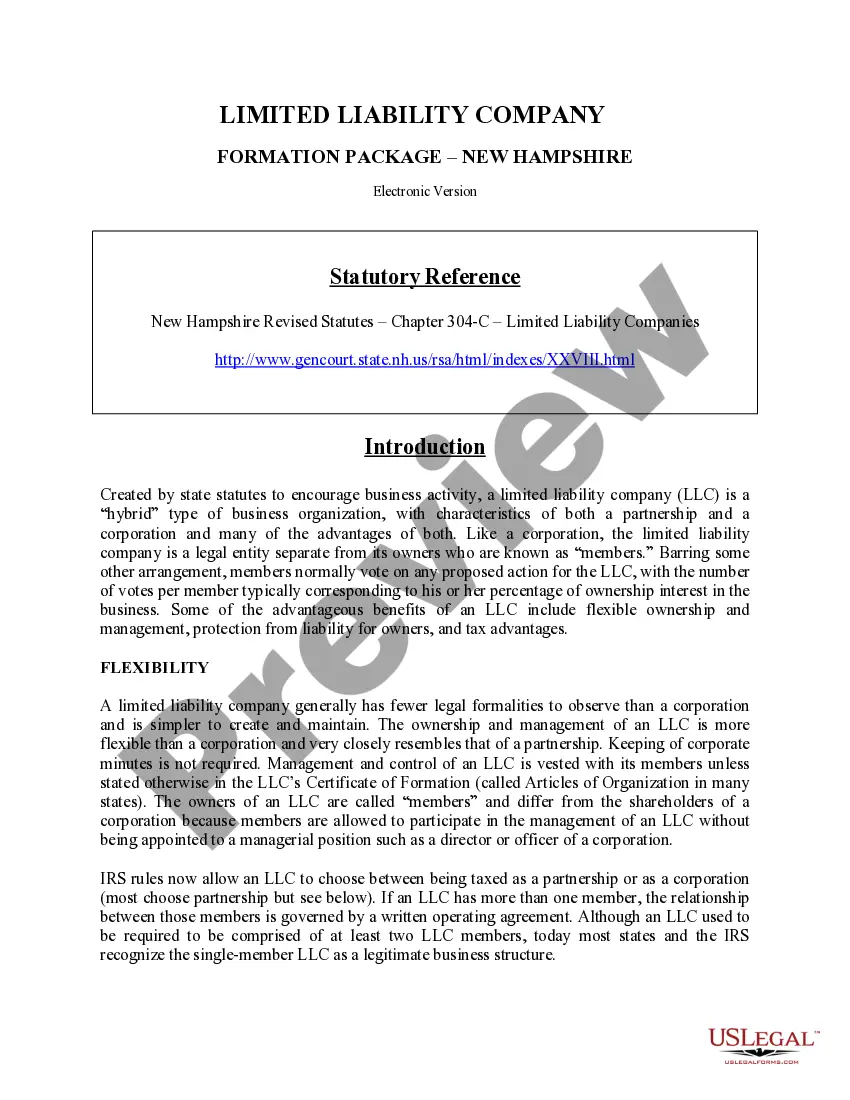
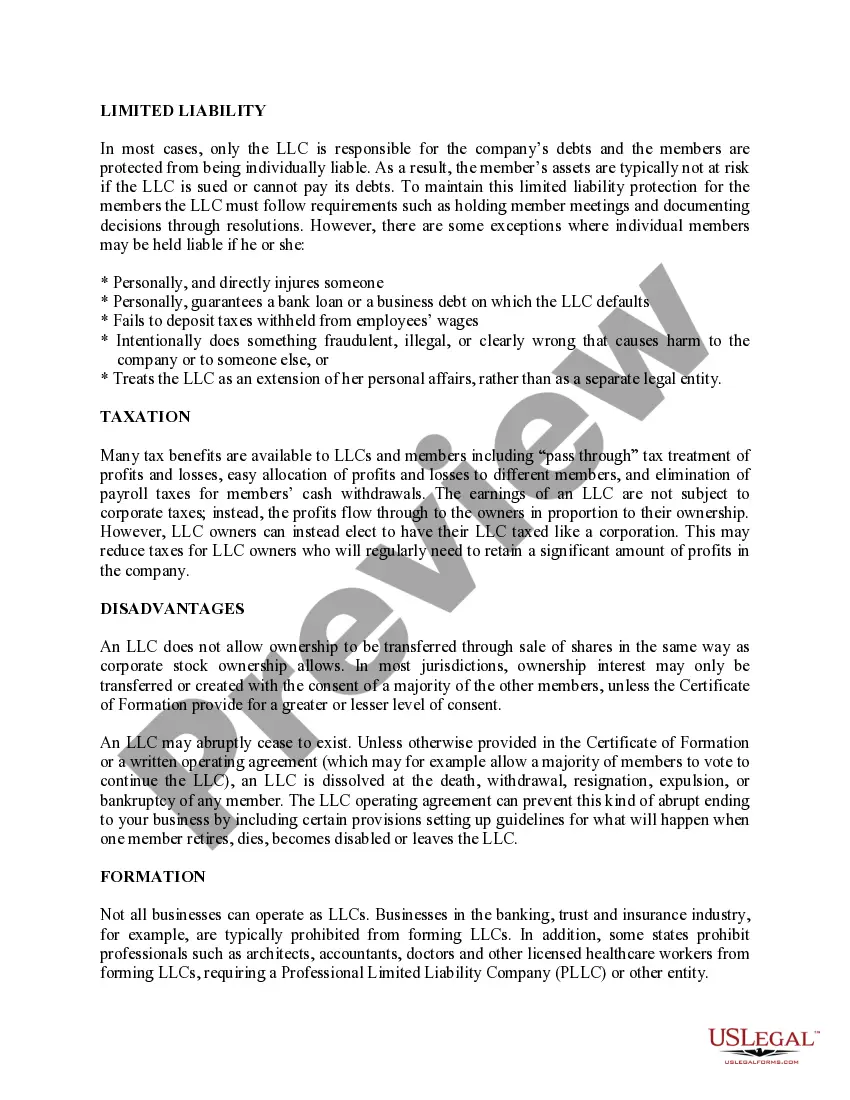
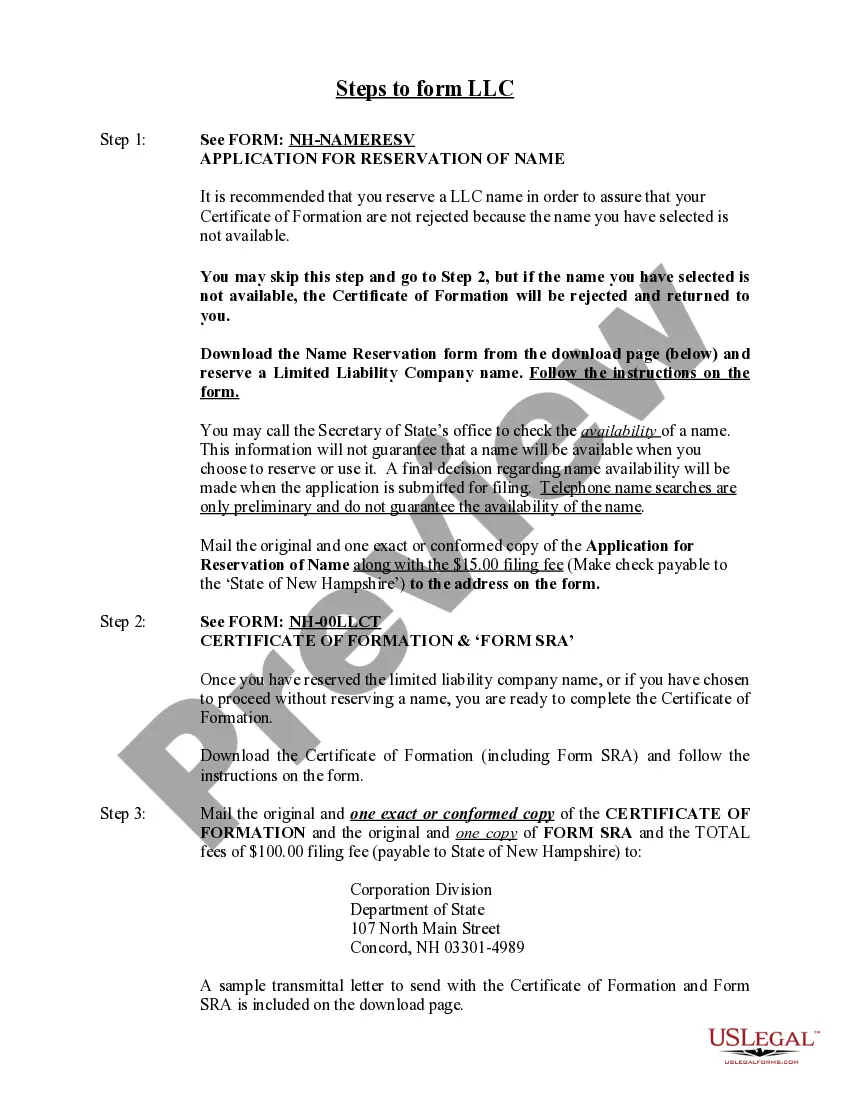
The New Hampshire Limited Liability Company LLC Formation Package provides essential documents and instructions for establishing a Limited Liability Company in New Hampshire. This package includes Articles of Formation, an Operating Agreement, member resolutions, and step-by-step guidance, making it an all-in-one solution for anyone looking to form an LLC in the state. Unlike other packages, this includes specific New Hampshire forms drafted by licensed attorneys, ensuring compliance with state laws.
Documents contained in this package
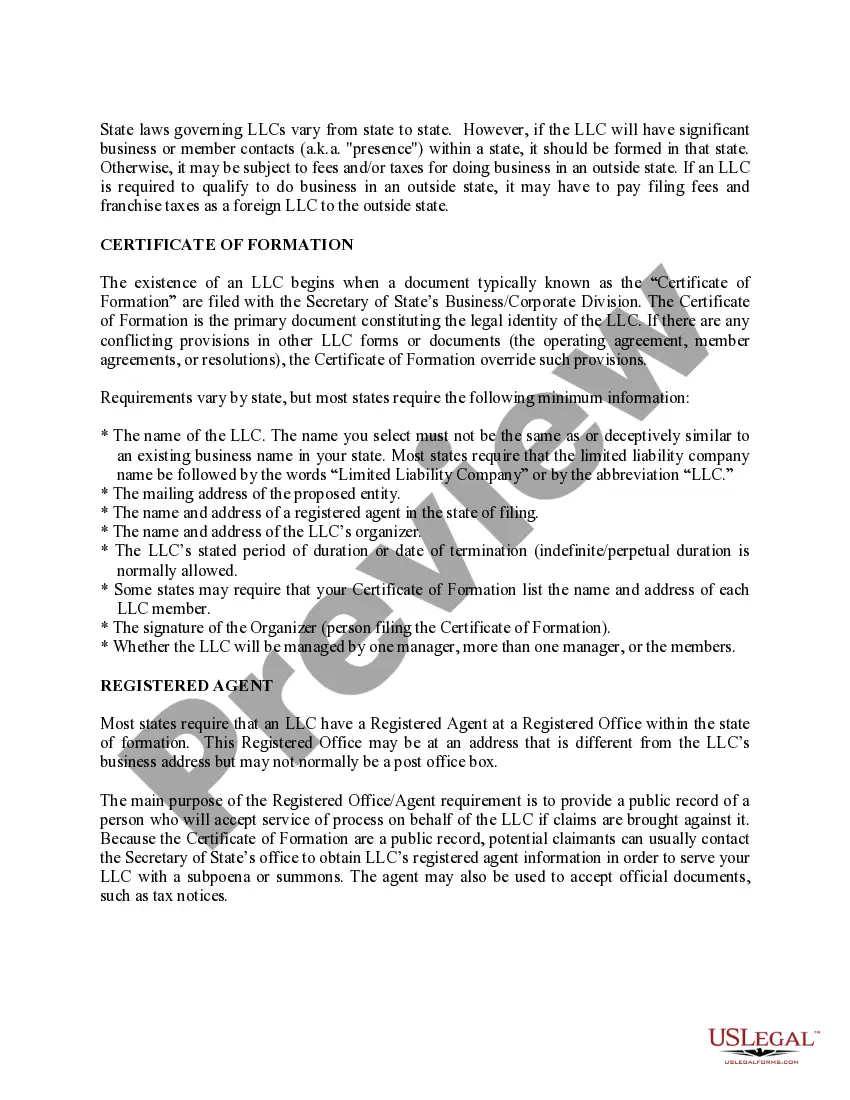
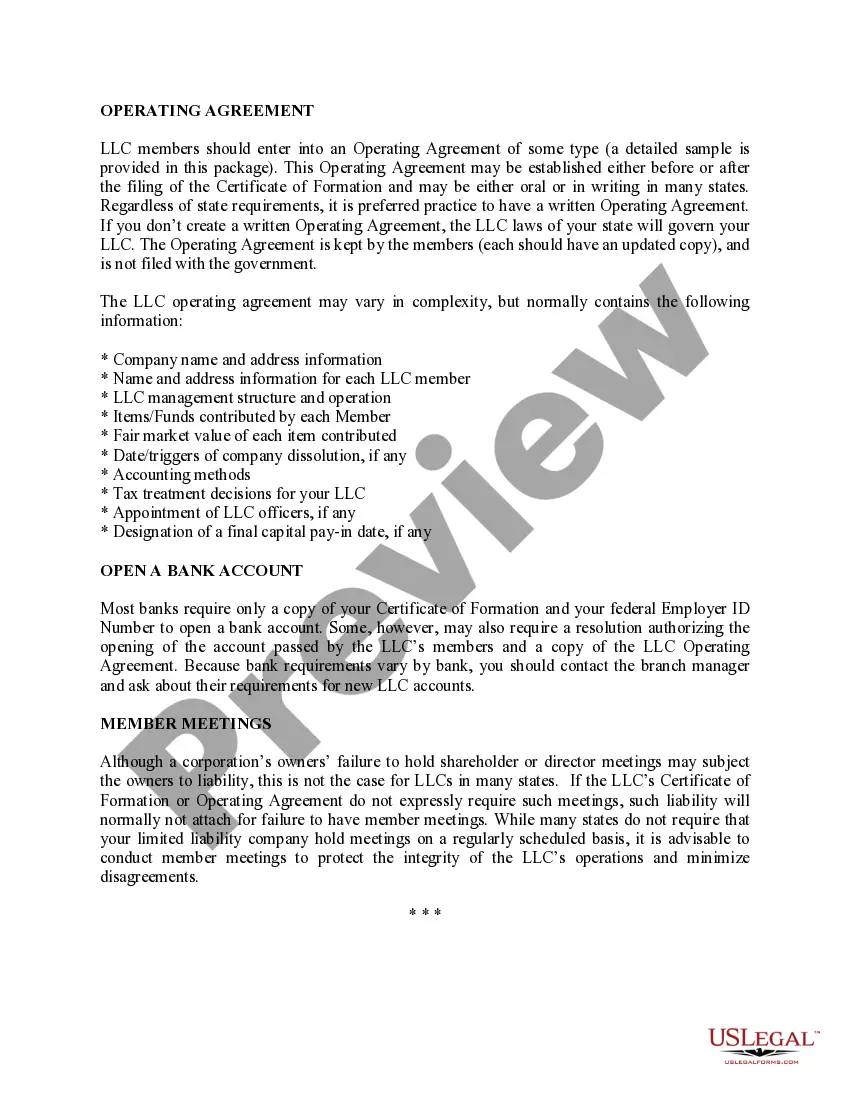
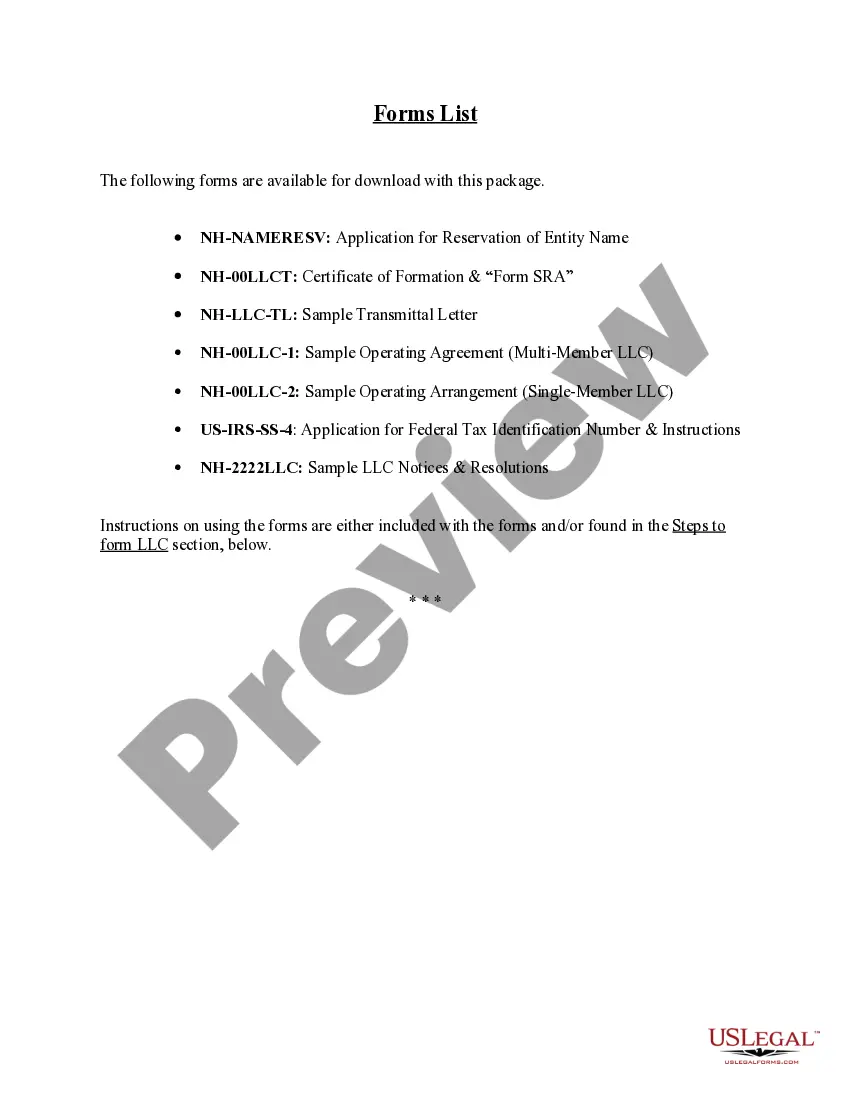
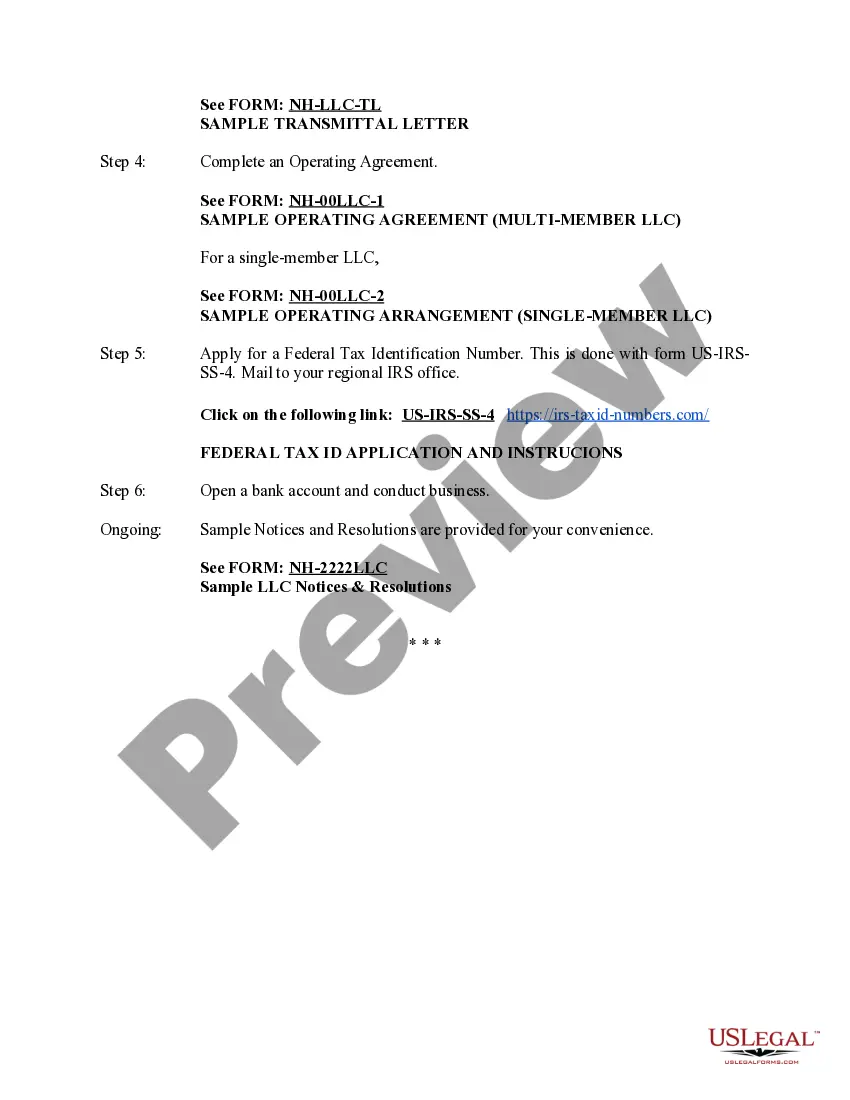
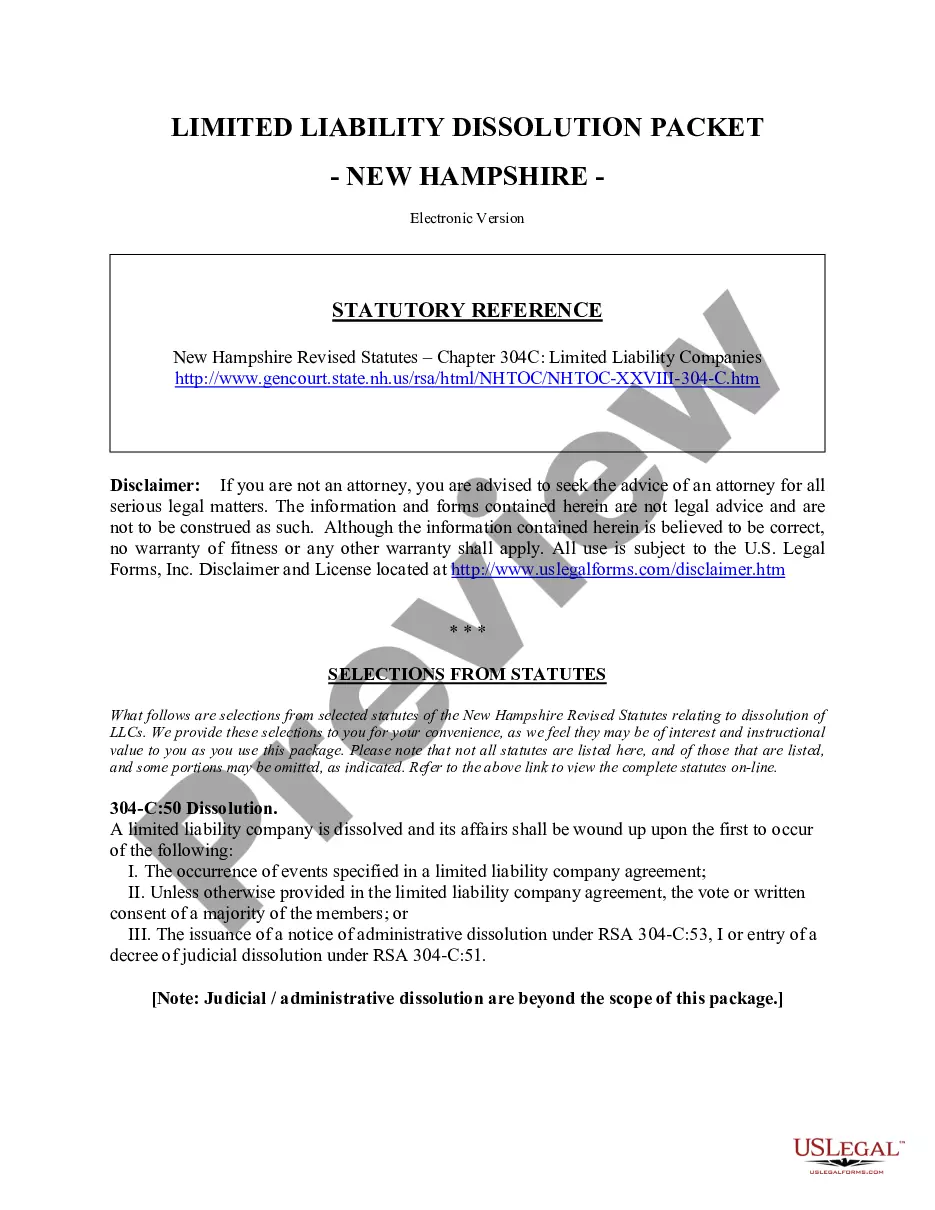
- Limited Liability Company LLC Operating Agreement
- Single Member Limited Liability Company LLC Operating Agreement
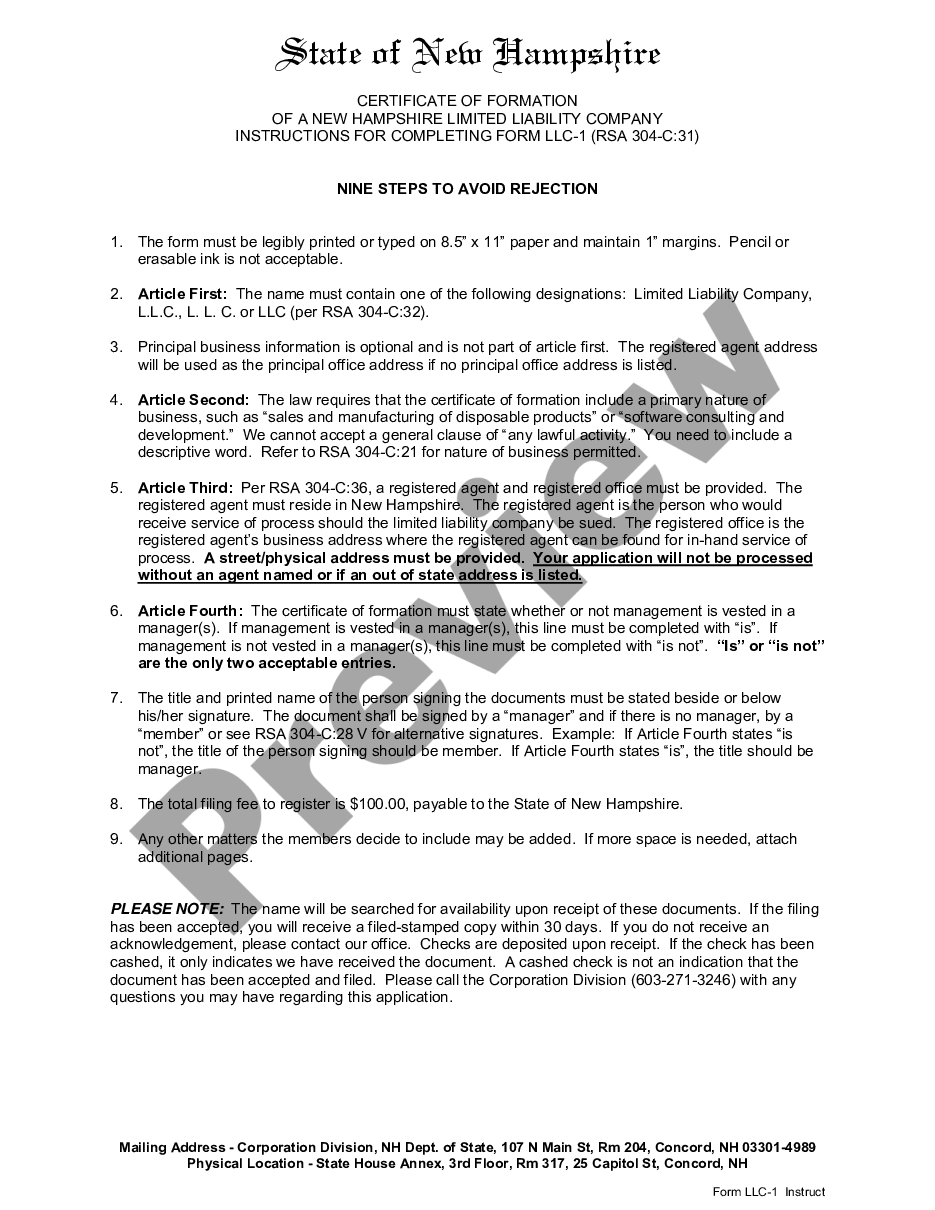
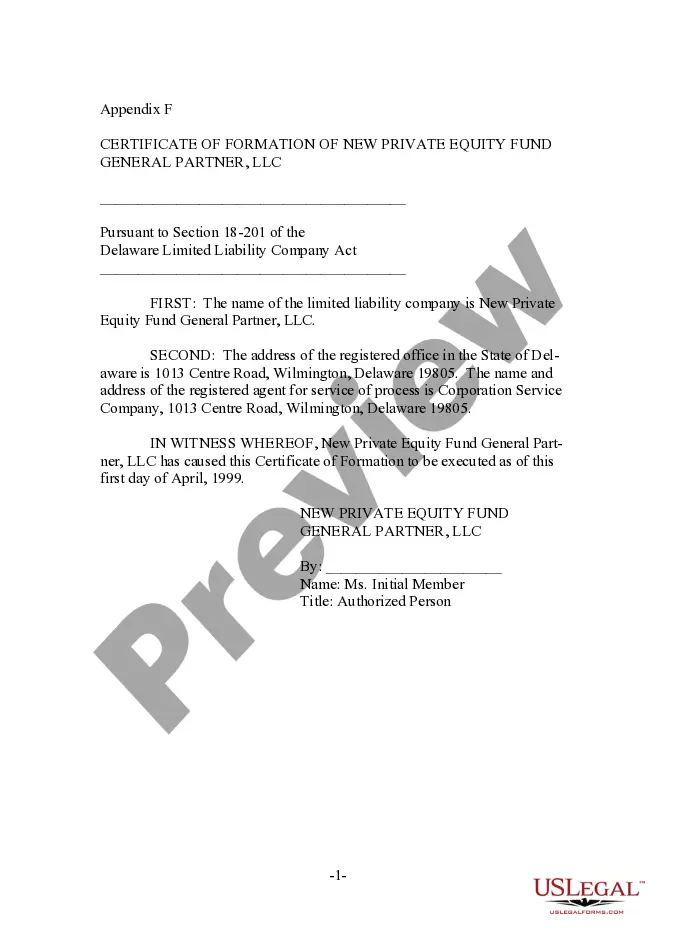
- New Hampshire Certificate of Formation for Domestic Limited Liability Company LLC
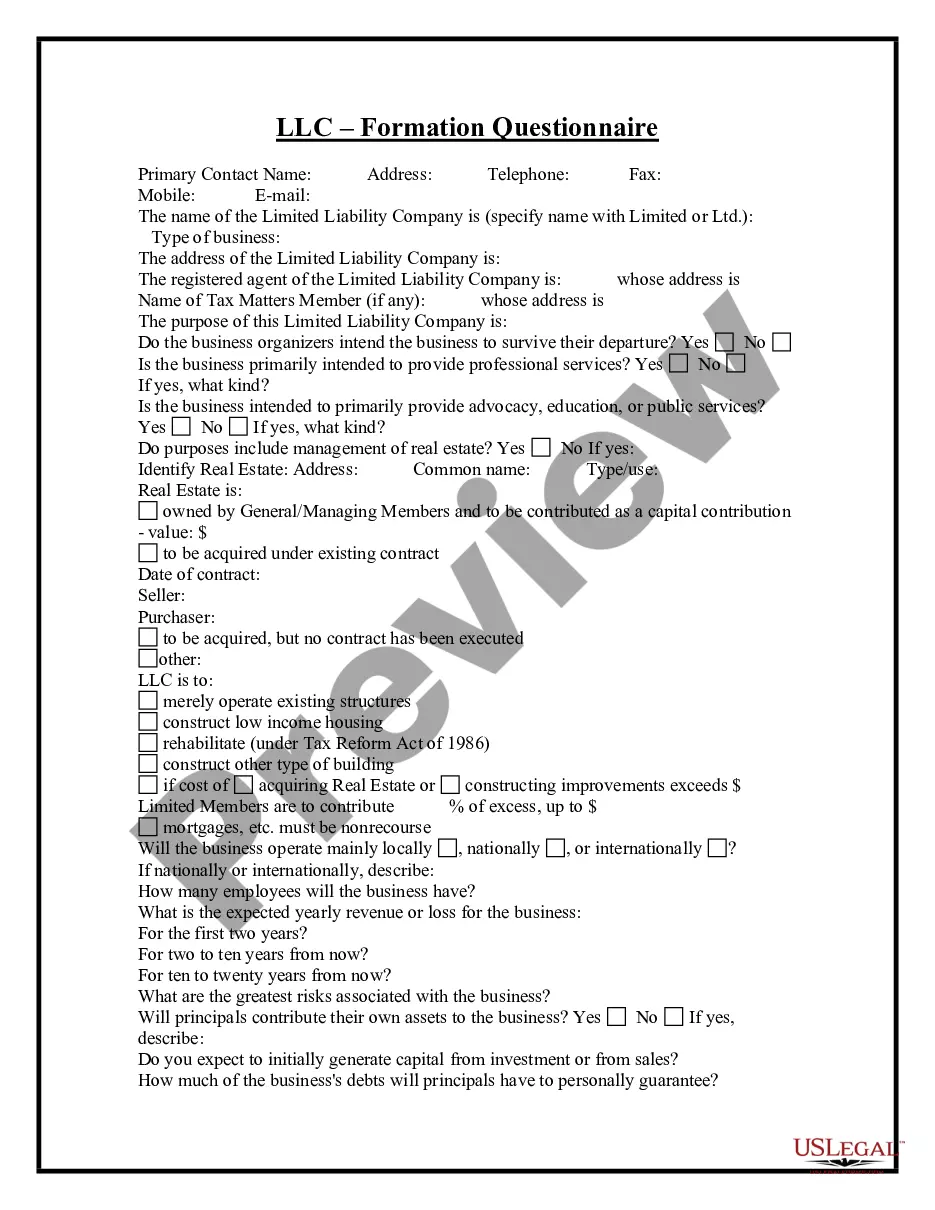
- LLC Notices, Resolutions and other Operations Forms Package
- Sample Cover Letter for Filing of LLC Articles or Certificate with Secretary of State
- Application of Name Reservation
- I.R.S. Form SS-4 (to obtain your federal identification number)


Common use cases
This form package is particularly useful in various scenarios, such as:
- Launching a new business and needing to limit personal liability.
- Transitioning a sole proprietorship to a more formal business structure.
- Seeking investment or partnership by formalizing ownership and management responsibilities.
- Individuals or professionals needing a flexible business model with potential tax advantages.
Intended users of this form package
- Entrepreneurs looking to create a business with limited liability protections.
- Business owners transitioning to an LLC from another structure.
- Individuals interested in forming a single-member or multi-member LLC.
- Professionals seeking a convenient way to establish their business legally.
How to prepare this document
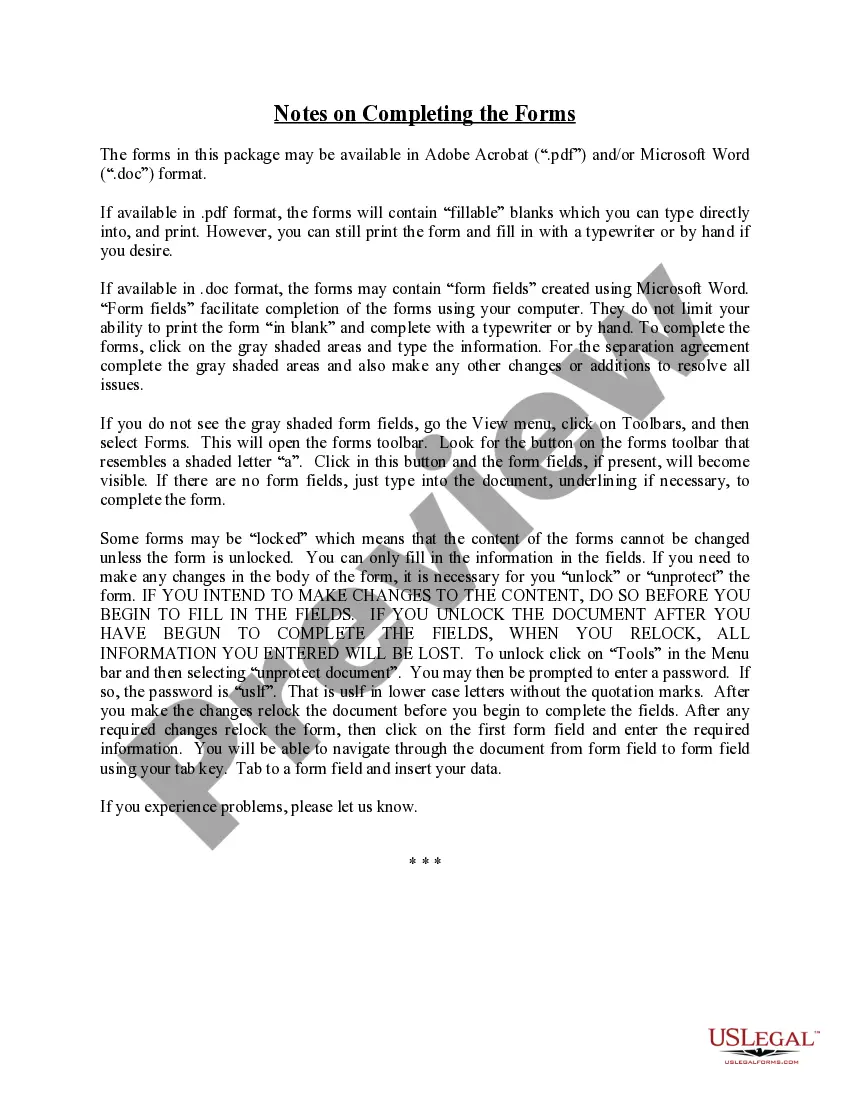
- Review the included forms and instructions.
- Reserve a business name (if desired) using the Name Reservation form.
- Complete the Certificate of Formation and submit it along with the required fees.
- Draft an Operating Agreement tailored to your LLC's structure.
- Apply for a Federal Tax Identification Number using the IRS application form included.
- Open a business bank account to ensure a clear separation of business and personal finances.
Do documents in this package require notarization?
Forms in this package typically do not require notarization unless required by local law. However, it is advisable to check specific requirements during the filing process to ensure compliance with legal standards.
Get your form ready online
Our built-in tools help you complete, sign, share, and store your documents in one place.
Make edits, fill in missing information, and update formatting in US Legal Forms—just like you would in MS Word.
Download a copy, print it, send it by email, or mail it via USPS—whatever works best for your next step.
Sign and collect signatures with our SignNow integration. Send to multiple recipients, set reminders, and more. Go Premium to unlock E-Sign.
If this form requires notarization, complete it online through a secure video call—no need to meet a notary in person or wait for an appointment.
We protect your documents and personal data by following strict security and privacy standards.
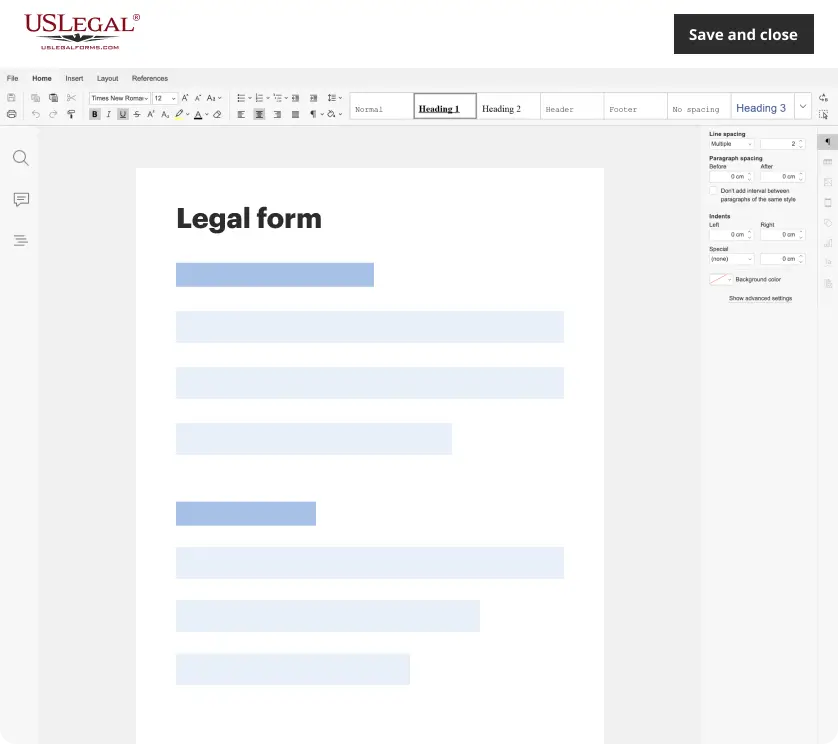
Make edits, fill in missing information, and update formatting in US Legal Forms—just like you would in MS Word.
Download a copy, print it, send it by email, or mail it via USPS—whatever works best for your next step.
Sign and collect signatures with our SignNow integration. Send to multiple recipients, set reminders, and more. Go Premium to unlock E-Sign.

If this form requires notarization, complete it online through a secure video call—no need to meet a notary in person or wait for an appointment.
We protect your documents and personal data by following strict security and privacy standards.
Typical mistakes to avoid
- Failing to reserve a business name before filing the Certificate of Formation.
- Not completing the Operating Agreement, which can lead to disputes among members.
- Neglecting to apply for a Federal Tax ID, which is essential for tax purposes.
- Not keeping proper records of meetings and resolutions, which can jeopardize LLC protections.
Benefits of completing this package online
- Convenience of downloading and completing forms from the comfort of your home.
- Editable forms that allow customization to fit specific business needs.
- Access to reliable legal documents drafted by licensed attorneys.
- Cuts down on the time and effort required to understand the formation process.
Key takeaways
- The New Hampshire LLC Formation Package simplifies the process of starting a business in New Hampshire.
- It includes all necessary forms designed for compliance with state laws.
- Flexible structures and liability protection are major advantages of forming an LLC.
- Understanding and following the filing requirements is crucial for successful LLC registration.
Looking for another form?
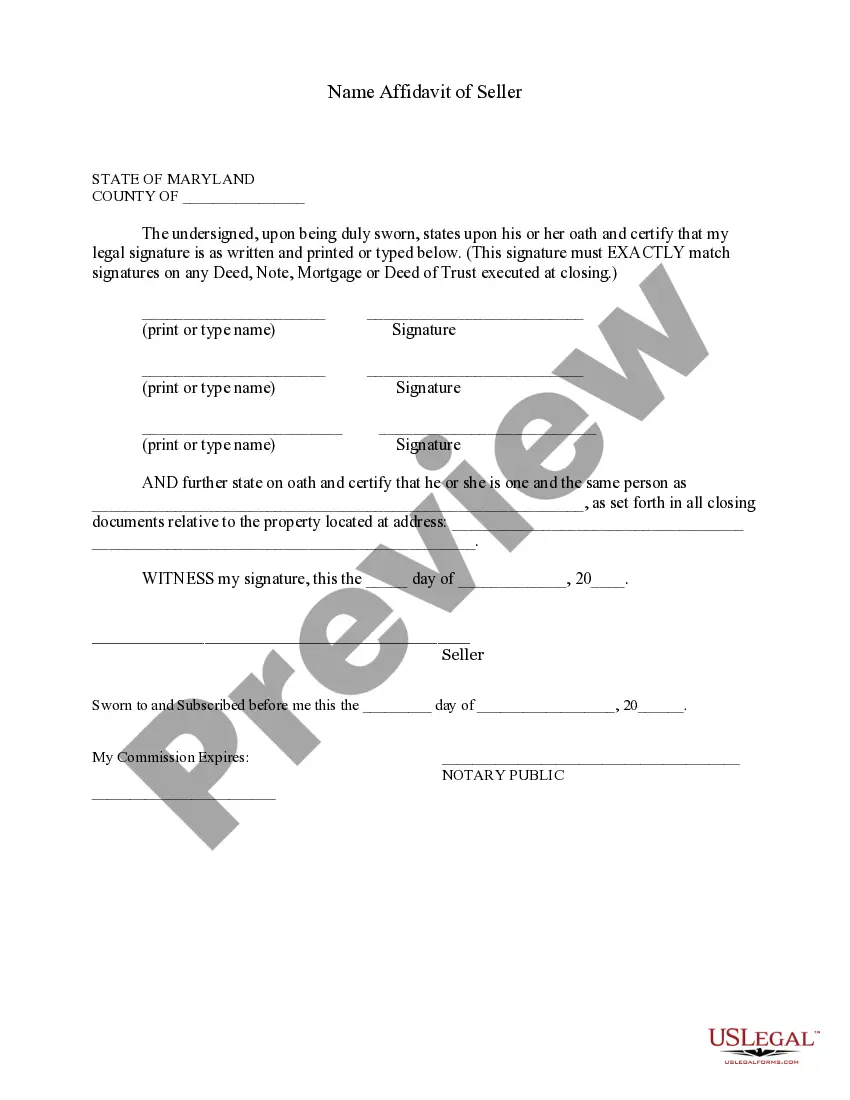
Form popularity
FAQ
The least expensive way to form your LLC is filing the forms yourself, although it will depend on the filing fees in your state. Incorporation statements for LLCs are typically the Articles of Organization.
If money's tight, or you don't want to use a company formation service, we've got good news for you you can form an LLC yourself. Although you'll still need to pay your state filing fees (they're unavoidable!), you can save on the costs of having your LLC filed through a professional incorporation business.
When you form a corporation or LLC, you need to pay a one-time filing fee to the state's secretary of state office. Arkansas, Colorado, Hawaii, Iowa, Oklahoma and Mississippi all boast the lowest corporation formation fee at $50. It costs $310 to incorporate in Texas.
There are no restrictions to the number of LLC Members (owners) an LLC can have.Exception to the rule: If an LLC is taxed as an S-Corp with the IRS it can't have more than 100 shareholders (Members).
In addition to "president" and "CEO," common titles used by LLC chief executives are "principal," "founder," "consultant" and "owner." Along with being correct and true, these titles accurately represent your position in the company.
Starting an LLC in New Hampshire is Easy. To start a New Hampshire Limited Liability Company, you will need to file your Certificate of Formation with the State of New Hampshire, which costs $100.
The President is essentially the highest ranking manager in the LLC. The Operating Agreement typically gives the President general management powers of the business of the LLC, as well as full power to open bank accounts. Other titles of LLC officers and managers are Secretary and Treasurer for example.
Owner. Managing member. CEO. President. Principal. Managing Director. Creative Director. Technical Director.
Choose a name for your LLC. File Articles of Organization. Choose a registered agent. Decide on member vs. manager management. Create an LLC operating agreement. Comply with other tax and regulatory requirements. File annual reports. Out of state LLC registration.