New Hampshire Notice of Assignment of Contract for Deed
About this form
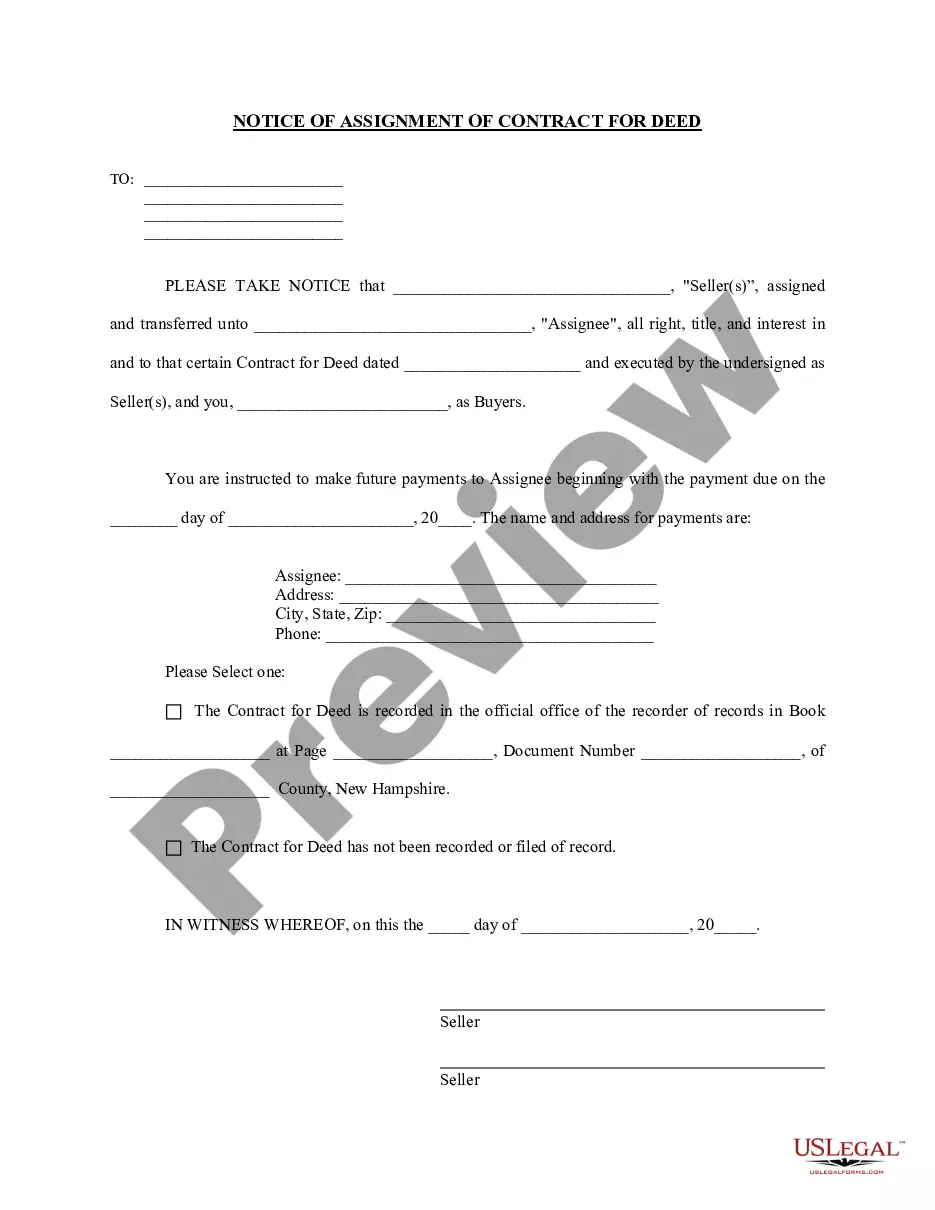
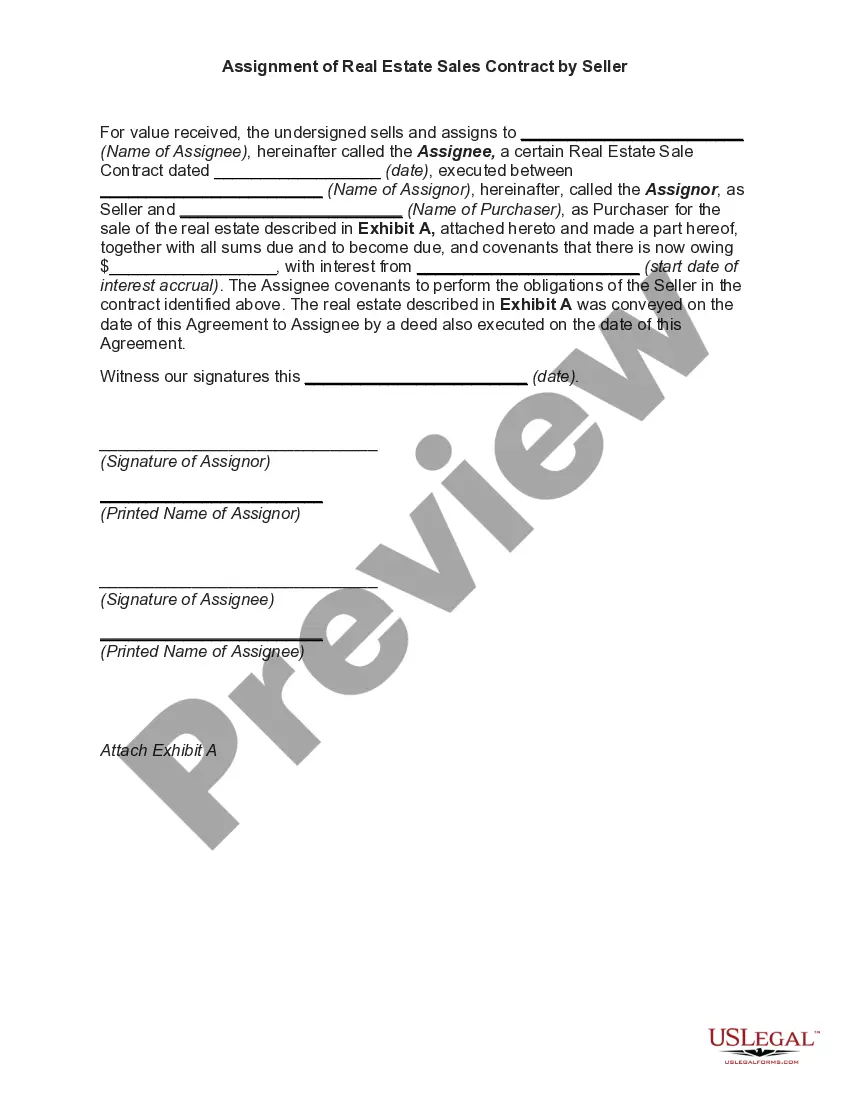
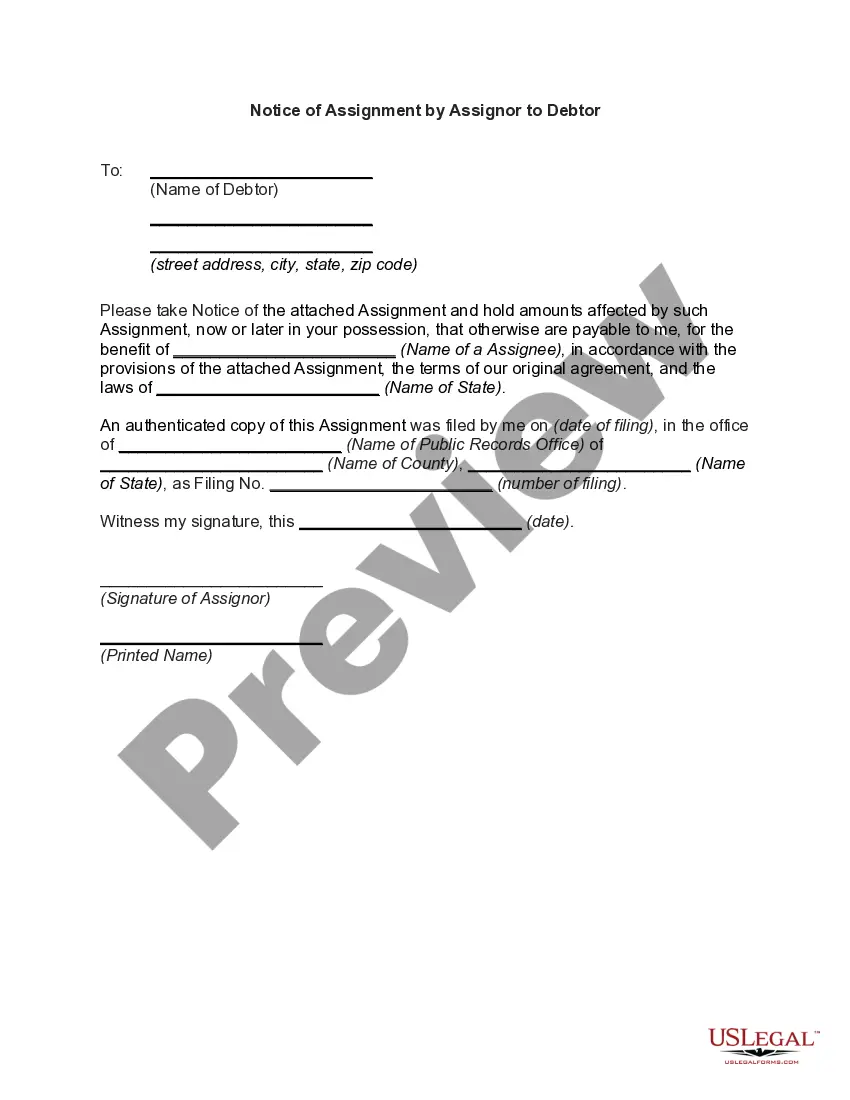
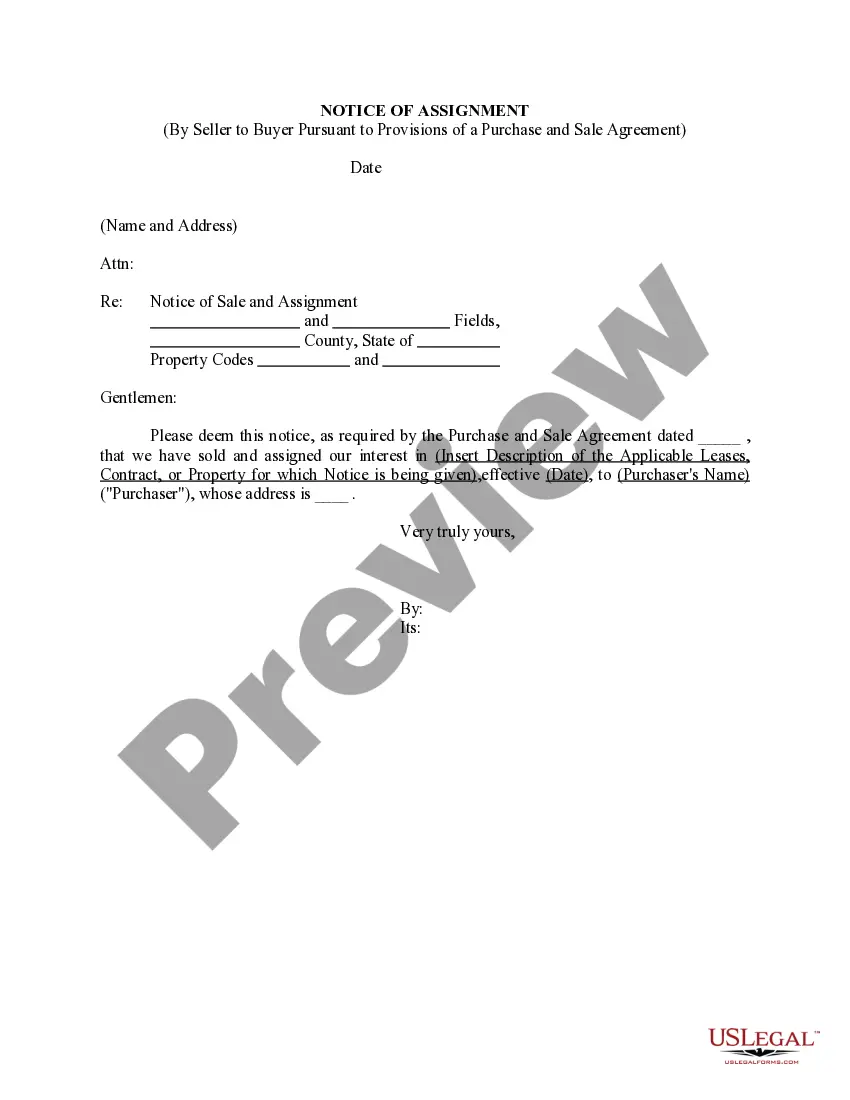
The Notice of Assignment of Contract for Deed is a legal document used by a seller to inform a buyer that the seller has assigned their contract for deed to a third party. This form is essential for ensuring that future payments related to the contract are directed to this third party. Unlike other real estate forms, this notice specifically applies to agreements where the seller retains some interest in the property until paid in full.
Key components of this form
- Identification of the seller, buyer, and assignee.
- Details of the assigned contract for deed.
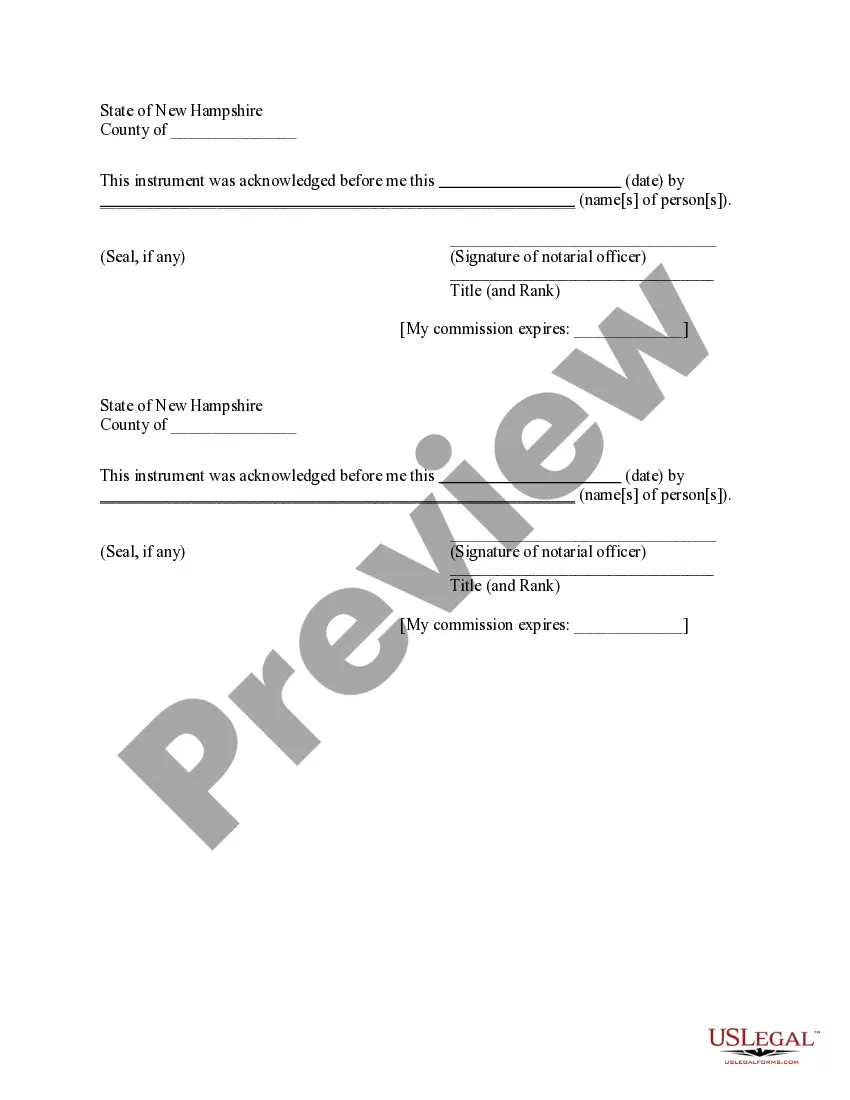
- Signatures of the seller and notary acknowledgment.
- Date of execution of the notice.
When to use this form
This form should be used when a seller has decided to transfer their rights under a contract for deed to another party. It is particularly important in transactions where the seller wants the buyer to make future payments to a new assignee, rather than the seller themselves. Situations may include selling the contract for deed for financial reasons or for estate planning purposes.
Who this form is for
- Real estate sellers who want to transfer their contract for deed to another party.
- Buyers involved in a contract for deed who need to be informed of such transfers.
- Legal professionals assisting clients with the assignment of real estate contracts.
How to prepare this document
- Identify the parties involved: seller, buyer, and third-party assignee.
- Fill in the details of the contract for deed being assigned.
- Specify the date of the notice execution.
- Sign the document in the presence of a notary public.
- Keep a copy for your records and provide one to the buyer and the assignee.
Is notarization required?
This form must be notarized to be legally valid. US Legal Forms provides secure online notarization powered by Notarize, allowing you to complete the process through a verified video call.
Get your form ready online
Our built-in tools help you complete, sign, share, and store your documents in one place.
Make edits, fill in missing information, and update formatting in US Legal Forms—just like you would in MS Word.
Download a copy, print it, send it by email, or mail it via USPS—whatever works best for your next step.
Sign and collect signatures with our SignNow integration. Send to multiple recipients, set reminders, and more. Go Premium to unlock E-Sign.
If this form requires notarization, complete it online through a secure video call—no need to meet a notary in person or wait for an appointment.
We protect your documents and personal data by following strict security and privacy standards.
Make edits, fill in missing information, and update formatting in US Legal Forms—just like you would in MS Word.
Download a copy, print it, send it by email, or mail it via USPS—whatever works best for your next step.
Sign and collect signatures with our SignNow integration. Send to multiple recipients, set reminders, and more. Go Premium to unlock E-Sign.

If this form requires notarization, complete it online through a secure video call—no need to meet a notary in person or wait for an appointment.
We protect your documents and personal data by following strict security and privacy standards.
Mistakes to watch out for
- Failing to identify all parties involved, including the assignee.
- Not providing the correct details of the assigned contract.
- Missing the notary public's signature or stamp.
Benefits of using this form online
- Convenience of downloading the form immediately for use.
- Editable fields allowing customization to fit specific needs.
- Access to templates drafted by licensed attorneys for legal reliability.
What to keep in mind
- The Notice of Assignment of Contract for Deed informs a buyer of a change in payment responsibilities.
- This form is vital for ensuring that all parties are aware of the assignment and its terms.
- Proper completion and notarization are crucial for the form's legal enforceability.
Looking for another form?
Form popularity
FAQ
But you might be wondering if an owner can transfer a deed to another person without a real estate lawyer. The answer is yes. Parties to a transaction are always free to prepare their own deeds.A quitclaim deed, for example, is far simpler than a warranty deed.
Other benefits include: no loan qualifying, low or flexible down payment, favorable interest rates and flexible terms, and a quicker settlement. The biggest risk when buying a home contract for deed is that you really don?t have a legal claim to the property until you have paid off the entire purchase price.
A contract for deed is a legal agreement for the sale of property in which a buyer takes possession and makes payments directly to the seller, but the seller holds the title until the full payment is made.
They are commonly used to add/remove someone to/from real estate title or deed (divorce, name changes, family and trust transfers). The quitclaim deed is a legal document (deed) used to transfer interest in real estate from one person or entity (grantor) to another (grantee).
Signing - According to New Hampshire Law (§ 477:3) the Grantor must sign the quit claim deed in the presence of a Notary Public. Recording - Once notarized, the quit claim deed must be filed with the County Recorder's Office in the city or county where the property is located.
Signing - According to New Hampshire Law (§ 477:3) the Grantor must sign the quit claim deed in the presence of a Notary Public. Recording - Once notarized, the quit claim deed must be filed with the County Recorder's Office in the city or county where the property is located.
Purchase price. Down payment. Interest rate. Number of monthly installments. Responsibilities of the buyer and seller. Legal remedies for the seller if the buyer does not make payments.
A: No, they are not. The Contract to Sell comes before a Deed of Sale, as the former serves as the basis for the latter. There is an act of finality when it comes to the Deed of Sale. On the other hand, the Contract to Sell requires that the parties first complete the conditions they agreed to.
A Quitclaim Deed must be notarized by a notary public or attorney in order to be valid.Consideration in a Quitclaim Deed is what the Grantee will pay to the Grantor for the interest in the property.