New Jersey Living Trust for Individual Who is Single, Divorced or Widow (or Widower) with Children
What is this form?
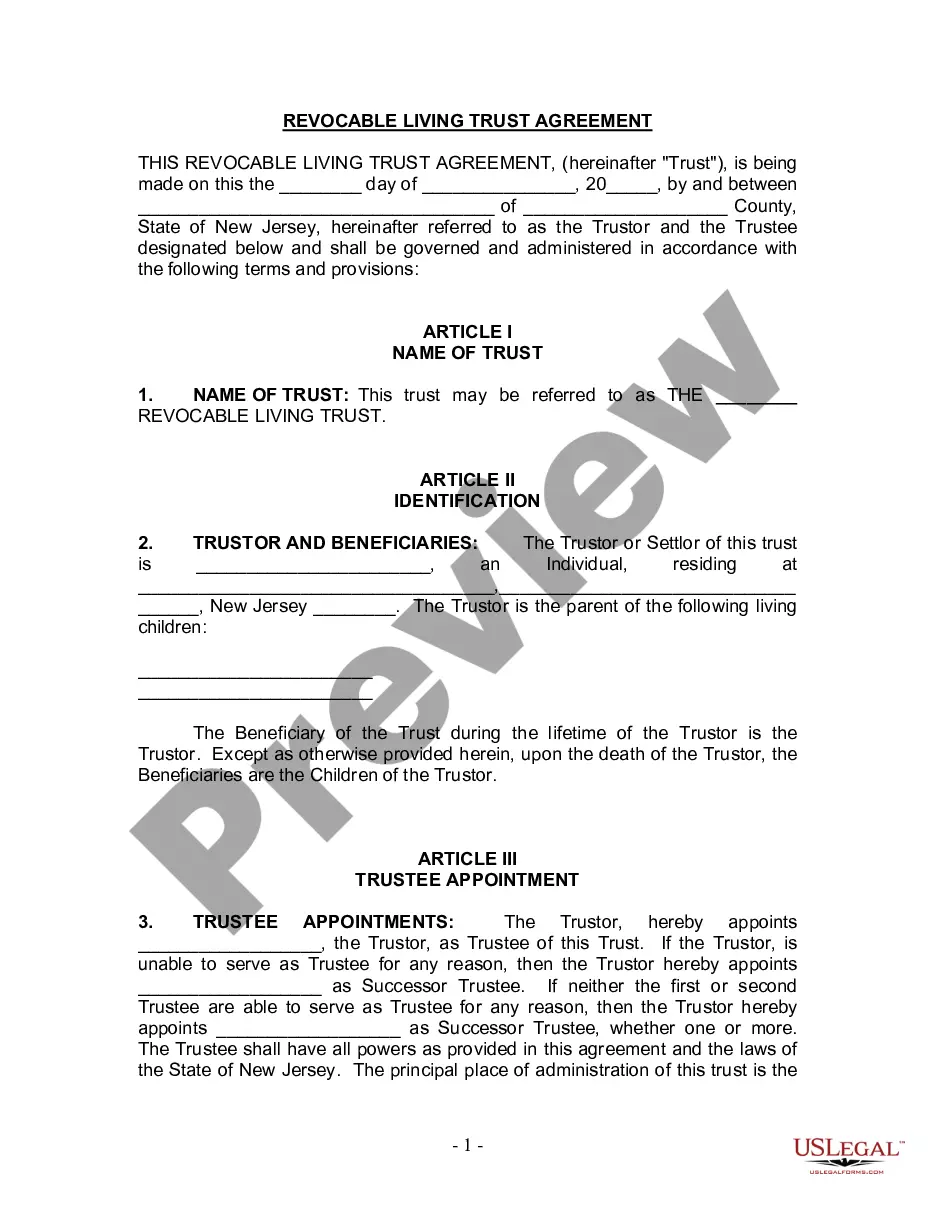
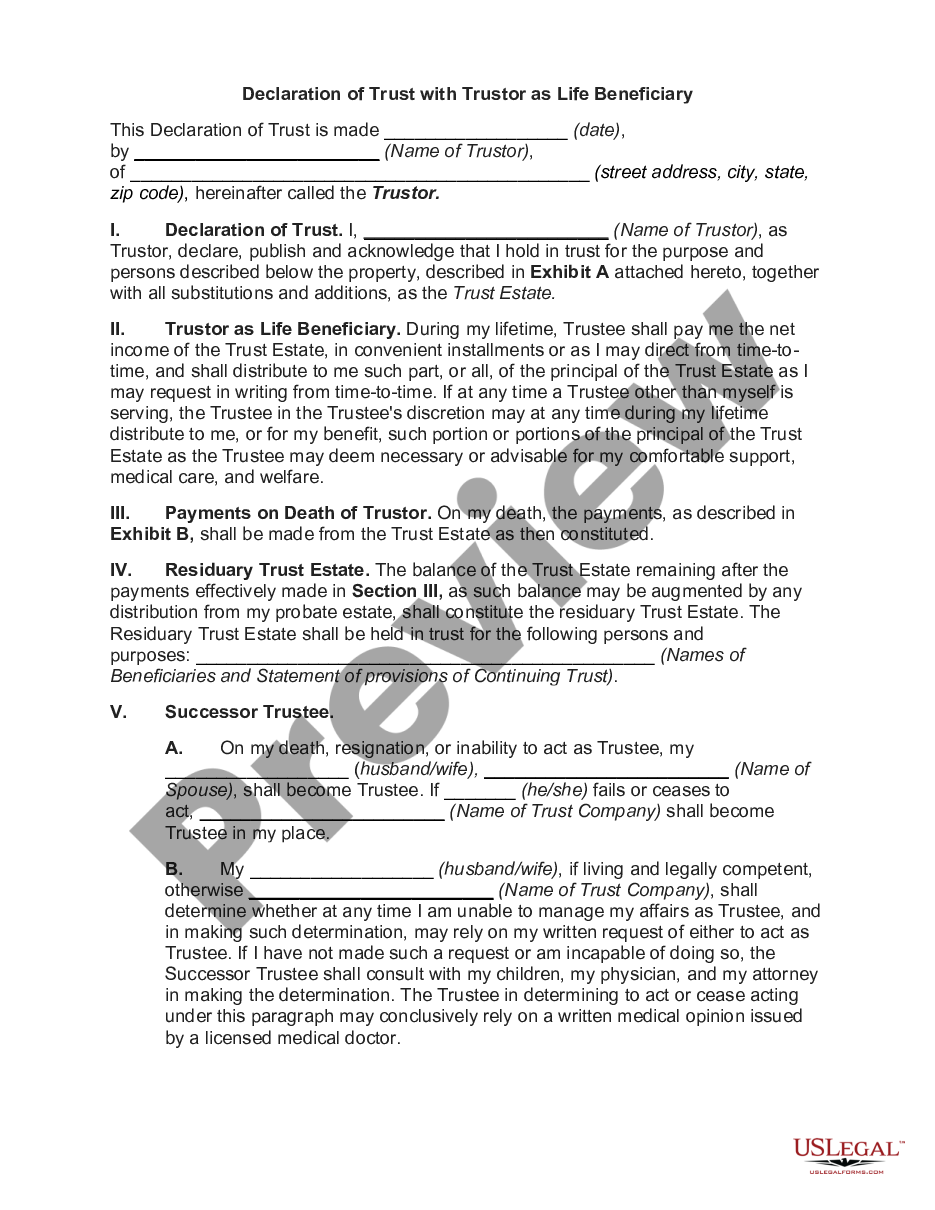
This form is a Living Trust for individuals who are single, divorced, or widowed with children. It allows you to create a revocable trust during your lifetime, safeguarding your assets and streamlining the management of your estate after death. Unlike a will, a living trust bypasses the probate process, ensuring that your assets are transferred directly to your beneficiaries as per your wishes. This form provides clear instructions for establishing a trust tailored to your circumstances and needs.
Key parts of this document
- Name of the trust and identification of the trustor and beneficiaries.
- Appointment of the trustee and successor trustee provisions.
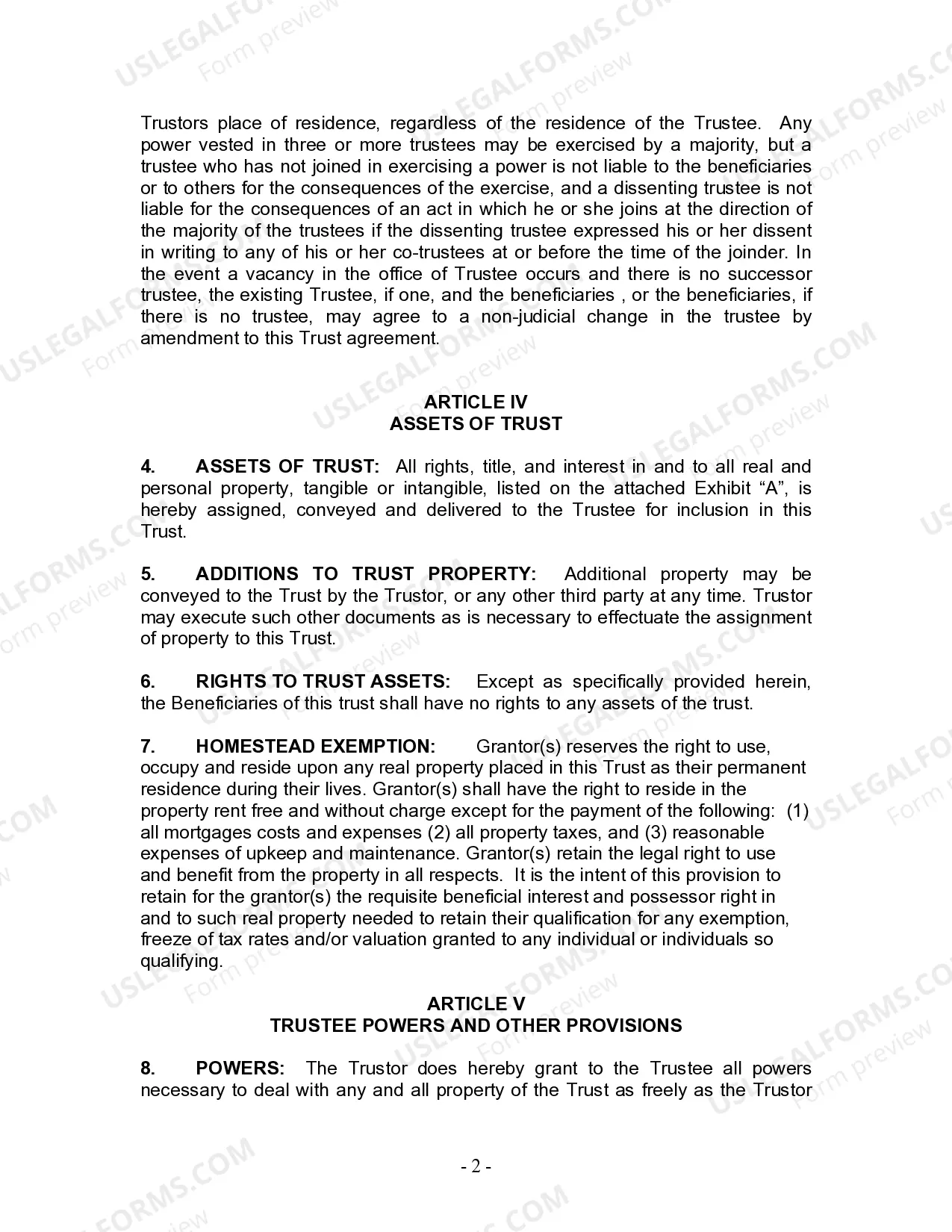
- Provisions regarding assets included in the trust.
- Powers and responsibilities granted to the trustee.
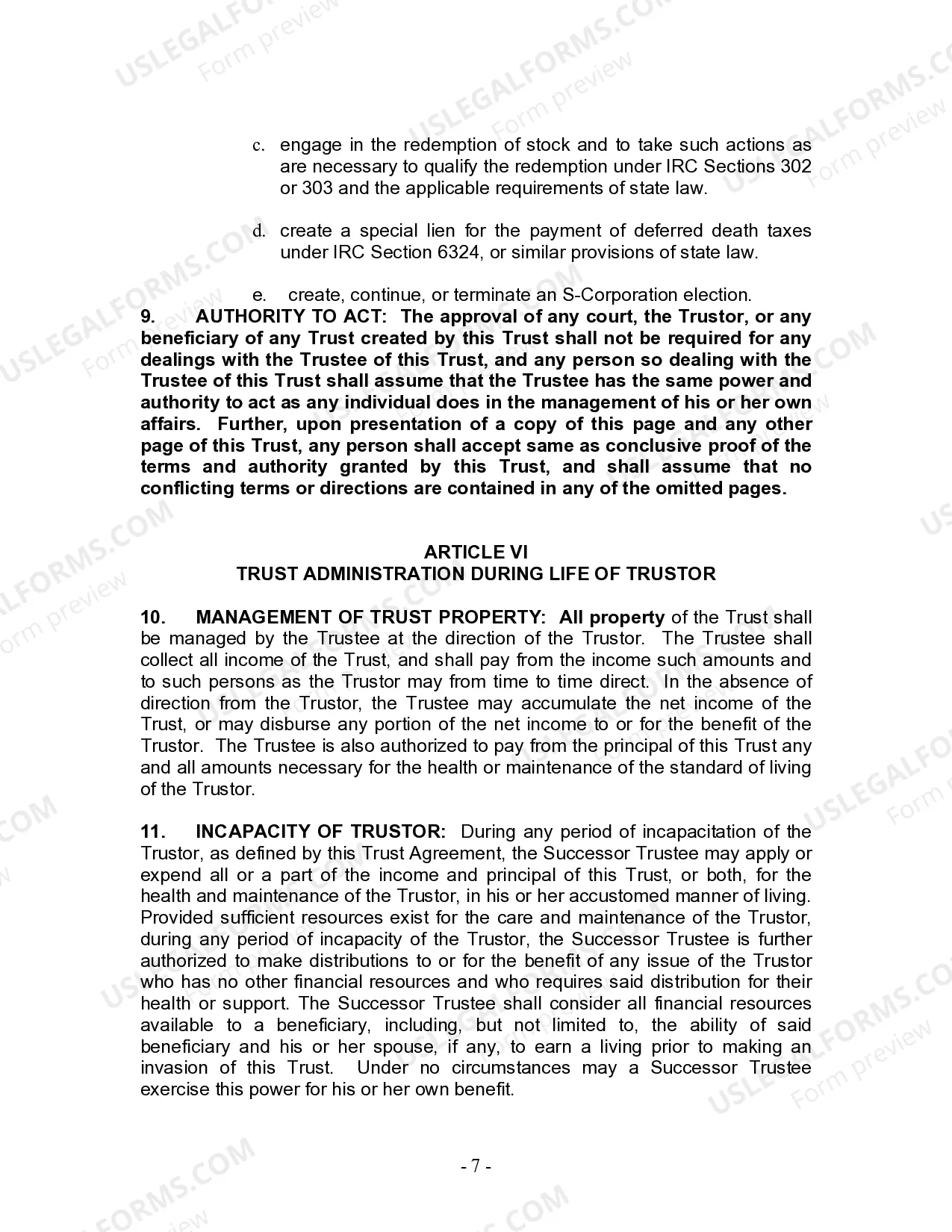
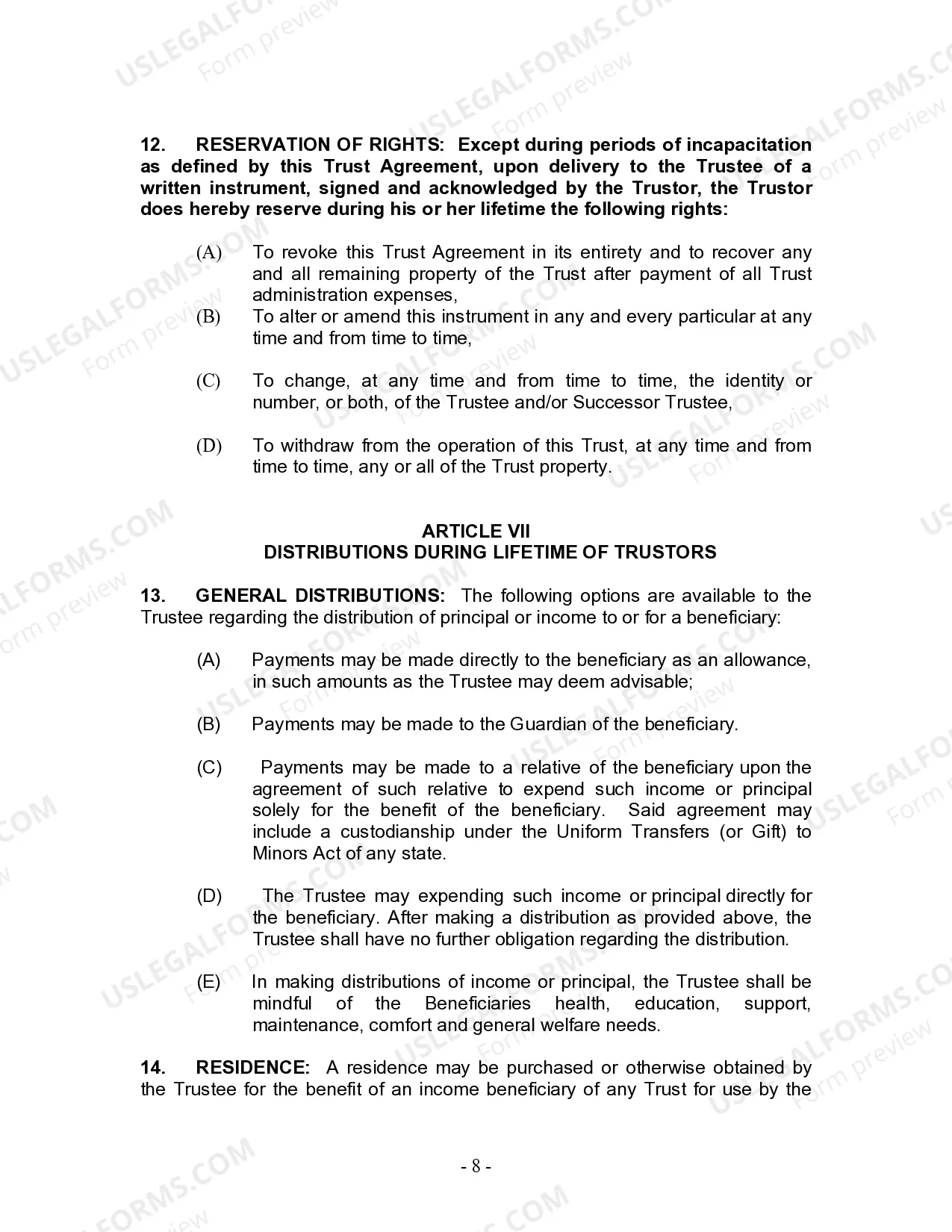
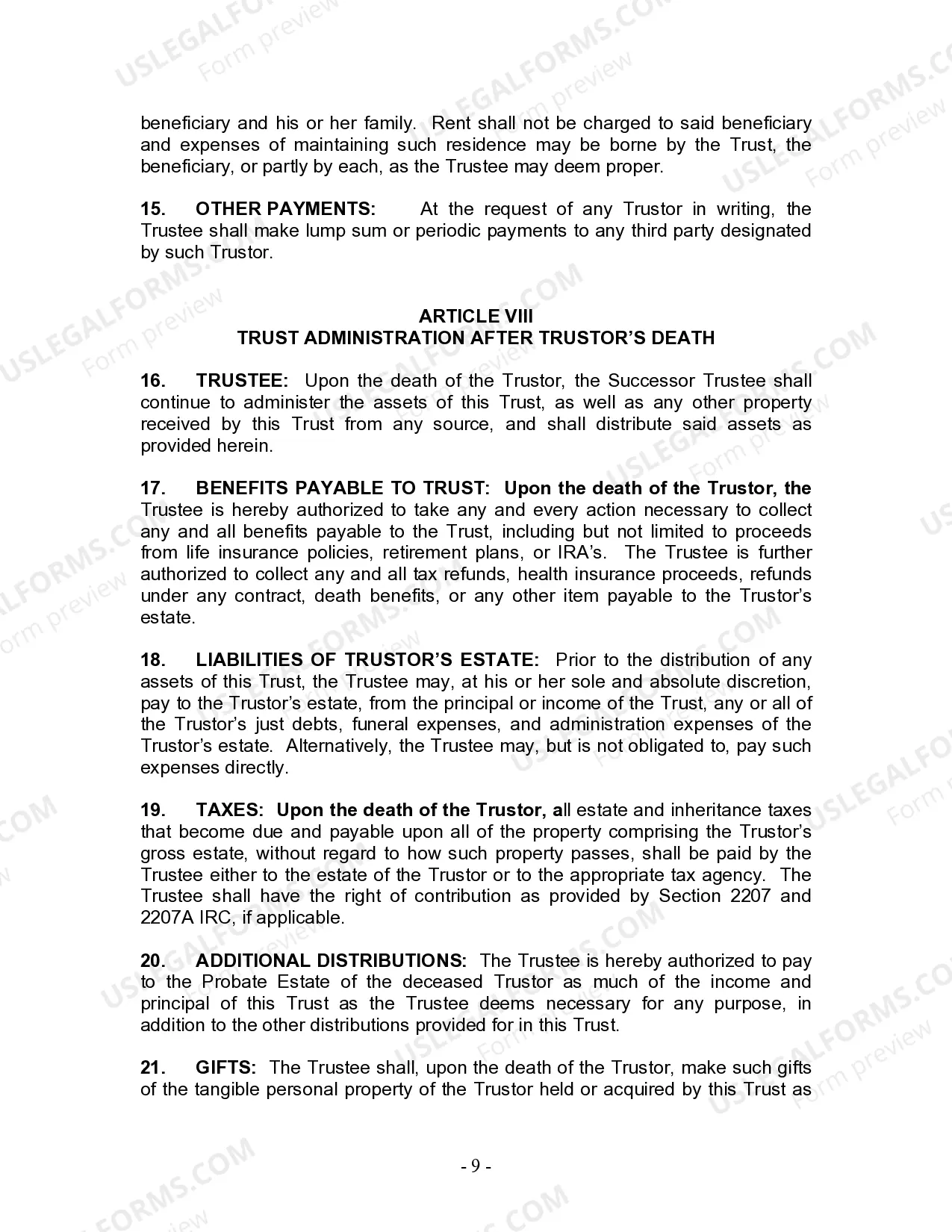
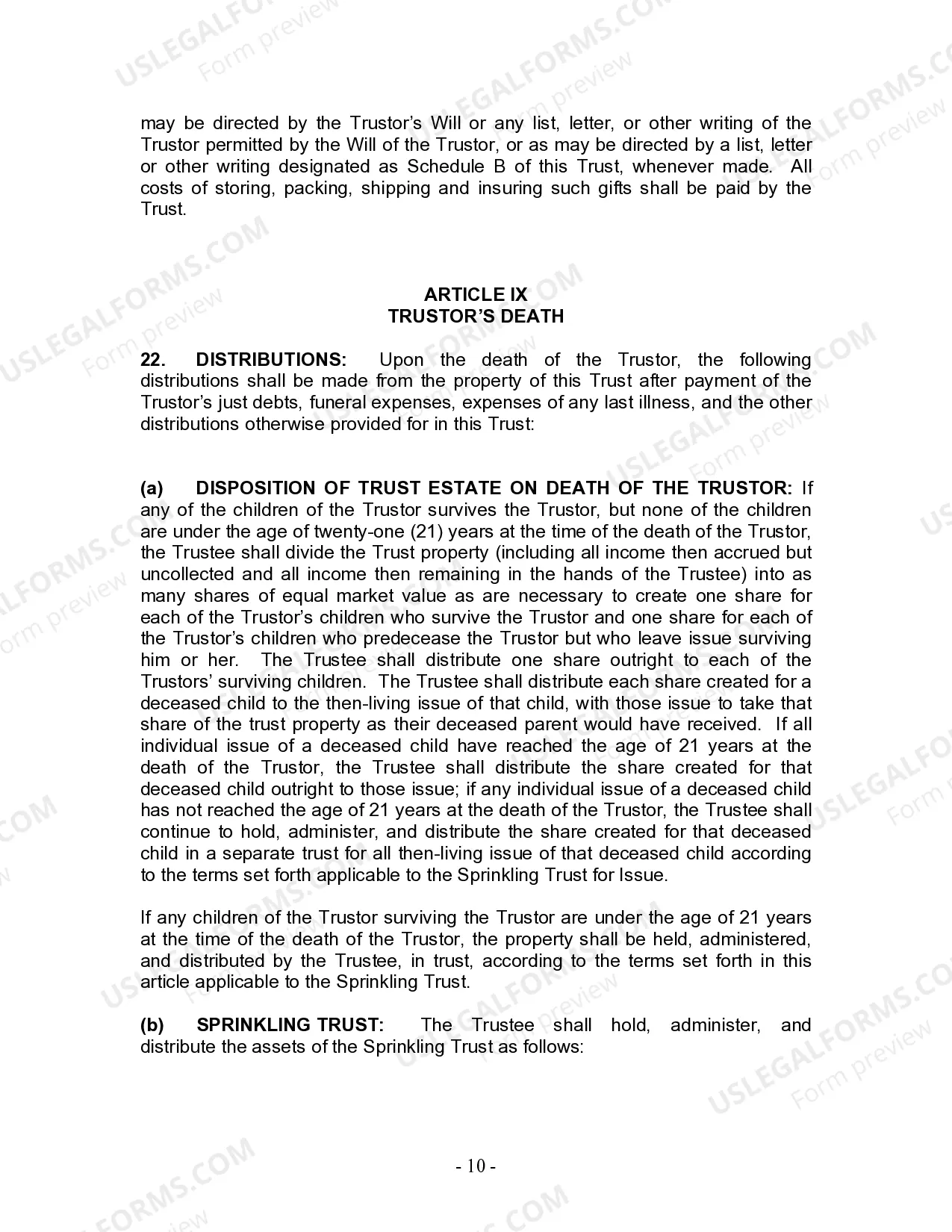
- Distribution terms and guidelines for beneficiaries upon the trustor's death.




When to use this form
This Living Trust should be used when an individual who is single, divorced, or widowed has children and wants to ensure their assets are efficiently managed and passed on without the complications of probate. It is particularly useful for those who wish to maintain control over their assets during their lifetime while providing for their children's future needs after their passing.
Who needs this form
- Individuals who are single, divorced, or widowed.
- Parents with one or more children who wish to secure their inheritance.
- Anyone looking to simplify the estate planning process and avoid probate.
- Individuals who want to maintain control over their assets during their lifetime.
Instructions for completing this form
- Identify the parties involved: the trustor (you), trustee, and beneficiaries (your children).
- Specify the name of the living trust you wish to create.
- List all the assets you want to place into the trust, including real and personal property.
- Designate your trustee and any successor trustees who will manage the trust if necessary.
- Sign and date the document before a notary public if required by state law.
Notarization requirements for this form
This form does not typically require notarization unless specified by local law. However, having it notarized can ensure greater legal validity and help prevent any future disputes regarding the trust's provisions.
Get your form ready online
Our built-in tools help you complete, sign, share, and store your documents in one place.
Make edits, fill in missing information, and update formatting in US Legal Forms—just like you would in MS Word.
Download a copy, print it, send it by email, or mail it via USPS—whatever works best for your next step.
Sign and collect signatures with our SignNow integration. Send to multiple recipients, set reminders, and more. Go Premium to unlock E-Sign.
If this form requires notarization, complete it online through a secure video call—no need to meet a notary in person or wait for an appointment.
We protect your documents and personal data by following strict security and privacy standards.

Make edits, fill in missing information, and update formatting in US Legal Forms—just like you would in MS Word.

Download a copy, print it, send it by email, or mail it via USPS—whatever works best for your next step.

Sign and collect signatures with our SignNow integration. Send to multiple recipients, set reminders, and more. Go Premium to unlock E-Sign.

If this form requires notarization, complete it online through a secure video call—no need to meet a notary in person or wait for an appointment.

We protect your documents and personal data by following strict security and privacy standards.
Common mistakes to avoid
- Failing to include all relevant assets in the trust documentation.
- Not designating a successor trustee, which can complicate management after your passing.
- Neglecting to keep the trust updated as your assets or family dynamics change.
- Overlooking state-specific requirements which may affect the validity of the trust.
Benefits of using this form online
- Convenience: Complete the trust form from home without needing to schedule an appointment with an attorney.
- Editability: Easily modify the form to reflect changes in your circumstances or preferences.
- Reliability: Access professionally drafted legal templates tailored to your specific situation.
Summary of main points
- A living trust allows for the management of your assets during your life and their distribution after death without probate.
- This trust is specifically designed for individuals who are single, divorced, or widowed with children.
- The document provides flexibility in managing your estate and can be amended as needed.
- Identifying clear beneficiaries and trusts assets are essential to avoid future disputes.
Looking for another form?

Form popularity
FAQ
A marital trust starts as a revocable living trust. A surviving spouse can be its trustee.
A typical sub trust that would become effective as of the death of the first spouse is often called the Survivor's Trust. The Survivor's Trust holds certain assets for the spouse that survives the other. Typically the Survivor's Trust is revocable - in other words, it can be changed by the surviving spouse.
At the time of your death, the assets in your family trust are protected by the exemption, and the assets in your marital trust are protected by the marital deduction. No estate taxes are due.
The Survivor's Trust is the surviving spouse's share of the estate. The survivor's portion of the Trust can typically be revoked or amended while the surviving spouse is still alive.
If you die in New Jersey without having a will, then you have died intestate. This is a legal term that means that you have no will to probate once you are dead. Therefore, since you don't have a will, your estate is distributed according to New Jersey's law of intestacy.
181. Therefore, under the statute of descent and distribution, next of kin in New Jersey are: Surviving spouse or domestic partner. Descendants.
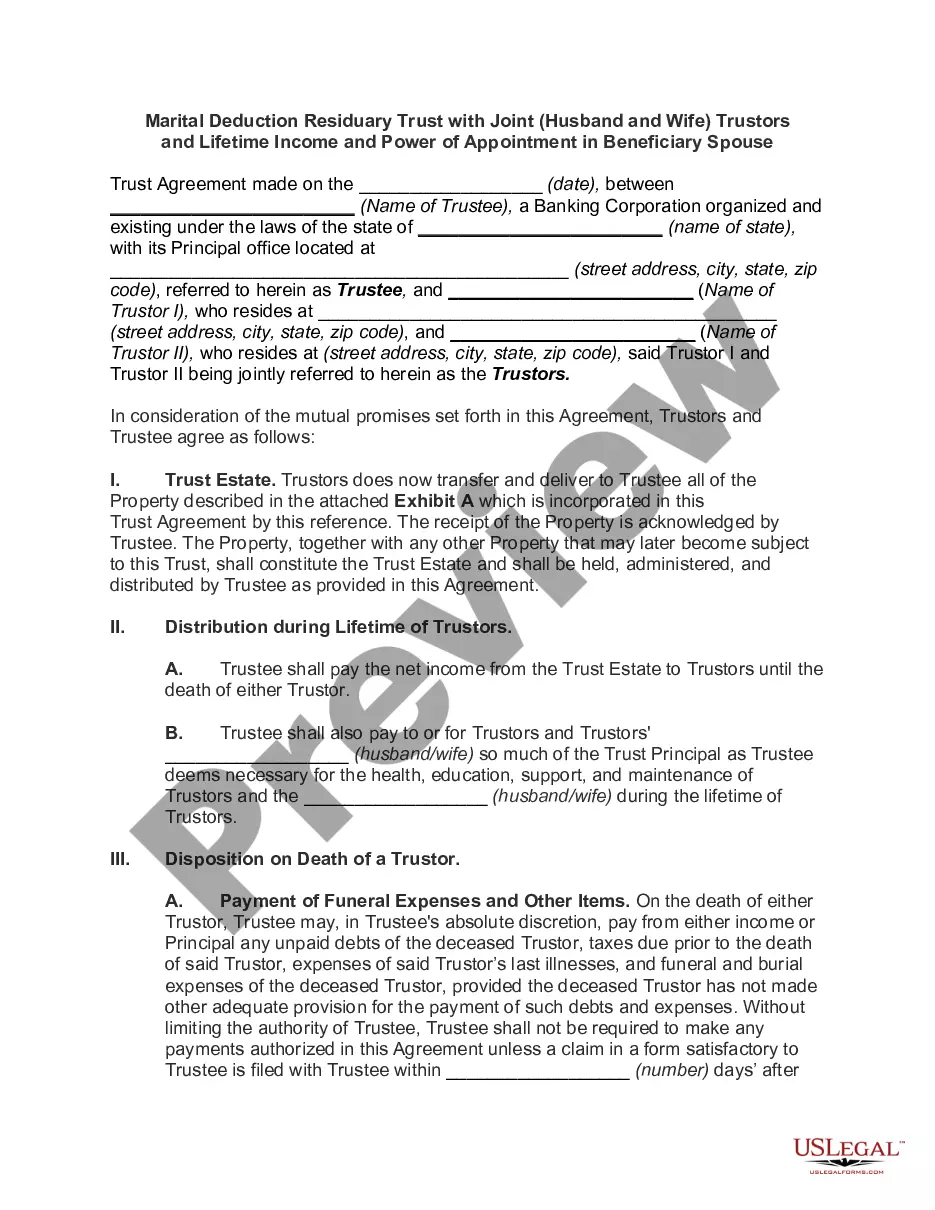
Also called an "A" trust, a marital trust goes into effect when the first spouse dies. Assets are moved into the trust upon death and the income that these assets generate go to the surviving spouseunder some arrangements, the surviving spouse can also receive principal payments.
Three commonly used testamentary trusts are the "survivor's trust," the "marital deduction trust," and the "by-pass trust."It is identical to a living trust for the surviving spouse. All income is taxed to the surviving spouse and all assets in the survivor's trust are included in the surviving spouse's estate.