Resolution by Shareholders Increasing Capital Stock
About this form
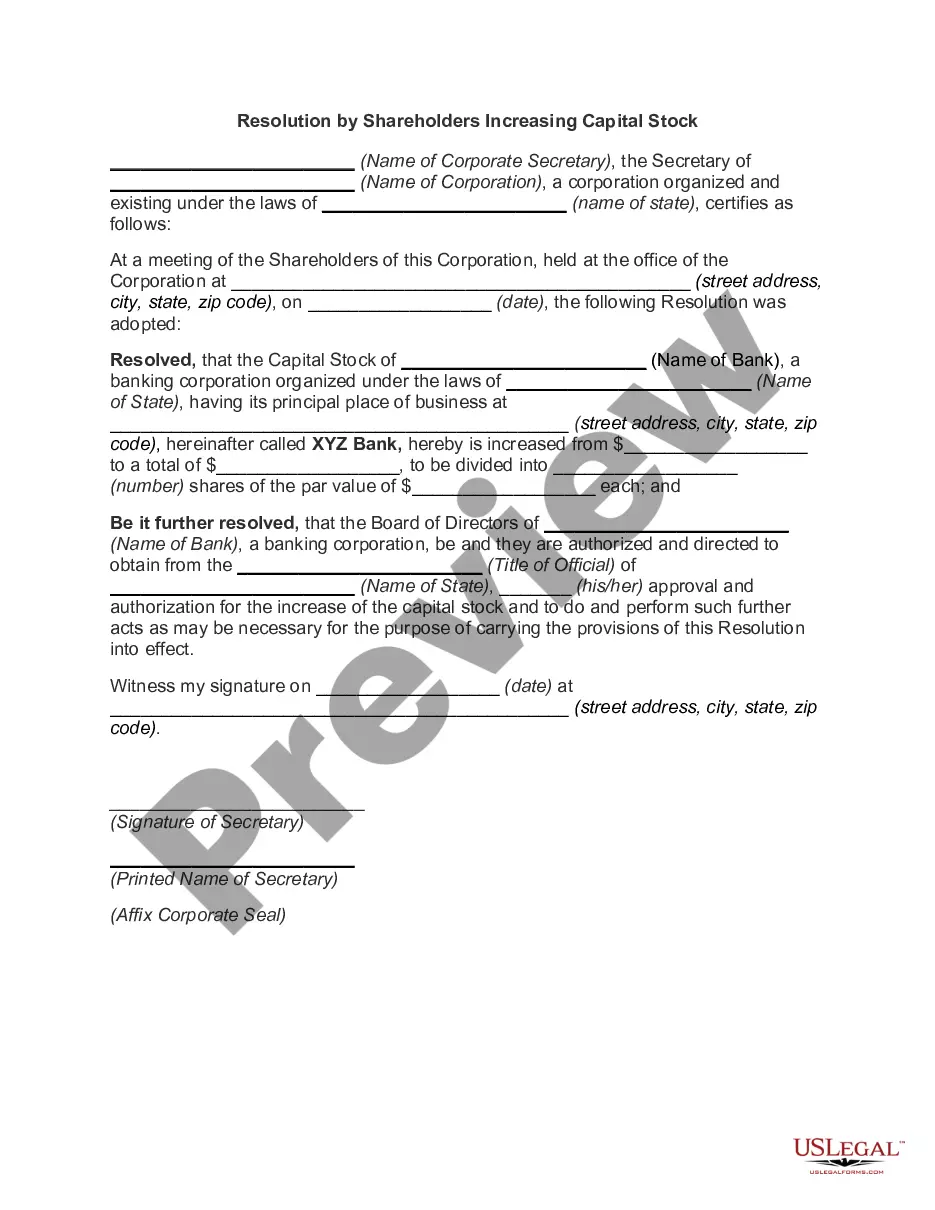
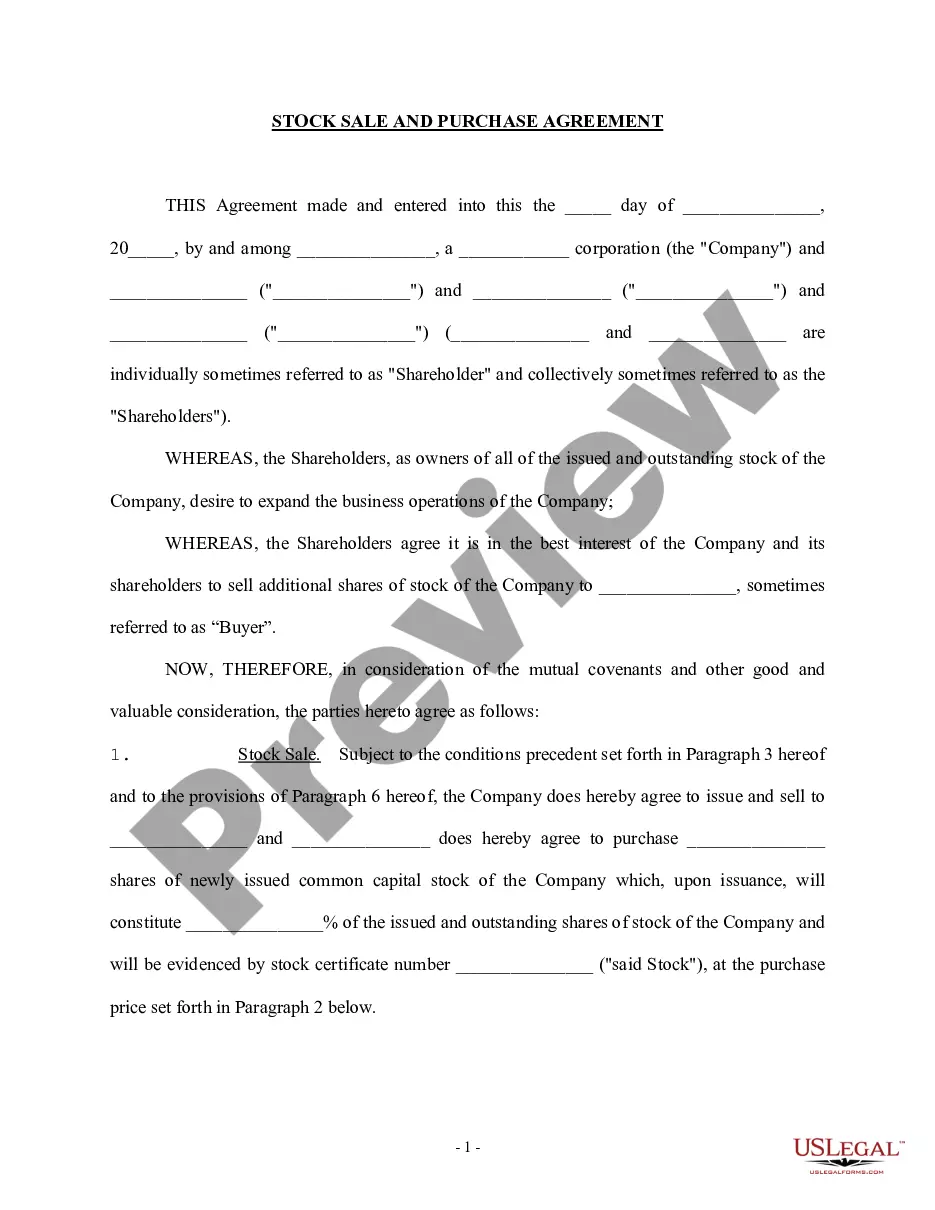
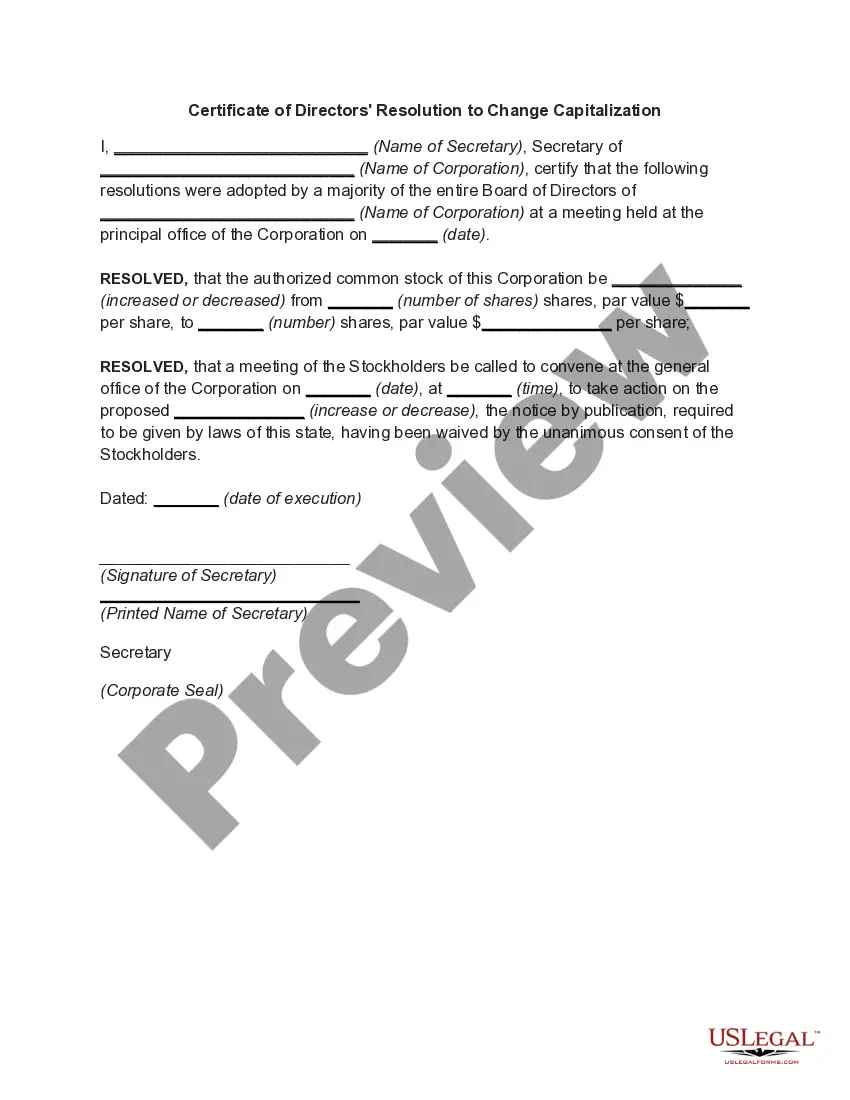
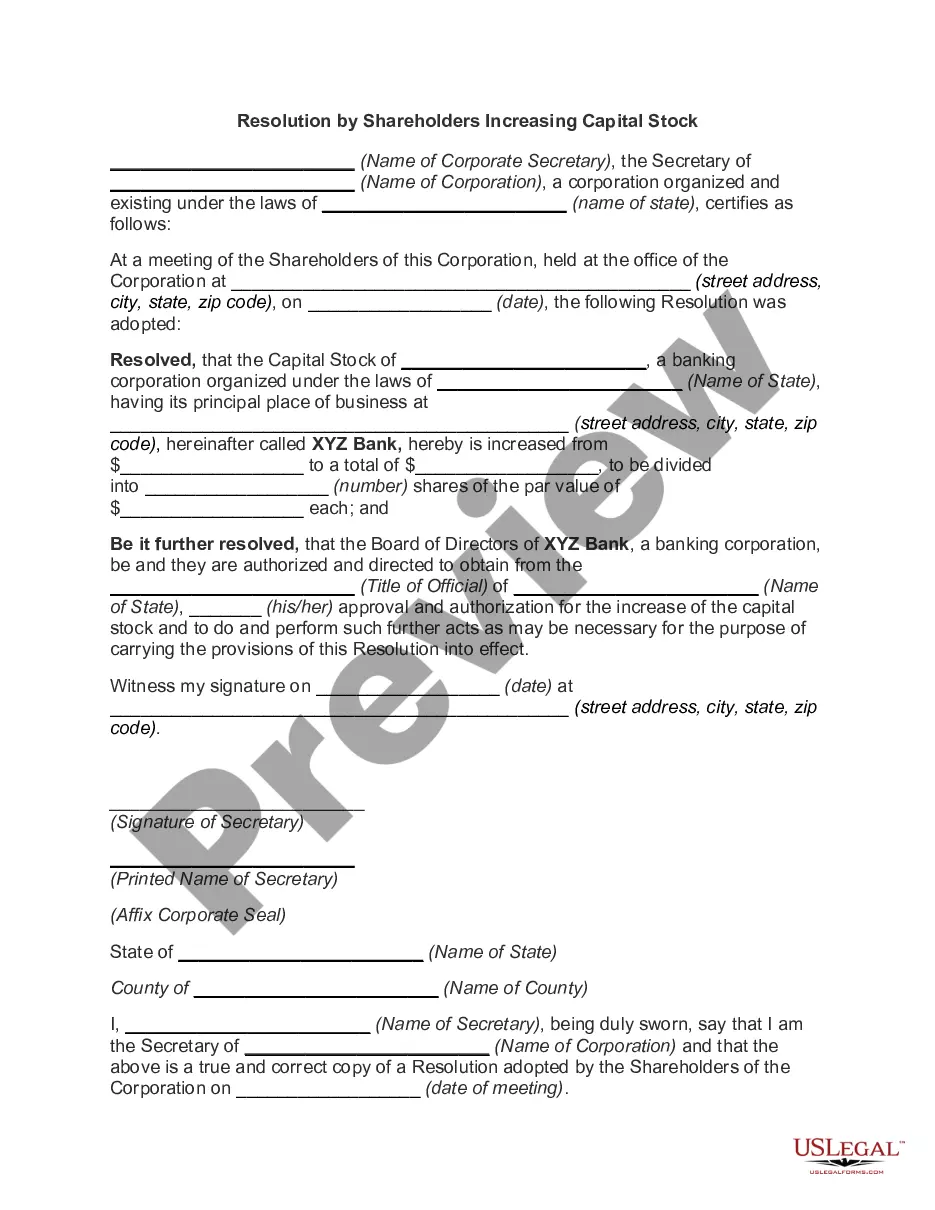
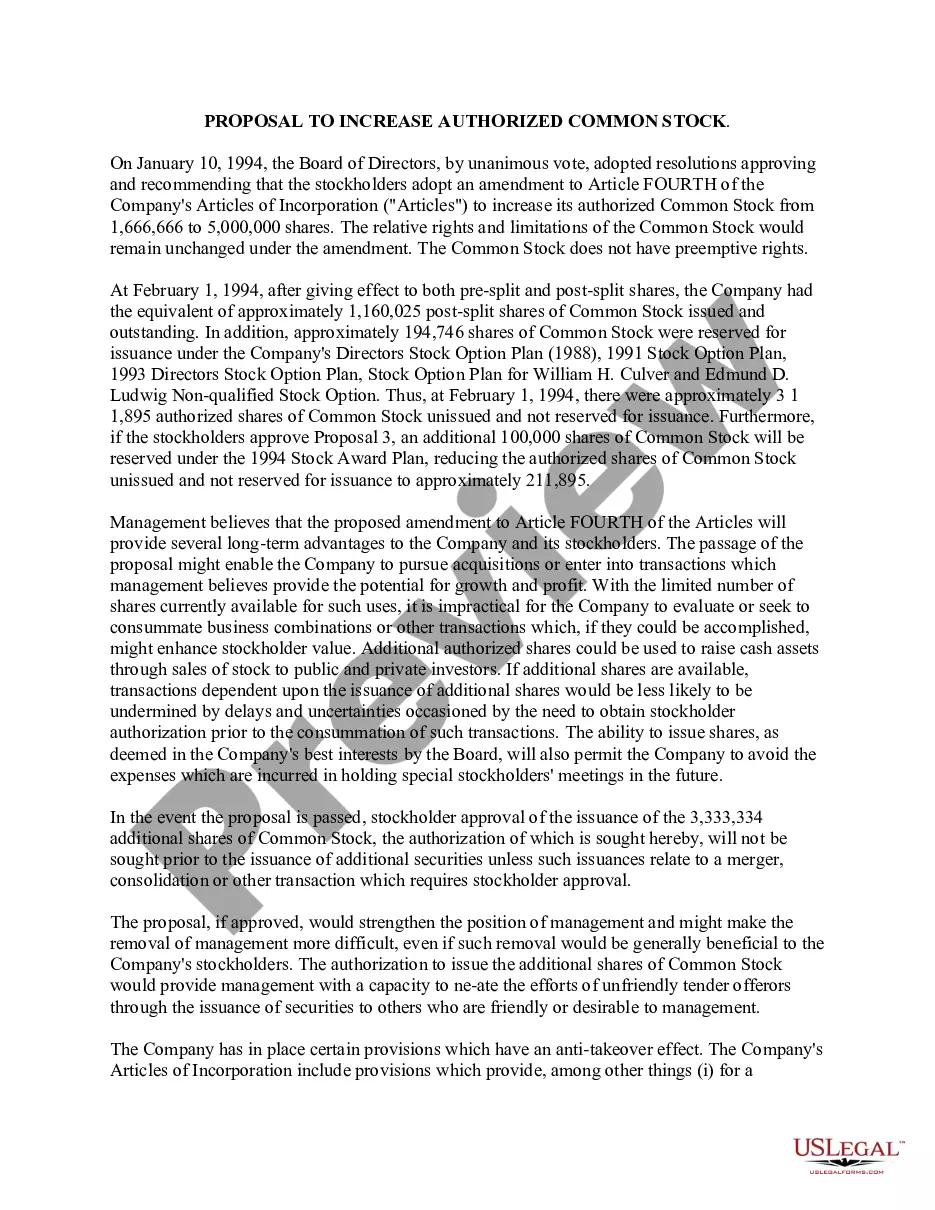
The Resolution by Shareholders Increasing Capital Stock is a formal document used by corporate shareholders to authorize an increase in a corporation's capital stock. This resolution outlines the specifics of the increase, including the number of shares and their par value. It is essential for corporations looking to raise additional equity to further their business operations, distinguishing it from similar forms such as stock transfer resolutions or bylaws amendments.
Key components of this form
- Name of the corporation and its Secretary.
- Date and location of the shareholder meeting.
- Current and proposed capital stock amounts.
- Details on the division of the new shares, including par value.
- Authorization for the Board of Directors to act on this resolution.
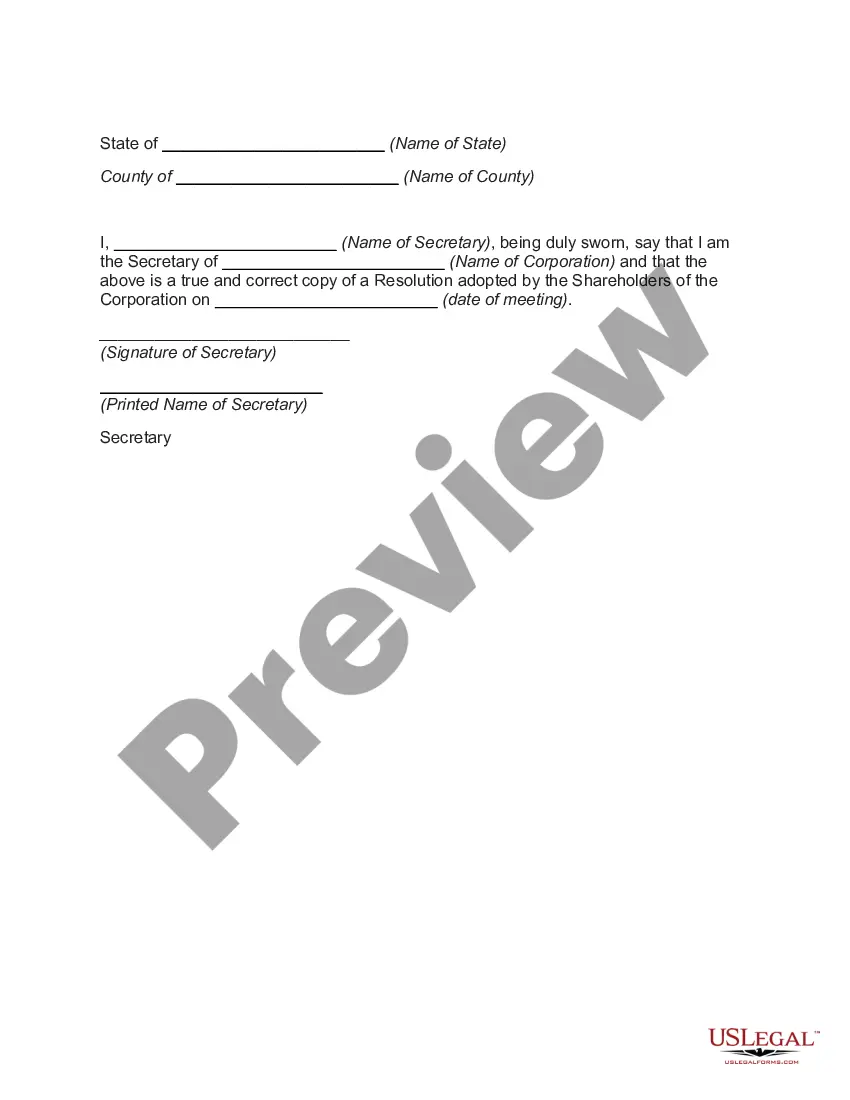
- A certification statement from the Secretary confirming the resolution.

When to use this form
This form is typically used when a corporation seeks to increase its capital stock as part of a plan to raise additional funds for business expansion, operational needs, or to comply with regulatory requirements. It is essential for corporations that intend to issue more shares to existing or new investors and for those looking to enhance their capital structure.
Intended users of this form
- Corporations that wish to increase their capital stock.
- Shareholders involved in corporate decision-making.
- Members of a corporation's Board of Directors seeking to obtain necessary approvals.
How to prepare this document
- Identify the name of the corporation and the corporate Secretary.
- Fill in the date and specific location of the shareholder meeting.
- Specify the current and new capital stock amounts, including the number of shares and par value.
- Ensure the Board of Directors is authorized to act in accordance with the resolution.
- Sign and notarize the document as required, ensuring all necessary parties have completed the form.
Notarization requirements for this form
This form does not typically require notarization unless specified by local law. However, it is advisable to ensure compliance with any specific legal requirements that may exist in your state.
Get your form ready online
Our built-in tools help you complete, sign, share, and store your documents in one place.
Make edits, fill in missing information, and update formatting in US Legal Forms—just like you would in MS Word.
Download a copy, print it, send it by email, or mail it via USPS—whatever works best for your next step.
Sign and collect signatures with our SignNow integration. Send to multiple recipients, set reminders, and more. Go Premium to unlock E-Sign.
If this form requires notarization, complete it online through a secure video call—no need to meet a notary in person or wait for an appointment.
We protect your documents and personal data by following strict security and privacy standards.

Make edits, fill in missing information, and update formatting in US Legal Forms—just like you would in MS Word.

Download a copy, print it, send it by email, or mail it via USPS—whatever works best for your next step.

Sign and collect signatures with our SignNow integration. Send to multiple recipients, set reminders, and more. Go Premium to unlock E-Sign.

If this form requires notarization, complete it online through a secure video call—no need to meet a notary in person or wait for an appointment.

We protect your documents and personal data by following strict security and privacy standards.
Common mistakes to avoid
- Failing to attach proper meeting minutes documenting the shareholder meeting.
- Incorrectly calculating the total proposed capital stock or share division.
- Not obtaining the required approvals from state officials or regulatory bodies.
- Missing signatures from the Secretary or Board members involved.
Why use this form online
- Convenience of completing the form from anywhere at any time.
- Editability allows for corrections and updates as needed.
- Reliability of having a legally vetted document prepared by licensed attorneys.
Looking for another form?


Form popularity
FAQ
Capital Stock refers to the ownership of a company. It is also another term for corporate share ownership of a company. The definition of Capital Stock is the amount of equity and preference shares a company is authorized to issue ing to the articles of association.
A company can increase share capital by issuing (i.e. allotting) new shares to existing or new shareholders. The company's constitution would typically provide that the Board of Directors (the ?Board?) has the authority to issue shares in the company.
Any shareholder has the right to propose a valid resolution for voting on at a meeting of shareholders, called a general meeting. If a valid resolution were passed by the requisite majority, the resolution would bind the company, the directors, the company secretary and all shareholders.
An increase in the authorised share capital of a company necessarily requires an amendment to the share capital clause of the Memorandum.
Three forms of resolutions are available: ordinary resolution, special resolution and unanimous resolution. There is no concept of special resolution in board meetings and very few unanimous resolutions are also required. However, all three are covered in the case of general meetings.