Renewable Performance Bond
What is this form?
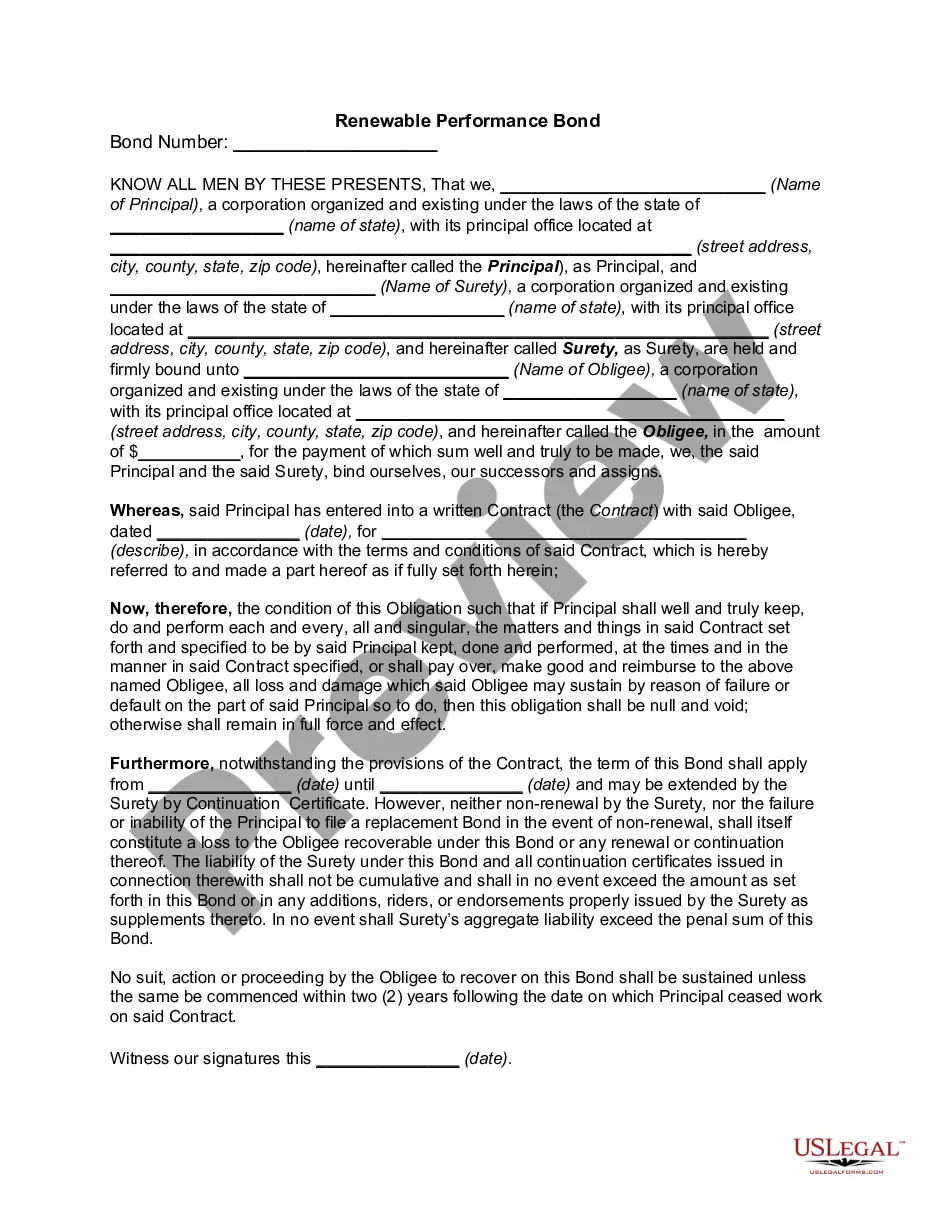
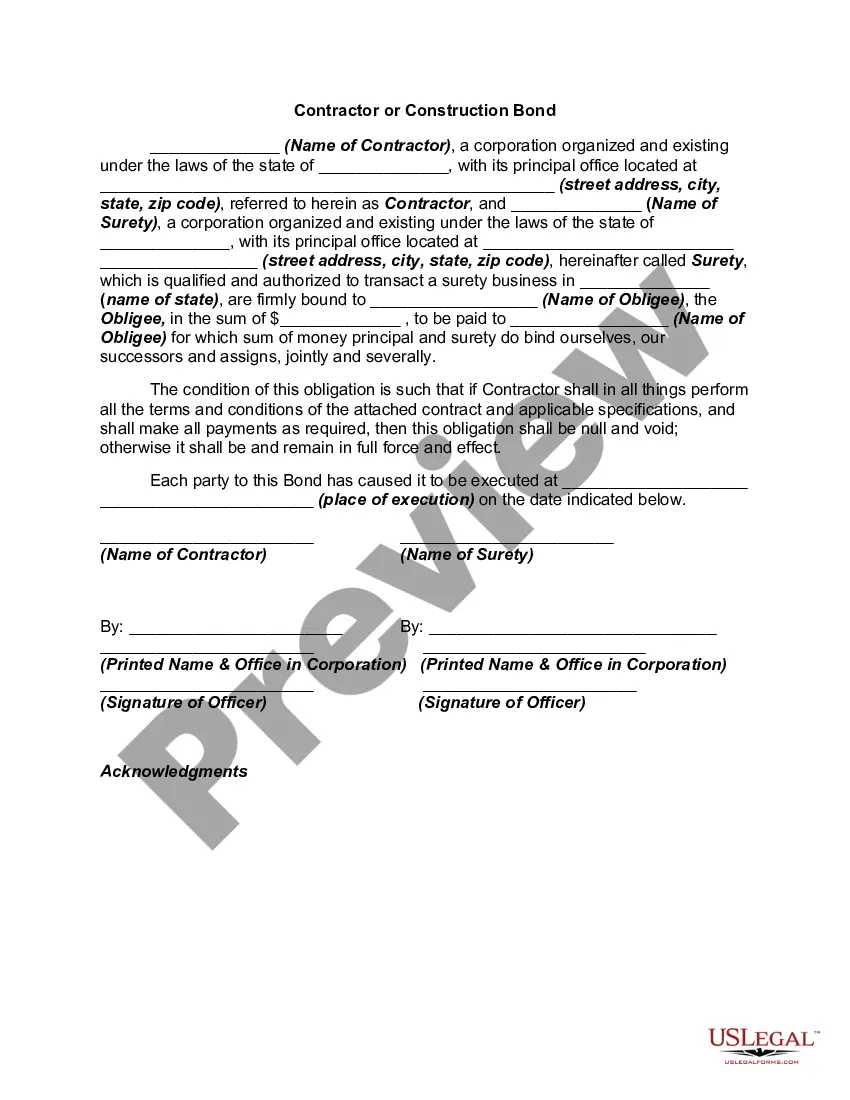
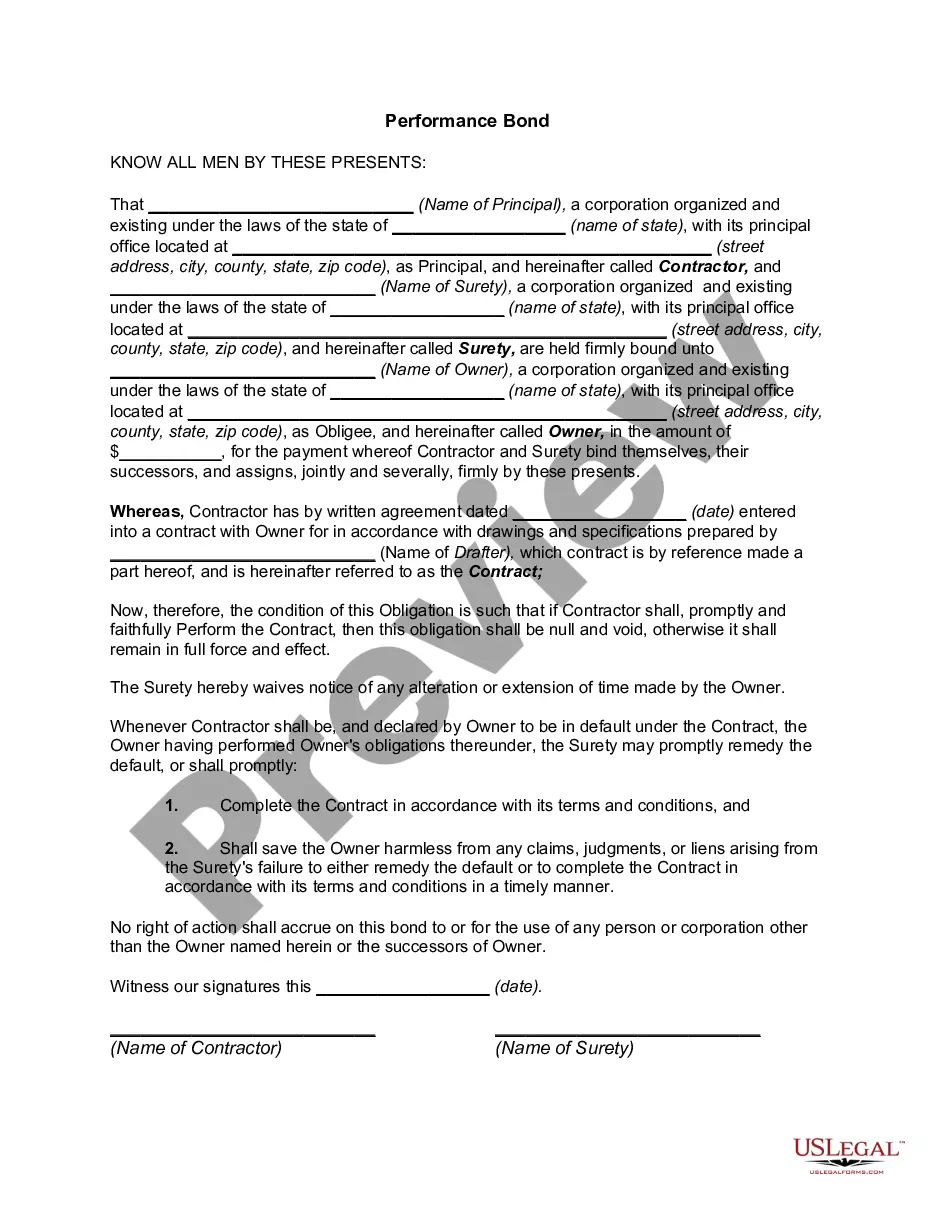
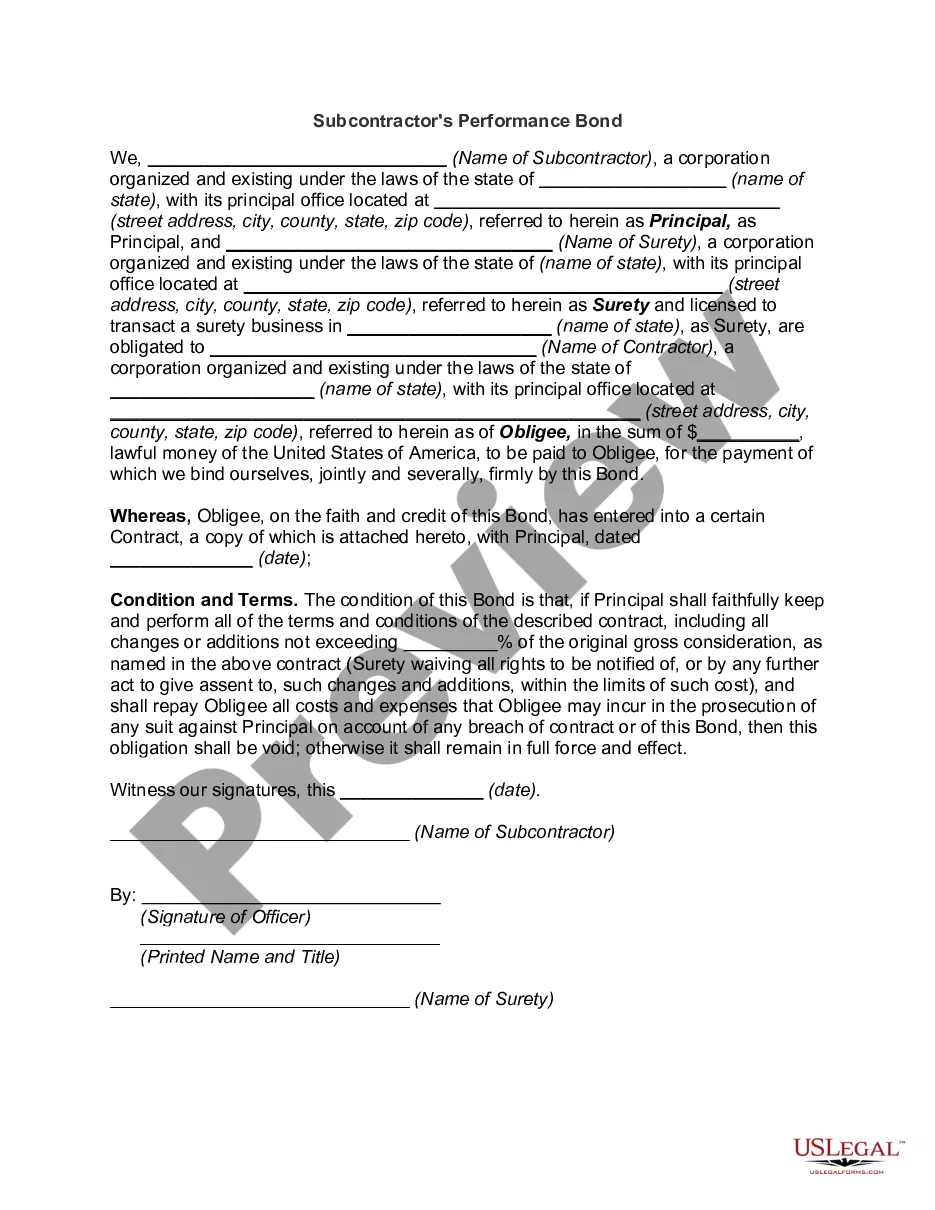
A Renewable Performance Bond is a type of surety bond issued by a surety company or bank to ensure the satisfactory completion of a project by a contractor. This bond protects the project owner (the Obligee) by guaranteeing that the contractor (the Principal) will fulfill their contractual obligations. Unlike a standard performance bond, a Renewable Performance Bond can be renewed periodically, which offers continued security for longer-term projects.
What’s included in this form
- Bond number: A unique identifier for the bond.
- Principal information: Name and address of the contractor responsible for the project.
- Surety information: Name and address of the surety company backing the bond.
- Obligee information: Name and address of the party benefiting from the bond.
- Contract details: Description of the project and terms of the contract.
- Renewal clause: Terms under which the bond can be renewed and limitations on liability.
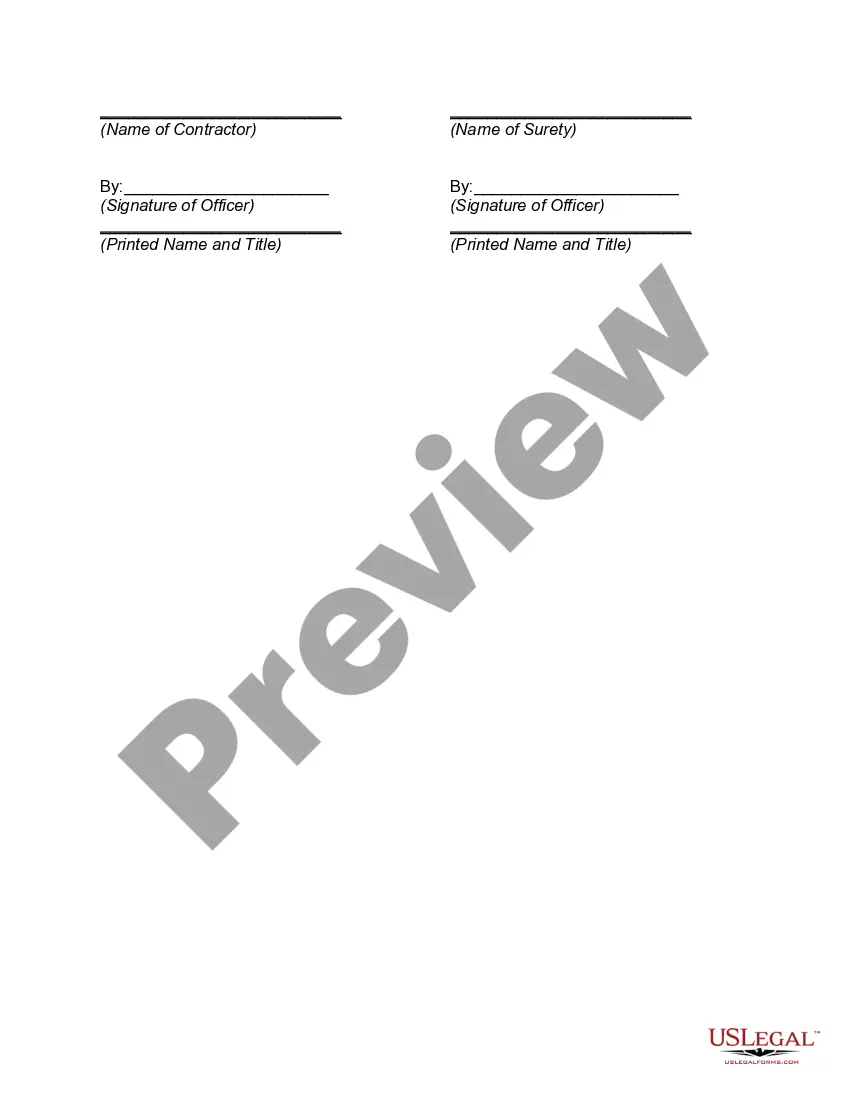
- Signature fields: Areas for authorized representatives to sign and date the bond.

When to use this document
This form should be used by contractors who are required to provide a Renewable Performance Bond to secure a contract for construction or related services. It is particularly relevant when the project has an ongoing nature, requiring continued assurance of performance over time. For example, it may be needed in large construction projects, maintenance agreements, or any other contractual arrangement specifying ongoing obligations.
Who should use this form
- Contractors entering into agreements that require performance bonds.
- Property owners or project managers who want to ensure project completion by the contractor.
- Surety companies offering bonds to contractors in compliance with legal obligations.
- Businesses involved in the construction industry needing protection against contractor default.
How to complete this form
- Identify the parties involved: Clearly state the names and addresses of the Principal, Surety, and Obligee.
- Enter the bond number: Write the unique identification number assigned to the bond.
- Describe the project: Provide a detailed description of the contract and its obligations.
- Specify the amount: Indicate the total bond amount that guarantees performance.
- Fill in the duration: Enter the start and end dates for the bondâs validity.
- Collect signatures: Ensure authorized representatives of the Principal and Surety sign and date the bond.
Is notarization required?
This form does not typically require notarization unless specified by local law. However, it is advisable to check with local regulations to ensure compliance with any specific requirements that may apply.
Get your form ready online
Our built-in tools help you complete, sign, share, and store your documents in one place.
Make edits, fill in missing information, and update formatting in US Legal Forms—just like you would in MS Word.
Download a copy, print it, send it by email, or mail it via USPS—whatever works best for your next step.
Sign and collect signatures with our SignNow integration. Send to multiple recipients, set reminders, and more. Go Premium to unlock E-Sign.
If this form requires notarization, complete it online through a secure video call—no need to meet a notary in person or wait for an appointment.
We protect your documents and personal data by following strict security and privacy standards.

Make edits, fill in missing information, and update formatting in US Legal Forms—just like you would in MS Word.

Download a copy, print it, send it by email, or mail it via USPS—whatever works best for your next step.

Sign and collect signatures with our SignNow integration. Send to multiple recipients, set reminders, and more. Go Premium to unlock E-Sign.

If this form requires notarization, complete it online through a secure video call—no need to meet a notary in person or wait for an appointment.

We protect your documents and personal data by following strict security and privacy standards.
Mistakes to watch out for
- Failing to provide complete and accurate information about the parties involved.
- Not entering the correct bond amount, which can affect its enforceability.
- Neglecting to specify the project details and contract obligations clearly.
- Omitting signatures or dates from the required parties, invalidating the bond.
Why use this form online
- Convenience: Download and access the form anytime, without the need for in-person meetings.
- Editability: Customize the form as needed to fit specific project requirements.
- Reliability: Use forms drafted by licensed attorneys, ensuring legal compliance.
- Time-saving: Complete and submit the form quickly, streamlining the bonding process.
What to keep in mind
- A Renewable Performance Bond guarantees the performance of a contractor over the life of the project.
- Important components include details about the Principal, Surety, and Obligee.
- This bond can be renewed, offering ongoing protection for longer projects.
- Accurate completion and signature by authorized parties is essential for validity.
Looking for another form?

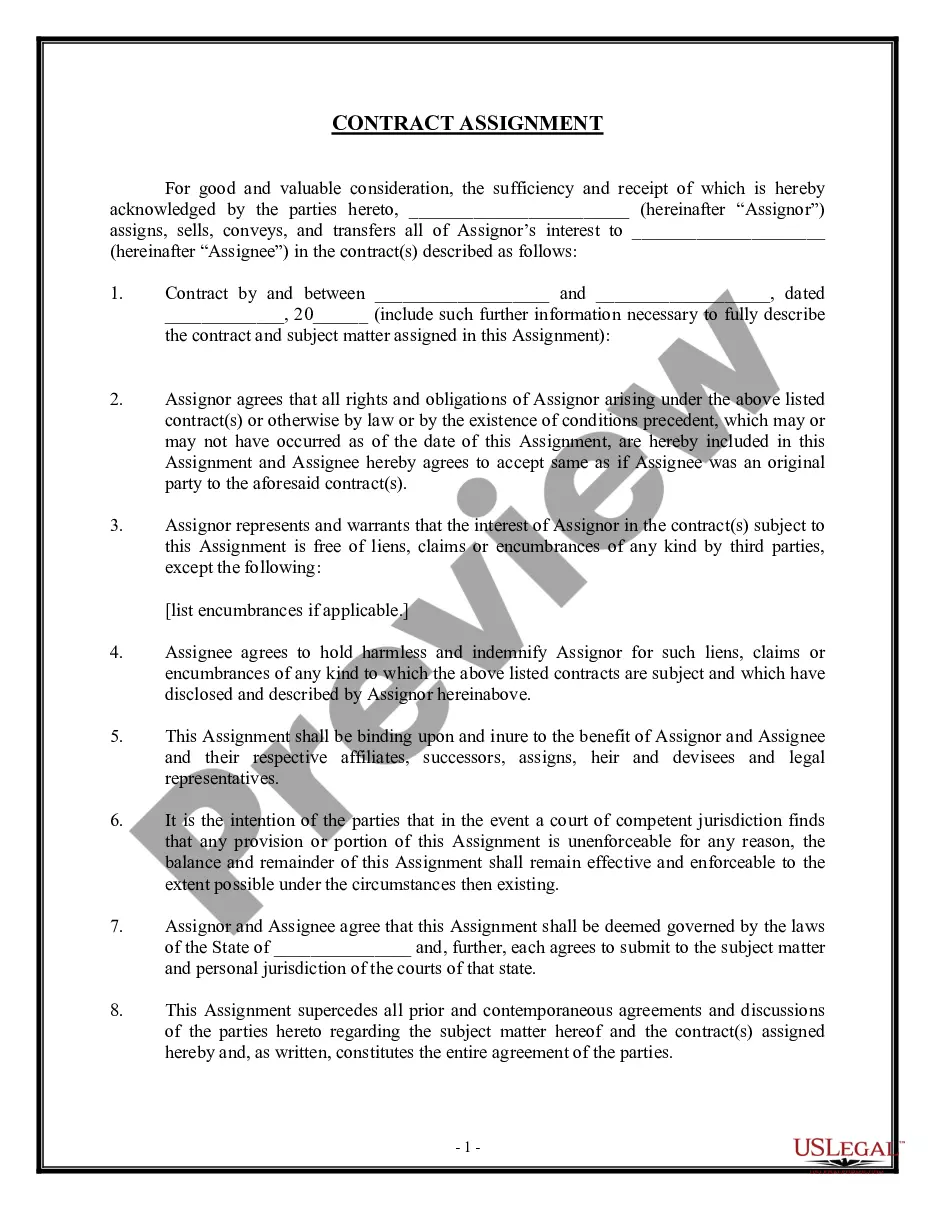
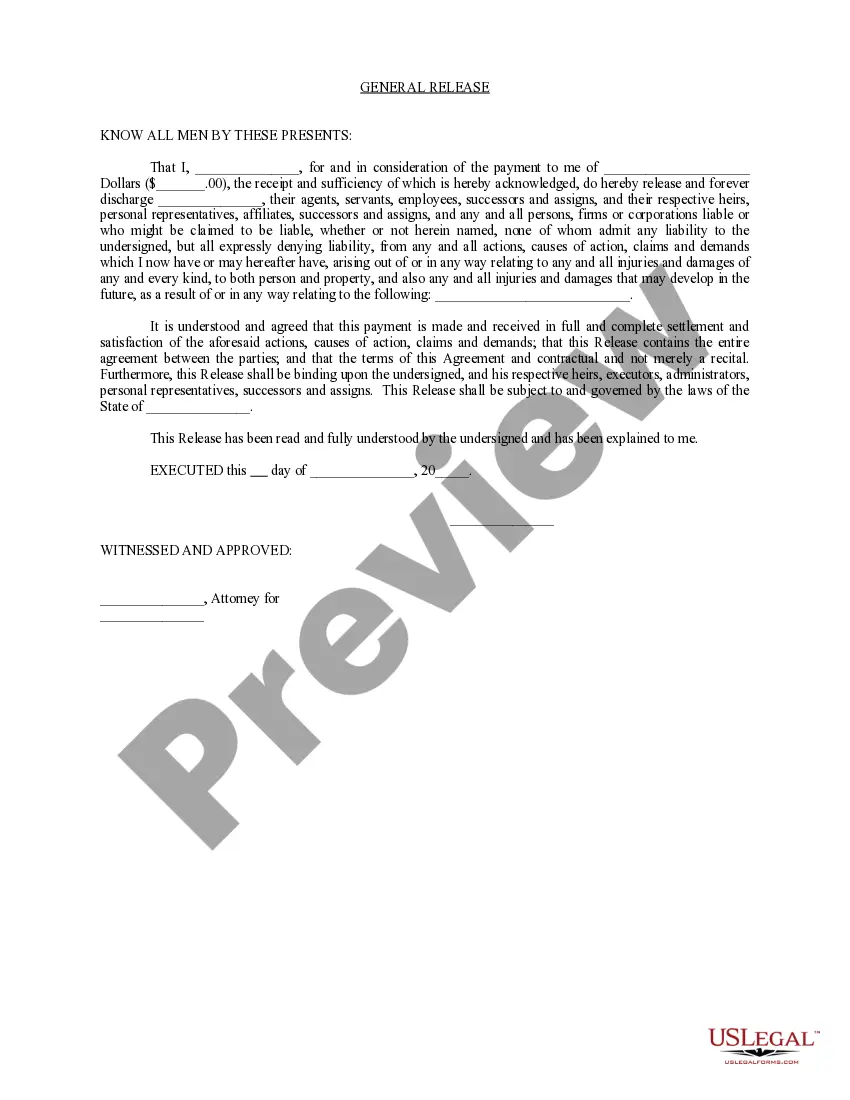
Form popularity
FAQ
The cost of a performance bond usually is less than 1% of the contract price; however, if the contract is under $1 million, the premium may run between 1% and 2%. Bonds may be more costly, depending upon the credit-worthiness of the contractor. Labor and material payment bonds are companions to the performance bond.
Collect the funds owed from the performance bond from the bank or brokerage house holding the bond. You may obtain a cashier's check or request a wire transfer into a designated account.
The Performance Bond secures the contractor's promise to perform the contract in accordance with its terms and conditions, at the agreed upon price, and within the time allowed. The Payment Bond protects certain laborers, material suppliers and subcontractors against nonpayment.
Performance bonds are typically provided by a financial institution such as a bank or an insurance company. The bond would be paid for by the party providing the services under the agreement. Performance bonds are common in industries like construction and real estate development.
A performance bond is issued to one party of a contract as a guarantee against the failure of the other party to meet obligations specified in the contract.A performance bond is usually provided by a bank or an insurance company to make sure a contractor completes designated projects.
A performance bond is a bond that guarantees that the bonded contractor will perform its obligations under the contract in accordance with the contract's terms and conditions. Performance bonds are typically in the amount of 50% of the contract amount, but can also be issued for 100% of the contract amount.
A performance bond provides assurance that the obligee will be protected if the principal fails to perform the bonded contract. If the obligee declares the principal in default and terminates the contract, it can call on the surety to meet the surety's obligations under the bond.
Performance bonds and surety bonds are the same type of instrument, used to help define business contracts when an owner wants to hire a contractor to do specific work. In general, "surety bond" is a term used to describe all such bonds, while "performance bond" is used to describe a specific type of surety bond.