Nebraska Mutual Wills Package for Married Couple with No Children
About this form
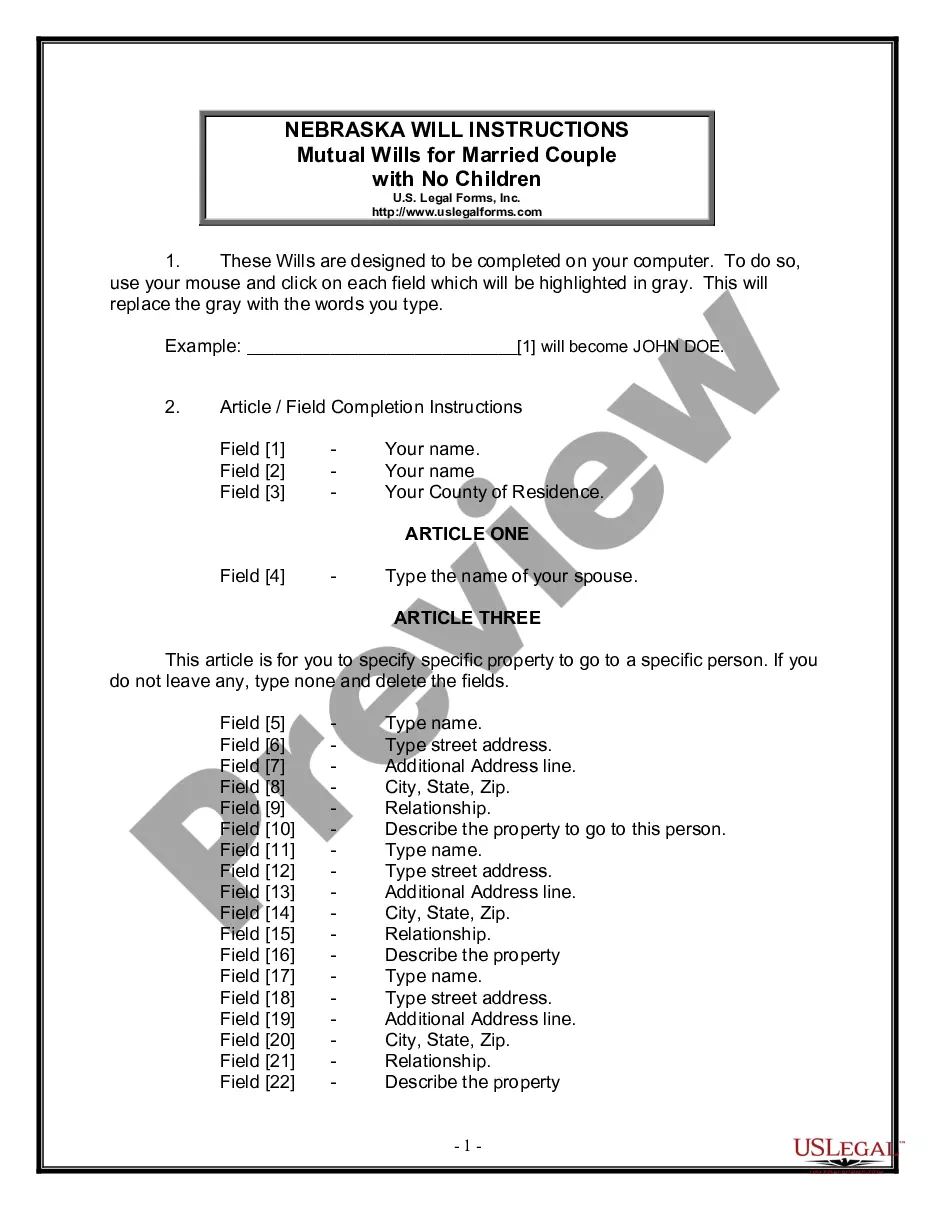
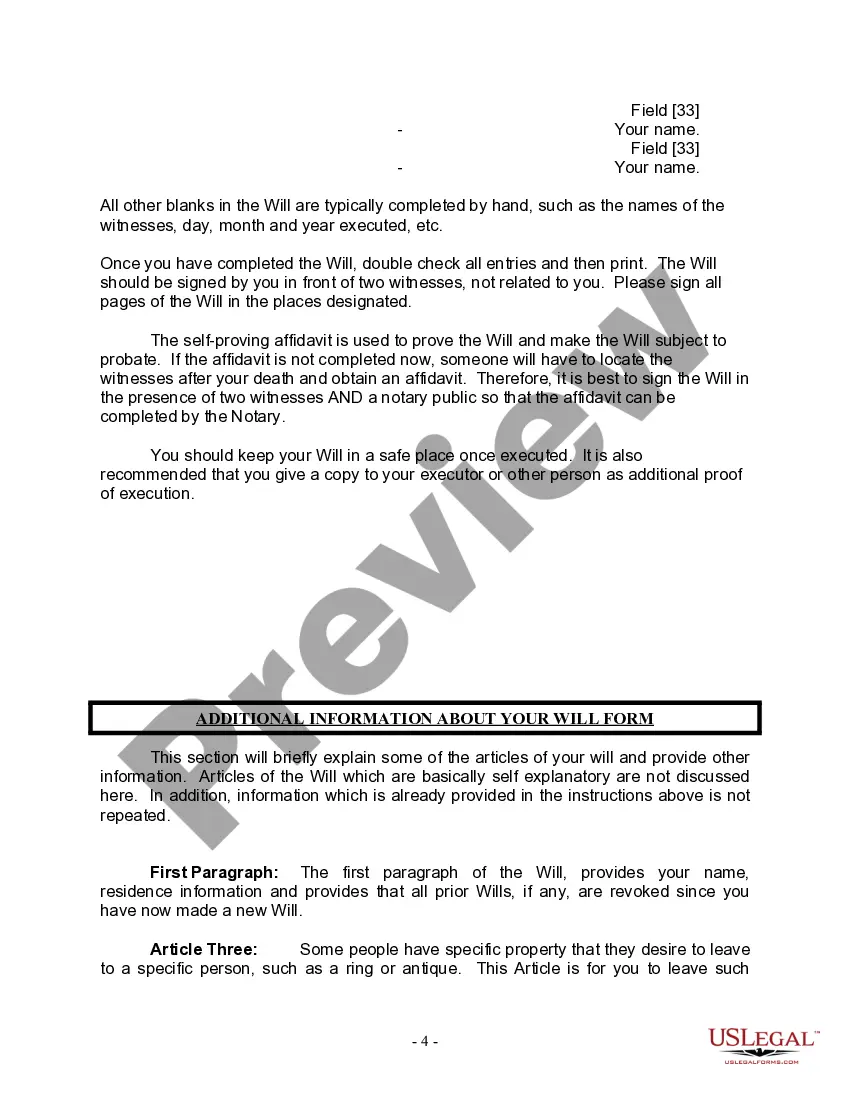
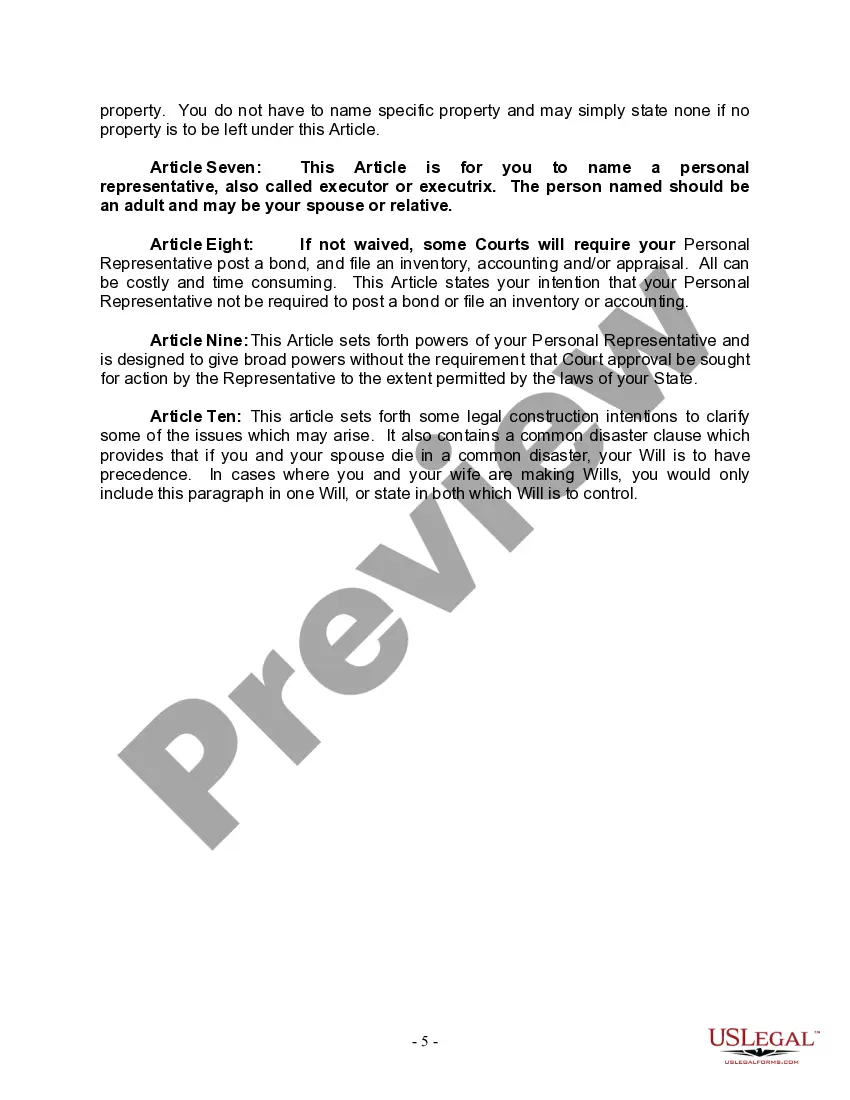
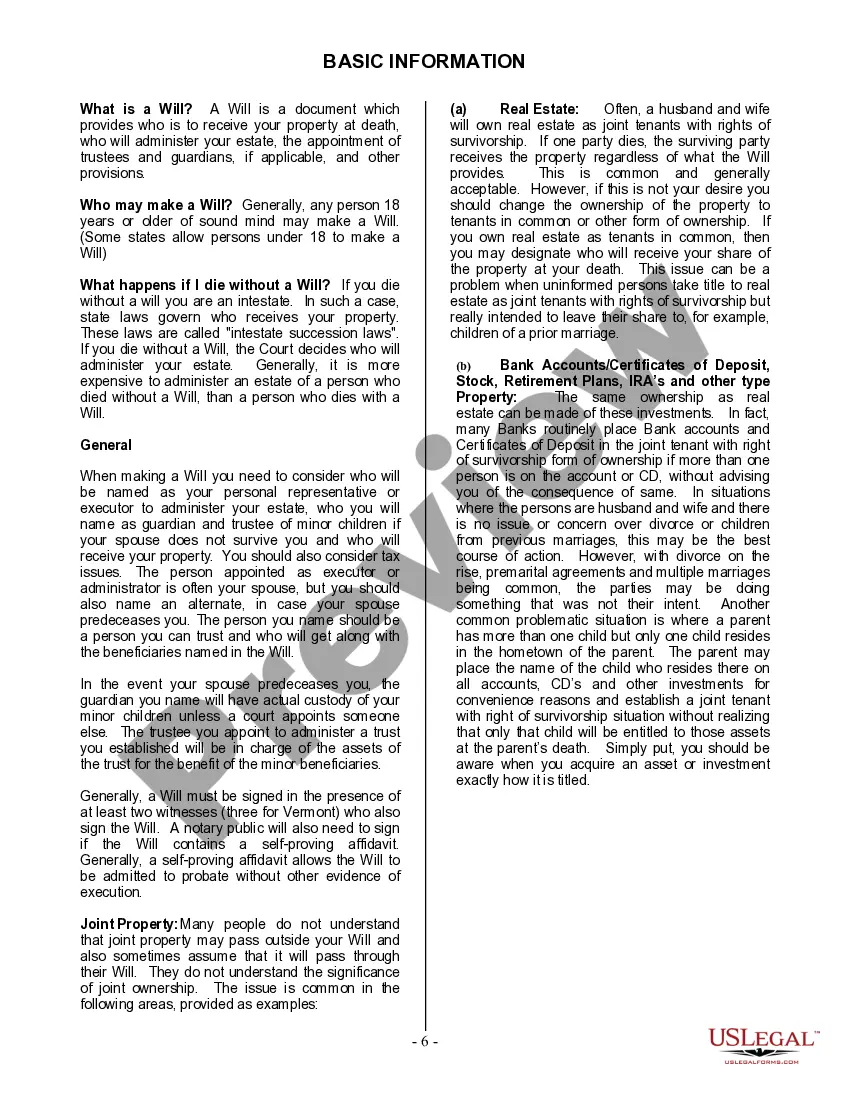
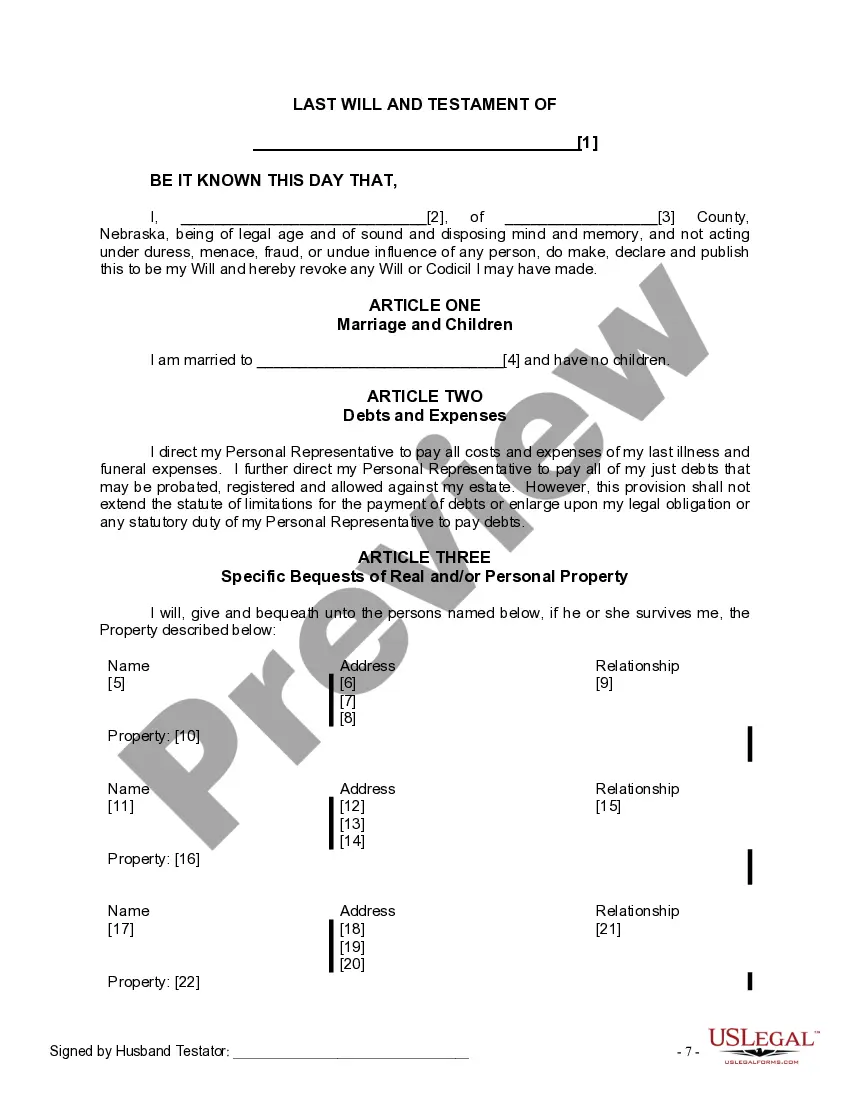
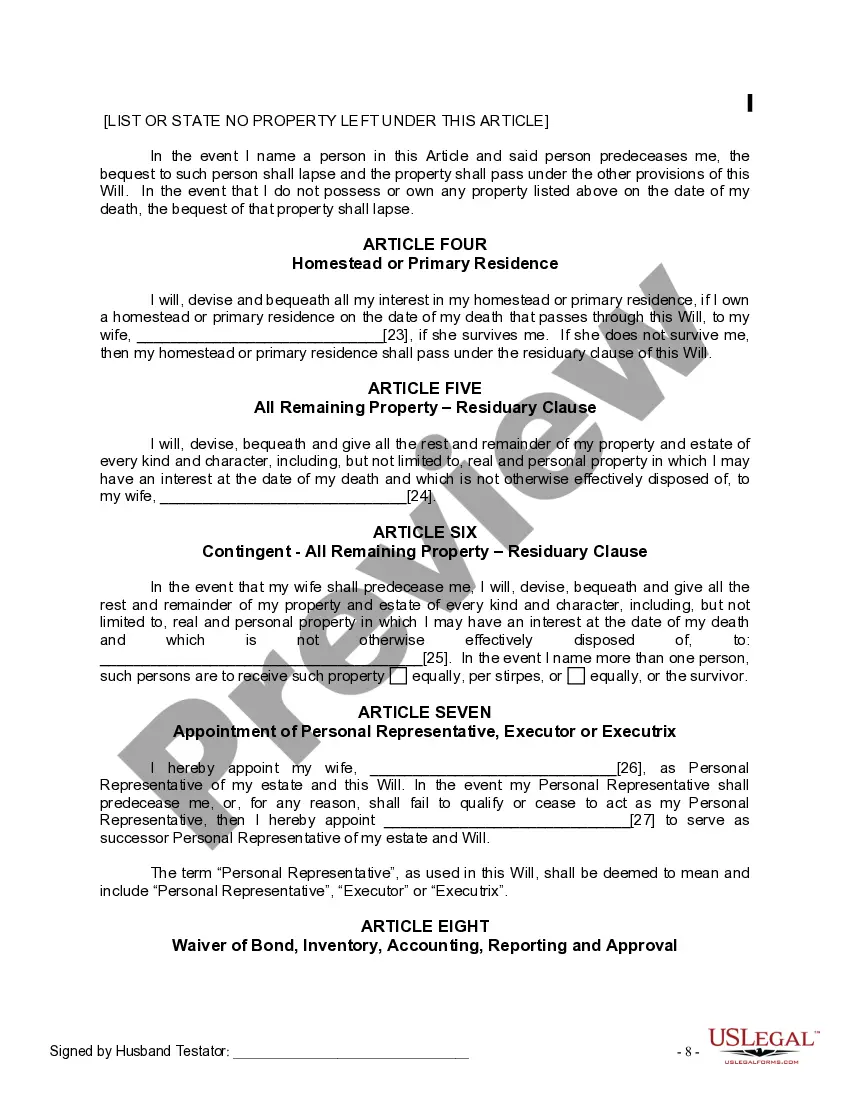
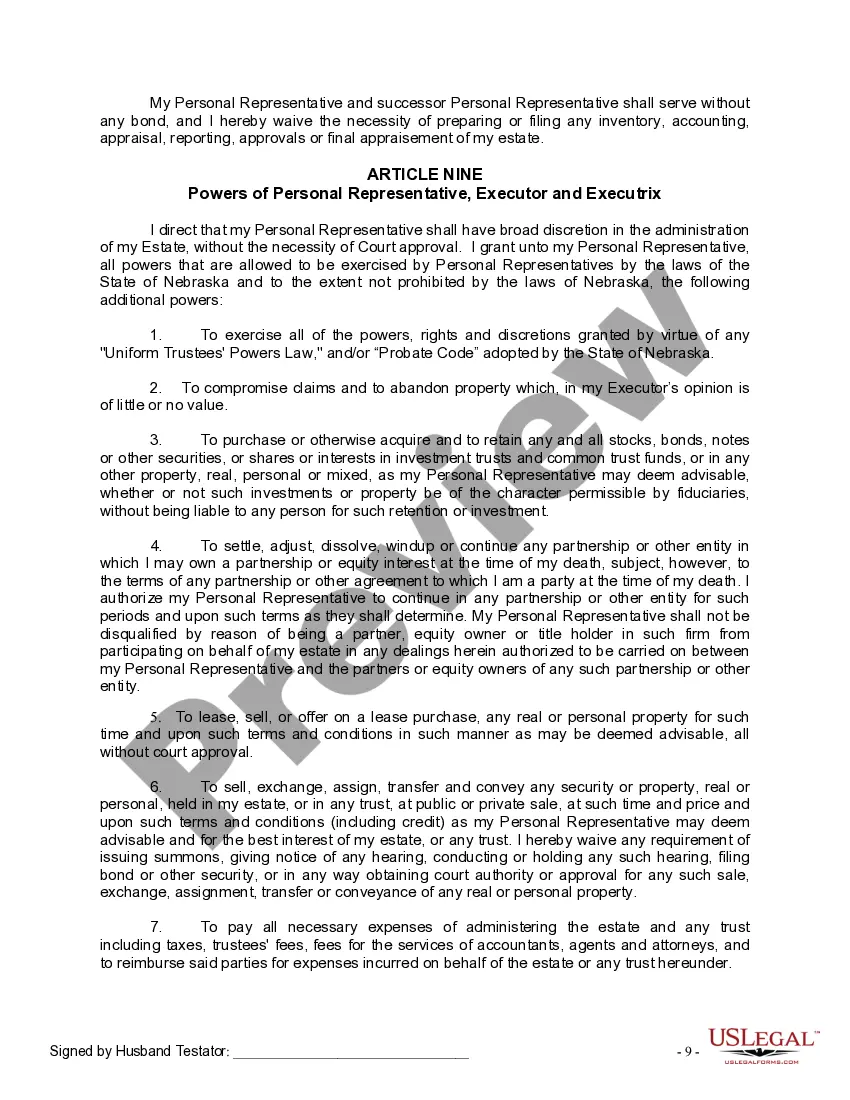
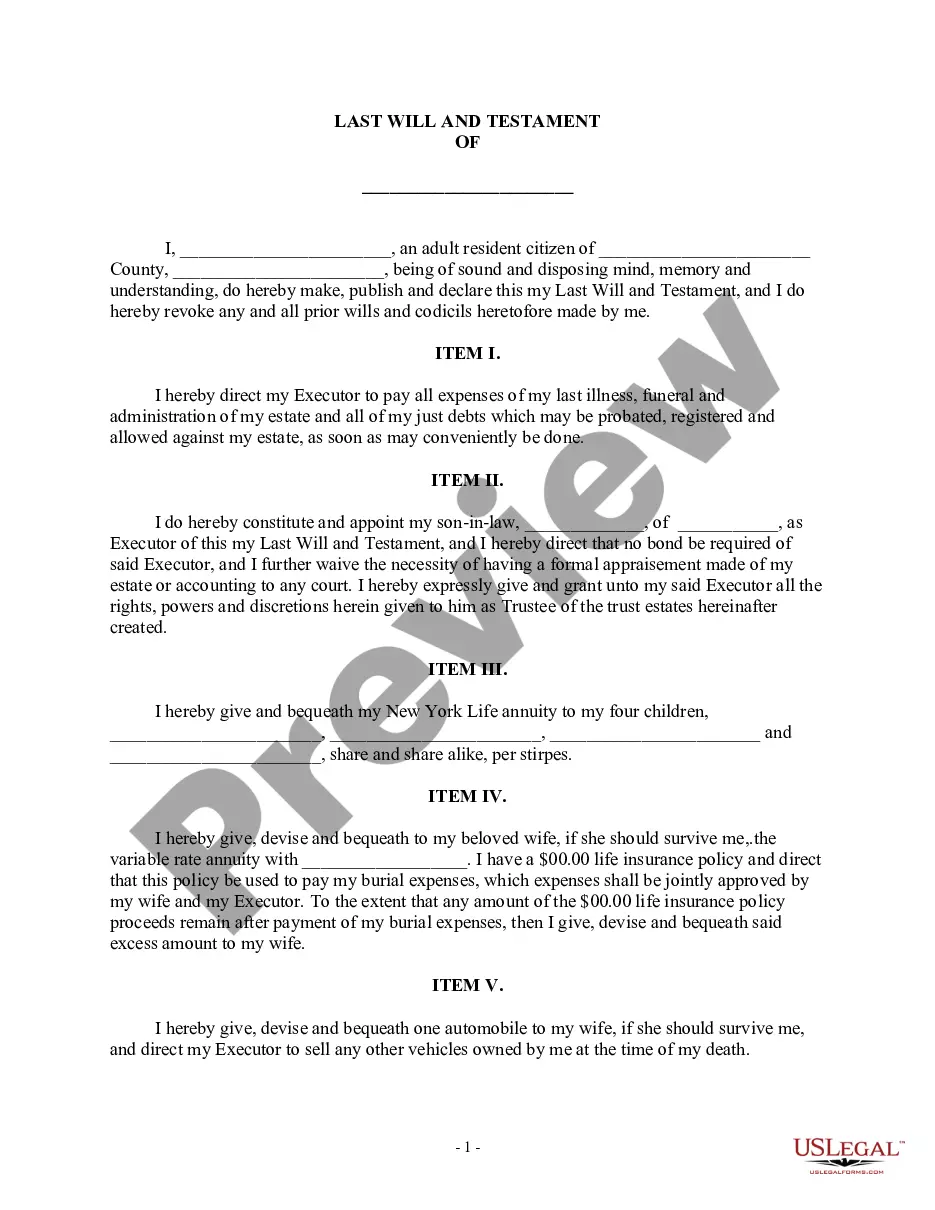
The Mutual Wills Package for Married Couple with No Children is a legal document designed for married couples who wish to create mutual wills. These wills ensure that upon the death of either spouse, the surviving spouse inherits the estate, along with other specified provisions. Unlike individual wills, mutual wills bind both spouses to their respective terms, meaning that neither can change their will without consent from the other. This package includes two wills and easy-to-follow instructions.
Key components of this form
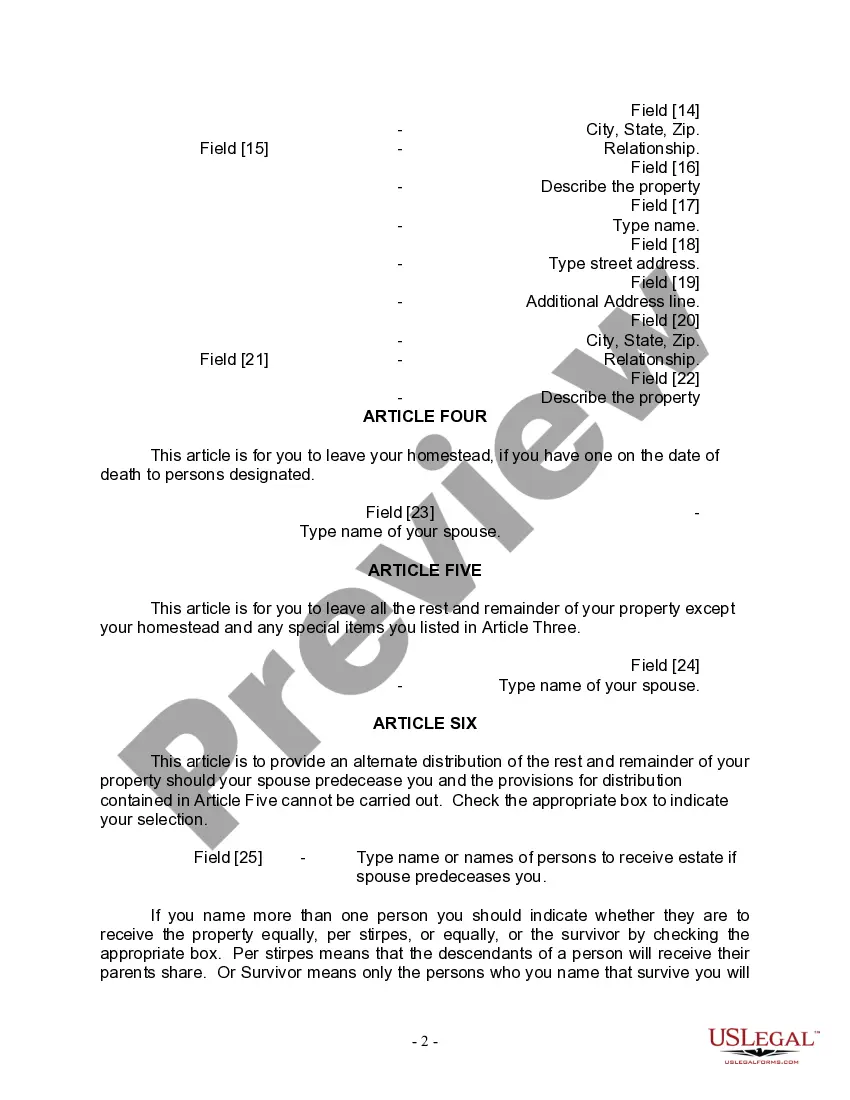
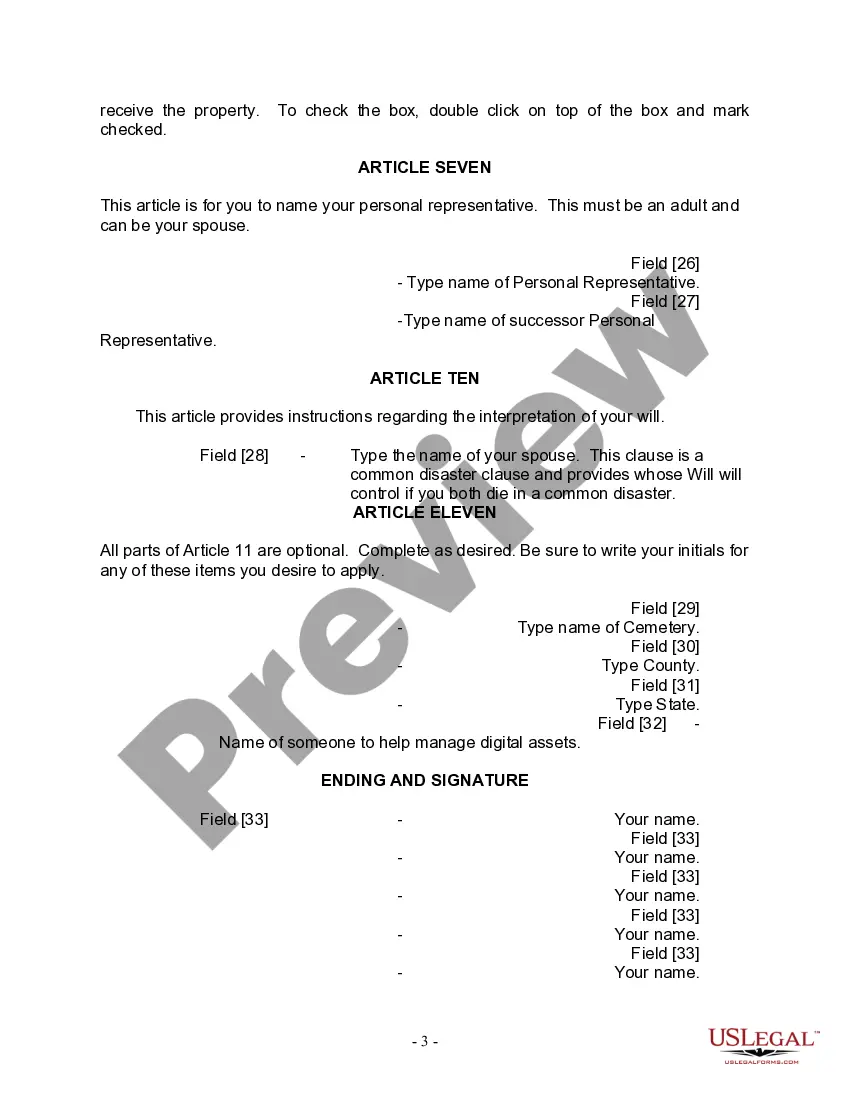
- Appointment of a personal representative: Designate an executor to manage the estate.
- Specific bequests: Outline any specific property to be passed to designated individuals.
- Homestead provision: Specify what happens to the family's primary residence.
- Residual estate clause: Determine what happens to remaining property not specifically mentioned.
- Contingent distribution: Plan for distribution in case both spouses die simultaneously.




When to use this document
This form is ideal for married couples without children who want to ensure that their assets are passed to each other upon death. If you are looking to solidify your estate plan and protect your spouse's inheritance, this is the appropriate time to utilize this package. It can also be used if you're updating existing wills or ensuring your estate plan reflects current wishes.
Who can use this document
- Married couples without children who wish to protect each otherâs inheritance.
- Couples looking to establish a clear plan for their estate distribution upon death.
- Individuals wanting a straightforward arrangement without complicated trusts or legal jargon.
How to prepare this document
- Identify the parties: Enter the names and residences of both spouses.
- Designate an executor: Fill in the details of the personal representative who will manage the estate.
- Specify bequests: Detail any specific gifts of property to be distributed.
- Fill in the homestead details: Include your primary residence's information, if applicable.
- Sign in front of witnesses: Ensure that both spouses sign the wills in the presence of two witnesses.
Does this document require notarization?
Yes, this form must be notarized to be legally valid. It is recommended to have a notary public present during the signing to ensure that all signatures are legitimate and to simplify the process of proving the will's validity in probate.
Get your form ready online
Our built-in tools help you complete, sign, share, and store your documents in one place.
Make edits, fill in missing information, and update formatting in US Legal Forms—just like you would in MS Word.
Download a copy, print it, send it by email, or mail it via USPS—whatever works best for your next step.
Sign and collect signatures with our SignNow integration. Send to multiple recipients, set reminders, and more. Go Premium to unlock E-Sign.
If this form requires notarization, complete it online through a secure video call—no need to meet a notary in person or wait for an appointment.
We protect your documents and personal data by following strict security and privacy standards.

Make edits, fill in missing information, and update formatting in US Legal Forms—just like you would in MS Word.

Download a copy, print it, send it by email, or mail it via USPS—whatever works best for your next step.

Sign and collect signatures with our SignNow integration. Send to multiple recipients, set reminders, and more. Go Premium to unlock E-Sign.

If this form requires notarization, complete it online through a secure video call—no need to meet a notary in person or wait for an appointment.

We protect your documents and personal data by following strict security and privacy standards.
Common mistakes
- Failing to have both spouses sign the documents in front of witnesses.
- Not properly identifying property or failing to specify beneficiaries.
- Overlooking the need for notarization if required by local law.
- Not updating the wills after significant life changes, such as divorce or major asset acquisitions.
Why complete this form online
- Convenience: Complete the forms at your own pace from the comfort of your home.
- Editability: Easily make changes to the forms before finalizing them.
- Cost-effective: Save on attorney fees while ensuring your legal documents are properly structured.
- Immediate access: Get your legal documents quickly without waiting for appointments.
Looking for another form?

Form popularity
FAQ
A joint will is one that two people, typically a married couple, sign together. Instead of each spouse having a separate will, they have one document that they've both agreed to. Most joint wills are written such that when one spouse dies, their portion of the estate passes to the other.
The reality is, however, that both you and your spouse should each have your own will, and it should be planned as soon as possible. Some couples think that they can have one joint will together, but this is not a sound approach.
Property in a living trust. One of the ways to avoid probate is to set up a living trust. Retirement plan proceeds, including money from a pension, IRA, or 401(k) Stocks and bonds held in beneficiary. Proceeds from a payable-on-death bank account.
Mirror wills are based on the idea that married or unmarried couples will likely have the same wishes regarding their estate. No matter which spouse dies first, the estates are handled the same way. The basic structure of a mirror will is similar to an individual last will.
Joint wills are usually created by married couples. They often state that: After one spouse has died, all the couple's property will be left to the surviving spouse; and. After the surviving spouse dies, the remaining property will be left to the couple's children.
To make a will self-proved in Nebraska, the testator and witnesses must sign a self proving affidavit before a notary public. An affidavit is a sworn statement, and a notary public is an officer of the court. Therefore, an affidavit before a notary public is like making a statement in court.
Bank accounts. Brokerage or investment accounts. Retirement accounts and pension plans. A life insurance policy.
In most states, if you have a will while you are married and then end the marriage, the will is automatically revoked. It's possible to leave an inheritance to your ex, but you have to write a new will that specifically states you are doing so. Disinheriting your spouse.
Create the initial document. Start by titling the document Last Will and Testament" and including your full legal name and address. Designate an executor. Appoint a guardian. Name the beneficiaries. Designate the assets. Ask witnesses to sign your will. Store your will in a safe place.