Nebraska Small Estate Affidavit for Personal Property of Estates Not More Than $100,000
About this form
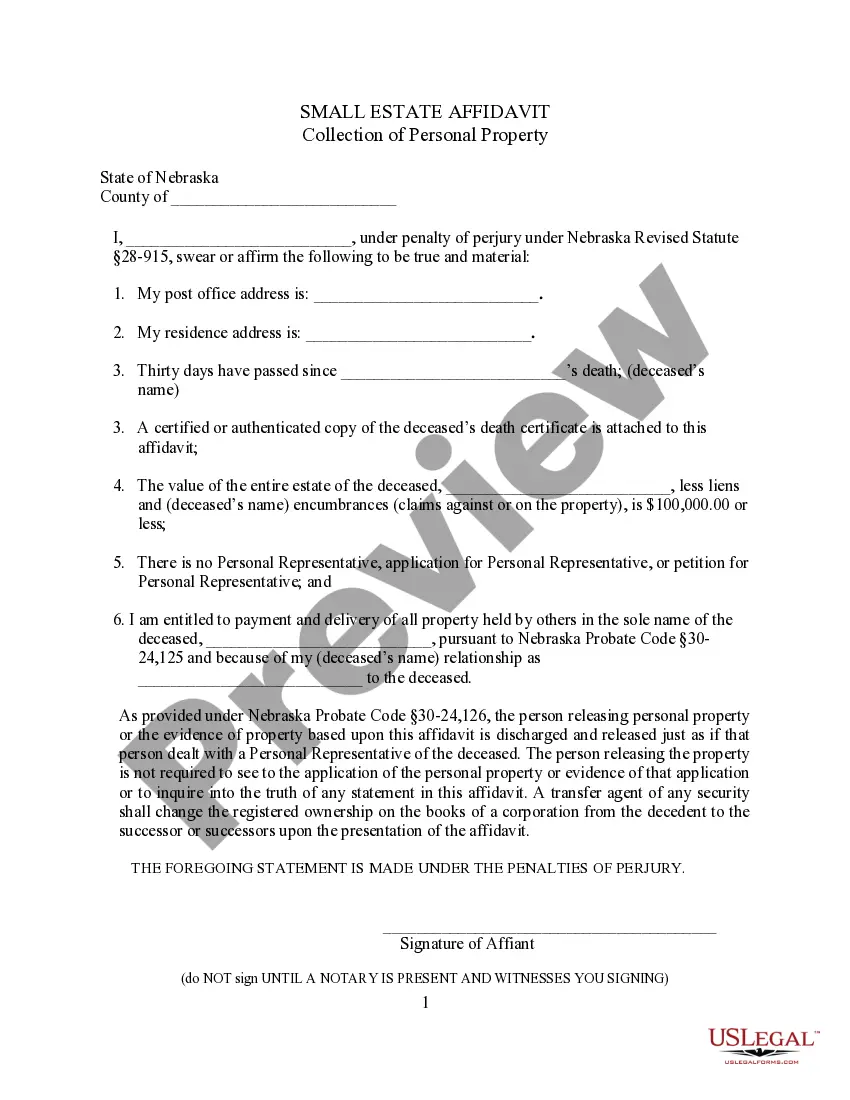
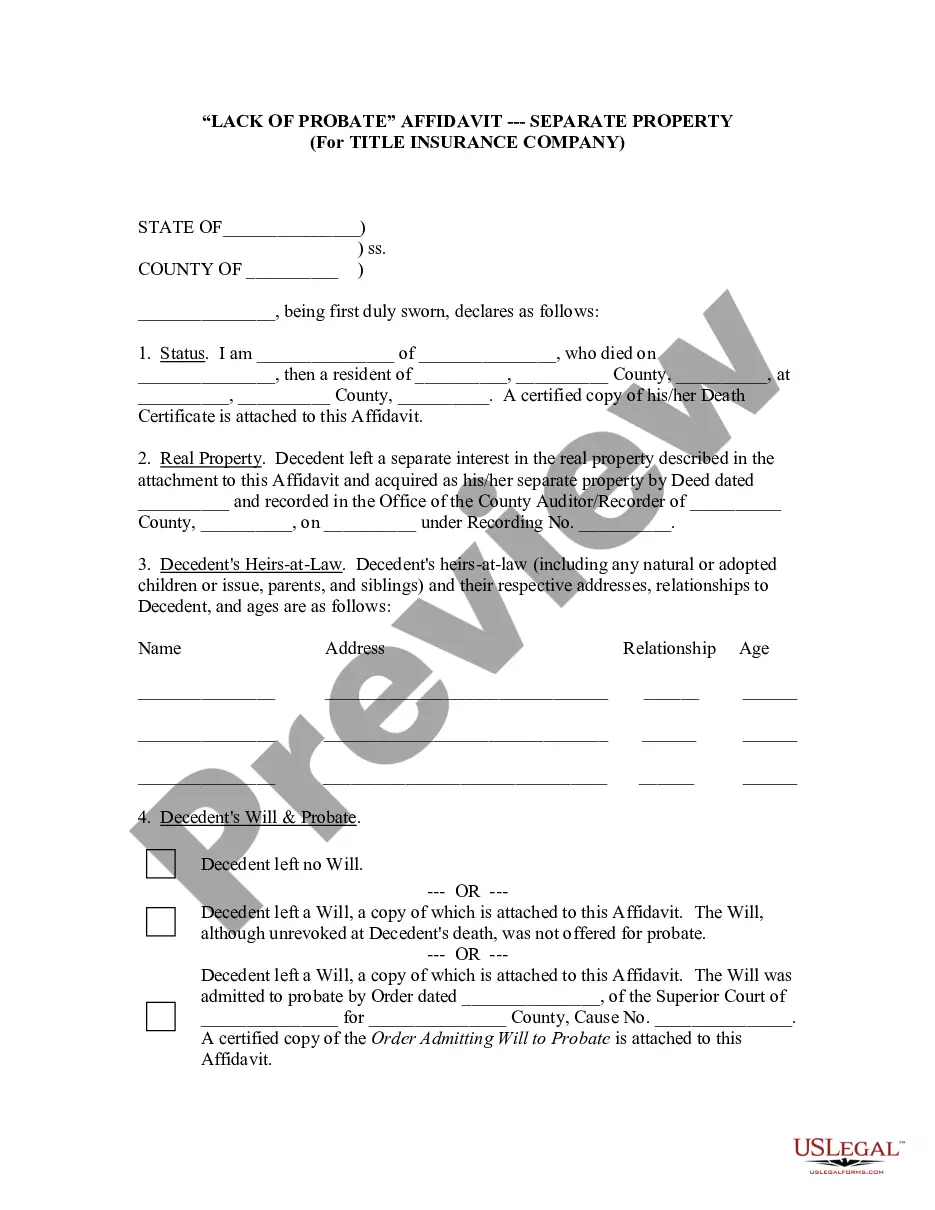
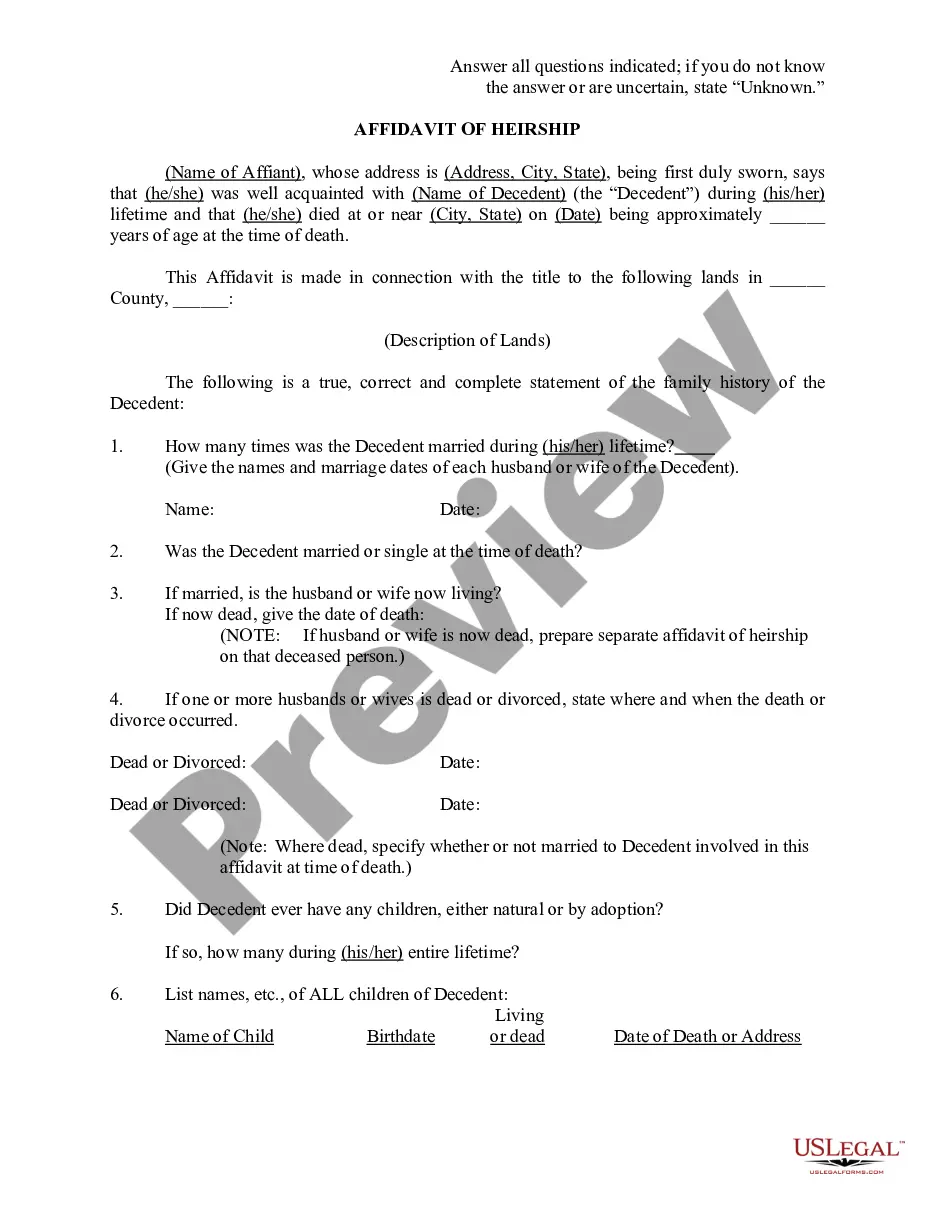
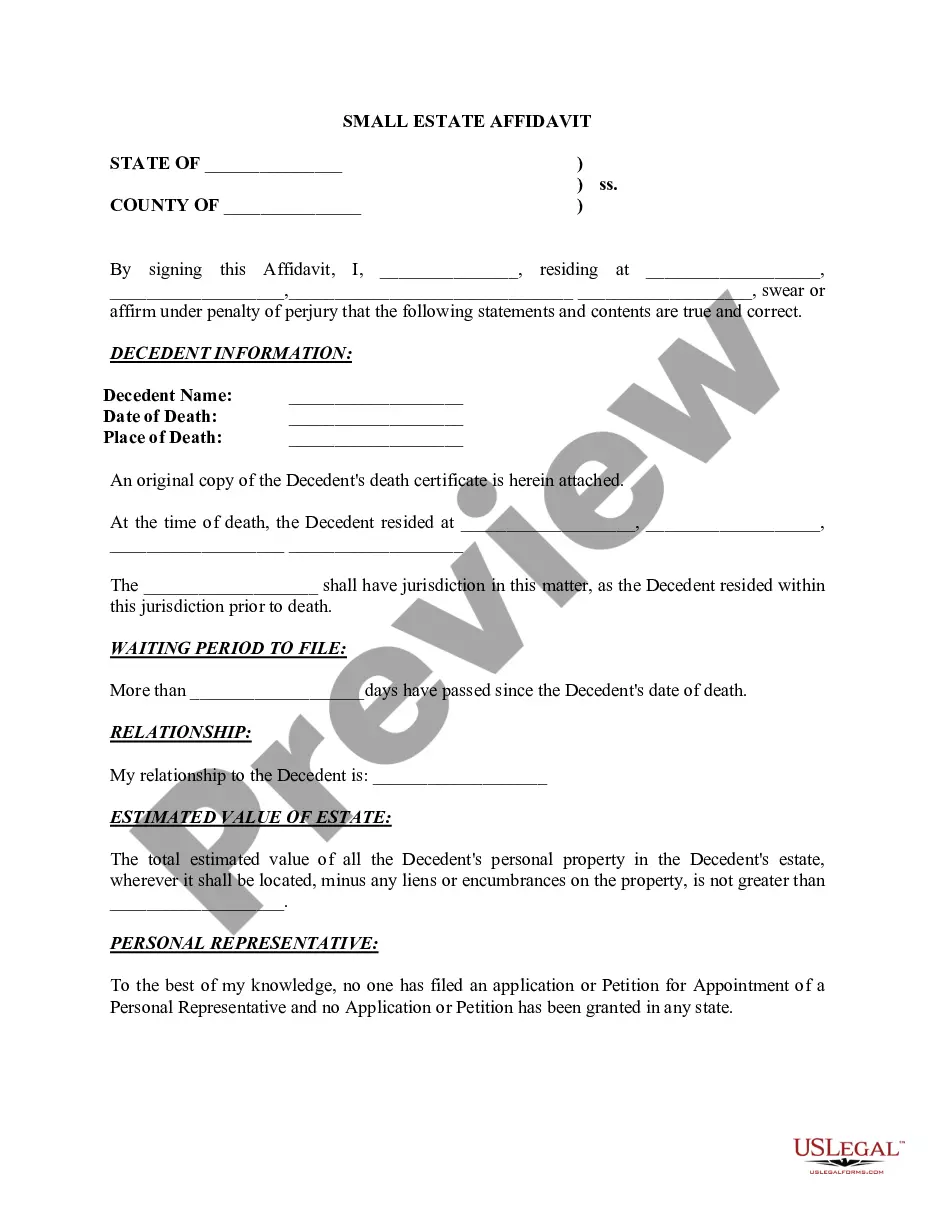
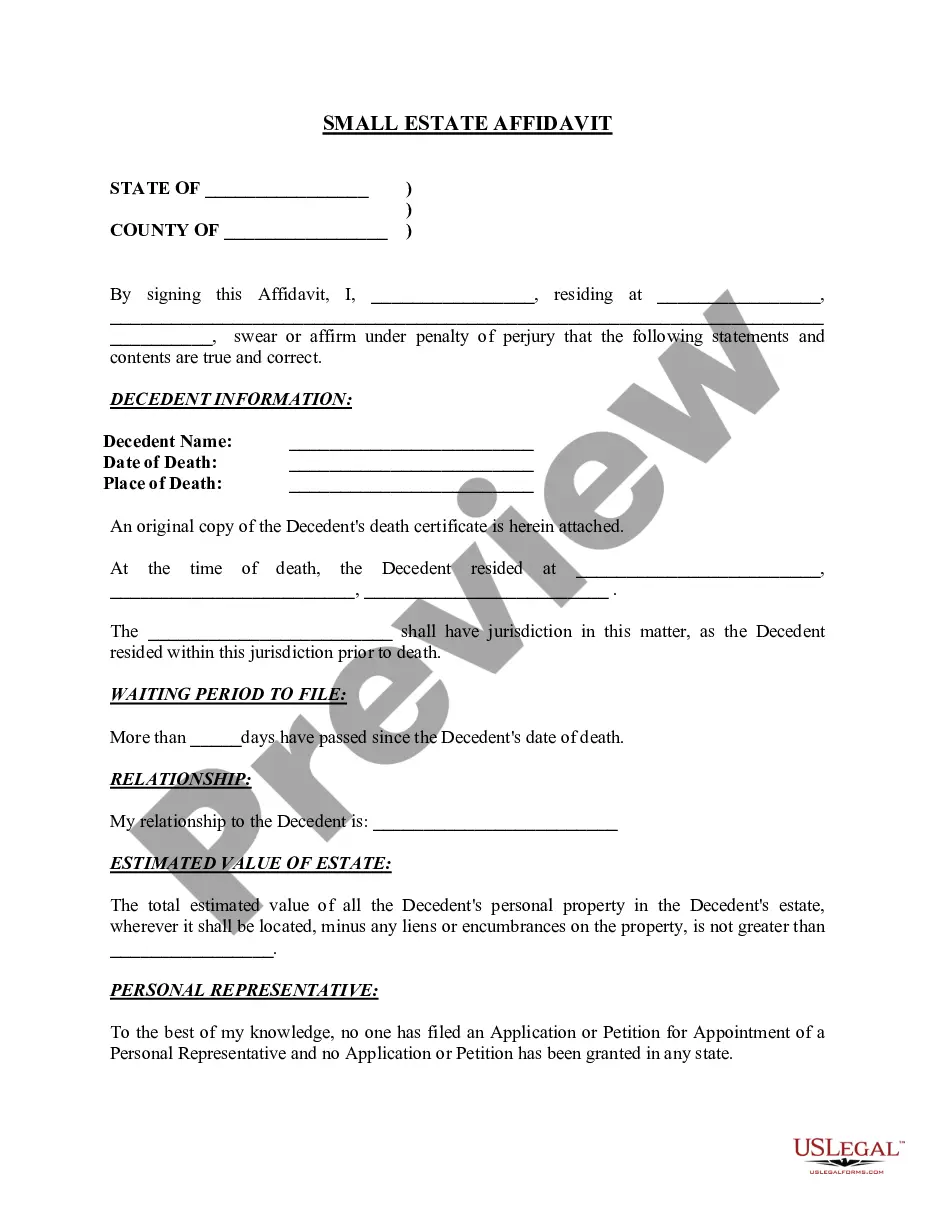
The Small Estate Affidavit for Personal Property of Estates Not More Than $100,000 is a legal document used in Nebraska that facilitates the collection of personal property from an estate valued at no more than $100,000. This affidavit allows an interested party, typically a legal successor, to collect debts owed to the decedent or retrieve tangible personal property without needing to go through a lengthy probate process, provided certain conditions are met.
Form components explained
- Identification of the affiant (the person claiming the estate).
- Decedent's information, including name and date of death.
- A declaration of the value of the personal property, confirming it does not exceed $100,000.
- Verification that at least thirty days have passed since the decedent's death.
- Affirmation that no application for a personal representative is pending.
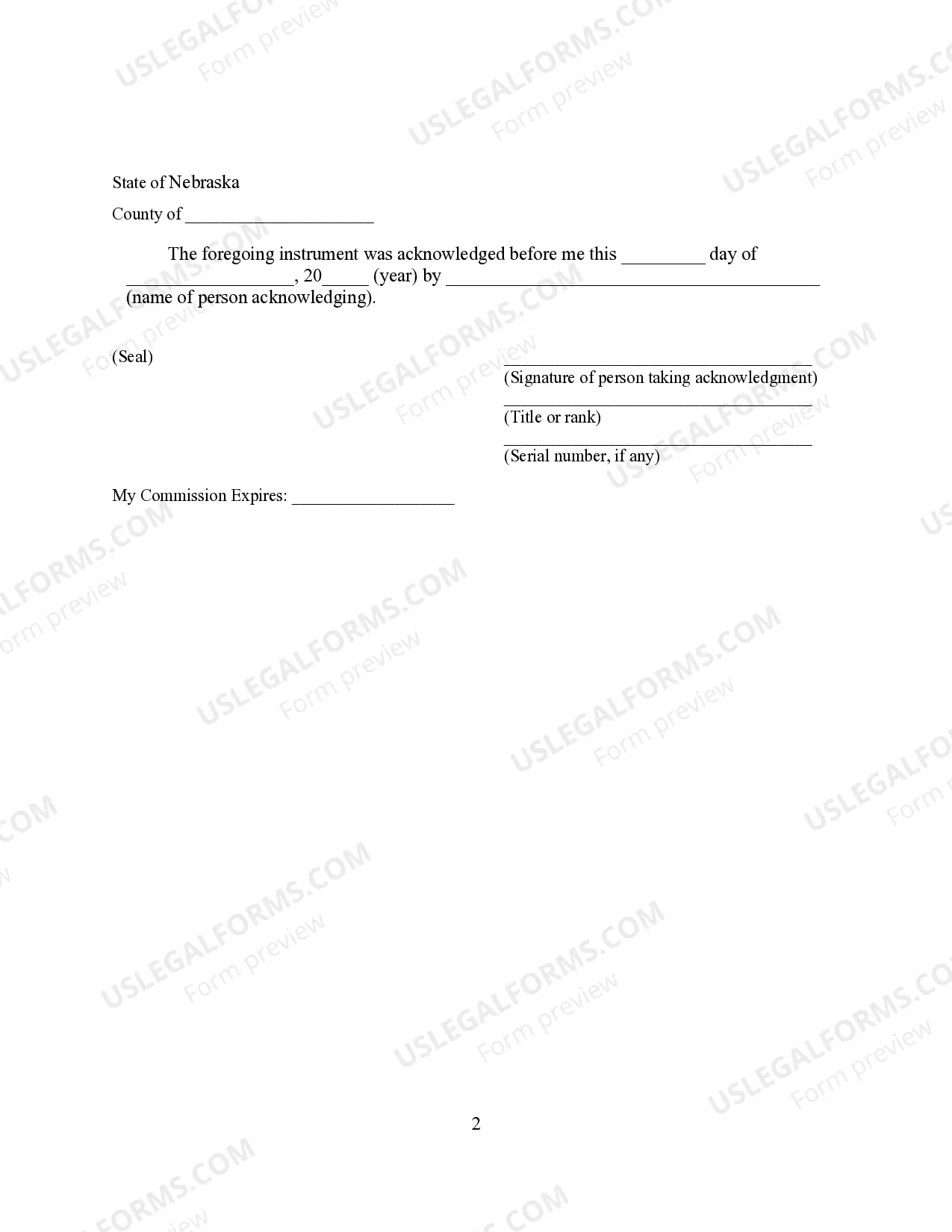
- Signature and notarization of the affidavit.
When to use this document
This form is used when a decedentâs personal estate is valued at up to $100,000, and you are an interested party seeking to collect property or debts owed to the decedent. Common situations include scenarios where a relative or dependent needs access to the estate's liquid assets or tangible personal property to settle debts, manage affairs, or distribute assets among heirs.
Who needs this form
- Individuals claiming to be legal successors of the decedent.
- Those who have a valid claim to the personal property of the decedent.
- Persons needing access to the estate's personal property without undergoing probate.
How to complete this form
- Identify yourself as the affiant by providing your personal details, including your name and addresses.
- Fill in the decedent's name and confirm their date of death.
- State the total value of the personal property and ensure it complies with the $100,000 limit.
- Affirm that thirty days have elapsed since the decedent's death and that no personal representative has been appointed.
- Sign the affidavit in the presence of a notary public to validate your claims.
Notarization guidance
Yes, this form must be notarized to be legally valid. Notarization confirms the authenticity of the signature and the identity of the affiant, protecting against fraud. US Legal Forms provides integrated online notarization services, making it easy and secure for users to complete this requirement via video call without needing to leave home.
Get your form ready online
Our built-in tools help you complete, sign, share, and store your documents in one place.
Make edits, fill in missing information, and update formatting in US Legal Forms—just like you would in MS Word.
Download a copy, print it, send it by email, or mail it via USPS—whatever works best for your next step.
Sign and collect signatures with our SignNow integration. Send to multiple recipients, set reminders, and more. Go Premium to unlock E-Sign.
If this form requires notarization, complete it online through a secure video call—no need to meet a notary in person or wait for an appointment.
We protect your documents and personal data by following strict security and privacy standards.

Make edits, fill in missing information, and update formatting in US Legal Forms—just like you would in MS Word.

Download a copy, print it, send it by email, or mail it via USPS—whatever works best for your next step.

Sign and collect signatures with our SignNow integration. Send to multiple recipients, set reminders, and more. Go Premium to unlock E-Sign.

If this form requires notarization, complete it online through a secure video call—no need to meet a notary in person or wait for an appointment.

We protect your documents and personal data by following strict security and privacy standards.
Common mistakes
- Failing to provide accurate property valuation, which must be under $100,000.
- Not waiting the required thirty days post-death before submitting the affidavit.
- Skipping the notarization process, which is crucial for legal validation.
- Providing incomplete information regarding your relationship to the decedent.
Benefits of using this form online
- Convenience of downloading the form immediately without the need for physical trips to a law office.
- Ability to fill out the form at your own pace, ensuring accuracy and completeness.
- Access to templates drafted by licensed attorneys, ensuring that the necessary legal language is included.
Legal use & context
- This affidavit can be used as a legal instrument to claim debt payments or personal property from the decedent's estate.
- Its enforceability is provided under Nebraska state law for estates valued below the specified threshold.
- Failure to adhere to form requirements may result in legal complications or rejection of claims.
Key takeaways
- The Small Estate Affidavit is essential for initiating the transfer of property without probate.
- Ensure compliance with Nebraska law, particularly regarding the timeframe and value limits.
- Proper completion and notarization are critical for the affidavit's validity.
Looking for another form?
Form popularity
FAQ
A small estate affidavit is a sworn written statement that authorizes someone to claim a decedent's assets outside of the formal probate process.
Basically, probate is necessary only for property that was: owned solely in the name of the deceased personfor example, real estate or a car titled in that person's name alone, or.
When you use a small estate affidavit , you have to pay the decedent's bills before paying money to anyone else. For example, the decedent might have owed money to a credit card company when they died. If you use the small estate affidavit, you must give money from the estate to pay the credit card company.
In most states, however, there is the option to use a small estate affidavit when the assets of the estate are under a certain dollar amount, which varies by state. An attorney is not required to file a small estate affidavit, although it may be helpful to consult with one prior to filing the small estate affidavit.
Small estate administration is a simplified court procedure that is an alternative to the longer probate process. It is available when the person who dies did not own that much in assets. There is often a limit to the value of the property, such as $25,000 or $100,000.
If the total value of all the assets you leave behind is less than a certain amount, the people who inherit your personal property -- that's anything except real estate -- may be able to skip probate entirely. The exact amount depends on state law, and varies hugely.
Probate is required when an estate's assets are solely in the deceased's name. In most cases, if the deceased owned property that had no other names attached, an estate must go through probate in order to transfer the property into the name(s) of any beneficiaries.
Fortunately, not all property needs to go through this legal process before it passes to your heirs.The quick rule of thumb is probate is not required when the estate is small, or the property is designed to pass outside of probate. It doesn't matter if you leave a will.