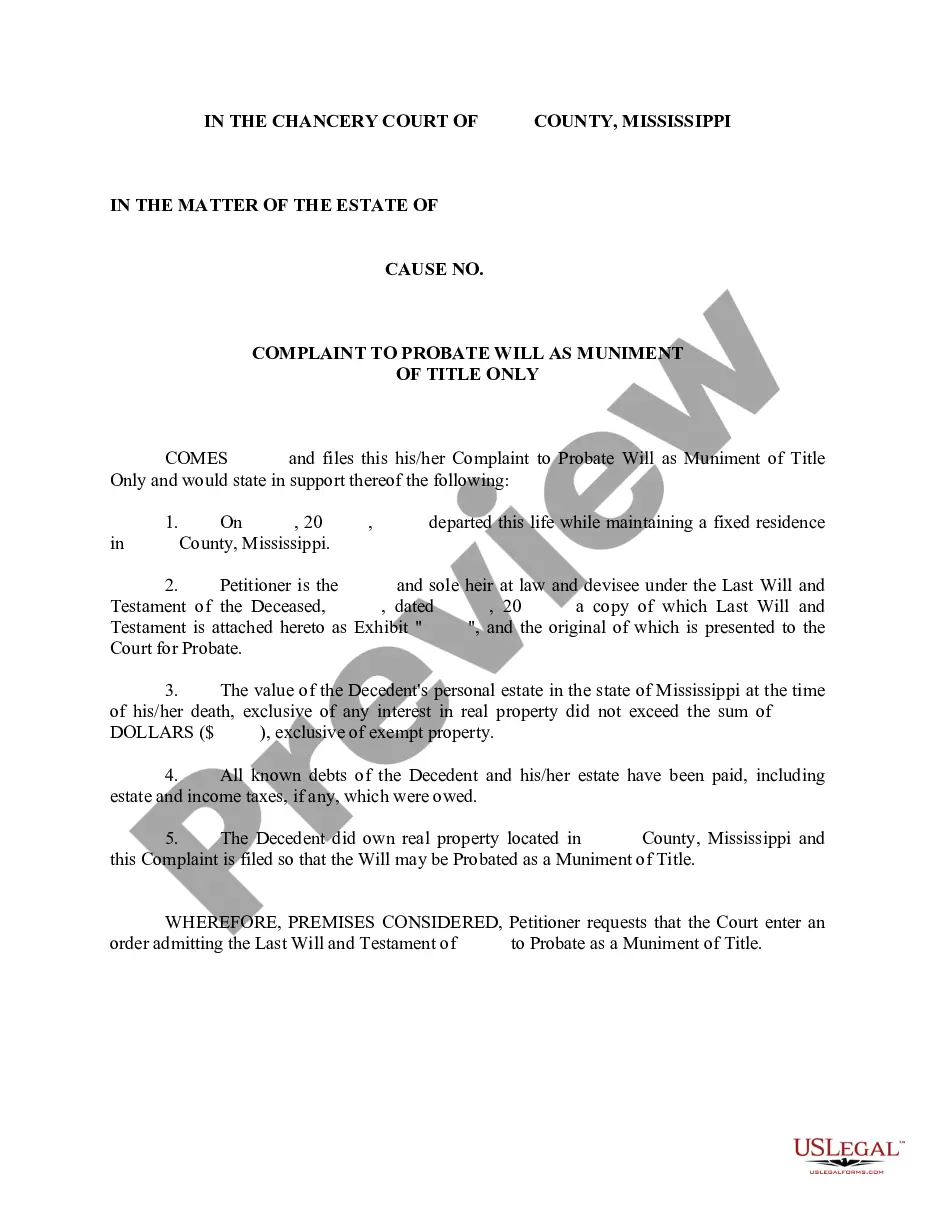
North Dakota Mutual Wills Package of Last Wills and Testaments for Man and Woman living together not Married with Adult Children
Understanding this form
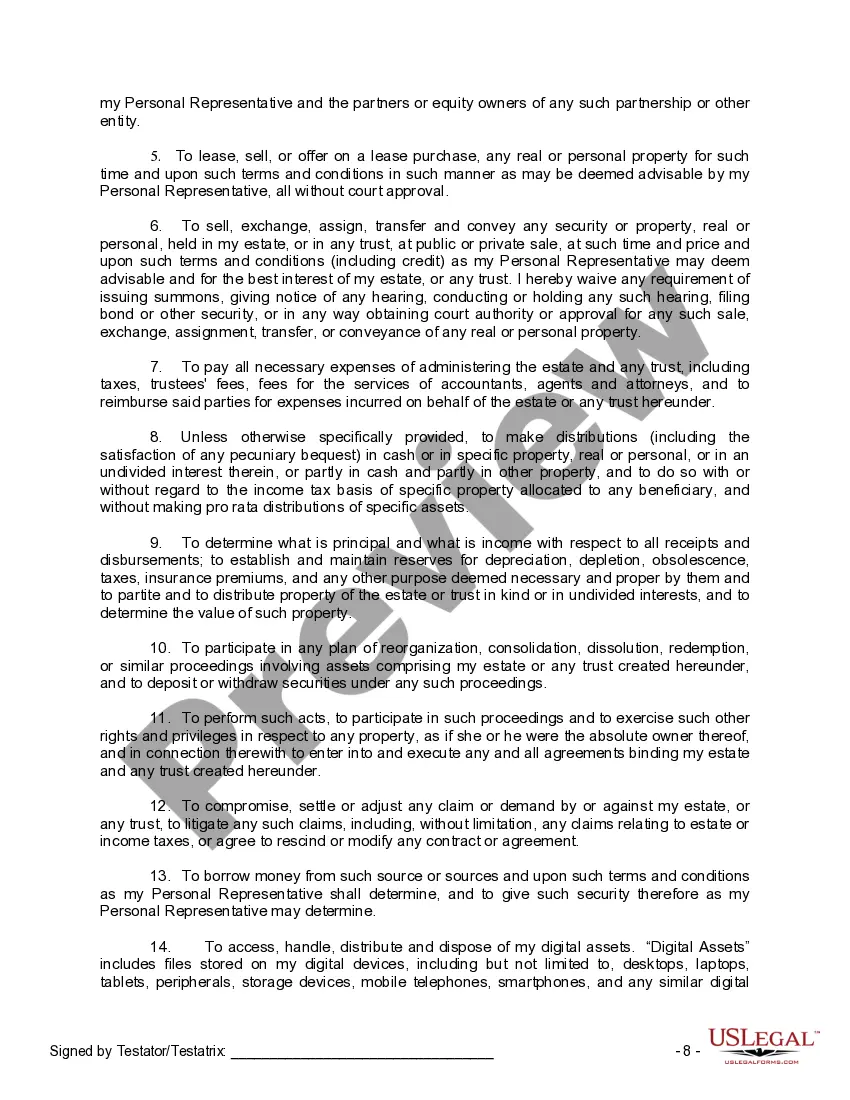
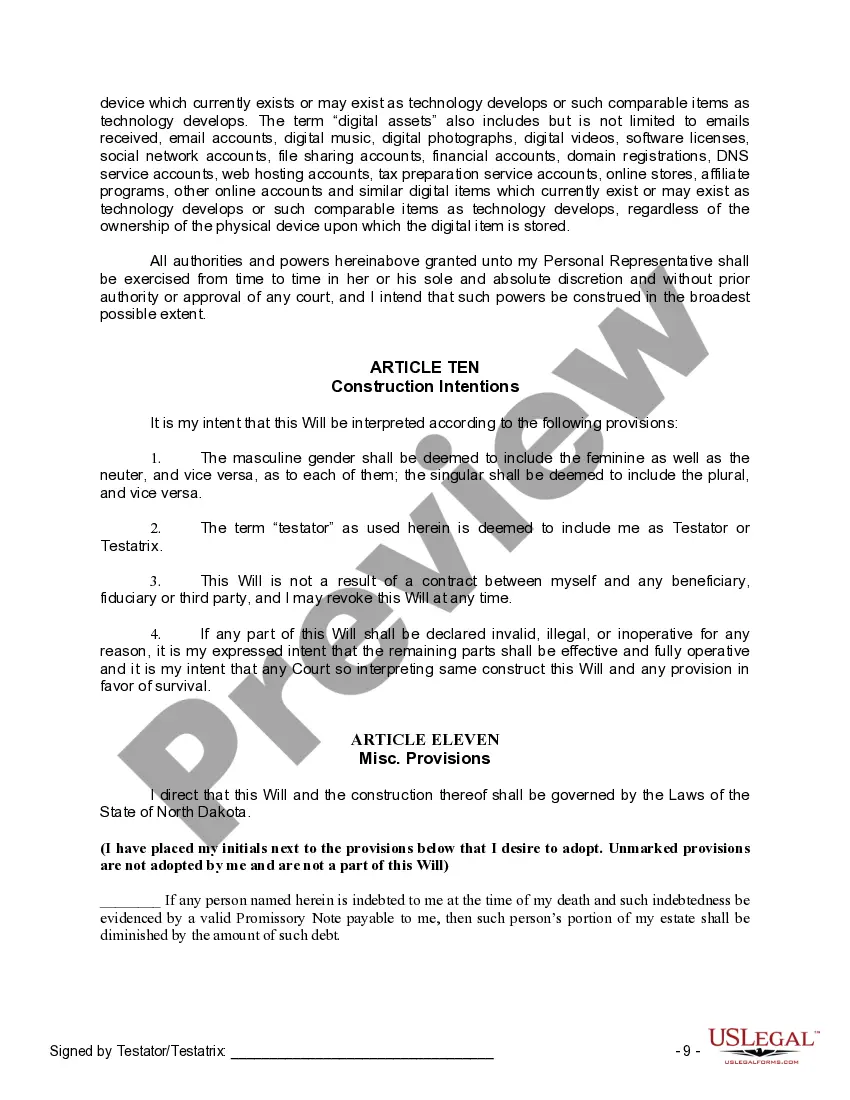
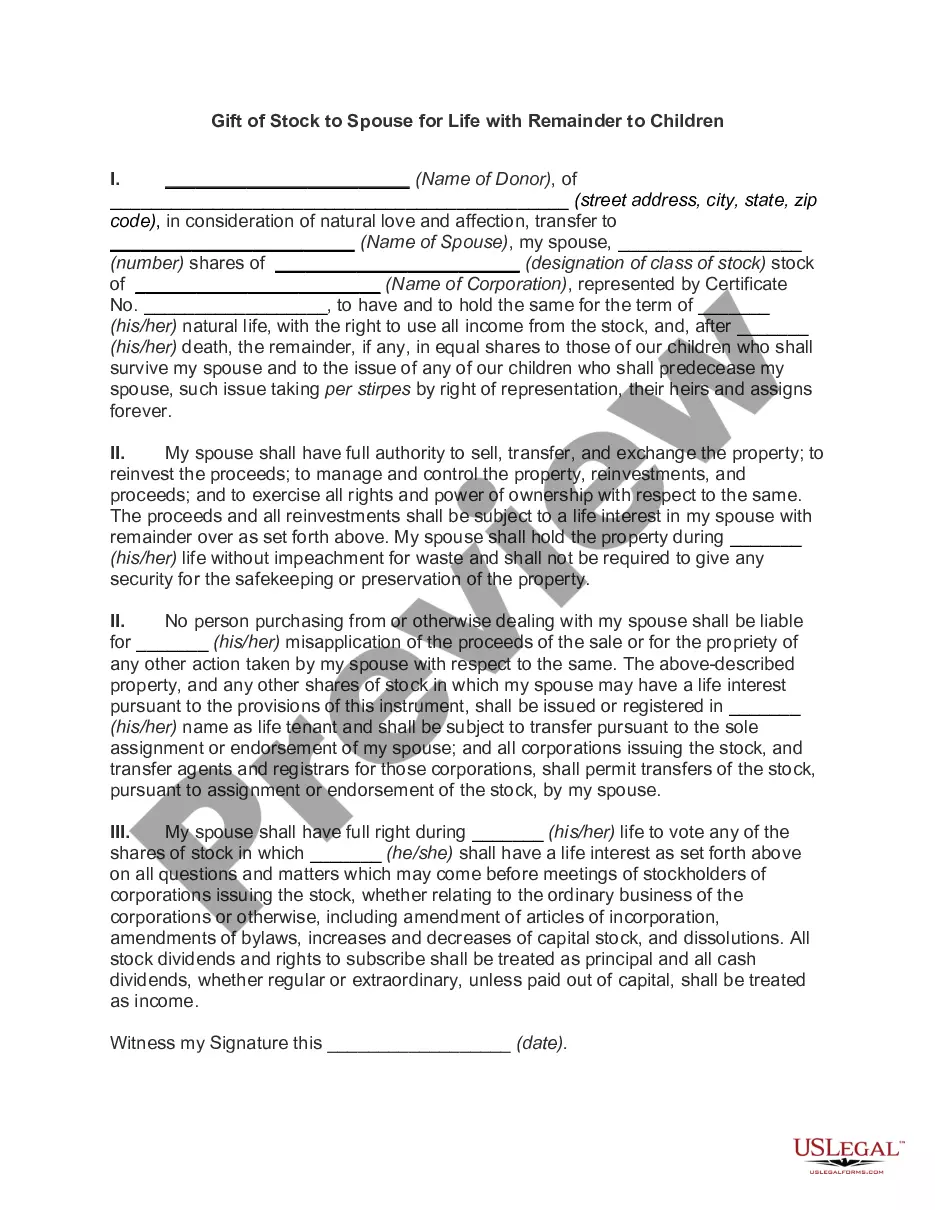
This Mutual Wills Package of Last Wills and Testaments is designed for a man and woman living together who are not married but wish to create mutual wills. This form allows them to specify how they want their property to be distributed upon their death, particularly for those with adult children. The mutual wills differ from standard individual wills by emphasizing reciprocal bequests between partners, ensuring that each partyâs wishes are respected after their passing.
Key parts of this document
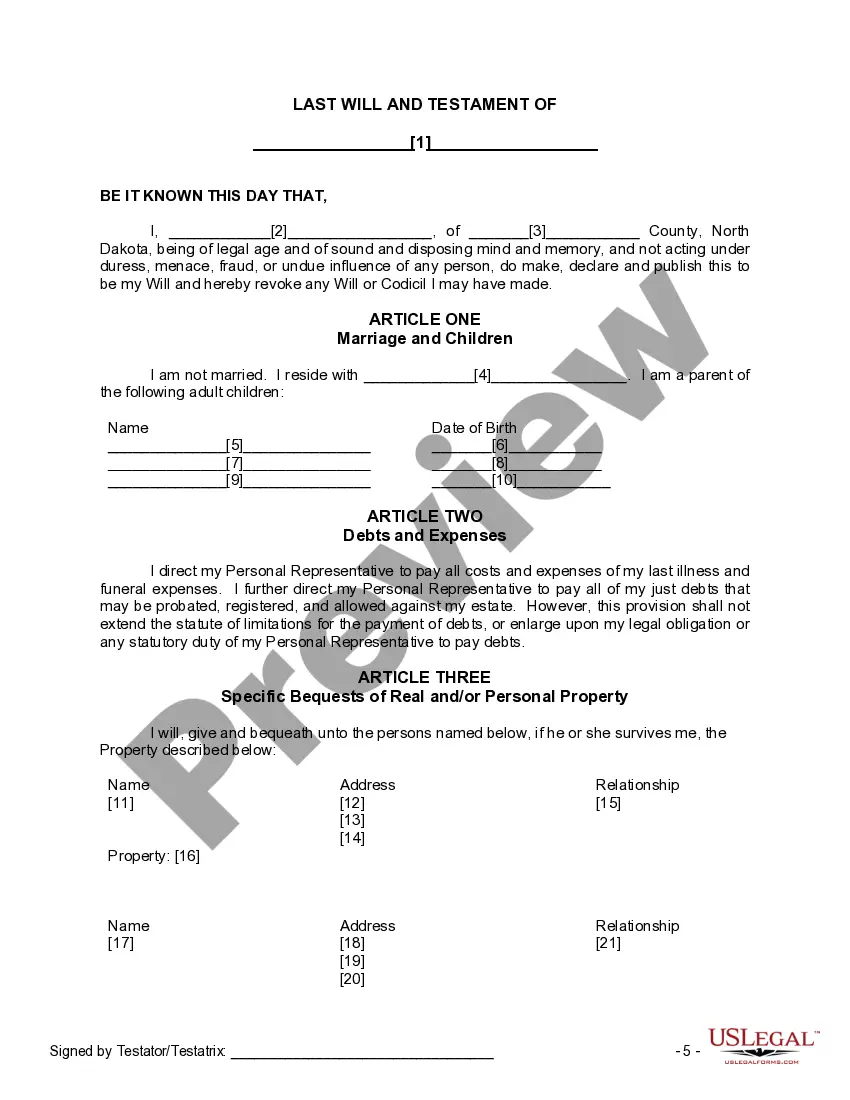
- Identification fields for the individuals and their adult children.
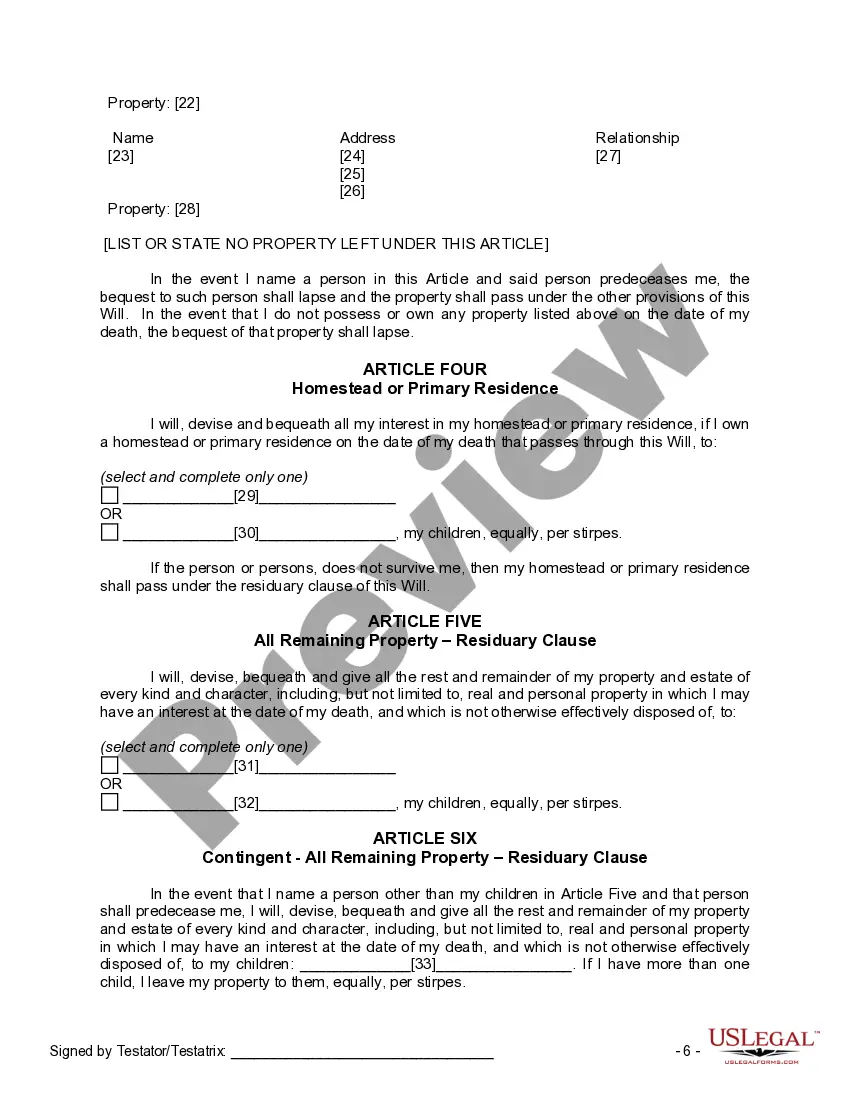
- Specific bequests section for naming individuals who will receive designated property.
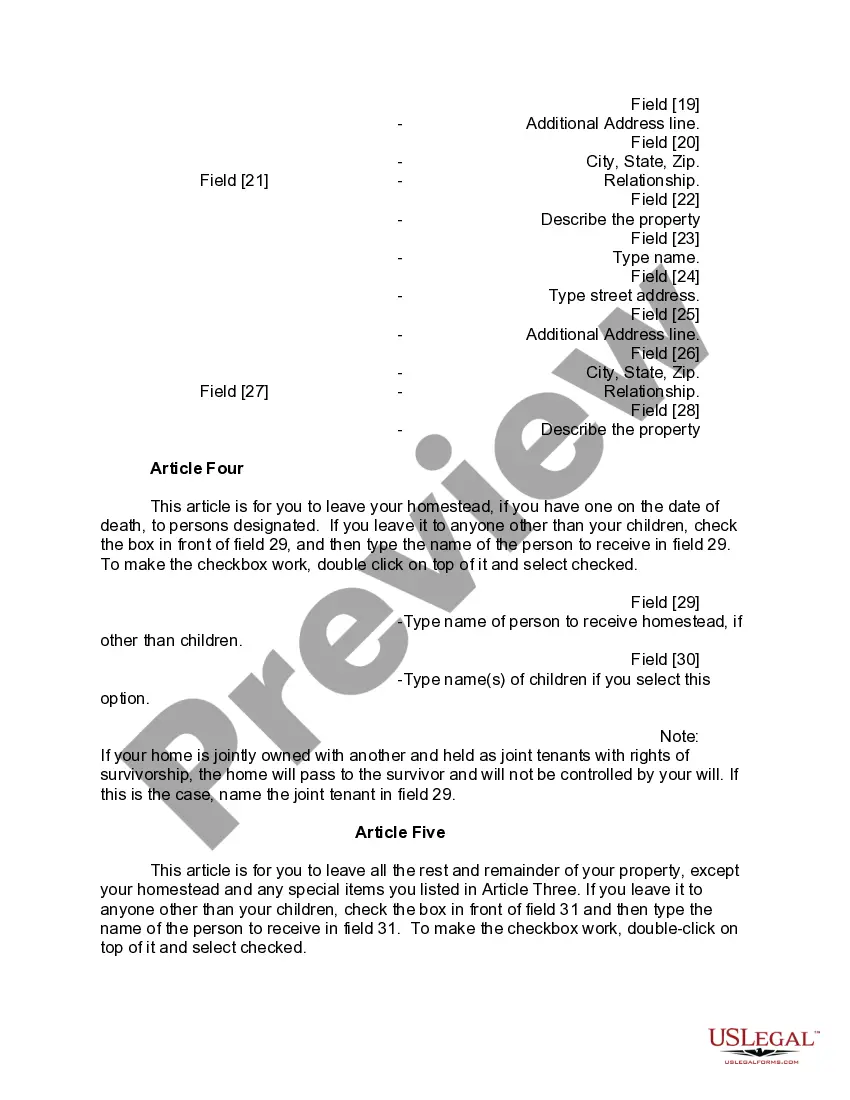
- Instructions on how to leave the homestead and other property to specified persons.
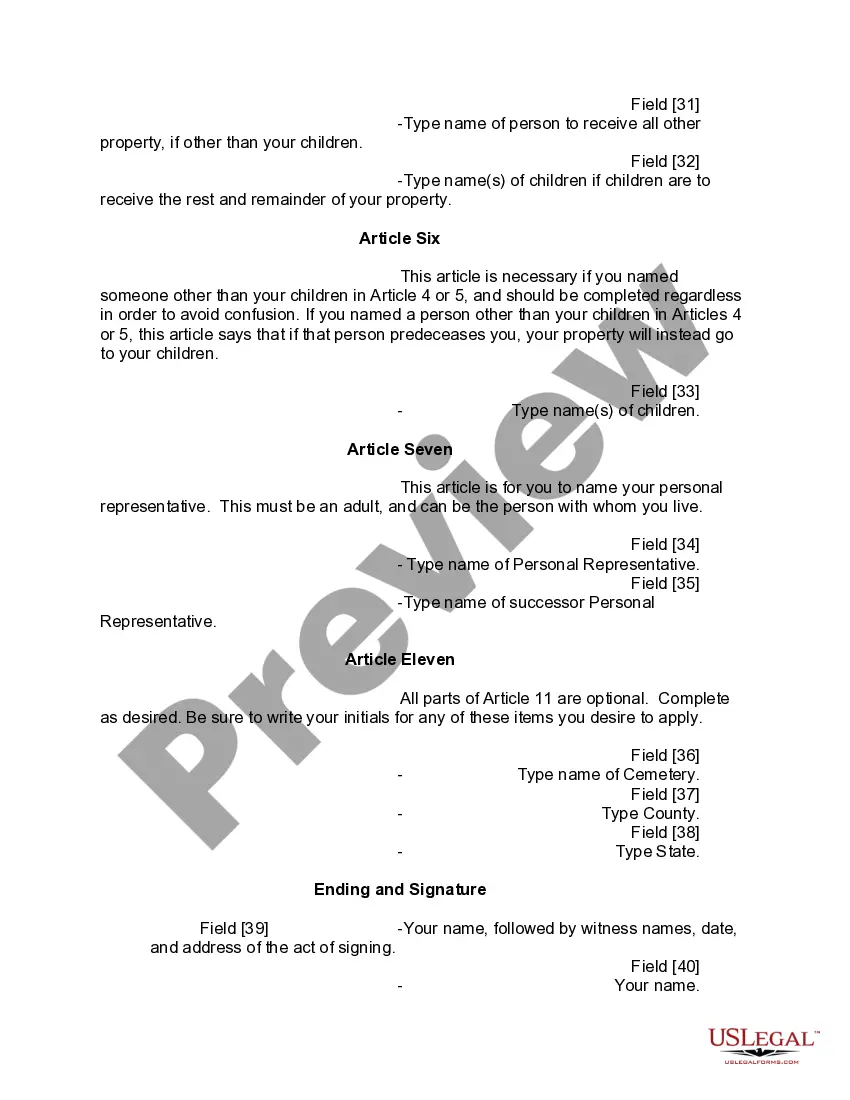
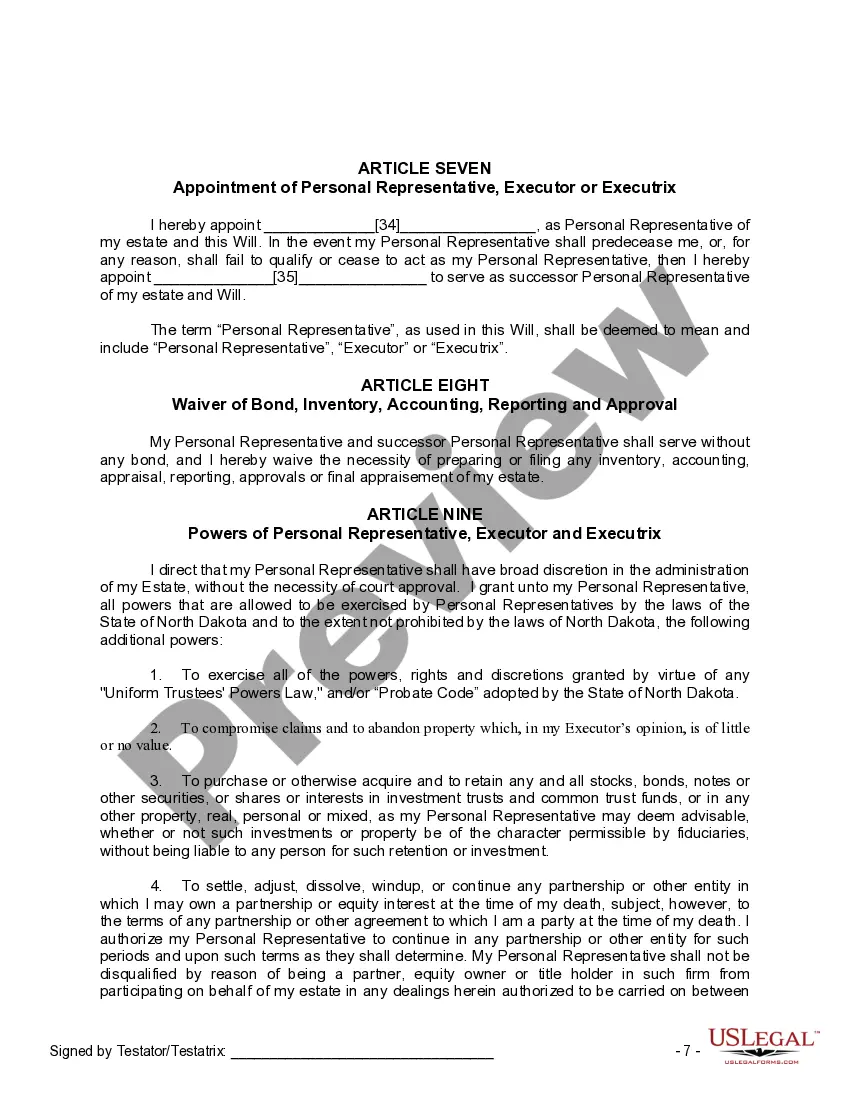
- Appointment of a personal representative to manage the estate.
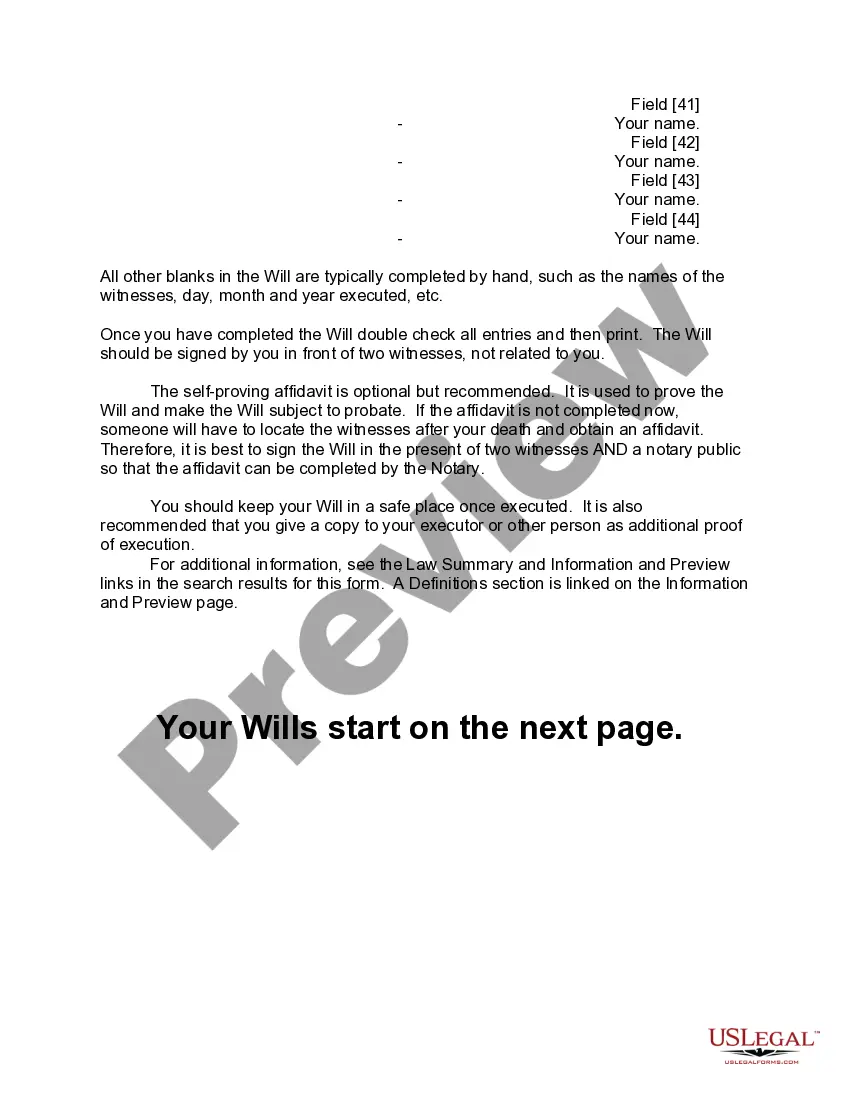
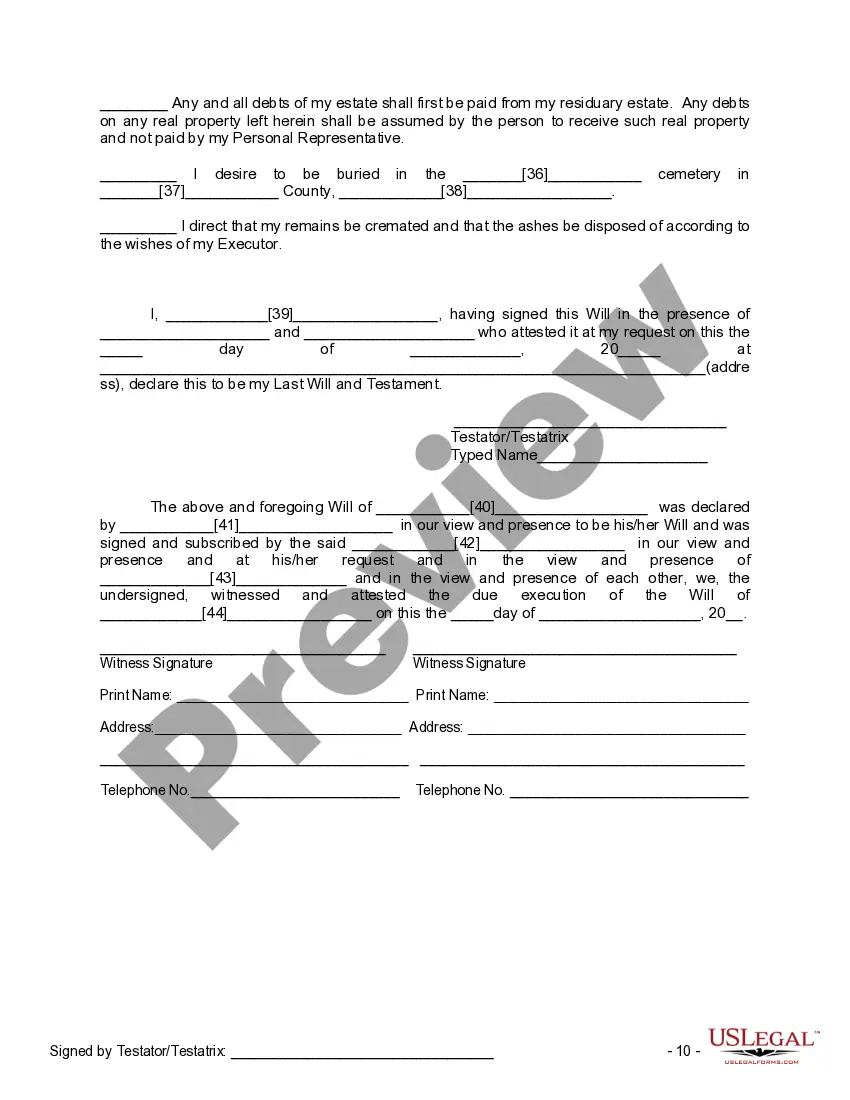
- Signature requirements including witness and notary public stipulations.




When to use this form
This form is appropriate for partners who are living together, wish to ensure the other is provided for after death, and have adult children to consider in their estate planning. It is particularly useful for those who want to create legally binding mutual wills reflecting their unique relationship and familial dynamics.
Who needs this form
- Couples living together and not legally married.
- Partners who wish to create mutual wills rather than individual wills.
- Individuals with adult children who need to be acknowledged in the distribution of estate assets.
- Anyone looking for a simple yet effective way to outline their property wishes, avoiding potential disputes among heirs.
Steps to complete this form
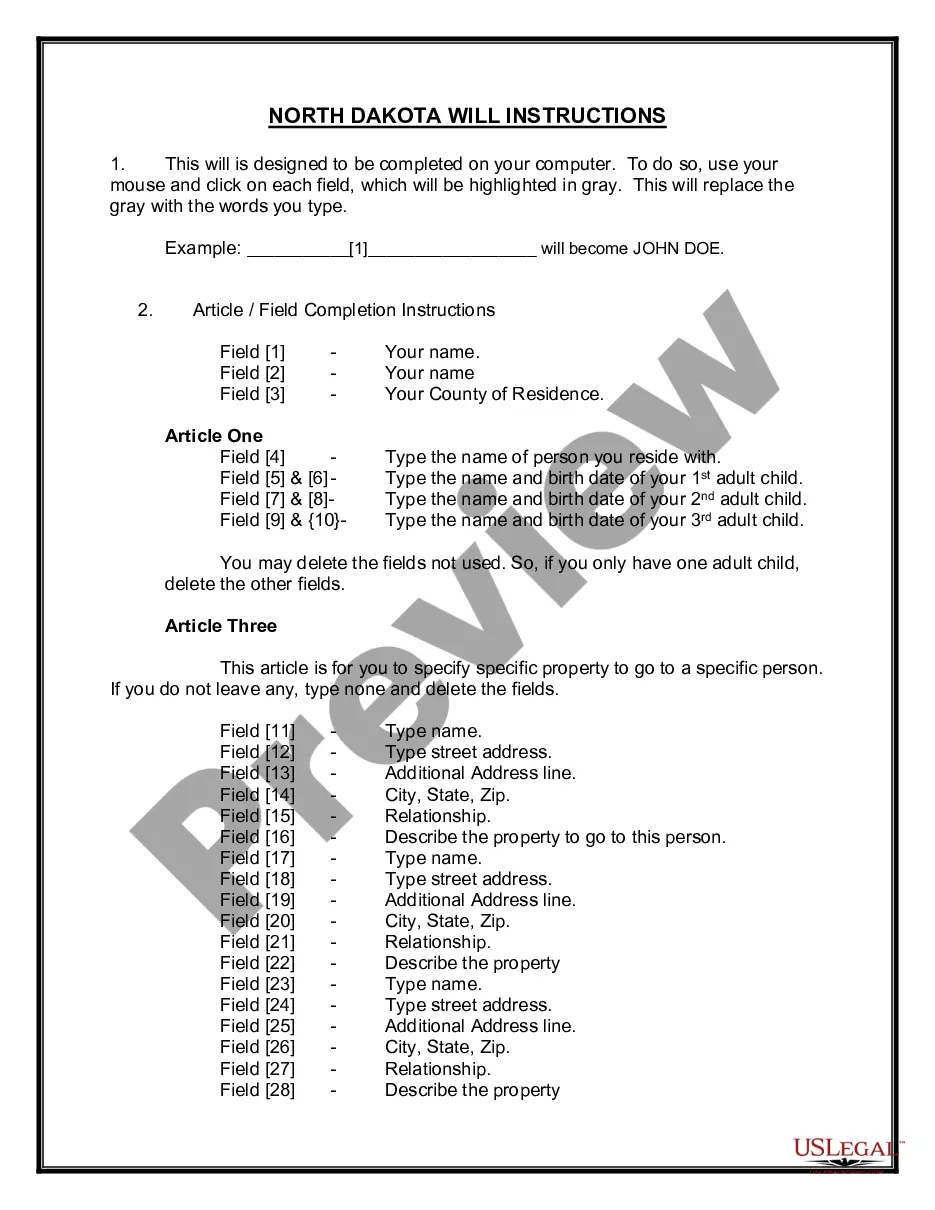
- Enter your name along with the name of your partner and their county of residence.
- Input the names and birth dates of your adult children in the designated fields.
- Specify any desired bequests by detailing the property and the intended recipient.
- Complete the sections related to your homestead and any other remaining property, ensuring all selections are made accurately.
- Sign the will in front of two witnesses and a notary public as required.
Notarization guidance
Yes, this form must be notarized to be legally valid. The wills should be signed in front of a notary public, which ensures that the self-proving affidavit can also be completed, facilitating a smoother probate process.
Get your form ready online
Our built-in tools help you complete, sign, share, and store your documents in one place.
Make edits, fill in missing information, and update formatting in US Legal Forms—just like you would in MS Word.
Download a copy, print it, send it by email, or mail it via USPS—whatever works best for your next step.
Sign and collect signatures with our SignNow integration. Send to multiple recipients, set reminders, and more. Go Premium to unlock E-Sign.
If this form requires notarization, complete it online through a secure video call—no need to meet a notary in person or wait for an appointment.
We protect your documents and personal data by following strict security and privacy standards.

Make edits, fill in missing information, and update formatting in US Legal Forms—just like you would in MS Word.

Download a copy, print it, send it by email, or mail it via USPS—whatever works best for your next step.

Sign and collect signatures with our SignNow integration. Send to multiple recipients, set reminders, and more. Go Premium to unlock E-Sign.

If this form requires notarization, complete it online through a secure video call—no need to meet a notary in person or wait for an appointment.

We protect your documents and personal data by following strict security and privacy standards.
Typical mistakes to avoid
- Failing to have the wills signed by the required number of witnesses.
- Not completing the self-proving affidavit if applicable, which can delay the probate process.
- Overlooking the state-specific rules that may affect how the document should be executed.
- Leaving property unaddressed in the will, leading to disputes among heirs.
Advantages of online completion
- Conveniently complete the form from home without the need for legal appointments.
- Edit and customize the document as needed before printing.
- Reliability of documents prepared by licensed attorneys.
Main things to remember
- The Mutual Wills Package provides legal directives for partners living together, ensuring mutual support after death.
- It is essential to follow the execution requirements meticulously to uphold the wishes stated in the will.
- Utilizing this form helps to clarify property distribution and mitigate family disputes in the event of death.
Looking for another form?
Form popularity
FAQ
Choose an online legal services provider or locate a will template. Carefully consider your distribution wishes. Identify a personal representative/executor. Understand the requirements to make your will legal. Make sure someone else knows about your will. Consult a lawyer if you have a more complicated estate.
Include personal identifying information. Include a statement about your age and mental status. Designate an executor. Decide who will take care of your children. Choose your beneficiaries. List your funeral details. Sign and date your Last Will and Testament.
Yes! Your Free Will Kit will be delivered to you at no-cost, no purchase necessary.
Property in a living trust. One of the ways to avoid probate is to set up a living trust. Retirement plan proceeds, including money from a pension, IRA, or 401(k) Stocks and bonds held in beneficiary. Proceeds from a payable-on-death bank account.
As long as it was properly signed and witnessed by two adult independent witnesses who are present at the time you sign your will, it should be legally binding.Using the wrong wording could mean that your instructions aren't followed, or even that your will isn't valid.
Find an online template or service. Make a list of your assets. Be specific about who gets what. If you have minor children, choose a guardian. Give instructions for your pet. Choose an executor. Name a 'residuary beneficiary' List your funeral preferences.
Many married couples own most of their assets jointly with the right of survivorship. When one spouse dies, the surviving spouse automatically receives complete ownership of the property.Since one never knows which spouse will survive the other, it is important that both have a Will.
Choose an online legal services provider or locate a will template. Carefully consider your distribution wishes. Identify a personal representative/executor. Understand the requirements to make your will legal. Make sure someone else knows about your will. Consult a lawyer if you have a more complicated estate.