Mississippi Motion for Acquittal Based on Insanity
Overview of this form
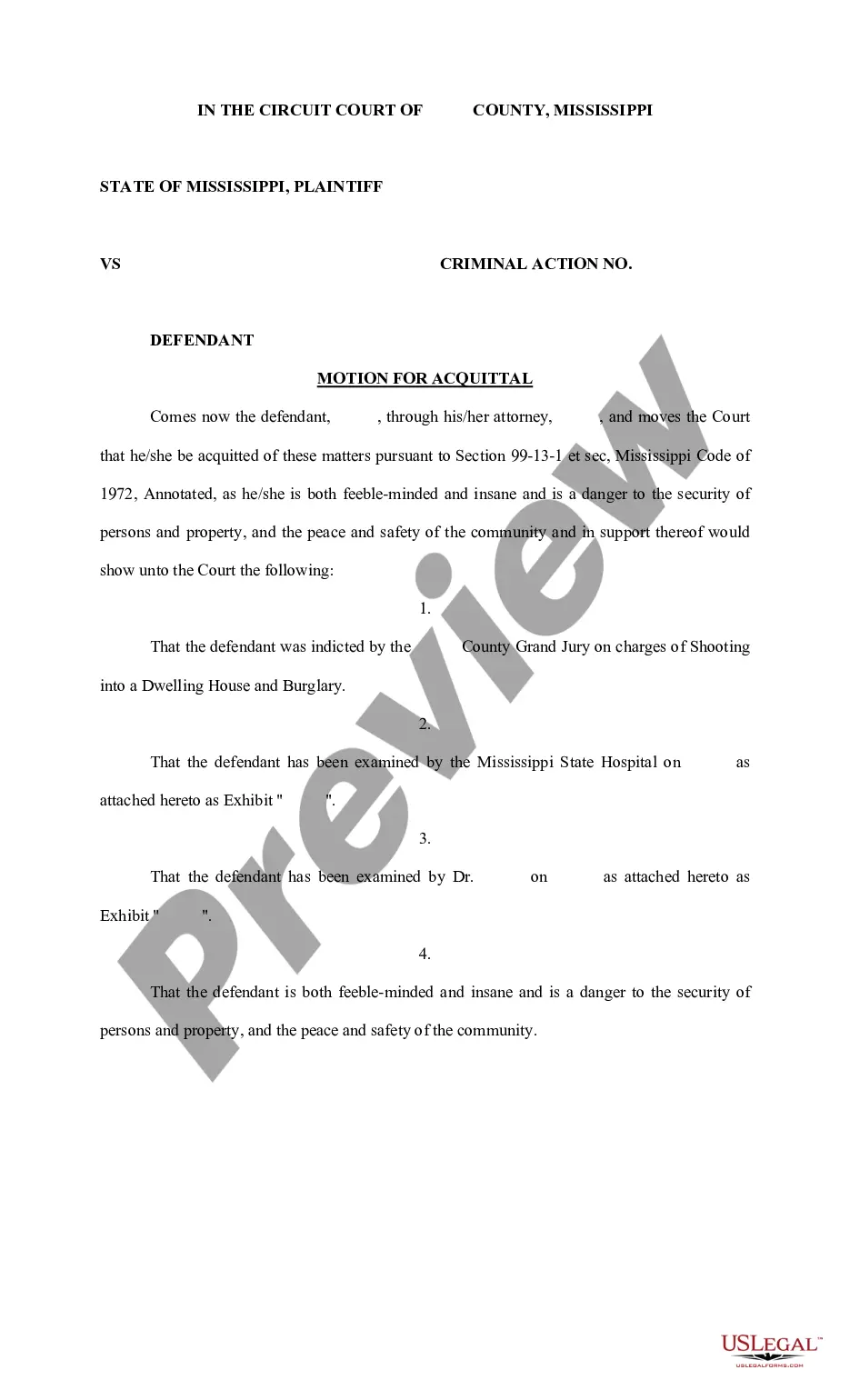
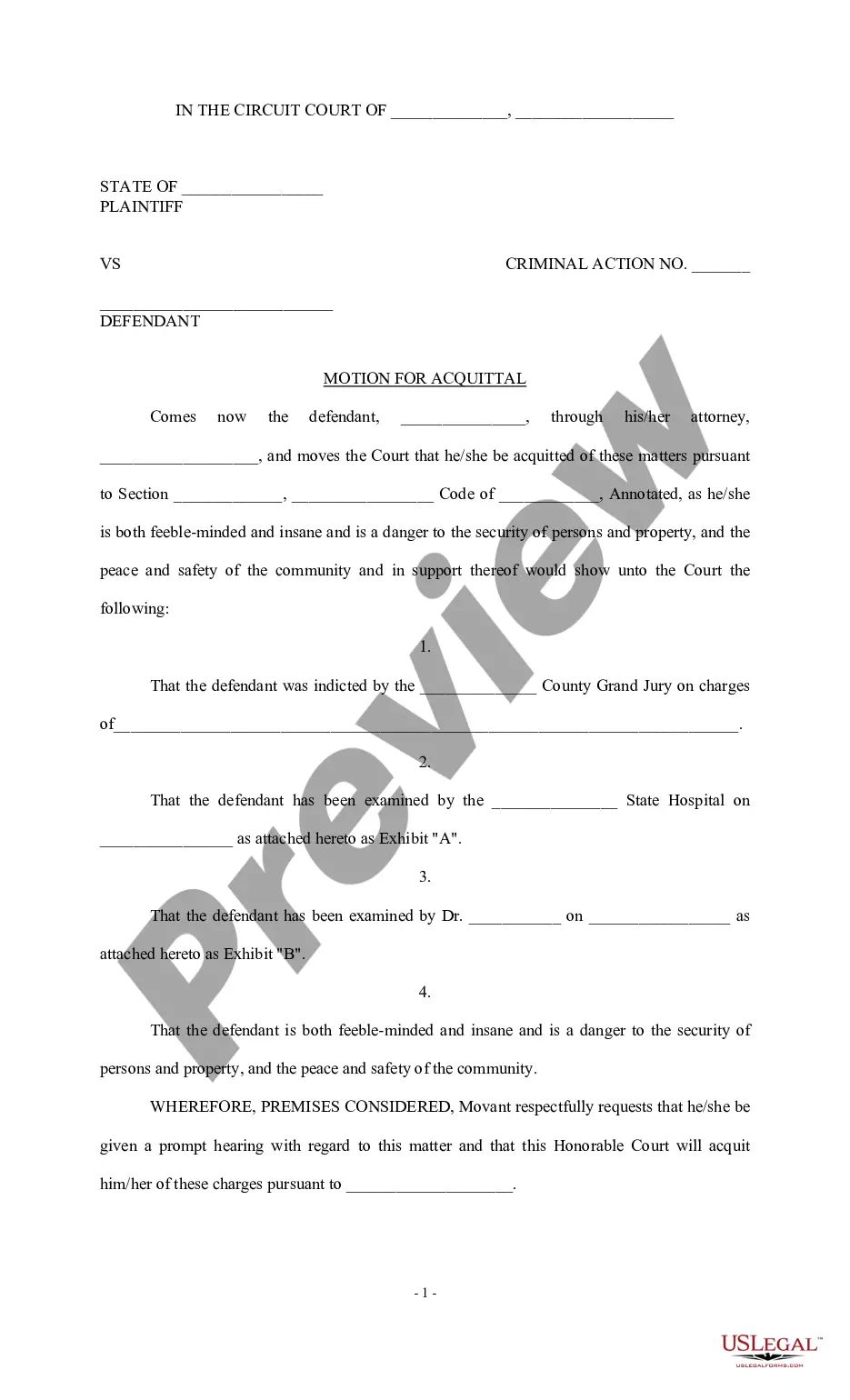
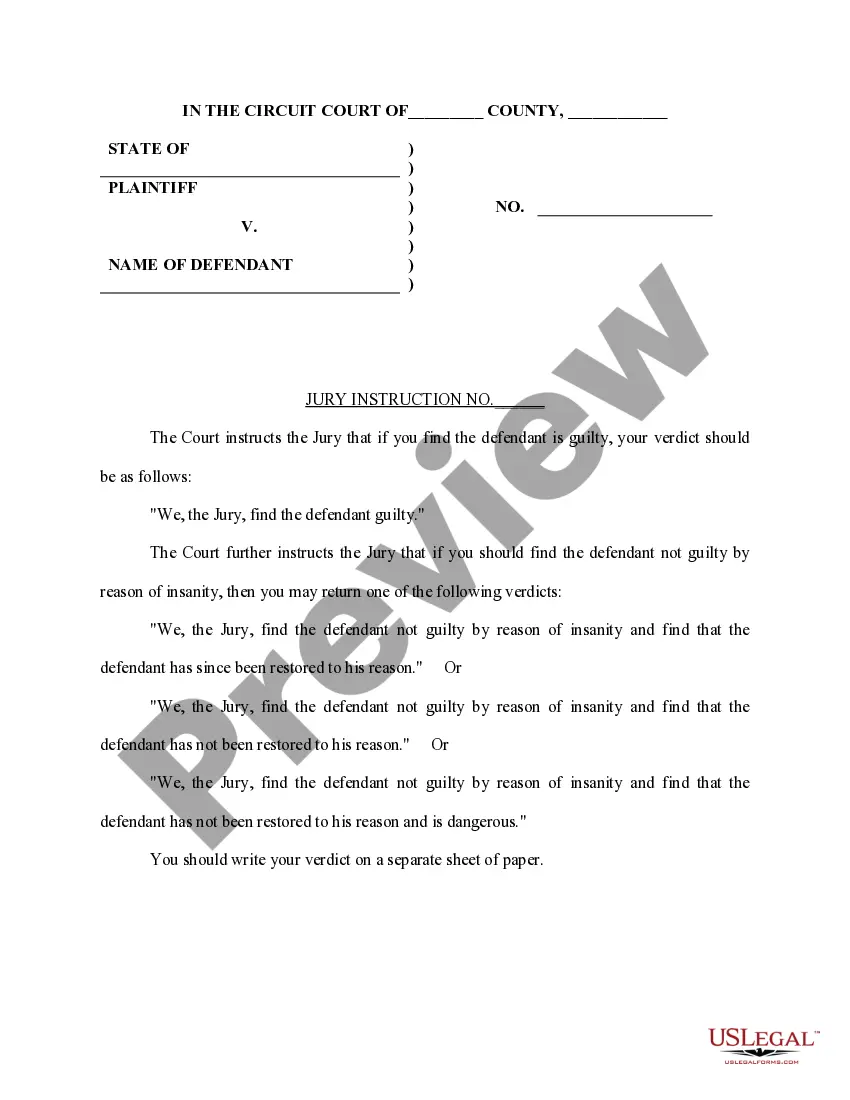
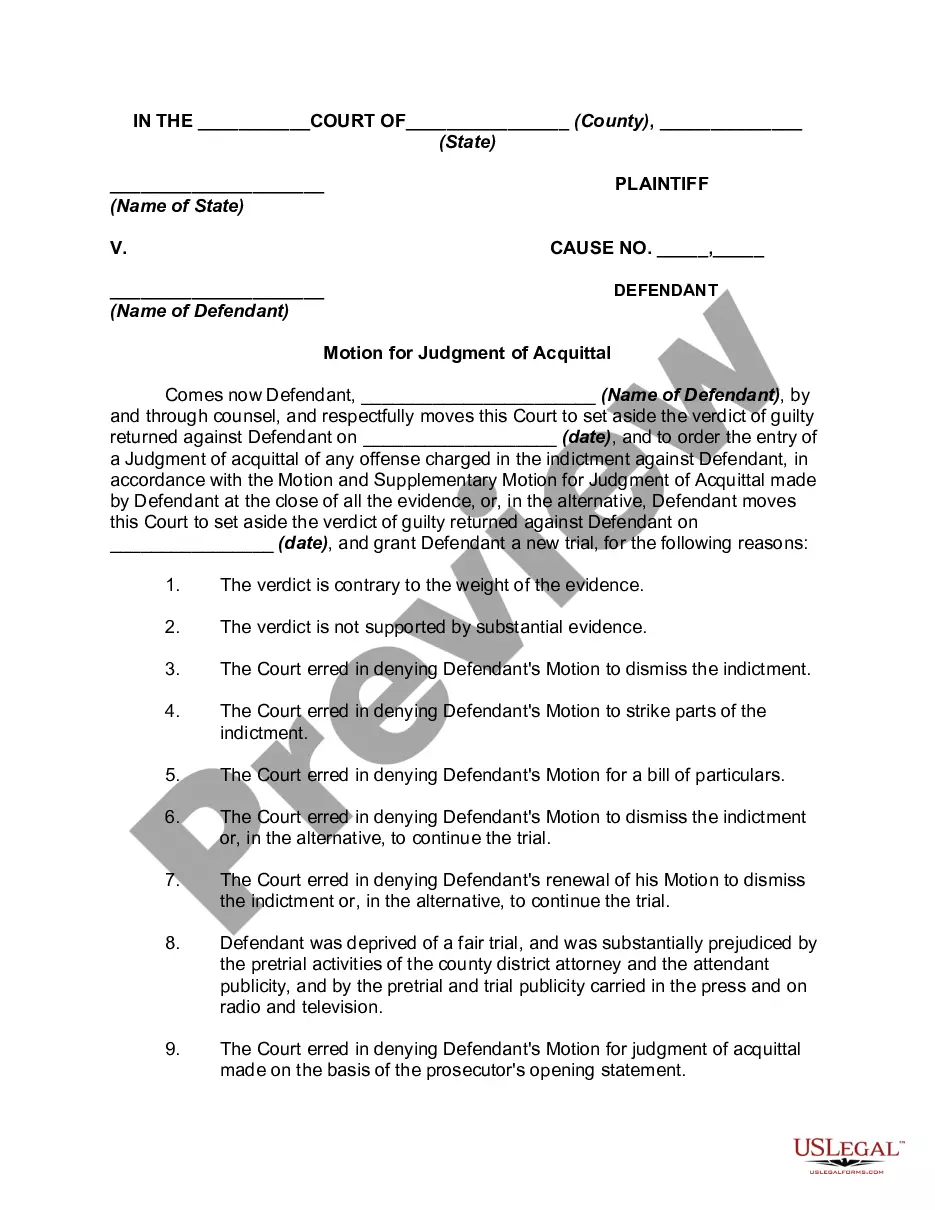
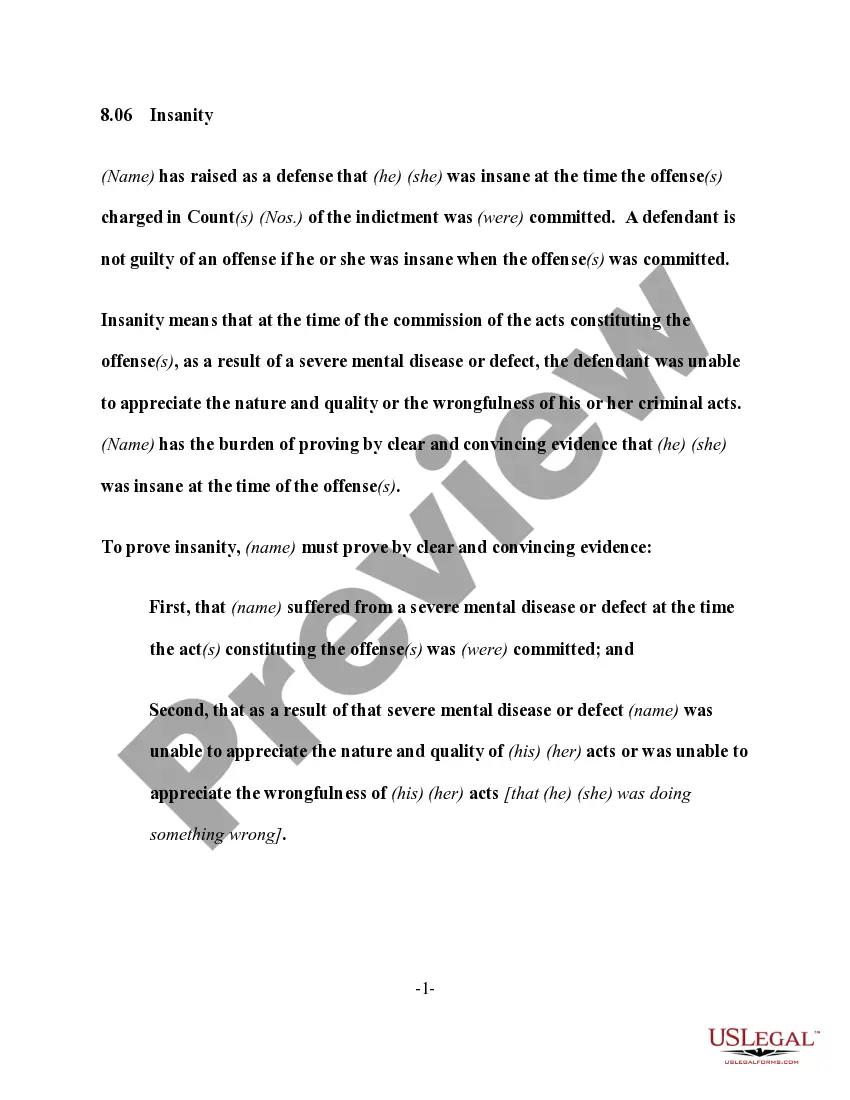
The Motion for Acquittal Based on Insanity is a legal document that requests a court to find a defendant not guilty due to mental illness or incapacity. This form is different from other motions as it specifically addresses the mental state of the accused at the time of the crime, which can lead to a complete acquittal. This motion is crucial in cases where a defendant's mental health significantly impacted their actions and judgment.
Form components explained
- Introduction: Identifies the parties involved and the relief sought.
- Statement of facts: Summarizes the case and relevant circumstances leading to the motion.
- Legal basis: Cites laws and precedents that support the claim of insanity.
- Argument: Presents reasons why the court should grant the acquittal due to mental incapacity.
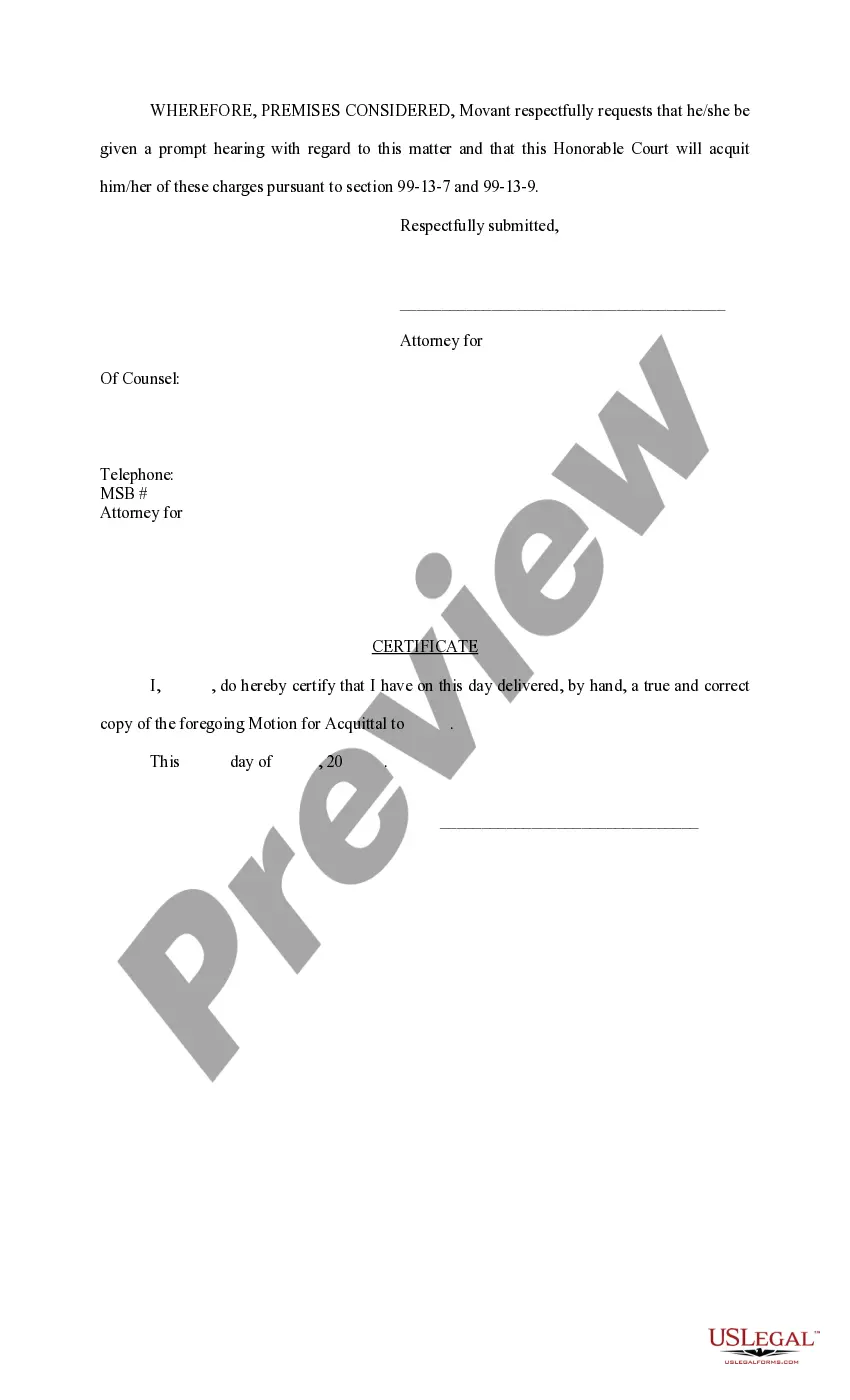
- Conclusion: Requests the court to dismiss the charges based on the provided arguments.
Common use cases
This form should be used in criminal cases when a defendant believes their mental health condition prevents them from being held criminally responsible for their actions. It is particularly relevant when there is substantial evidence of a mental disorder at the time of the alleged offense.
Intended users of this form
- Defendants who are facing criminal charges and have been diagnosed with a mental illness.
- Defense attorneys representing clients with valid claims of insanity as a defense.
- Legal representatives seeking to advocate for a client's mental health in court proceedings.
Completing this form step by step
- Identify the parties involved, including the defendant and the court.
- Summarize the relevant facts of the case that support the insanity claim.
- Cite applicable laws or precedents that grant eligibility for an acquittal based on insanity.
- Clearly articulate the argument for the acquittal due to mental incapacity.
- Conclude with a formal request for the court to grant the motion.
Notarization guidance
Notarization is generally not required for this form. However, certain states or situations might demand it. You can complete notarization online through US Legal Forms, powered by Notarize, using a verified video call available anytime.
Get your form ready online
Our built-in tools help you complete, sign, share, and store your documents in one place.
Make edits, fill in missing information, and update formatting in US Legal Forms—just like you would in MS Word.
Download a copy, print it, send it by email, or mail it via USPS—whatever works best for your next step.
Sign and collect signatures with our SignNow integration. Send to multiple recipients, set reminders, and more. Go Premium to unlock E-Sign.
If this form requires notarization, complete it online through a secure video call—no need to meet a notary in person or wait for an appointment.
We protect your documents and personal data by following strict security and privacy standards.

Make edits, fill in missing information, and update formatting in US Legal Forms—just like you would in MS Word.

Download a copy, print it, send it by email, or mail it via USPS—whatever works best for your next step.

Sign and collect signatures with our SignNow integration. Send to multiple recipients, set reminders, and more. Go Premium to unlock E-Sign.

If this form requires notarization, complete it online through a secure video call—no need to meet a notary in person or wait for an appointment.

We protect your documents and personal data by following strict security and privacy standards.
Avoid these common issues
- Failing to include sufficient factual evidence to support the insanity claim.
- Not citing relevant laws or case precedents accurately.
- Omitting necessary signatures or filing with the wrong court.
- Using technical jargon that may not be understood by the court.
Why use this form online
- Convenience of downloading the form at any time from the comfort of your home.
- Editability allows users to customize the form easily to fit specific circumstances.
- Reliability, as the forms are drafted by licensed attorneys to ensure legal compliance.
Looking for another form?

Form popularity
FAQ
The Criminal Defense of Insanity In reality, however, various criminal studies have established that only about one percent of all felony cases in the United States involve use of the insanity defense. Moreover, even when the defense is asserted, it is successful in only about 30 cases every year.
However, the insanity defense is rarely used and hardly ever successful. This is generally because of the difficulty in proving legal insanity. Many criminal defendants suffer from mental illness and can produce evidence of this illness such as psychiatric or layperson testimony.
Defendants offer an insanity defense in less than 1% of all felony cases, and are successful only about one-quarter of the time.
According to an eight-state study, the insanity defense is used in less than 1% of all court cases and, when used, has only a 26% success rate. Of those cases that were successful, 90% of the defendants had been previously diagnosed with mental illness.
Overview. The insanity defense refers to a defense that a defendant can plead in a criminal trial. In an insanity defense, the defendant admits the action but asserts a lack of culpability based on mental illness. The insanity defense is classified as an excuse defense, rather than a justification defense.
The four versions of the insanity defense are M'Naghten, irresistible impulse, substantial capacity, and Durham.
In states that allow the insanity defense, defendants must prove to the court that they didn't understand what they were doing; failed to know right from wrong; acted on an uncontrollable impulse; or some variety of these factors.
Insanity. n. mental illness of such a severe nature that a person cannot distinguish fantasy from reality, cannot conduct her/his affairs due to psychosis, or is subject to uncontrollable impulsive behavior. Insanity is distinguished from low intelligence or mental deficiency due to age or injury.
Regardless of the precise legal standard, the insanity defense is rarely raised and even more rarely successful. It is used in only about 1% of cases in the U.S. and is successful less than 25% of the time.