Mississippi Petition to Enter Plea of Guilty
About this form
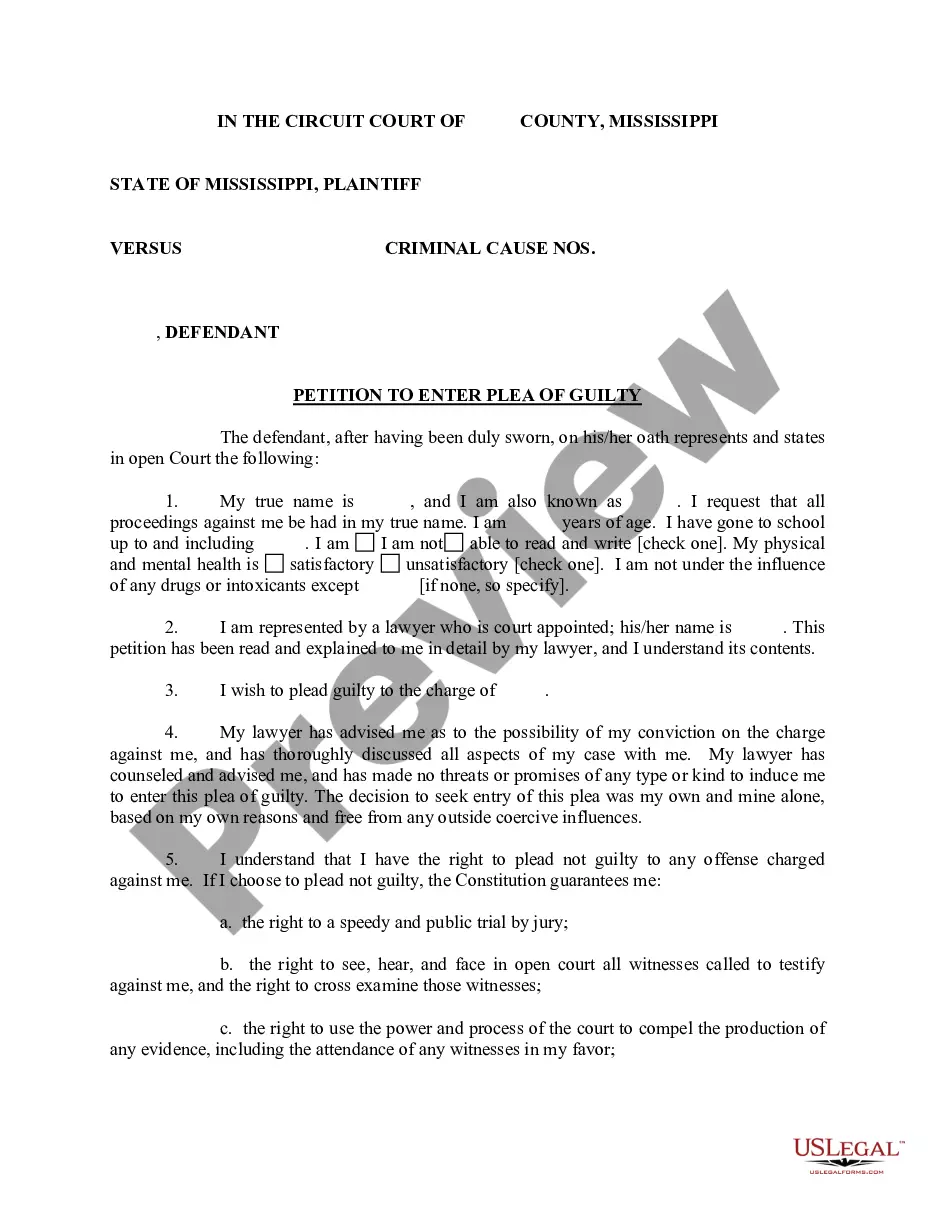
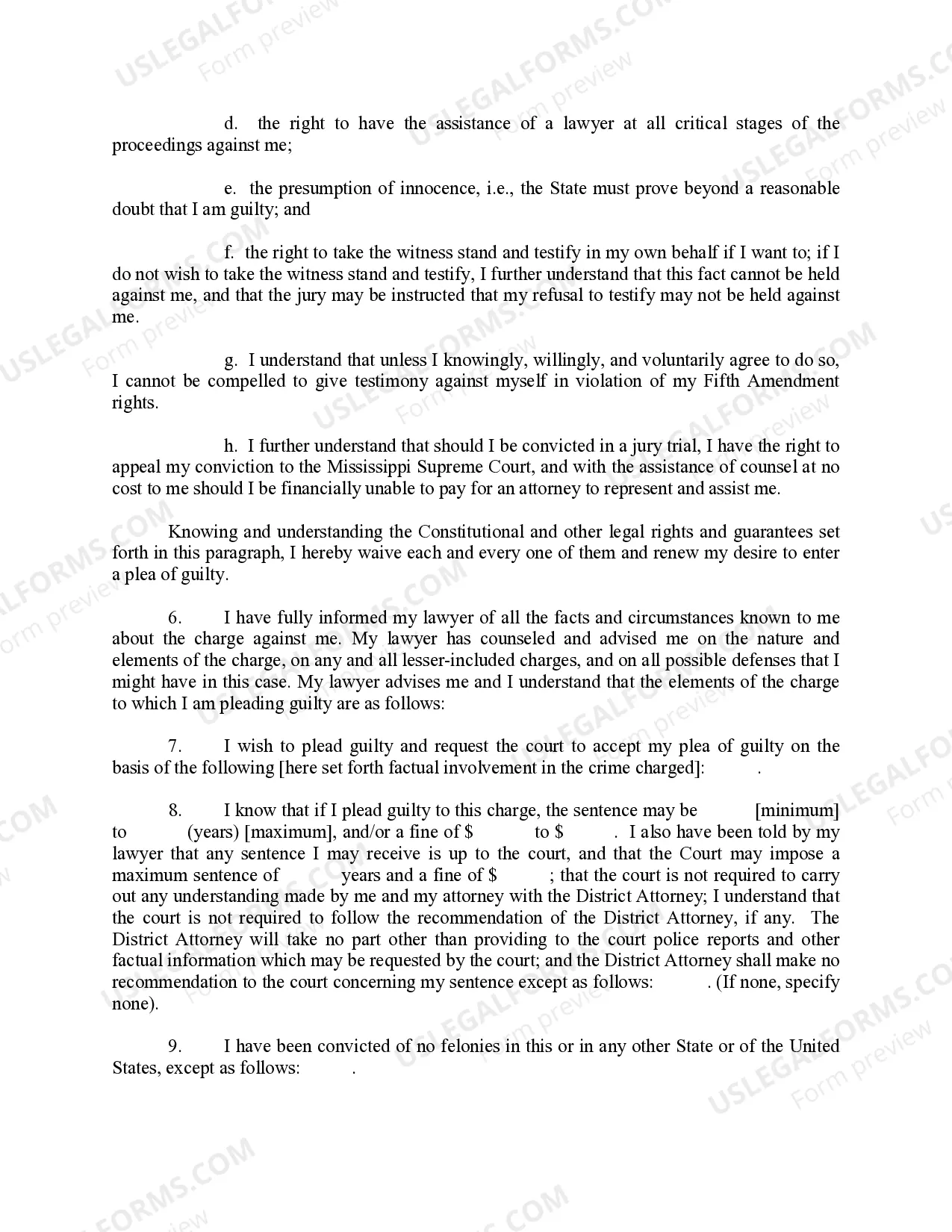
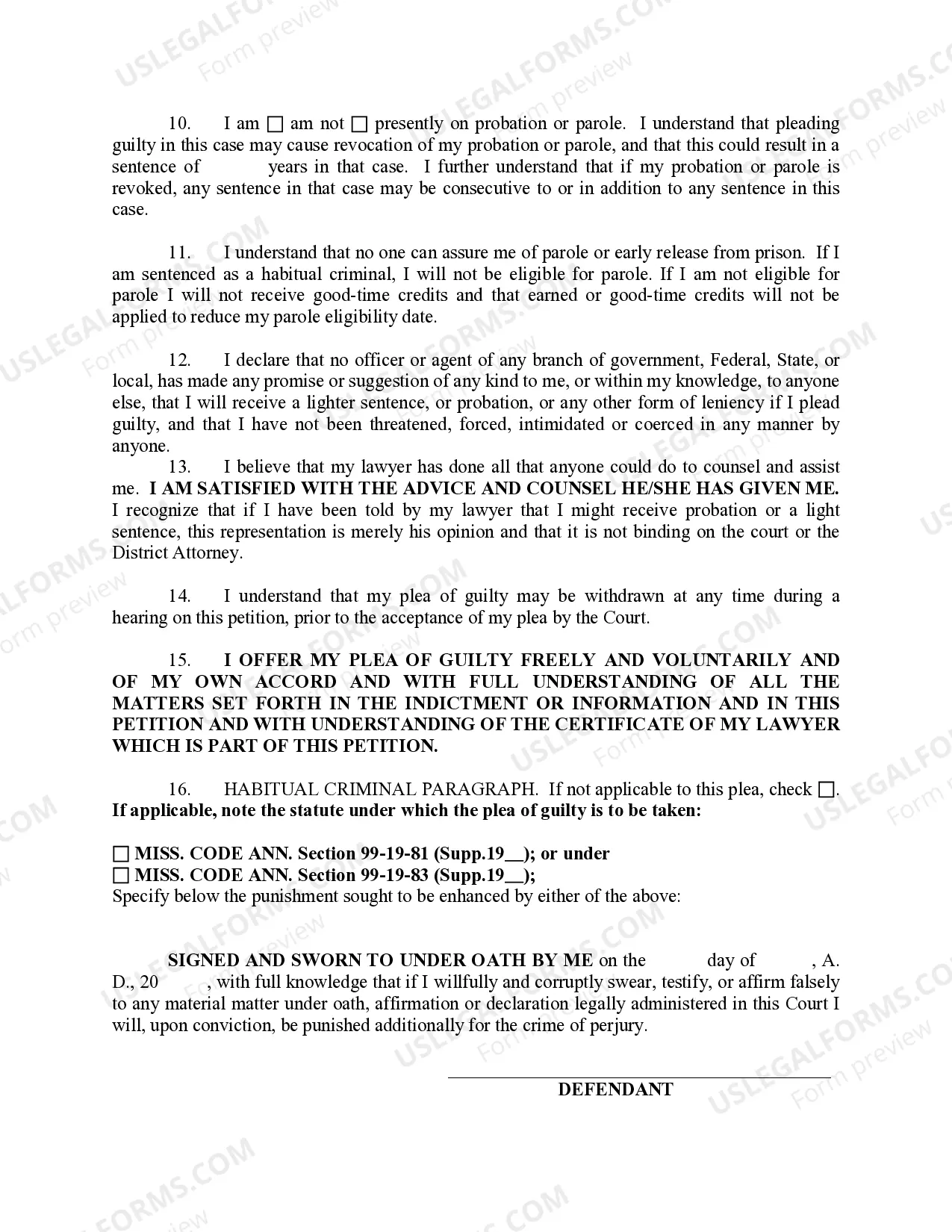
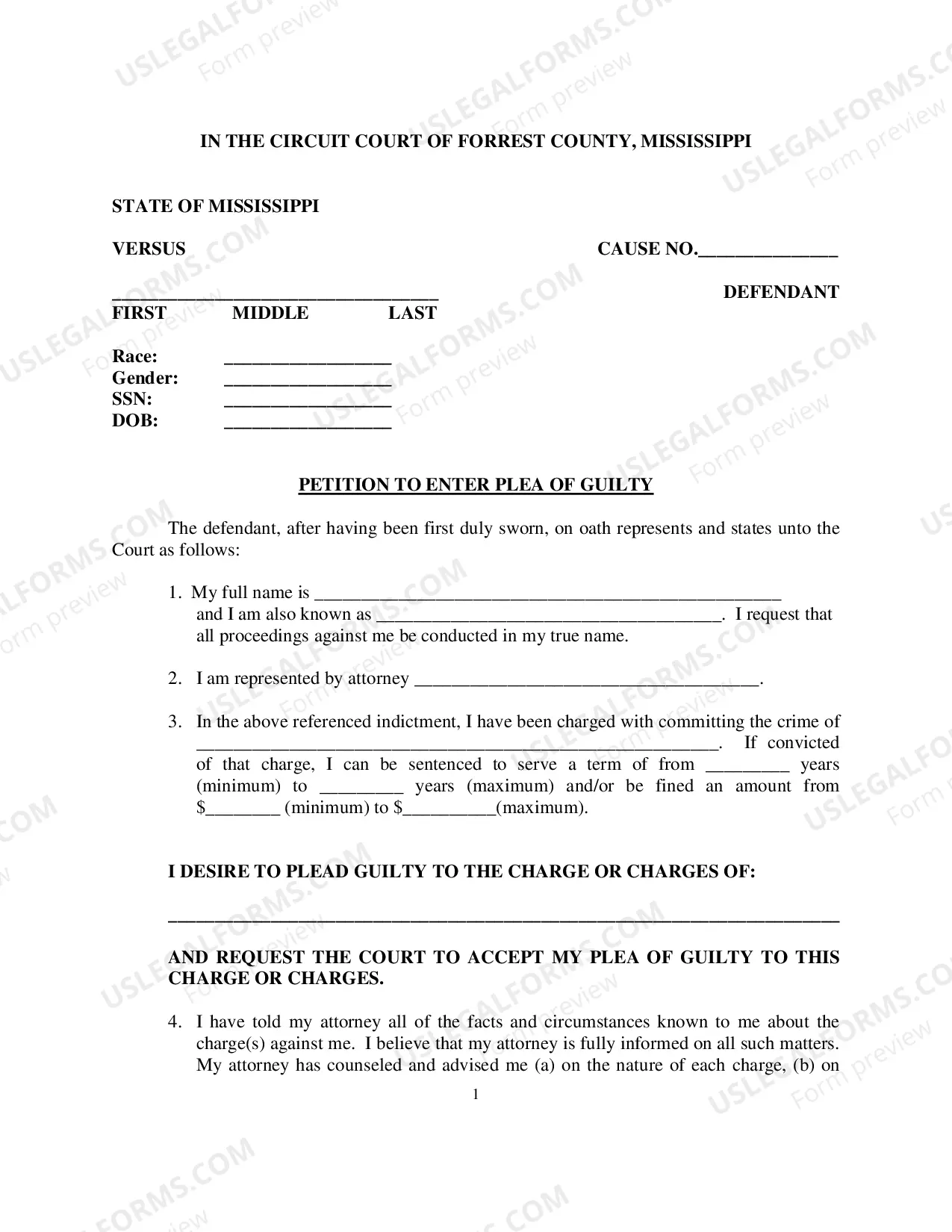
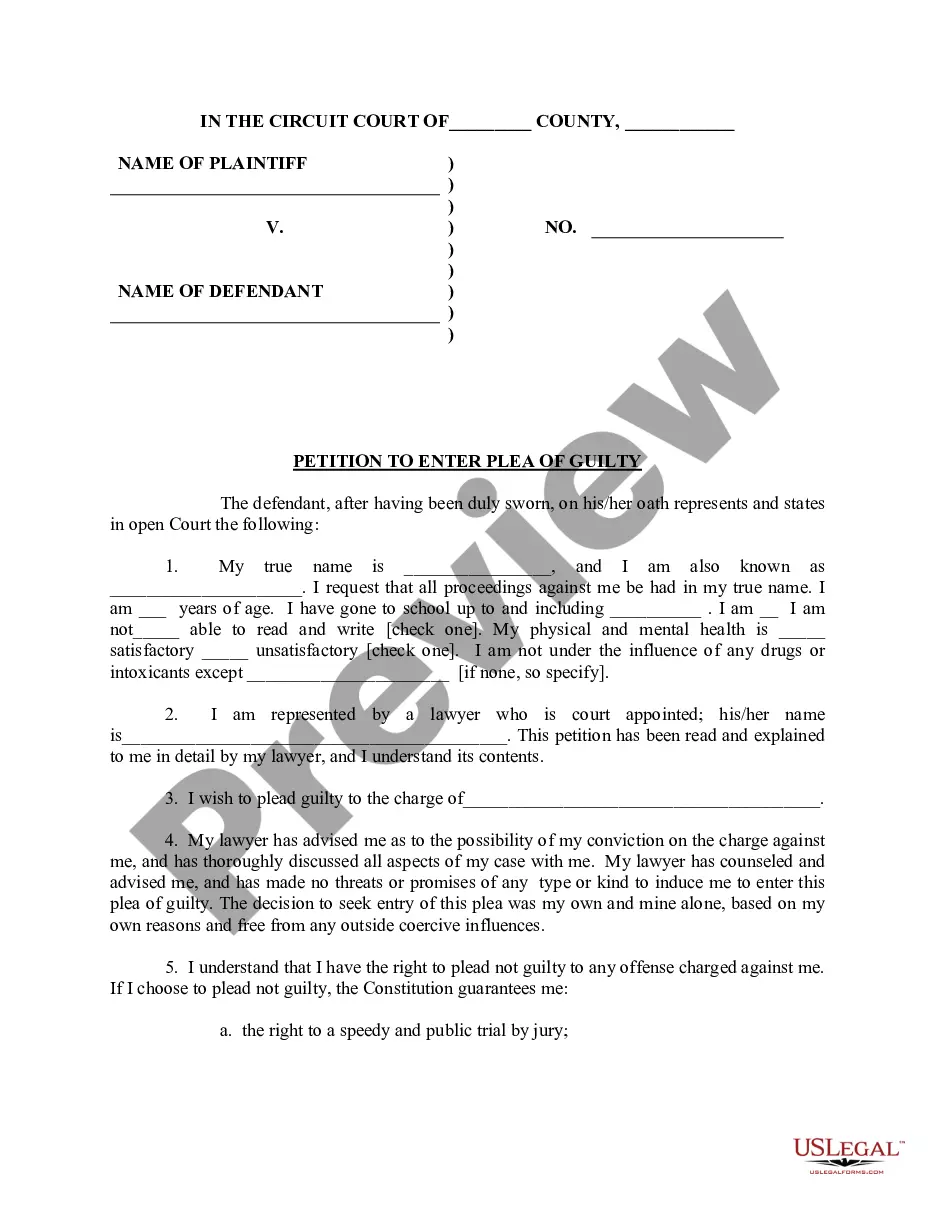
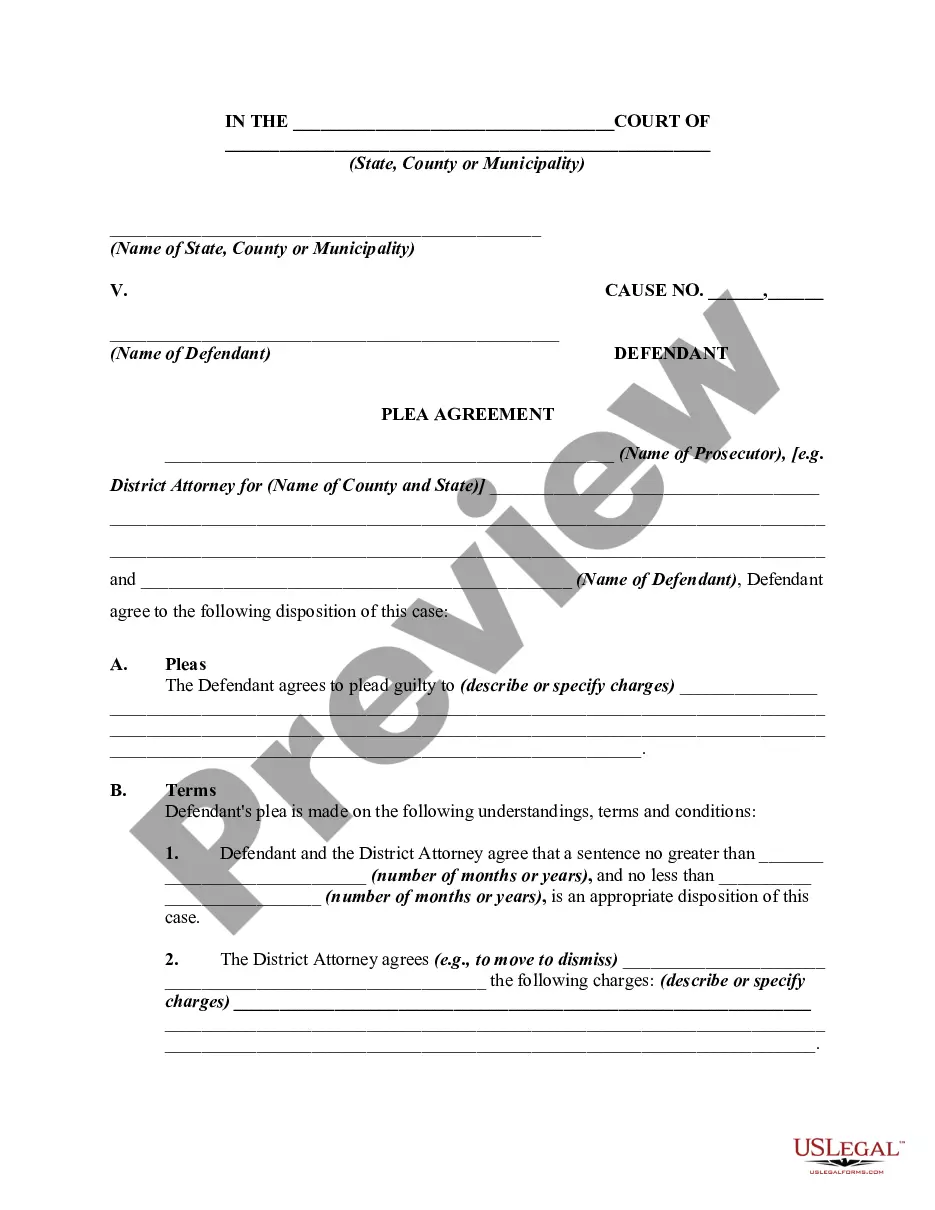
The Petition to Enter Plea of Guilty is a legal document used to formally express a defendant's desire to plead guilty to criminal charges in court. This form serves as a request for the court to accept the guilty plea and is an essential step in the legal process. Unlike other forms related to criminal proceedings, this petition specifically outlines the defendant's understanding of their rights and the implications of entering a guilty plea.
What’s included in this form
- Declaration of understanding of rights and legal ramifications of pleading guilty.
- Waiver of constitutional rights associated with a guilty plea.
- Confirmation that no promises or threats were made to induce the plea.
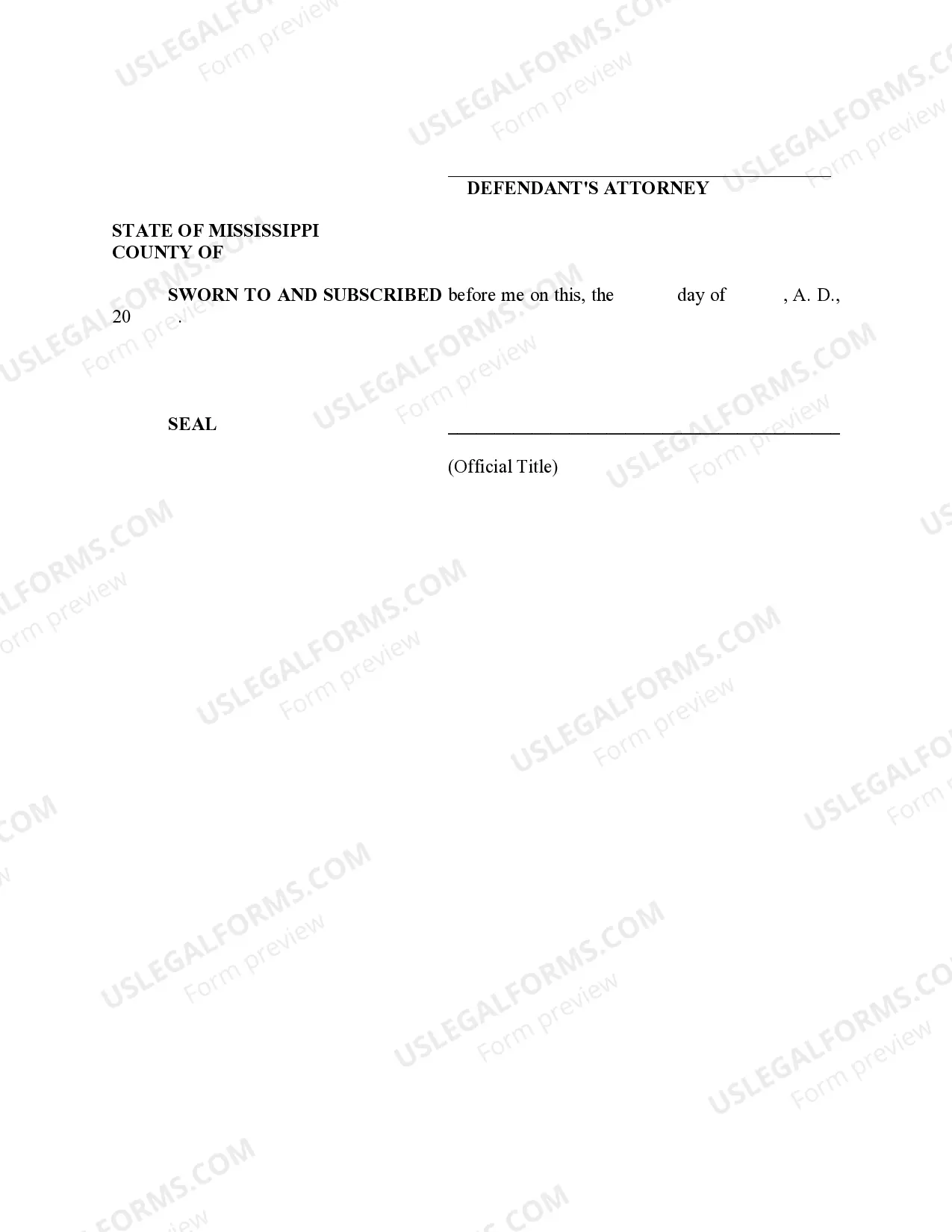
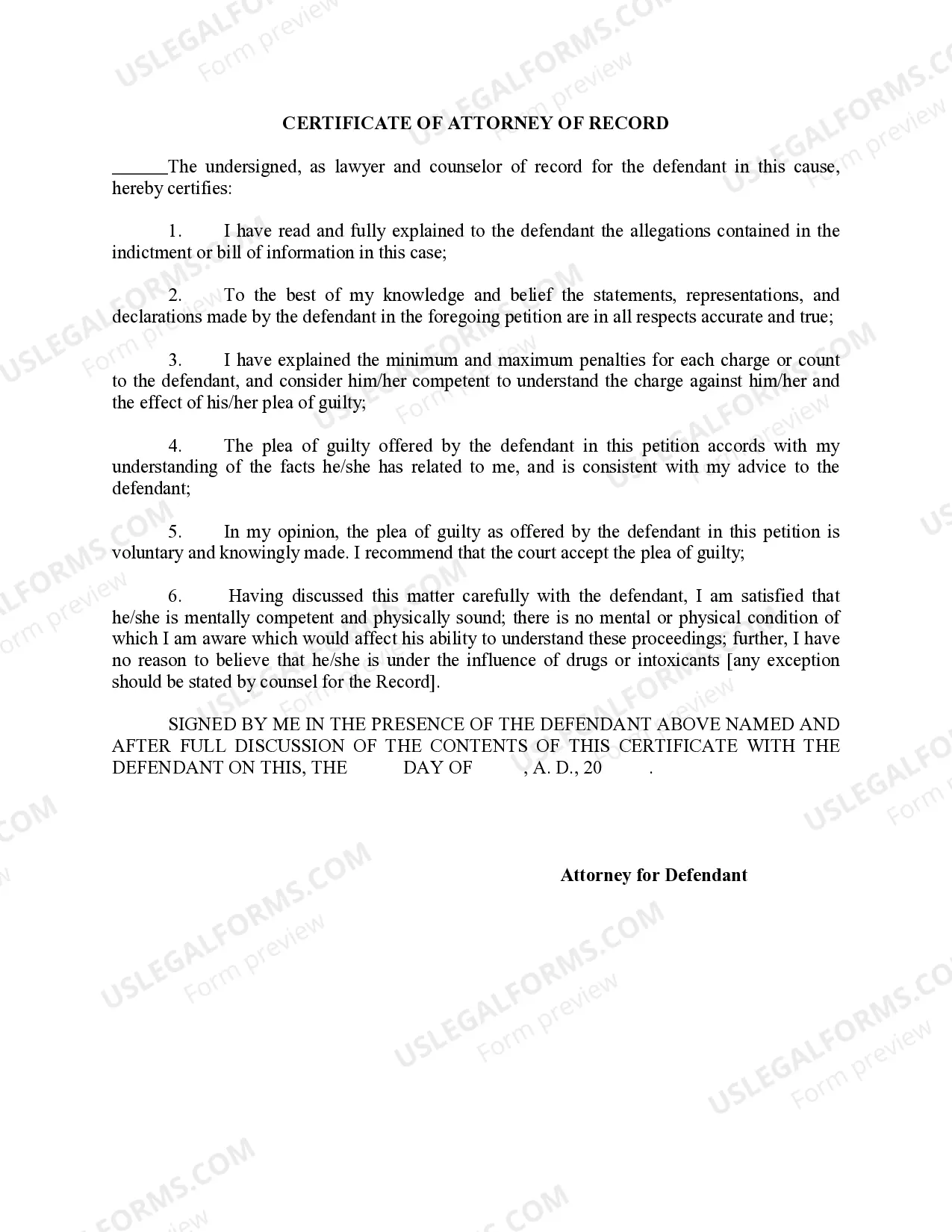
- Certification by the defendant's attorney regarding the defendant's competence and understanding of the plea.
- Space for signatures of both the defendant and the attorney to validate the petition.
When to use this form
This form should be used in situations where an individual has been charged with a criminal offense and wishes to enter a guilty plea rather than proceeding to trial. It may be appropriate when the defendant has discussed the charges with their attorney and understands the consequences of their plea, including potential sentencing outcomes. Using this form helps ensure that the defendant's rights are protected during this process.
Intended users of this form
- Individuals charged with a criminal offense seeking to plead guilty.
- Defendants who have consulted with an attorney and received legal advice about their plea.
- Persons who understand the rights they are waiving by entering a guilty plea.
How to complete this form
- Read the petition thoroughly to understand the terms and implications of your guilty plea.
- Fill in your personal information and the details of the charge.
- Review the rights you are waiving and confirm your understanding.
- Sign the petition, indicating your agreement to plead guilty.
- Have your attorney complete their section to certify that you understand the process.
Notarization requirements for this form
This form does not typically require notarization unless specified by local law. However, having it notarized can add an additional layer of authenticity and may be advisable in certain circumstances to ensure its validity in court.
Get your form ready online
Our built-in tools help you complete, sign, share, and store your documents in one place.
Make edits, fill in missing information, and update formatting in US Legal Forms—just like you would in MS Word.
Download a copy, print it, send it by email, or mail it via USPS—whatever works best for your next step.
Sign and collect signatures with our SignNow integration. Send to multiple recipients, set reminders, and more. Go Premium to unlock E-Sign.
If this form requires notarization, complete it online through a secure video call—no need to meet a notary in person or wait for an appointment.
We protect your documents and personal data by following strict security and privacy standards.

Make edits, fill in missing information, and update formatting in US Legal Forms—just like you would in MS Word.

Download a copy, print it, send it by email, or mail it via USPS—whatever works best for your next step.

Sign and collect signatures with our SignNow integration. Send to multiple recipients, set reminders, and more. Go Premium to unlock E-Sign.

If this form requires notarization, complete it online through a secure video call—no need to meet a notary in person or wait for an appointment.

We protect your documents and personal data by following strict security and privacy standards.
Mistakes to watch out for
- Failing to fully understand the rights being waived.
- Not consulting with an attorney before filling out the form.
- Leaving sections of the form incomplete or incorrectly filled out.
- Signing the form without reviewing the implications of the guilty plea.
Why use this form online
- Convenience of downloading the form from home without needing to visit a legal office.
- Editable fields allow for easy customization to fit individual circumstances.
- Immediate access to expert-drafted content ensures reliability and legal accuracy.
Looking for another form?
Form popularity
FAQ
What Happens When You Accept A Plea Bargain? In the process of accepting a plea bargain, your attorney will work out the terms of the plea bargain with the prosecution. You will then have a hearing where you create a verbal agreement between you and the prosecution and waive your right to a jury trial.
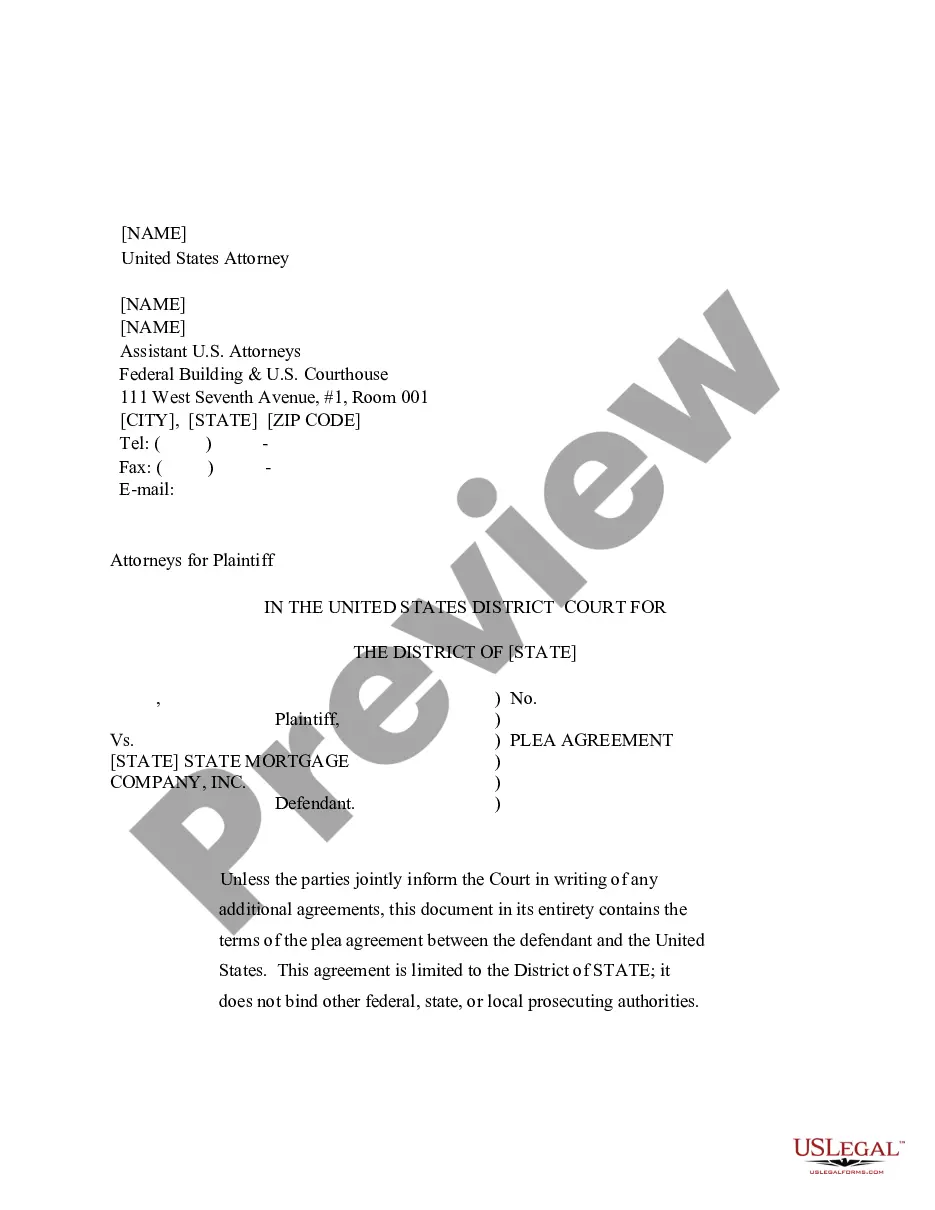
A plea bargain is an agreement between a defendant and a prosecutor, in which the defendant agrees to plead guilty or "no contest" (nolo contendere) in exchange for an agreement by the prosecutor to drop one or more charges, reduce a charge to a less serious offense, or recommend to the judge a specific sentence
PLEASINTRODUCTION: THE NATURE OF PLEA TAKINGPlea taking marks the commencement of the trial process in a criminal court. After a decision has been taken to prosecute an accused person he/she is brought before a court of law to plead to the charge(s) laid against him.
A plea bargain is a deal offered to a defendant by the prosecution in a criminal case. Typically, this deal will exchange reduced sentencing or conviction on a lesser charge for the defendant pleading guilty or no contest and waiving their right to a trial.
This may mean that the defendant will plead guilty to a less serious charge, or to one of the several charges, in return for the dismissal of other charges; or it may mean that the defendant will plead guilty to the original criminal charge in return for a more lenient sentence.
These pleas include: not guilty, guilty, and no contest (nolo contendere). At Worgul, Sarna & Ness, Criminal Defense Attorneys, LLC, we know how to what's on the line for you and how these different pleas can impact your life.
The United States Sentencing Guidelines Typically, sentencing will take place ninety days after a guilty plea or guilty verdict.
Sentencing: If a defendant is convicted by either pleading guilty to a charge, or by being found guilty after a trial, sentencing will take place about seventy- Page 5 five days later if the defendant is in custody, or about ninety days later if the defendant is out of custody.
Simply put, a plea hearing is the court hearing where a defendant responds to the criminal charges against them. The response must be one of the following: a plea of guilty, not guilty, or "nolo contendere" (no contest). When the plea hearing takes places largely depends on whether you are in state or federal court.