North Dakota Revocation of Premarital or Prenuptial Agreement
About this form
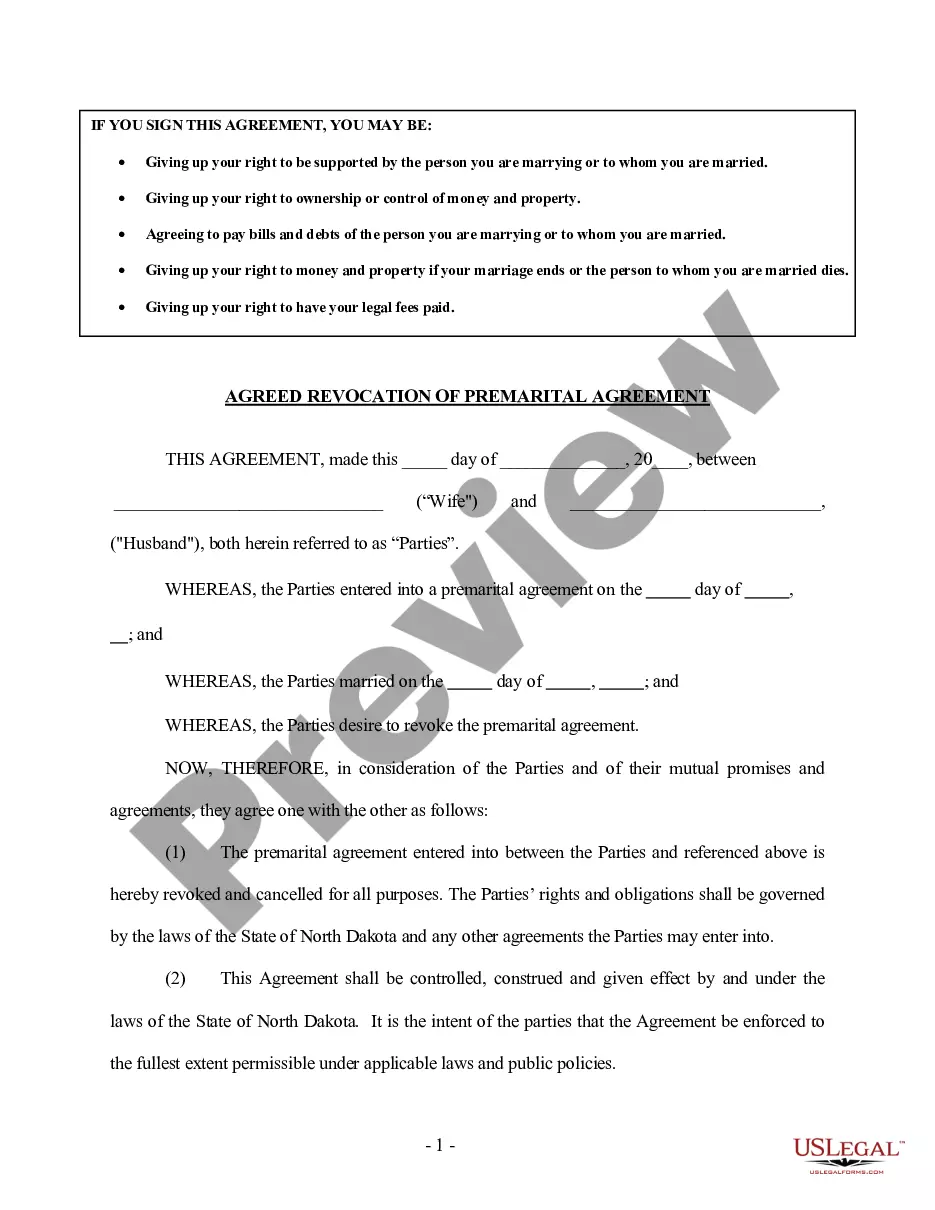
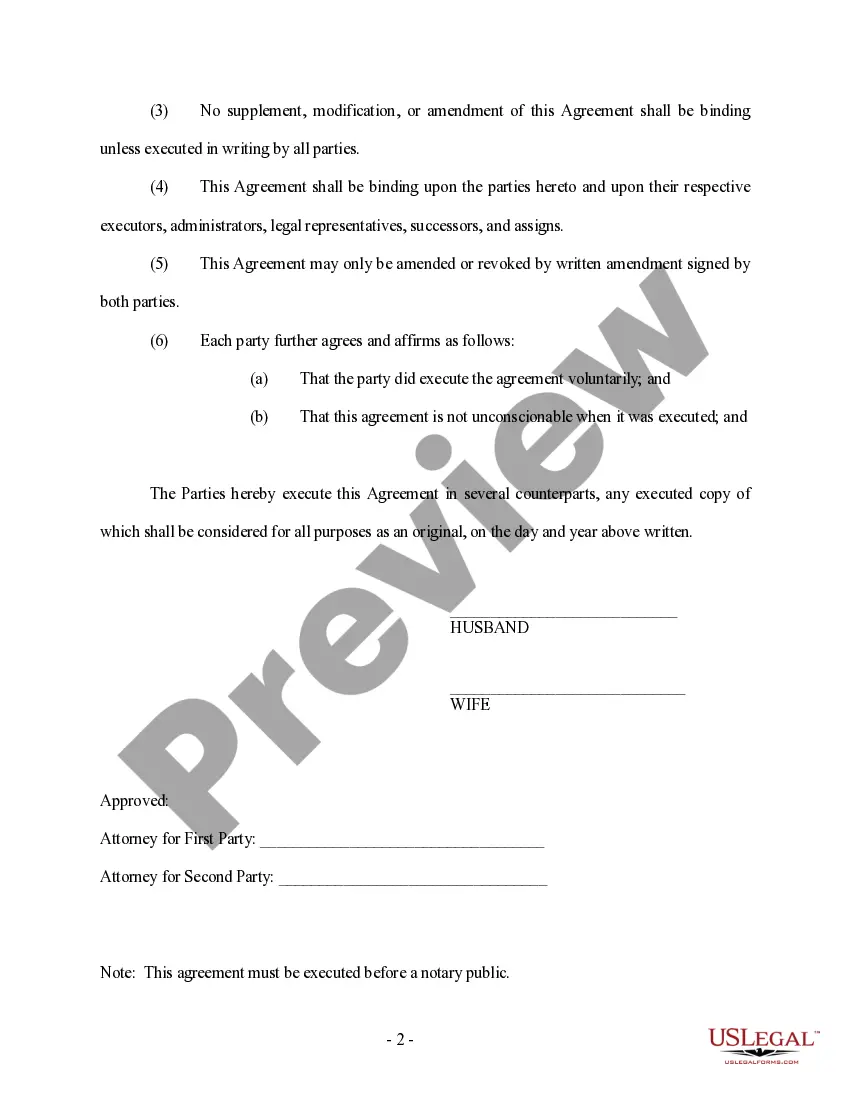
The Revocation of Premarital or Prenuptial Agreement is a legal document that allows a married couple to formally cancel an existing prenuptial agreement. This form ensures that all prior agreements regarding their rights and obligations are revoked, restoring the parties to the legal status and responsibilities outlined under state law. Unlike similar agreements, which establish terms before marriage, this form rescinds those terms, making it a crucial document for couples wishing to reset their marriage contract.
Main sections of this form
- The names of both parties (Wife and Husband) who are revoking the agreement.
- The date on which the agreement is signed.
- A statement indicating the cancellation of the existing premarital agreement.
- Reference to the governing law, which in this case is the State of North Dakota.
- Clauses regarding the binding nature of the agreement upon successors and assigns.
- Signatures of both parties to indicate acceptance.
When this form is needed
This form should be used when a married couple decides they no longer wish to abide by the terms set forth in their prenuptial agreement. Situations may include a change in circumstances, such as the couple's improved financial standing or a mutually agreed change in the relationship dynamic. Revoking a prenuptial agreement may also be necessary if the couple decides to address their marital rights and obligations through different means.
Who can use this document
- Couples who have an existing prenuptial agreement they wish to cancel.
- Married individuals looking to redefine their legal obligations without a prenuptial agreement.
- Individuals seeking to ensure both parties are in agreement and understand their rights post-revocation.
Instructions for completing this form
- Identify the parties involved by entering the full names of the Husband and Wife.
- Enter the date on which the revocation agreement is being executed.
- Clearly state the name of the premarital agreement being revoked.
- Sign the agreement under the respective signature lines provided for both parties.
- Ensure all mandatory fields are completed before filing or storing the document.
Does this form need to be notarized?
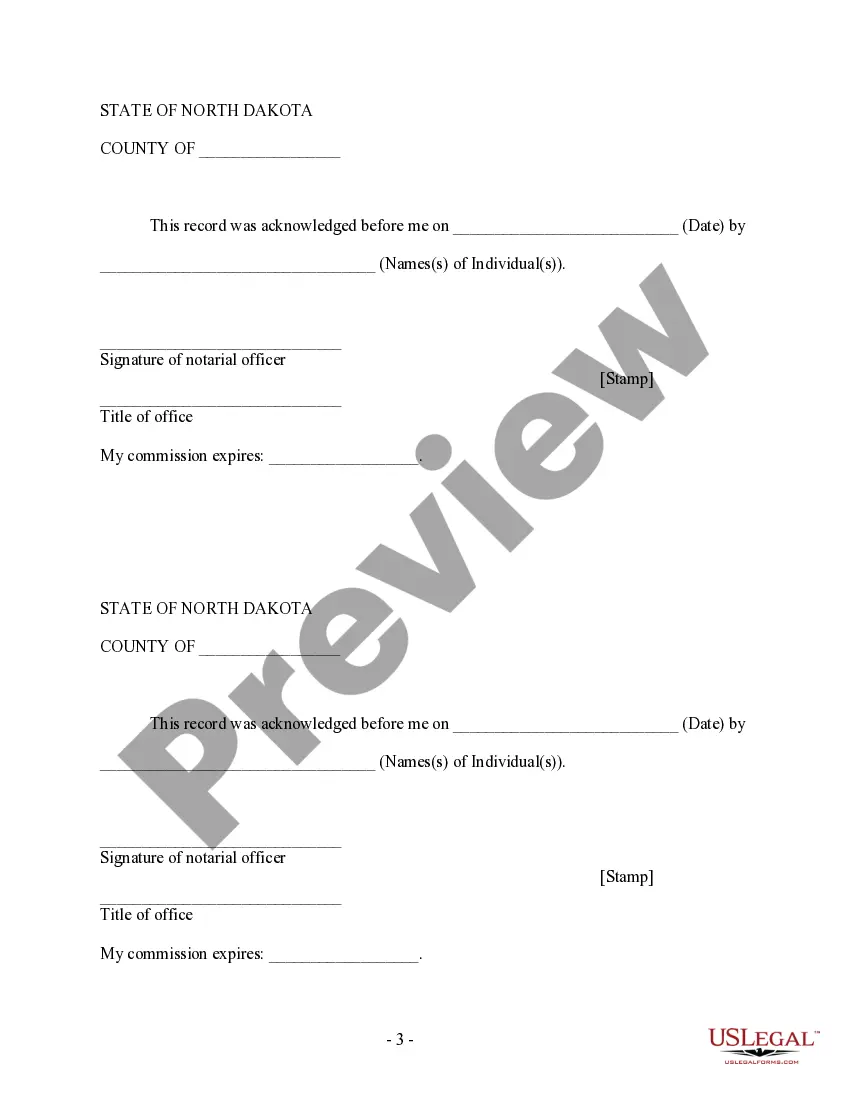
This form does not typically require notarization unless specified by local law. It is essential to check if any specific state requirements mandate notarization for the document to be legally binding.
Get your form ready online
Our built-in tools help you complete, sign, share, and store your documents in one place.
Make edits, fill in missing information, and update formatting in US Legal Forms—just like you would in MS Word.
Download a copy, print it, send it by email, or mail it via USPS—whatever works best for your next step.
Sign and collect signatures with our SignNow integration. Send to multiple recipients, set reminders, and more. Go Premium to unlock E-Sign.
If this form requires notarization, complete it online through a secure video call—no need to meet a notary in person or wait for an appointment.
We protect your documents and personal data by following strict security and privacy standards.

Make edits, fill in missing information, and update formatting in US Legal Forms—just like you would in MS Word.

Download a copy, print it, send it by email, or mail it via USPS—whatever works best for your next step.

Sign and collect signatures with our SignNow integration. Send to multiple recipients, set reminders, and more. Go Premium to unlock E-Sign.

If this form requires notarization, complete it online through a secure video call—no need to meet a notary in person or wait for an appointment.

We protect your documents and personal data by following strict security and privacy standards.
Common mistakes to avoid
- Failing to properly identify both parties, leading to legal disputes over the agreement's validity.
- Not including the date of execution, which may affect the enforceability.
- Omitting signatures from both parties, which renders the document incomplete.
Advantages of online completion
- Convenience of accessing and downloading the form from anywhere at any time.
- Editability allows you to input your details accurately before finalizing.
- Reliable drafting by licensed attorneys ensures legal compliance and soundness of the form.
Legal use & context
- The Revocation of Premarital Agreement is legally enforceable in North Dakota when executed properly.
- Both parties must voluntarily agree to revoke the previous agreement for it to be valid.
- It protects both parties by ensuring clarity regarding their financial obligations moving forward.
What to keep in mind
- The form officially cancels an existing premarital agreement.
- It is crucial for both parties to sign and date the document.
- Following proper procedures ensures the revocation is legally binding in North Dakota.
Looking for another form?
Form popularity
FAQ
If a spouse is able to prove non-disclosure of all previous assets or property, then the prenuptial agreement can be considered void. Second, if a spouse is able to prove that he or she was compelled to sign the prenuptial agreement under stressful circumstances, then the prenup can be invalidated.
A prenuptial agreement can be changed or canceled, provided this what both parties want.Remember, a single partner in the marriage can't change or cancel the prenuptial agreement by themselvesthey must have the agreement and signature of the other party.
Essentially, the prenup simply has to be reasonable if it's going to hold up in court. If it's not, the judge may decide to disregard the document entirely.
No, you cannot get a prenup if you are already married.You can still sign a postnuptial agreement (or postnup), which achieves the same goals as a prenup in most cases. Prenups are a common step before marriage. Texas community property rules are the reason why prenups are common in Texas.
The three most common grounds for nullifying a prenup are unconscionability, failure to disclose, or duress and coercion. Unconscionability may be present if the agreement is patently unfair to one party.
A prenup can also be overturned if one or both parties change their mind after initially signing the agreement. They may decide at that time to sign a new agreement suspending the prenup.
As long as you and your spouse agree, your prenuptial agreement can be changed. To create an amendment to a prenup, you can either add to the original contract or sign a separate contract that modifies the terms of the initial agreement.
Prenuptial agreements are not set in stone: Parties may be able to renegotiate the terms, so long as the renegotiation is legal and valid.
The courts will not enforce illegal terms in a prenuptial agreement. The courts also will not enforce verbal prenuptial agreements. If someone wishes to enforce the terms of a prenup in California in court, he or she must have a written, signed and notarized legal document.