Nevada Concrete Mason Contract for Contractor
Understanding this form
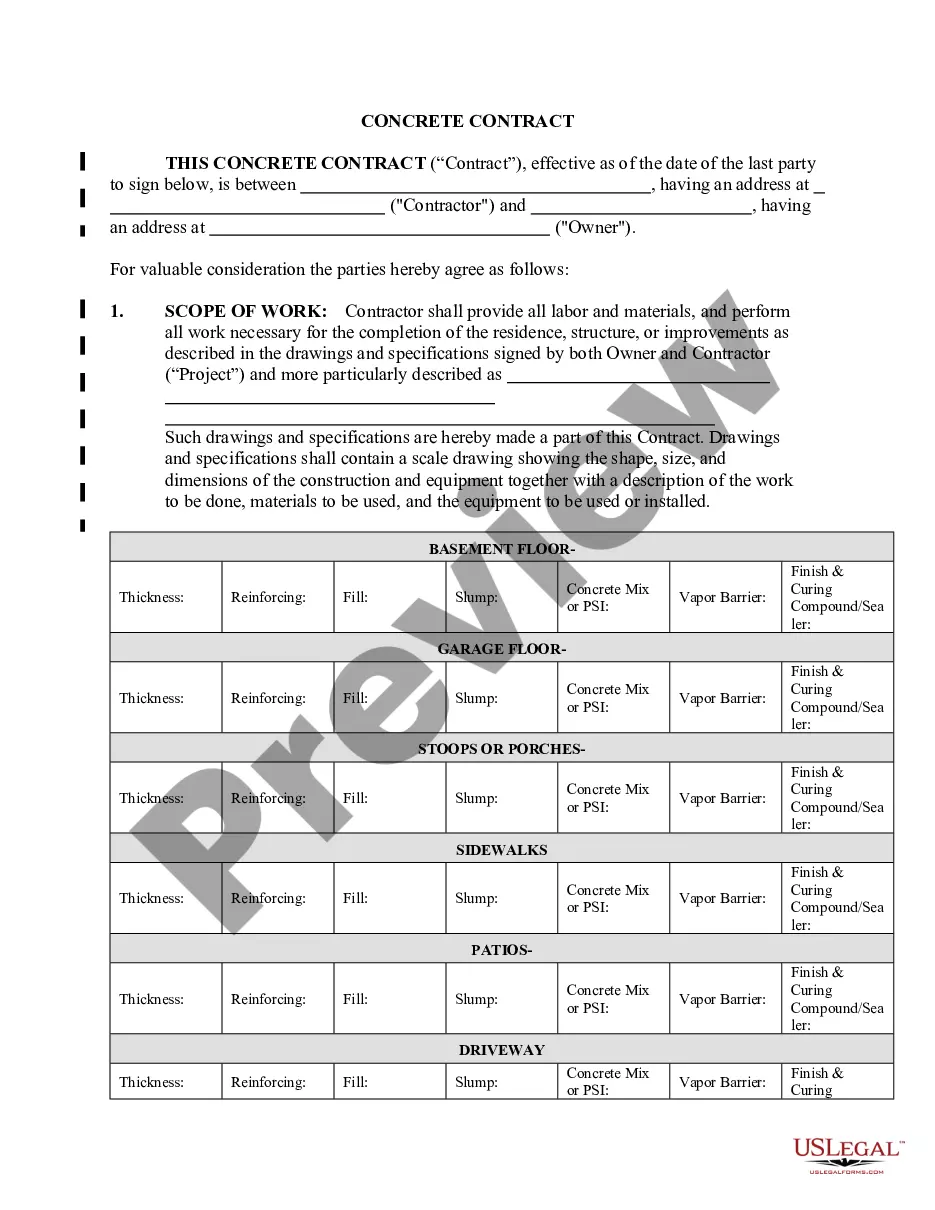
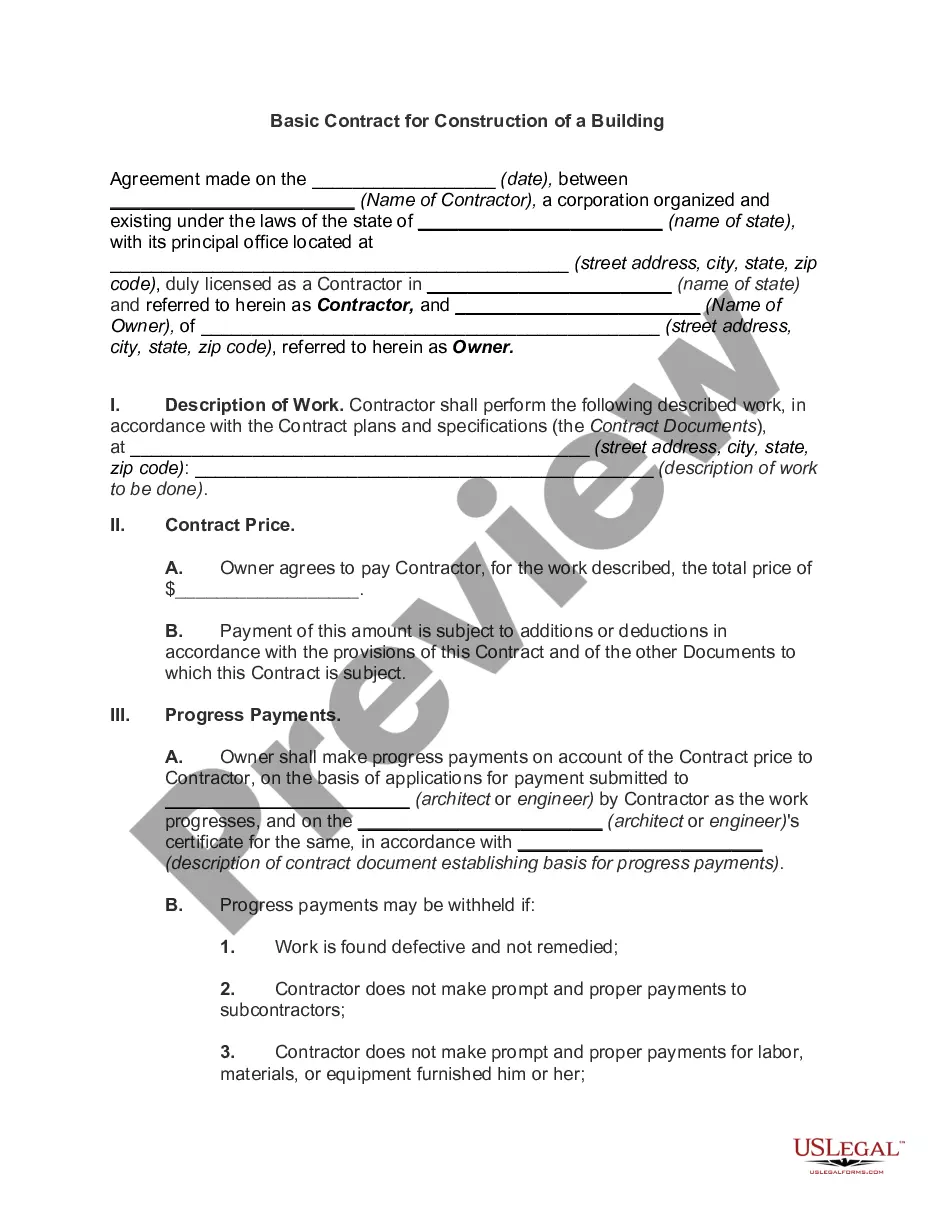
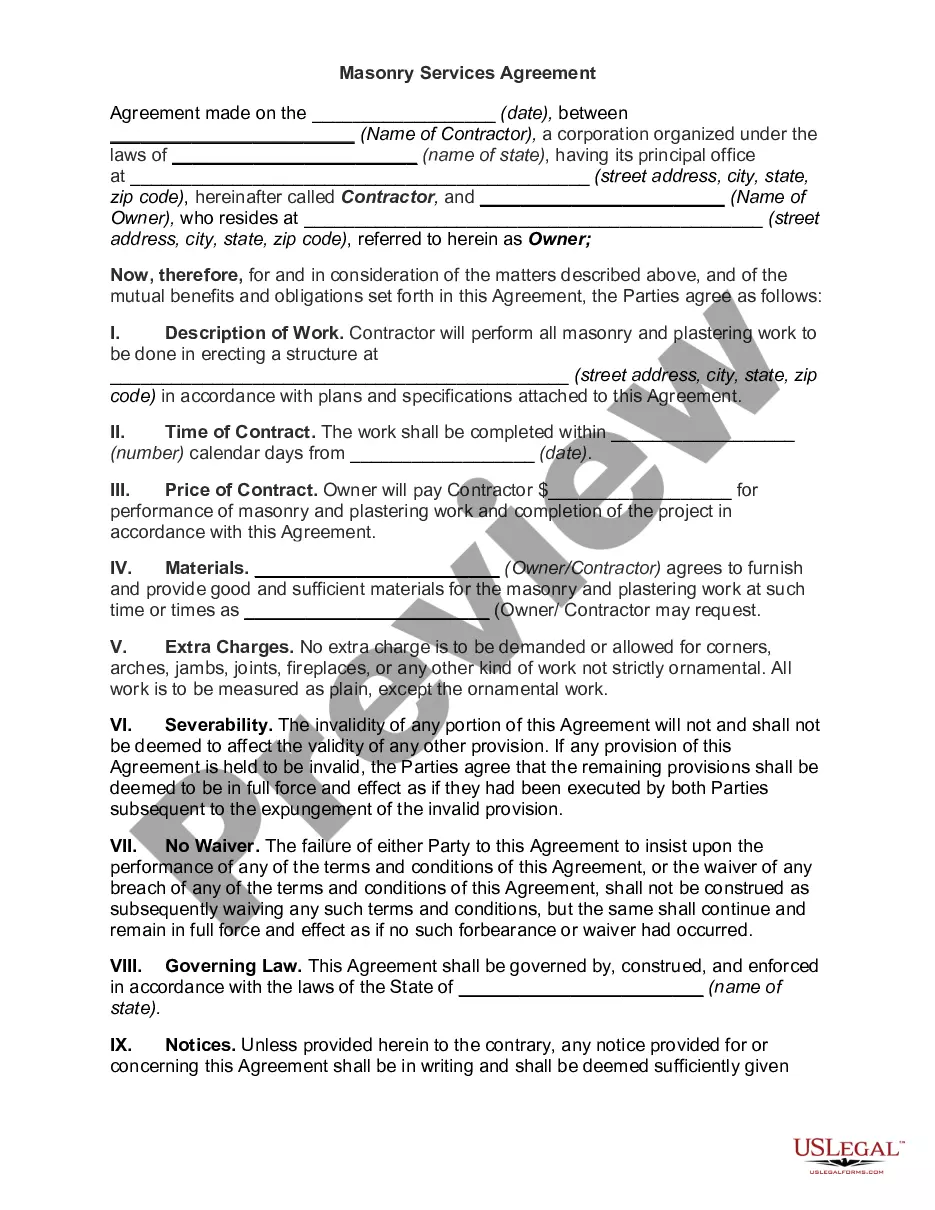
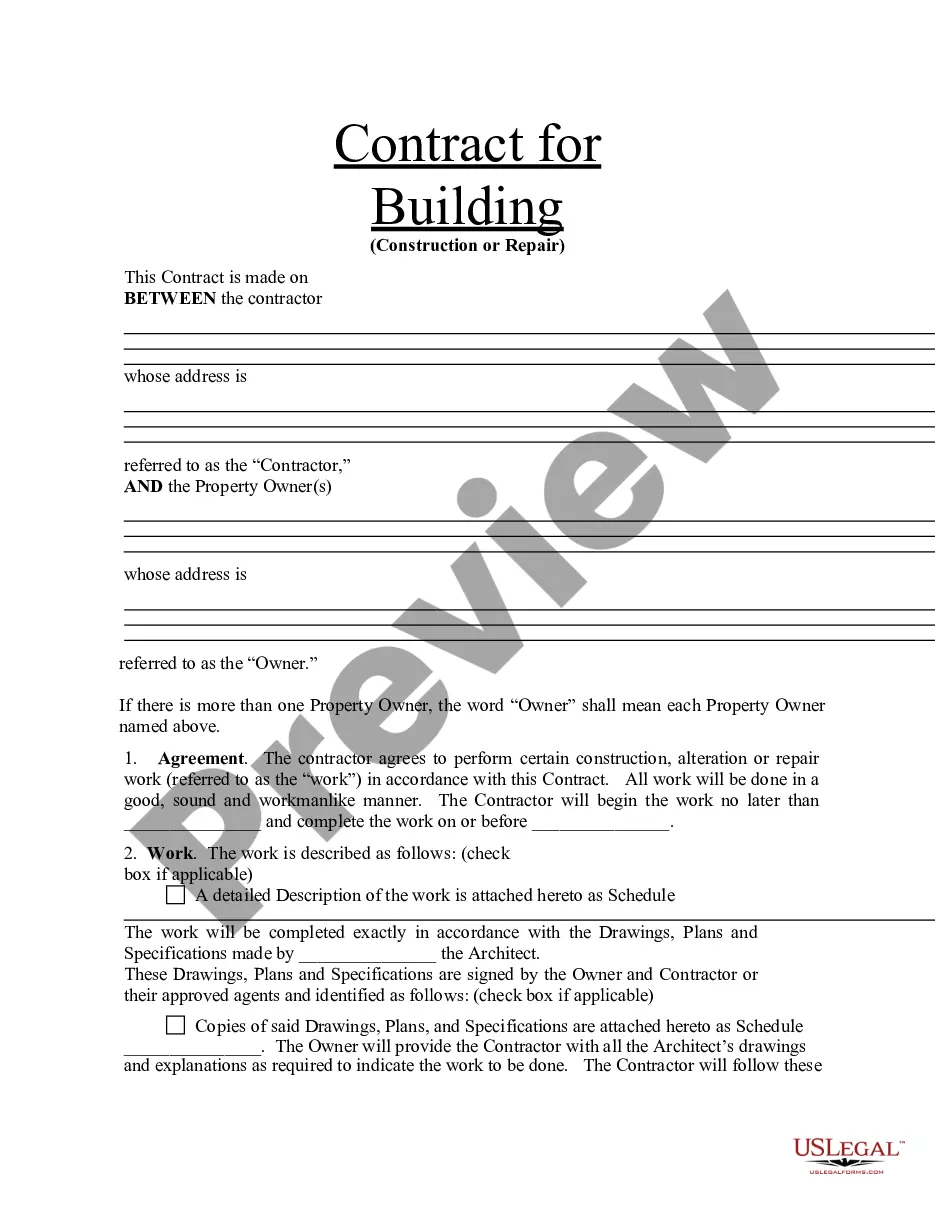
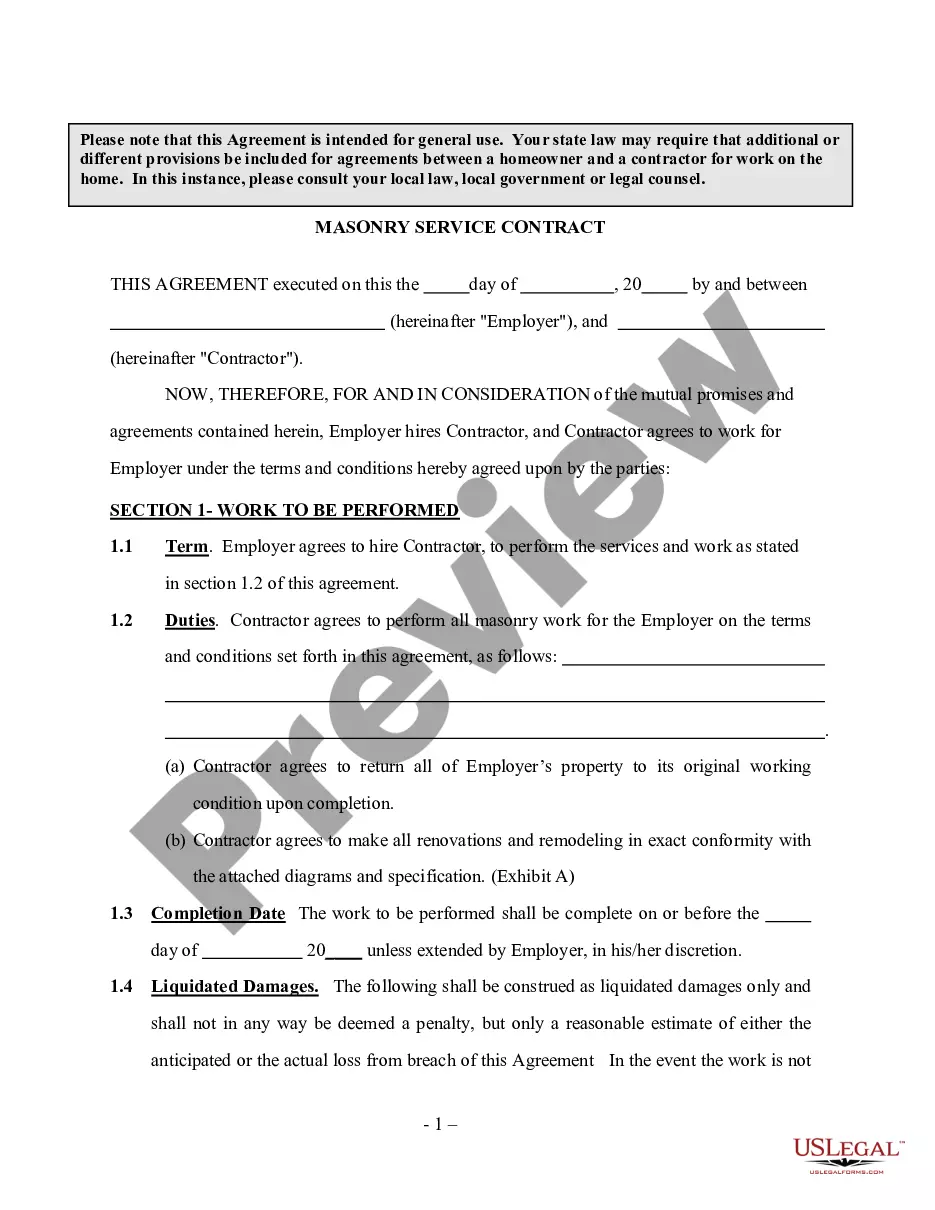
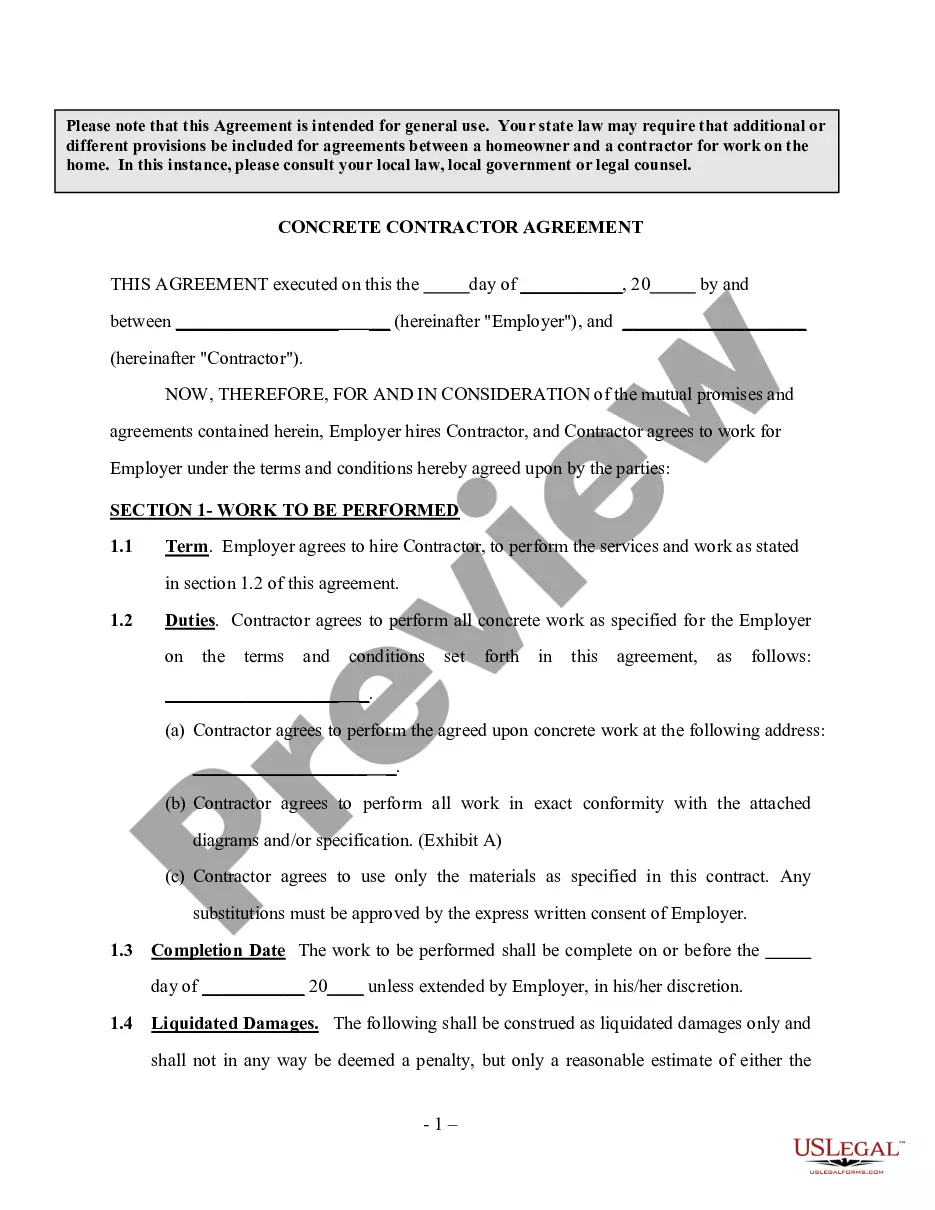
The Concrete Mason Contract for Contractor is a legal agreement between concrete masonry contractors and property owners. This form outlines the terms of employment, including payment arrangements, responsibilities for permits, insurance requirements, and conditions for changes to project scope. It is essential for ensuring clarity in the contractor-client relationship and helps in mitigating disputes that may arise during the project. Unlike general contracts, this form specifically addresses issues relevant to concrete masonry work and complies with the laws of the State of Nevada.
What’s included in this form
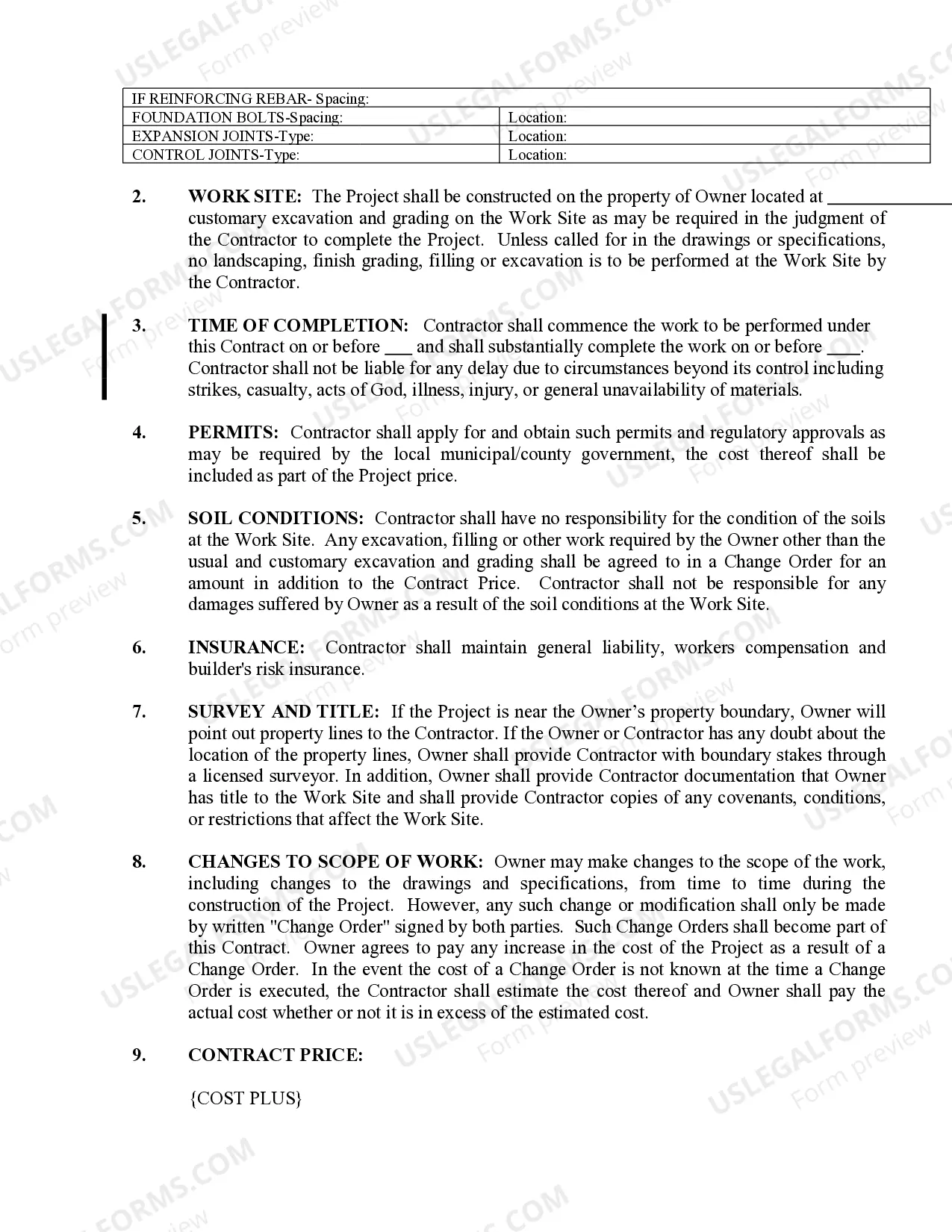
- Detailed contractor obligations regarding permits and regulatory approvals.
- Clarification of responsibilities concerning soil conditions at the work site.
- Specifications for insurance coverage required for contractors.
- Procedures for making changes to the project scope and associated costs.
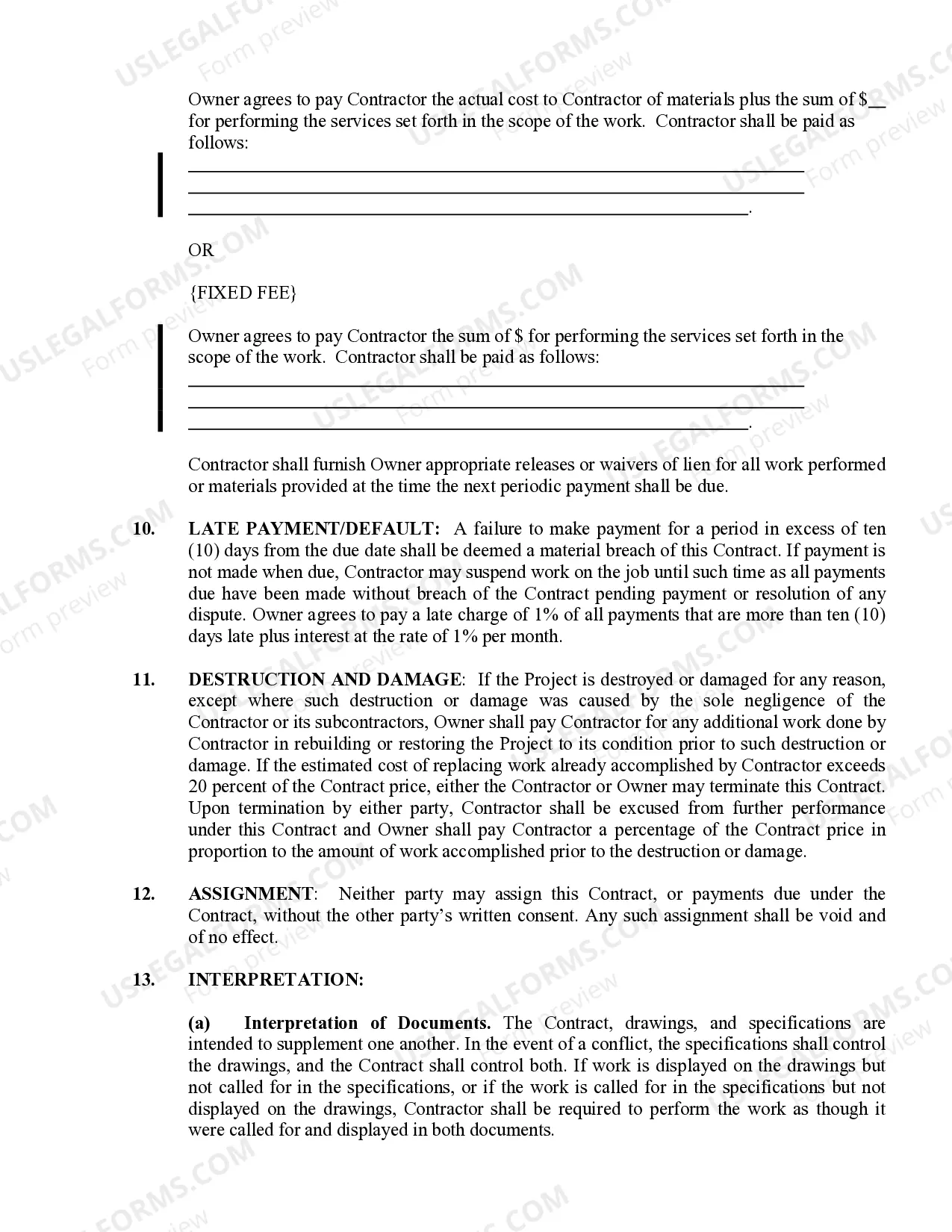
- Provisions for late payments, including penalties and default responses.
- Conditions relating to damage or destruction during the project.
When to use this form
This form is appropriate when a property owner hires a contractor to undertake concrete masonry work. It is particularly necessary in situations where the project involves specific local permits, warranty issues, or changes in project scope that could affect costs. Use this contract to ensure that both parties understand their rights and responsibilities, thus helping to avoid potential disputes throughout the construction process.
Who needs this form
- Concrete masonry contractors seeking a clear contractual agreement with property owners.
- Property owners intending to hire contractors for concrete-related projects.
- Parties involved in residential or commercial construction projects that require specific terms for concrete work.
Steps to complete this form
- Identify and enter the names of both the contractor and the property owner.
- Specify the property address where the work will be conducted.
- Choose the payment arrangement (cost plus or fixed fee) and enter the agreed project price.
- Detail any specific permits or inspections that need to be obtained for the project.
- Outline any conditions for changes to the scope of work, including potential costs.
- Ensure both parties sign and date the contract to make it legally binding.
Notarization requirements for this form
This form does not typically require notarization unless specified by local law. However, having it notarized can provide an additional layer of verification and security.
Get your form ready online
Our built-in tools help you complete, sign, share, and store your documents in one place.
Make edits, fill in missing information, and update formatting in US Legal Forms—just like you would in MS Word.
Download a copy, print it, send it by email, or mail it via USPS—whatever works best for your next step.
Sign and collect signatures with our SignNow integration. Send to multiple recipients, set reminders, and more. Go Premium to unlock E-Sign.
If this form requires notarization, complete it online through a secure video call—no need to meet a notary in person or wait for an appointment.
We protect your documents and personal data by following strict security and privacy standards.

Make edits, fill in missing information, and update formatting in US Legal Forms—just like you would in MS Word.

Download a copy, print it, send it by email, or mail it via USPS—whatever works best for your next step.

Sign and collect signatures with our SignNow integration. Send to multiple recipients, set reminders, and more. Go Premium to unlock E-Sign.

If this form requires notarization, complete it online through a secure video call—no need to meet a notary in person or wait for an appointment.

We protect your documents and personal data by following strict security and privacy standards.
Avoid these common issues
- Failing to specify the project price or payment terms clearly.
- Not including details about necessary permits and inspections.
- Overlooking the need for insurance coverage confirmations.
- Ignoring the importance of signed change orders for scope modifications.
Why complete this form online
- Immediate access to a legally vetted contract specifically for concrete masonry work.
- Convenient editing options allow customization to fit specific project needs.
- Provides peace of mind with clear terms and conditions outlined for both parties.
Summary of main points
- The Concrete Mason Contract is essential for formalizing the relationship between a contractor and a property owner.
- This contract ensures both parties understand their rights and responsibilities during construction projects.
- Using this template helps maintain compliance with Nevada laws governing construction agreements.
Looking for another form?

Form popularity
FAQ
Identifying/Contact Information. Title and Description of the Project. Projected Timeline and Completion Date. Cost Estimate and Payment Schedule. Stop Work Clause and Stop Payment Clause. Act of God Clause. Change Order Agreement. Warranty.
Get it in writing. Keep it simple. Deal with the right person. Identify each party correctly. Spell out all of the details. Specify payment obligations. Agree on circumstances that terminate the contract. Agree on a way to resolve disputes.
An estimate should be the contractor's best professional assessment, including the cost of hiring any subcontractors, the price of materials, and any other labor involved.
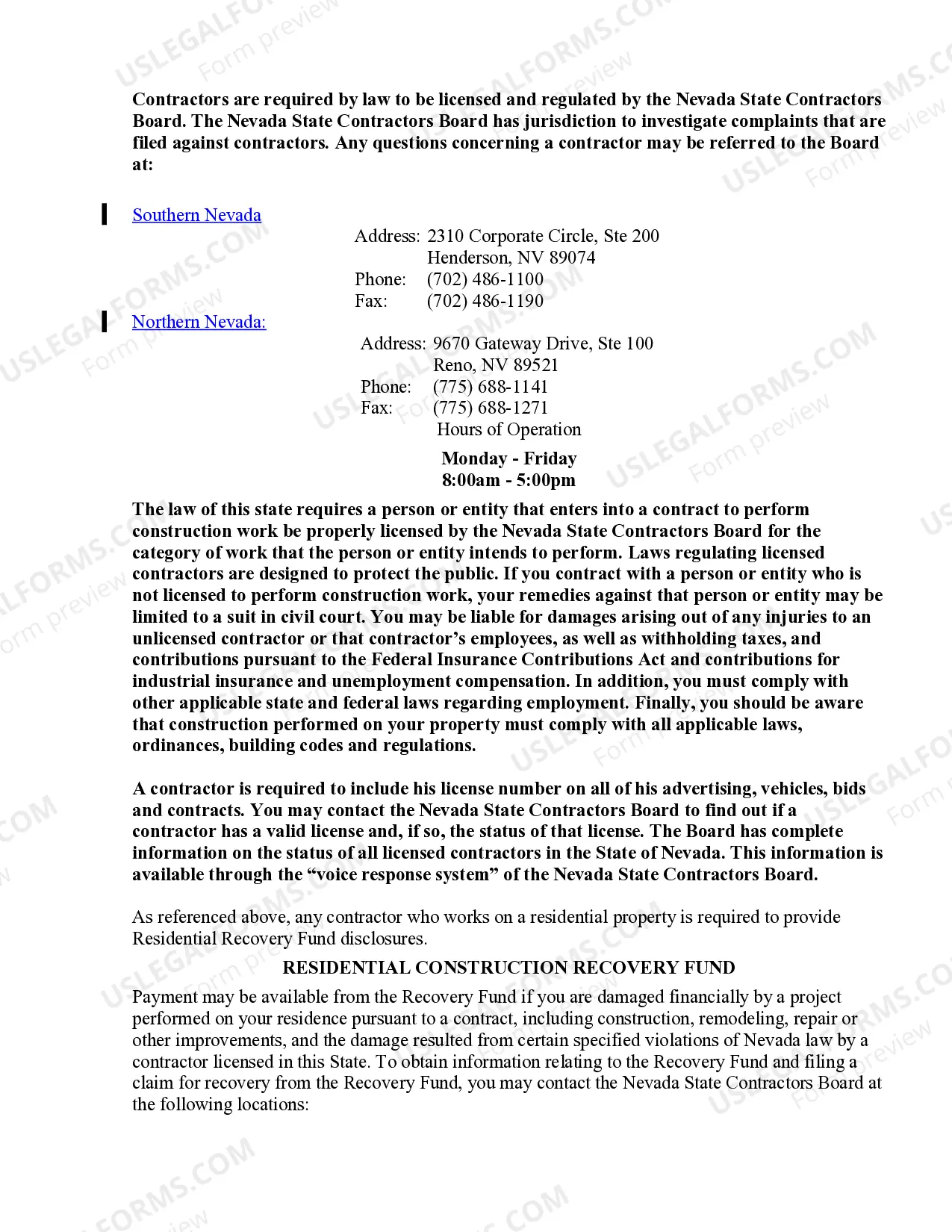
All businesses or individuals who construct or alter any building, highway, road, parking facility, railroad, excavation, or other structure in Nevada must be licensed by the Nevada State Contractors Board. Contractors, including subcontractors and specialty contractors must be licensed before submitting bids.
Your general contractor should provide proof of licensing, bonding and insurance before a project starts, but it's better to have it in hand before you sign any contracts. It's important that contractors carry any licensing and/or certification required for the specific trade or skill they practice.
Never pay the full amount up front for your swimming pool. According to the law, you should not pay more than 10% or $1,000; whichever is less, to get your project started.
Name of contractor and contact information. Name of homeowner and contact information. Describe property in legal terms. List attachments to the contract. The cost. Failure of homeowner to obtain financing. Description of the work and the completion date. Right to stop the project.
An agreement between private parties creating mutual obligations enforceable by law. The basic elements required for the agreement to be a legally enforceable contract are: mutual assent, expressed by a valid offer and acceptance; adequate consideration; capacity; and legality.
Get it in writing. Keep it simple. Deal with the right person. Identify each party correctly. Spell out all of the details. Specify payment obligations. Agree on circumstances that terminate the contract. Agree on a way to resolve disputes.