North Dakota Electrical Contract for Contractor
What is this form?
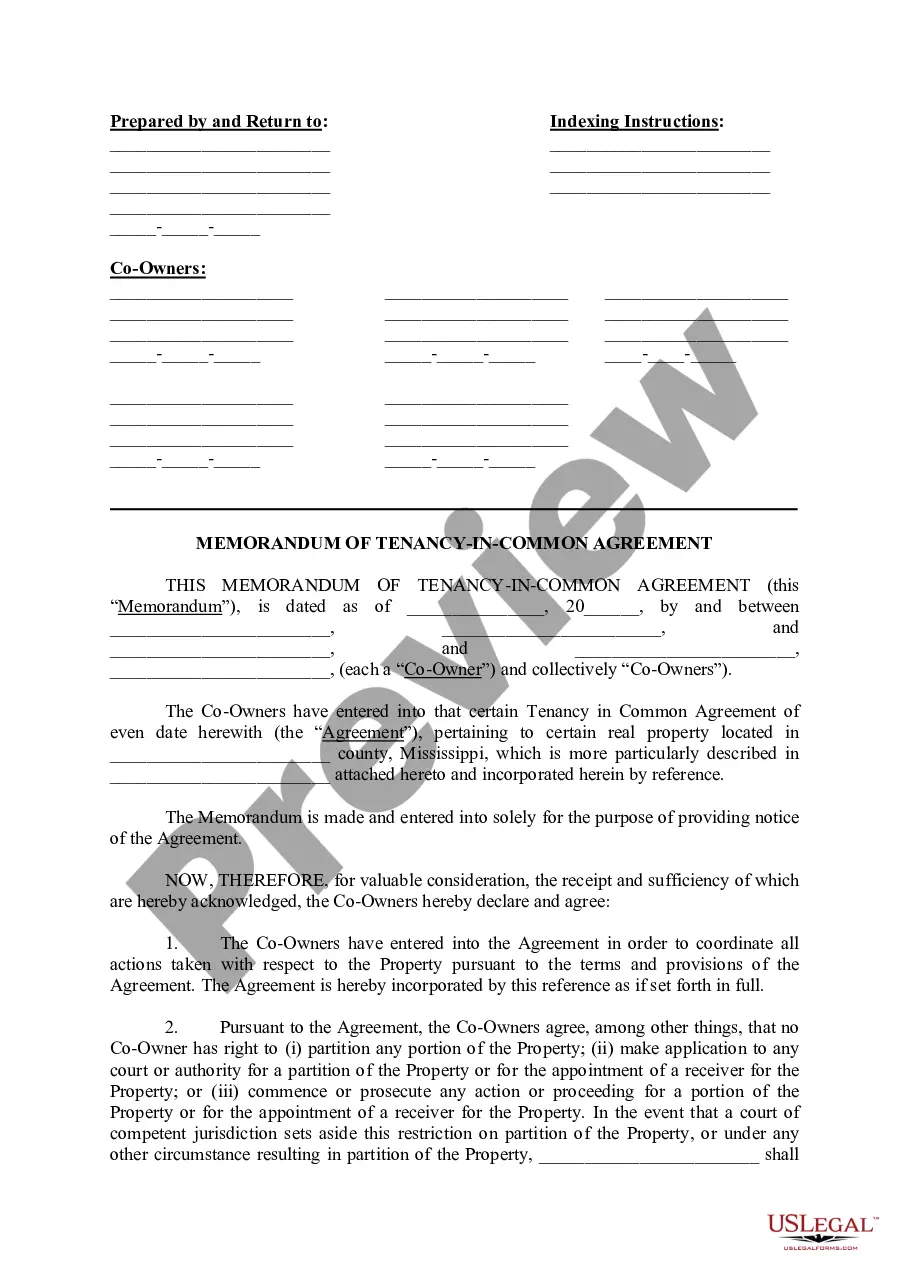
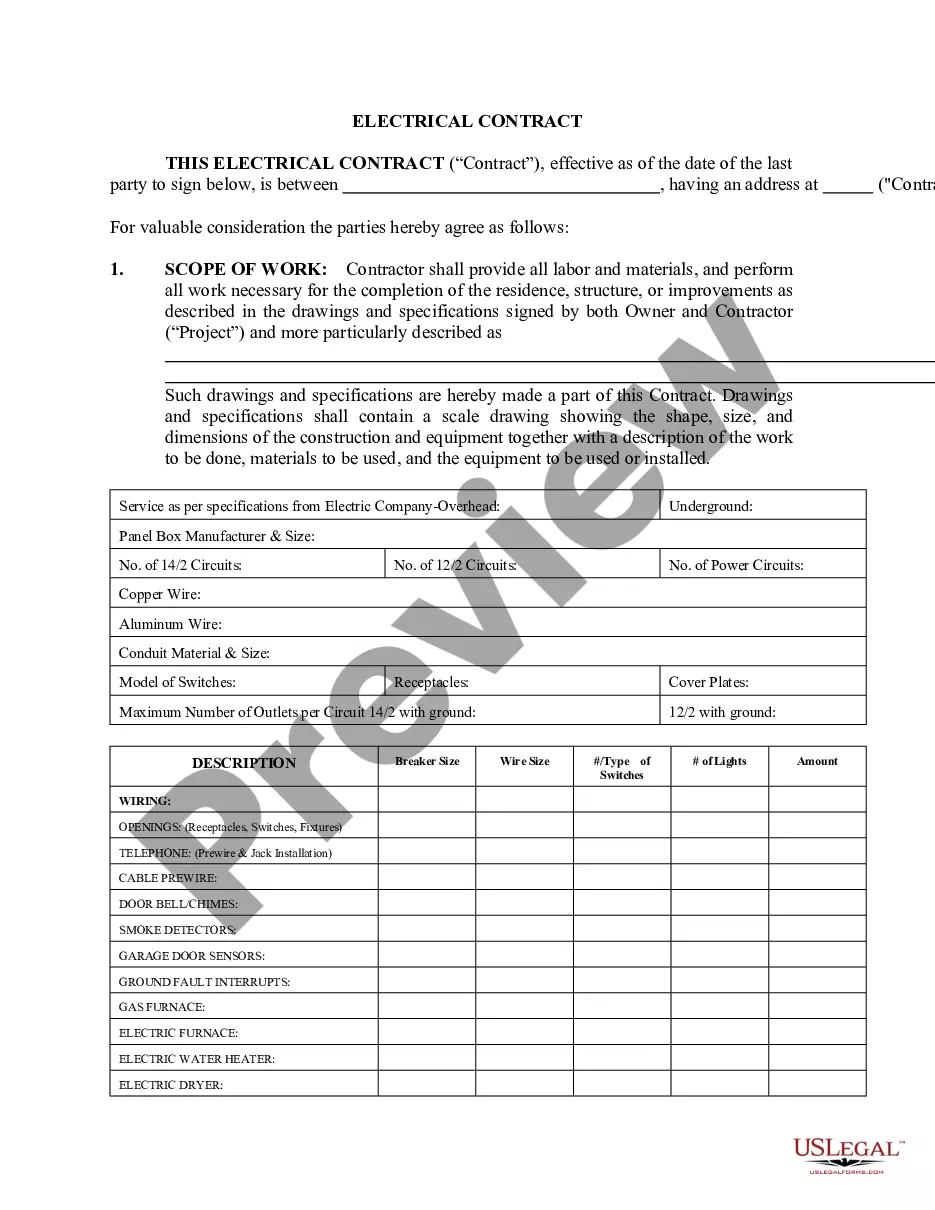
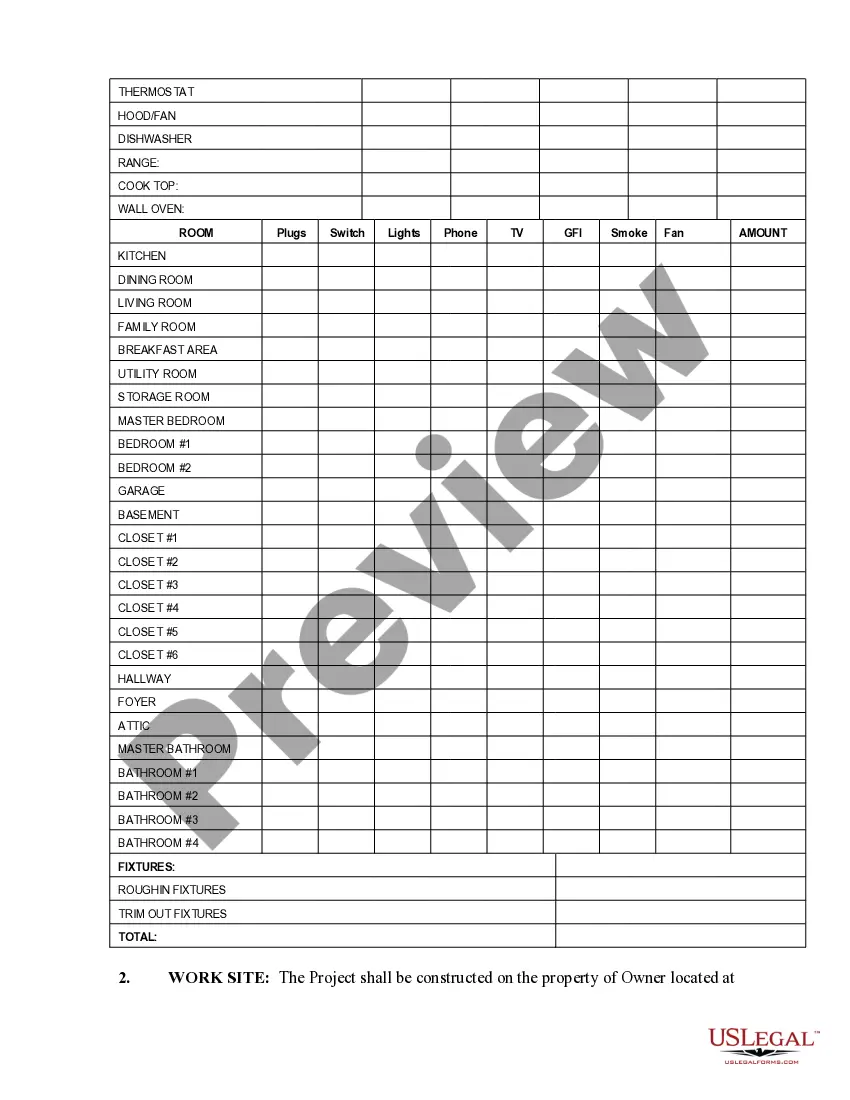
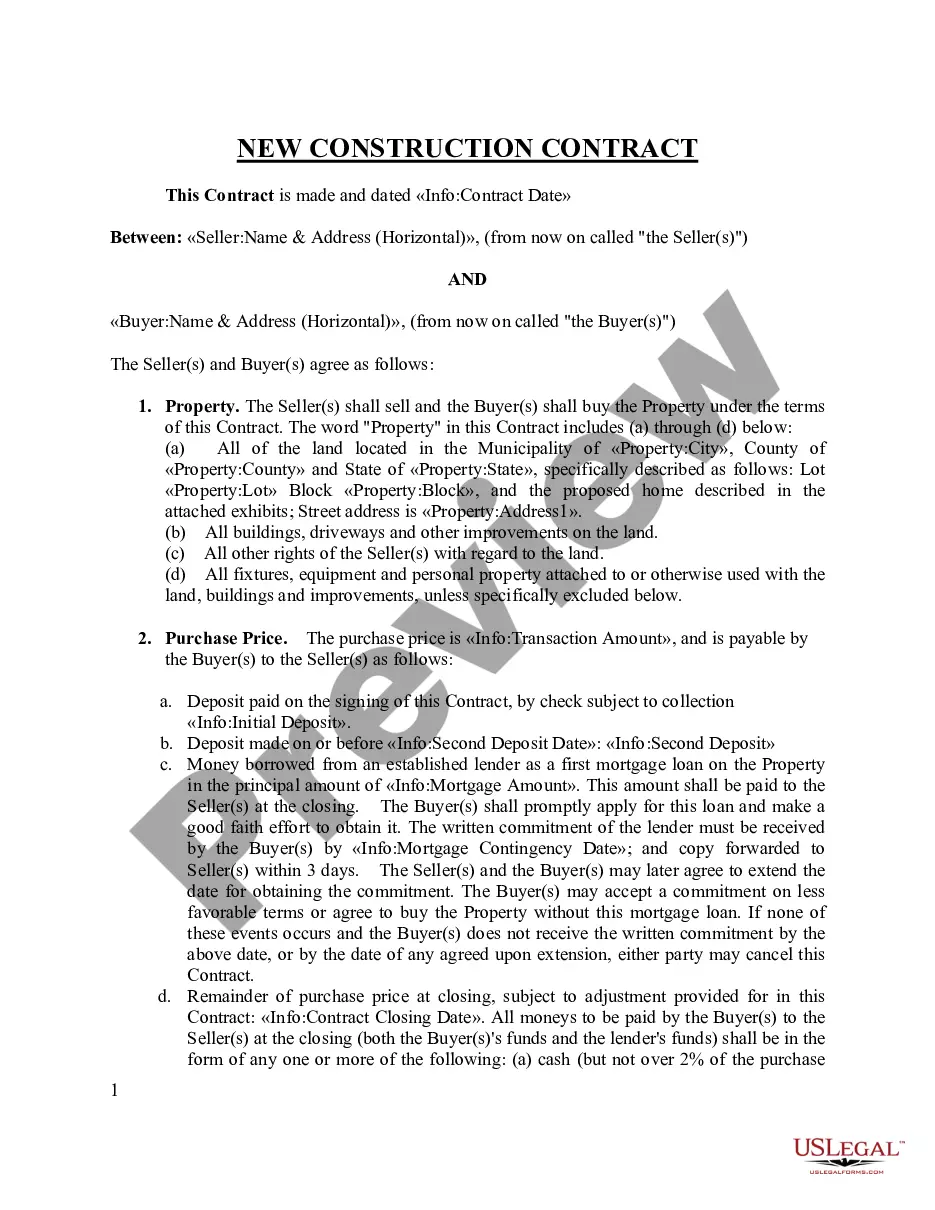
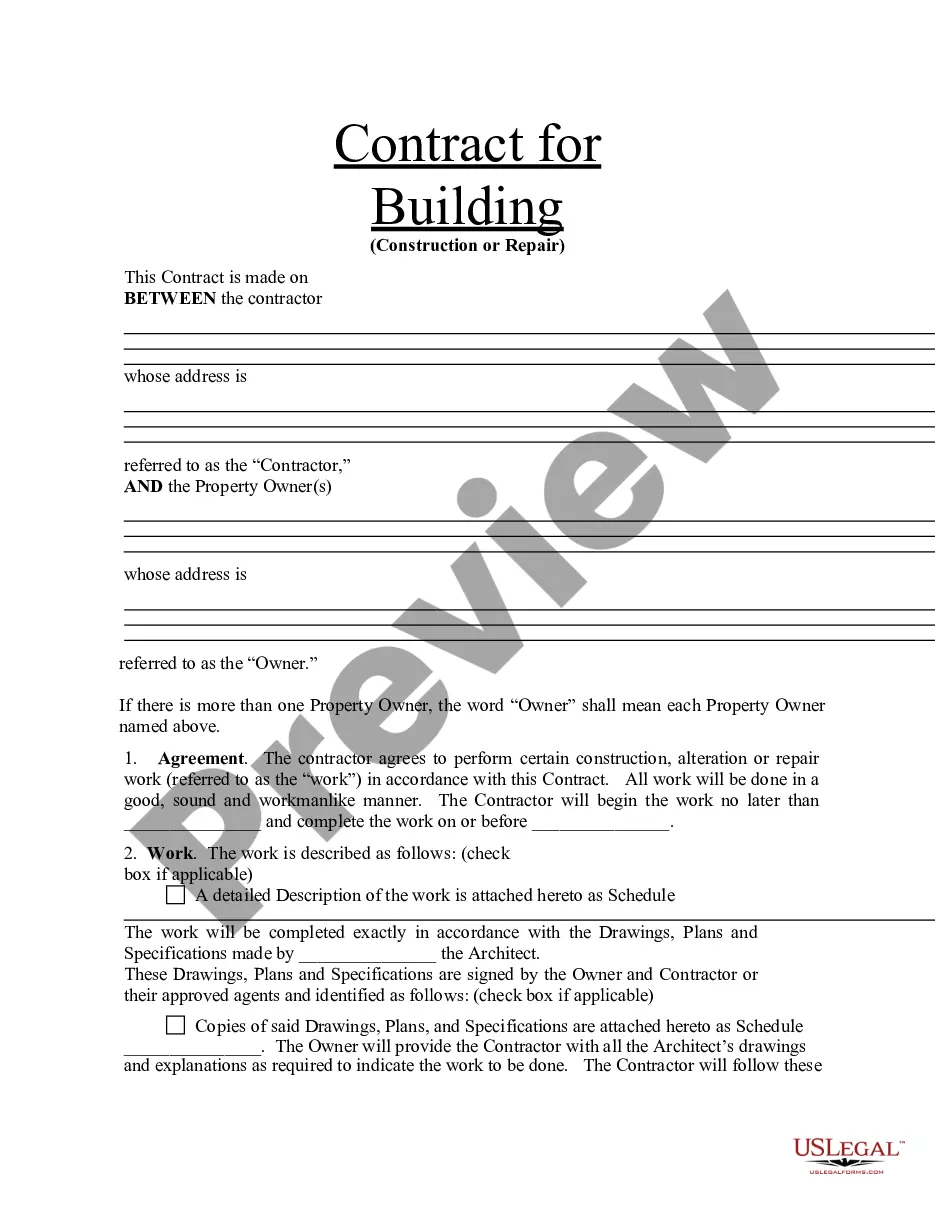
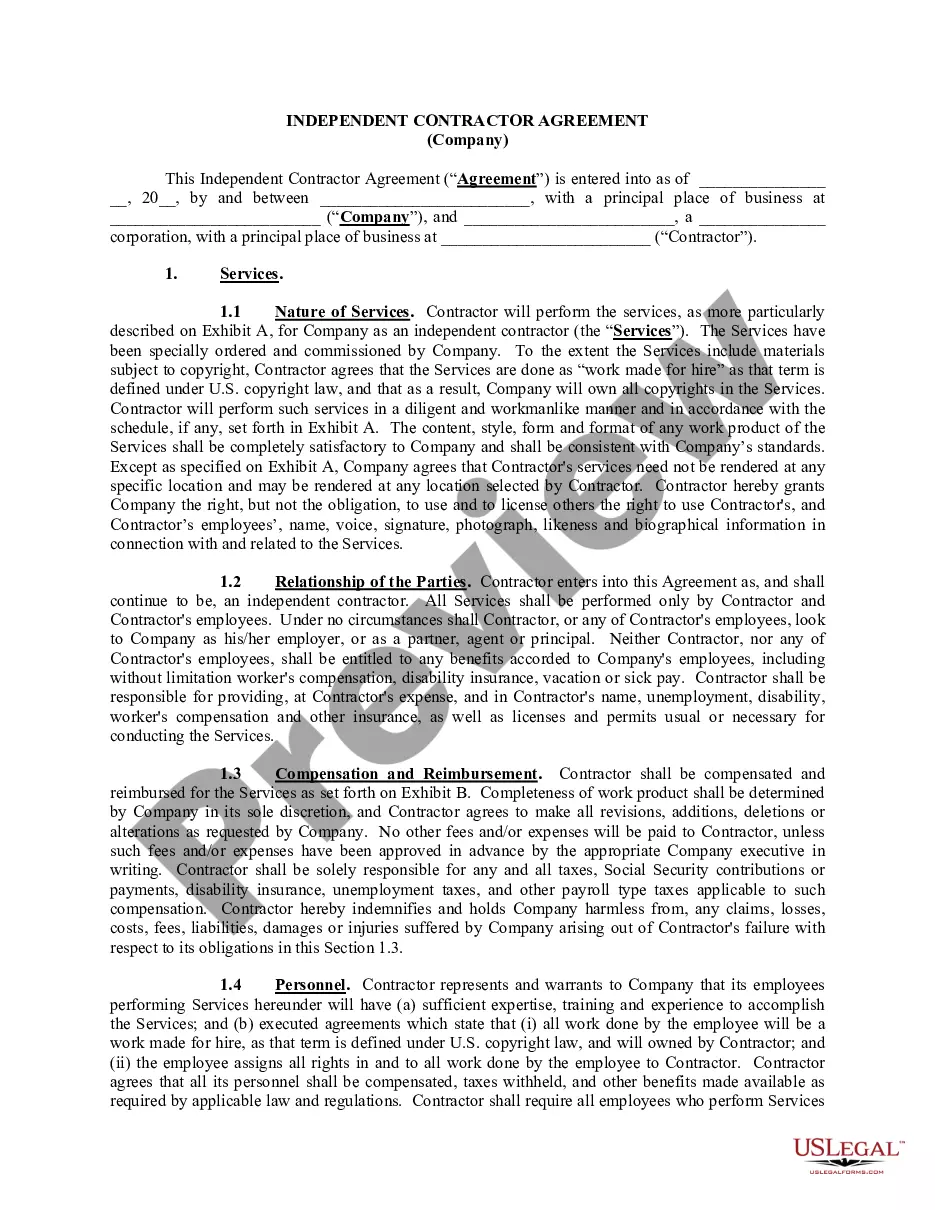
The Electrical Contract for Contractor is a legal document specifically used between electrical contractors and property owners. This form outlines the terms of the project and payment arrangements, including cost plus or fixed fee options. It addresses critical aspects such as change orders, insurance, and permits, ensuring both parties have clear expectations. This contract is tailored to comply with the legal framework of North Dakota, differentiating it from general electrical contracts that may not meet state-specific requirements.
Form components explained
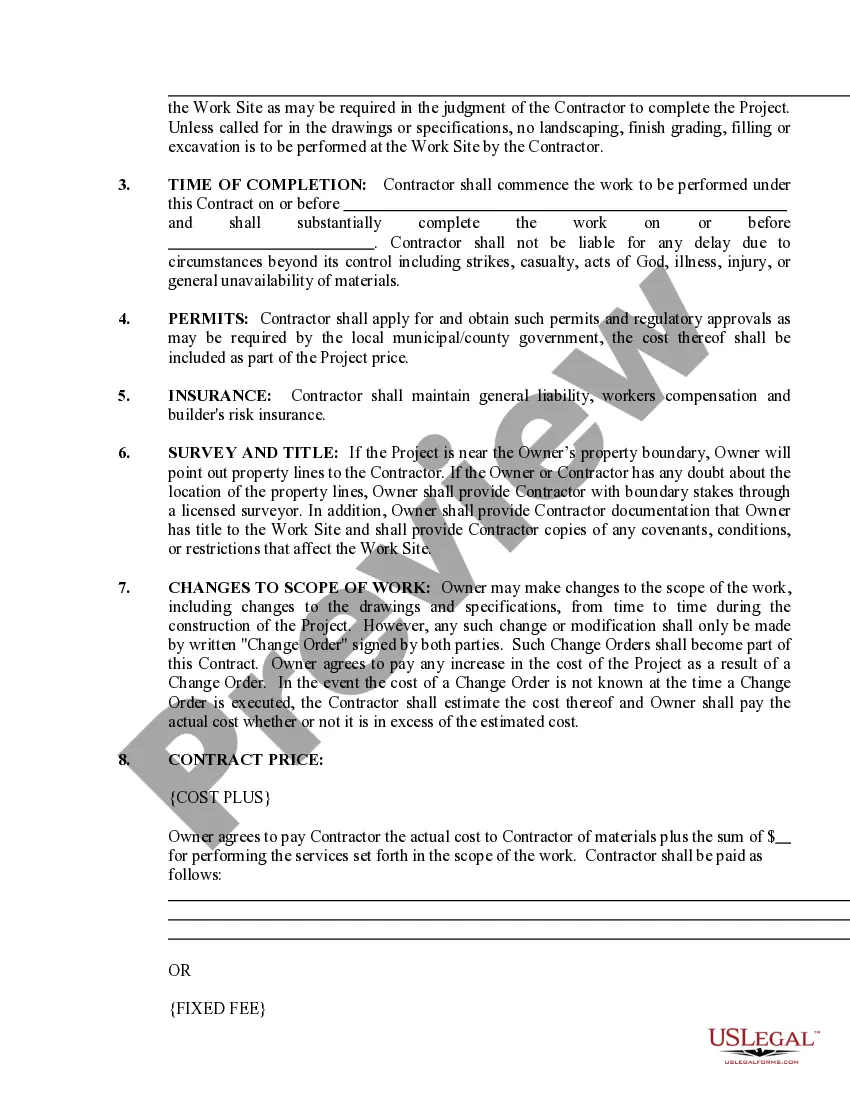
- Permits: Contractor applies for necessary permits, costs included in the project price.
- Insurance: Contractor maintains general liability, workers compensation, and builders risk insurance.
- Survey and Title: Owner indicates property boundaries, providing stakes from a licensed surveyor if needed.
- Changes to Scope of Work: Any modifications must be made via written Change Orders agreed upon by both parties.


When this form is needed
This form is essential when an electrical contractor is hired to perform work on a property. It can be used for both new installations and upgrades, offering clear guidelines about the project's scope and payment structure. Additionally, it is ideal in situations where adjustments to the project may arise, ensuring that both parties document changes properly to avoid disputes.
Who needs this form
- Electrical contractors providing services to property owners.
- Homeowners or property managers hiring electrical contractors for projects.
- Real estate developers requiring clear contracts for electrical services.
How to complete this form
- Identify the parties: Enter the names and contact information of the contractor and the property owner.
- Specify the project details: Clearly describe the electrical work to be performed.
- Choose the payment arrangement: Indicate whether the payment will be cost plus or a fixed fee.
- Sign and date the contract: Ensure both parties sign the document to make it legally binding.
Does this form need to be notarized?
In most cases, this form does not require notarization. However, some jurisdictions or signing circumstances might. US Legal Forms offers online notarization powered by Notarize, accessible 24/7 for a quick, remote process.
Get your form ready online
Our built-in tools help you complete, sign, share, and store your documents in one place.
Make edits, fill in missing information, and update formatting in US Legal Forms—just like you would in MS Word.
Download a copy, print it, send it by email, or mail it via USPS—whatever works best for your next step.
Sign and collect signatures with our SignNow integration. Send to multiple recipients, set reminders, and more. Go Premium to unlock E-Sign.
If this form requires notarization, complete it online through a secure video call—no need to meet a notary in person or wait for an appointment.
We protect your documents and personal data by following strict security and privacy standards.

Make edits, fill in missing information, and update formatting in US Legal Forms—just like you would in MS Word.

Download a copy, print it, send it by email, or mail it via USPS—whatever works best for your next step.

Sign and collect signatures with our SignNow integration. Send to multiple recipients, set reminders, and more. Go Premium to unlock E-Sign.

If this form requires notarization, complete it online through a secure video call—no need to meet a notary in person or wait for an appointment.

We protect your documents and personal data by following strict security and privacy standards.
Avoid these common issues
- Failing to specify details of the project scope, leading to misunderstandings.
- Not documenting change orders in writing, which can cause disputes later.
- Ignoring the need for permits, which could halt the project.
Advantages of online completion
- Convenience: Download and fill out the form from anywhere.
- Editability: Easily customize the document to fit specific project requirements.
- Reliability: Access forms drafted by licensed attorneys to ensure legal compliance.
Legal use & context
- This contract serves as a binding agreement that outlines the rights and responsibilities of both parties.
- It reinforces clarity in construction practices and payment obligations.
- Compliance with North Dakota laws ensures its enforceability in legal disputes.
Summary of main points
- The Electrical Contract for Contractor is essential for defining the relationship and expectations between property owners and electrical contractors.
- It clarifies roles regarding permits, insurance, and changes to the project scope.
- This form adheres to North Dakota law, ensuring legality and protection for both parties involved in the contract.
Looking for another form?
Form popularity
FAQ
You Could Make Six Figures According to PayScale, the average annual salary for electricians is $55,477. Per the BLS, the highest 10% of electricians earn more than $90,420.Electricians who join unions can make more than those who do not.
Complete a Contractor's Application (SFN 12012) using the exact name your business is registered under. The application requires a statement of the applicant's experience and qualifications as a contractor, which will be signed under oath. You must be 18 years of age or older to sign this certificate.
Across the electrical and mechanical construction industry, gross margins were up almost 2 percent in 2017, but overall profitability decreased by 1 percent to 4.1 percent of revenue.
Recent developments help to clarify the employee/independent contractor distinction, and sound a warning to employers who rely on workers they have classified as contractors.
An electrical contractor is different from an electrician; an electrician is an individual tradesman and an electrical contractor is a business person or company that employs electricians.Electricians may work for an electrical contractor, or directly for individuals or companies.
An electrical engineer makes around $93,000 every year. On the other hand, electricians make about $53,000.For example, a project electrical engineer can go up to more than $100,000, while electrical electronic engineers earn around $75,000.
Apprentice Electrician. Journeyman Electrician. Master Electrician.
A license is a grant of permission from a statutory body for an individual to perform work in an approved category of work (electrician, plumber, builder, etc.), while a certification is the credentialing of an individual for a particular discipline that is portable, i.e., across municipal, county or state lines.
Each contractor who works on a project and the price per job, value, contractor, or cost goes over $2,000 is required to obtain a Contractor License for North Dakota. There are four licensure classes that are based on price per job, value, or cost.