North Carolina Storage Business Package
About this form package
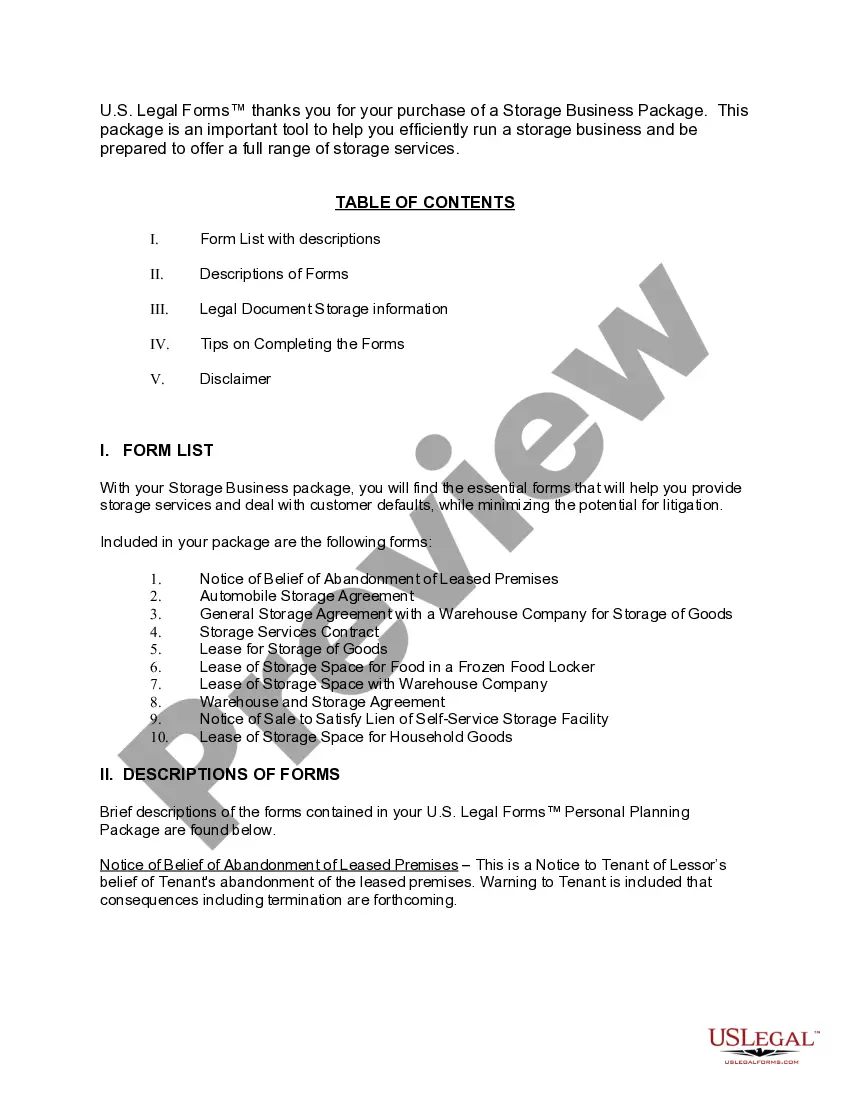
The North Carolina Storage Business Package is a collection of essential legal forms designed for storage business owners. It aims to assist in providing storage services while minimizing the risk of litigation. This package includes a variety of agreements tailored for different types of stored property, making it distinct from generic legal forms that do not cater to the specific needs of storage operations.
Forms you’ll find in this package
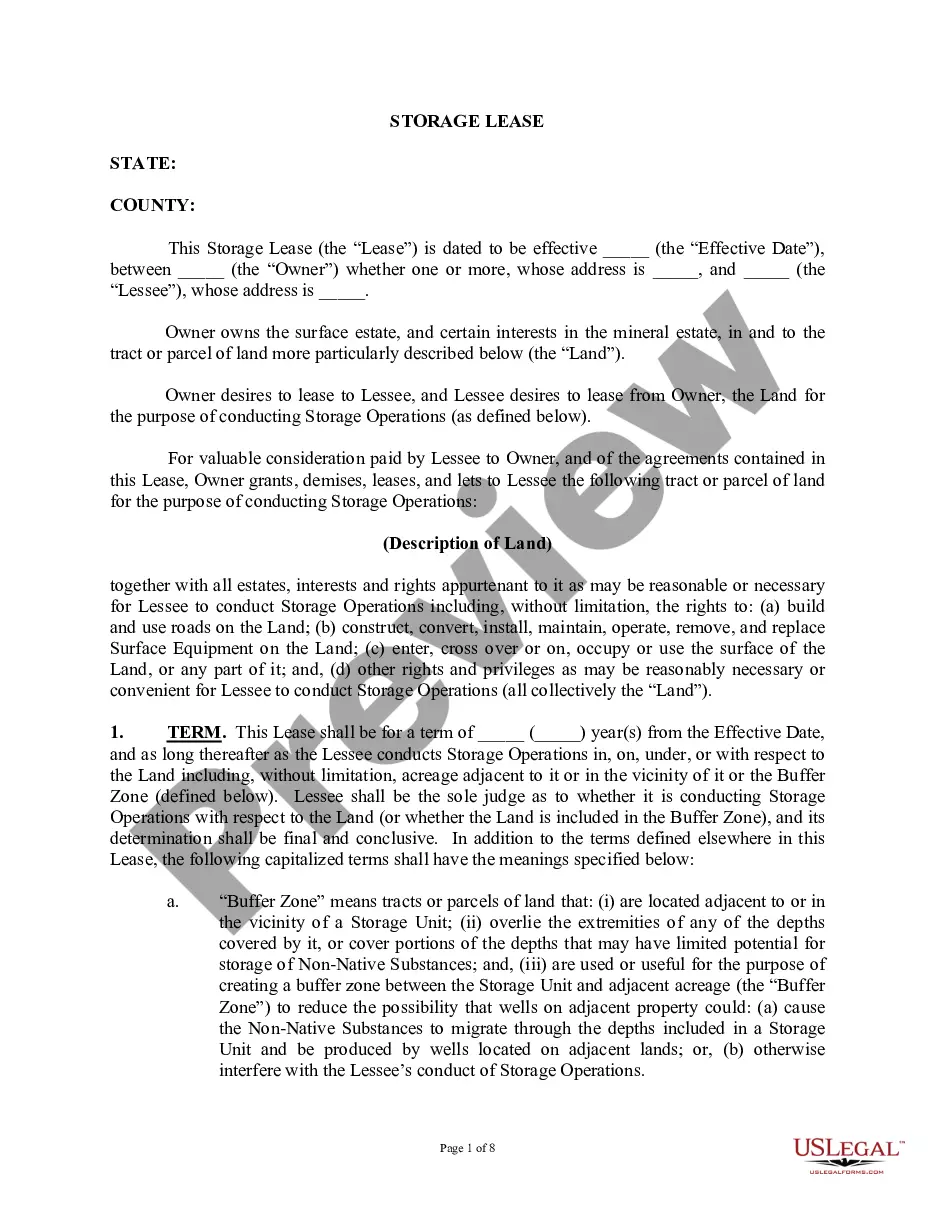
- Lease for Storage of Goods
- Notice of Sale to Satisfy Lien of Self-Service Storage Facility
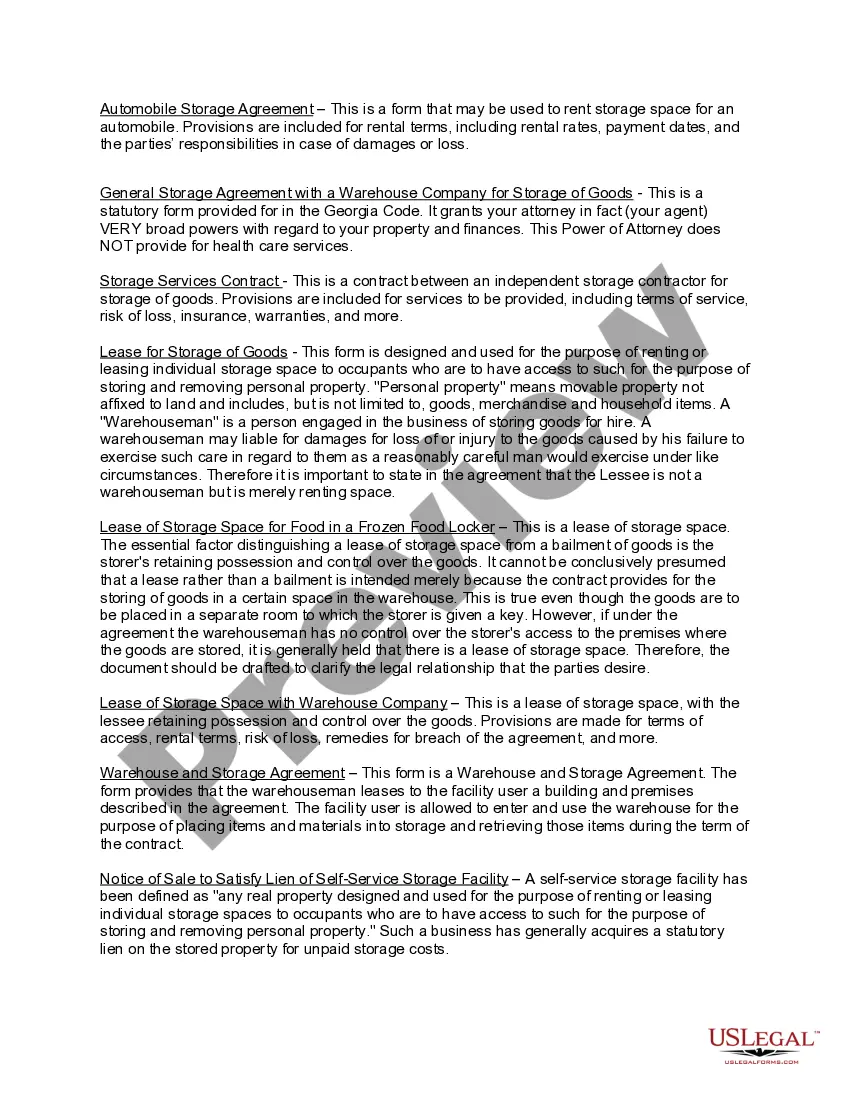
- Automobile Storage Agreement
- Lease of Storage Space for Food in a Frozen Food Locker
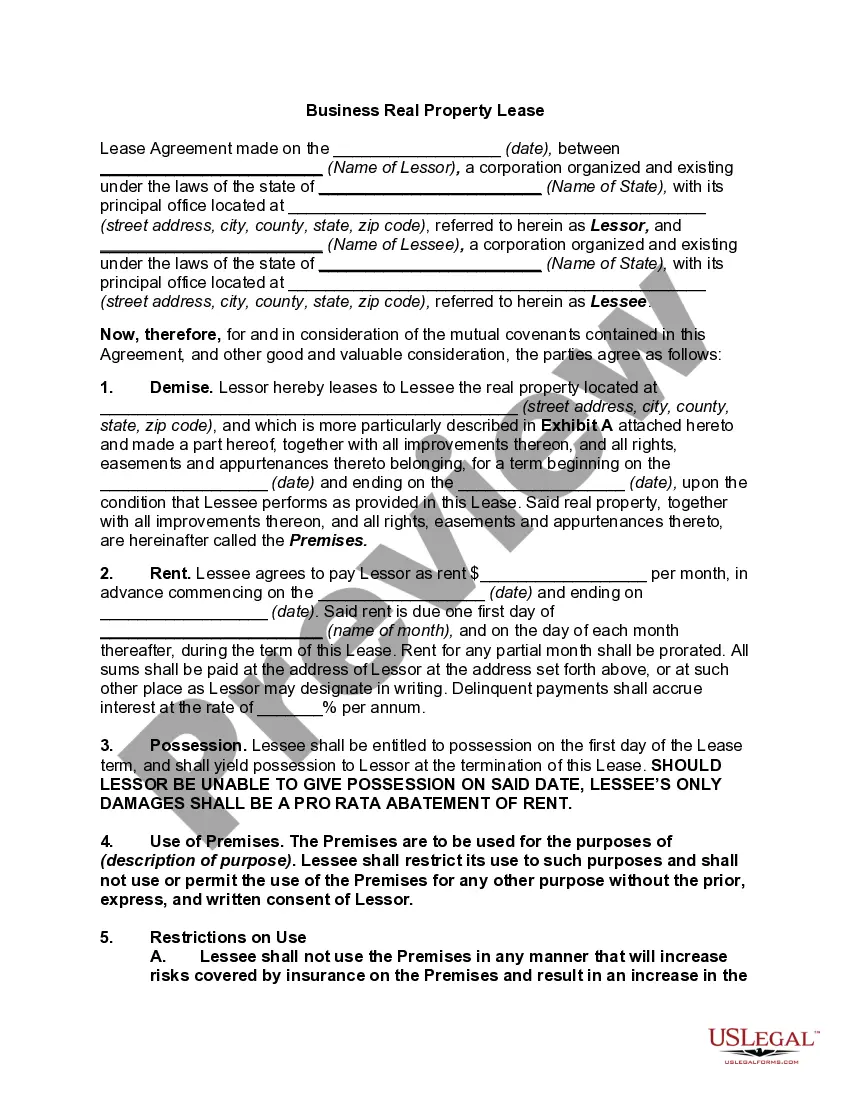
- Lease of Storage Space with Warehouse Company
- General Storage Agreement with a Warehouse Company for Storage of Goods
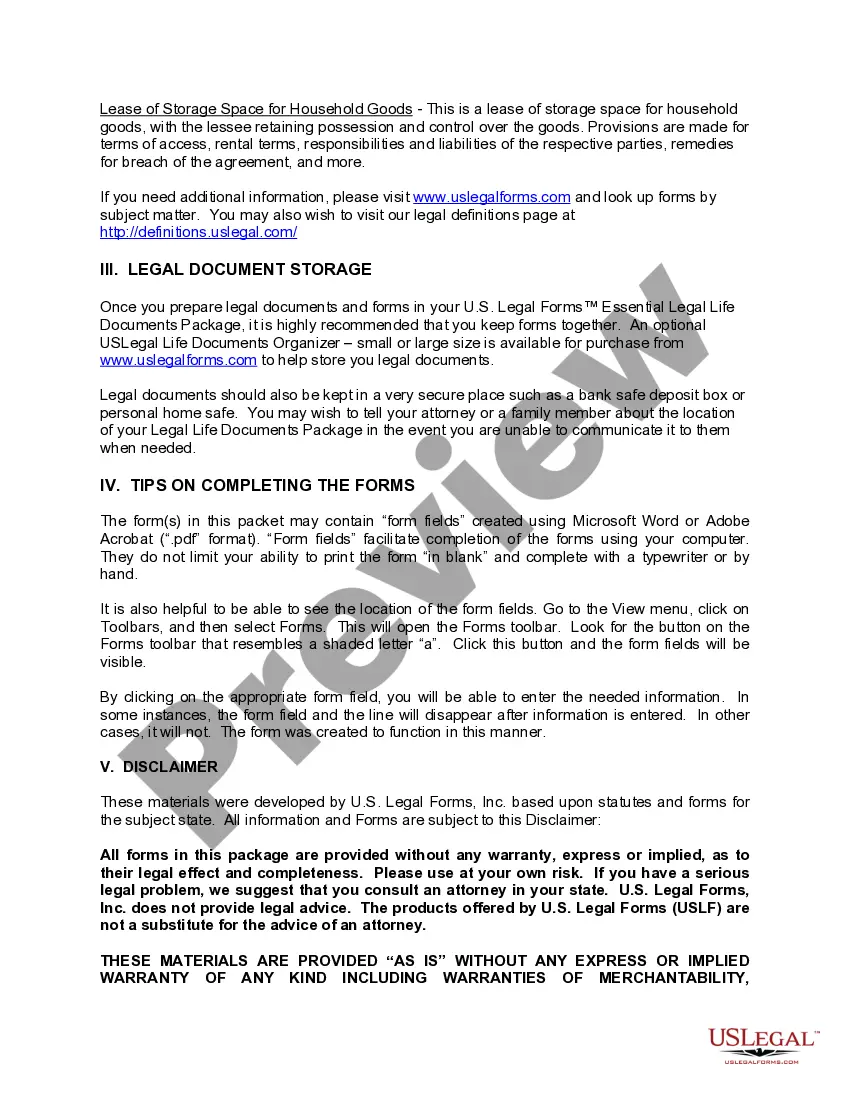
- Lease of Storage Space for Household Goods
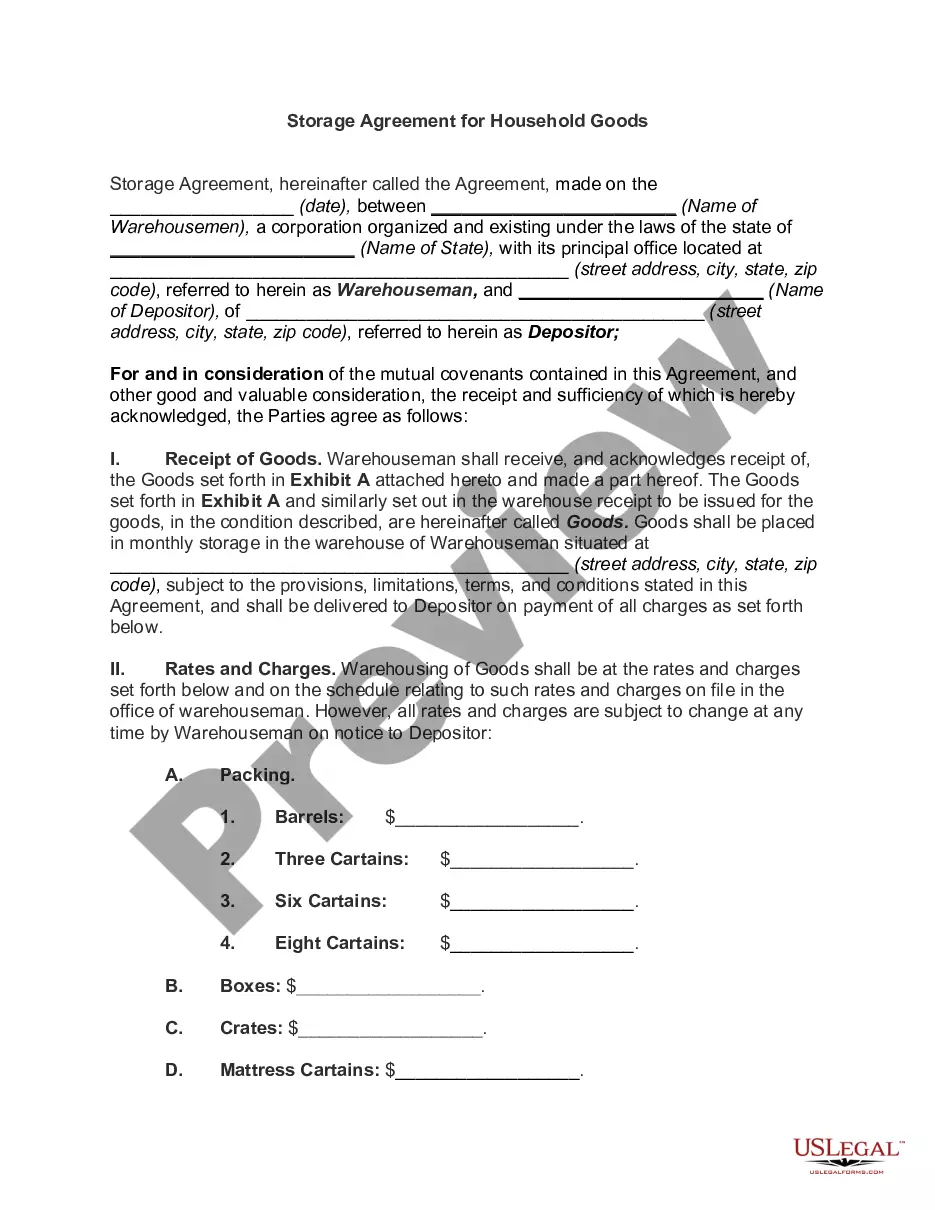
- Warehouse and Storage Agreement
- Notice of Belief of Abandonment of Leased Premises
- Storage Services Contract - Self-Employed

When to use this document
This package is useful in several scenarios, including:
- Starting a new storage business and needing foundational legal documentation.
- Rental agreements for various types of stored property such as automobiles, household goods, and frozen food.
- Addressing situations involving customer defaults or abandoned items.
- Ensuring compliance with legal requirements specific to storage operations in North Carolina.
Who this form package is for
- New or existing storage business owners in North Carolina.
- Property managers of self-storage facilities.
- Legal representatives preparing documentation for clients in the storage industry.
- Individuals looking to offer storage services while protecting their legal interests.
Completing these forms step by step
- Review the included forms to understand each document's purpose.
- Identify the parties involved in the agreements and their responsibilities.
- Enter applicable dates, rental terms, and payment agreements in the provided fields.
- Ensure all necessary signatures are included where indicated.
- Keep a copy of completed forms for your records and legal compliance.
Do documents in this package require notarization?
Forms in this package usually don’t need notarization, but certain jurisdictions or signing circumstances may require it. US Legal Forms provides a secure online notarization option powered by Notarize, accessible 24/7 from anywhere.
Get your form ready online
Our built-in tools help you complete, sign, share, and store your documents in one place.
Make edits, fill in missing information, and update formatting in US Legal Forms—just like you would in MS Word.
Download a copy, print it, send it by email, or mail it via USPS—whatever works best for your next step.
Sign and collect signatures with our SignNow integration. Send to multiple recipients, set reminders, and more. Go Premium to unlock E-Sign.
If this form requires notarization, complete it online through a secure video call—no need to meet a notary in person or wait for an appointment.
We protect your documents and personal data by following strict security and privacy standards.

Make edits, fill in missing information, and update formatting in US Legal Forms—just like you would in MS Word.

Download a copy, print it, send it by email, or mail it via USPS—whatever works best for your next step.

Sign and collect signatures with our SignNow integration. Send to multiple recipients, set reminders, and more. Go Premium to unlock E-Sign.

If this form requires notarization, complete it online through a secure video call—no need to meet a notary in person or wait for an appointment.

We protect your documents and personal data by following strict security and privacy standards.
Avoid these common issues
- Failing to fill in all required fields, which can lead to incomplete agreements.
- Not understanding the distinction between leases and bailments, which can affect liability.
- Neglecting to keep copies of completed forms for personal records.
Advantages of online completion
- Convenience of accessing and downloading forms from anywhere.
- Editability allows you to customize agreements to fit specific business needs.
- Reliability of forms drafted by licensed attorneys, ensuring they meet legal standards.
Legal use & context
- These forms are designed to create legally binding agreements between storage facility owners and clients.
- Proper usage and completion of forms safeguard against potential disputes.
- Regular updates may be necessary to comply with changes in state law regarding storage services.
Quick recap
- The North Carolina Storage Business Package contains vital legal forms for storage business operations.
- It is essential for new and existing storage facility owners to protect their interests legally.
- Understanding and accurately completing these forms minimizes risks associated with customer agreements.
Looking for another form?



Form popularity
FAQ
Typically, a self-storage facility still makes a profit at 60% to 70% of full occupancy. Currently, the industry average occupancy stands near 90%, according to Statista. Nevertheless, experts say it takes one to two years to reach 90% capacity. Many self-storage owners run family operations.
The typical self storage development cost ranges from $34 to $42 per gross building square foot. Again, this variance is dependent on land, construction and cost of financing. However, it is important to remember that there is a relationship between market rents and development cost.
Low-risk packaged foods are the only products allowed to be produced at home. These can include: Baked goods. Jams and jellies.
Typically, a self-storage facility still makes a profit at 60% to 70% of full occupancy. Currently, the industry average occupancy stands near 90%, according to Statista. Nevertheless, experts say it takes one to two years to reach 90% capacity. Many self-storage owners run family operations.
For many real estate investors, self-storage is an appealing asset class because it has large income potential with low overhead, fewer construction costs than other commercial real estate (CRE) sectors, and relatively low ongoing management.Cash flow with large income potential.
The Cost of Construction Once you begin construction of the building, if you're going to build single story units, you can expect to pay $25 to $40 per square foot you build. If you want a multi-story building, costs will be around $42 to $70 per square foot.
Self-storage is an excellent investment if you own land. Choose your location carefully and check out the competition. Use new (one trip) shipping containers. Use one trusted supplier and range. Invest in good container padlocks. Use standing orders or direct debits for rentals. Consider condensation treatment for containers.
Conduct Market Research and Feasibility Studies. Decide Which Niche to Concentrate On. Know Your Major Competitors in the Industry. Decide Whether to Buy a Franchise or Start from Scratch. Discuss with an Agent to Know the Best Insurance Policies for You.
North Carolina does not have specific laws for selling homemade food, but the state's Food and Drug Protection Division allows home-based businesses to operate. Entrepreneurs who want to sell homemade food must create a business plan, have their products tested and sometimes complete a food safety course.