Montana Closing Statement
What this document covers
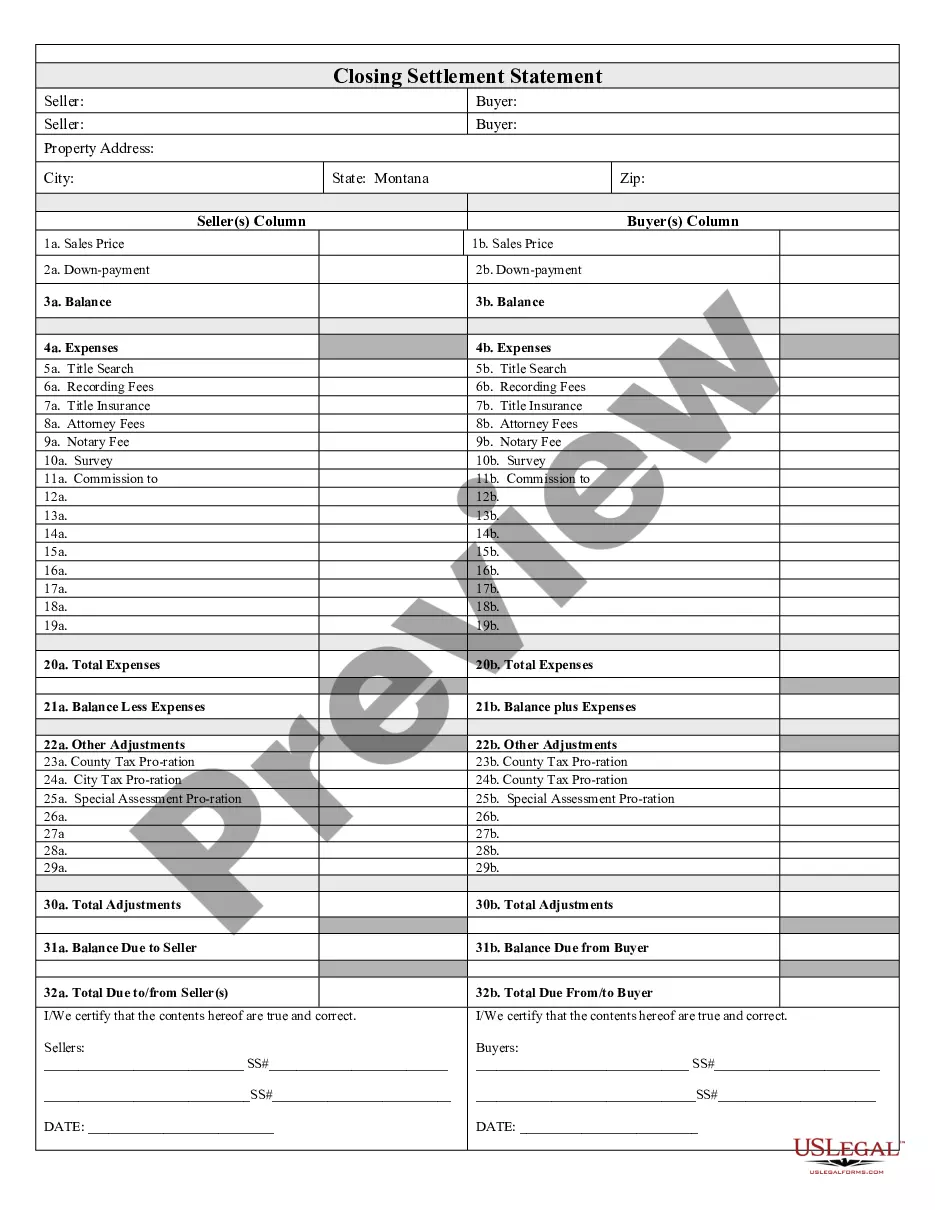
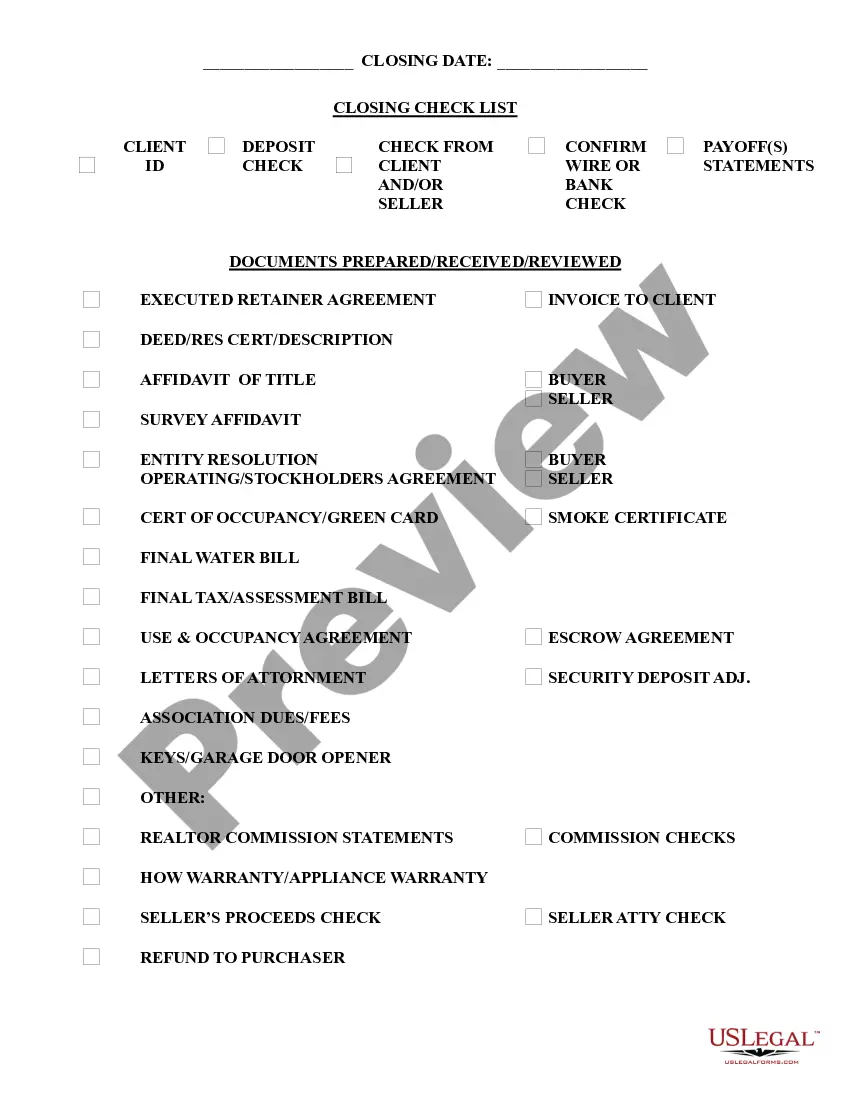
The Closing Statement is a crucial document in a real estate transaction, particularly in cash sales or owner financing situations. This form details the financial aspects of the transaction, including the costs and fees associated with the sale. Unlike other agreements, the Closing Statement is signed and verified by both the buyer and the seller, ensuring mutual acknowledgment of the transaction's terms.
Main sections of this form
- Balance: Indicates the total balance of the transaction.
- Expenses: Details various costs associated with the sale, such as title search and recording fees.
- Adjustments: Covers prorations for taxes and special assessments, affecting the final balance.
- Certification: Spaces for both seller and buyer to certify the accuracy of the statement.
- Total expenses: Summarizes the overall costs involved in the transaction.

Common use cases
This form should be used during the closing phase of real estate transactions, especially when payment is made in cash or through owner financing. It is essential for documenting all financial details agreed upon by the buyer and seller, ensuring clarity on what is owed and received during the transaction.
Who should use this form
- Buyers and sellers involved in a real estate transaction.
- Real estate agents managing the sale.
- Attorneys representing either party in the transaction.
How to prepare this document
- Identify the parties involved: Fill in the names of the buyer and seller.
- Specify the property: Provide details about the property being sold, including its address.
- Detail financial information: Enter the balance, total expenses, and adjustments clearly.
- Obtain necessary signatures: Ensure both parties sign the form to confirm its accuracy.
- Keep a copy: Retain a copy of the signed Closing Statement for future reference.
Notarization guidance
This form must be notarized to be legally valid. US Legal Forms provides secure online notarization powered by Notarize, allowing you to complete the process through a verified video call.
Get your form ready online
Our built-in tools help you complete, sign, share, and store your documents in one place.
Make edits, fill in missing information, and update formatting in US Legal Forms—just like you would in MS Word.
Download a copy, print it, send it by email, or mail it via USPS—whatever works best for your next step.
Sign and collect signatures with our SignNow integration. Send to multiple recipients, set reminders, and more. Go Premium to unlock E-Sign.
If this form requires notarization, complete it online through a secure video call—no need to meet a notary in person or wait for an appointment.
We protect your documents and personal data by following strict security and privacy standards.

Make edits, fill in missing information, and update formatting in US Legal Forms—just like you would in MS Word.

Download a copy, print it, send it by email, or mail it via USPS—whatever works best for your next step.

Sign and collect signatures with our SignNow integration. Send to multiple recipients, set reminders, and more. Go Premium to unlock E-Sign.

If this form requires notarization, complete it online through a secure video call—no need to meet a notary in person or wait for an appointment.

We protect your documents and personal data by following strict security and privacy standards.
Common mistakes to avoid
- Failing to provide complete information on expenses and adjustments.
- Not obtaining signatures from both parties.
- Overlooking the need for accurate prorations of taxes.
- Using incorrect or outdated versions of the form.
Why complete this form online
- Convenience of downloading and customizing the form from anywhere.
- Editable format allows users to tailor the document to their specific transaction.
- Access to reliable templates drafted by licensed attorneys.
What to keep in mind
- The Closing Statement is essential for detailing financial transactions in real estate.
- It must be signed by both the buyer and seller to be valid.
- Understanding the components of the form can prevent errors during completion.
Looking for another form?
Form popularity
FAQ
Closing Notice means a written notice duly executed by an authorized officer of Seller that is delivered by Seller to Buyer exercising its right to require the Closing of the transactions contemplated hereby in accordance with Article 6.
YOUR CLOSING STATEMENT IS "IMPORTANT": When your escrow has closed you will receive a closing statement which is a summary of the costs and financial settlement of your real estate transaction. This closing statement will be important for future tax needs and other possible considerations.
The Closing Disclosure is meant to help you understand your loan before you get to the closing table. In essence, it means your loan is clear to close, but it also means that you have time to go over the fees on your loan.
While the buyers will typically be responsible for the lion's share, sellers should expect to pay between 1-3% of the home's final sale price at closing.
Normally the seller purchases title insurance for the new buyer in the amount of the purchase price and the borrower purchases title insurance for the lender in the amount of the mortgage. When the mortgage is paid off, the lender's title insurance contract expires.
Estimated Escrow: Some lenders collect the money needed for recurring expenses (such things as property taxes, homeowners insurance and association fees) in advance and pay those bills on your behalf. To see which bills your lender escrows for, look at the Other Costs tab on Page 2 of the form.
Cleared to Close (3 days)Getting the all clear to close is the last step before your final loan documents can be drawn up and delivered to you for signing and notarizing. A final Closing Disclosure detailing all of the loan terms, costs and other details will be prepared by your lender and provided to you for review.
A closing statement is an accounting, in writing, prepared at the close of escrow which sets forth the charges and credits of your account.
A closing statement, also called a HUD-1 statement or settlement sheet, is a form used in real estate transactions with an itemized list of all the costs to the buyer and seller.