Montana Heirship Affidavit - Descent
What this document covers
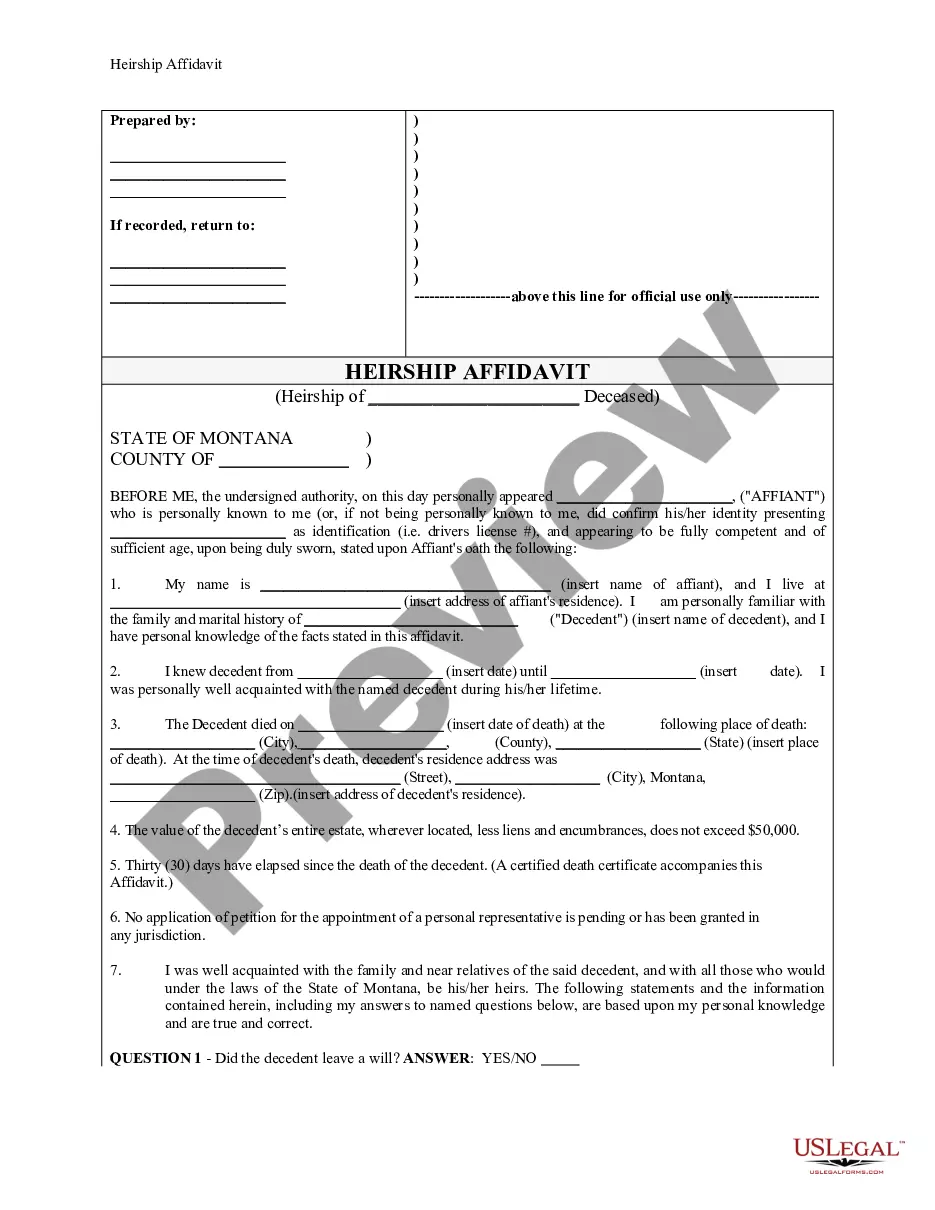
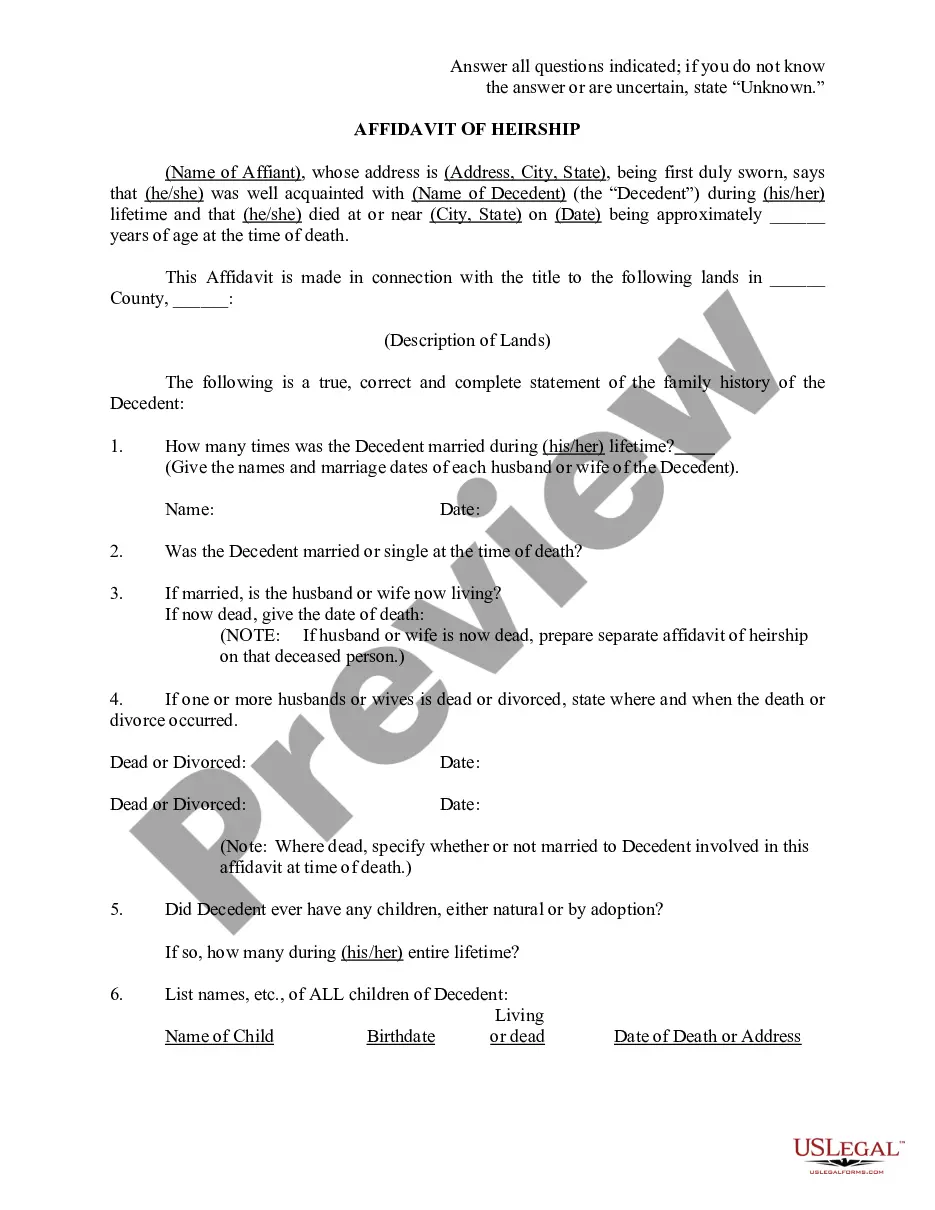
The Heirship Affidavit - Descent is a legal document used to declare the heirs of a deceased individual, particularly when no will exists. This affidavit helps establish the rightful ownership of both personal and real property. Unlike a probate process, this form allows heirs to assert their rights more efficiently, especially when the value of the estate is below a certain threshold.
Key parts of this document
- Affiant details: Name and address of the person completing the affidavit.
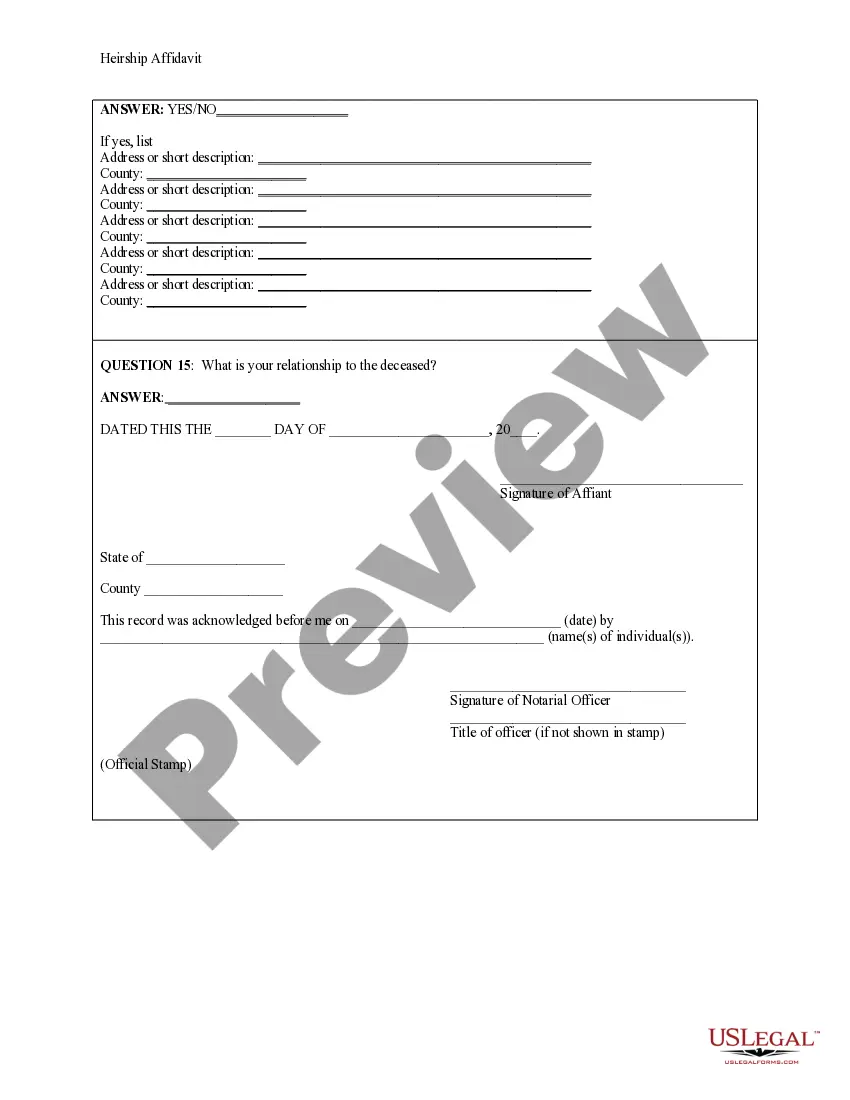
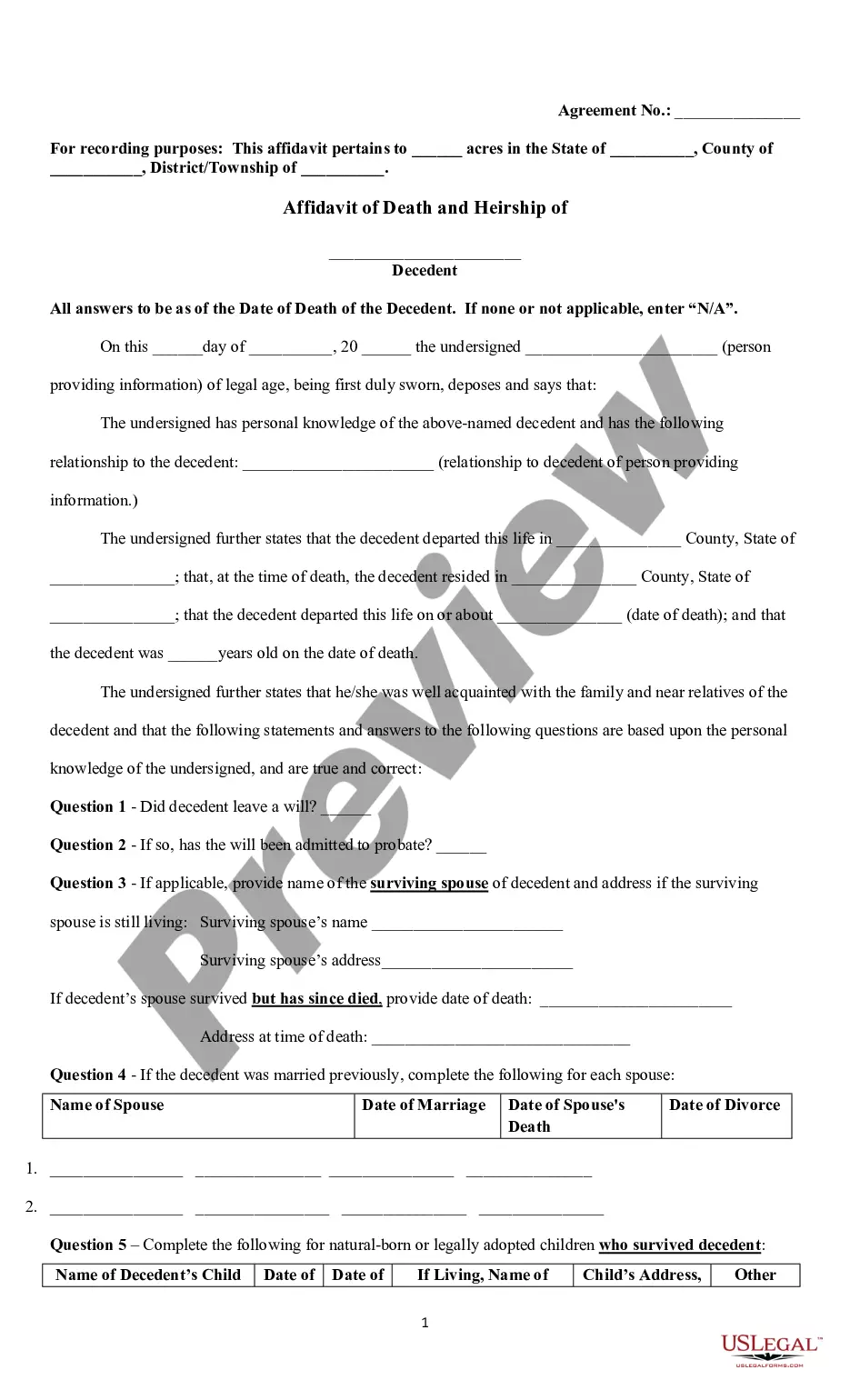
- Decedent information: Name, date of death, and last residence of the deceased.
- Statements regarding the estate: Confirmation that the estate value does not exceed the threshold and no probate proceedings are pending.
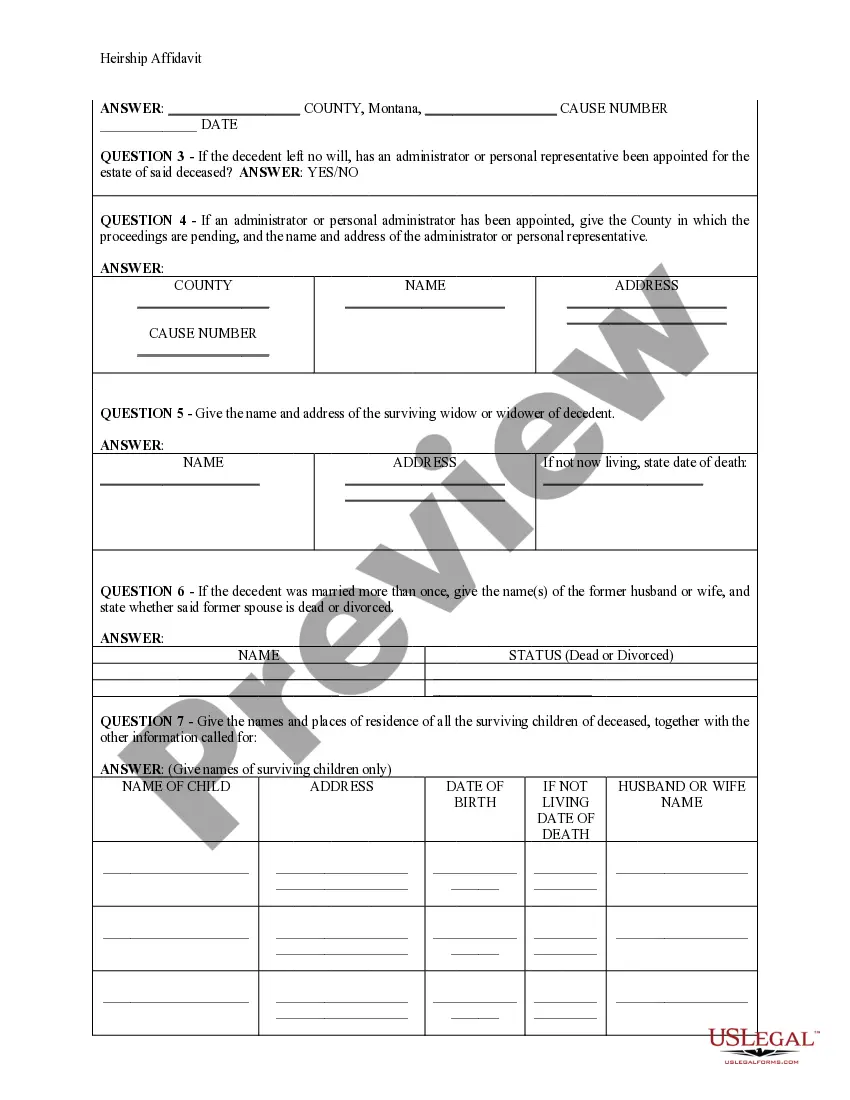
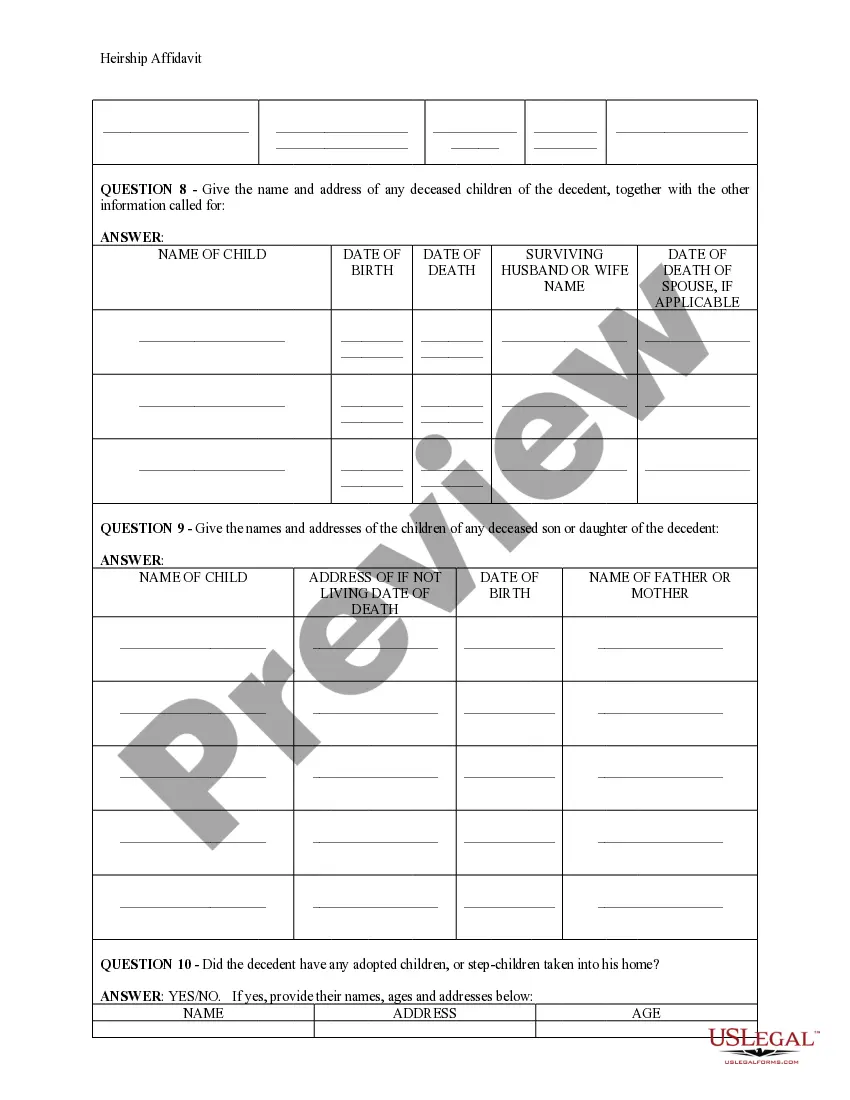
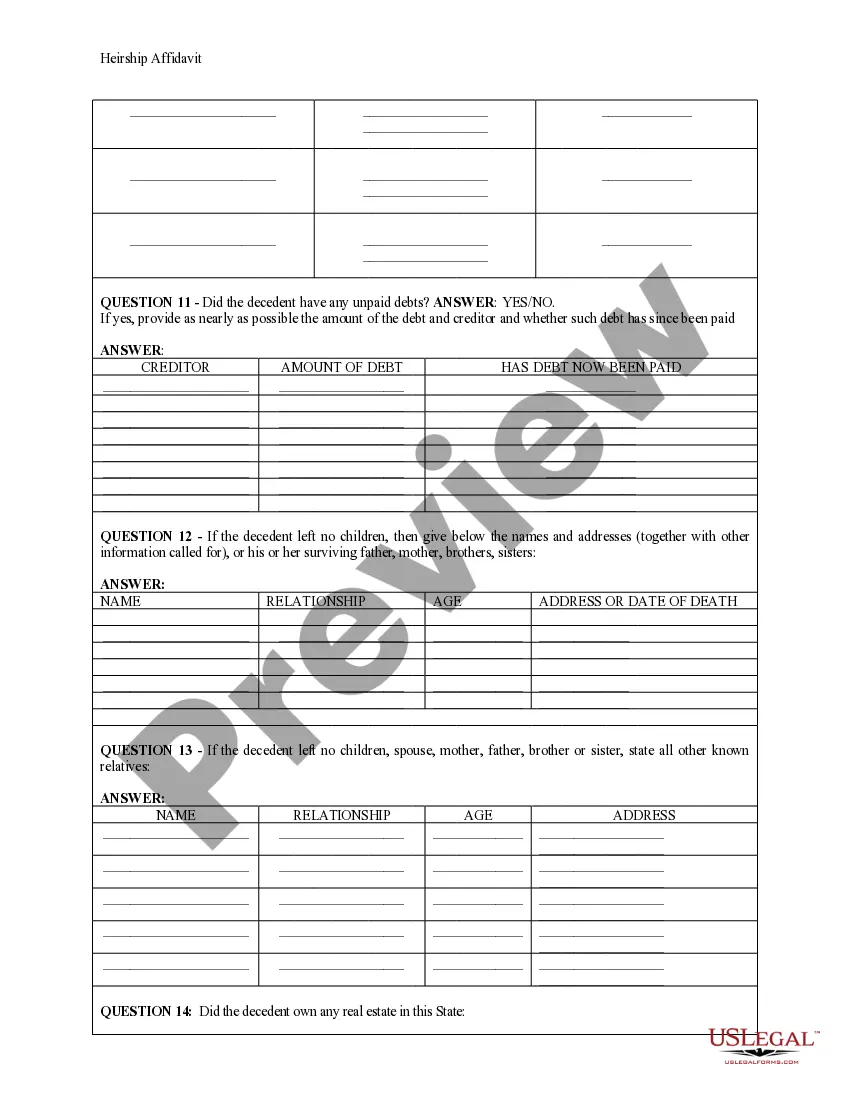
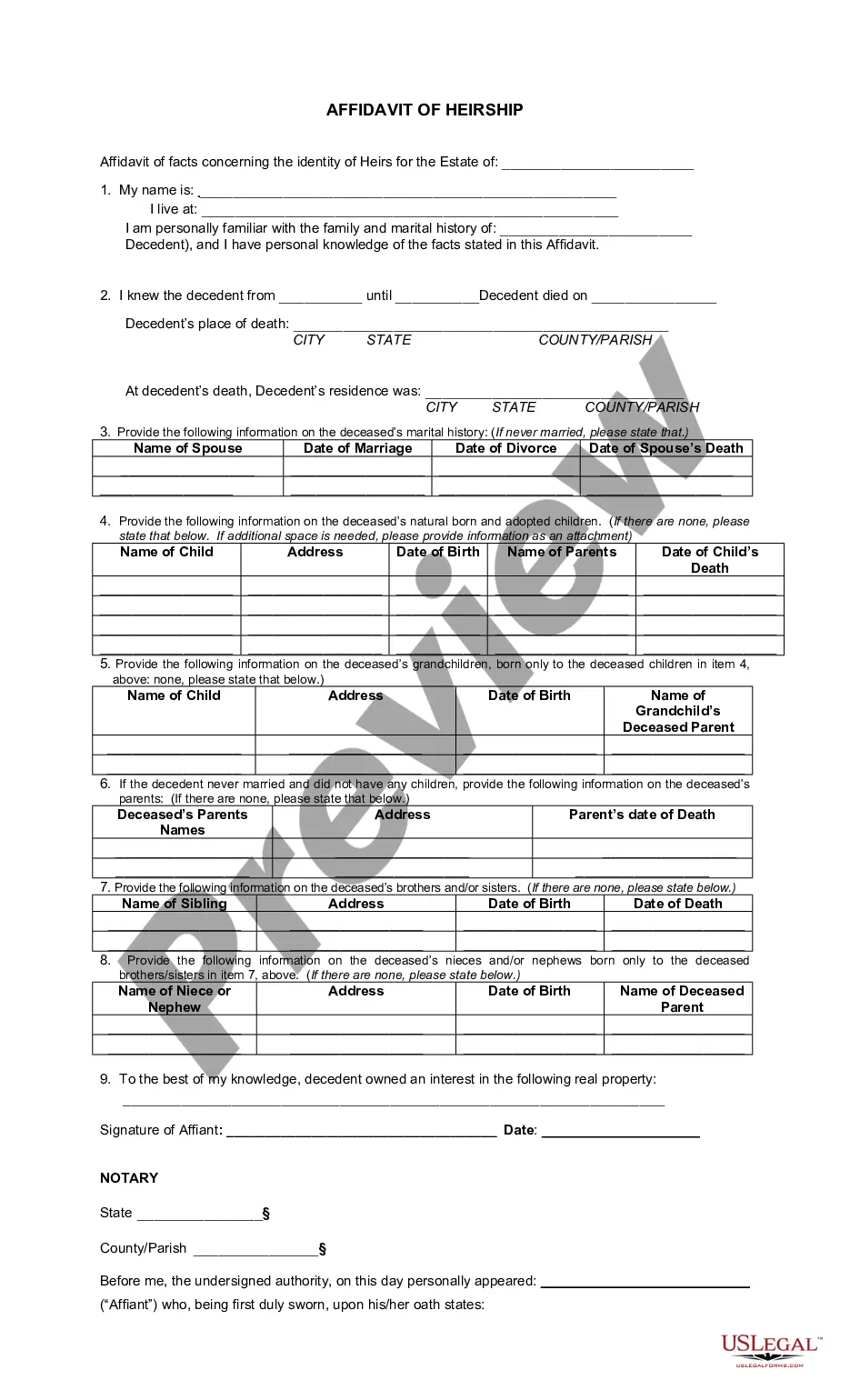
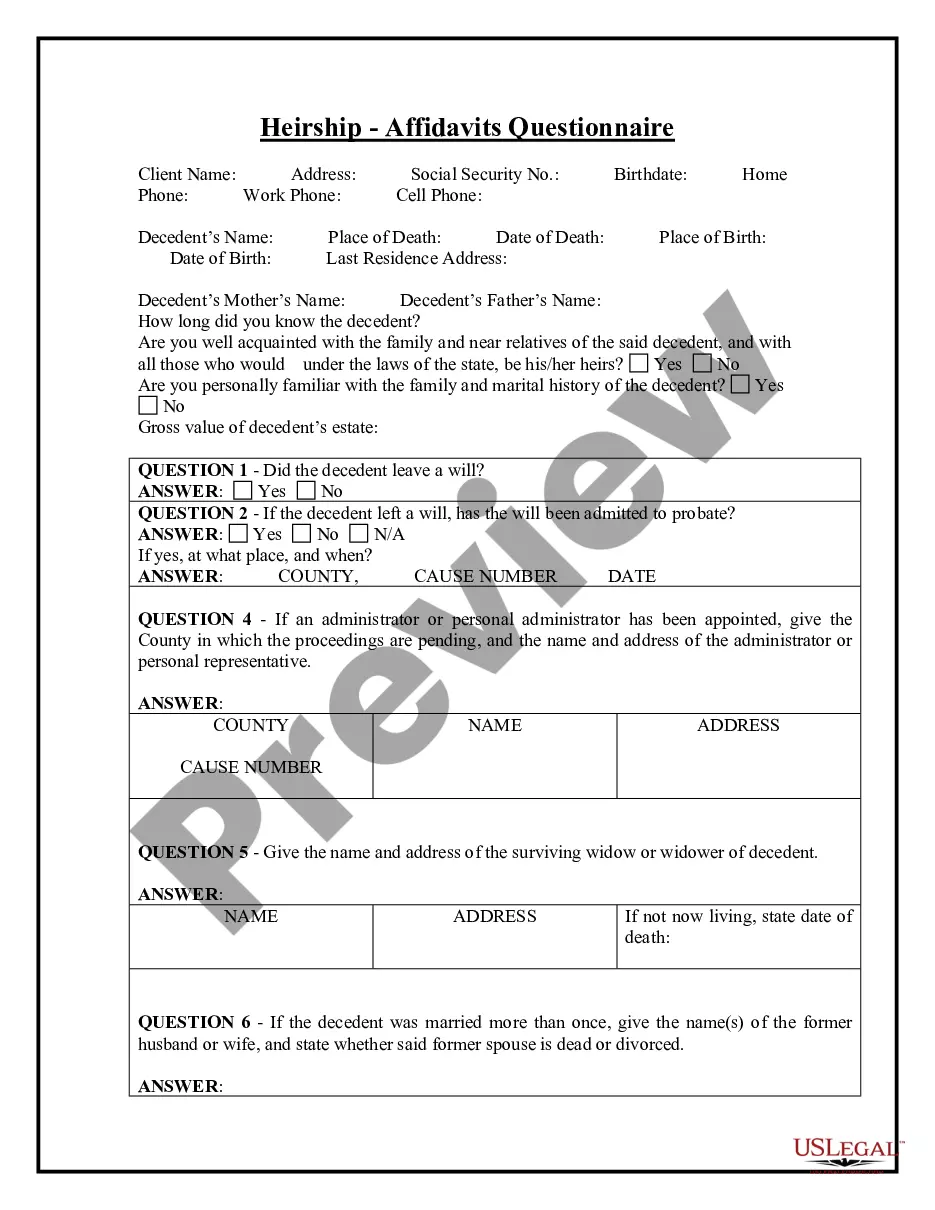
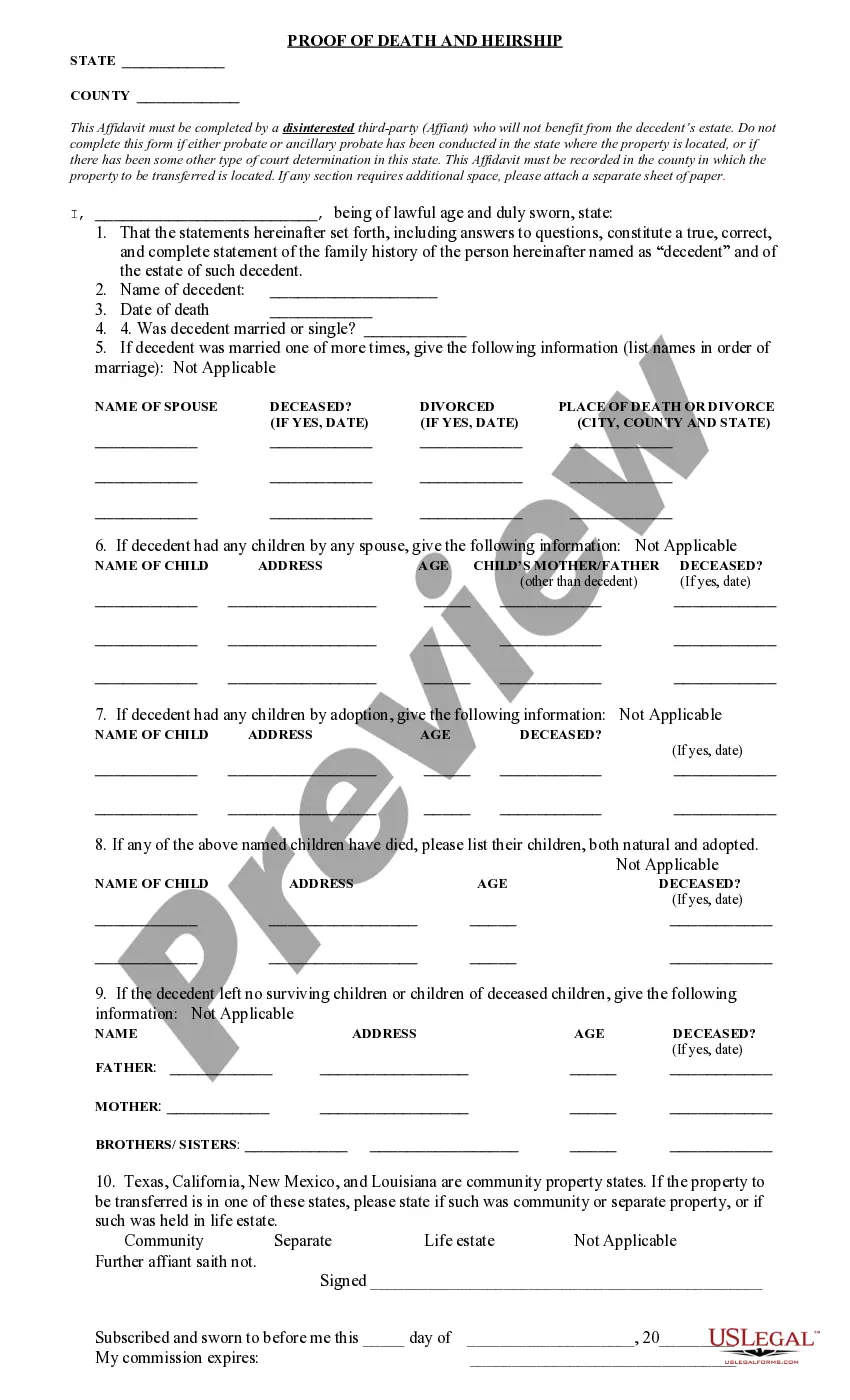
- Questions about heirs: Information about the decedentâs family and potential heirs.
- Signature and notarization: Affiant's signature and notarization requirement.
When to use this form
This form is typically used in situations where a person has passed away without leaving a will, and their heirs need to establish their legal rights to the deceased's property. For example, if a son wishes to sell land owned by his deceased father and no estate has been opened, obtaining this affidavit is crucial for resolving ownership issues.
Who can use this document
- Individuals who are heirs or beneficiaries of an estate without a will.
- Family members of a deceased person needing to assert their claims to property.
- Those seeking to avoid lengthy probate proceedings for small estates.
How to prepare this document
- Identify the affiant: Provide the name and address of the individual completing the affidavit.
- Fill in decedent details: Enter the name, date of death, and last known address of the deceased.
- Answer the questions included: Respond to inquiries about wills, estate proceedings, and surviving family members.
- Sign and date the affidavit: The affiant must sign the document and include the date of completion.
- Notarization: Arrange for the affidavit to be notarized if required.
Notarization guidance
Yes, this form must be notarized to be legally valid. US Legal Forms offers integrated online notarization, allowing you to complete the process via secure video call at your convenience, ensuring the affidavit meets legal standards without needing to travel.
Get your form ready online
Our built-in tools help you complete, sign, share, and store your documents in one place.
Make edits, fill in missing information, and update formatting in US Legal Forms—just like you would in MS Word.
Download a copy, print it, send it by email, or mail it via USPS—whatever works best for your next step.
Sign and collect signatures with our SignNow integration. Send to multiple recipients, set reminders, and more. Go Premium to unlock E-Sign.
If this form requires notarization, complete it online through a secure video call—no need to meet a notary in person or wait for an appointment.
We protect your documents and personal data by following strict security and privacy standards.

Make edits, fill in missing information, and update formatting in US Legal Forms—just like you would in MS Word.

Download a copy, print it, send it by email, or mail it via USPS—whatever works best for your next step.

Sign and collect signatures with our SignNow integration. Send to multiple recipients, set reminders, and more. Go Premium to unlock E-Sign.

If this form requires notarization, complete it online through a secure video call—no need to meet a notary in person or wait for an appointment.

We protect your documents and personal data by following strict security and privacy standards.
Mistakes to watch out for
- Failing to provide accurate information about the decedent and heirs.
- Not including a certified death certificate with the affidavit.
- Submitting the form without notarization when required.
- Leaving sections of the form blank that are crucial for proving heirship.
Advantages of online completion
- Convenient download: Access the form immediately without needing a physical visit to a legal office.
- Editability: Easily fill in the required sections before printing.
- Guidance: Comprehensive instructions are often included to help ensure accuracy.
Legal use & context
- The Heirship Affidavit serves as proof of heirship, which can be crucial for property transactions.
- Without proper documentation, heirs may face challenges in claiming assets.
- This affidavit can have legal weight in court if disputes arise concerning inheritance.
What to keep in mind
- The Heirship Affidavit is essential for asserting rights to property when someone dies intestate.
- Accurate and complete information is critical to avoid legal complications.
- Notarization is a necessary step to finalize the affidavit and validate the document.
Looking for another form?
Form popularity
FAQ
An affidavit of heirship is needed to transfer a deceased person's interest in real or personal property to his or her heirs when the decedent dies without leaving a last will and testament or without disposing of all of his or her property in a will.
Under Montana statute, where as estate is valued at less than $50,000, an interested party may, thirty (30) days after the death of the decedent, issue a small estate affidavit to to demand payment on any debts owed to the decedent.
Heirs who inherit property are typically children, descendants, or other close relatives of the decedent. Spouses typically are not legally considered to be heirs, as they are instead entitled to properties via marital or community property laws.
In Montana, you can make a living trust to avoid probate for virtually any asset you ownreal estate, bank accounts, vehicles, and so on. You need to create a trust document (it's similar to a will), naming someone to take over as trustee after your death (called a successor trustee).
(A judgment in this case is a court order, in writing, reciting that the deceased person is dead, the date of death and a list of who are the heirs.) Proof. Once the judgment is issued, copies of the judgment can be used to show proof as to who is entitled to estate assets.
A fee of $15 for the first page and $4 for each additional page is common. Ask if you can file the two affidavits of heirship as one document. Some counties let you file the two affidavits of heirship as one document if the decedent and property descriptions are the same.
If you are unmarried and die without a valid will and last testament in Montana, then your entire estate goes to any surviving children in equal shares, or grandchildren if you don't have any surviving children. If you die intestate unmarried and with no children, then by law, your parents inherit your entire estate.
When a person who owns real property dies intestate, and there is no survivor mentioned in the deed, the heirs of the decedent, must file an affidavit of descent to establish their chain of title to the property. This affidavit, is known as an affidavit of descent.
The heirship of a deceased person is determined through a document called an Affidavit of Heirship. This is a form that gives a detailed explanation of the heirs at law of the deceased person at the time of his/her death.The deceased, DOROTHY, died at Anytown, Illinois on January 1, 2015.