Wisconsin Training Contract - Horse Equine Forms
What this document covers
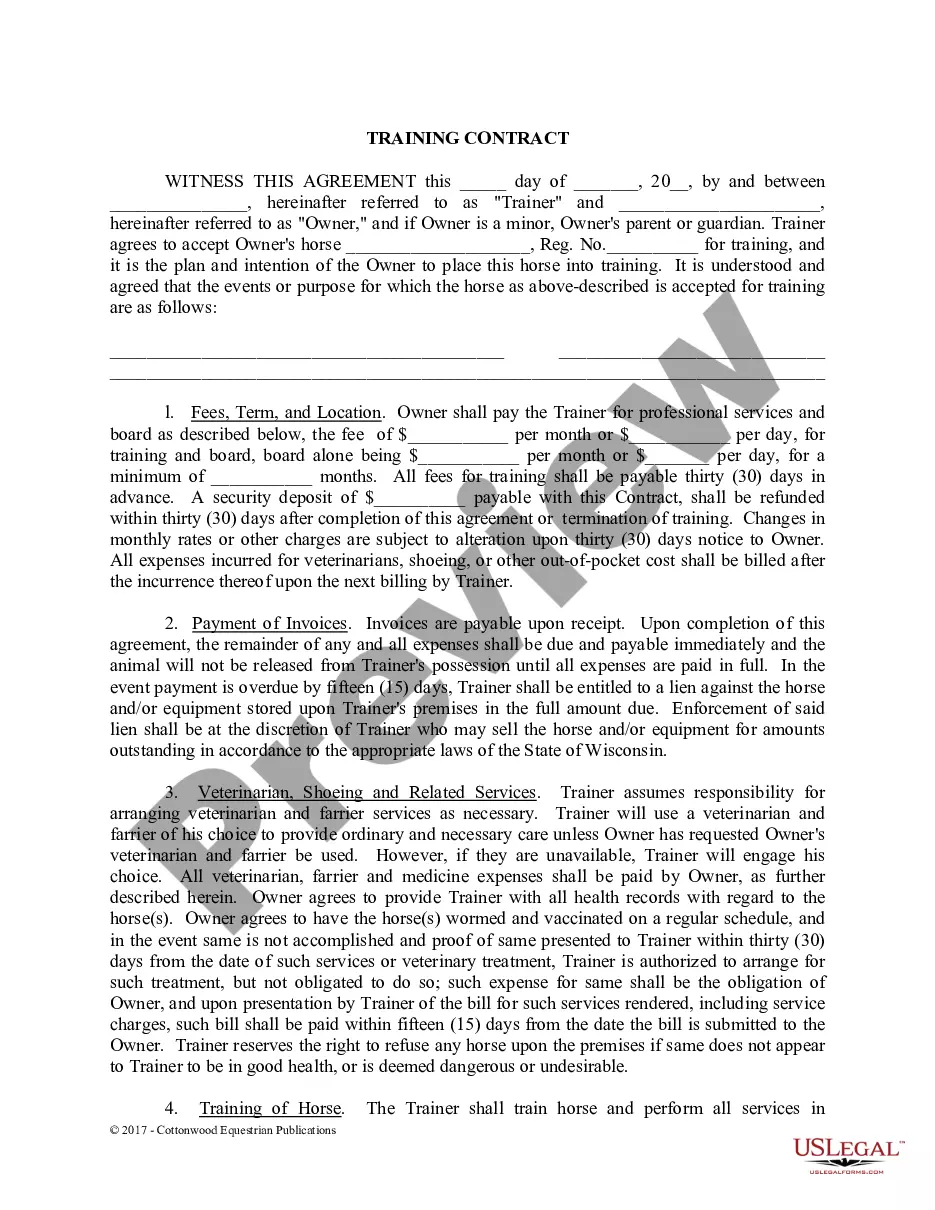
The Training Contract is a legally binding agreement between a horse trainer and a horse owner. This form outlines the responsibilities and expectations of both parties regarding the training of the horse, including care, costs, and liability. It differs from other equine agreements by specifically detailing the training services provided and associated fees, ensuring both parties have a clear understanding of their roles during the training period.
Key components of this form
- Parties involved: Identifies Trainer and Owner, including provisions for minor Owners.
- Fees, term, and payment structure: Clarifies training fees, payment schedule, and security deposits.
- Veterinary responsibilities: Details Trainer's responsibilities for veterinary and farrier services and expenses.
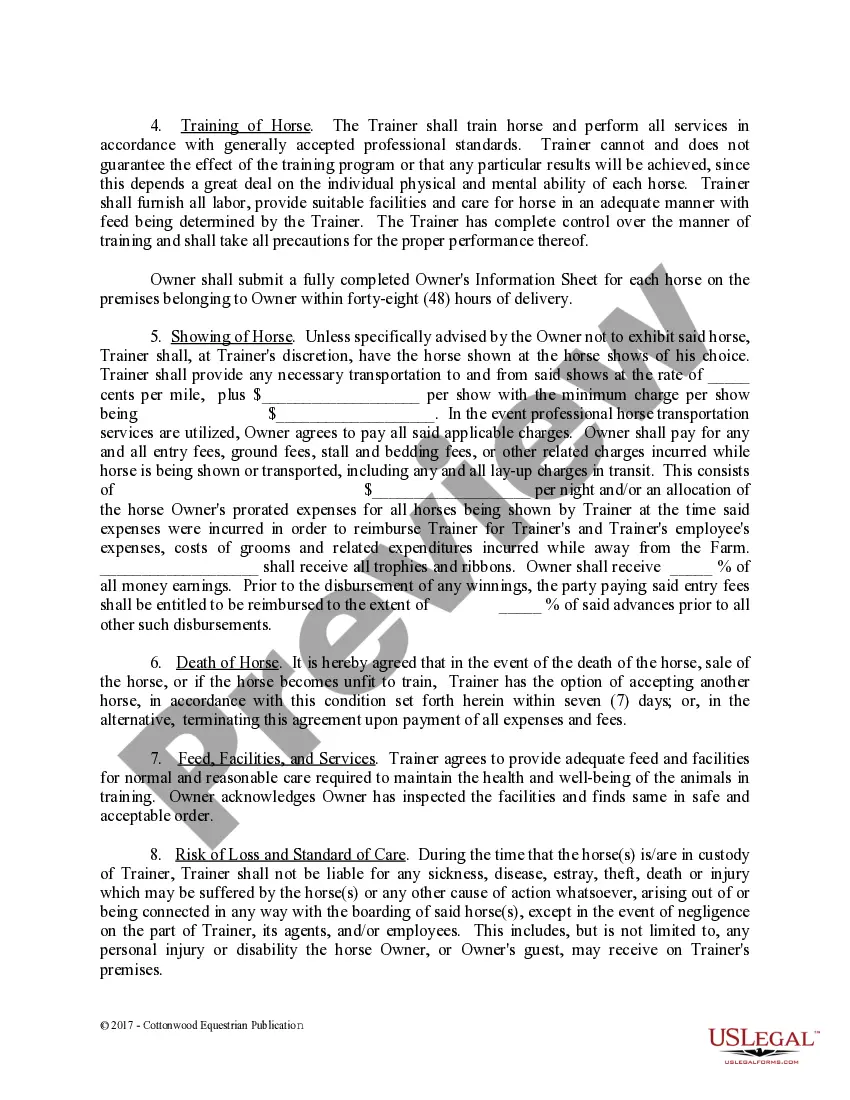
- Training standards: Describes the Trainer's obligations for the horse's training and wellbeing.
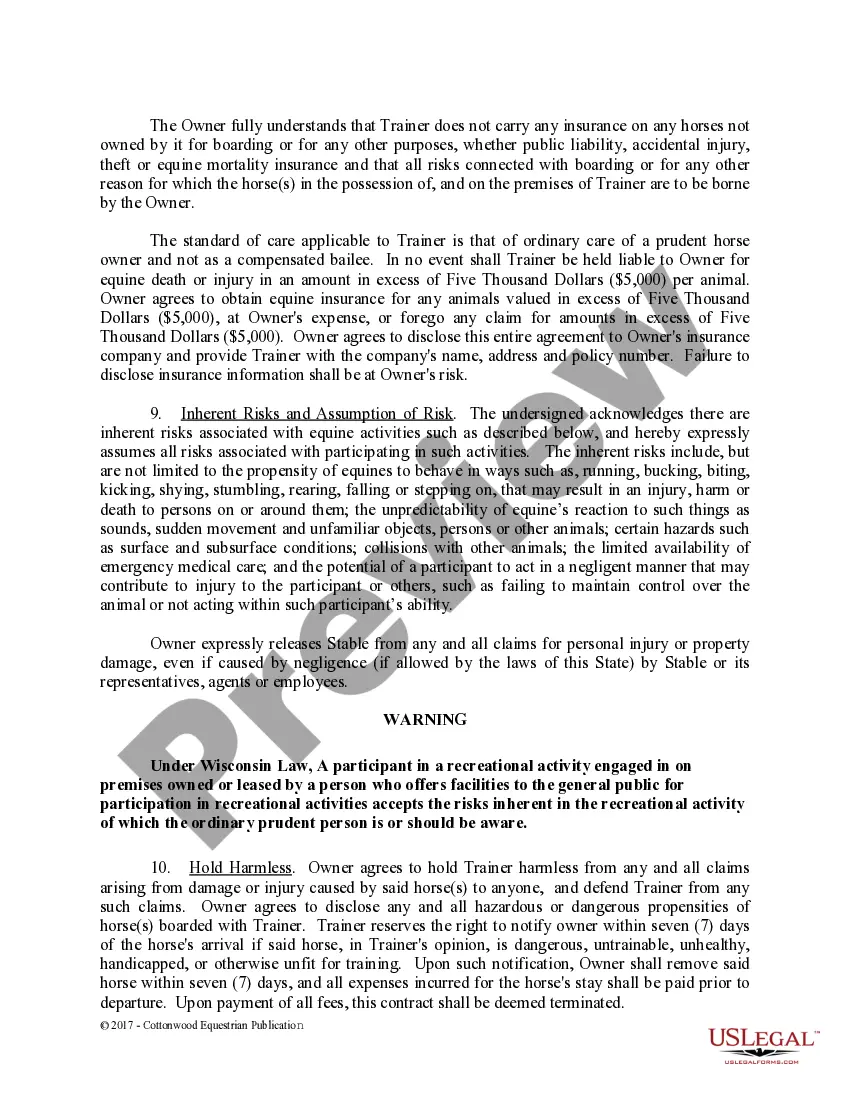
- Liability and risk: Outlines the risks involved and limits Trainer's liability for horse injuries or deaths.
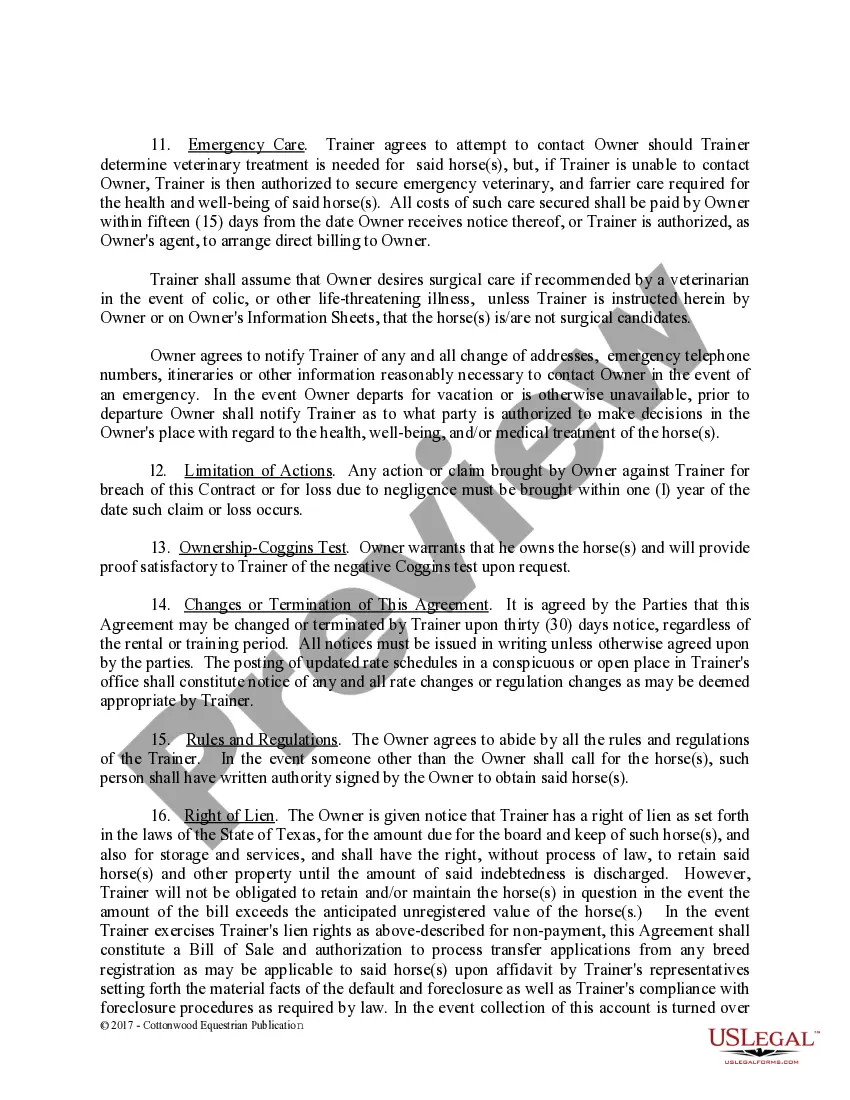
- Emergency care provisions: Specifies Trainer's authority to seek emergency care and expenses related to care.


Common use cases
This Training Contract should be used when a horse owner wants to engage a trainer for professional training services. It is essential in situations where the horse requires specialized attention and care, whether for performance training, rehabilitation, or behavioral work. The agreement protects both parties by ensuring clear communication regarding services, costs, and care responsibilities.
Intended users of this form
- Horse owners seeking professional training for their horses.
- Trainers who provide training services and need a formal agreement with clients.
- Parents or guardians of minor horse owners who require legal agreements for training services.
How to complete this form
- Identify the parties: Fill in the names of the Trainer and the Owner, and include parent or guardian details if the Owner is a minor.
- Specify the horse: Enter the horse's name and registration number clearly.
- Detail the fees: Clearly list the monthly or daily training and boarding fees along with the payment schedule.
- Define training and care specifics: Outline the training goals and any special provisions for veterinary care.
- Obtain signatures: Ensure all parties sign and date the contract to make it binding and effective.
Notarization requirements for this form
This form does not typically require notarization unless specified by local law. However, having it notarized may enhance the formâs validity and enforceability in certain circumstances.
Get your form ready online
Our built-in tools help you complete, sign, share, and store your documents in one place.
Make edits, fill in missing information, and update formatting in US Legal Forms—just like you would in MS Word.
Download a copy, print it, send it by email, or mail it via USPS—whatever works best for your next step.
Sign and collect signatures with our SignNow integration. Send to multiple recipients, set reminders, and more. Go Premium to unlock E-Sign.
If this form requires notarization, complete it online through a secure video call—no need to meet a notary in person or wait for an appointment.
We protect your documents and personal data by following strict security and privacy standards.

Make edits, fill in missing information, and update formatting in US Legal Forms—just like you would in MS Word.

Download a copy, print it, send it by email, or mail it via USPS—whatever works best for your next step.

Sign and collect signatures with our SignNow integration. Send to multiple recipients, set reminders, and more. Go Premium to unlock E-Sign.

If this form requires notarization, complete it online through a secure video call—no need to meet a notary in person or wait for an appointment.

We protect your documents and personal data by following strict security and privacy standards.
Common mistakes
- Failing to specify the exact training and care services needed for the horse.
- Not including clear terms for payment and additional costs, leading to disputes later.
- Neglecting to collect signatures or date the agreement, making it unenforceable.
Benefits of using this form online
- Convenience to download and complete the form at your own pace.
- Editability allows customization to fit specific training needs and agreements.
- Accessibility to legal templates drafted by licensed attorneys ensures reliability.
Legal use & context
- This contract establishes the legal duties and responsibilities of both the Trainer and Owner regarding the training of the horse.
- The Trainer's lien rights protect against non-payment for services rendered.
- Owners should be aware of their obligations to ensure the horse is healthy and adequately cared for while under the Trainer's supervision.
What to keep in mind
- This Training Contract helps clarify the roles and expectations of both Trainer and Owner.
- Understanding the fee structure and payment terms is crucial to avoid disputes.
- Emergency care provisions ensure the horse is taken care of in case the Owner cannot be reached.
Looking for another form?






Form popularity
FAQ
Many states do allow homeowners to act as a contractor for their own home.No general contractor overseeing home construction comes cheap. Most general contractors charge between 10-percent to 20-percent of the overall cost of the home build, and this includes permits and materials.
Check specialty license requirements or applications. Take an approved Wisconsin contractor qualifier course. Apply for a qualifier certificate. Choose your license level. Get your paperwork in order. Submit application. Renew your license every year.
Successful general contractors often have a degree in construction management or civil engineering, along with several years in the construction industry. Regardless of your approach, start planning three to five years in advance to become a general contractor. At a minimum, you need to: Be at least 18 years old.
A "handyman" or "handyperson" is an unlicensed contractor who offers home maintenance, small home repairs and simple installation services. They may do minor carpentry, plumbing, electrical work, painting, plastering or drywall work, but nothing requiring a license or permit.
Anyone wishing to obtain a Dwelling Contractor license for their business must submit an application, which can be found here. You must also submit proof of insurance. There are no continuing education requirements. There is a $40 fee, consisting of a $15 application fee and a $25 credential fee.
Homeowners can pull their own building permits, but they must first read and sign a Cautionary Statement prior to the issuance of the building permit.Electrical Contractors pulling permits need to have a State of WI Master Electrician Certification and possibly a Electrical Contractors Certification.
If you want to make money through your general contracting business, you need a Wisconsin contractor license. It's a must-have, not a nice-to-have.