Montana Warranty Deed from Corporation to Two Individuals
Overview of this form
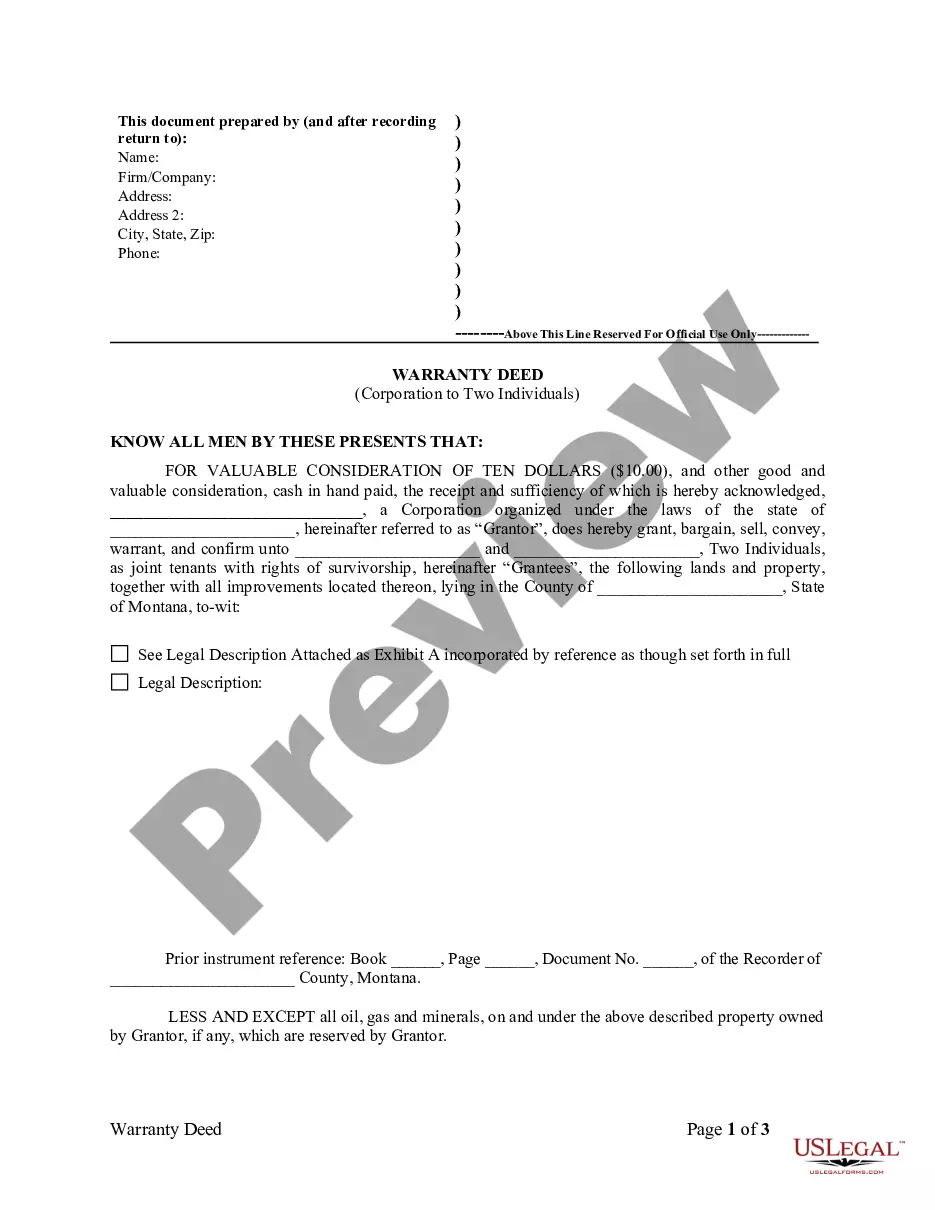
The Warranty Deed from Corporation to Two Individuals is a legal document used to transfer property from a corporation (the Grantor) to two individuals (the Grantees). This deed guarantees that the Grantor holds clear title to the property and is empowered to sell it, thereby providing assurance to the Grantees. Unlike other property transfer documents, this warranty deed specifically offers protection against defects in the title of the property being transferred.
Form components explained
- Identification of the Grantor corporation and the Grantees (individuals receiving the property).
- Clear description of the property being transferred, including any reservations and exceptions.
- Clauses regarding the rights and interests conveyed to the Grantees, including joint tenancy.
- Covenant from the Grantor affirming they have legal title and that the property is free from encumbrances.
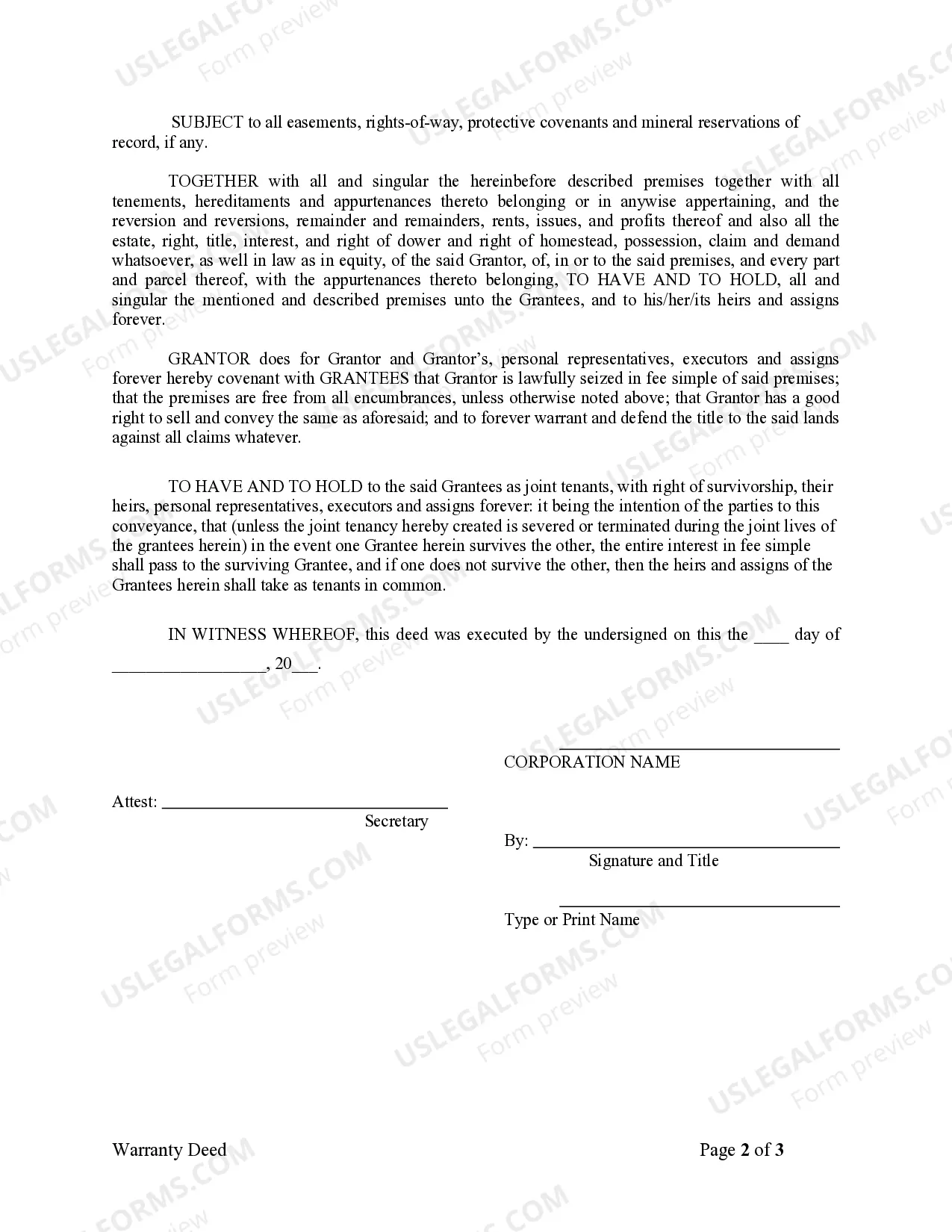
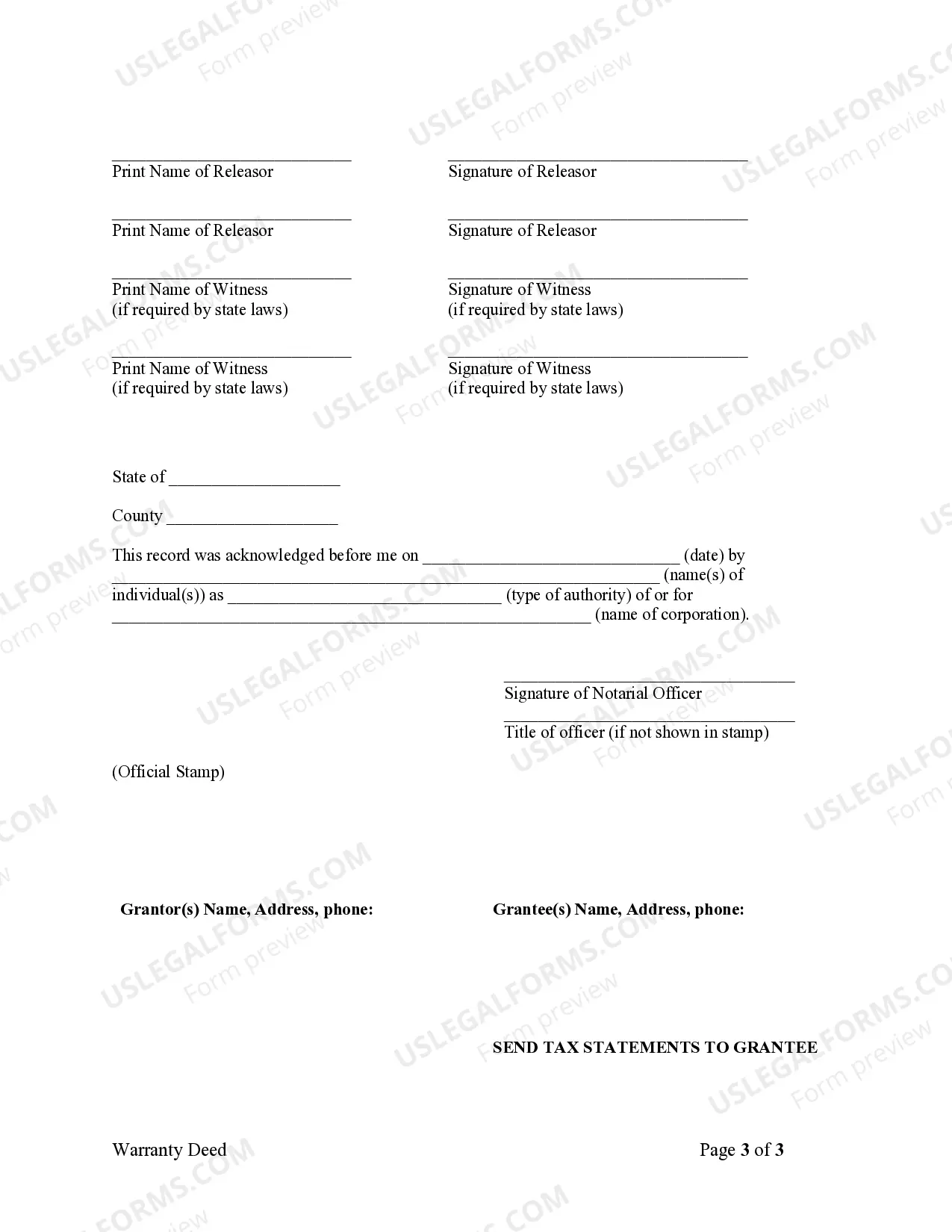
- Signatures of the Grantor and witnesses (if required by state law).




When this form is needed
This form should be used when a corporation is transferring property ownership to two individuals. It is commonly applicable in situations such as estate planning where a corporation is required to convey real estate to individuals, or when dissolving a corporate entity and distributing its assets to individual members. This deed ensures that the individuals receive full legal rights to the property with guarantees regarding the title.
Who this form is for
- Corporations looking to convey real property to individuals.
- Individuals who are receiving property from a corporation.
- Real estate attorneys or professionals assisting in property transactions involving corporate entities.
- Anyone involved in the dissolution of a corporation that includes transferring assets to shareholders or owners.
How to complete this form
- Identify the parties involved by entering the corporation's name as Grantor and the names of the two individuals as Grantees.
- Specify the legal description of the property being transferred, referencing any attached exhibits as necessary.
- Include any reservations or exceptions regarding oil, gas, and mineral rights if applicable.
- Obtain signatures from the Grantor and any required witnesses.
- Have the document notarized if required by state law.
Notarization guidance
This form needs to be notarized to ensure legal validity. US Legal Forms provides secure online notarization powered by Notarize, allowing you to complete the process through a verified video call, available anytime.
Get your form ready online
Our built-in tools help you complete, sign, share, and store your documents in one place.
Make edits, fill in missing information, and update formatting in US Legal Forms—just like you would in MS Word.
Download a copy, print it, send it by email, or mail it via USPS—whatever works best for your next step.
Sign and collect signatures with our SignNow integration. Send to multiple recipients, set reminders, and more. Go Premium to unlock E-Sign.
If this form requires notarization, complete it online through a secure video call—no need to meet a notary in person or wait for an appointment.
We protect your documents and personal data by following strict security and privacy standards.

Make edits, fill in missing information, and update formatting in US Legal Forms—just like you would in MS Word.

Download a copy, print it, send it by email, or mail it via USPS—whatever works best for your next step.

Sign and collect signatures with our SignNow integration. Send to multiple recipients, set reminders, and more. Go Premium to unlock E-Sign.

If this form requires notarization, complete it online through a secure video call—no need to meet a notary in person or wait for an appointment.

We protect your documents and personal data by following strict security and privacy standards.
Common mistakes
- Failing to include a complete legal description of the property.
- Not obtaining necessary signatures from witnesses if required by state law.
- Overlooking the reservation of rights concerning minerals or other interests in the property.
- Neglecting to notarize the deed when required, potentially invalidating the transfer.
Benefits of completing this form online
- Convenience of downloading the form from anywhere, at any time.
- Editability allows for easy updates to specific fields as needed.
- Forms drafted by licensed attorneys ensure legal compliance.
- Time-saving by facilitating quick preparation compared to traditional paper-based methods.
Looking for another form?
Form popularity
FAQ
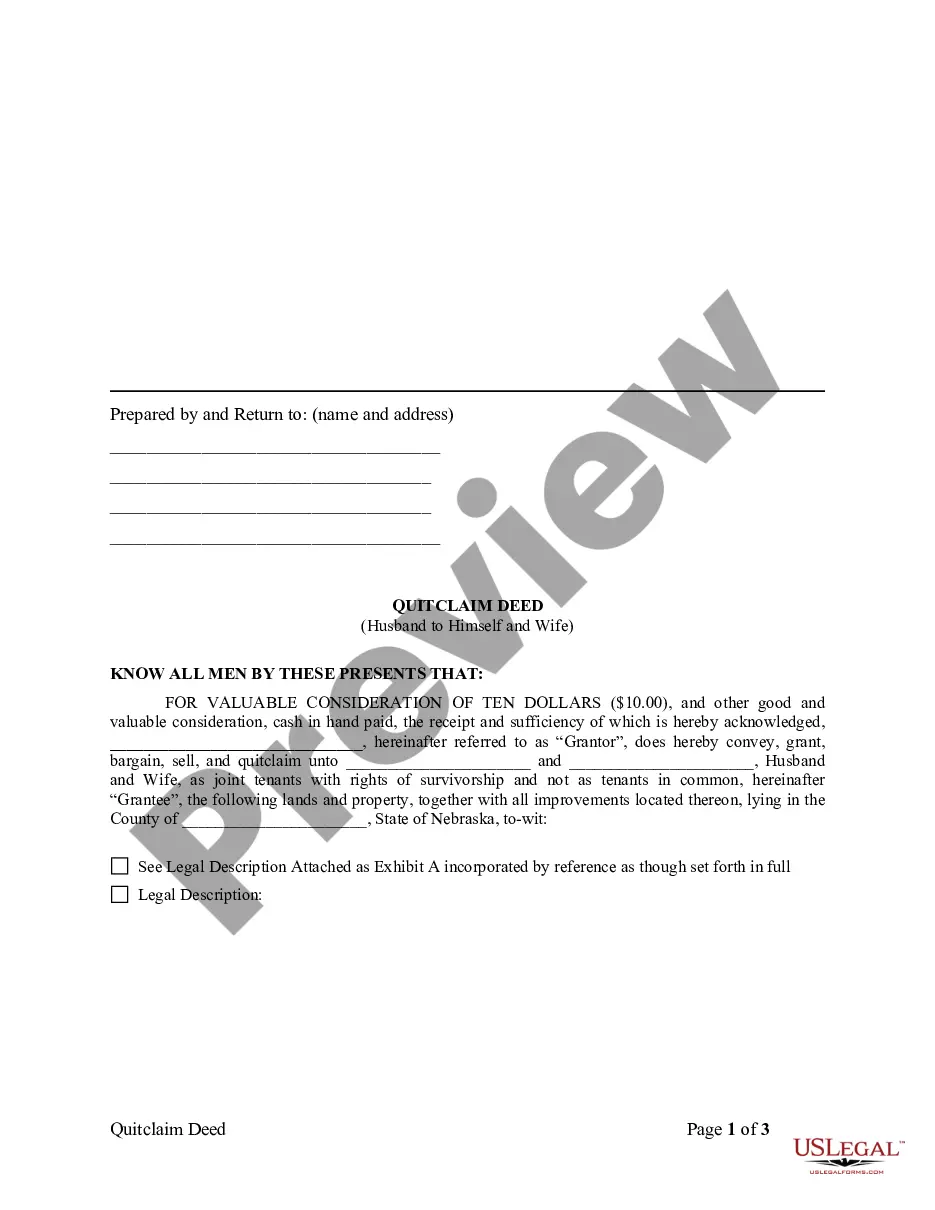
Adding someone to your house deed requires the filing of a legal form known as a quitclaim deed. When executed and notarized, the quitclaim deed legally overrides the current deed to your home. By filing the quitclaim deed, you can add someone to the title of your home, in effect transferring a share of ownership.
To add a co-owner, the bank would have to create a new home loan agreement, which must be registered after paying the due stamp duty and registration charges. The bank would also insist on making the co-owner a co-borrower in the home loan applicable.
If you've recently married and already own a home or other real estate, you may want to add your new spouse to the deed for your property so the two of you own it jointly. To add a spouse to a deed, all you have to do is literally fill out, sign and record a new deed in your county recorder's office.
A deed, of course, is a legal document representing property ownership. But you might be wondering if an owner can transfer a deed to another person without a real estate lawyer. The answer is yes. Parties to a transaction are always free to prepare their own deeds.
It is possible to be named on the title deed of a home without being on the mortgage. However, doing so assumes risks of ownership because the title is not free and clear of liens and possible other encumbrances. Free and clear means that no one else has rights to the title above the owner.
Yes you can. This is called a transfer of equity but you will need the permission of your lender. If you are not married or in a civil partnership you may wish to consider creating a deed of trust and a living together agreement which we can explain to you.
Adding someone to your house deed requires the filing of a legal form known as a quitclaim deed. When executed and notarized, the quitclaim deed legally overrides the current deed to your home. By filing the quitclaim deed, you can add someone to the title of your home, in effect transferring a share of ownership.
The mortgage company usually prepares this deed as part of the loan package and delivers it to the title company for you to sign at closing. The title company is commonly the trustee to the deed and holds legal title to the property until the loan gets fully repaid.