Delaware Tenant's Maintenance Repair Request Form
Overview of this form
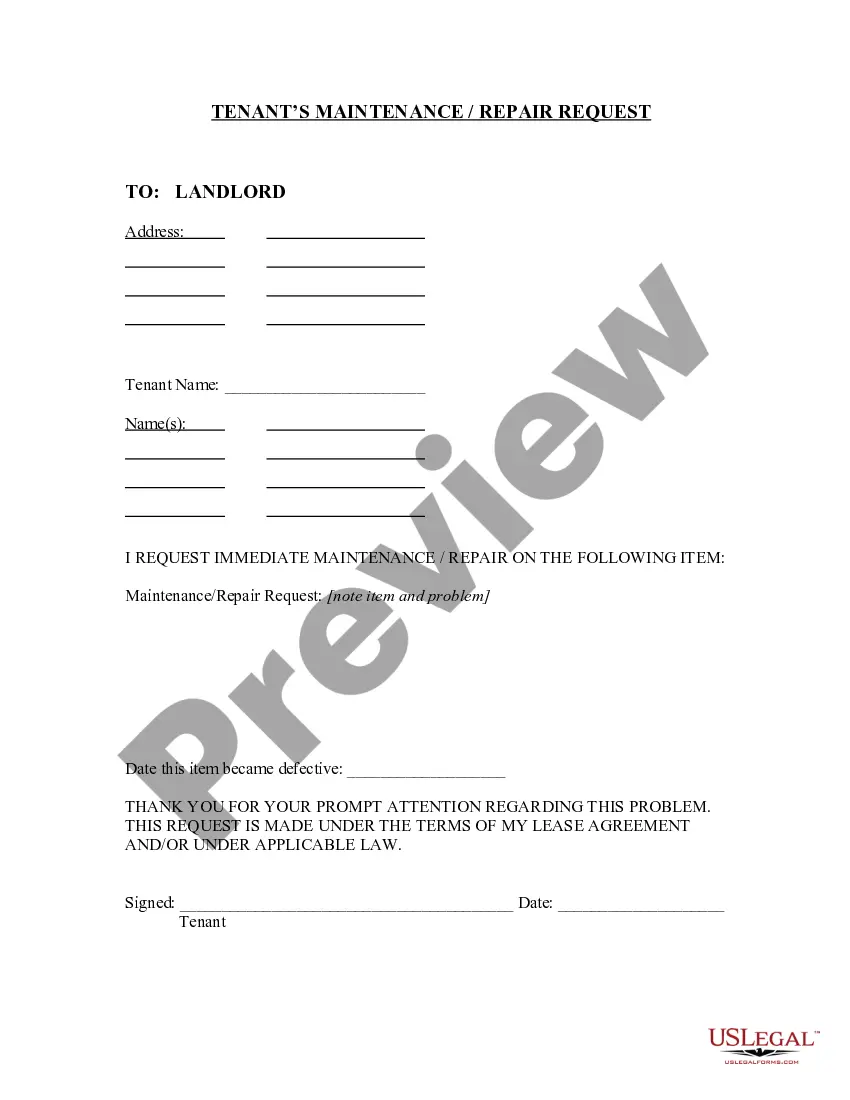
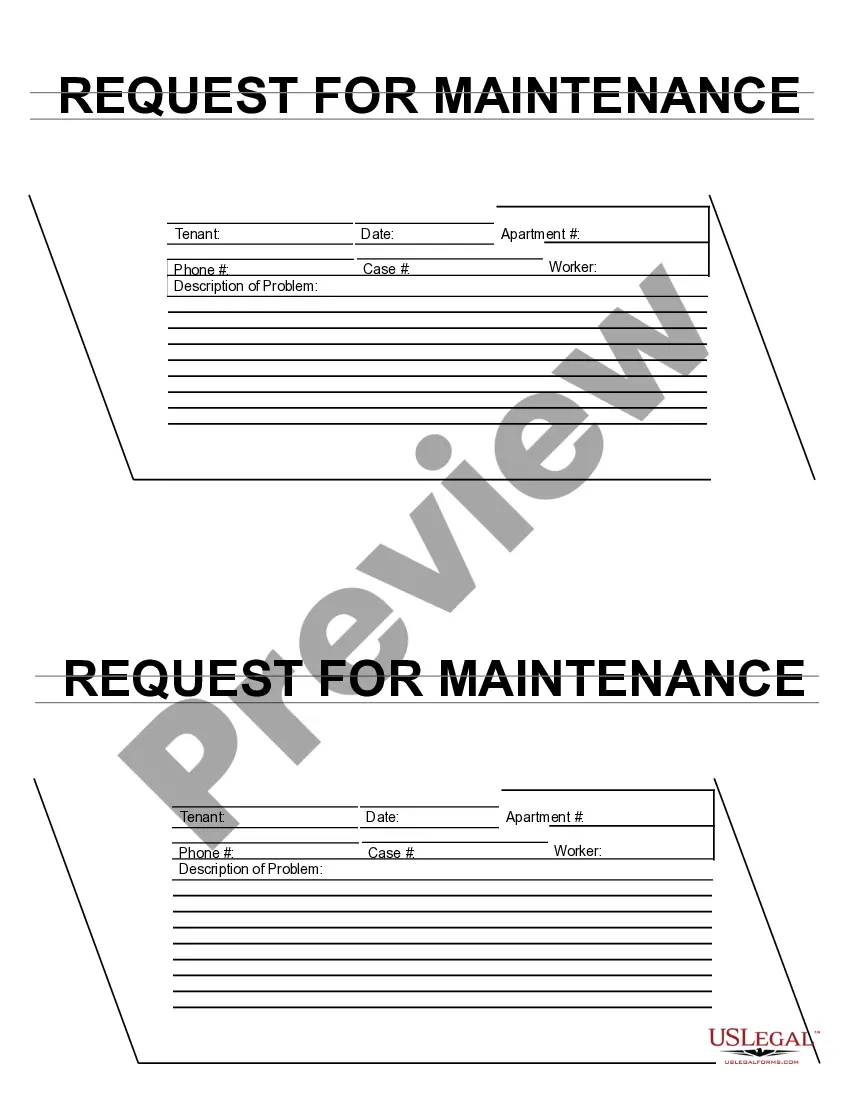
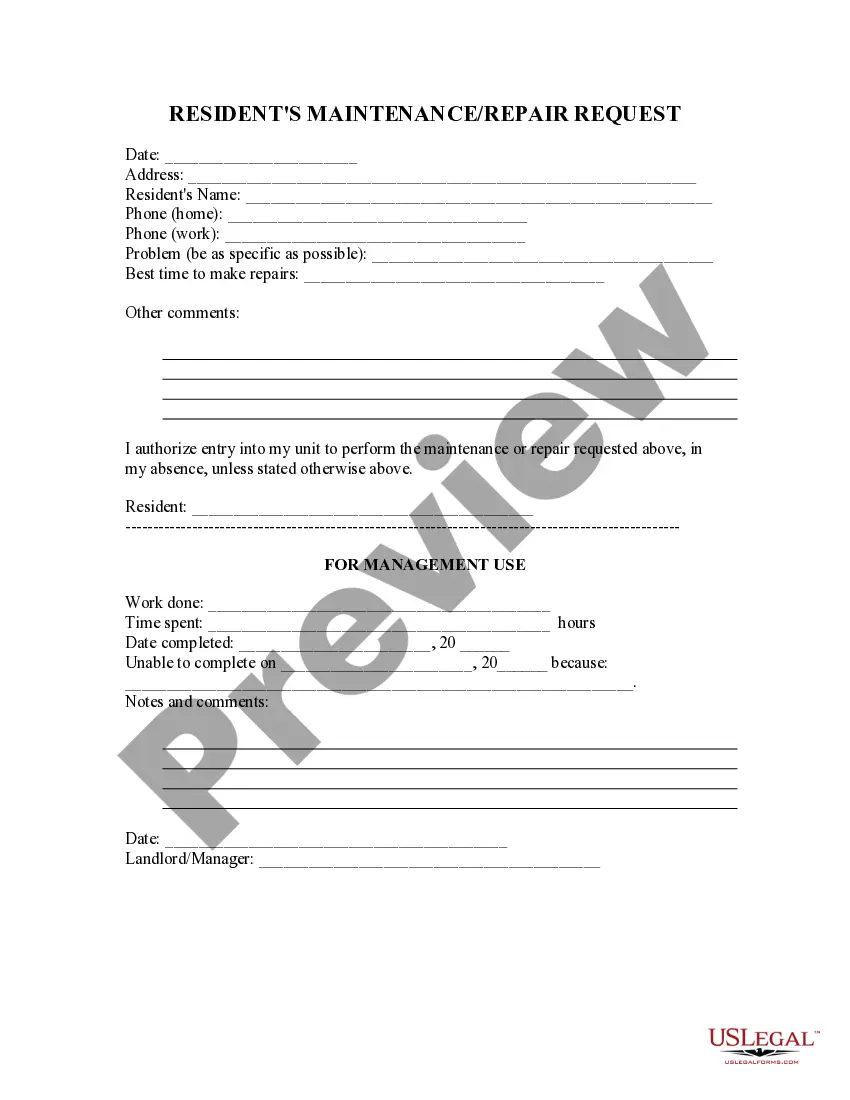
A Tenant's Maintenance Repair Request Form is a legal document that allows tenants to formally notify their landlord about necessary maintenance or repairs in their rented property. This form helps ensure that the tenant's requests are documented and comply with applicable state laws, providing clear communication between the tenant and landlord regarding repair issues. It serves as an essential tool for tenants seeking to maintain their living conditions without misunderstanding or conflict.
Key components of this form
- Identification of the tenant: Space for the tenant's name and contact information.
- Property details: Section to specify the address of the rented premises.
- Description of the issue: Area to detail the specific maintenance or repair needed.
- Acknowledgment of lease terms: Statement confirming the request aligns with the lease agreement or applicable law.
- Signature and date: Space for the tenant's signature and the date the request is made.
Situations where this form applies
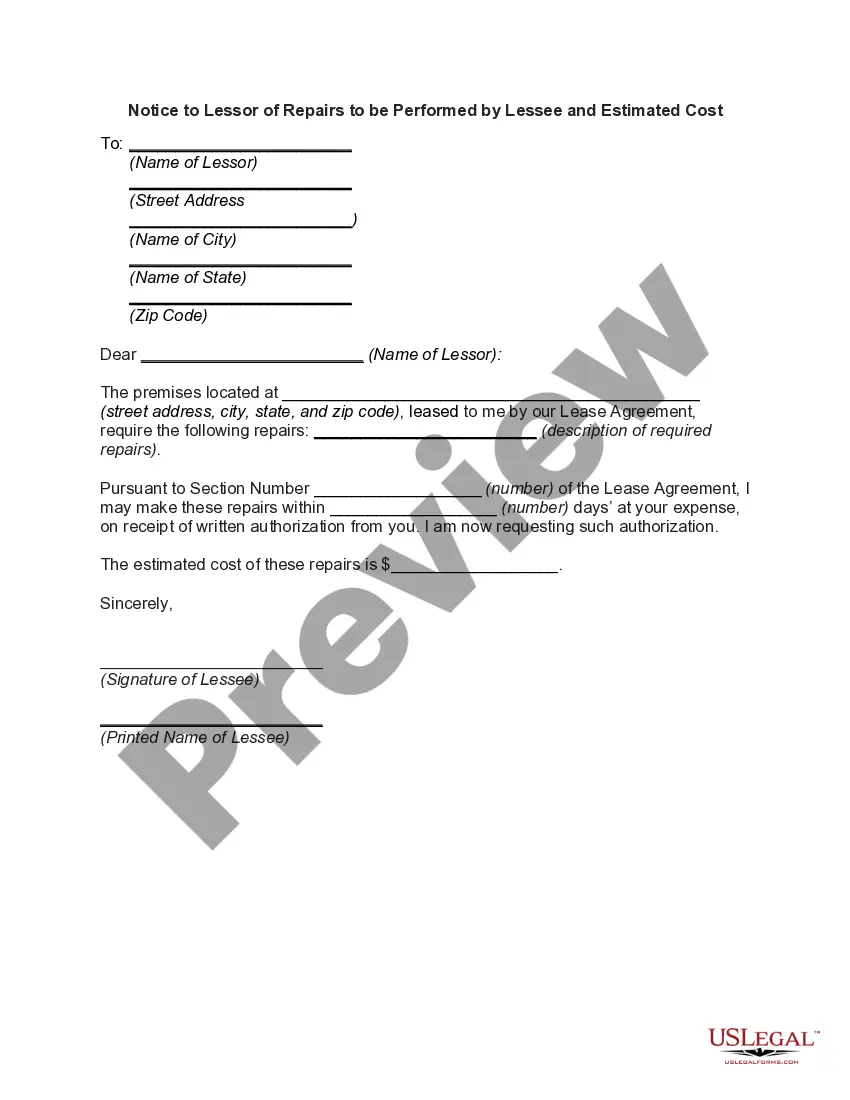
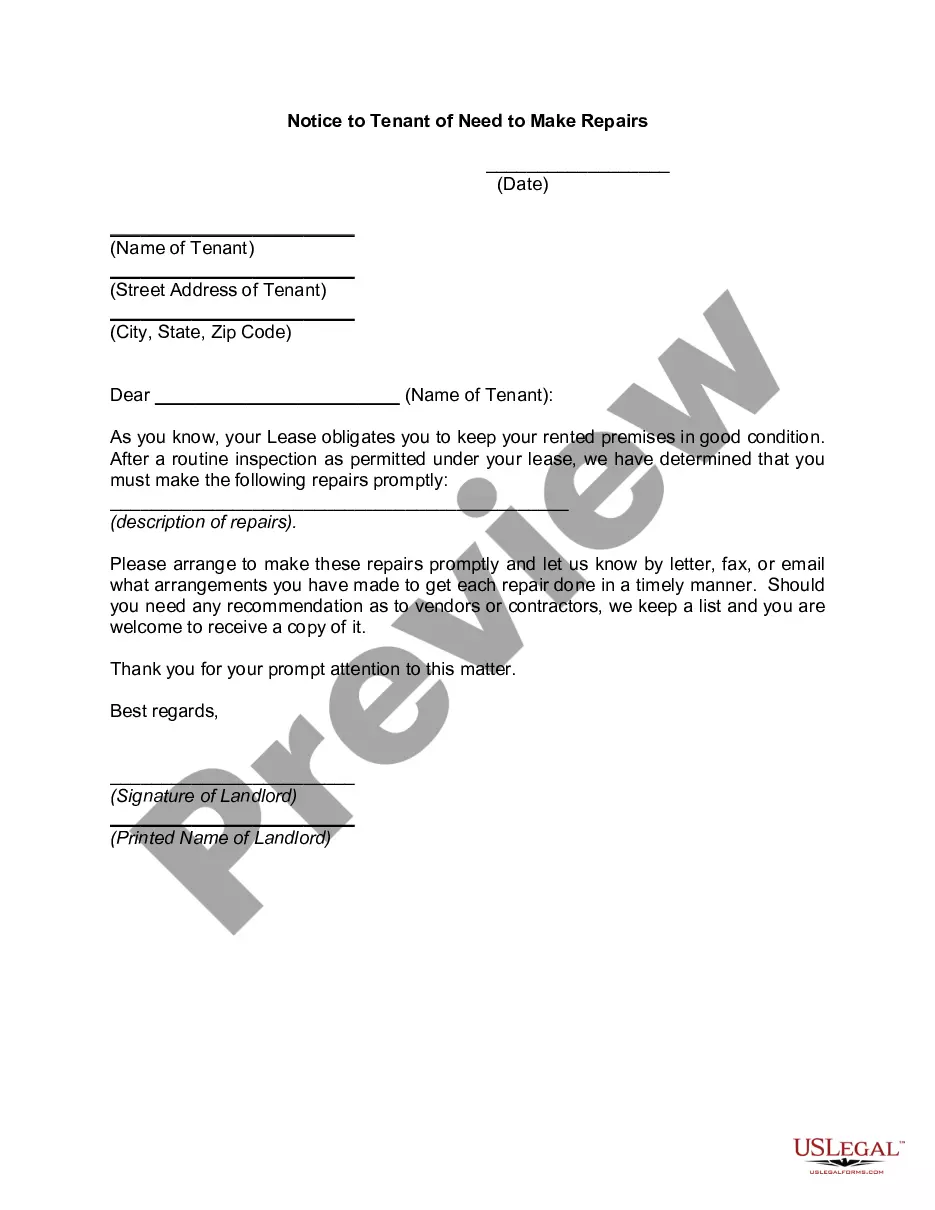
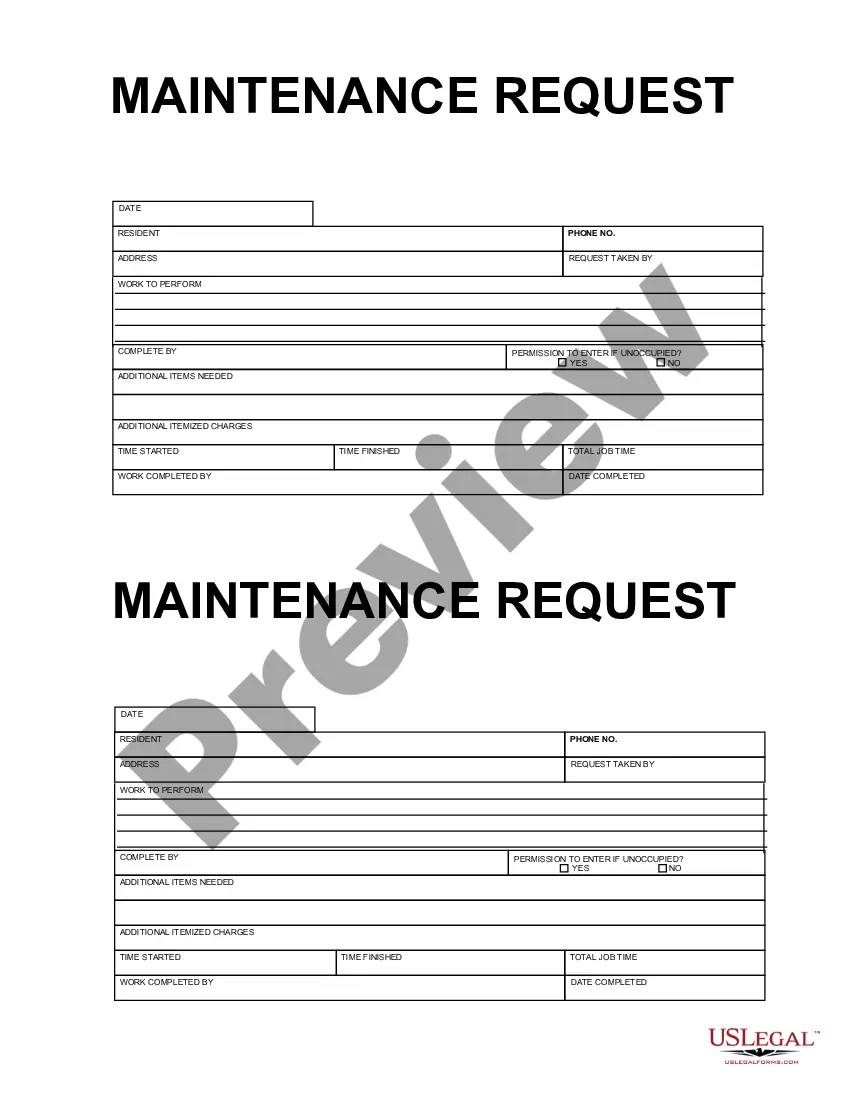
This form should be used when a tenant notices issues requiring repair or maintenance in their rental unit, such as plumbing leaks, electrical problems, or heating and cooling malfunctions. It is important to submit the request promptly to ensure issues are addressed in a timely manner and to initiate any potential legal obligations for the landlord under the lease agreement or state law.
Who needs this form
- Tenants who are renting residential properties.
- Individuals needing to formally document repair requests to their landlord.
- Anyone seeking to exercise their rights under their lease agreement regarding maintenance issues.
Instructions for completing this form
- Identify the tenant by entering your full name and contact information.
- Specify the address of the property for which repairs are needed.
- Enter a clear description of the maintenance or repair issue.
- Sign and date the form to confirm the request.
Is notarization required?
In most cases, this form does not require notarization. However, some jurisdictions or signing circumstances might. US Legal Forms offers online notarization powered by Notarize, accessible 24/7 for a quick, remote process.
Get your form ready online
Our built-in tools help you complete, sign, share, and store your documents in one place.
Make edits, fill in missing information, and update formatting in US Legal Forms—just like you would in MS Word.
Download a copy, print it, send it by email, or mail it via USPS—whatever works best for your next step.
Sign and collect signatures with our SignNow integration. Send to multiple recipients, set reminders, and more. Go Premium to unlock E-Sign.
If this form requires notarization, complete it online through a secure video call—no need to meet a notary in person or wait for an appointment.
We protect your documents and personal data by following strict security and privacy standards.

Make edits, fill in missing information, and update formatting in US Legal Forms—just like you would in MS Word.

Download a copy, print it, send it by email, or mail it via USPS—whatever works best for your next step.

Sign and collect signatures with our SignNow integration. Send to multiple recipients, set reminders, and more. Go Premium to unlock E-Sign.

If this form requires notarization, complete it online through a secure video call—no need to meet a notary in person or wait for an appointment.

We protect your documents and personal data by following strict security and privacy standards.
Mistakes to watch out for
- Failing to provide detailed descriptions of the issues can lead to delays in repairs.
- Not including contact information may hinder communication with the landlord.
- Using unclear language in the request may lead to misunderstandings.
Benefits of using this form online
- Easy to download and fill out from the comfort of your home.
- Editable format allows for customization to fit specific situations.
- Ensures compliance with state laws, increasing the likelihood of a quick resolution.
Summary of main points
- Use the Tenant's Maintenance Repair Request Form to formally notify landlords of necessary repairs.
- Ensure your request is clear and documented to protect your tenant rights.
- No notarization needed unless your state law requires it.
Looking for another form?
Form popularity
FAQ
The Delaware Tenant's Maintenance Repair Request Form is a formal written notice that tenants use to report needed maintenance or repairs to a landlord. It documents the issue and helps ensure a timely response under the lease. The form includes fields for the tenant’s name and contact, the property address, a description of the issue, acknowledgment of lease terms, and the tenant’s signature and date.
To fill out the Delaware Tenant's Maintenance Repair Request Form, provide the tenant’s identifying information, the property address, and a clear description of the issue. Include a statement acknowledging the lease terms, then sign and date the form. Keep a copy for your records and submit it to the landlord as a written repair request.
Renters in Delaware use written requests like this form to document repair needs and communicate maintenance requests to a landlord. The form helps exercise rights under the lease for repairs, but it does not by itself guarantee action. For specific protections or deadlines, consult a licensed attorney familiar with Delaware housing law.
This form is intended for tenants renting residential properties and requires the tenant’s identifying information, the property address, a description of the issue, an acknowledgment that the request aligns with the lease terms or applicable law, and the signature with the date.
Submit this form as soon as a maintenance issue is noticed, such as plumbing leaks, electrical problems, or heating and cooling malfunctions. The written request creates a record and may trigger the landlord’s duties under the lease or Delaware law, supporting timely repairs.
This form is Delaware-specific and designed for residential leases. It includes fields for the tenant’s information, property details, a description of the issue, an acknowledgment of lease terms, and the signer’s date, ensuring alignment with Delaware practices.